So, you've pulled a favorite jacket out of the closet and discovered weird white spots on it. Don't panic just yet. It's a common discovery, but it's not always white mold on clothing. The culprit could be anything from harmless detergent residue to hard water stains, so figuring out what you're up against is always the first step.
Is It White Mold or Something Else?
Before you start scrubbing or tossing the garment, you need to play detective. What you do next depends entirely on whether you’re dealing with a simple laundry blunder or a genuine mold problem.
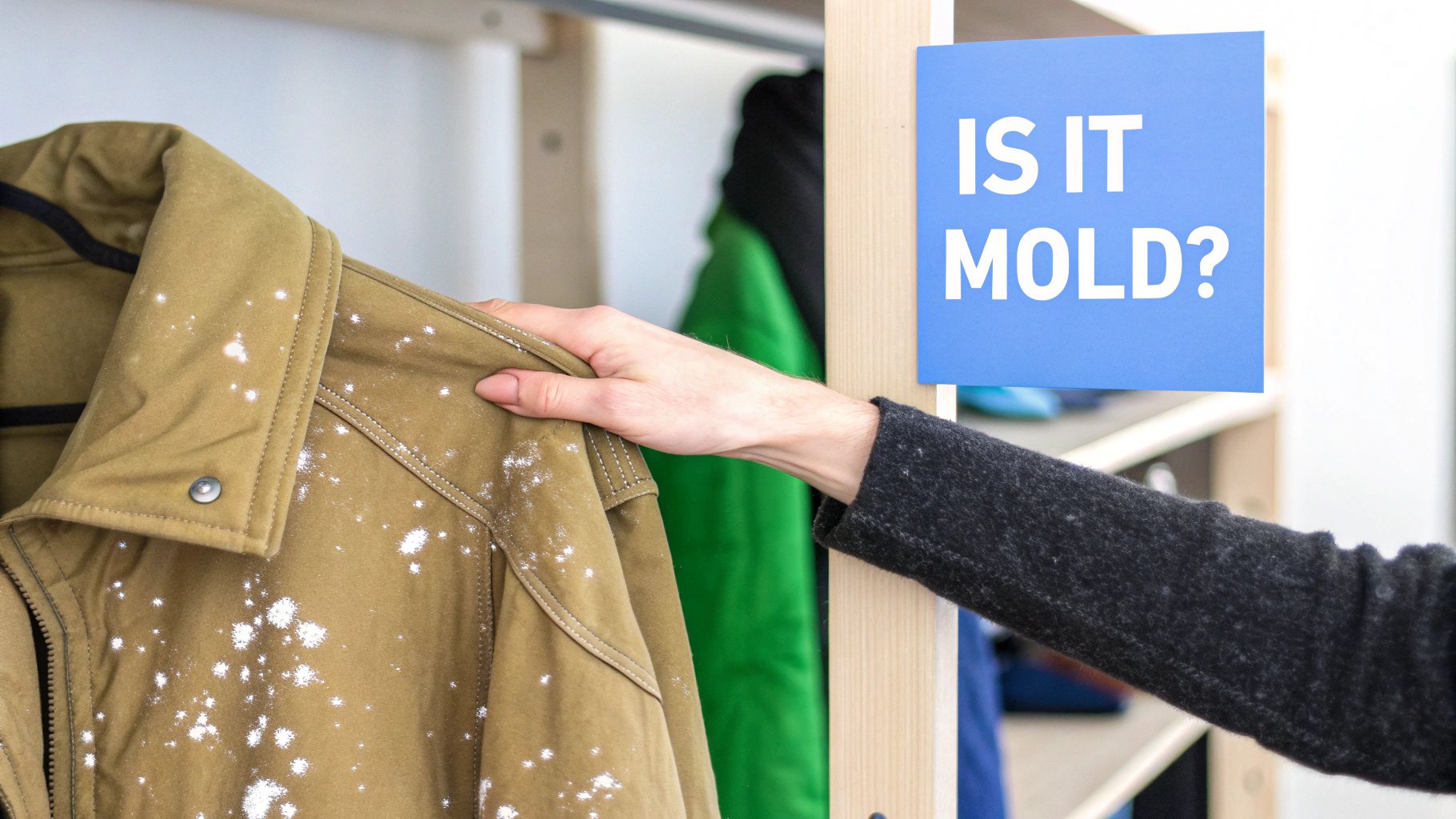
Imagine this: you forgot about your damp gym bag over a long weekend. When you finally open it, you find fuzzy white spots colonizing your workout gear. Or maybe it’s a leather jacket that was stored in a damp corner of the basement. These are prime scenarios for mold, but the visual cues can be deceiving.
Let's break down how to tell the difference.
The Tell-Tale Signs of Mold
True white mold has a few dead giveaways. Unlike a flat stain, it usually has a slightly fuzzy, powdery, or even slimy texture. It’s a three-dimensional growth, not just a discoloration.
This kind of growth is often caused by common indoor fungi like Penicillium or Aspergillus. At first, it might look like a light dusting of chalk or flour, but it's actively breaking down the fabric fibers underneath.
The other huge clue? The smell. Mold has a distinct musty, earthy odor that’s hard to ignore. Give the fabric a cautious sniff (from a safe distance). If it smells damp and old, you're likely on the right track. If you're still not sure what you're smelling, our guide on how to know if that musty smell is mold can help you nail it down.
Expert Tip: Try a simple touch test. If the white stuff feels soft, powdery, and slightly raised, it's probably mold. Detergent residue, in contrast, feels stiff and crusty. Hard water stains just make the fabric feel rough, with no chalky texture to brush off.
Identifying White Spots on Your Fabric
Use this quick comparison to figure out if you're dealing with mold, detergent, or mineral stains.
| Symptom | White Mold | Detergent Residue | Hard Water Stains |
|---|---|---|---|
| Texture | Powdery, fuzzy, or sometimes slimy. Slightly raised. | Stiff, crusty, or soapy. Can be flaky or streaky. | Rough and stiff, integrated into the fabric fibers. |
| Smell | Musty, earthy, and damp. | Typically odorless or might have a faint soap smell. | No distinct smell. |
| Appearance | Circular patches or splotches. Can have a 3D look. | White streaks, clumps, or a chalky film. | Faint, flat white or gray discoloration. |
| Location | Often in damp areas or on clothes stored improperly. | Can appear anywhere, especially on dark fabrics. | Appears uniformly after washing in mineral-rich water. |
By taking a moment to check the texture, location, and smell, you can confidently identify what you're dealing with. This quick check ensures you use the right cleaning method without damaging your clothes or wasting your time on the wrong problem.
Differentiating from Other Common Stains
Not every white mark spells doom. Before you gear up for a full-on mold remediation, rule out these common look-alikes.
- Detergent Residue: This is a classic laundry mistake. It shows up as stiff, soapy, or streaky white marks and usually happens when you overload the washer or use too much powdered detergent.
- Hard Water Stains: If your water has a high mineral content, you might see faint, chalky deposits. These stains are flat, feel rough, and won’t have that signature musty smell.
- Deodorant Marks: We’ve all been there. These are solid white streaks you'll find around the underarm area, and they lack the distinct texture or smell of mold.
Safety First When Handling Moldy Clothes
Don't underestimate even a small patch of white mold on a t-shirt. Before you touch anything, you need to take a few simple safety precautions. This isn't just for big basement floods—those same health risks apply here.
When you disturb mold, it releases microscopic spores into the air. Think of it like kicking up a cloud of invisible dust.
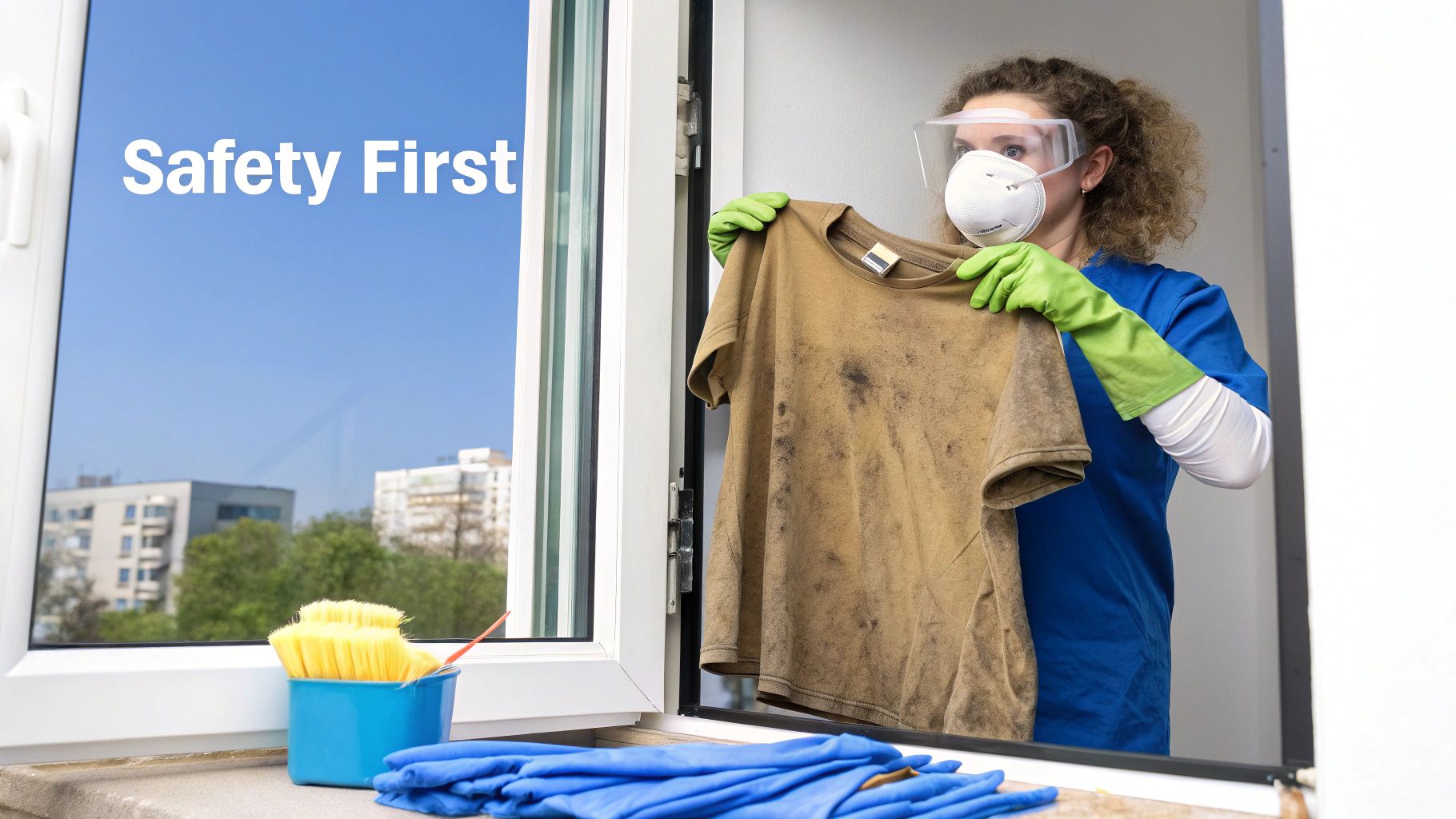
Breathing in those spores can trigger everything from sneezing and itchy eyes to more serious respiratory problems, especially if you have asthma or a weakened immune system. The health risks are real, so a few minutes of prep is well worth it.
The link between mold and health issues is well-established. In the U.S., an estimated 4.6 million of the 21.8 million asthma cases are connected to dampness and indoor mold. Some studies even suggest up to 25% of people have a genetic predisposition that makes them more vulnerable to mold-related illnesses. You can read more of these important mold exposure statistics on Realtimelab.com.
Your Personal Protective Equipment Checklist
Before you start, gear up. Think of this as your mold-fighting uniform—it creates a necessary barrier between you and the spores.
- An N95 Respirator Mask: A simple cloth mask just won't cut it. You need an N95, which is specifically designed to filter out tiny mold spores so you don't breathe them in.
- Gloves: Disposable rubber or nitrile gloves are perfect for preventing any direct skin contact.
- Eye Protection: Goggles or safety glasses are a smart move. They'll protect your eyes from any spores that get kicked up into the air.
Once you have your gear on, pick the right location. Never, ever handle moldy clothes inside your main living area. That’s a surefire way to spread spores through your entire home and create a much bigger headache for yourself.
If you're already seeing mold pop up in other spots around the house, it might be time to look deeper. Our guide on how to test for toxic mold is a great place to start.
Isolate the Garment and Ventilate Your Space
The best place to handle moldy clothing is outside. Take the item outdoors and gently brush off any loose, visible mold so the spores can disperse harmlessly away from your home.
If you can't go outside, a well-ventilated room like a garage or laundry room is your next best bet. Open up all the windows to get a strong cross-breeze going.
To move the garment to the washing machine, place it directly into a trash bag first. This simple step minimizes its contact with other surfaces and keeps the contamination contained.
Removing White Mold from Different Fabrics
Not all fabrics are created equal, and the same goes for mold treatments. A method that works wonders on a sturdy cotton towel could completely ruin a delicate silk blouse or a leather jacket. Using the wrong approach can set stains, weaken fibers, or cause irreversible damage.
Let's break down the best strategies for safely tackling white mold on clothing, based on what it's made of.
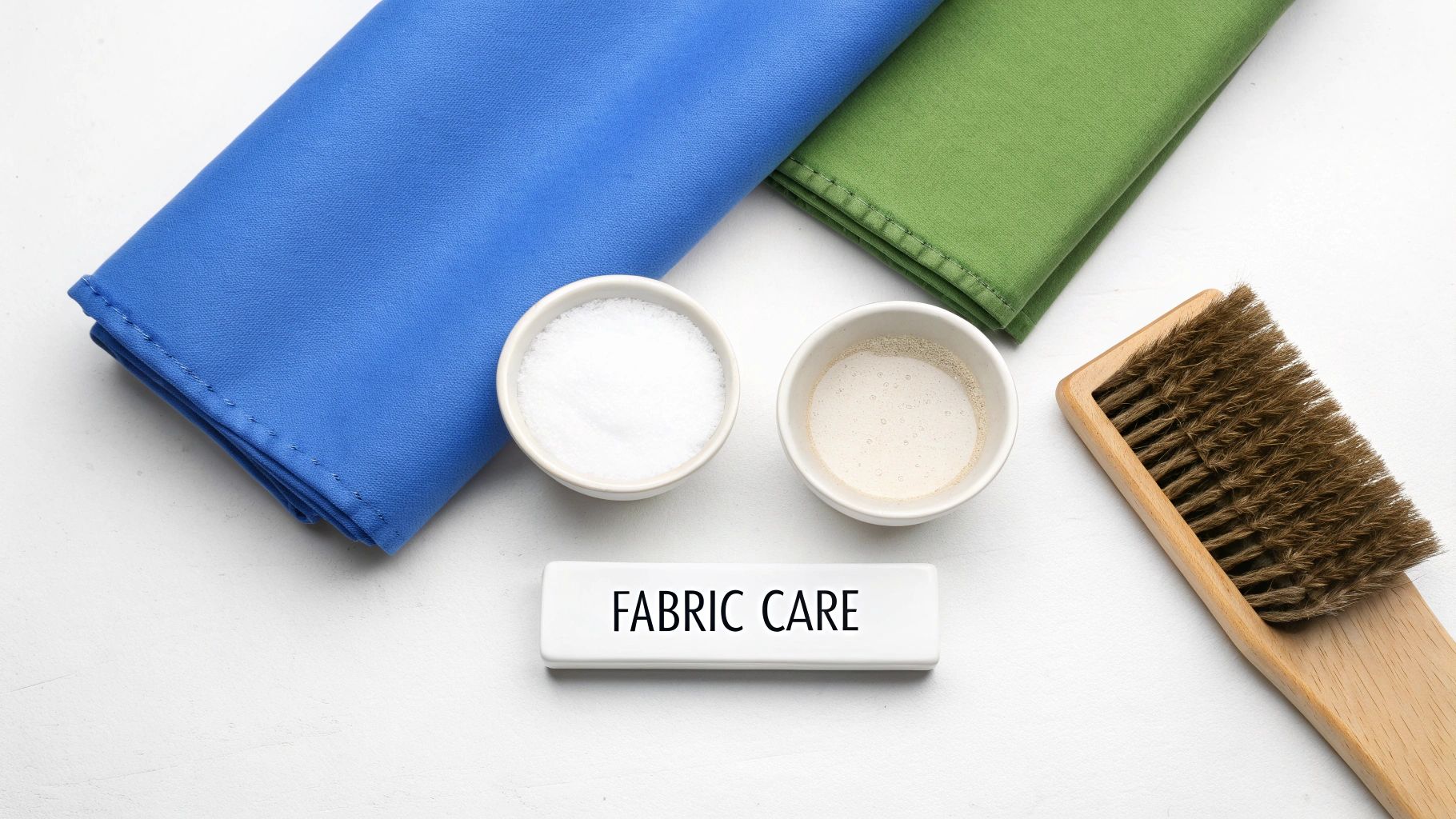
The key is to match the strength of your cleaning agent to the durability of the fabric. We’ll start with the everyday items you can toss in the washing machine before moving on to materials that need a much more gentle touch.
Machine-Washable Fabrics like Cotton and Polyester
For most of your wardrobe—think t-shirts, jeans, hoodies, and synthetic activewear—you can rely on your washing machine and some powerful, yet safe, household staples. The goal here isn't just to wash the mold away, but to kill the spores for good.
First things first, take the item outside. Use a soft-bristled brush to gently flick off as much of the visible surface mold as you can. This simple step prevents you from sending a cloud of spores into your laundry room.
Next, it's time for a pre-soak. Mix one part white vinegar with one part water and completely submerge the garment for at least an hour. Vinegar is a fantastic natural disinfectant that kills most common mold species without being too harsh on most fabrics.
After it has soaked, pop the garment in your washing machine on the hottest water setting the care label allows. Hot water is another powerful ally in killing any stubborn, lingering spores. Add your regular detergent along with one full cup of white vinegar directly into the wash basin. If you're dealing with a particularly stubborn musty smell, tossing in a half-cup of baking soda can also help neutralize those odors.
A Quick Note on Bleach
While chlorine bleach is an effective mold killer, it really should be a last resort, and only for sturdy, all-white cotton items. It can strip color from fabrics and weaken fibers over time. For a safer alternative that works on a much wider range of clothes, vinegar is the superior choice.
Delicate Materials Wool and Silk
Delicate fabrics like wool and silk demand a much gentler approach. The high heat and agitation of a washing machine can cause them to shrink or lose their shape, and harsh chemicals will destroy their natural fibers. For these items, hand-washing is the only way to go.
Start by brushing off the loose mold outdoors, just as you would with sturdier fabrics. Then, fill a clean basin with cool water and a mild, pH-neutral detergent—one specifically designed for delicates.
Add about a half-cup of white vinegar to the water and mix it in. Submerge your wool or silk garment and gently swish it around. Let it soak for about 30 to 60 minutes, but be sure to avoid any aggressive scrubbing or wringing, which can stretch or damage the delicate fibers.
Once it's done soaking, drain the basin and rinse the garment thoroughly with cool, clean water until all the soap and vinegar are gone. To dry, gently squeeze out the excess water—never wring it. Lay the item flat on a clean, dry towel, roll it up to absorb more moisture, and then lay it flat on another dry towel or a mesh rack away from direct sunlight or heat.
Non-Washable Items Leather and Suede
Treating white mold on leather or suede is all about careful surface cleaning. Tossing these materials in water is a recipe for disaster, leading to cracking, staining, and permanent damage.
For smooth leather, mix equal parts water and rubbing alcohol in a small bowl. Dampen a clean cloth with the solution—don't saturate it—and gently wipe down the moldy areas. The alcohol will kill the mold without over-soaking the leather. Follow up by wiping the area with a clean, damp cloth to remove any residue, and then dry it immediately with a soft towel. Always finish with a quality leather conditioner to restore its moisture.
Suede is trickier because of its napped texture. Start with a suede brush to gently buff away the dry, surface mold. Then, very lightly dampen a clean cloth with white vinegar and carefully blot the affected area. Avoid rubbing, as this can easily ruin the texture. Let it air dry completely, then use the suede brush again to restore the nap.
Here’s a quick cheat sheet to help you choose the right method every time.
Effective Mold Removal Methods by Fabric
| Fabric Type | Recommended Cleaning Agent | Washing Instructions | Key Precaution |
|---|---|---|---|
| Cotton & Polyester | White Vinegar & Baking Soda | Pre-soak for 1 hour, then machine wash on the hottest setting allowed. | Avoid chlorine bleach on colored items; it can cause fading and fiber damage. |
| Wool & Silk | White Vinegar & Mild Detergent | Hand-wash only in cool water; soak for 30-60 minutes. | Never wring or twist the fabric; lay flat to dry away from direct heat. |
| Leather (Smooth) | Rubbing Alcohol & Water (50/50 mix) | Wipe the surface with a dampened cloth; do not saturate. | Always follow up with a quality leather conditioner to prevent cracking. |
| Suede | White Vinegar (for blotting) | Brush off dry mold first, then blot gently with a lightly dampened cloth. | Avoid rubbing the fabric, as it can permanently damage the napped texture. |
This table should cover most common scenarios, but remember to always spot-test a new cleaning solution on an inconspicuous area first.
No matter the fabric, that lingering musty odor can sometimes be as stubborn as the mold itself. If a smell persists after cleaning, you may need a more focused approach. To learn more, check out our guide on how to get rid of mold smell in your home and on your belongings.
Keeping Your Clothes Mold-Free for Good
Getting rid of white mold on your clothes is a great start, but the real win is making sure it never comes back. Prevention isn't about some magic trick; it's about creating an environment where mold just can't get a foothold. It’s time to shift from reactive cleaning to proactive habits that will protect your wardrobe for the long haul.
It all boils down to one thing: moisture. Mold needs water to grow, and even a little bit of dampness in a dark, stagnant space is like putting out a welcome mat. Your goal is to make your closets, drawers, and storage areas completely inhospitable to these unwelcome guests.
Master Your Environment
Think about where you keep your clothes. Are they crammed in tight? Is there any air movement? A stuffed closet is a classic breeding ground for mold because it traps moisture and kills airflow, creating the perfect little humid microclimate.
First things first, declutter. Give your clothes some breathing room. Don't over-pack closets and drawers. You'd be surprised how much even leaving a closet door slightly ajar can improve air circulation and stop stale, damp air from settling in.
For those naturally damp spots like basements, laundry rooms, or closets that just don't get much airflow, a small dehumidifier can be a total game-changer. Keeping the ambient humidity below 50% is key. You can get the full rundown on at what humidity does mold grow in our comprehensive guide. For a lower-tech solution, moisture-absorbing products like silica gel packets or calcium chloride containers work wonders in smaller, enclosed spaces.
A Simple Habit Swap: Instead of tossing your worn-once-but-not-dirty clothes onto a chair, hang them up outside the closet for a few hours. This lets any lingering body moisture completely evaporate before the garment gets put away, cutting off a key resource for mold growth.
Smart Laundry and Storage Routines
Your laundry routine plays a huge role in keeping mold at bay. That journey from the washer to the closet is full of opportunities for moisture to stick around where it doesn't belong.
Whatever you do, don't let wet clothes sit in the washing machine. That warm, damp environment is a mold incubator. Set a timer and get them into the dryer the second the cycle finishes.
And when you dry them, be thorough. Don't pull clothes out when they feel "mostly dry." Pay close attention to thick seams, waistbands, and pockets—these are the spots that hold onto moisture the longest. If you're not sure, run an extra dry cycle or hang the item up for a while longer. Storing even one slightly damp garment can introduce moisture into an entire drawer, putting everything inside at risk.
When it's time to pack away seasonal items for long-term storage, follow these crucial steps:
- Wash Everything First: Never store dirty clothes. Body oils, sweat, and tiny stains are a food source for mold.
- Ensure Bone-Dryness: Double-check that every single item is completely, totally dry before you pack it away.
- Choose Breathable Containers: Stay away from airtight plastic bins, as they can trap condensation. Instead, opt for fabric storage bags or boxes that allow for a bit of air exchange.
By working these simple, conscious habits into your routine, you build a powerful defense system that keeps your clothes fresh, clean, and permanently mold-free.
When to Toss It or Call a Professional
I’ll be honest—not every moldy garment can be saved. Sometimes, you have to know when to cut your losses for your own health and sanity. It's tough, but trying to rescue a piece that's too far gone is just a waste of time and energy.
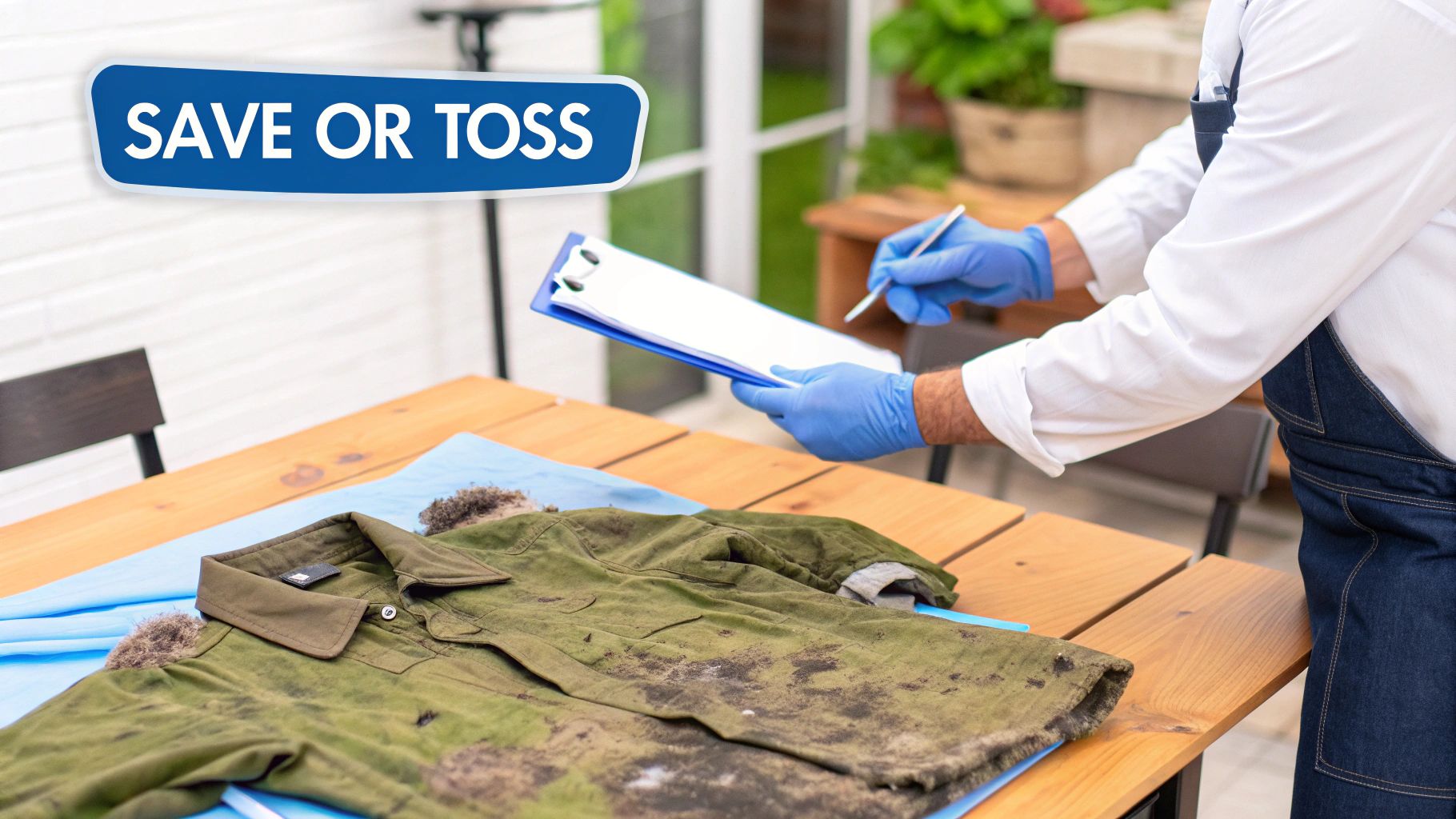
So, when is it time to just say goodbye? The mold itself will tell you. If the fabric feels brittle and weak, almost like it might tear if you gently tug it, that's a bad sign. Deep, dark stains that refuse to lift after a couple of solid cleaning attempts are another clue that the mold has permanently damaged the fibers.
And then there's the smell. If that distinct musty odor is still clinging to the fabric even after a vinegar wash and a good sun-drying session, it's a red flag. That stubborn smell usually means mold spores are still deeply embedded, and it’s better to let the item go.
Red Flags That Point to a Bigger Problem
Every so often, moldy clothes aren't just a laundry problem—they're the tip of the iceberg. They're a symptom of a much larger, hidden issue somewhere in your home. If you’re constantly finding mold on clothes you know were stored properly, it’s time to start looking beyond your closet.
Here are the signs I tell homeowners to watch out for:
- Recurring Mold: You clean your clothes thoroughly, but the mold just keeps coming back. This almost always points to a constant source of moisture you haven't found yet.
- Widespread Growth: The mold isn't just on your clothes. You're now spotting it on walls, inside dresser drawers, or on other surfaces around the house.
- A Persistent Damp Smell: Your entire home, or even just one room, has that musty odor that you can't air out or pin down.
These scenarios scream "systemic moisture problem," and that’s when you need to bring in a professional. Ignoring these signs can lead to serious structural damage and, more importantly, health risks. Mold damage is a huge contributor to textile waste; in 2018 alone, textile waste in the U.S. hit a staggering 17 million tons. You can read more about how textile waste impacts our environment from the EPA.
When you see mold spreading beyond a few isolated items, it's no longer a laundry issue; it's an environmental one. A professional mold inspector can use tools like thermal imaging and moisture meters to find the hidden source of the problem, whether it's a leaky pipe, poor ventilation, or high humidity.
Understanding the difference between just cleaning the mold you see and actually fixing the source is critical. To get a better grasp on this, check out our guide explaining the difference between mold removal vs remediation. A true professional won’t just remove the mold; they'll address the underlying conditions to make sure it doesn't come back, protecting your property and your family's health.
Still Have Questions About Mold on Clothing?
Even with a solid game plan, finding mold on your clothes can leave you with a few nagging questions. Let's tackle some of the most common ones I hear from people dealing with this exact problem.
Can I Just Brush the White Mold Off My Clothes?
It’s tempting, right? You see the fuzzy stuff, and your first instinct is to just brush it away. And you should—but always do it outdoors to avoid sending spores flying around your house.
But here’s the thing: brushing is just the first, tiny step. It only gets rid of the visible surface growth, leaving behind microscopic spores that have worked their way deep into the fabric. Think of it like pulling the top off a weed but leaving the roots in the ground. If you don't follow up with a proper wash using a mold-killer like white vinegar, that mold is just going to come right back.
Will Drying My Clothes in the Sun Kill Mold?
Ah, the power of the sun. It's a fantastic natural disinfectant, and those UV rays do a great job of killing mold spores and knocking out that musty smell. After a thorough wash, letting your clothes dry in the bright, direct sunlight for a few hours is a brilliant final touch.
But don’t rely on sunlight alone to solve a real mold problem. It’s not a magic bullet. For a serious infestation or on thick, heavy fabrics, the sun’s rays might not penetrate deep enough to kill everything. Use it as a powerful final step, not your main treatment.
Is It Dangerous to Touch White Mold on Clothes?
Look, a brief, accidental touch isn't likely to cause a major health crisis for most healthy people. But it’s definitely something you want to avoid.
When you handle moldy fabric, you can easily disturb the spores and send a little cloud of them into the air—which you then breathe in. For anyone with allergies, asthma, or even just sensitive skin, direct contact can trigger anything from a skin rash to respiratory issues. The best practice is simple: always wear gloves and an N95 mask when you're dealing with moldy items. Better safe than sorry.
Can I Use Bleach on Any Fabric to Remove Mold?
Bleach is the nuclear option. Yes, it’s incredibly effective at killing mold, but it’s just as effective at destroying your clothes. It should only be considered as a last resort for tough, all-white items you don't mind putting at risk, like cotton towels or old sheets.
On anything with color, bleach will cause permanent fading and ugly blotches. It's also incredibly harsh on delicate fibers like wool or silk, and it can weaken many synthetics over time. For a much safer (and nearly as effective) alternative, stick with white vinegar. It’s strong enough to kill the mold but gentle enough for almost any fabric you throw at it.