As the chill of winter recedes and Santa Barbara and Ventura counties welcome the vibrant bloom of spring, it's the perfect time to give your home the attention it deserves. After months of rain and persistent coastal moisture, hidden issues can fester, potentially leading to serious problems like mold growth, water damage, and structural decay. These conditions not only threaten your property's integrity but can also have significant impacts on indoor air quality and your family's health.
This isn't just another generic to-do list; it is a strategic home spring maintenance checklist designed to safeguard your investment and well-being. We will move beyond the obvious, providing a detailed, exterior-to-interior guide with a critical focus on moisture control, which is the number one defense against mold. From inspecting your roof and gutters to servicing your HVAC system and ensuring proper foundation drainage, each task is broken down into clear, actionable steps.
Think of this guide as a proactive roadmap. It helps you identify potential problems before they escalate into costly, complex repairs. For homeowners in our unique coastal climate, where damp air is a constant, this seasonal check-up is not just beneficial, it is essential. Following this comprehensive checklist ensures your home remains a safe, healthy, and structurally sound sanctuary throughout the year. Let's get started on a season of proactive care.
1. Clean and Inspect Gutters and Downspouts
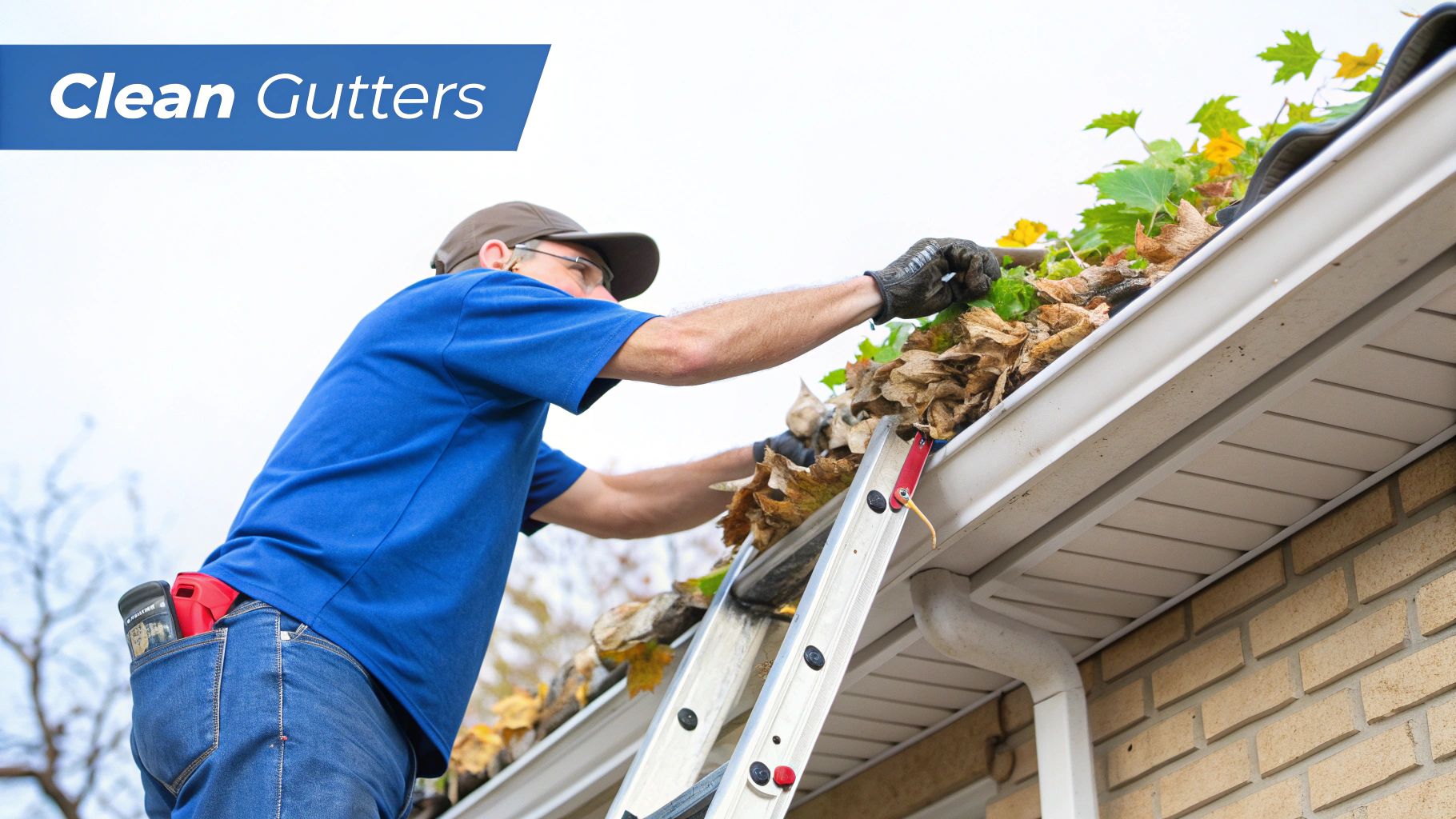
After a long winter, your home's gutters are likely clogged with a combination of leaves, twigs, dirt, and other debris. This accumulation acts like a dam, preventing rain and snowmelt from flowing freely away from your house. This initial task on any comprehensive home spring maintenance checklist is arguably one of the most critical for preventing long-term water damage.
When gutters overflow, water spills down your siding, pools around your foundation, and can seep into your basement or crawl space. This creates the perfect damp environment for mold growth, wood rot, and even pest infestations. A thorough cleaning ensures your gutter system can do its job: protecting your home's structural integrity by managing water.
Why It's a Spring Priority
Spring often brings heavy rains, especially in coastal areas like Santa Barbara and Ventura. If your gutters are blocked from winter buildup, this is the season when significant water intrusion is most likely to occur. Cleaning them out first prepares your home for the wet weather ahead and stops moisture problems before they start.
Actionable Gutter Maintenance Tips
- Safety First: Always use a sturdy ladder on level ground. Wear thick gloves to protect your hands from sharp debris and bacteria. A headlamp can improve visibility in shaded areas.
- Clear and Flush: Remove large debris by hand or with a gutter scoop. After the bulk of the material is gone, use a garden hose to flush out any remaining sediment and confirm the downspouts are clear. Watch for a strong, steady flow from the downspout outlet.
- Inspect as You Go: Look for signs of damage such as cracks, rust spots, or sagging sections. Check that all brackets are securely fastened to the fascia board.
- Extend Your Downspouts: Ensure downspouts direct water at least four to six feet away from your foundation. If they don't, add extensions to prevent water from pooling near the base of your home.
- Consider Professional Help: For multi-story homes or if you're uncomfortable on a ladder, hiring a professional gutter cleaning service is a safe and effective option.
Properly functioning gutters are your first line of defense against water damage. To better understand how this simple task fits into a larger strategy, you can find more information about preventing moisture intrusion from Pacific Mold Pros.
2. Pressure Wash Exterior Surfaces
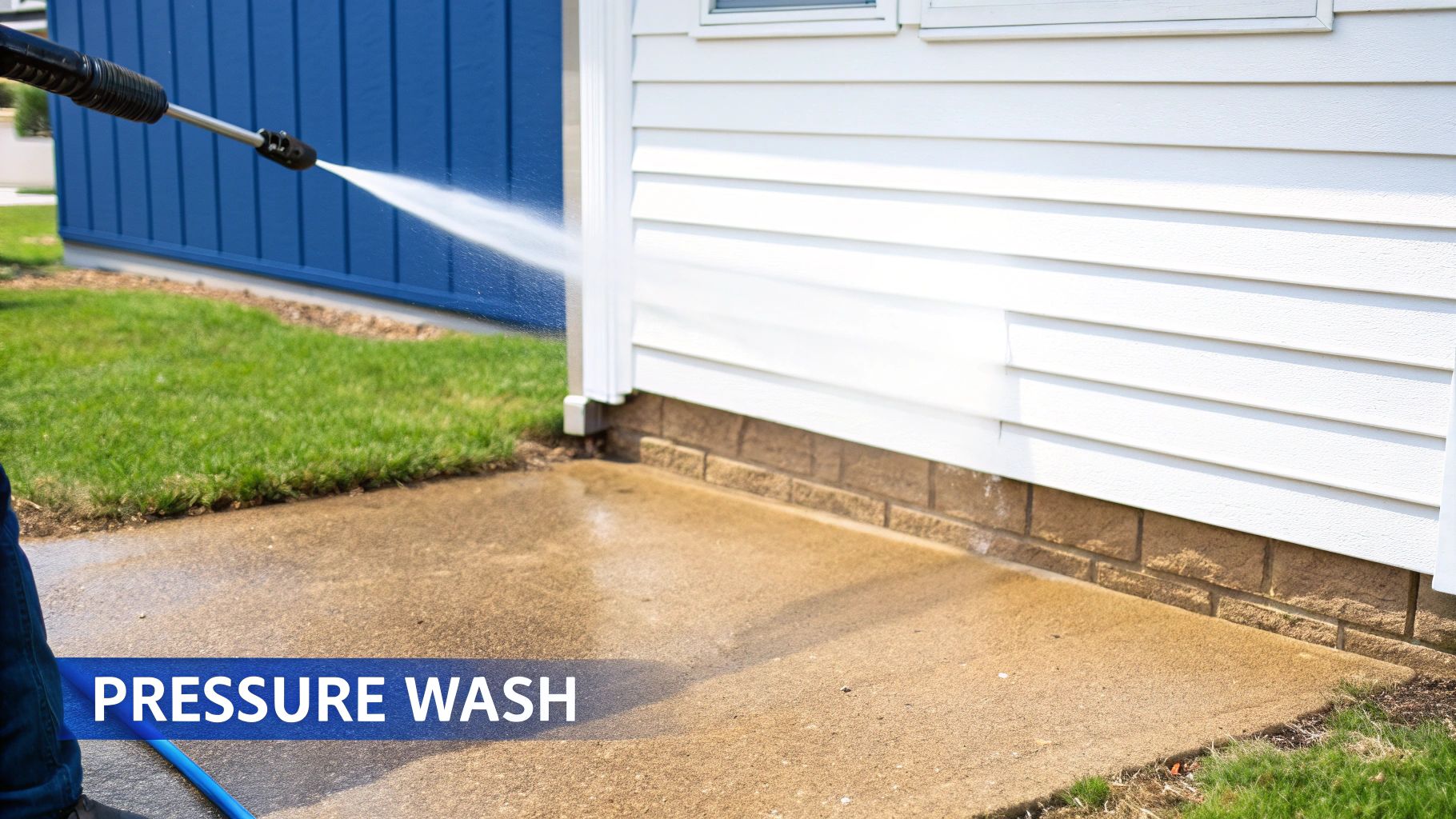
Over the winter, your home's exterior surfaces accumulate a layer of grime, dirt, salt, and organic growth like mold, mildew, and algae. Pressure washing is an effective way to blast away this buildup, instantly restoring your home's curb appeal while also protecting its surfaces from long-term deterioration. This deep clean is a vital part of any home spring maintenance checklist, especially for preventing moisture-related damage.
Allowing mold and algae to thrive on siding, decks, and walkways not only looks unsightly but can also eat away at materials over time. Organic growth holds moisture against surfaces, which can lead to wood rot, paint failure, and the degradation of concrete and stone. A thorough spring cleaning removes these destructive elements before they can cause lasting harm.
Why It's a Spring Priority
As temperatures rise and humidity increases in the spring, dormant mold and algae spores become active and begin to spread rapidly. Cleaning them off now stops this growth cycle in its tracks. For coastal homes in areas like Santa Barbara, pressure washing is particularly important for removing corrosive salt deposits that can damage paint and siding. It also prepares surfaces for any painting, staining, or sealing you plan to do in the warmer months.
Actionable Pressure Washing Tips
- Start with Low Pressure: Always begin with the widest spray nozzle and the lowest pressure setting, especially on siding or wood. Gradually increase the pressure only if necessary to avoid gouging or damaging the surface.
- Keep the Wand Moving: Maintain a consistent distance from the surface and use a smooth, sweeping motion. Lingering in one spot for too long can create visible lines, strip paint, or etch the material.
- Protect Your Surroundings: Before you start, cover nearby plants, light fixtures, and electrical outlets with plastic sheeting. Be mindful of where the chemical-laden runoff is flowing to protect your lawn and garden beds.
- Know When to Call a Pro: Delicate surfaces like older wood, stucco, and some types of brick can be easily damaged. If you're unsure about the right technique or pressure level, hiring a professional service is the safest choice to prevent costly repairs.
- Schedule Smartly: Plan to pressure wash before other exterior projects. This ensures you have a clean, prepared surface for tasks like resealing your driveway, re-staining your deck, or painting your trim.
3. Inspect and Repair Roof and Siding
Your home's roof and siding are its primary armor against the elements. After enduring winter storms, heavy rain, and fluctuating temperatures, this protective layer can be left vulnerable. A thorough inspection is a vital part of any home spring maintenance checklist, designed to catch small issues like missing shingles or cracked siding before they escalate into major leaks and structural damage.
This preventative task involves a careful visual check for any signs of winter's impact. Identifying and addressing compromised areas early prevents water from penetrating your home's envelope, which is a common cause of hidden moisture problems, wood rot, and mold infestations that can compromise both your property's value and your indoor air quality.

Why It's a Spring Priority
The transition from winter to spring is the ideal time for this inspection. Damage from winter ice dams, which force water up under shingles, often becomes apparent as temperatures rise. Catching these vulnerabilities before the heavy spring rains arrive gives you a crucial window to make repairs, ensuring your home is sealed and protected for the wet season ahead.
Actionable Roof and Siding Maintenance Tips
- Ground-Level Scan: Start safely from the ground. Use a pair of binoculars to get a close look at your roof, searching for shingles that are curled, cracked, or missing entirely. Look for damage to the flashing around chimneys, vents, and skylights.
- Check the Attic: On a bright day, go into your attic and turn off the lights. Look for any beams of daylight coming through the roof, as this indicates a direct path for water entry. Also, scan for dark water stains on the underside of the roof deck or on the insulation.
- Examine Siding: Walk the perimeter of your home, inspecting siding for cracks, gaps, or warping. Pay special attention to areas where siding meets trim, windows, and doors, ensuring caulk and seals are intact.
- Document Everything: If you find any damage, take clear photos. This documentation is essential for insurance claims and for showing contractors the exact areas that need attention.
- Schedule Professional Help: For a comprehensive assessment, especially on steep or multi-story roofs, hire a professional roofer or certified home inspector. An expert eye can spot subtle signs of wear that are easily missed.
If your inspection uncovers water stains or dampness, it's important to act quickly. You can explore a detailed guide on how to check for mold after water damage to understand the next steps in preventing a larger problem.
4. Service and Test HVAC Systems
As temperatures rise, your home’s air conditioning system transitions from a long winter hibernation to being your primary defense against the summer heat. This crucial system is often overlooked in a home spring maintenance checklist, but servicing it now prevents unexpected breakdowns and ensures it operates efficiently when you need it most. A well-maintained HVAC system not only provides comfort but also plays a vital role in managing indoor humidity and air quality.
Neglecting your AC can lead to decreased efficiency, higher energy bills, and poor indoor air quality. Dust, pollen, and other allergens that accumulate over winter get circulated throughout your home the first time you turn on the air. A professional tune-up addresses these issues, preparing your system for peak performance during the hottest months.

Why It's a Spring Priority
Scheduling HVAC service in the spring, typically April or May, allows you to get ahead of the summer rush when technicians are in high demand for emergency repairs. This proactive approach ensures your system is ready for the first heatwave. The EPA’s Energy Star program notes that a dirty air filter alone can reduce your system's efficiency by up to 15%, highlighting the importance of this simple yet effective task.
Actionable HVAC Maintenance Tips
- Schedule Professional Service: A certified technician should inspect refrigerant levels, clean evaporator and condenser coils, check electrical connections, and lubricate moving parts. This is the most comprehensive way to ensure system health.
- Replace Your Air Filter: This is a simple DIY task. A clean filter improves airflow, increases efficiency, and enhances indoor air quality. Plan to replace it monthly during the cooling season.
- Clean the Outdoor Unit: Gently rinse the outdoor condenser unit with a garden hose to remove dirt, grass clippings, and debris. Ensure the area around the unit is clear of foliage and obstructions for at least two feet.
- Test the System: On a mild day, turn on your AC to confirm it’s blowing cold air and running smoothly. Listen for any unusual noises that might indicate a problem.
- Upgrade Your Thermostat: A programmable or smart thermostat can optimize your cooling schedule, reducing energy consumption and lowering your utility bills.
A clean, efficient HVAC system is fundamental to a healthy home environment. For a deeper look into how your system impacts the air you breathe, discover more about improving indoor air quality from Pacific Mold Pros.
5. Check and Repair Outdoor Faucets and Irrigation Systems
As you prepare your garden and lawn for the growing season, inspecting your outdoor water systems is a crucial step in your home spring maintenance checklist. Winter's freezing temperatures can wreak havoc on spigots, pipes, and irrigation lines, leading to cracks and leaks that often go unnoticed until it's too late. A small, hidden leak can waste thousands of gallons of water and saturate the soil around your foundation.
This excess moisture creates a direct pathway for water to seep into your crawl space or basement, fostering the ideal conditions for mold growth, wood rot, and pest infestations. A burst pipe from freeze damage can lead to significant flooding and repairs costing thousands of dollars. Checking these systems now prevents costly damage and ensures they are ready for summer use.
Why It's a Spring Priority
The transition from freezing winter nights to warmer spring days is the perfect time to identify and repair any damage before you rely on these systems heavily. Turning on the water for the first time will reveal any issues that occurred over winter. Addressing them early prevents a minor drip from becoming a major leak that compromises your home's foundation and air quality.
Actionable Faucet and Irrigation Tips
- Turn Water on Slowly: Before opening the valve completely, turn the water supply to your outdoor faucets on slowly. Listen for hissing sounds inside the walls, which could indicate a pipe leak. Go outside and check the spigot for drips or leaks before opening it fully.
- Test All Irrigation Zones: Run your sprinkler system through each zone one by one. Walk the lawn to check for sputtering heads, poor coverage, or puddles, which could signal an underground leak or a broken head.
- Clean and Adjust: Remove sprinkler heads and clean their filter screens of any accumulated debris. Adjust the spray patterns to ensure they water your lawn and garden, not your house siding, driveway, or windows.
- Fix Drips Immediately: Even a slow drip from a faucet can waste over 3,000 gallons of water per year. Replace worn-out washers or gaskets to stop leaks and prevent water from pooling near your foundation.
- Consider Smart Upgrades: If your system is old, consider upgrading to a smart irrigation controller. These devices use weather data to adjust watering schedules automatically, conserving water and preventing over-saturation of the soil.
Undetected leaks from outdoor plumbing are a common source of excess ground moisture. To understand how this can affect the area beneath your home, you can learn more about preventing moisture problems in crawl spaces from Pacific Mold Pros.
6. Inspect and Service Foundation and Basement
The freeze-thaw cycles of winter put immense stress on your home's foundation. As moisture in the soil freezes, it expands, pushing against foundation walls. When it thaws, the soil contracts, leaving gaps that can lead to settling and cracks. A thorough foundation and basement inspection is a non-negotiable part of any home spring maintenance checklist, as it helps you catch these issues before they escalate into costly structural repairs or severe water damage.
Neglecting the base of your home is a recipe for disaster. Small cracks can widen, allowing water to seep into your basement or crawl space. This moisture creates an ideal breeding ground for mold, compromises structural materials like wood joists, and can lead to musty odors throughout your home. A proactive inspection ensures your foundation remains solid, dry, and secure.
Why It's a Spring Priority
Spring's melting snow and heavy rains create the perfect storm for foundation problems. The ground becomes saturated, increasing hydrostatic pressure against your basement walls and testing every potential entry point for water. Identifying and sealing new cracks and ensuring your drainage systems are functional before the peak rainy season is the best way to prevent a flooded basement and the resulting mold growth.
Actionable Foundation Maintenance Tips
- Document and Monitor: Walk the interior and exterior of your foundation, taking photos of any visible cracks. Use a pencil to mark the ends of existing cracks and date them. This creates a simple visual record to track any growth over the year.
- Check for Moisture: Look for efflorescence (a white, chalky substance on concrete), dark stains, or damp spots on basement walls and floors. These are clear indicators of water seepage that needs to be addressed.
- Test Your Sump Pump: Don't wait for a storm to discover your sump pump has failed. Pour a bucket of water into the sump pit to ensure the pump activates, removes the water, and shuts off properly.
- Evaluate Landscape Grading: The soil around your foundation should slope away from the house, dropping at least six inches over the first ten feet. This directs surface water away from your walls. If you see water pooling, add compacted soil to build up the grade.
- Manage Humidity: Maintain humidity levels in your basement or crawl space between 40% and 60% using a dehumidifier. This helps prevent condensation and inhibits mold growth on surfaces.
Keeping these lower levels of your home dry is crucial. Understanding the early warnings of moisture can help you act quickly. If you're concerned about musty smells or visible signs of moisture, you can find more information on how to identify the signs of mold in a crawl space from Pacific Mold Pros.
7. Clean and Inspect Windows and Doors
Winter storms, wind, and rain leave a layer of grime and salt spray on your windows and doors, especially in coastal climates like Santa Barbara and Ventura. This task on your home spring maintenance checklist goes beyond aesthetics; it's a crucial step in maintaining energy efficiency, preventing water intrusion, and ensuring the security of your home. A thorough cleaning and inspection reveals issues that winter may have created or worsened.
Failing to inspect windows and doors can lead to overlooked problems like deteriorating seals, cracked caulking, or warped frames. These small gaps allow conditioned air to escape and, more importantly, create pathways for moisture to enter your walls. This can lead to hidden mold growth, wood rot, and a significant drop in your home's energy performance.
Why It's a Spring Priority
Spring is the perfect time to address the wear and tear from winter. Cleaning away grime maximizes natural light and can improve your windows' energy efficiency. More critically, identifying and sealing drafts or water entry points before the spring rains and summer humidity arrive prevents moisture from becoming trapped inside your home's structure.
Actionable Window and Door Maintenance Tips
- Clean Thoroughly: Use a simple solution of white vinegar and water for a streak-free clean on glass. Don't forget to wipe down the frames, sills, and tracks, where dirt and mold spores can accumulate.
- Inspect Seals and Weatherstripping: Check the weatherstripping around all doors and windows for signs of brittleness, cracking, or compression. If you can see daylight around a closed door or feel a draft, it’s time for a replacement.
- Check Caulking: Examine the exterior caulk around window and door frames. Look for gaps or cracks where water could seep in. Scrape out old, failing caulk and apply a fresh bead of high-quality, paintable exterior caulk.
- Test Hardware: Open and close all windows and doors to ensure they operate smoothly. Lubricate stubborn tracks and hinges with a silicone-based spray. Check that all locks and latches engage securely.
- Repair Screens: Inspect screens for any holes or tears, which can let pests inside. Small holes can be patched with a screen repair kit, while larger damage may require replacing the screen entirely.
8. Inspect and Repair Deck and Patio Structures
Your deck, patio, or porch is the gateway to outdoor living, but winter’s harsh conditions can take a silent toll on its safety and structural integrity. Exposure to constant moisture, freezing temperatures, and debris can weaken wood, corrode fasteners, and compromise supports. Making a thorough inspection part of your home spring maintenance checklist is crucial for preventing accidents and costly future repairs.
A weakened deck isn't just an eyesore; it's a significant safety hazard. Most catastrophic deck failures are not sudden events but the result of gradual decay, often from wood rot where the deck attaches to the house or at the base of support posts. Identifying and addressing these issues in the spring ensures your outdoor space is safe and ready for summer barbecues, family gatherings, and quiet evenings.
Why It's a Spring Priority
As the weather warms, you'll be using your outdoor spaces more frequently. An early spring inspection allows you to find and fix any winter damage before the season of heavy foot traffic begins. This proactive approach prevents a wobbly railing or a rotten board from turning a pleasant gathering into a dangerous accident. Addressing issues now is far easier than mid-summer when you want to be enjoying the space.
Actionable Deck and Patio Maintenance Tips
- Probe for Rot: Use a screwdriver to gently poke support posts, joists (the beams under the deck boards), and stair stringers, especially where wood meets concrete or the ground. If the wood is soft and spongy, it's a clear sign of rot that needs immediate attention.
- Check All Connections: Inspect all metal fasteners, including joist hangers, bolts, and screws. Look for rust or corrosion, which can weaken the connection. Use a wrench or screwdriver to tighten any loose bolts and screws.
- Examine the Surface: Look for splintering, cracked, or warped deck boards. These should be replaced to prevent trips and injuries. Pay close attention to the ledger board, which fastens the deck to your house, as this is a common point of failure.
- Clear Debris and Ensure Drainage: Sweep away all leaves, pine needles, and dirt from between deck boards and from underneath the deck. This debris traps moisture against the wood, accelerating rot. Ensure the ground beneath slopes away to prevent water from pooling around support posts.
- Clean and Seal: After making repairs, give your deck a thorough cleaning with a deck-appropriate cleaner. Once completely dry, apply a fresh coat of sealer or stain to protect the wood from UV rays and moisture, typically every 2-3 years.
9. Test and Service Lawn Mower and Outdoor Equipment
As grass begins to grow again, the last thing you want is for your lawn mower or string trimmer to fail on the first warm Saturday. Servicing your outdoor power equipment is a foundational task in any spring maintenance checklist, ensuring your tools are ready for the demanding season ahead. This proactive step prevents frustrating mid-season breakdowns and extends the life of expensive machinery.
Properly maintained equipment operates more efficiently and delivers better results. For instance, a lawn mower with a dull blade tears at grass rather than cutting it cleanly. This jagged tearing stresses the grass, making your lawn more susceptible to disease, pests, and discoloration. A well-tuned machine not only saves you time but also promotes a healthier, more resilient landscape.
Why It's a Spring Priority
After sitting dormant all winter, your equipment's fuel system, battery, and engine need attention. Old gasoline can gum up carburetors, and fluctuating temperatures can affect tire pressure and fluid viscosity. Addressing these issues before the first use ensures your equipment starts reliably and performs optimally when you need it most, preventing delays in your landscaping efforts.
Actionable Equipment Maintenance Tips
- Fuel System First: If you didn't add a fuel stabilizer before winter storage, drain the old gasoline from the tank. Refill with fresh fuel to prevent clogs and ensure a smooth start.
- Change the Oil: Just like a car, your small engines need clean oil. Start the season with a fresh oil change to provide proper lubrication and cooling for the engine.
- Sharpen or Replace Blades: A sharp mower blade creates a clean cut that helps grass heal quickly. You can sharpen the blade yourself with a file or grinder, or take it to a local hardware store for professional service.
- Check Spark Plugs and Filters: A new spark plug ensures a reliable spark for easy starting. Inspect the air filter and clean or replace it if it's dirty to allow the engine to breathe properly.
- Inspect Belts and Tires: Look over any belts for signs of cracking or excessive wear. Check the tire pressure on riding mowers and add air as needed for an even cut.
- Safety Check: Before starting, ensure all safety guards, shields, and features are in place and functioning correctly. Clean caked-on grass from the underside of the mower deck for better performance.
10. Mulch Garden Beds and Check Landscaping Drainage
Landscaping is more than just curb appeal; it's a critical component of your home's water management system. After winter, your garden beds need attention to prepare for the growing season and to ensure they aren't contributing to moisture problems around your foundation. Applying fresh mulch and correcting drainage issues is a key task in a complete home spring maintenance checklist.
A healthy layer of mulch retains soil moisture, suppresses weed growth, and regulates soil temperature. More importantly, proper grading and drainage in your landscaping directs rainwater away from your home's foundation, preventing water intrusion in basements and crawl spaces. This simple task protects your plants and your property simultaneously.
Why It's a Spring Priority
Spring is the ideal time to mulch, as it prepares the soil for summer heat by helping it retain moisture from spring rains. It’s also the perfect moment to observe how water flows during heavy downpours. Addressing poor drainage now prevents soil erosion and stops water from pooling against your foundation, which is a leading cause of moisture-related structural damage and mold growth.
Actionable Landscaping & Drainage Tips
- Mind the Gap: When applying mulch, keep it at least four to six inches away from your home's siding and the base of tree trunks. Piling mulch directly against these surfaces can trap moisture, promoting rot and creating a bridge for pests like termites.
- Apply the Right Amount: A layer of two to three inches is optimal. Too little won't be effective, while too much can suffocate plant roots and create a soggy environment that fosters fungal growth.
- Observe and Grade: After a rainstorm, check for areas where water pools. The ground around your foundation should slope away from the house, dropping at least two to three inches for every ten feet. If it doesn't, add soil to build up the grade and redirect water flow.
- Remove Old Mulch: If last year's mulch has become matted or heavily decomposed, it can impede water and air penetration. Rake it away before applying a fresh layer.
- Inspect Plant Health: Check trees, shrubs, and perennials for any signs of winter damage, such as broken branches or frost heave. Prune damaged areas to encourage healthy new growth.
10-Point Spring Home Maintenance Comparison
| Task | 🔄 Implementation Complexity | ⚡ Resource Requirements | ⭐ Expected Outcomes | 📊 Ideal Use Cases | 💡 Key Advantages |
|---|---|---|---|---|---|
| Clean and Inspect Gutters and Downspouts | 🔄 Moderate — ladder work, safety precautions | ⚡ Low equipment (ladder, gloves); pro $150–$300; recurring labor | ⭐ High — prevents water damage, foundation issues | 📊 Homes with heavy trees or post-storm debris | 💡 Prevents costly repairs; use gutter guards to reduce frequency |
| Pressure Wash Exterior Surfaces | 🔄 Moderate — equipment handling, surface care | ⚡ Medium — rental $50–$100/day or pro $400–$1,000+ | ⭐ High — restores appearance, removes mold/algae | 📊 Driveways, siding, decks with grime or biological growth | 💡 Fast visual impact; start at low pressure to avoid damage |
| Inspect and Repair Roof and Siding | 🔄 High — roof access/height risk; may need pros | ⚡ Medium–High — inspection $200–$400; repairs vary widely | ⭐ Very high — prevents leaks and structural damage | 📊 Post-winter storms, older roofs, visible shingle loss | 💡 Early detection saves major repair costs; document issues for insurance |
| Service and Test HVAC Systems | 🔄 Moderate — technical checks; some DIY limits | ⚡ Medium — pro $150–$300; refrigerant handling requires certification | ⭐ High — improves efficiency, reduces breakdowns | 📊 Pre-summer preparation; high-use or aging systems | 💡 Schedule before peak season; replace filters regularly for savings |
| Check and Repair Outdoor Faucets & Irrigation | 🔄 Low–Moderate — mostly DIY; underground issues complex | ⚡ Low — basic tools; pro $100–$300 for systems | ⭐ High — stops leaks, conserves water | 📊 After last frost; properties with irrigation or freeze risk | 💡 Test zones slowly; consider smart controllers to save water |
| Inspect and Service Foundation and Basement | 🔄 High — may require specialists and detailed assessment | ⚡ Medium–High — inspection $200–$500; repairs costly if needed | ⭐ Very high — prevents structural failure and mold intrusion | 📊 Freeze-thaw regions or homes with new cracks/water stains | 💡 Monitor cracks annually; ensure proper grading/gutter runoff |
| Clean and Inspect Windows and Doors | 🔄 Low — mainly DIY cleaning and seal checks | ⚡ Low — basic supplies; pro cleaning $300–$800 | ⭐ Medium — improves efficiency and security when sealed | 📊 After winter grime; homes seeking energy savings | 💡 Recaulk and replace weatherstripping to improve efficiency |
| Inspect and Repair Deck and Patio Structures | 🔄 Moderate — structural checks; some heavy repairs | ⚡ Medium — inspection $100–$300; major repairs $2,000+ | ⭐ High — prevents injuries and extends lifespan | 📊 Pre-season use, visible rot or loose fasteners | 💡 Test for rot with a screwdriver; tighten/replace corroded fasteners |
| Test and Service Lawn Mower & Outdoor Equipment | 🔄 Low — routine maintenance; some tasks need shop tools | ⚡ Low — DIY parts; pro service $50–$150 | ⭐ High — improves reliability and cut quality | 📊 Before first mow (April–May) or start of season | 💡 Change oil, sharpen blades, drain/ stabilize fuel for longevity |
| Mulch Garden Beds & Check Landscaping Drainage | 🔄 Low–Moderate — physical labor and grading checks | ⚡ Low — mulch cost; pro $300–$1,000+ for large jobs | ⭐ Medium — conserves moisture, suppresses weeds, improves appearance | 📊 After last frost; beds needing moisture retention or erosion control | 💡 Apply 2–3" mulch, keep away from trunks, fix grading to prevent rot |
When DIY Isn't Enough: Your Local Guide to Professional Mold Inspection
Completing this comprehensive home spring maintenance checklist is a powerful act of stewardship for your property. By systematically addressing everything from your gutters and roof to your HVAC system and foundation, you’ve taken crucial steps to fortify your home against the pervasive threat of moisture intrusion, which is the primary catalyst for mold growth. You’ve moved beyond a simple spring cleaning and engaged in a proactive strategy to protect not only your home’s structural integrity but also your family’s long-term health and well-being. This isn’t just about ticking boxes; it’s about creating a safe, resilient, and healthy indoor environment.
However, even the most diligent homeowner can’t see through walls. The tasks you’ve completed are excellent at managing visible and predictable moisture sources, but the reality is that water damage can be insidious and hidden. If your spring maintenance efforts have uncovered warning signs, or if you simply have a lingering feeling that something isn't right, it’s crucial to recognize the limits of a DIY approach.
Key Takeaways and When to Elevate Your Response
Let's recap the core theme of this guide: Proactive moisture control is proactive mold prevention. Every checklist item, from ensuring your downspouts direct water far from your foundation to checking for condensation around your HVAC unit, is designed to interrupt the moisture cycle that mold needs to thrive.
Despite your best efforts, certain symptoms demand professional evaluation. Consider this your final, and most important, checklist item: knowing when to call for expert help. You should strongly consider a professional mold inspection if you've encountered any of the following during your maintenance routine:
- Persistent Musty Odors: If a musty or earthy smell remains in a specific area (like a basement, bathroom, or under a sink) even after cleaning and airing it out, it's a classic indicator of hidden microbial growth.
- Visible Discoloration or Staining: Any unexplained staining or fuzzy-looking discoloration on drywall, ceilings, or baseboards, especially in areas with high humidity or past leaks, warrants immediate investigation.
- Warping or Peeling Surfaces: If you’ve noticed wood floors are buckling, wallpaper is peeling, or paint is blistering, it signals an underlying moisture problem that has been active for some time.
- Condensation Issues: Persistent condensation on windows, pipes, or walls is a sign that your home’s humidity levels are too high, creating a prime breeding ground for mold.
- Post-Leak Concerns: Even if you cleaned up a recent plumbing leak or roof leak, moisture can become trapped within building materials. A professional inspection can confirm if the area has truly dried out or if a hidden mold colony has taken root.
Your Path Forward: From Maintenance to Mastery
Moving forward, your goal is to integrate these spring checks into an annual habit. This consistent vigilance transforms home maintenance from a reactive chore into a proactive system for asset protection. By mastering this checklist, you are no longer just a homeowner; you are the primary defender of your home’s health.
For residents in Santa Barbara, Montecito, Goleta, and the greater Ventura County area, our coastal climate presents unique challenges. The "May Gray" and "June Gloom" can trap marine layer moisture, making homes here particularly susceptible to mold issues. If you’ve identified any of the red flags above, don't guess or wait. A professional mold inspection is not a sign of failure but a smart, decisive step to gain clarity.
At Pacific Mold Pros, we utilize specialized tools like thermal imaging cameras to detect temperature anomalies behind walls that indicate hidden moisture, and moisture meters to precisely quantify saturation levels in building materials. This technology allows us to pinpoint the source of a problem without unnecessary destruction. We provide you with certified lab results and a clear, actionable plan.
Your home is more than an investment; it's your sanctuary. By completing your home spring maintenance checklist, you’ve honored that. Now, take the final step if needed. Trust your instincts, recognize the signs, and call in professionals to ensure the air you breathe is as clean and healthy as the home you work so hard to maintain. Schedule a professional assessment and truly "Breathe Easy" this spring and for all the seasons to come.