Think of a preventative maintenance inspection as a routine health check-up for your home. It’s not about reacting to a disaster like a burst pipe or a furnace that dies in the middle of winter; it’s a proactive strategy to find and fix the small stuff before it balloons into an expensive emergency.
Frankly, it's the smartest way to manage your property, saving you a ton of money and giving you priceless peace of mind.

Why a Proactive Inspection Matters
Don't look at a preventative maintenance inspection as an expense—it's an investment in your home's future health and value. It works just like regular oil changes that keep your car's engine from seizing up. Routine home inspections can prevent the catastrophic failure of your home’s core systems.
Instead of waiting for that tiny leak under the sink to blossom into a full-blown mold remediation project, you catch the moisture source early. This simple shift in mindset, from reactive to proactive, is the bedrock of responsible homeownership.
This isn’t just a homeowner hack; it's a cornerstone of industrial operations for a reason. A 2018 survey found that 94% of companies see maintenance as critical for avoiding downtime, with a whopping 60% directly linking preventative strategies to better productivity. You can see more on how proactive maintenance drives efficiency on blog.infraspeak.com. The same logic absolutely applies to your home.
Investing in Prevention Over Emergency Repair
The core idea here is simple: trade a small, predictable cost now for a huge, unexpected one later. A scheduled inspection might run you a few hundred dollars, but an emergency HVAC replacement can easily cost thousands.
By identifying and resolving potential issues in advance, property owners can avoid costly emergency repairs and the associated disruptions. This simple shift in strategy saves money, extends the life of your home's systems, and ensures a safer living environment.
A proactive inspection lets you budget for repairs, schedule them on your own terms, and sidestep the chaos of a sudden system collapse. The alternative is crisis mode—often paying premium rates for emergency service and dealing with serious damage to your home and belongings.
The table below really drives home the true cost of waiting for something to break.
Proactive Maintenance vs Emergency Repair: A Quick Comparison
Here’s a side-by-side look at how a little planning stacks up against a middle-of-the-night disaster.
| Factor | Preventative Maintenance | Emergency Repair |
|---|---|---|
| Cost | Low, predictable costs for inspections and minor fixes. | High, unexpected costs for urgent service and major replacements. |
| Stress Level | Low; issues are handled on your own schedule. | High; involves sudden disruption, panic, and potential displacement. |
| Damage | Minimal; problems are caught before they cause damage. | Widespread; can include water damage, mold, and structural issues. |
| System Lifespan | Maximized; regular care extends the life of appliances and systems. | Shortened; systems fail catastrophically due to neglect. |
As you can see, the choice is pretty clear. Planning ahead not only protects your wallet but also preserves your home’s integrity and your own sanity.
The Big Payoffs of Regular Home Inspections
A consistent preventative maintenance schedule is one of the most powerful tools in any homeowner's arsenal. It's a small, regular investment that prevents huge, unexpected withdrawals from your financial and emotional bank accounts. Think of it this way: by catching problems early, you turn potential disasters into minor, manageable fixes.
This proactive approach is the gold standard in industrial settings for one simple reason—it works. Data shows that around 87% of facilities use preventive maintenance, which speaks volumes about its value. But here’s the catch: the same report found that 59% of those facilities spend less than half their time on these crucial tasks. You can dig into more of these insights on getsockeye.com. The lesson for homeowners is crystal clear: having a plan is one thing, but consistency is everything.
Stop Mold Before It Even Starts
The number one enemy of any home, especially in coastal spots like Santa Barbara and Ventura, is hidden moisture. Honestly, mold prevention is probably the single most critical benefit of a regular inspection schedule.
It’s all about routinely checking those out-of-sight areas where water loves to hide: under sinks, in dusty attic corners, and behind big appliances. A tiny drip from a dishwasher supply line can go unnoticed for months, quietly saturating the subfloor and creating a five-star resort for mold. A preventative check catches that drip when it’s just a drip—long before it balloons into a costly and hazardous contamination nightmare.
Extend the Life of Your HVAC System
Your home's Heating, Ventilation, and Air Conditioning (HVAC) system is one of its most expensive and complicated components. Neglecting it is like driving your car without ever changing the oil. A breakdown is inevitable, and you can bet it will be expensive.
A routine preventative maintenance inspection keeps this vital system humming along. It’s the simple things that have a massive impact:
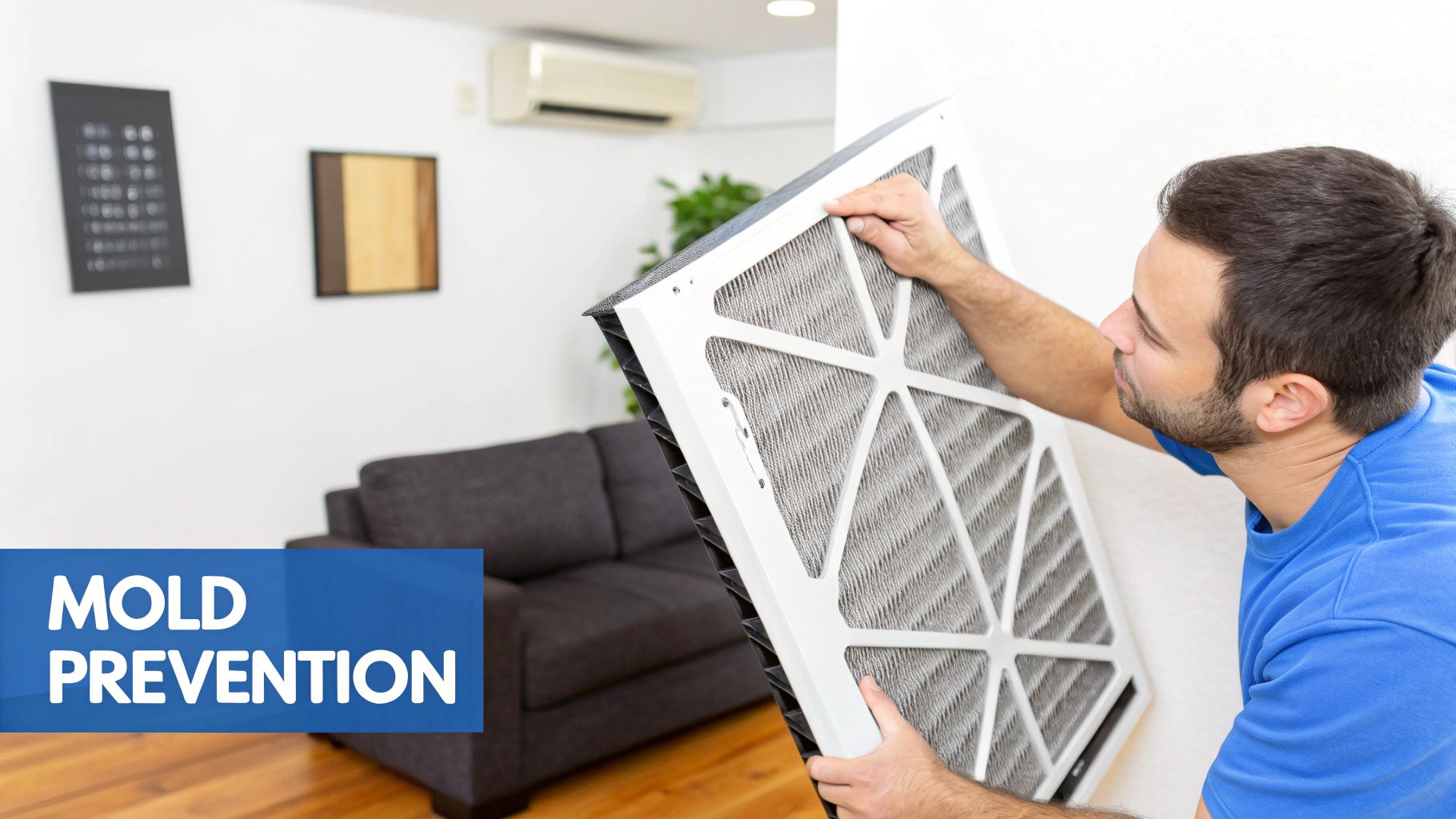
- Checking and changing air filters: A dirty, clogged filter forces the system to work overtime, straining the motor and jacking up your energy bills.
- Cleaning coils: Evaporator and condenser coils can get caked with dust and grime, making them struggle to cool your home efficiently.
- Inspecting ductwork: Even small leaks in your ducts can waste a shocking amount of heated or cooled air, leading to higher costs and rooms that are never the right temperature.
These simple checks don't just prevent sudden, catastrophic failures. They can actually extend the lifespan of your unit by years, saving you thousands in premature replacement costs.
A well-maintained HVAC system not only ensures comfort but also operates at peak efficiency. This translates directly into lower utility bills and a longer operational life, making preventative checks one of the highest-return investments a homeowner can make.
Improve Your Indoor Air Quality
The benefits of these inspections extend directly to your family's health. Your home's indoor air quality (IAQ) is a direct reflection of how well it's maintained. A house with hidden moisture problems or a neglected HVAC system is circulating a lot more than just air.
When an HVAC system runs with a dirty filter and dusty ducts, it's essentially blowing mold spores, dust mites, pet dander, and other allergens throughout your living space. At the same time, unchecked moisture leads to mold growth, which releases spores that can trigger allergies, asthma, and other respiratory issues.
A thorough preventative maintenance inspection helps ensure your home is a healthy sanctuary. By keeping moisture out and making sure your HVAC system is clean and running correctly, you are actively creating a safer breathing environment for everyone under your roof. It connects the dots between the health of your home and the health of your family.
Your Essential Home Maintenance Checklist
A proactive mindset is great, but it’s the practical plan that truly protects your home. A preventative maintenance inspection isn't some huge, one-time event. It’s actually a series of small, manageable tasks you tackle throughout the year. Breaking it down by season makes it feel less overwhelming and lines up your efforts with what your home needs most at any given time.
Think of this checklist as your year-round playbook. It’s designed to keep your home's major systems—from the roof over your head to the foundation it sits on—in top working order. Following this schedule helps you catch those annoying little issues before they spiral into costly emergencies.
Spring: Your Home's Annual Awakening
As the weather finally warms up, it’s the perfect time to check for any damage winter left behind and get your home ready for the more active months. Spring cleaning should go way beyond just dusting and decluttering; this is about inspecting the core components of your property.
For a deeper dive, our comprehensive home spring maintenance checklist has even more detailed steps to get your property in shape.
Your key focus areas for spring should include:
- Roof and Gutters: Get your eyes on the roof. Look for any shingles that are missing, damaged, or curled up. Clean out every inch of your gutters and downspouts to make sure water flows freely away from your foundation, which is your first line of defense against moisture intrusion.
- Exterior and Foundation: Walk the perimeter. Check your siding and paint for cracks or peeling. Take a close look at the foundation for any new cracks or signs of shifting that might have happened during winter's freeze-and-thaw cycles.
- Windows and Doors: Inspect the seals and caulking around all your windows and doors. A tight seal is a game-changer—it keeps your cool A/C air from escaping and stops water from sneaking in during those spring showers.
Summer: Preparing for the Heat
Summer maintenance is all about efficiency and getting your outdoor spaces ready. With the heat at its peak, your HVAC system will be working overtime, and your yard will see the most use. Now is the time to make sure everything is running smoothly to avoid a miserable mid-heatwave breakdown.
Your summer preventative check should prioritize these tasks:
- HVAC System Check: Your air conditioner is the MVP of the summer. Swap out the filter (do this monthly!), and have the whole system professionally serviced to ensure it's clean and running at peak efficiency. This one step can make a huge difference in your energy bills.
- Plumbing and Irrigation: Check all your outdoor faucets and sprinkler systems for leaks. Even a small drip can waste hundreds of gallons of water over a season, quietly inflating your utility bills.
- Deck and Patio Safety: Give your wooden deck a once-over for loose boards, popped nails, or any signs of rot. For stone patios, check for uneven surfaces that could become a tripping hazard.
Fall: Battening Down the Hatches
As the temperatures start to drop, your focus shifts to prepping your home for the harsher conditions of winter. Fall is arguably the most critical season for preventative maintenance. The steps you take now will protect your property from the damage that cold, snow, and ice can bring.
Taking the time to properly winterize your home in the fall is non-negotiable. It protects your plumbing from catastrophic bursts, ensures your heating system is reliable, and seals your home against drafts that drive up energy costs.
Key tasks for your autumn checklist include:
- Heating System Tune-Up: Before you actually need it, have your furnace or boiler inspected and serviced by a pro. This ensures it's safe and ready to perform the moment that first cold snap hits.
- Seal Air Leaks: Grab some weatherstripping and caulk and seal any gaps around windows, doors, and places where pipes or wires enter the house. This is one of the easiest and most effective ways to lower your heating bills.
- Clean the Chimney: If you have a fireplace, get the chimney professionally swept and inspected. This is crucial for preventing dangerous chimney fires and ensuring proper ventilation.
Winter: Interior Vigilance and Safety
Winter maintenance is mostly about what’s happening inside your home and keeping an eye out for issues caused by the cold weather. While big outdoor projects are on hold, it's a critical time for safety checks and watching for signs of stress on your home's systems.
Keep these essential winter tasks top of mind:
- Test Safety Devices: Once a month, test all your smoke and carbon monoxide detectors and replace the batteries if needed. Make sure your fire extinguishers are easy to get to and fully charged.
- Monitor for Ice Dams: After a heavy snowfall, keep an eye on the edges of your roof. Look for ice dams—those ridges of ice that can force water to back up under your shingles and into your home.
- Check for Interior Leaks: Regularly peek into your attic and scan your ceilings for any signs of water stains. They could be a sign of a roof leak or a condensation problem. Don't forget to check under sinks and around toilets to catch plumbing drips early.
When to Call in the Experts
Your seasonal DIY checklist is a fantastic first line of defense for keeping your home healthy. But let's be honest—some problems hide deeper than the naked eye can see. Knowing the red flags that signal a hidden issue is just as important as your routine maintenance.
Think of yourself as the first responder for your home. You’re great at handling the day-to-day, but it’s crucial to recognize when it's time to call in specialists with the advanced gear and training to diagnose a complex issue before it spirals out of control.
Unmistakable Signs You Need a Pro
Some symptoms are your home’s way of screaming for help. If you notice any of the following, it’s time to put down your checklist and pick up the phone.
- Persistent Musty Odors: If you keep catching a whiff of that damp, earthy smell but can't pinpoint the source, that's a huge red flag. This odor is often caused by mold actively growing somewhere out of sight—inside a wall, under the floorboards, or deep within your HVAC system.
- Visible Mold Growth: A tiny spot of mildew on your shower grout is one thing. Discovering a patch of mold spreading across drywall, especially after any water event, is a whole different ballgame. To get a better handle on this, check out our guide on how to check for mold after water damage.
- Sudden Spikes in Your Water Bill: Did your water bill just shoot up for no apparent reason? This often points to a hidden plumbing leak. It could be lurking inside a wall or even under your foundation, slowly saturating building materials and creating a perfect storm for mold.
- Family Health Symptoms: If anyone in your family is dealing with unexplained allergy-like symptoms—coughing, sneezing, itchy eyes—that mysteriously get better when they leave the house, your indoor air quality could be the culprit. Hidden mold is a common trigger.
The Professional Advantage
Calling in an expert isn’t admitting defeat; it’s being smart. A professional brings specialized tools to the table, like thermal imaging cameras and moisture meters, that can "see" what you can't. They don't just find the problem; they accurately diagnose its source and scope, giving you a clear roadmap to fix it right.
This proactive, expert-led approach isn't just for homes. The global inspection, repair, and maintenance market is on track to hit nearly $100.7 billion by 2032, and some organizations have seen an 80% reduction in unplanned downtime by using professional strategies. You can dig into more data on how advanced maintenance delivers results by reading these industrial maintenance trend insights. The principle is exactly the same for your house: a small investment in professional insight now can save you from massive costs and headaches later.
A professional preventative maintenance inspection provides certainty. Instead of guessing about a weird smell or a discolored wall, you get a definitive diagnosis based on hard data. That allows you to make informed, confident decisions to protect your property and your family's health.
Advanced Tools Pros Use for Deeper Inspections
Your seasonal checklist is a fantastic first line of defense for catching the obvious stuff, but some of the most destructive problems in a home are completely invisible. This is where a professional inspection really shines, moving beyond what the eye can see and into the world of advanced diagnostics.
We use specialized technology to uncover the hidden threats lurking behind your walls, under the floors, and deep within your home’s systems.
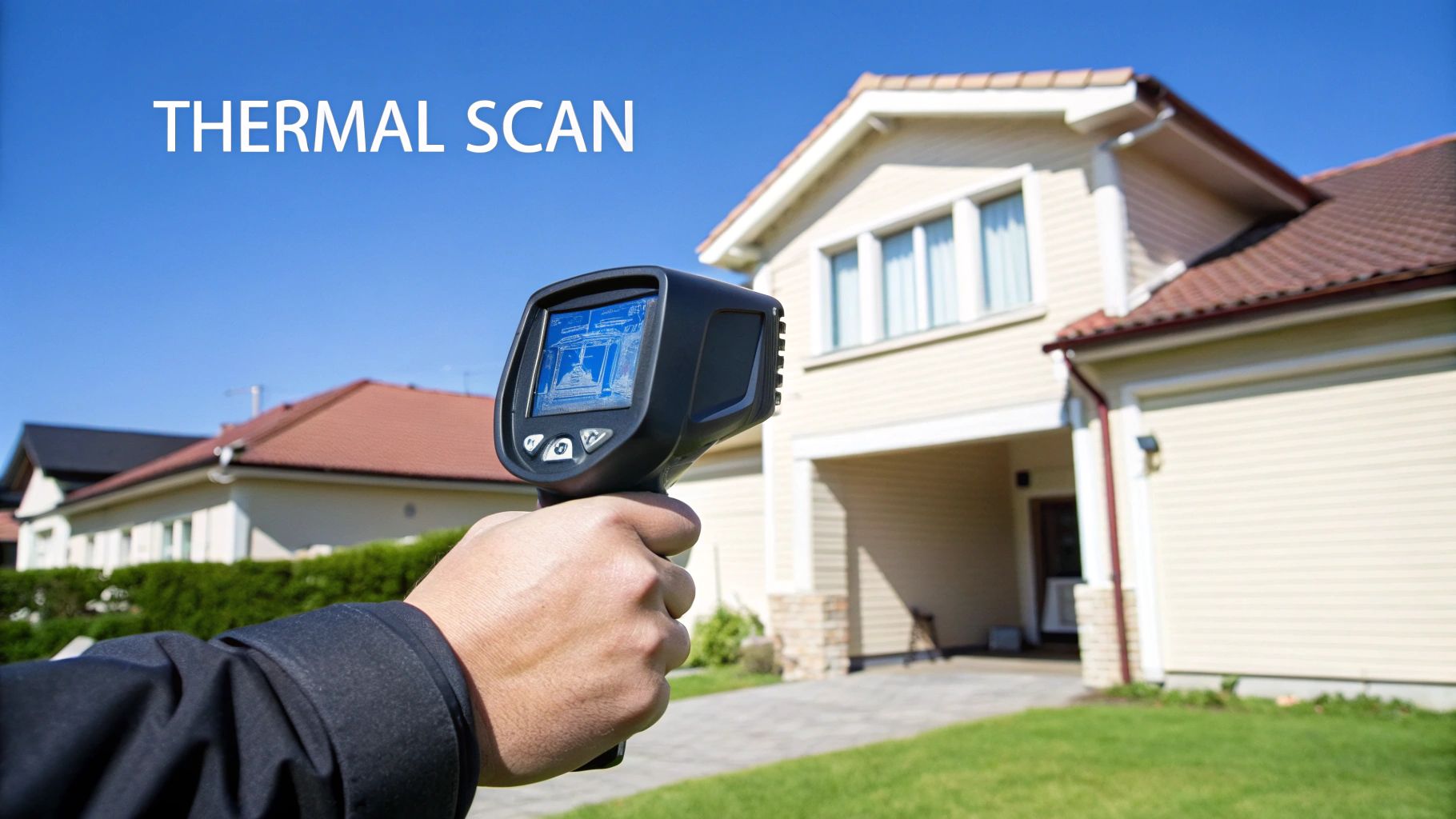
Knowing what these tools do helps you understand the incredible value an inspector brings to the table. It’s the difference between guessing where a problem might be and knowing with data-driven certainty.
Thermal Imaging: Finding Hidden Water and Energy Loss
Think of a thermal imaging camera as giving us X-ray vision for your home. This amazing device doesn't see moisture directly. Instead, it detects tiny differences in surface temperature. When water evaporates from a material like drywall, it creates a subtle cooling effect—invisible to us, but it lights up as a distinct cold spot on the thermal camera’s screen.
This tech lets us find serious issues without tearing your house apart:
- Hidden Water Leaks: A slow drip from a pipe inside a wall creates a tell-tale cold signature, pinpointing the moisture source before you ever see a water stain.
- Insulation Gaps: We can spot missing or settled insulation, which shows up as cold spots in winter or hot spots in summer. This tells you exactly where you're losing expensive conditioned air.
- Electrical Hot Spots: Overloaded circuits or faulty wiring can create dangerous hot spots. A thermal scan makes them stick out like a sore thumb, often long before they become a fire hazard.
Moisture Mapping: Tracing the Full Extent of Damage
Once thermal imaging points us to a potential moisture issue, we bring out the moisture meters to confirm it and map out the problem's true size. This process, called moisture mapping, is all about figuring out just how far the water has spread.
Using non-invasive meters (or sometimes pin-style meters for direct readings), an inspector takes measurements across a wall, ceiling, or floor. This creates a literal "map" showing the wet, damp, and dry zones. This step is critical because water travels in sneaky ways. What looks like a small water stain on the ceiling might be the tip of the iceberg, connected to a huge, saturated area in the attic above.
Moisture mapping takes away all the guesswork. It gives us a clear, data-backed blueprint of the affected area, ensuring the entire problem gets fixed—not just the part you can see.
Air and Surface Sampling: The Final Word on Mold
When we suspect mold but can't see it, or when we need to know exactly what kind of mold is in your home, air and surface sampling is the next step. This is the most definitive way to confirm contamination and is a key part of an inspection when certain red flags are present.
- Air Sampling: Using a calibrated pump, we draw a specific volume of air through a collection cassette. This sample goes to an accredited lab where they identify the types of mold spores and their concentrations. We then see if your indoor spore counts are abnormally high compared to the outside air.
- Surface Sampling: With a sterile swab or tape lift, we can take a direct sample from a surface where mold is suspected. This confirms its presence and identifies the species, which is crucial for understanding potential health risks and planning the right cleanup strategy.
While DIY kits exist, professional sampling is the only way to ensure sterile collection and accurate interpretation by a certified lab. If you're curious about the differences, you can learn more in this guide to the best mold test kit for home use. At the end of the day, professional testing provides the concrete evidence you need to make smart decisions about your home's health and safety.
Coastal Home Maintenance in Santa Barbara and Ventura
Living on the coast in Santa Barbara and Ventura is a dream, but it comes with a few challenges that homeowners further inland never think about. That beautiful marine layer, the salty air, and the ever-present humidity create a perfect storm for accelerated wear and tear on your home.
Think of the salt in the air as a relentless, microscopic sandblaster. It’s constantly working to break down your home's protective surfaces, corroding metal fixtures, eating away at window seals, and causing exterior paint to peel and fail way faster than it would in a drier climate. For this reason, a standard maintenance schedule just doesn't cut it for coastal properties.
The War Against Coastal Moisture
For coastal homeowners, the real fight is against moisture. That charming morning fog is more than just a pretty view; it’s a slow-motion delivery system for dampness, and it will find any tiny crack or compromised seal to creep into your home’s structure.
This constant assault puts a few key areas of your home at a much higher risk:
- Window and Door Seals: The combination of salt and sun is brutal on rubber and caulk. They dry out, crack, and shrink, creating perfect little highways for moisture to get inside. These need a close look at least twice a year.
- Exterior Surfaces: Stucco and wood siding are porous and love to absorb moisture. Even small cracks can trap water, leading to dry rot and creating the perfect hidden habitat for mold to thrive behind your walls.
- Metal Components: Everything from your deck railings to your HVAC unit is under constant attack. Salt air is incredibly corrosive, so you have to be vigilant about checking for rust and failing protective coatings.
Your best lines of defense are proper attic and crawl space ventilation. These systems are designed to give all that trapped moisture an escape route before it can condense and start causing real damage. A good inspection makes sure they’re clear and working as they should.
On a coastal property, a preventative maintenance inspection isn't just about routine upkeep—it's a specialized defense strategy against salt and moisture. Ignoring these unique local factors is an invitation for rapid, expensive structural damage and hidden mold problems.
Because these threats are so specific to our area, you need a localized approach. If you're worried that years of living with the coastal air may have already caused hidden problems, getting familiar with professional mold testing services in Santa Barbara, CA can give you some much-needed peace of mind. A targeted inspection focused on moisture intrusion is hands-down the smartest investment you can make in your coastal home's health and value.
Answering Your Top Home Inspection Questions
Even with the best game plan, it’s totally normal to have questions before you start a new routine. Getting clear answers helps you move forward with confidence, knowing you’re making the right moves to protect your home. We've gathered some of the most common questions we hear from homeowners just like you.
Think of this as your quick-reference guide to nail down the key takeaways and tackle those practical concerns that always seem to pop up right when you’re ready to get started.
How Often Should I Schedule an Inspection?
The best approach is a layered one. You should be doing a thorough visual inspection yourself with the changing seasons—so, four times a year is ideal. At a bare minimum, get it done in the spring and fall. Smaller jobs, like swapping out your HVAC filter, should be a monthly habit.
For a deeper dive, we recommend getting a professional inspection every one to three years. That said, the timeline gets shorter if you spot any red flags like water stains, a persistent musty smell, or visible mold. For those of us with coastal homes here in Santa Barbara and Ventura, an annual professional check-up is a wise investment, given the constant battle with high humidity.
Can I Do This Inspection Myself?
A hybrid approach really is the sweet spot. As a homeowner, you absolutely can—and should—perform regular DIY checks using the lists in this guide. Things like clearing out your gutters, looking for leaks under the sinks, and testing smoke detectors are perfect for you to handle.
But for the problems you can't see? That’s where a professional is non-negotiable.
An expert uses specialized tools like thermal cameras and moisture meters to find problems hiding in plain sight, like moisture trapped inside your walls or a slow leak you’d never notice. They turn guesswork into certainty by giving you the hard data you need for an accurate diagnosis.
To get the full picture of what’s happening inside your home's environment, a professional evaluation is key. To see what a comprehensive assessment really covers, you can explore the details of professional house environmental testing.
What Is the Average Cost of a Professional Inspection?
Costs can swing quite a bit depending on your home's size, its age, and exactly what you need inspected. A general home inspection might run anywhere from $300 to $600. More specialized services, like a dedicated mold and moisture inspection that includes lab testing, will be priced differently based on the diagnostics involved.
While there's an upfront cost, it's just a fraction of what a major water damage repair or mold remediation project would set you back—those can easily climb into the thousands. It’s better to see this not as an expense, but as a critical investment in protecting your home's value and your family's health.