When people talk about the health risks of mold exposure, they're often thinking about a runny nose or itchy eyes. While that’s certainly part of it, the reality can be much more serious, especially with long-term exposure. The issues can range from mild allergic reactions all the way to chronic respiratory problems and even neurological symptoms.
Why Mold in Your Home Is a Serious Concern
That patch of discoloration in the corner of your bathroom or that musty smell coming from the basement isn’t just an eyesore—it’s a warning sign. It signals that a hidden ecosystem is growing, thriving, and releasing microscopic spores right into the air your family breathes.
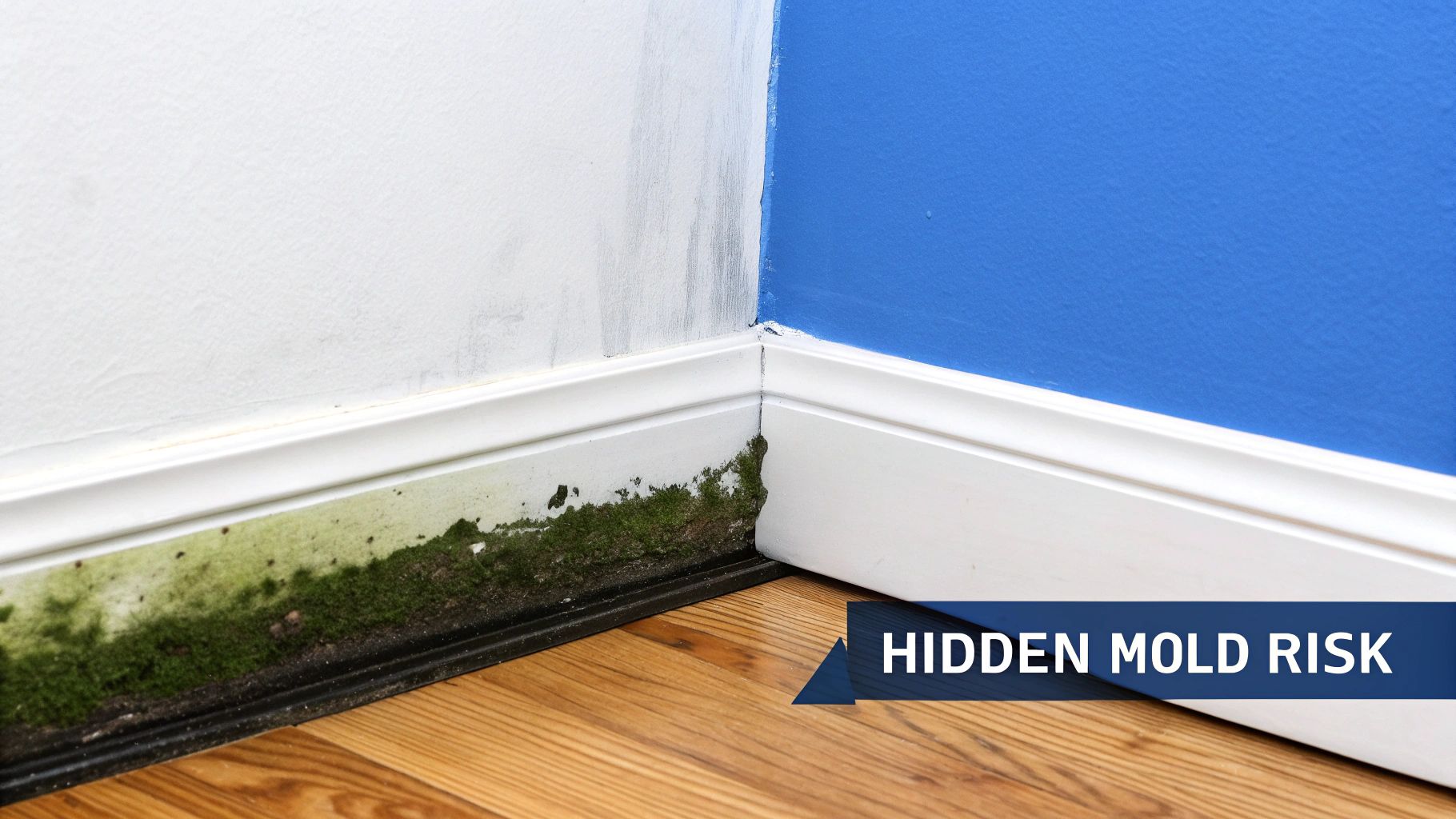
Think of a dandelion puffball—when the wind blows, its seeds scatter everywhere. Mold works in a similar way, but its spores are invisible and they're being released constantly. When these tiny spores land on a damp surface, they set up camp and start a new colony.
For those of us living in coastal California, our persistent humidity creates the perfect breeding ground for mold. This isn’t some rare problem; it's a genuine public health issue.
In fact, the World Health Organization found that a staggering 10–50% of indoor environments in North America and Europe have signs of dampness—the number one ingredient for mold growth. Unsurprisingly, those rates are even higher in coastal areas. All that moisture allows mold to flourish, turning your home into a constant source of airborne irritants.
Understanding Mold's Impact on Air Quality
When mold grows, it does more than just sit there. It actively degrades the air inside your home by releasing not only spores but also microbial volatile organic compounds (MVOCs). Those MVOCs are what create that unmistakable musty, earthy smell.
These particles contaminate the air you breathe every single day, becoming a hidden source of health problems. Managing your home’s moisture and ventilation is the best defense. For a deeper dive, check out our guide on improving indoor air quality for some practical, actionable steps.
Mold doesn't just damage property; it actively pollutes your indoor air. The spores and byproducts it releases can act as constant triggers for your body's immune and respiratory systems, turning your home from a sanctuary into a source of chronic stress.
To make it easier to understand, here's a quick look at the key health risks broken down by category.
Key Mold Exposure Health Risks at a Glance
This table sums up the primary ways mold can impact your well-being, from common allergic reactions to more severe, long-term conditions.
| Health Category | Common Symptoms and Conditions | Severity Level |
|---|---|---|
| Allergic & Respiratory | Sneezing, runny nose, itchy eyes, skin rash, asthma attacks, wheezing. | Mild to Severe |
| Neurological | Headaches, memory problems, "brain fog," mood changes. | Moderate to Severe |
| Immune System | Chronic inflammation, increased susceptibility to other illnesses. | Moderate |
Ultimately, recognizing the health risks is the first step toward creating a safer home. From nagging allergies to more persistent health issues, the evidence is clear: what you can't always see can definitely hurt you.
What Mold Exposure Actually Feels Like
Think of mold spores as microscopic trespassers. When you breathe them in, your body’s alarm system goes off, kicking off a chain reaction. The tricky part is that the initial symptoms are often subtle—so subtle that you might just brush them off as a seasonal cold or allergies. It's easy to miss the connection between how you feel and what's growing in your home.
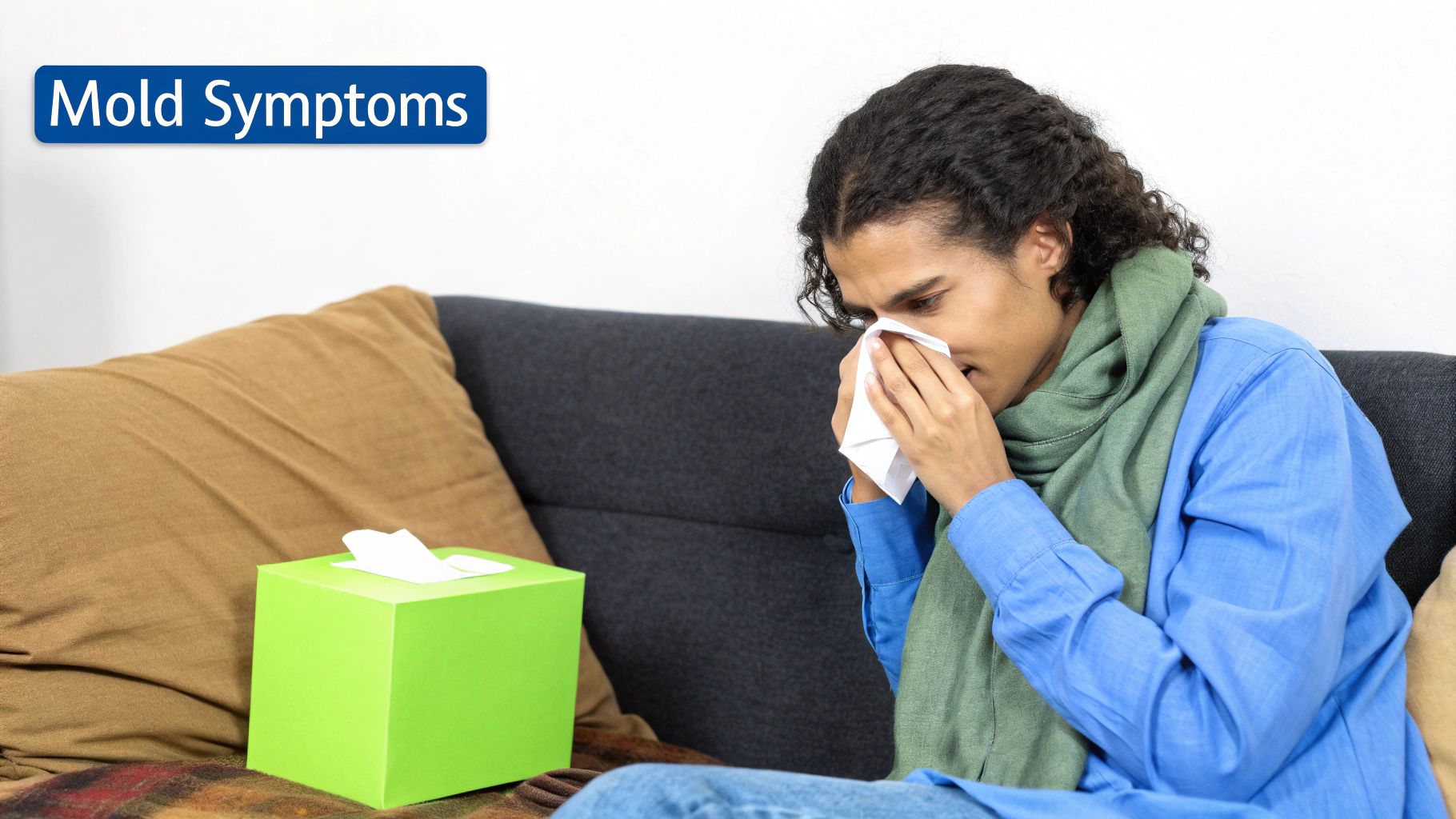
Getting a handle on the health risks of mold exposure is key to protecting yourself. The effects can range from immediate, short-term reactions to much more serious, long-term conditions that build up over time.
Immediate Allergic Reactions: The First Warning Signs
Your body's first line of defense usually looks a lot like a classic allergy attack. These are the most common and immediate responses when you inhale mold spores, acting like your system's first warning flares.
These symptoms pop up because your immune system flags the mold spores as dangerous invaders and releases histamines to fight them off. This defensive reaction is what causes all that familiar discomfort.
Common immediate symptoms include:
- Persistent Sneezing: Not just once or twice, but a constant, nagging reaction.
- Runny or Stuffy Nose: It can feel like a head cold that just refuses to leave.
- Itchy, Watery Eyes: Redness and irritation are classic signs your body is fighting an airborne irritant.
- Skin Irritation or Rashes: Direct contact with mold, or even a severe airborne reaction, can trigger dermatitis.
- Itchy Throat or Ears: That annoying tickle in your throat you just can't seem to clear.
If these issues are a regular occurrence inside your home, it’s a sign that something is off. You can learn more about the common signs of mold in a house in our detailed guide to help you pinpoint potential problems.
Persistent Respiratory Issues: When Symptoms Stick Around
When exposure doesn't stop, those initial allergic reactions can morph into more serious respiratory problems. This happens as the inflammation in your airways becomes chronic, making it harder for your lungs to do their job.
Imagine your airways are clear, open tubes. Mold exposure causes these tubes to swell up and get tight, making every breath a little harder. For anyone with a pre-existing condition like asthma, this is especially dangerous.
The link between mold and respiratory health is solid. What starts as a minor cough can snowball into chronic inflammation, seriously impacting lung function and quality of life, especially for sensitive people.
This ongoing irritation can lead to or worsen several conditions:
- Chronic Coughing and Wheezing: A persistent, dry cough or a whistling sound when you breathe are tell-tale signs of lung inflammation.
- Shortness of Breath: Feeling winded after simple activities suggests your respiratory system is under stress.
- Worsening Asthma: Mold is a powerful asthma trigger, capable of causing more frequent and severe attacks.
The connection between damp, moldy homes and asthma is particularly strong. Research has shown that a huge percentage of asthma cases in the U.S. can be traced back to these conditions. A 2007 review estimated that approximately 21% of current asthma cases were tied to residential dampness and mold. Read the full research about these asthma findings.
Long-Term Neurological and Systemic Effects
The sneakiest health risks are the ones that creep up after long-term, chronic exposure. These symptoms often affect your whole body and can be easily misdiagnosed because they look so much like other chronic illnesses.
Certain molds produce mycotoxins—toxic compounds that can be inhaled or absorbed. Over time, these toxins can get past the blood-brain barrier and start messing with your neurological function, leading to a whole host of debilitating symptoms.
This is where the problem goes beyond your lungs, hitting your cognitive abilities and energy levels. It’s not just about feeling sick; it’s about not feeling like yourself anymore.
Here are some of the more serious long-term effects:
- Chronic Fatigue: A deep, persistent exhaustion that sleep just doesn't fix.
- Headaches and Migraines: Frequent and unexplained headaches are a very common complaint.
- "Brain Fog": Trouble concentrating, memory lapses, and a general feeling of mental slowness.
- Mood Changes: Increased anxiety, depression, and irritability have all been linked to long-term mold exposure.
- Joint Pain and Muscle Aches: Widespread inflammation can cause body aches that feel a lot like fibromyalgia.
Recognizing these symptoms is the first step. If you suspect your health is taking a hit, finding and fixing the source of the mold is the only real path to recovery.
Identifying Who Is Most Vulnerable to Mold Sickness
We all breathe in mold spores every day—they're just a natural part of our environment. For most healthy people, it’s no big deal. Think of your immune system as a seasoned security guard; it spots a few stray spores and quietly shows them the door without causing a scene.
But for some people, that security system is still in training, is already overworked, or just isn’t equipped to handle the intruders. For these folks, even a small amount of mold exposure can lead to serious illness. Understanding who falls into these high-risk groups is key to protecting everyone under your roof.
Infants and Children
At the very top of the list are infants and young children. Their immune systems are still developing, figuring out what's a real threat versus what's harmless. When they encounter mold, their inexperienced systems can overreact, triggering allergic reactions and respiratory problems far more easily than an adult's would.
Plus, their lungs are smaller and they breathe more rapidly than adults. This means they're inhaling a larger volume of air—and any contaminants in it—relative to their small body size. It’s a combination that makes a moldy environment especially dangerous for the youngest members of your family.
The Elderly
On the other end of the age spectrum, older adults face a similar heightened risk. As we age, our immune systems naturally slow down in a process called immunosenescence. This means an older person's body just can't fight off the effects of mold exposure as efficiently as it used to.
Many seniors also live with pre-existing health conditions like Chronic Obstructive Pulmonary Disease (COPD). Mold exposure can pour fuel on that fire, turning a manageable condition into a serious health crisis. Their bodies simply have fewer resources to combat the inflammation and stress mold causes.
"While most healthy people inhale mold spores daily without severe illness, molds can cause serious invasive infections and a substantial healthcare burden in vulnerable groups. These infections are a primary concern for those with weakened immune systems."
Individuals with Compromised Immune Systems or Pre-Existing Conditions
This is probably the most critical high-risk group. It includes anyone whose immune system is already compromised, whether from an autoimmune disease, chemotherapy, or immunosuppressant drugs. Without their primary defense system running at full strength, fungal threats can take hold.
For these individuals, mold isn't just an allergen—it's a potential invader. The U.S. Centers for Disease Control and Prevention (CDC) warns that invasive mold infections, which can be life-threatening, happen almost exclusively in people with weakened immune systems. You can discover more insights about invasive mold infections on CDC.gov.
This category also includes people with specific sensitivities:
- Asthma and Allergies: For someone with asthma, mold is a well-known trigger that can lead to frequent and severe attacks.
- Cystic Fibrosis: The lungs of people with CF are particularly susceptible to fungal infections from common molds like Aspergillus.
- Chronic Inflammatory Response Syndrome (CIRS): Some people have a genetic predisposition that makes it impossible for their bodies to get rid of biotoxins from mold. This leads to a debilitating, multi-symptom illness that can be triggered by even low levels of exposure.
This is why tackling a mold problem isn't just a home maintenance task—it’s a crucial health measure for protecting the people you care about most.
How to Find and Test for Mold in Your Home
Figuring out if you have a hidden mold problem can feel a bit like detective work. But you don't need a magnifying glass to get started—your own senses are often the best initial tools you have. If you've noticed a persistent musty or earthy smell that you just can't seem to track down, that's a huge red flag. It’s often the very first clue that mold is growing somewhere out of sight.
Of course, sometimes the problem is staring you right in the face. Keep an eye out for fuzzy, slimy, or discolored patches on walls, ceilings, or baseboards—they often show up as black, green, or even white. It's also easy to dismiss minor water stains or peeling wallpaper, but don't. These are classic signs of a moisture issue hiding just behind the surface, which is the perfect breeding ground for mold.
Common Mold Hiding Spots
Mold isn't very creative; it's predictable. It loves dark, damp spaces where the air doesn't move much. Once you know its favorite hideouts, you can do a much more targeted search of your home. Start by methodically checking these common hotspots where moisture loves to hang out.
Your search should definitely include:
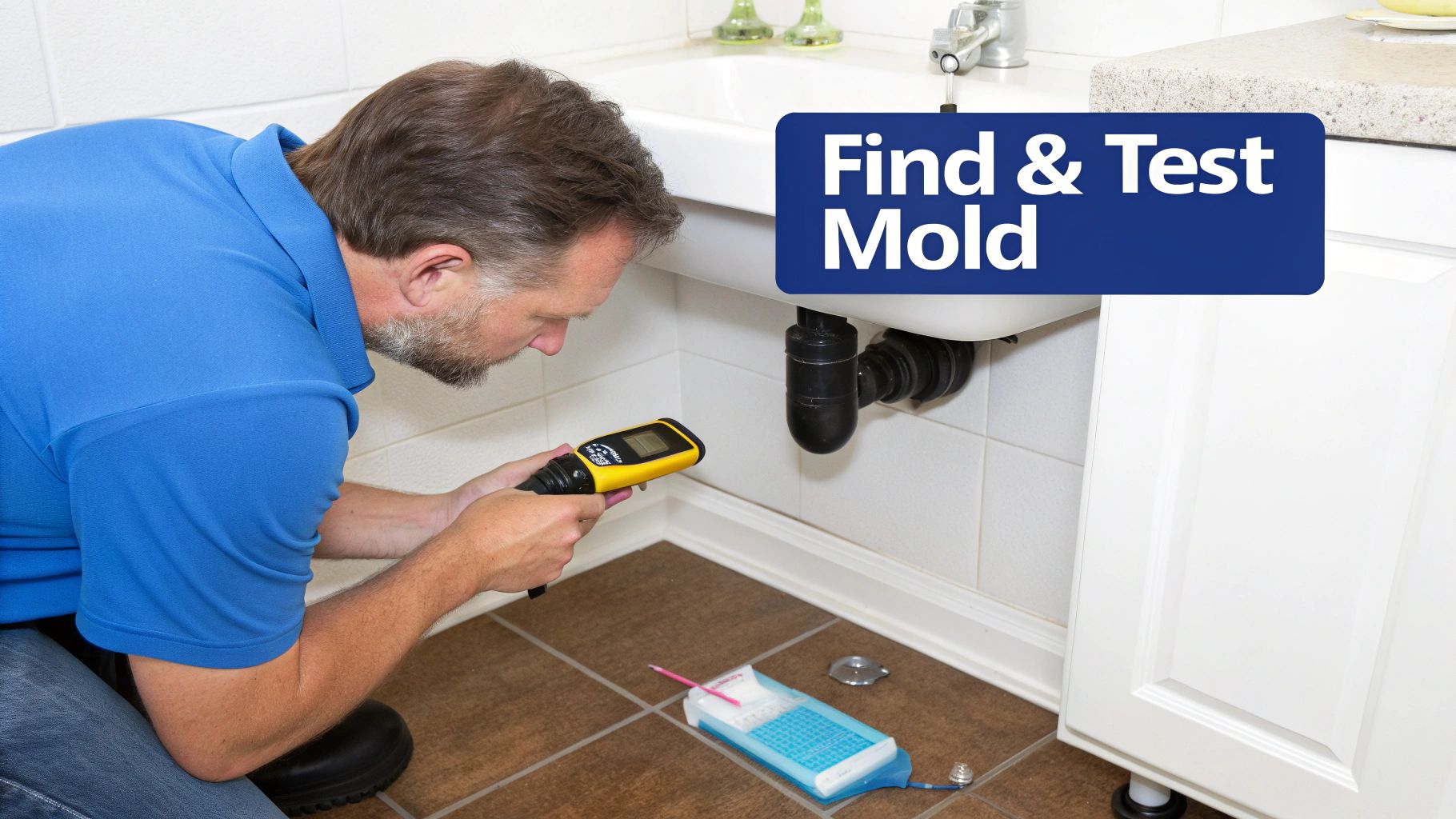
- Bathrooms and Kitchens: Get on your hands and knees and look under sinks. Check behind toilets, around shower tiles, and near the water lines for your dishwasher or fridge. Any sign of a leak or discoloration is cause for concern.
- Basements and Crawl Spaces: These below-ground areas are notoriously damp. Give the corners, walls, and any stored boxes a good look (and sniff) for that telltale musty smell or visible growth.
- Attics and Insulation: Look for signs of a leaky roof, like dark stains on the wood sheathing or insulation that looks compressed or damp.
- Windows and Door Frames: Especially in our coastal climate, condensation can easily pool on window sills, creating a perfect little farm for mold to grow.
- HVAC Systems: Your air conditioning unit and ductwork can become a mold superhighway if condensation isn't draining correctly. It'll spread spores throughout your entire home every time the system kicks on.
The golden rule of any mold investigation is simple: follow the water. Mold cannot grow without moisture. Finding the source of the water is every bit as important as finding the mold itself, because that's how you create a permanent solution.
The Problem with DIY Mold Test Kits
When you think you have mold, it’s incredibly tempting to run to the hardware store and grab a DIY test kit. They seem like a quick, cheap answer, but honestly, they often create more confusion than clarity. Most of these kits are just a petri dish that you leave out to collect airborne spores, but that method has some serious flaws.
First off, mold spores are literally everywhere—inside and outside. A "positive" result on one of those dishes doesn't tell you anything useful. You can't know if you have a dangerous colony growing inside your walls or just the normal background level of spores that floated in through an open window. Second, and most importantly, these kits can't tell you where the problem is or how bad it is.
It’s for these reasons that major organizations like the CDC and EPA generally don't recommend DIY mold sampling. To get a better sense of the nuances, you can read our detailed comparison on choosing the best mold test kit for your home. But the bottom line is this: if you can see or smell mold, the priority is getting rid of it, not just getting a petri dish to confirm it exists.
Why Professional Testing Makes a Difference
A professional mold inspection is in a completely different league from a DIY kit. Certified inspectors use specialized equipment to get the full picture of your home’s health. The goal isn't just about finding mold; it's about understanding why it’s there in the first place and how to make sure it doesn't come back.
Here’s what a real inspection looks like:
- Visual Assessment: A trained inspector has seen it all. They know how to spot the subtle signs of water damage and hidden mold that are incredibly easy for a homeowner to miss.
- Moisture Meters: These tools let us see inside your walls, floors, and ceilings without tearing them apart. They measure moisture content and pinpoint hidden leaks with precision.
- Thermal Imaging: Infrared cameras are another game-changer. They can detect tiny temperature differences in your walls that often point directly to hidden moisture or wet insulation.
- Air and Surface Sampling: When it’s truly necessary, a pro will collect samples for an accredited lab to analyze. This identifies the specific types of mold and their concentration levels, giving us the hard data needed to assess the health risks of mold exposure and plan an effective remediation.
This methodical, science-backed process provides the definitive answers you need to restore your home to a safe, healthy environment.
What To Do When You Find Mold: Your Action Plan
Finding mold in your home can be unnerving. That dark, fuzzy spot instantly raises concerns about your property and, more importantly, your family’s health. It’s easy to feel overwhelmed, but the best thing you can do is take a deep breath and follow a clear, methodical plan.
Acting quickly and safely is the key. Your first two calls should tackle the problem from both sides: your family’s health and your home's structure. Don't wait for symptoms to get worse or for the mold to spread.
First, Call Your Doctor About Exposure
If you or your family have been dealing with mysterious allergies, brain fog, headaches, or respiratory issues, it’s time to talk to a healthcare provider. Pay close attention to the timing—do the symptoms get worse when you're at home? That's a critical clue.
When you speak with your doctor, be ready with specific details. This isn't about guesswork; it's about giving them the information they need to assess the potential health risks of mold exposure.
- Describe the Mold: Tell them the color, where you found it, and roughly how big the area is.
- Timeline: When did you first see it? How long do you think it’s been there?
- Symptom Log: Keep a record of who is feeling what, when it started, and if symptoms seem to fade when you leave the house.
- High-Risk Individuals: Make sure to mention if anyone in your home is in a high-risk group—young children, the elderly, or anyone with asthma or a compromised immune system.
Taking immediate action on both the health and home fronts is non-negotiable. Consulting a doctor protects your family's well-being, while calling a remediation professional prevents the problem from escalating and causing more significant, long-term damage.
Second, Understand the Role of Professional Mold Remediation
When you spot mold, your first instinct might be to grab a bottle of bleach and start scrubbing. While that might work for a tiny spot on your shower tile, it’s absolutely the wrong move for anything larger.
The U.S. Environmental Protection Agency (EPA) is clear on this: any mold problem larger than about 10 square feet needs professional attention. Why? Because you could accidentally make things much, much worse.
Trying to scrub a mold colony without the right containment measures is like kicking a dandelion puff—it sends a cloud of invisible spores flying everywhere, spreading the contamination to new areas of your home. It’s a classic case of the “cure” being worse than the disease.
To understand why a pro is necessary, it’s helpful to know the difference between just wiping something down and a full-scale fix. You can learn more about the specifics of mold removal vs remediation, but in short, remediation is a scientific process designed to safely contain and eliminate the problem at its source.
A professional remediation plan isn’t just about cleaning. It’s a strict protocol that includes:
- Assessment and Planning: A certified expert first figures out how far the mold has spread and, most importantly, finds the moisture source that’s feeding it.
- Containment: The area is sealed off with plastic sheeting and negative air pressure machines to keep spores from escaping into the rest of your house.
- Air Filtration: Industrial-grade high-efficiency particulate air (HEPA) scrubbers are run to capture microscopic spores floating in the air.
- Removal: Porous materials that can’t be saved—like drywall, insulation, or carpet—are carefully cut out, bagged, and disposed of following strict regulations.
- Cleaning and Disinfection: Hard, non-porous surfaces are treated with antimicrobial agents, and the entire contained space is meticulously vacuumed with HEPA filters.
- Source Repair: This is the most crucial step. The original leak, condensation issue, or ventilation problem is fixed for good. If you skip this, the mold will just come right back.
This systematic approach doesn’t just get rid of the mold you can see. It removes the contamination and ensures your home is truly safe and healthy again.
DIY Cleanup vs Professional Remediation
So, when can you handle it, and when should you call for backup? It's a common question, and getting it right is crucial for your home's health and your peace of mind. Here’s a quick guide to help you decide.
| Scenario | DIY Approach (If Applicable) | When to Call a Professional |
|---|---|---|
| A small spot of mildew on shower grout or tile. | Mix a solution of water and vinegar or a household cleaner. Scrub, rinse, and dry thoroughly. Improve ventilation. | If the spot is larger than your hand, returns quickly, or you smell a persistent musty odor. |
| A patch of mold on drywall or wood. | Not recommended. Scrubbing porous materials releases spores and doesn’t kill the mold roots growing inside. | Immediately. Any mold on drywall, wood, or insulation means the problem is more than surface-level. |
| The affected area is smaller than 10 sq. ft. | Only if it's on a hard, non-porous surface like glass, metal, or hard plastic. Wear an N95 mask and gloves. | If the mold is on a porous surface, or if anyone in the home is sensitive (asthma, allergies, etc.). |
| You smell a musty odor but can't see mold. | Check for obvious leaks under sinks or around windows. Use a dehumidifier to lower humidity. | Always. A musty smell is a major red flag for hidden mold behind walls, under floors, or in your HVAC system. |
| Your home had recent water damage (flood, leak). | Focus on drying the area completely within 24-48 hours. Use fans, dehumidifiers, and remove wet items. | If the area was wet for more than 48 hours or if the water was from a contaminated source (like sewage). |
Ultimately, the rule is simple: when in doubt, don't risk it. A small, contained spot on a hard surface is one thing. Anything else requires a professional eye to ensure the problem is solved completely and safely.
Proactive Steps to Prevent Mold Growth
Now that you understand the serious health risks of mold exposure, the next logical step is learning how to stop it before it starts. The best defense is a good offense—creating a home environment where mold simply can’t get a foothold.
Think of it like this: mold needs water to survive, just like a plant. If you take away its water source, it can't grow. It really is that simple. By controlling moisture, you cut off its most critical resource.
For those of us living in coastal California, our beautiful but humid climate creates a constant battle. Proactive prevention isn't just a good idea; it's a non-negotiable part of home maintenance. The goal is to turn your home from a potential petri dish into a place where mold stands no chance.
Master Your Indoor Humidity
Your home’s humidity level is the single biggest factor in preventing mold. Once indoor humidity creeps above 60%—which happens all too easily with our coastal air—mold has everything it needs to thrive. The sweet spot for keeping your home safe and comfortable is between 30% and 50%.
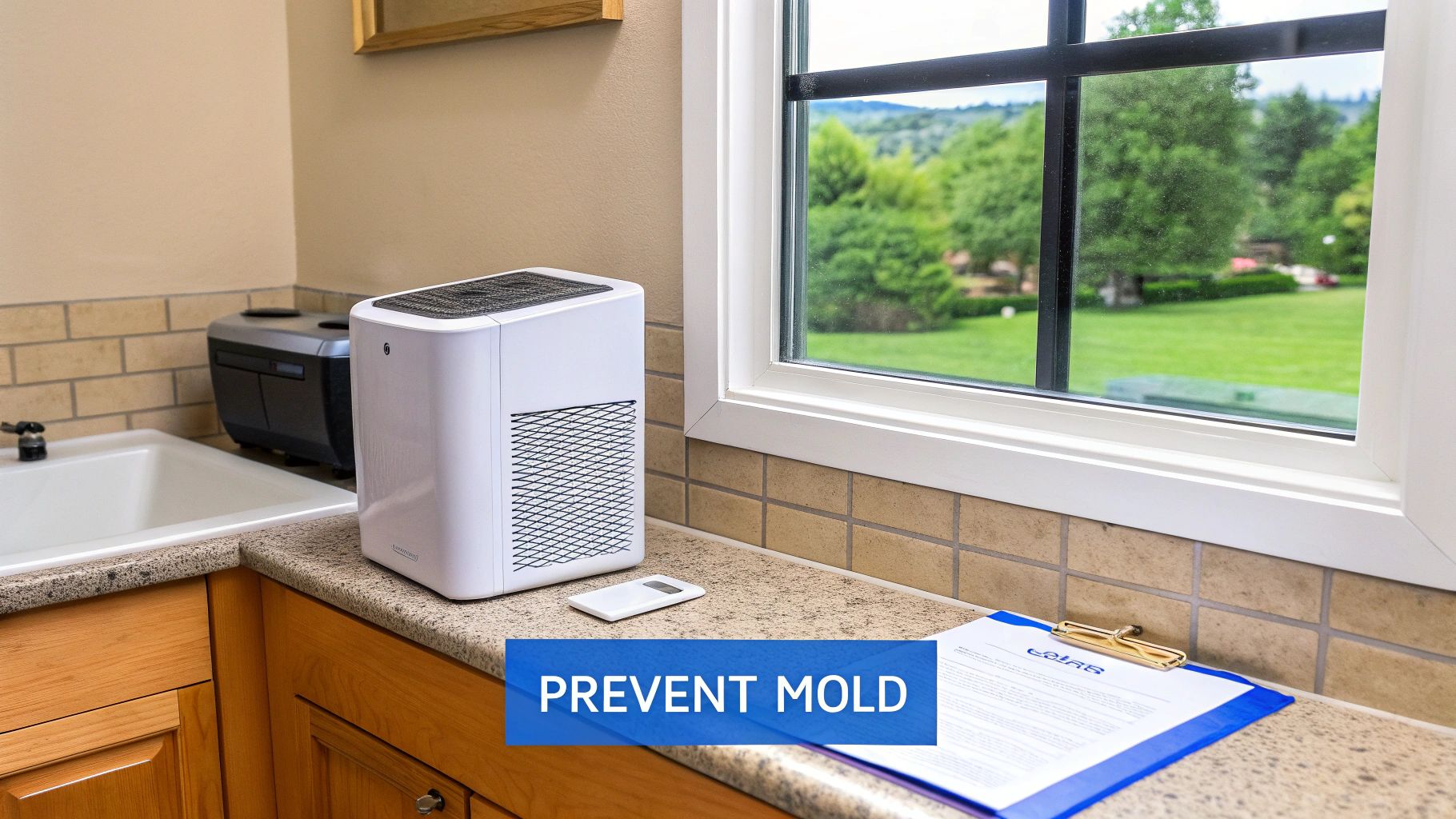
A simple, inexpensive hygrometer can give you a real-time reading of your home's humidity. If you find it’s consistently high, a dehumidifier is your best friend. Running one in damp areas like basements, laundry rooms, or even living areas during foggy months can make all the difference.
Keeping indoor humidity below 50% is the cornerstone of mold prevention. It creates an environment that is actively hostile to mold growth, effectively stopping a problem before it can ever begin.
Optimize Ventilation and Airflow
Stagnant, damp air is basically an open invitation for mold. Good ventilation keeps the air moving, whisking away excess moisture before it can settle on surfaces and start causing trouble. This is especially crucial in rooms that generate a lot of steam, like kitchens and bathrooms.
A few simple habits can dramatically improve your home’s airflow:
- Run Exhaust Fans: Always use the fan in your bathroom during and after a shower, and in the kitchen while you cook. Let them run for at least 20-30 minutes afterward to clear out all that lingering moisture.
- Ensure Vents Are Clear: Make sure your clothes dryer vents directly outside and that the line is free of lint buildup.
- Encourage Cross-Ventilation: On dry days, open windows on opposite sides of your house. It creates a natural breeze that helps dry everything out.
Conduct Regular Leak Inspections
Water damage is mold’s best friend. Even a slow, hidden drip can provide more than enough moisture to fuel a huge mold colony behind a wall or under the floorboards. Making routine inspections a habit is one of the most powerful things you can do.
Once a month, do a quick visual sweep of these key spots:
- Under every sink in your kitchen and bathrooms
- Around the base of toilets and showers
- Near your water heater and washing machine hoses
- On ceilings below any upstairs bathrooms or in the attic
- Around window sills, especially after a big storm
Catching a small leak early can save you from a massive remediation headache and a lot of expense down the road. For a more detailed checklist, our guide on how to prevent mold growth offers even more expert tips. By staying vigilant and managing moisture, you can effectively protect your home and keep your indoor environment healthy for years to come.
Your Top Mold Questions, Answered
When it comes to mold, it's easy to fall down a rabbit hole of conflicting information online. Homeowners often have plenty of questions, and getting clear, straightforward answers is the first step toward protecting your family and your property.
Let's cut through the noise and tackle some of the most common questions we hear every day.
Can Mold Exposure Cause Permanent Health Problems?
For most healthy people, the good news is that symptoms usually clear up once the mold is gone. After a professional remediation, that chronic cough, headache, or fatigue should start to fade.
However, the longer the exposure, the higher the risk—especially for children, the elderly, or anyone with a compromised immune system. Chronic conditions like asthma can definitely be made permanently worse by the constant irritation from mold. Some studies even suggest a potential link between heavy, long-term exposure to toxic molds and lasting neurological or autoimmune problems. This is exactly why you can't afford to wait. Early detection and professional removal are your best defense against long-term effects.
Is Black Mold More Dangerous Than Other Molds?
This is probably the biggest misconception out there. Everyone’s heard of "toxic black mold" (Stachybotrys chartarum), and yes, it produces some nasty mycotoxins. But the idea that it’s the only dangerous mold is completely false.
The truth is, any mold growing inside your home is a problem. Common household molds like Aspergillus and Penicillium—which can show up in shades of green, white, or blue—are notorious for triggering severe allergic reactions and asthma attacks. The color of mold is not a reliable indicator of how dangerous it is. All indoor mold growth signals a health risk and needs to be dealt with right away.
The real takeaway here? Any visible mold, no matter the color, means you have a moisture issue that’s compromising your home’s air. That's the problem that needs to be fixed.
Will an Air Purifier Get Rid of the Mold in My Home?
A high-quality air purifier with a HEPA filter is a fantastic tool for improving your indoor air quality. It's great at trapping airborne mold spores, which can certainly help reduce allergy symptoms and give your respiratory system a break.
But—and this is a big but—an air purifier only treats the symptom, not the cause. It can't do anything about the actual mold colony growing on your drywall, in your insulation, or under your floorboards. Think of it like bailing water out of a boat with a hole in it. It helps, but it doesn’t fix the leak. An air purifier is a helpful supplement, but it is not a substitute for professional remediation that gets rid of the mold for good and addresses the moisture source.