The fundamental difference between mildew and mold is simple: mildew is a surface-level fungus, while mold penetrates deep into materials. Think of mildew as a minor annoyance you can often wipe away, while mold is a destructive intruder that causes real structural damage.
Mold Vs Mildew A Quick Comparison

Here along the coast in Santa Barbara and Ventura, homeowners often use the terms interchangeably. But knowing the difference is crucial. Both are fungi that love damp, poorly ventilated spaces, but how they grow, what they look like, and the damage they can do are worlds apart.
Mildew is basically mold in its infancy. It lives right on the surface of materials and is usually easy to clean up with household products. It's the powdery white stuff you see on shower grout or the gray film that forms on a damp windowsill.
Mold, on the other hand, is the more sinister cousin. Its root-like structures, called hyphae, burrow deep into porous materials like drywall, wood, and insulation. This deep infiltration makes it much harder to get rid of and can lead to serious rot and decay if you don't catch it in time.
Key Distinguishing Features
When you're trying to figure out what you're dealing with, you can look for a few key giveaways. The most obvious difference is visual, but texture and location also offer important clues.
- Color and Texture: Mildew usually looks downy or powdery and shows up in lighter shades of white, gray, or sometimes yellow. Mold is often fuzzy or even slimy and appears in darker colors like black, dark green, or brown.
- Depth of Growth: This is the most critical distinction. Mildew grows flat on a surface. Mold grows into the material it’s on, causing it to rot from the inside out.
- Smell: Both can create a musty smell, but the odor from mold is typically much stronger and more persistent. A strong, earthy smell often signals a more significant, hidden problem.
For a quick side-by-side look, this table breaks down the main differences at a glance.
Quick Comparison Mold Vs Mildew
| Characteristic | Mildew | Mold |
|---|---|---|
| Appearance | Powdery or downy patches | Fuzzy, slimy, or velvety patches |
| Color | White, gray, or yellowish | Black, green, blue, brown, or gray |
| Texture | Flat, superficial growth | Raised, can penetrate surfaces deeply |
| Common Locations | Shower grout, window sills, damp fabrics | Walls, ceilings, basements, crawl spaces |
| Potential Damage | Primarily cosmetic discoloration | Can cause structural rot and decay |
| Health Risks | Mild allergenic reactions | More severe allergies, respiratory issues |
Ultimately, recognizing these differences early is the key to protecting both your property and your family's health.
A Visual Guide to Appearance and Texture
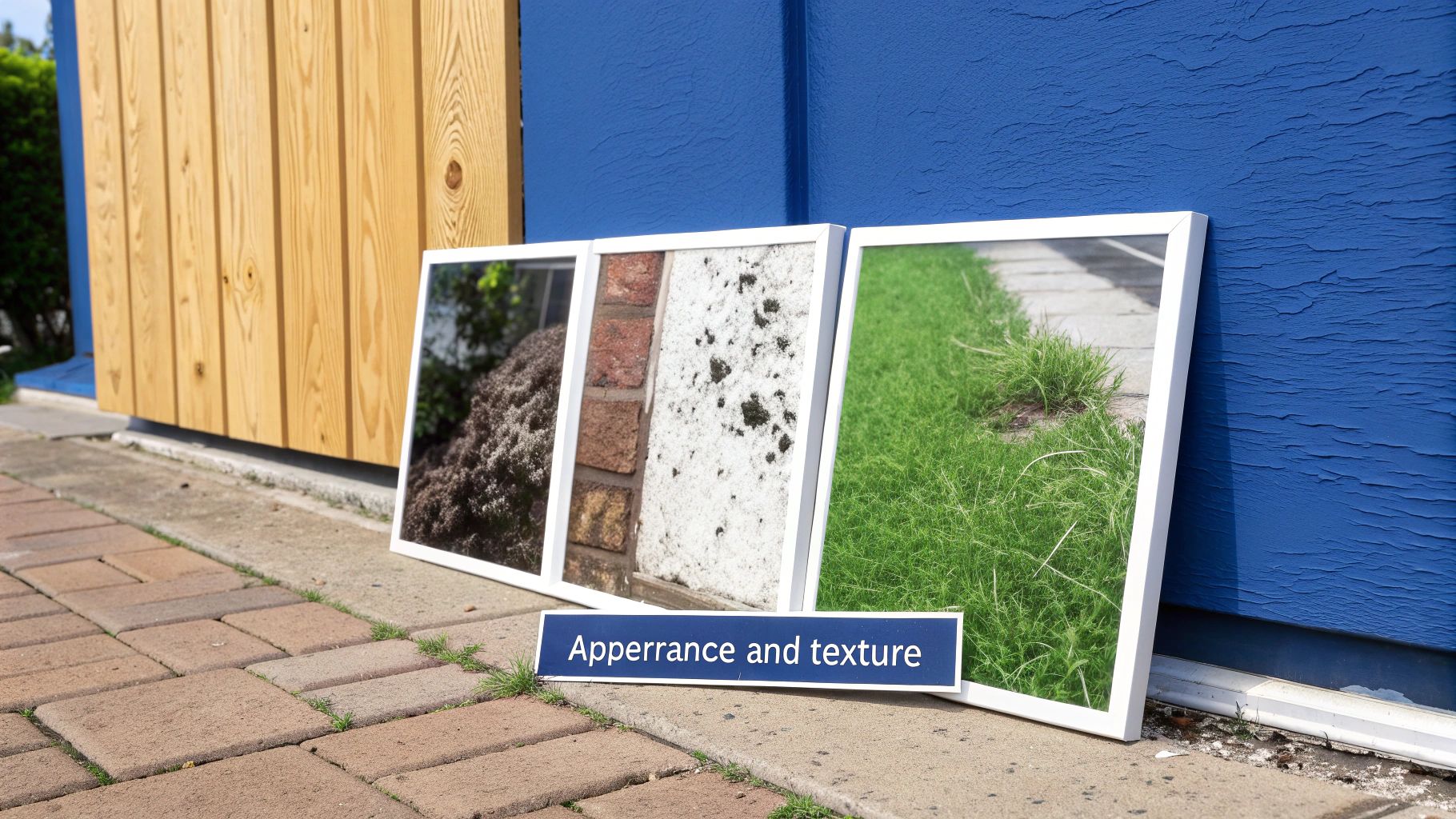
Telling the difference between mold and mildew often starts with a simple visual check. While they're both fungi that love damp spots, their look and feel offer the first real clues about what you're up against. Getting a handle on these visual cues is the first step in figuring out how serious a potential fungus problem in your home might be.
The Superficial Nature of Mildew
Mildew almost always sticks to the surface. It doesn't burrow deep into whatever it's growing on, which is why it usually looks flat—a key trait for identifying it.
Think of that gray or white powdery stuff you see on shower grout, in the corners of a damp window sill, or even on fabrics left in a humid room. Its texture is often described as powdery or downy. You can usually wipe it away with a household cleaner, but it might leave a stain behind.
Because it lives on the surface, mildew's initial impact is mostly cosmetic. It loves to feed on soap scum and other organic residues in the moist environments of bathrooms and kitchens.
- Color: Typically white, gray, or sometimes a bit yellowish.
- Texture: Powdery or fine and fluffy, almost like dust.
- Location: Almost always found on non-porous surfaces like tile, grout, caulk, or even damp clothes. It's also a common plant disease.
Its flat growth is a dead giveaway. If you see a patch of fungus that looks like it's just sitting on top of something, chances are it's mildew.
Key Insight: Mildew is a surface-dweller. Its flat, powdery appearance on hard surfaces like grout or glass is its primary visual identifier. This superficial growth means it hasn't invaded the material itself, making it far less destructive than mold.
The Invasive Appearance of Mold
Mold, on the other hand, is an infiltrator. Its appearance is often more alarming and varied, pointing to a deeper, more serious issue that needs attention right away. It doesn’t just sit on a surface; it grows into it.
Mold colonies can look fuzzy, slimy, or velvety, depending on the species and how much moisture is present. Unlike mildew's simple white or gray, mold comes in a whole rainbow of colors. You might see patches of green, blue, brown, or the infamous black.
The most notorious is Stachybotrys chartarum, often called "black mold," which typically has a slimy texture and a dark, greenish-black hue. Other common household molds, like Aspergillus, might look fuzzy and be greenish or gray. This variety is a clear sign you’re dealing with more than just mildew. These visual differences are just one of many potential signs of mold in your home that require a closer look.
How Mold's Structure Causes Damage
The real threat with mold is its structure. It develops root-like filaments called hyphae that dig deep into porous materials like drywall, wood, insulation, and carpet. This is exactly why you can't just wipe mold away.
This invasive growth is what leads to real structural damage. The hyphae break down the material they infest from the inside out, causing it to rot and decay. A small spot of mold you can see on a wall could just be the tip of the iceberg, with a much larger colony spreading unseen inside the wall cavity.
Here’s a quick breakdown of mold's characteristics:
| Feature | Description | Example Scenario |
|---|---|---|
| Texture | Can range from fuzzy and cotton-like to slimy and wet. | Fuzzy green patches on old bread or slimy black spots near a leaky pipe. |
| Color | Highly variable, including black, dark green, brown, blue, or even orange. | A patch of dark green Cladosporium on a damp wooden window frame. |
| Growth Pattern | Raised and three-dimensional, penetrating into the host material. | Visible mold growth on drywall that, when removed, reveals extensive dark staining and decay on the paper and gypsum core behind it. |
Comparing Health Risks and Allergenic Effects
While both mold and mildew are unwelcome guests in your home, the difference in their health impacts is huge. One is mostly an annoyance, while the other can pose a genuine threat to your family's well-being. Knowing the difference is the first step in understanding the true risk.
Mildew exposure usually brings on milder, temporary symptoms. Think of it as a low-grade allergen. For people with existing sensitivities or asthma, it can trigger some frustrating reactions, but they're typically manageable.
These reactions are just your body's way of dealing with inhaled mildew spores. Since mildew lives on the surface of things, the concentration of airborne spores is often much lower than what you'd find with a deep-rooted mold colony.
Mildew's Allergenic Annoyances
When you're dealing with mildew, the health effects are usually limited to common allergic responses. You might notice these symptoms flare up when you're in a specific room (like the bathroom) and then feel better once you leave.
- Respiratory Irritation: This often feels like a tickle in your throat, causing coughing, sneezing, or a sore throat.
- Headaches: A dull, nagging headache is a frequent complaint from those sensitive to mildew.
- Sinus Congestion: Spores can easily irritate your nasal passages, leaving you with a stuffy or runny nose.
Basically, mildew is an environmental irritant. It's uncomfortable, for sure, but it doesn't typically pose a long-term threat to otherwise healthy people. The main concern is for those with pre-existing respiratory issues who are exposed day after day.
Situational Recommendation: If you or a family member notice allergy-like symptoms that seem to get worse in specific rooms like the bathroom or basement, start looking for powdery, gray patches on surfaces. A good cleaning is often all it takes to clear up these minor health issues.
Mold's More Serious Health Threats
Mold is a completely different ballgame. Its ability to produce mycotoxins—toxic compounds you can inhale, ingest, or even absorb through your skin—sets it leagues apart from mildew. These toxins can trigger a cascade of health issues that go far beyond a simple case of the sniffles.
The health risks of mold exposure aren't just about allergies; they can involve toxic effects that impact your entire body. While one person might only get itchy eyes, another could face severe, long-term health consequences, especially with ongoing exposure to certain species like Stachybotrys chartarum (infamous black mold).
While many people use the terms interchangeably, experts draw a clear line. Mildew often refers to the fungi you see on plants, while mold describes the diverse fungi growing on indoor surfaces. A landmark 1994 Harvard study of 10,000 homes in the US and Canada found something staggering: 50% of residences with water damage and mold saw a 50-100% increase in respiratory symptoms. This really drives home the critical, and often overlooked, link between indoor moisture and health. You can explore more research on how mold silently takes hold in homes on the National Institutes of Health website.
From Allergies to Toxicosis
The spectrum of health problems tied to mold is incredibly broad. It all depends on the mold species, how long you've been exposed, and the strength of your own immune system. Knowing how to spot the difference between a minor allergy and a more severe toxic reaction is key to deciding when it's time to call in the pros.
Allergenic vs. Pathogenic vs. Toxic Effects of Mold
| Impact Type | Description | Common Symptoms |
|---|---|---|
| Allergenic | An immune system response to inhaled spores, much like a pollen allergy. | Sneezing, itchy eyes, runny nose, skin rashes, asthma flare-ups. |
| Pathogenic | The mold causes an active infection, mainly hitting those with compromised immune systems. | Can lead to sinus or lung infections like aspergillosis. |
| Toxic | Health effects caused by inhaling mycotoxins from certain mold species. | Neurological issues (brain fog, memory loss), chronic fatigue, suppressed immune system, severe respiratory distress. |
This range of potential effects is exactly why a proper identification isn't just about protecting your property—it's about protecting your family's health. You can't tell what species of mold you have or if it's producing mycotoxins just by looking at it. Professional air and surface testing is the only definitive way to understand the full scope of the health risk you're facing.
Choosing the Right Removal Strategy
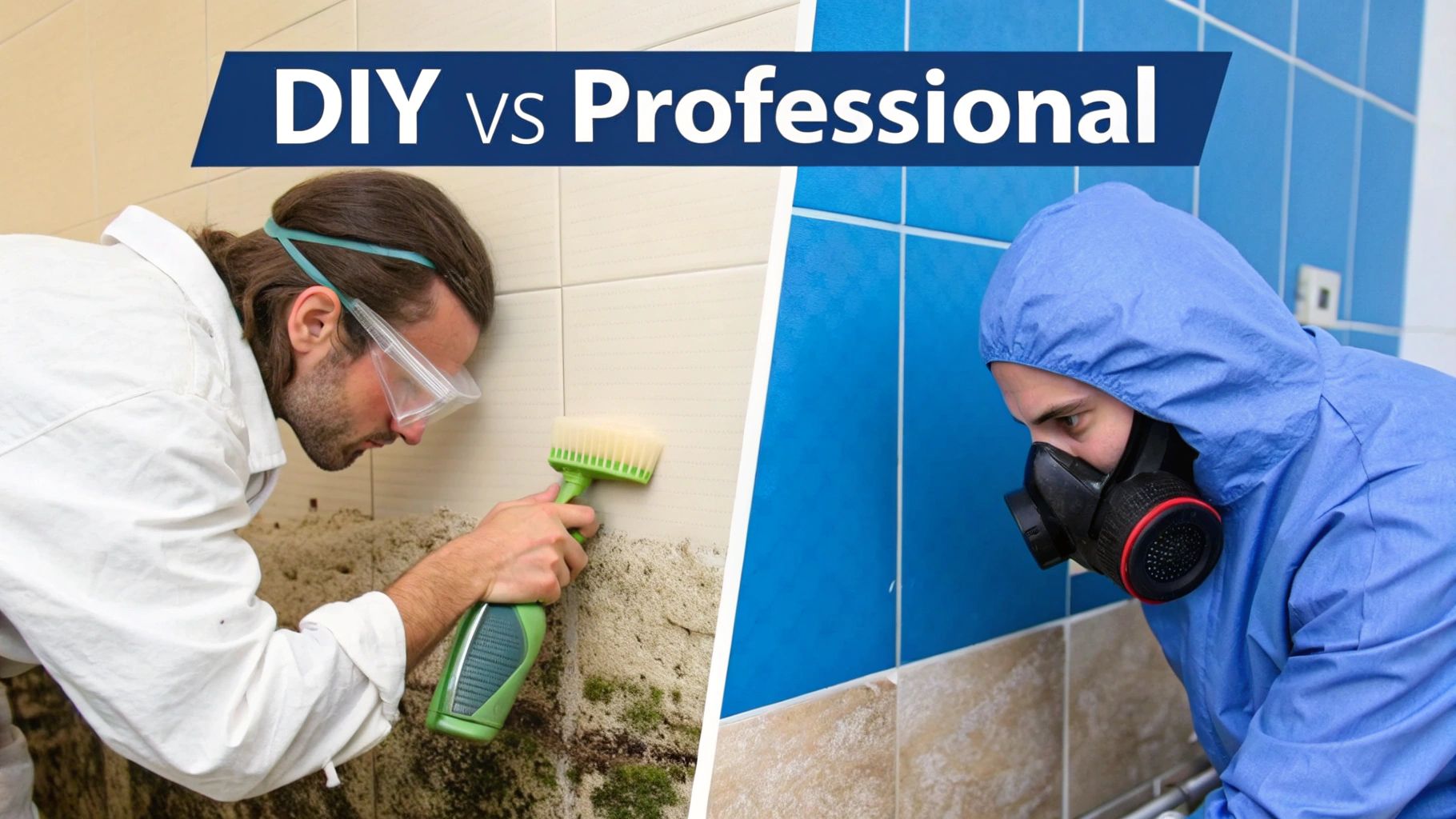
So, you’ve found something funky growing in your home. Your next move is critical, and it all comes down to whether you’re dealing with mildew or mold. The difference dictates everything—from the cleaning products you’ll use to whether you can safely handle it yourself. Getting this part right is the most important step in protecting your property and your family's health.
Mildew, that powdery surface-level fungus, is often a manageable weekend project. Because it doesn't burrow deep into materials, a little elbow grease and the right cleaning solution usually knock it out. Mold, on the other hand, is a whole different beast that requires a much more cautious and strategic approach.
A Practical DIY Guide for Mildew Removal
Since mildew hangs out on the surface, getting rid of it is pretty straightforward. For non-porous surfaces like tile, grout, or shower doors, you can typically restore the area with a simple cleaning process.
- Safety First: Before you do anything, gear up. Put on rubber gloves, safety goggles, and an N95 mask to keep from breathing in spores. Make sure the area has good airflow by opening a window or turning on an exhaust fan.
- Mix Your Solution: A classic and effective mildew killer for hard surfaces is a solution of one part bleach to ten parts water. If you prefer a less harsh option, straight white vinegar can also get the job done.
- Scrub It Down: Spray your solution on the affected area and let it sit for about 10-15 minutes. Then, use a stiff-bristled brush to scrub away all visible signs of mildew.
- Rinse and Dry Completely: Rinse the surface with clean water, then dry it thoroughly with a towel. Moisture is the enemy, so making sure the area is bone-dry is the key to preventing it from coming right back.
This process is almost always enough to handle the common powdery mildew you find in bathrooms and on windowsills.
Why DIY Mold Removal Is a Major Risk
Trying to tackle mold with the same techniques you’d use for mildew isn't just ineffective—it's dangerous. When you scrub or disturb a mold colony, you can unleash a massive cloud of microscopic spores and mycotoxins into the air, spreading the contamination all over your home.
This can quickly turn a small, localized issue into a whole-house nightmare, contaminating your HVAC system and exposing your family to much higher levels of harmful substances. The root-like hyphae of mold grow deep into porous materials like drywall and wood, which makes surface cleaning completely useless. You might wipe away the part you can see, but the hidden roots are still there, guaranteeing it will return.
Critical Warning: Never attempt to remove mold yourself if the affected area is larger than 10 square feet (about a 3×3 foot patch). You should also call a professional if you suspect mold is in your HVAC system or if anyone in your home is experiencing unexplained respiratory issues.
The danger of underestimating fungi isn’t new. For centuries, Ergot, a mold-like fungus that infested rye crops, caused widespread poisoning that suppressed European populations for 500 years. That history is a stark reminder of the potent toxins fungi can produce. In our homes today, the threat is just as real. A 1999 Mayo Clinic study even linked fungi to nearly all chronic sinus infections affecting 37 million Americans. You can dive deeper into the history of these fungi on the Abbey Newsletter website.
When Professional Remediation Is Non-Negotiable
It’s crucial to understand the vast difference between simple removal and professional remediation. While removal is just surface cleaning, remediation is a comprehensive process that contains, removes, and prevents future growth safely and effectively. If you even suspect you have a real mold problem, calling a certified professional is the only safe move. Our guide on mold removal vs. remediation breaks down these critical differences in more detail.
Professionals bring in specialized equipment and follow strict protocols to ensure the problem is solved for good:
- Containment: They seal off the entire affected area with plastic sheeting to stop cross-contamination in its tracks.
- Air Filtration: High-efficiency HEPA air scrubbers are used to capture any airborne spores released during the removal process.
- Safe Removal: Contaminated materials, like drywall or insulation, are carefully removed and disposed of according to industry regulations.
- Thorough Cleaning: Any remaining surfaces are cleaned with EPA-approved antimicrobial agents to kill any lingering spores.
- Source Correction: Most importantly, a pro will find and help you fix the underlying moisture problem that allowed the mold to grow in the first place.
For homeowners in coastal communities like Santa Barbara or Montecito, where persistent marine layer humidity creates the perfect breeding ground for fungi, a professional inspection is the only surefire way to diagnose the problem and get your home back to being a safe, healthy space.
Knowing When to Call a Professional
Some minor mildew spots are easy enough to handle with a scrub brush and some household cleaner. But the line between a simple cleanup and a serious problem gets blurry when the issue persists or hides just out of sight. Guessing is a risky game—one that can lead to bigger headaches and potential health issues down the road.
The key is knowing when to stop guessing and bring in an expert. Some signs are subtle but incredibly important. For instance, that persistent musty or earthy smell you can’t quite place? That’s a massive red flag. The odor often comes from Microbial Volatile Organic Compounds (MVOCs), which are gases released by active mold colonies hidden from view. If your nose is telling you something’s off, it’s time to listen.
Critical Triggers for a Professional Inspection
Certain situations dramatically raise the stakes, pointing to a hidden mold problem that a DIY approach just can't handle. The real issue is almost always buried deep within your home's structure, silently causing damage while you scrub the surface.
You should stop guessing and consult an expert if you encounter any of these:
- Persistent Musty Odors: If a damp, earthy smell hangs in the air without a visible source, it’s a classic sign of hidden mold growth—likely behind walls, under floors, or inside your HVAC system.
- Visible Signs of Water Damage: Don't ignore those water stains on ceilings or walls. Peeling paint, bubbling wallpaper, and warped floors are all clear signs of a moisture problem. Where there's moisture, mold isn't far behind.
- After a Major Water Event: A burst pipe, a flooded basement, or a serious roof leak is a non-negotiable trigger for an inspection. Water soaks into structural materials, creating the perfect breeding ground for mold that might not show itself for weeks.
- Unexplained Allergy-Like Symptoms: Are family members dealing with chronic coughing, sneezing, headaches, or fatigue that seem to get better when they leave the house? It could easily be a reaction to indoor mold spores.
Expert Insight: A professional inspection isn't just about finding mold you can see. It's about diagnosing the building’s health by pinpointing the hidden moisture sources that fuel the growth. That’s the only way to find a permanent solution.
Uncovering Hidden Problems with Advanced Tools
The real value of a professional inspection comes from the technology we use to see what the naked eye can’t. Certified inspectors use specialized equipment to map out moisture and find the exact source of a mold problem, leaving no stone unturned.
These tools give us definitive data, completely removing guesswork from the equation. For example, thermal imaging cameras can spot temperature differences in walls caused by hidden moisture, revealing potential mold hot spots without tearing anything apart. It’s like having x-ray vision for water leaks.
We also use moisture meters to get precise readings of the moisture content in drywall, wood, and concrete. By mapping these readings, an inspector can trace the path of water intrusion straight back to its origin—a critical step for any effective remediation.
The Decisive Value of Certified Lab Analysis
Ultimately, the biggest difference between DIY and a professional assessment is certainty. You can't tell what species of mold you have just by looking at it. Is it a common allergen, or is it a mycotoxin-producing species like Stachybotrys?
A professional solves this by collecting air and surface samples for analysis at an accredited lab. This testing provides the hard data we need:
- Species Identification: It pinpoints the exact types of mold present in your home.
- Spore Concentration: It measures the quantity of mold spores in your air compared to the outdoors, telling us just how severe the contamination is.
- Informing Remediation: The lab report becomes the roadmap for remediation, ensuring the right methods are used to safely and completely remove the specific mold identified.
This is a level of detail no homeowner can get alone. Here in Santa Barbara and Ventura counties, our coastal humidity creates a constant threat. Investing in professional mold inspection services gives you the clarity and peace of mind you need to ensure your home is healthy. It's the only way to get a definitive answer and a clear plan to move forward.
Preventing Mold and Mildew in Coastal Homes
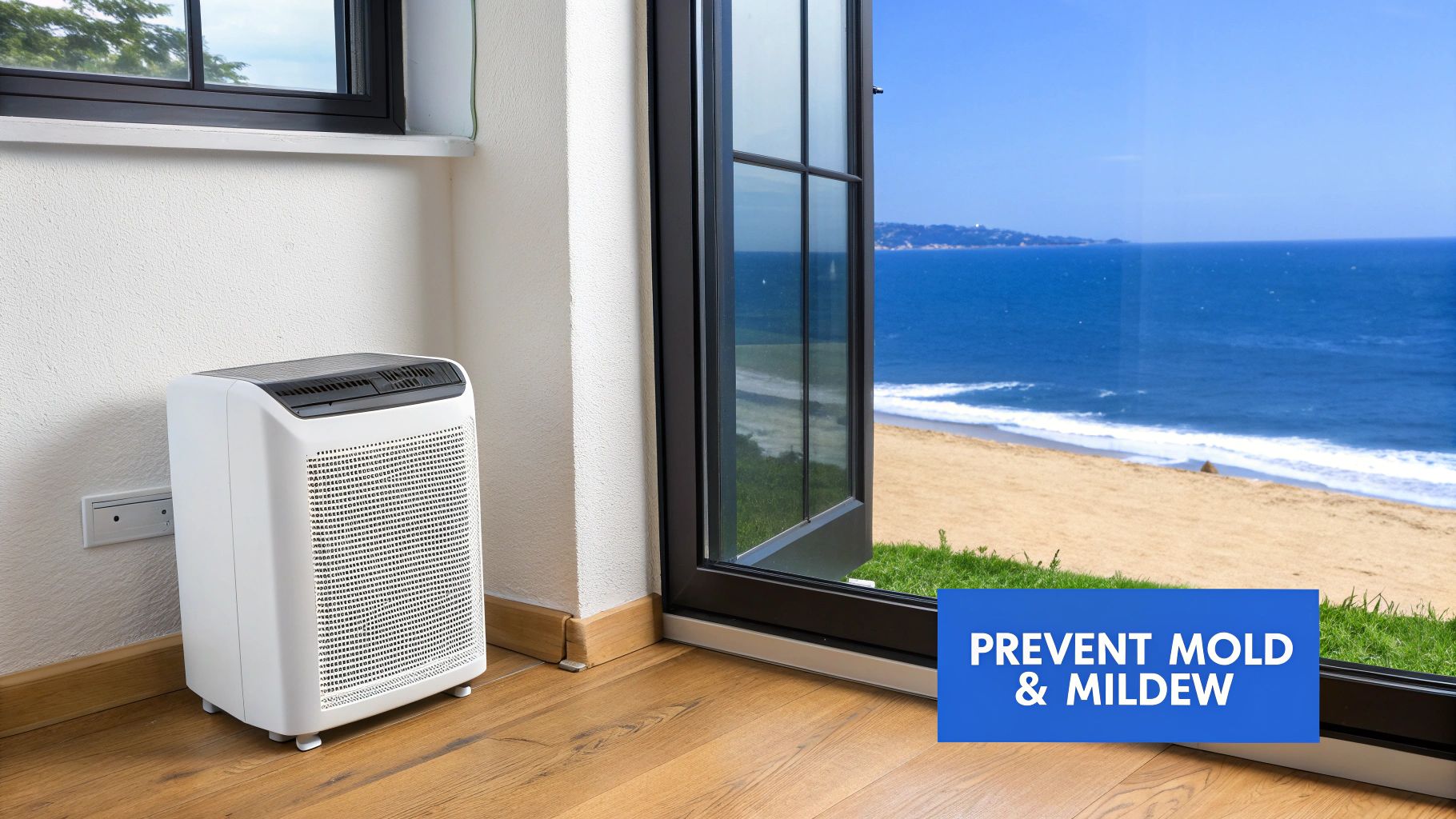
Living in beautiful coastal communities like Santa Barbara and Ventura comes with a unique environmental challenge: persistent moisture. The constant high humidity, salty air, and marine fog create the perfect breeding ground for both mildew and mold. When it comes to fungi, proactive prevention is always the best strategy to protect your home and your health.
The absolute core of prevention is moisture control. Since mildew grows on surfaces and mold penetrates deep into materials, you have to manage both the humidity in the air and any direct water intrusion. Your goal should be to keep indoor humidity levels between 30-50%. A quality dehumidifier is an excellent investment to achieve this balance, especially in basements, crawl spaces, and rooms that just don't get enough airflow.
Enhancing Ventilation and Airflow
Proper airflow is your best defense against the stagnant, damp air that fungi love. Without it, everyday activities like showering and cooking can trap moisture inside, creating microclimates where mildew and mold will happily take root.
Simple habits can make a huge difference. Always use the exhaust fan in the bathroom during and after a shower, and run the vent hood in your kitchen when you cook. If you can, open windows on opposite sides of the house for a few minutes each day to create a cross-breeze that flushes out humid, stale air. On top of that, regularly cleaning your HVAC system and using high-quality filters will help circulate clean, dry air throughout your property.
Key Takeaway: The difference between mold and mildew prevention hinges on where moisture collects. Controlling surface condensation stops mildew, while preventing hidden water intrusion from leaks is crucial to stopping destructive mold growth deep within walls and floors.
Routine Checks for Leaks and Condensation
Water intrusion is mold’s entry ticket into your home. A tiny, slow leak can go completely unnoticed for months, silently feeding a hidden mold colony that causes significant structural damage.
Make it a habit to routinely look for signs of water issues. Check under your sinks for drips, look for stains on the ceilings, and inspect the areas around windows for condensation or water damage. In our coastal climate, window condensation is a common problem that quickly leads to mildew on sills and frames. Wiping that moisture away promptly is a simple but vital task. By addressing these seemingly minor issues, you can learn more about how to prevent mold growth and keep your home safe. These regular checks are the foundation of a healthy indoor environment, stopping problems before they get out of hand.
Got Questions About Mold and Mildew? We've Got Answers.
Once you know the difference between mold and mildew, a few more questions usually pop up. Getting these details right is key to protecting your home and deciding what to do next. Here are some of the most common questions we get from homeowners.
Can Mildew Actually Turn Into Mold?
No, mildew can’t turn into mold. They're two completely different types of fungi with their own unique growth patterns and structures.
But here’s the critical takeaway: the damp, stagnant conditions that let mildew thrive are the exact same conditions that invite mold to grow. Think of mildew as a canary in a coal mine. When you see that powdery stuff on your shower grout or window sill, it’s a flashing neon sign that your home has a moisture problem perfect for a much more destructive mold issue to take root.
Key Insight: While mildew doesn't become mold, its presence is undeniable proof that you have a moisture issue. Fixing the source of that moisture is the only way to prevent a more serious, invasive mold infestation from starting.
Does Bleach Really Kill Mold and Mildew?
Bleach is great for killing mildew and surface mold on non-porous materials—think tile, glass, or porcelain. Its chemical makeup breaks down the fungus on contact. But its effectiveness absolutely plummets when you try to use it on porous surfaces like drywall, wood, or carpet.
Here's the problem: bleach just can't penetrate deep enough to kill mold's root system (the hyphae). The water in the bleach soaks into the material, but the active chlorine ingredient stays on the surface. Ironically, this often just feeds more moisture to the surviving roots below, which can actually encourage it to grow back even stronger. For any real mold problem on porous materials, you need professional remediation with EPA-approved biocides. It's the only way to do it safely and effectively.
How Can I Be Sure a Musty Smell Is Mold?
That persistent, earthy smell is one of the most reliable clues you have a hidden mold problem. The distinct odor comes from Microbial Volatile Organic Compounds (MVOCs), which are gases released as mold grows and digests. Your nose can often sniff out a problem long before you ever see it.
If you’re constantly catching a whiff of that smell, especially in a specific spot like a basement, laundry room, or closet, it's a strong sign mold is growing somewhere out of sight. It could be behind drywall, under the flooring, or deep inside your HVAC system. That smell is your cue to call in a professional to pinpoint the hidden source.
What Does a Professional Mold Inspection Actually Include?
A real, comprehensive mold inspection is way more than just a quick look around. Certified inspectors follow a systematic process using advanced tools to uncover the true extent of any moisture and mold issue, giving you the definitive answers you need.
A typical inspection from a pro includes:
- A thorough visual assessment of the entire property, inside and out.
- Moisture mapping with professional-grade meters to find every source of water intrusion.
- Thermal imaging to detect hidden dampness and temperature differences inside walls that indicate moisture.
- Air and surface sampling (when needed) that's sent to a certified lab to identify the exact mold species and spore counts.
Afterward, you get a detailed report with all the findings, lab results, and clear, straightforward recommendations for what to do next.