That faint, musty smell you can’t quite put your finger on? Or that nagging cough that just won’t quit? These are often the first clues. The health effects of household mold can sneak up on you, starting with what feels like a simple allergy—sneezing, itchy eyes—and escalating into much bigger respiratory problems, especially for anyone with asthma or a weakened immune system. Getting a handle on this invisible intruder is the first step toward protecting your family.
The Unseen Threat in Your Home

Mold isn't just an ugly blotch on the wall or a funky smell coming from the basement. It's a living organism that can quietly compromise your home and your health.
Think of mold spores like tiny, invisible seeds floating all around us. They’re harmless until they find a damp spot to land. Once they do, they start to grow, sending even more spores into the air you and your family breathe.
This is a real issue here in coastal communities like Santa Barbara and Ventura County. Our famous marine layer and persistent humidity create the perfect storm for mold to take hold. All it takes is a small pipe leak, a little condensation on a window, or a poorly ventilated bathroom to create a thriving mold colony.
How Mold Spores Affect Your Health
When you breathe them in, these airborne spores can act like microscopic troublemakers in your body. For many people, the initial signs feel just like seasonal allergies. But for the more vulnerable, the story can be very different.
The health effects of household mold are not a one-size-fits-all problem. How your body reacts depends on your own sensitivity, the specific type of mold, and just how long you’ve been exposed.
Here’s how we typically come into contact with it:
- Inhalation: This is the most common route. Breathing in spores directly affects your lungs and respiratory system.
- Skin Contact: Simply touching a moldy surface can trigger rashes or skin irritation for sensitive people.
- Ingestion: It's less frequent, but accidentally eating something with mold on it can also cause problems.
The Centers for Disease Control and Prevention (CDC) is clear on this: exposure to damp and moldy environments can cause a variety of health issues. Their key takeaway? The best defense is controlling moisture inside your home.
Understanding these risks is something every homeowner should take seriously. We often see families overlook the connection between a damp home and persistent health problems until things get really bad. For example, a child's asthma that keeps getting worse or a family member's constant headaches could easily be linked to a hidden mold colony behind a wall.
By recognizing the potential health effects of household mold, you can start taking steps to protect your space. A great place to begin is by learning more about improving indoor air quality to build a healthier home from the ground up.
Decoding Mold Exposure Symptoms
So, how does your body actually react when it comes up against mold? The truth is, the health effects of household mold show up in a whole spectrum of ways, from little irritations that feel just like seasonal allergies to much more serious respiratory problems. The first step is learning to recognize these signs and connect the dots between how you feel and what’s going on in your home.
Think of mold spores like tiny, invisible bits of pollen floating through your living room. When you breathe them in, your immune system can flag them as unwelcome invaders, kicking off a defensive response. That’s exactly why the most common symptoms of mold exposure are allergic in nature.
Common Allergic Reactions to Mold
For a lot of people, the first signs of a mold problem are frustratingly familiar. They often look just like a common cold or a bout of hay fever, which makes it all too easy to brush them off as something else.
These initial, allergy-like symptoms usually include:
- Persistent Sneezing: An ongoing reaction as your body tries to physically expel the spores you’ve inhaled.
- Runny or Stuffy Nose: Classic congestion caused by inflammation in your nasal passages.
- Itchy, Watery Eyes: A tell-tale allergic response that causes redness and irritation.
- Skin Rashes or Hives: Sometimes a systemic reaction or direct contact can show up on your skin.
- Dry, Hacking Cough: Spores can irritate your throat and upper airways, leading to a cough.
Here's a big clue: if these symptoms seem to pop up or get worse when you're at home but clear up when you leave for the day, there's a good chance an indoor allergen—like mold—is the real culprit.
When Symptoms Escalate to Respiratory Issues
A stuffy nose is one thing, but continued exposure can lead to much more serious problems, especially for your respiratory system. The inflammation that mold spores cause can go from a simple irritation to a chronic condition, and it's a much bigger deal for vulnerable people.
This is where the impact can get more severe, potentially triggering or worsening significant respiratory illnesses. According to a landmark World Health Organization report, homes with dampness and mold are linked to a 30-50% increase in respiratory and asthma-related health issues.
In the U.S. alone, an estimated 4.6 million cases of asthma are traced back to damp, moldy homes, ringing up $3.5 billion a year in treatment costs. For infants, the risk is especially high—those exposed in their first year are nearly three times more likely to develop asthma.
You can think of this constant inflammation as a slow-burning fire in your airways. It might not always be a full-blown blaze, but the persistent heat and irritation cause gradual damage, making your lungs more sensitive and reactive over time.
For anyone who already has asthma, mold can mean more frequent and more severe attacks. And even if you've never had a diagnosis, long-term exposure can lead to chronic conditions like bronchitis or wheezing. You can learn more about the specific dangers by reading our guide on black mold health symptoms.
Severe and Systemic Health Conditions
In rarer but more dangerous cases, heavy or long-term mold exposure can lead to severe health outcomes. One of these is hypersensitivity pneumonitis, a serious immune system disorder where the lungs become inflamed from an allergic reaction to inhaled particles like mold spores. The symptoms can look a lot like pneumonia, including fever, chills, and shortness of breath.
To help you connect the dots, we've put together a quick table that breaks down potential symptoms by their impact level.
Symptoms of Mold Exposure by Health Impact
This table helps categorize the progression of mold-related symptoms, from mild allergic responses to more serious conditions affecting the respiratory system and beyond.
| Symptom Category | Common Signs and Symptoms |
|---|---|
| Mild Allergic Reactions | Sneezing, runny nose, itchy/watery eyes, skin irritation, postnasal drip. |
| Moderate Respiratory Issues | Chronic cough, wheezing, shortness of breath, asthma exacerbation, bronchitis. |
| Severe Health Conditions | Hypersensitivity pneumonitis, opportunistic infections in immunocompromised individuals. |
Recognizing this progression is key. What seems like a minor allergy could actually be your body’s early warning system, telling you there’s a hidden problem in your home that needs your attention to protect your long-term health.
Who Is Most at Risk From Mold Exposure?

While anyone can react to a moldy environment, some people are far more vulnerable to its effects. Think of it this way: for a healthy adult, breathing in mold spores might be a minor annoyance, like walking through a light drizzle. But for others, it’s like being caught in a downpour with no umbrella—it can make them seriously sick.
Understanding who falls into these high-risk categories is critical. It helps shift our perspective from seeing mold as just another cleaning chore to recognizing it as a direct threat to the most vulnerable people in our homes.
Infants and Young Children
Kids aren't just tiny adults. Their bodies are still building their defenses, with respiratory and immune systems that are very much under construction. This makes them especially sensitive to irritants like mold spores.
Because their immune systems are still learning the ropes, they can overreact to mold, setting the stage for respiratory problems down the line. In fact, significant mold exposure in early life is a major risk factor for developing childhood asthma. Plus, children breathe faster than adults, meaning they inhale a greater volume of air—and any contaminants in it—relative to their body size.
A child's developing immune system, when constantly challenged by mold spores, can become overwhelmed. This can lead to long-term sensitivities and respiratory conditions that follow them right into adulthood.
The Elderly
As we get older, our immune systems naturally begin to slow down. This process, known as immunosenescence, means the body is less equipped to fend off the inflammation triggered by mold spores. It becomes harder to clear inhaled particles from the lungs, leading to more persistent and nagging respiratory symptoms.
On top of that, seniors are more likely to be managing pre-existing health issues like chronic obstructive pulmonary disease (COPD) or heart conditions. For them, mold exposure can be the tipping point that turns a stable condition into a serious health crisis.
Individuals with Pre-Existing Conditions
For anyone already dealing with a respiratory ailment, mold is like throwing gasoline on a fire. Their bodies are already on high alert, and mold exposure pushes them over the edge.
- Asthma: Mold is a notorious asthma trigger, capable of causing more frequent and severe attacks. Living in a moldy home can feel like a constant struggle for every breath.
- Allergies: People with known mold allergies will, unsurprisingly, have a rough time. Reactions can range from intense nasal congestion and skin rashes to full-blown respiratory distress.
- Chronic Obstructive Pulmonary Disease (COPD): Inhaled mold spores cause lung inflammation that can seriously worsen COPD symptoms, leading to more coughing, shortness of breath, and a higher chance of dangerous lung infections.
The Immunocompromised
This category includes anyone with a weakened immune system. That could be someone undergoing chemotherapy, living with an autoimmune disease, recovering from an organ transplant, or managing a condition like HIV/AIDS.
For these individuals, certain molds that a healthy person would easily fight off can cause "opportunistic infections." These infections can be incredibly difficult to treat and, in some cases, life-threatening.
The World Health Organization highlights just how widespread this problem is, estimating that up to 50% of buildings in North America have issues with dampness and mold. Here in coastal California, our persistent humidity only elevates that risk. The WHO also notes that living in a damp, moldy home increases the risk of developing asthma by a staggering 40%—a statistic that drives home why we have to protect those who are most vulnerable.
Debunking the "Toxic Black Mold" Myth
That phrase—"toxic black mold"—is enough to make any homeowner nervous. It conjures up images from dramatic news stories about homes being condemned and families getting sick. And while the concern over mold is absolutely valid, the reality is a lot more nuanced than the scary myth suggests.
Let’s get one thing straight right away: the idea that there's a single, uniquely dangerous "toxic black mold" is a total misconception. The mold that usually gets slapped with this label is Stachybotrys chartarum, a greenish-black fungus that loves to grow on really wet materials like drywall and wood. It’s definitely not something you want in your house, but fixating on its color is a huge mistake.
Why You Can’t Judge a Mold by Its Color
Lots of different household molds can look black. Common species from the Cladosporium, Aspergillus, and Alternaria families can all show up with a dark, blackish hue depending on what they're growing on and where they are in their life cycle. To an untrained eye, they can look almost identical to Stachybotrys.
But here’s the most important part: any mold, regardless of its color, can produce allergens and irritants that cause health issues. The real problem isn't the mold's pigment; it's the fact that you have a significant amount of mold growth, period. A big patch of green or white mold can be just as problematic for your health as a spot of black mold.
The Centers for Disease Control and Prevention (CDC) doesn't even make a distinction between "black mold" and other types. Their advice is simple and direct: treat all molds the same when it comes to health risks and removal. The goal is always to get rid of the mold safely and, crucially, fix the moisture problem that let it grow in the first place.
Mycotoxins and So-Called "Toxic Mold Syndrome"
A lot of the fear comes from the word "mycotoxins." These are real toxic compounds that some fungi, including Stachybotrys, can produce. But the idea of "toxic mold syndrome"—a controversial and unproven diagnosis that claims people get severely ill from inhaling mycotoxins in their homes—just isn't backed by solid scientific evidence.
The health effects of household mold that are well-established and proven are allergic reactions and respiratory problems. These are the real risks you face from long-term exposure to any major indoor mold problem. Worrying about a rare or unproven condition can distract from dealing with the very common, very real health issues that mold can trigger.
Instead of panicking over a specific color, your energy is much better spent on getting to the root of the problem. If you even suspect you have mold, the first step is to figure out where the moisture is coming from and get a professional to take a look. If you need some guidance, our article on how to test for toxic mold breaks down the professional methods we use to get clear, accurate answers. Your goal is simple: fix the moisture, remove the mold, and make your home a safe place to breathe again.
How to Confirm a Mold Problem in Your Home
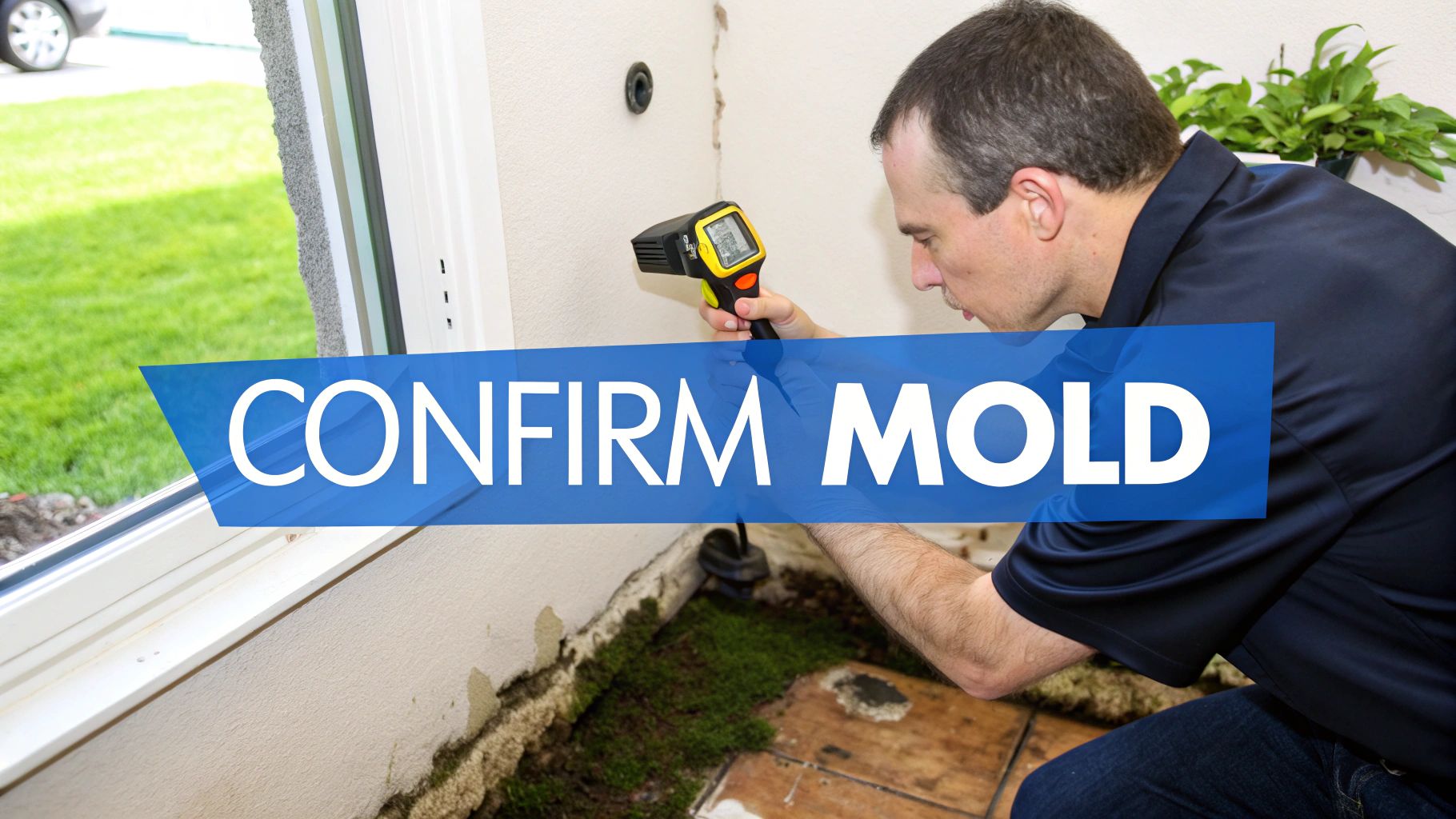
If you’re wrestling with strange allergy-like symptoms or a musty smell that just won't go away, it's natural to wonder if mold is the culprit. Figuring out if you have a mold problem is the critical first step toward clearing the air and tackling any potential health effects. It all starts with trusting your own eyes and nose.
The most obvious signs are often staring you right in the face. Visible mold can pop up as splotches of black, green, white, or even orange on walls, ceilings, and furniture. But often, the most reliable clue is your sense of smell. That distinct, earthy odor is a dead giveaway for microbial growth, even when there's no visible mold to be found.
The Limits of DIY Mold Test Kits
When mold is on your mind, it’s tempting to run to the hardware store for a DIY test kit. Those little petri dishes seem like an easy, affordable fix. In reality, they usually create more questions than answers.
Here’s the problem: mold spores are literally everywhere, inside and out. A DIY kit will almost always grow something. What it can't tell you is far more important:
- Context: Is this a normal background level of spores, or do you have a concentrated colony pumping them into your living room? The kit has no idea.
- Location: The test can't pinpoint the source of the mold or the underlying moisture issue that’s feeding it.
- Type: Knowing the exact species of mold is less critical than confirming you have an active growth problem that needs a real solution.
These kits can be incredibly misleading, either giving you a false sense of security or kicking off a panic for no good reason. To get a true picture of what’s happening in your home, you need to dig deeper. We break this down further in our guide to the best mold test kit for home use and explain why professional testing almost always wins.
The Professional Inspection Process
A certified mold inspector is part detective, part scientist. They don't just scan for visible spots; they use specialized tools and a systematic process to uncover the hidden moisture and mold you’d never find on your own. This is the only way to get a complete diagnosis of your home's health.
A real inspection goes way beyond a petri dish and usually involves a few key steps:
- Moisture Mapping: Using professional-grade moisture meters, inspectors can "see" inside your walls, floors, and ceilings to find elevated moisture levels where mold loves to hide.
- Thermal Imaging: Infrared cameras are another secret weapon, helping spot temperature differences that often point to hidden water leaks or condensation problems.
- Air and Surface Sampling: If needed, a pro will take air and surface samples for lab analysis. This provides hard data, confirming the types of mold present and just how concentrated the spores are.
This professional approach doesn't just confirm there's mold; it finds the why. Identifying and fixing the source of the moisture—whether it's a slow leak, a foundation crack, or bad ventilation—is the only way to make sure the problem doesn't come right back.
When to Call an Expert
While a small patch of mildew on your shower tile is usually a simple DIY cleanup, some situations demand a professional eye.
You should call a professional inspector immediately if:
- You suspect a mold problem that covers more than 10 square feet.
- You can smell that musty, moldy odor but can't find the source.
- Your home recently suffered water damage from a flood or major leak.
- Your family is dealing with ongoing, unexplained health symptoms.
Don't let a small concern turn into a major hazard. An expert inspection gives you the clear answers and peace of mind you need to protect your family and your home.
Of course. Here is the rewritten section, crafted to sound like an experienced human expert while adhering to all your requirements.
Proactive Steps for a Mold-Free Home
Knowing the health risks of mold is one thing, but taking action to stop it before it starts? That’s where the real power lies. Preventing mold isn’t just about cleaning up a mess; it’s about creating an environment in your home where mold simply can’t get a foothold.
The secret isn’t complicated. It all comes down to one thing: moisture control. Think of it like a garden—without water, weeds can’t grow. In the same way, mold spores are all around us, but without moisture, they just stay dormant and harmless. Take away the water, and you take away their ability to grow.
Master Your Indoor Climate
Your first line of defense, especially here in coastal spots like Santa Barbara and Ventura County, is getting a handle on your indoor humidity. That persistent marine layer we all know can create the perfect damp conditions for mold to thrive. Mold really starts to take off when humidity levels stay above 60% for too long.
A simple hygrometer is your best friend here. It’s an inexpensive little gadget that acts like a thermostat for moisture, giving you a real-time reading of your home’s humidity. You’ll want to aim for a sweet spot between 30% and 50%. You can dive deeper into this topic in our guide on at what humidity does mold grow.
If you notice your levels are creeping up, especially on foggy mornings or after a good rain, a dehumidifier can be a game-changer. Stick one in the basement, crawl space, or even your main living area to pull that excess moisture right out of the air.
Improve Airflow and Ventilation
Stagnant, damp air is basically a welcome mat for mold. Good ventilation is key because it keeps air moving, which helps dry out surfaces before mold has a chance to settle in.
- Use Exhaust Fans: This is a big one. Always run the fan in your bathroom during a shower and for at least 30 minutes afterward. Do the same in the kitchen when you’re cooking to vent out all that steam.
- Check Your Dryer Vent: Make sure your clothes dryer is venting all the way to the outside, and that the line is clear of lint and other blockages.
- Promote Natural Airflow: Whenever the weather allows, throw open the windows and doors. Let that fresh air in to push the humid, stale air out.
The goal is simple: keep the air moving. Even small changes, like leaving interior doors open or running ceiling fans, can disrupt the still, damp conditions that mold spores need to colonize.
Conduct Routine Maintenance Checks
More often than not, a serious mold problem starts with a slow, hidden leak. A little proactive home maintenance can stop a tiny drip from turning into a massive headache and health hazard.
- Inspect for Leaks: Every so often, take a peek under your sinks, around the base of your toilets, and near appliances like the dishwasher and washing machine. Look for any drips, water stains, or warping.
- Examine Your Roof and Gutters: Make sure your roof is in solid shape and that your gutters are clean. Clogged gutters can send water cascading down your walls and right into your foundation.
- Check Window and Door Seals: Living on the coast means condensation on our windows is a regular thing. Check that the seals are tight so that moisture isn’t seeping into your walls.
By making these habits part of your routine, you shift from reacting to mold problems to preventing them from ever starting. It’s not just about protecting your property—it’s about safeguarding the health of everyone who lives there. If you have a gut feeling that there’s an underlying moisture issue you can’t find, a professional inspection can give you the peace of mind that your home is the safe, healthy sanctuary it should be.
Common Questions We Hear About Mold and Health
Even after you understand the basics of mold and its health effects, it's normal to have more specific, practical questions. We get calls about these all the time. Here are some straightforward answers to the concerns we hear most often from homeowners.
Can Mold in My House Make My Whole Family Sick?
Yes, it absolutely can, but here's the thing: everyone reacts differently. Think of it like seasonal allergies—pollen can make one person miserable while someone else barely sniffles. It all comes down to the type of mold, how much is in the air, and each person’s unique sensitivity.
Family members who already have allergies, asthma, or a compromised immune system are usually the first to show significant respiratory symptoms. Others might just have a nagging cough or feel a bit stuffy. Because kids and the elderly are especially vulnerable, it’s always best to tackle a mold problem right away for the whole family’s sake.
What Is the Difference Between Mold and Mildew?
This is a common point of confusion, but the answer is pretty simple. Mildew is just a specific type of mold. It's the kind you usually see growing flat on surfaces, often looking like a white or gray powdery patch on your bathroom grout or window sills.
Other household molds can look fuzzy, slimy, or even velvety and come in a whole range of colors—green, black, you name it. While mildew is usually less destructive to your home's structure, both release spores that can cause allergic reactions. The bottom line? Any fungal growth inside your house means there’s a moisture problem that needs fixing.
Am I Safe If I Cannot See Any Mold?
Not necessarily. One of the most frustrating things about mold is its ability to hide just out of sight—behind drywall, under carpets, in your attic, or deep inside your HVAC system. A lot of the time, the first clue isn't something you see. It's that persistent musty smell or those unexplained allergy symptoms that seem to get worse when you're at home.
This is exactly why a professional assessment is so important. Certified inspectors don’t just rely on their eyes. We use tools like moisture meters and thermal imaging to find hidden water sources where mold loves to grow. Air sampling can also tell us if spore counts are elevated, confirming a problem even when there’s no visible evidence.
Is My Landlord Responsible for Fixing a Mold Problem?
In most places, including California, landlords have a legal duty to provide a safe and habitable home. This is often called the “warranty of habitability,” and it covers fixing significant mold growth that’s caused by bigger issues like unrepaired leaks or bad ventilation.
If you find mold in your rental, the first thing you should do is notify your landlord in writing. This creates a paper trail. A professional mold inspection gives you the unbiased, third-party documentation you need to prove the problem and its source. That report is often the key to making sure your landlord takes care of the remediation properly and completely.