Here's the simple, hard truth: no, mold will not die on its own inside your home. It’s a common misconception. Instead of just disappearing, mold spores go dormant. Think of them like tiny seeds, just waiting for a little moisture to spring back to life.
Why Mold Won't Simply Die On Its Own
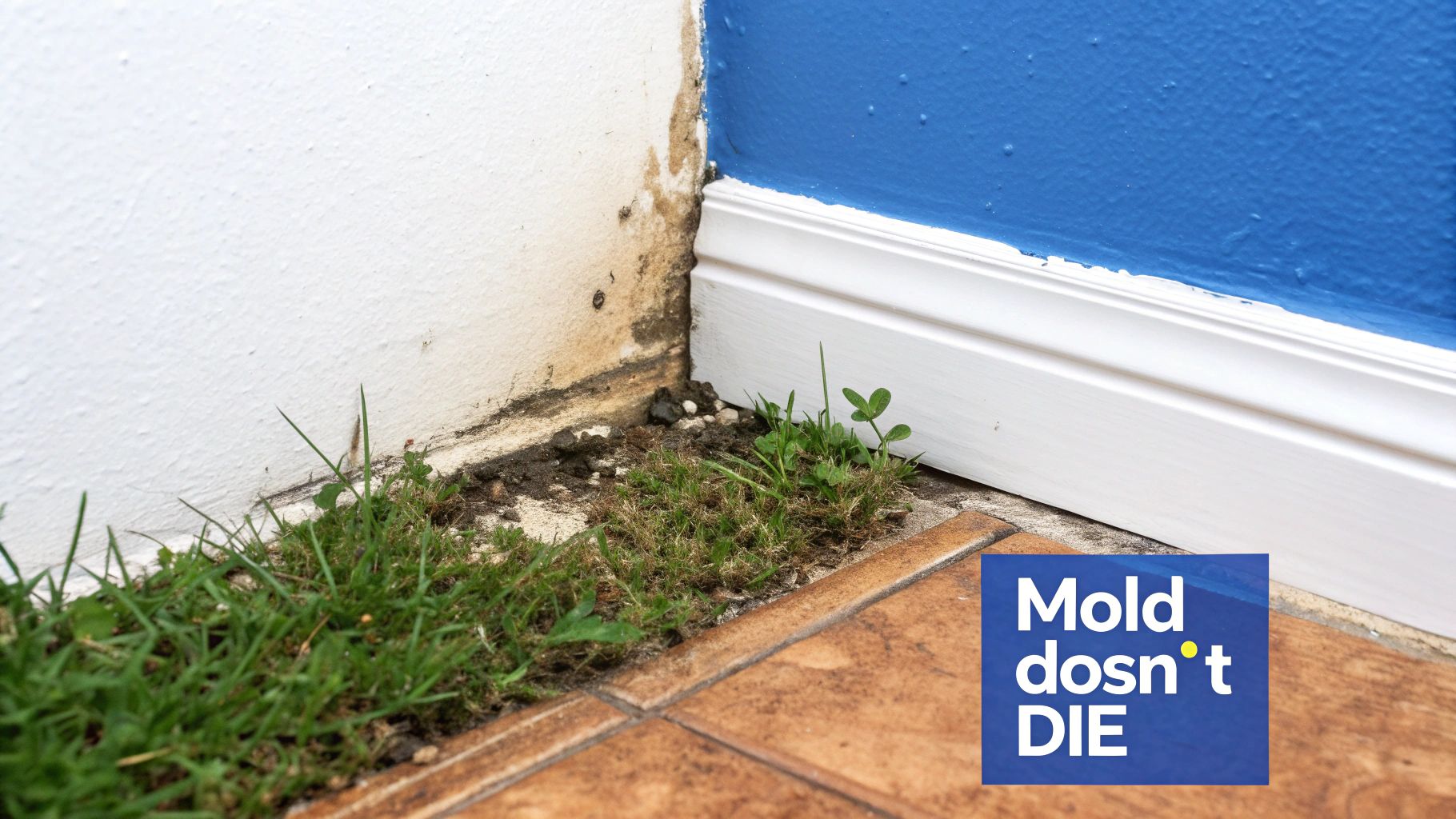
So many homeowners I've spoken with hope that if they just dry out a damp area, their mold problem will vanish. I wish it were that easy. Unfortunately, mold is far more resilient. When its water source is cut off, a mold colony doesn’t die—it just shifts into a survival mode.
It’s a bit like a desert plant that looks completely lifeless during a long drought but bursts with green leaves the moment the rains return. In that same way, dormant mold spores can lie in wait for weeks, months, or even years. The second the humidity rises or a new leak appears, that colony can reactivate and pick up right where it left off.
The Science of Mold Survival
This built-in survival mechanism is exactly why a one-time water event can turn into a frustrating, recurring mold issue. Even after you've cleaned up the initial mess, microscopic spores are left behind, embedded deep in porous materials like drywall, wood, and insulation.
This is especially true for homes in coastal regions like Santa Barbara and Ventura. Here, building materials can hit a critical moisture level when the indoor humidity is as low as 60–65%. With a bit of moisture from a leak or even just a heavy coastal fog, mold can start growing in just 24–48 hours. This explains why the crawl spaces, attics, and HVAC systems in our area are such common trouble spots.
To get a sense of just how persistent mold can be, this table breaks down its survival strategy:
Mold Survival Quick Facts
| Stage | Description | What This Means for Homeowners |
|---|---|---|
| Growth | Mold spores find moisture, a food source (like drywall), and the right temperature. | Active growth can start in as little as 24 hours after a water event. |
| Dormancy | When moisture is removed, the colony stops growing and spores enter a hibernation-like state. | The mold isn't dead. It's just waiting for conditions to become favorable again. |
| Reactivation | A new leak, high humidity, or condensation provides the moisture needed for spores to grow again. | Even old mold problems can suddenly reappear without warning. |
This cycle of dormancy and reactivation is the core reason professional intervention is so critical. Simply drying the area is only half the battle.
The spores themselves must be physically removed to prevent a future outbreak. You can't just dry them out and hope for the best.
Removal vs. Remediation: A Key Distinction
Because mold doesn’t actually die on its own, properly tackling the problem means doing more than just scrubbing the spots you can see. Real resolution involves three critical steps: identifying and fixing the moisture source, containing the affected area to stop cross-contamination, and physically removing the mold-infested materials.
This process highlights the crucial difference between simple mold removal and professional mold remediation. To truly protect your property and your health, a complete remediation strategy is the only way to break the cycle for good. You can learn more by exploring the details of mold removal versus remediation in our guide.
The Three Ingredients Mold Needs To Thrive
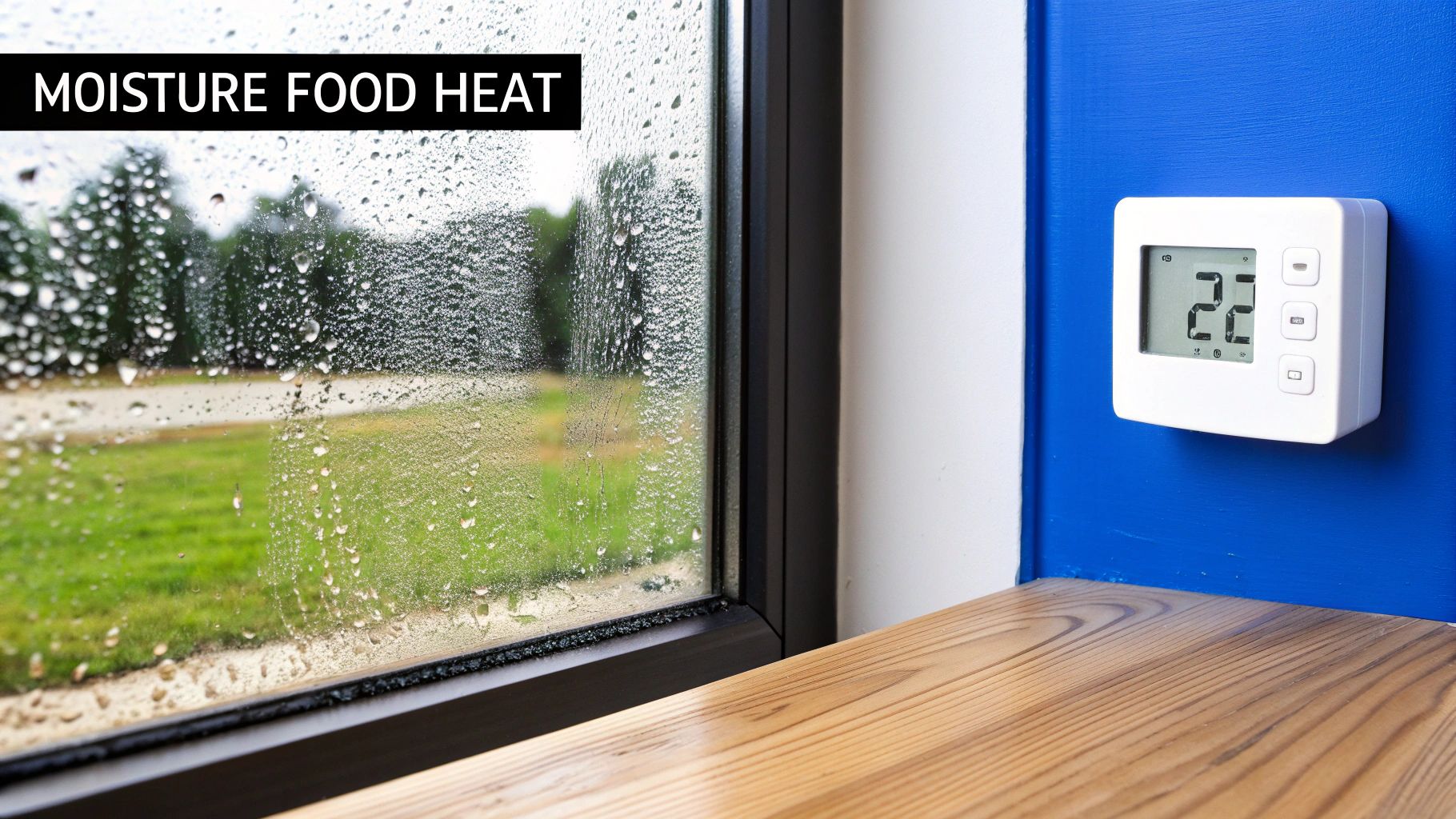
To really get why mold won't just pack up and leave on its own, it helps to think of your home as a potential ecosystem. That patch of mold isn't just a stain; it’s a living thing that needs three key ingredients to survive and spread. People in my line of work often call it the "mold triangle."
If your house provides all three of these ingredients, you’ve basically rolled out the welcome mat.
Like a plant needing water, soil, and sun, mold has its own list of non-negotiables. When all the boxes are checked, those dormant spores you can't even see can wake up and start a colony in as little as 24 to 48 hours. The secret to stopping mold dead in its tracks—and keeping it from coming back—is to take away just one piece of that triangle.
Ingredient 1: Moisture Is The Trigger
Let's be clear: moisture is the absolute number one factor. Without water, mold spores are just harmless, microscopic dust particles floating around. But here in coastal California, from Santa Barbara down to Ventura, moisture is often in constant supply.
And it’s not always a dramatic flood or a burst pipe that causes the biggest problems. More often than not, it's the chronic, low-level moisture that does the real damage. This sneaky moisture comes from a few common places:
- High Humidity: That persistent marine layer we all know keeps the air heavy with moisture. This easily creates the perfect breeding ground inside poorly ventilated spots like closets, basements, and bathrooms.
- Condensation: See those little water droplets on your windows, pipes, or concrete floors? That's a steady drinking fountain for mold.
- Hidden Leaks: A slow, silent drip behind a wall or under a sink can go unnoticed for weeks, quietly feeding a growing colony.
Think of it this way: without water, mold is like a car with an empty gas tank—it’s not going anywhere. If you control the moisture, you control the mold. It’s that simple.
Ingredient 2: A Food Source Is Everywhere
The second item on mold's shopping list is an organic food source. The bad news? Modern homes are essentially a giant buffet. Mold can digest almost any carbon-based material, turning most houses into an all-you-can-eat restaurant.
Common items on the menu include the paper on drywall, wood studs, insulation, carpet fibers, and even the dust bunnies under your furniture. Mold isn't a picky eater. If it's organic, it's fair game. This is exactly why you'll see mold growing on a perfectly clean-looking wall—it’s not eating the paint, it’s munching on the paper backing of the drywall itself.
Ingredient 3: The Right Temperature
Last but not least, mold needs a comfortable temperature to really get going. Most of the mold species we find indoors thrive in temperatures between 60 and 80 degrees Fahrenheit.
Does that range sound familiar? It should. It’s the exact same temperature most of us keep our homes for our own comfort.
Your thermostat, set to keep your family cozy, is also creating the perfect incubator for mold. This stable, pleasant temperature gives mold the green light to grow all year round, no matter what the weather is doing outside. This combination of moisture, food, and warmth is why waiting for mold to "just die" is a losing battle. Your home is giving it everything it needs to flourish. For homeowners around here, it's especially critical to understand at what humidity does mold grow so you can stay one step ahead.
The Hidden Health Risks Of Dormant Mold
One of the most dangerous myths we hear is that dry, inactive mold is harmless. Homeowners often think that once the visible growth stops and the area feels dry to the touch, the threat is over.
Unfortunately, that couldn't be further from the truth. Even when it's dormant, the microscopic spores, mold fragments, and the toxins they produce (mycotoxins) remain potent allergens and irritants just waiting to be disturbed.
Think of it like pollen during allergy season. The flowers aren't growing inside your house, but the tiny particles floating through the air are what trigger your sneezing and itchy eyes. Dormant mold works the same way. Those invisible spores can easily become airborne, circulating through your HVAC system and settling on every surface.
Why Inactive Spores Are Still A Problem
When you breathe them in, these particles can trigger a whole range of health issues. The CDC has long connected indoor mold exposure to persistent symptoms that can seriously impact your family's quality of life. For families here in Santa Barbara and Ventura, simply ignoring a "dry" mold problem can lead to ongoing health struggles without an obvious cause.
Common symptoms of exposure include:
- Chronic coughing or wheezing
- Itchy, watery eyes
- Unexplained skin rashes
- A persistent stuffy nose
- More frequent or severe asthma attacks
The risks are especially high for children, the elderly, and anyone with pre-existing respiratory conditions or a compromised immune system. For them, even low-level exposure can lead to much more severe reactions. You can learn more about the specific health risks of mold exposure in our detailed guide.
Comparing Active vs. Dormant Mold Health Risks
It's crucial to understand that "dry" doesn't mean "safe." While the mold isn't actively spreading, the allergenic and toxic components remain.
| Health Concern | Risk from Actively Growing Mold | Risk from Dormant (Dry) Mold |
|---|---|---|
| Allergic Reactions | High. Releases spores and MVOCs, causing immediate symptoms like sneezing, coughing, and itchy eyes. | High. Dried spores and fragments are easily inhaled, triggering the same allergic responses. |
| Asthma Attacks | High. Can trigger severe asthma flare-ups in sensitive individuals. | High. Inhaling airborne particles can also provoke asthma attacks. |
| Respiratory Issues | High. Can lead to irritation of the throat, lungs, and nasal passages. | High. Inhaling fine particles can cause ongoing respiratory irritation. |
| Toxic Exposure | Moderate to High. Actively produces mycotoxins, which can be absorbed or inhaled. | Moderate to High. Mycotoxins can remain on the surfaces of dormant spores and continue to pose a risk. |
The takeaway is clear: whether it looks wet and fuzzy or dry and dusty, the potential health risks don't just disappear.
Why Waiting Is A Growing Risk
Simply hoping mold will die on its own is an increasingly risky bet, especially in our coastal climate. Recent data shows that residential services make up roughly 63.4% of the global mold remediation market, which highlights just how often homes need professional help.
Here in coastal counties like Santa Barbara and Ventura, the persistent marine layer and winter storms keep building materials just damp enough for mold to hang on indefinitely. This data confirms what we see every day: mold doesn't just die off; it has to be actively and properly removed.
Simply put, a mold problem doesn't end when the moisture does. The allergenic particles left behind continue to pose a health risk until they are physically and professionally removed from your home's environment.
Why Coastal California Homes Are At Higher Risk
Living along the beautiful coast in communities like Santa Barbara, Ventura, and Goleta is a dream for many. The ocean breeze, the stunning views—it’s an incredible lifestyle. But that same idyllic environment creates a perfect storm for mold growth. Unlike homes in drier, inland areas, our houses are in a constant battle with moisture, making it much harder for mold to simply "die on its own."
The biggest culprit is our persistent marine layer. That thick blanket of fog and low clouds rolls in from the Pacific, keeping humidity levels consistently high, often well above the 60% threshold mold loves. It’s like a slow-motion water event that never truly ends, feeding a steady diet of moisture into our walls, attics, and crawl spaces.
The Role of Older Construction and Sea Breezes
So many of the charming homes in our area were built decades ago, long before modern building codes required things like vapor barriers in foundations. These older homes are much more porous, absorbing moisture from the damp ground and humid air like a sponge. Without that protective layer, a home’s foundation and structural wood can wick up dampness, creating a hidden moisture problem.
Then there are those lovely sea breezes we all enjoy. They carry salt-laden, humid air that finds its way into every nook and cranny of a home, especially through older, poorly sealed windows and doors. When this cool, damp air meets warmer indoor surfaces, condensation forms—creating a perfect little drinking fountain for dormant mold spores just waiting for an opportunity.
For coastal homes, moisture isn't a one-time event from a leak; it's a chronic condition. This constant exposure is why a localized approach to mold prevention and inspection is so critical for protecting your property and health.
Subtle Issues Create Major Problems
It’s not always the big, obvious leaks that cause the most trouble. Often, it’s a combination of subtle, persistent issues that create an ideal habitat for mold to thrive:
- Window Condensation: Those single-pane windows common in older properties often "sweat" in the morning, dripping moisture onto wooden sills and into the drywall below. It seems minor, but it's a daily water source.
- Poor Attic Ventilation: Humid air gets trapped in attics and condenses on the cool underside of the roof sheathing. This can lead to massive, hidden mold colonies that go unnoticed for years.
- Inadequate Crawl Space Airflow: Damp soil and poor ventilation under a house create a perpetually moist, dark environment—basically, a five-star resort for fungi.
These seemingly small issues provide the consistent dampness that mold needs to reactivate and flourish. Understanding these local risk factors is the first step toward protecting your home. To get ahead of potential issues, you can learn more about practical strategies in our guide on how to prevent mold growth in your home. Taking proactive steps tailored to our unique coastal climate is the best defense you have.
Clear Signs You Need A Professional Mold Inspection
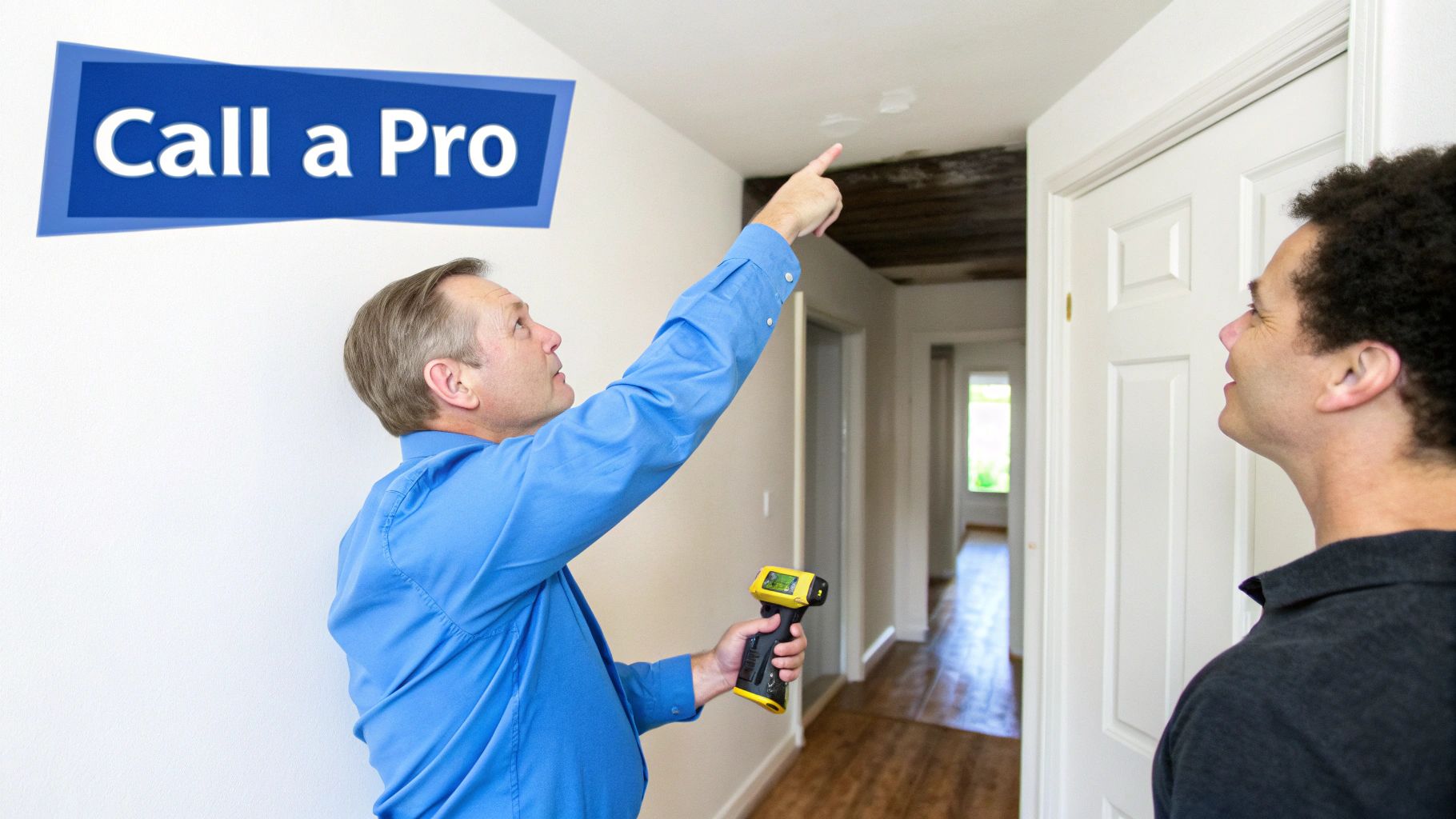
Realizing that mold won't just die on its own can be a bit unsettling. But here's the good news: that knowledge gives you the power to take the right next step. Instead of waiting and wondering, certain signals tell you it’s time to stop guessing and bring in a professional. Ignoring them is a gamble with your property and your family’s health.
The most obvious trigger is, of course, seeing actual mold growth. But it’s often the more subtle clues that point to a hidden problem. Trust your senses—especially your nose. A persistent earthy or musty smell that you just can’t trace is one of the most reliable signs of a colony thriving behind a wall, under the floorboards, or deep in your HVAC system.
When To Make The Call
It’s easy to dismiss the little things. That tiny speck of discoloration on the ceiling or a faint stain in a corner? It could be the tip of a much bigger iceberg. If you notice any of these red flags, it’s a clear sign you need an expert opinion:
- A Persistent Musty Odor: If your home smells damp or earthy even after you’ve aired it out, that’s a strong signal of hidden microbial growth.
- Visible Discoloration: Any new or spreading stains on walls, ceilings, or baseboards—especially black, green, or white patches—warrant an immediate call.
- Recent Water Damage: If you've had a plumbing leak, a leaky roof, or a flood, an inspection is critical, even if the area looks and feels dry now.
- Unexplained Health Symptoms: When family members have ongoing allergy-like symptoms (sneezing, coughing, itchy eyes) that only seem to act up at home, mold is a very likely culprit.
The global mildew remover market was valued at US$ 813.4 million in 2023 and is projected to nearly double by 2034. This booming industry confirms what experts already know: homeowners are realizing that waiting for mold to die on its own simply doesn’t work.
Demystifying The Inspection Process
A professional mold inspection goes far beyond what you can see with the naked eye. Certified inspectors use specialized tools to get the full picture, giving you clarity and a concrete plan.
During a typical assessment, an expert will use moisture mapping to find hidden dampness inside your walls and thermal imaging to detect temperature differences that indicate water intrusion. By understanding what is a mold inspection, you can feel confident you’re getting a complete diagnosis of your home’s health—not just a surface-level glance.
Ready to Clear the Air for Good?
If there's one thing to take away from all this, it's that hoping mold will just die and go away on its own is a recipe for disaster. It doesn't work that way. Instead, those spores just lie dormant, like tiny seeds waiting for the next rain or leak to spring back to life. This endless cycle of growth, dormancy, and regrowth is a constant threat to your home's structure and, more importantly, your family's health. Taking clear, decisive action isn't just a smart move—it's the only real way to guarantee a safe and healthy home.
For homeowners across Santa Barbara and Ventura counties, that next step is an easy one. Pacific Mold Pros is your local, trusted partner in this fight. Our certified inspectors don't just skim the surface for obvious problems; we dig deep to uncover the hidden moisture issues that keep the mold cycle going.
Your Path to a Healthy Home
We use sophisticated diagnostic tools to give you the full, unvarnished truth about your home's condition.
- Moisture Mapping: We'll find exactly where hidden dampness is lurking inside your walls and under your floors.
- Thermal Imaging: This technology lets us see temperature differences that are dead giveaways for water intrusion.
- Certified Lab Analysis: We take the guesswork out of it by identifying the specific types of mold and the concentration of spores you're up against.
Once our assessment is complete, we'll give you a straightforward, easy-to-read report that explains exactly what's going on and how to fix it. No confusing jargon—just actionable information that empowers you to make the right call for your home.
Don't gamble with your family's health or your property's value. Our "Breathe Easy Guarantee" is our promise to you: we provide the accurate, unbiased information you need to finally restore your peace of mind.
Ready to take back control? It's time to protect your investment and your family's well-being by scheduling a professional inspection. Contact Pacific Mold Pros at (805) 232-3475 to get the definitive answers you deserve. Let’s work together to create a healthy home.
Got Questions About Mold? We've Got Answers.
Once homeowners learn that mold won't just pack up and leave on its own, a bunch of practical questions usually follow. Getting straight answers is the first step toward taking safe, effective action to protect your home and family. Let's tackle some of the most common ones we hear every day.
Can I Just Grab Some Bleach And Kill The Mold Myself?
It's a tempting thought—see some mold, nuke it with bleach, and problem solved, right? Unfortunately, it’s not that simple, and bleach is usually the wrong tool for the job.
Sure, on a hard, non-porous surface like a porcelain sink or tile, bleach can wipe away the surface stain. But on materials mold loves to eat—like drywall, wood, or insulation—it often makes the problem worse. The chemistry is the issue: the chlorine in bleach kills surface mold, but the water in the solution soaks deep into the porous material. You're essentially giving the mold's hidden root structure (its mycelium) a nice, long drink, which can help it grow back even stronger.
Plus, even dead mold spores can trigger allergies and respiratory issues. Simply killing the mold without physically removing it from your home doesn't get rid of the health risk.
Professional remediation is the only way to be certain you've removed both the visible mold and its hidden allergenic particles. It's about getting to the root of the problem, not just masking the symptoms.
What’s The Real Difference Between Mold And Mildew?
This one's a classic. Think of it this way: all mildew is a type of mold, but not all mold is mildew.
Mildew is the term for specific types of mold that grow flat on surfaces, usually in a powdery or downy pattern. You'll typically find it in shades of gray, white, or light yellow on damp shower grout, window sills, or even fabrics.
Other molds can be fuzzy, slimy, or velvety and come in a whole rainbow of colors, including the infamous black or green varieties. While mildew is generally less destructive than its more invasive cousins, both are fungi that release airborne spores into your home. More importantly, both are giant red flags pointing to an underlying moisture problem that needs to be addressed for good.
How Long Does A Professional Mold Inspection Actually Take?
A thorough, professional inspection is designed to be comprehensive without turning your life upside down. For most homes, a complete inspection by a Pacific Mold Pros certified technician will take between one to three hours.
The time depends on the size of your home and how complex the potential issue is. We do way more than just a quick visual scan. Our inspectors use professional tools like moisture meters and thermal imaging cameras to find what the naked eye can't see—hidden moisture inside walls, under floors, or in ceilings. This detailed approach is how we give you a truly complete and accurate picture of your home's health.