For anyone suffering from allergies, the right air filter isn’t just a nice-to-have—it’s a game-changer. The best air filters are the ones with a high MERV rating (think 11-13) for your home's HVAC system, or standalone air purifiers that are True HEPA certified. These are the heavy hitters, specifically engineered to trap microscopic villains like pollen, dust mites, pet dander, and mold spores, clearing the air you breathe every day.
Your Quick Guide To Allergy-Fighting Air Filters
If you're stuck in a cycle of sneezing, congestion, and itchy eyes, the right air filter can be your strongest ally. Think of it as a high-tech net for your home's air, designed to catch the invisible triggers that make you miserable. While the world of air filtration can seem a little complicated, it really just boils down to a few key ideas.
This guide is your practical roadmap. We’ll cut through the technical jargon and help you pick the perfect air filter for your home and your allergies. Let's start with the basics.
The Foundation Of Allergy Relief
At its core, an allergy-focused filter has one job: grab tiny particles out of the air before you have a chance to breathe them in. These irritants are usually way too small to see, but they're the primary culprits behind most respiratory flare-ups. Your goal is to find a filter that's dense enough to trap these particles without choking your HVAC system's airflow.
The two most important features to look for are:
- High MERV Rating: This is a scale that measures how well a filter catches airborne particles. For allergies, a MERV rating between 11 and 13 is the sweet spot.
- True HEPA Certification: This is the gold standard for air purification. It’s a guarantee that the filter captures an incredible 99.97% of particles as small as 0.3 microns.
A filter's effectiveness isn't just a marketing claim; it’s a proven way to slash your exposure to allergens. When you reduce the triggers floating around your home, you give your immune system a much-needed break. That means fewer symptoms and a better quality of life.
The science on this is compelling. One rigorous 6-month clinical study followed asthma patients and found that using HEPA filters in their bedrooms cut down house dust mite concentrations in bedding by 68.3% and in settled dust by 71.0%. The result? Patients reported fewer symptoms and better asthma control, proving the direct link between cleaner air and real relief. You can dive into the full findings on HEPA filter effectiveness in the published study.
While HVAC filters protect your entire home, portable air purifiers can provide targeted relief in crucial areas like the bedroom. If mold is a specific concern, our guide on the best air purifiers for mold spores offers more specialized advice. Getting these basics down is the first step toward clearer air and a healthier, more comfortable home.
Decoding Filter Ratings Like MERV and HEPA
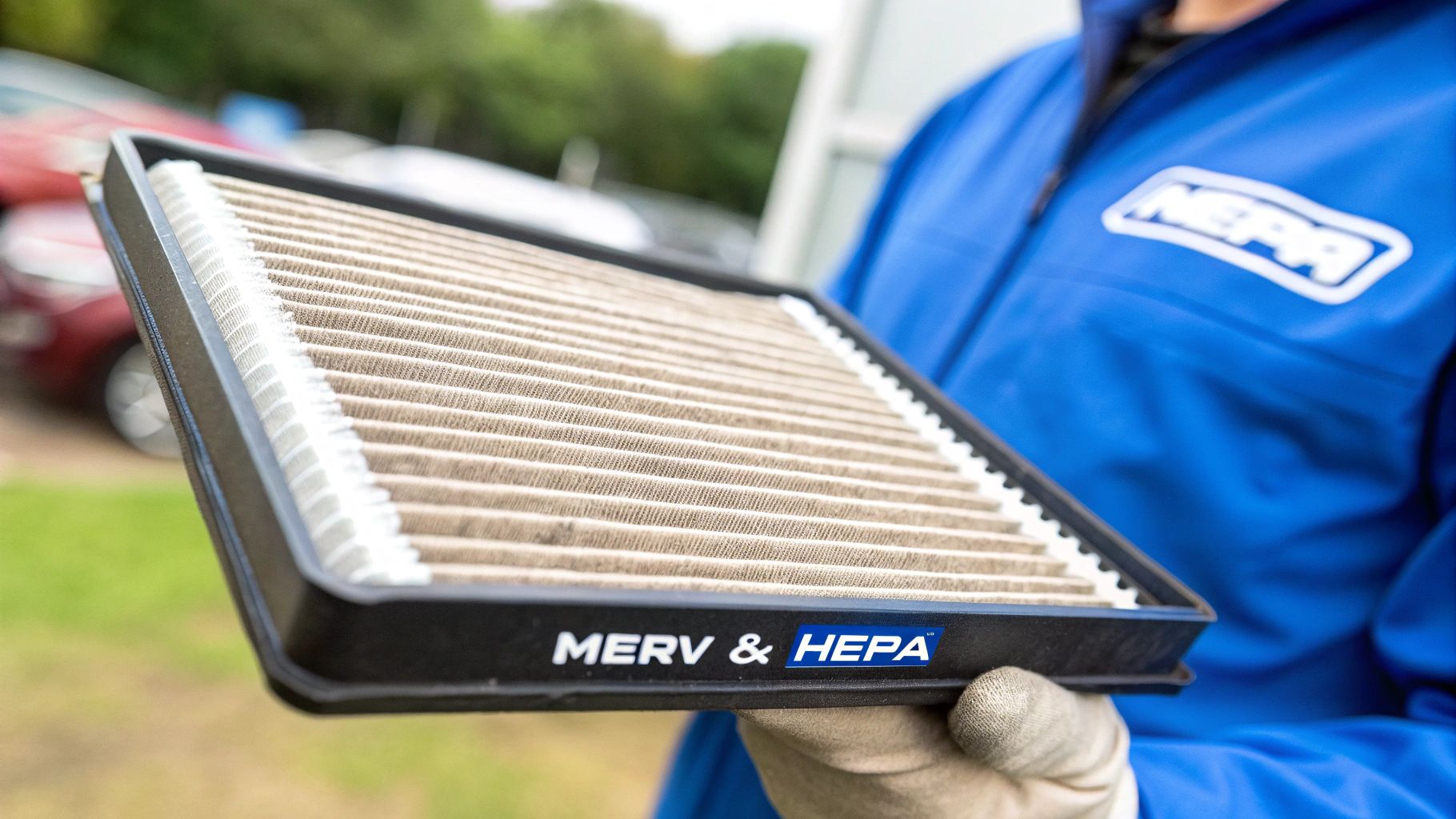
Walking down the air filter aisle can feel like trying to crack a secret code. The packaging is covered in technical jargon, but figuring it out is the first step toward finding the best air filters for allergies. Two acronyms are all you really need to know: MERV and HEPA.
Think of these ratings like the nutrition facts label on your food—they cut through the marketing fluff and tell you exactly what the filter is capable of capturing.
Choosing a filter is a bit like making coffee. You wouldn't use a paper towel to catch fine espresso grounds; you'd end up with a gritty, muddy cup. You'd want a tightly woven filter that lets the good stuff through while trapping everything else. Air filter ratings work the same way for the air you breathe.
Understanding The MERV Rating Scale
For the big filter in your HVAC system, the most important score is its MERV rating. MERV stands for Minimum Efficiency Reporting Value, and it’s a simple 1-to-20 scale that tells you how well a filter traps airborne particles of different sizes. The higher the MERV number, the denser the filter and the smaller the particles it can grab.
Basic filters you’ll find in most homes usually have a MERV rating between 5 and 8. These do a fine job of protecting your furnace from big dust bunnies, but for allergy sufferers, they’re practically useless. Microscopic irritants like pollen, pet dander, and mold spores sail right on through.
To actually stop those allergens, you need a filter with a much tighter weave.
- MERV 1-4: Catches only the largest particles, like carpet fibers. Offers almost no allergy relief.
- MERV 5-8: The standard for most homes. It traps visible dust and lint but lets the real allergy triggers pass.
- MERV 9-12: This is where you start to feel a difference. These filters are fine enough to capture most pollen, pet dander, and dust mite debris.
- MERV 13-16: Considered superior residential filtration. These can snag bacteria, smoke, and even some virus-carrying particles. A MERV 13 is often the highest rating a standard residential HVAC system can handle without straining the fan motor.
For most homeowners looking for serious allergy relief, the sweet spot is a MERV 11 to 13 filter. This range strikes the perfect balance—it captures a huge percentage of allergens without choking your HVAC system by overly restricting airflow.
HEPA Filters: The Gold Standard for Allergy Relief
While MERV ratings are for your central air system, the undisputed champion for air purification is HEPA, which stands for High-Efficiency Particulate Air. You’ll typically find these in portable, room-sized air purifiers, and a True HEPA filter is certified to meet an incredibly high performance standard.
To earn the HEPA name, a filter must be lab-tested and proven to capture 99.97% of all airborne particles down to 0.3 microns in size. This includes the most common—and potent—triggers for allergy and asthma attacks.
So, how small is 0.3 microns? For perspective, a single human hair is about 50-70 microns thick. A HEPA filter is designed to trap particles more than 150 times smaller than that.
That level of filtration is a game-changer. The HEPA standard of capturing 99.97% of 0.3-micron invaders like pollen and mold spores is why systematic reviews show it can lead to a 65-90% reduction in airborne allergens. With the CDC reporting over 25 million cases of allergic rhinitis in the U.S., effective filtration is a must-have, especially for anyone with a compromised immune system.
Once you understand these ratings, you can confidently look past flashy marketing and choose a filter based on what it can actually do. Whether you’re upgrading your HVAC filter to a MERV 13 or adding a HEPA purifier to a bedroom, this knowledge is key to improving indoor air quality and creating a home that feels like a true sanctuary.
Choosing the Right Filter Type for Your Home
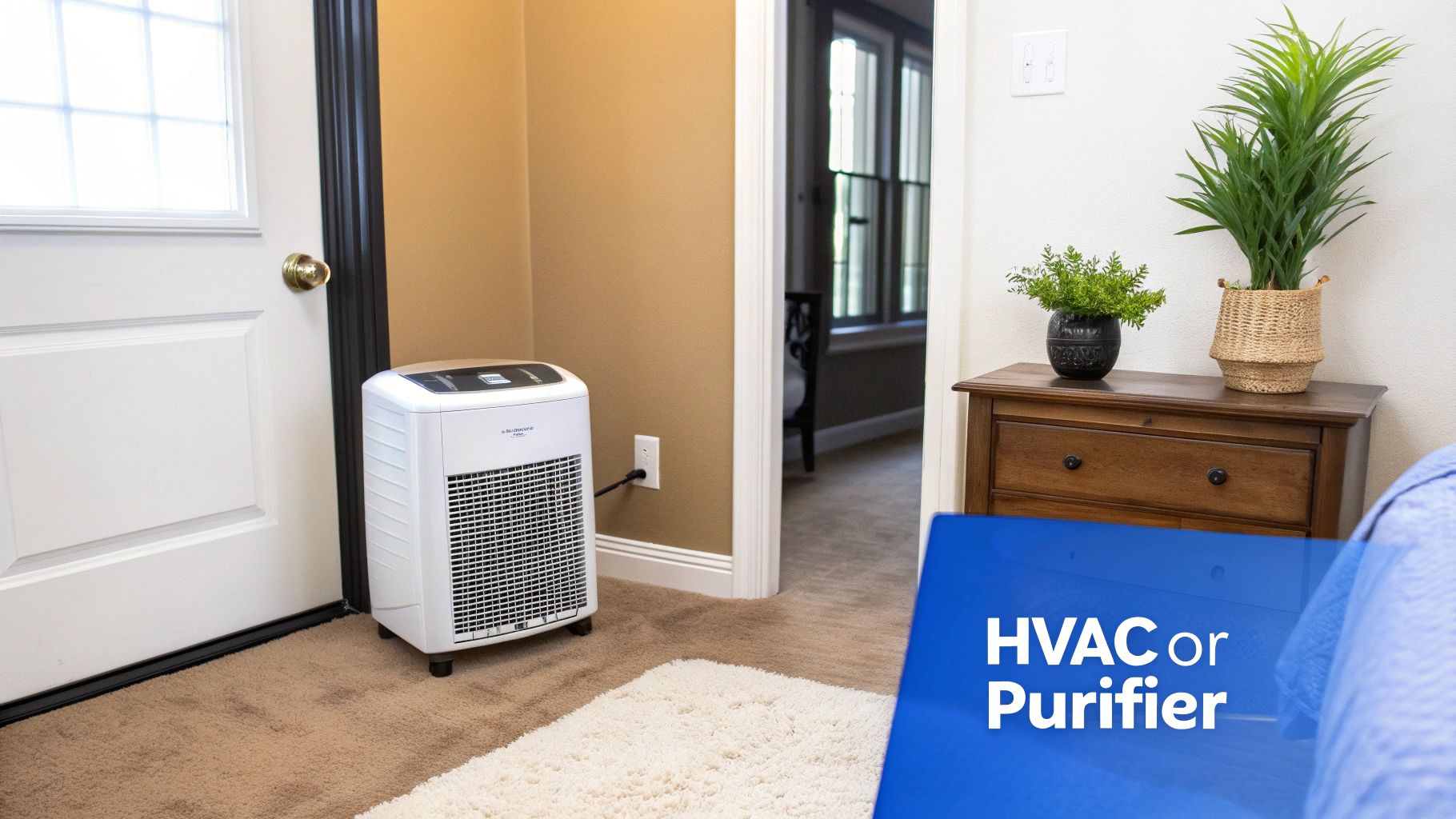
Alright, you know how to read the ratings on the box. Now it’s time to put that knowledge to work in your own home. The biggest decision you’ll face is whether to upgrade the filter in your central HVAC system or to bring in one or more portable air purifiers.
Think of your HVAC system as your home's lungs, circulating air through every single room. A high-quality filter here is a whole-house solution. Portable units, on the other hand, are like specialists—they deliver a concentrated dose of clean air to a specific room, like your bedroom or home office.
There’s no single right answer. The best strategy really depends on your living situation, how bad your allergies are, and what you’re trying to accomplish. Let’s break down the pros and cons of each.
Upgrading Your Central HVAC Filter
For most homeowners, upgrading your central air filter is the most efficient place to start. It uses the system you already own to clean the air everywhere a vent is present. But there’s a catch, and it's a big one: the filter has to fit perfectly.
A filter with even small gaps around the edges is like trying to catch fish with a hole in your net. Air, like water, follows the path of least resistance. It will just flow around the filter, sending all those allergens right back into your living space and making your fancy new filter pretty much useless. Always measure your current filter or check your system’s manual to get the exact dimensions.
A filter that's even a fraction of an inch too small creates a "bypass" route for air. This means dust, pollen, and dander are simply recirculated back into your home instead of being captured.
You also need to be realistic about your HVAC system's muscle. As we covered, filters with a MERV 13 rating or higher can be harder for air to push through, which might strain an older furnace or AC unit. For most modern homes, a filter in the MERV 11 to 13 range strikes a perfect balance between high-efficiency filtration and healthy airflow.
Using Portable Air Purifiers
If you’re a renter, live somewhere without central air, or just need an extra layer of defense in one room, a portable air purifier is your best friend. These standalone machines are incredible for targeted air cleaning. They almost always use True HEPA filters to pull a massive amount of particles out of the air in a specific area.
When you’re shopping for a portable unit, the number one spec to look for is the Clean Air Delivery Rate (CADR). This tells you exactly how much clean air the purifier produces and how fast it can clean a room of a certain size. The higher the CADR, the more air it cleans.
To find the right size, you first need to know the square footage of your room. From there, you can use a simple rule of thumb:
- The Rule of Two-Thirds: Your purifier's CADR number should be at least two-thirds of the room's square footage.
- For example: If your bedroom is 150 square feet, you'll want a purifier with a CADR of at least 100. This ensures the unit can cycle all the air in the room multiple times an hour, keeping those allergen levels way down.
Portable units are a fantastic tool here in coastal California. Our high humidity can create little microclimates in certain rooms, leading to localized mold growth. For a deeper dive, check out our guide on effective humidity control in homes. A good purifier can be a powerful defense against the mold spores that love these damp conditions.
HVAC Filter vs Portable Purifier: Which Is Right for You?
So, how do you choose? It really comes down to your home’s setup and your specific needs. This table breaks down the key differences to help you decide.
| Consideration | HVAC Filter | Portable Air Purifier |
|---|---|---|
| Coverage Area | Whole-home solution; cleans air in every room with a vent. | Targeted; cleans the air in a single room or defined space. |
| Filtration Level | Good to great (MERV 8-13 is common). Higher ratings can strain the system. | Typically excellent (True HEPA is the standard). |
| Best For | Homeowners with modern central air systems. | Renters, homes without central air, or allergy sufferers needing extra protection in bedrooms. |
| Cost | Lower upfront cost (filters are ~$20-$50) but requires regular replacement. | Higher upfront cost ($100-$500+) plus filter replacement costs. |
| Maintenance | Simple filter replacement every 1-3 months. | Filter replacement every 6-12 months. May require pre-filter cleaning. |
| Noise | No additional noise beyond your existing HVAC system. | Can be noisy, especially on higher fan settings. |
| Energy Use | May slightly increase HVAC energy use with higher MERV ratings. | Adds to your electricity bill, consuming power like a fan or small appliance. |
Ultimately, many people find that a combination approach works best: a quality MERV 11 filter in the HVAC system for general, whole-house cleaning, plus a dedicated HEPA purifier in the bedroom for a guaranteed eight hours of allergy-free sleep.
The Unique Air Quality Challenges in Coastal Areas
Living on the beautiful California coast comes with stunning views, but it also brings a unique set of air quality challenges that can make allergies feel relentless. That same marine layer that creates picturesque foggy mornings also traps moisture, leading to persistently high humidity. This isn't just about comfort; it creates the perfect breeding ground for one of the most stubborn allergens out there: mold.
Mold thrives in damp, dark environments. In coastal homes, this means it can flourish unseen in crawl spaces, attics, behind walls, or even deep inside your HVAC system’s ductwork. Once a mold colony gets established, it doesn’t stay put. It releases millions of microscopic spores into the air, which are then circulated through your entire home every time the heat or AC kicks on.
For anyone with allergies, these airborne spores are a constant trigger, leading to symptoms like coughing, sneezing, congestion, and itchy eyes that just never seem to go away.
Your Filter Is a Critical Line of Defense
This is where finding the best air filters for allergies becomes so incredibly important. A high-efficiency filter, whether it’s a MERV 11-13 in your HVAC or a True HEPA filter in a portable purifier, acts as a crucial barrier. It’s specifically designed to capture these tiny, irritating spores before you can breathe them in.
Think of your filter as a security checkpoint for your air. While basic, cheap filters let mold spores pass right through, a high-quality filter stops them at the gate. This can dramatically reduce the allergen load in your home, bringing immediate relief from those nagging respiratory symptoms.
However, it's vital to understand a key limitation.
An air filter is an excellent tool for treating the symptom—airborne mold spores—but it cannot solve the source of the problem. If a hidden moisture issue is feeding a mold colony, the spores will just keep coming, forcing your filter to work overtime without ever fixing the root cause.
This is why a comprehensive air quality strategy, especially here on the coast, has to go beyond filtration alone. Managing indoor moisture is just as critical. For some practical steps, check out our guide on how to reduce humidity in your house.
Beyond Filtration: The Need for a Holistic Approach
A high-performance air filter is a non-negotiable part of the solution, but it’s most effective when paired with proactive moisture control. And the evidence for just how powerful good filtration can be is clear and compelling.
Controlled trials have shown that effective air filtration can slash particulate matter levels in bedrooms by half, with some studies showing reductions as high as 69-80%. One landmark study combined air cleaners with other allergen-control measures, resulting in a significant drop in allergen levels in both mattresses and floor dust. These findings strongly support asthma guidelines that recommend filters for pet dander and other common allergens.
Ultimately, winning the battle against coastal allergens requires a two-pronged attack. Use the best air filters you can to immediately improve the air you breathe, but also stay vigilant for the underlying moisture issues that let mold thrive in the first place. This dual strategy is the key to creating a truly healthy indoor environment where you can finally breathe easy.
When to Call a Professional for Air Quality Issues
Upgrading your air filter is a fantastic first step, but what happens when it’s not enough? If you’ve installed a top-tier filter and are still dealing with a stubborn musty smell, allergy symptoms that won’t quit, or—even worse—visible mold, it's a huge red flag.
Those are signs that the problem runs deeper than what any filter, no matter how good, can handle.
Think of it like this: your air filter is like a bouncer at a club, catching airborne particles trying to get in. But it can’t stop the source of the problem. If there’s a leaky pipe behind the wall feeding a hidden mold colony, your filter is just catching the spores that escape. The real issue is still growing, completely out of sight.
This is the point where you have to switch from a DIY fix to calling in a professional. Ignoring these warning signs lets hidden damage spread, putting both your health and your home's structure at risk.
Signs a Filter Is Not Enough
Knowing when to call for backup is key. If you’ve done everything right with your filters but the problems persist, it’s time for an expert to take a look. A specialist can uncover issues that are flat-out impossible for a homeowner to see.
Here are the red flags that scream "deeper problem":
- Persistent Musty Odors: That earthy, damp basement smell that just won't go away is the classic signature of hidden mold. If it gets worse after it rains, pay attention.
- Ongoing Allergy Symptoms: Are you still sneezing, congested, and dealing with itchy eyes despite having a new, high-quality filter? An undiscovered allergen source is the likely culprit.
- Visible Signs of Mold: Any visible mold, even a small patch, is often just the tip of the iceberg. What you see on a wall or ceiling could be connected to a much larger colony you can't see.
- Water Damage or Leaks: If you've had any water issues—a leaky roof, a busted pipe, or even minor flooding—you've rolled out the welcome mat for mold to grow inside your walls and under your floors.
What a Professional Inspection Uncovers
When you call a team like Pacific Mold Pros, you’re not just getting a quick look-around. You’re getting a scientific investigation into the health of your home using specialized tools and a systematic process.
Our certified inspectors start with a trained eye, searching for the subtle clues of moisture and mold that are easy to miss. But the real deep dive happens with our technology.
A professional inspection uses tools like thermal imaging cameras and moisture meters to "see" inside your walls. This tech reveals temperature and moisture differences that pinpoint hidden leaks and damp insulation—the exact spots where mold loves to grow undetected.
From there, we can take samples for certified lab analysis to get definitive answers. You can learn more about our process and what is involved in professional air quality testing to see how we take the guesswork out of the equation.
From Testing to a Clear Action Plan
The whole point of a professional inspection is to give you clarity. Instead of guessing, you get a detailed, easy-to-understand report that identifies the type of mold, measures how much is present, and—most importantly—traces it all back to the source.
This gives you a clear roadmap for what to do next. You’ll know exactly what needs fixing, whether it’s a slow leak in the attic, poor ventilation in the crawl space, or condensation building up in your HVAC system. By fixing the root cause, you solve the problem for good. Then, your air filter can finally do its job: keeping an already clean and healthy home that way.
Got Questions About Air Filters? We’ve Got Answers.
Even after you've nailed down the basics, a few questions always pop up. That’s perfectly normal. Choosing the right air filter isn’t a one-and-done decision; it’s about finding a rhythm that keeps your home’s air clean and your allergies quiet.
This is where we get into the nitty-gritty. Think of this as the practical, day-to-day guide to managing your filters. We’ll cover the most common questions we hear from homeowners, giving you straightforward answers to help you feel confident you're making the right call for your home.
How Often Should I Really Change My Air Filter for Allergies?
This is probably the most important question we get, and the answer is simple: more often than you think. For real, noticeable allergy relief, you need to change your HVAC filter way more frequently than the generic recommendation on the package.
Most basic 1-inch filters say to replace them every 90 days. That’s fine for an average home, but it’s not nearly enough for a household where someone is fighting allergies. For serious allergen control, you should be swapping out your filter every 30 to 60 days.
This is especially critical during peak allergy seasons when pollen is flying or if you have pets sharing their dander. A clogged filter is a useless filter. It can’t trap any new particles, and worse, it chokes your HVAC system by restricting airflow. That forces the system to work harder, driving up your energy bills and potentially shortening its lifespan.
For portable air purifiers, the schedule is a little different. Always check the manufacturer's guide, but here’s a good rule of thumb:
- HEPA Filter: Replace every 6 to 12 months.
- Carbon Pre-filter: Replace every 3 months.
Making regular filter changes a habit is one of the cheapest and most powerful things you can do for your indoor air quality.
Can a High-MERV Filter Actually Damage My HVAC System?
That’s a smart question to ask. A high-MERV filter (we’re talking MERV 13 and up) is made of a much denser, more tightly woven material. It’s what makes them so good at grabbing tiny allergens, but it also creates more resistance to airflow—what the pros call "pressure drop."
Imagine trying to breathe through a thin t-shirt versus a thick wool blanket. The blanket is a lot harder to breathe through, right? It's the same idea. If your HVAC system is on the older side or just wasn’t built for a high-efficiency filter, that extra resistance can strain the fan motor, kill its efficiency, and even lead to some pricey repairs down the road.
Before you slide a MERV 13 (or higher) filter into your system, do yourself a favor and check the HVAC manual or call a trusted HVAC technician. They can tell you exactly what the maximum MERV rating your system can safely handle is.
For most modern homes, a filter in the MERV 11 to 13 range is the sweet spot. You get fantastic allergen filtration without putting your system at risk.
Will an Air Filter Actually Help with My Mold Allergies?
Yes, absolutely. A high-quality air filter is a non-negotiable tool for anyone with mold allergies because it physically traps airborne mold spores. Whether it’s a True HEPA filter in a portable purifier or a high-MERV filter in your HVAC system, it will pull those microscopic irritants out of the air before you can breathe them in.
But here’s the crucial part you can’t forget.
A filter only treats the symptom—the spores floating around your home. It does nothing to fix the cause—the hidden mold colony that's pumping them out in the first place. If you have mold growing somewhere because of a leak, high humidity, or condensation, it’s going to keep producing spores 24/7. Your filter will be working overtime, but it can never stop the source.
If you still smell that musty odor or your allergies won’t let up even with a great filter, it’s a huge red flag that you have an underlying moisture problem. Lasting relief from mold allergies only comes from finding and fixing the source.
Are More Expensive Filters Always Better for Allergies?
Not necessarily. You often get what you pay for, but a higher price tag doesn't automatically mean a filter is better for your home. The "best" filter is the one that has the right rating for your allergies, fits your system perfectly, and doesn't overwork your HVAC.
Sure, a $50 MERV 13 filter is worlds better for allergies than a $5 MERV 6 filter. But a $70 MERV 14 might not give you a noticeable improvement over the MERV 13, and it could put unnecessary strain on your system. It’s all about finding that sweet spot between high performance and system compatibility.
When you're shopping, ignore the flashy marketing and focus on the specs that matter:
- The MERV Rating: Stick to the 11-13 range for your HVAC.
- True HEPA Certification: For portable purifiers, this is a must-have. No exceptions.
- Correct Size: A filter that doesn't fit is worthless, no matter the price.
- CADR (for portables): Make sure the unit’s Clean Air Delivery Rate is right for your room size.
Focus on these performance numbers, and you’ll be investing your money where it counts—in cleaner air and better health.