Here's a common question we get from homeowners: "If I dry out the mold, will it just die?" It's a logical thought, but unfortunately, mold is a lot more resilient than that.
The short answer is no, mold doesn't really die on its own. Instead of dying off when conditions get dry, it pulls a clever survival trick: it goes into a dormant, inactive state.
Think of it like a plant seed in the desert. It’s not dead—it’s just patiently waiting for the next rain to spring back to life. That dry, dusty patch of what looks like "dead" mold is often just a colony of spores, armed and ready for a comeback.
Why Dormant Mold Is a Ticking Time Bomb
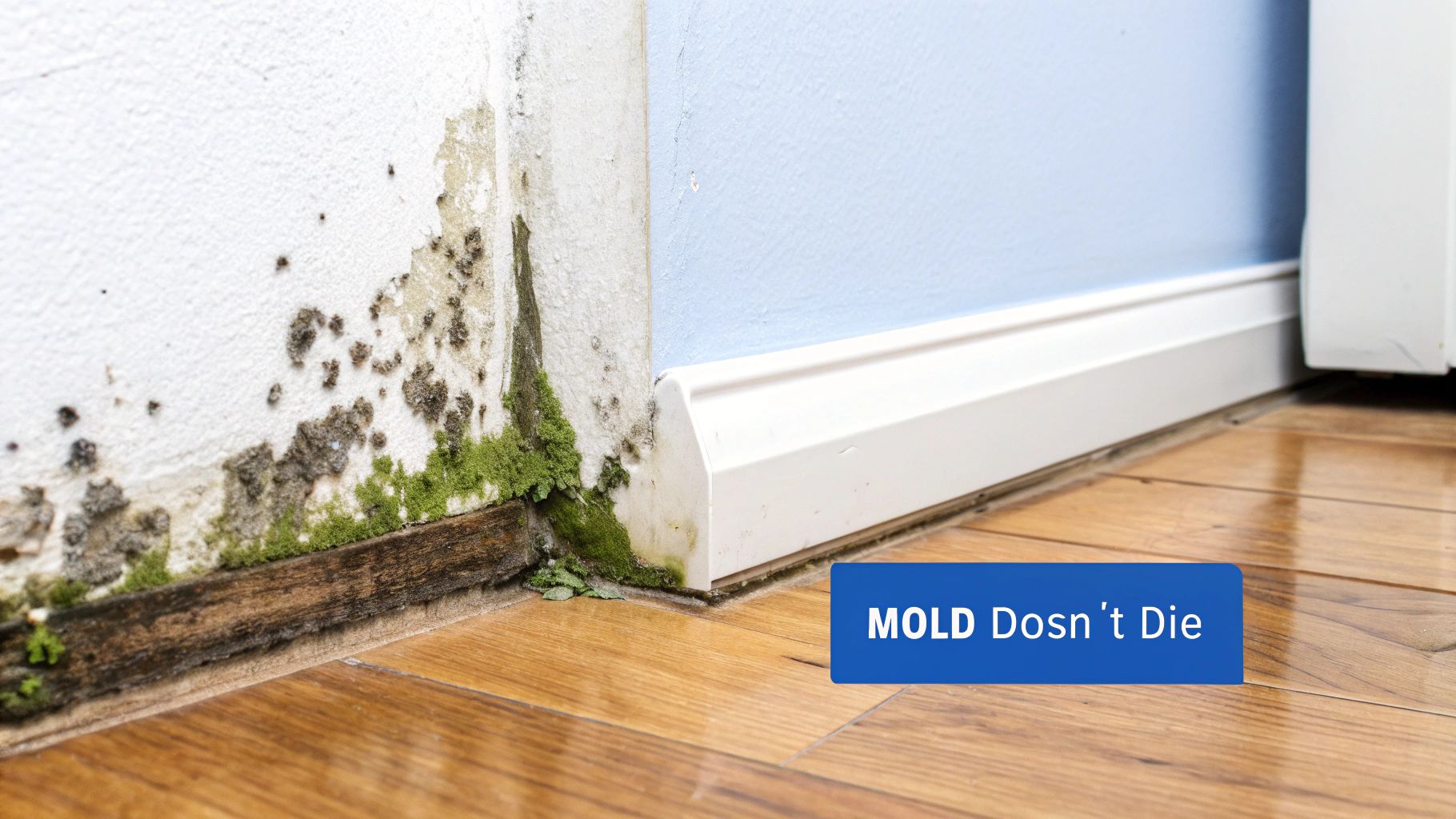
Many people believe that if they just point a fan at a damp, moldy spot, the problem is solved. This is one of the biggest—and most dangerous—misconceptions we see.
When a mold colony loses its moisture source, its primary mission shifts to survival. It does this by releasing countless microscopic spores that can hang around for years, completely dry and inactive.
These dormant spores are incredibly lightweight. The slightest disturbance—running the vacuum, dusting a shelf, or even the air kicking on from your HVAC system—can send them airborne. From there, they travel and settle all over your home, just waiting for a little moisture to start growing again. Understanding at what humidity does mold grow is the key to preventing them from coming back with a vengeance.
The real danger is that even dormant mold is a health hazard. While it isn’t actively growing, the spores still contain the same allergens and mycotoxins that cause respiratory issues. Simply drying out mold doesn’t get rid of the threat; it just hits the pause button.
To really get a handle on the situation in your home, it's helpful to know the difference between mold that's actively growing, lying in wait, or truly gone.
Understanding Mold Status at a Glance
This quick table breaks down the key differences between active mold, dormant mold, and a professionally cleaned surface. It helps clarify what you're actually looking at and why the distinctions matter so much.
| Characteristic | Active Mold | Dormant Mold | Professionally Removed Mold |
|---|---|---|---|
| Appearance | Often looks fuzzy, slimy, or velvety; can be various colors (black, green, white). | Looks dry, powdery, or flaky; may crumble when touched. | No visible signs of mold or staining remain; materials are clean or replaced. |
| Health Risk | High. Actively releases spores and mycotoxins into the air, causing immediate allergic reactions and respiratory issues. | High. Spores are still allergenic and toxigenic; easily disturbed and spread through the air. | Low. Contaminated materials are physically gone, along with the associated health risks. |
| Regrowth Potential | Guaranteed to spread as long as moisture and a food source are available. | Extremely high. Spores will reactivate and grow as soon as moisture is reintroduced. | Very low. The source of the problem and the mold itself have been completely eliminated. |
As you can see, the only state that truly eliminates the health risk and regrowth potential is complete, physical removal. Dormant mold is, in many ways, just as risky as the active kind because it's so easily spread.
Dormant vs. Dead Mold: What's the Real Difference?

To really get why mold doesn't just pack up and die on its own, we need to talk about two very different states: dormant and dead. They might sound alike, but in the world of mold, they mean completely different things for your home and your health.
Think of an active mold colony like a thriving plant. It's got everything it needs: moisture, a food source (like your drywall), and a comfortable temperature. But what happens when you fix that leaky pipe and cut off its water supply?
The colony doesn't just give up. It goes into survival mode. It’s a lot like a dandelion that senses the end of the season and turns into a puffball of seeds. The visible part of the mold might dry out and look crusty, but before it does, it has already released millions of microscopic spores into the air.
The Survival Genius of Mold Spores
Those spores are mold's secret weapon. Each one is a tiny, self-contained survival pod, built to withstand incredibly harsh conditions. They can float through your HVAC system, settle on furniture, and hide in carpets, just waiting for their next chance—sometimes for months or even years.
All it takes is a little moisture. When one of those dormant spores lands on a damp spot—even just from a humid day—it can spring back to life and start a brand new colony. This is exactly why a one-time leak can turn into a recurring nightmare if the initial cleanup wasn't handled properly.
A dangerous myth we hear all the time is that dry, flaky mold is harmless. The truth is, that "dead-looking" patch is still loaded with the same allergens and mycotoxins that trigger health issues. Just bumping into it can send a cloud of irritants straight into the air you breathe.
Why Dormant Mold is Still a Health Hazard
The health risks don't just vanish when mold dries out. Many common indoor molds produce toxic compounds called mycotoxins, and these toxins don't just evaporate. They stick around on the spores and the materials the mold grew on.
What does that mean for you and your family?
- Airborne Allergens: Everyday activities like vacuuming, dusting, or even just walking past a dormant colony can kick these spores and toxins back into the air.
- Persistent Symptoms: If you're dealing with unexplained allergies, headaches, or breathing problems, dormant mold could be the hidden culprit.
- A False Sense of Security: Seeing a dry spot and assuming the problem is gone can lead to long-term exposure for everyone in your home.
The only way to know for sure what you're dealing with is through professional testing. It's the difference between guessing and knowing, and it's critical for understanding mold test results and developing a safe plan of action.
Bottom line: inactive mold is not safe mold.
Why Just Drying Out Mold Is a Band-Aid, Not a Cure
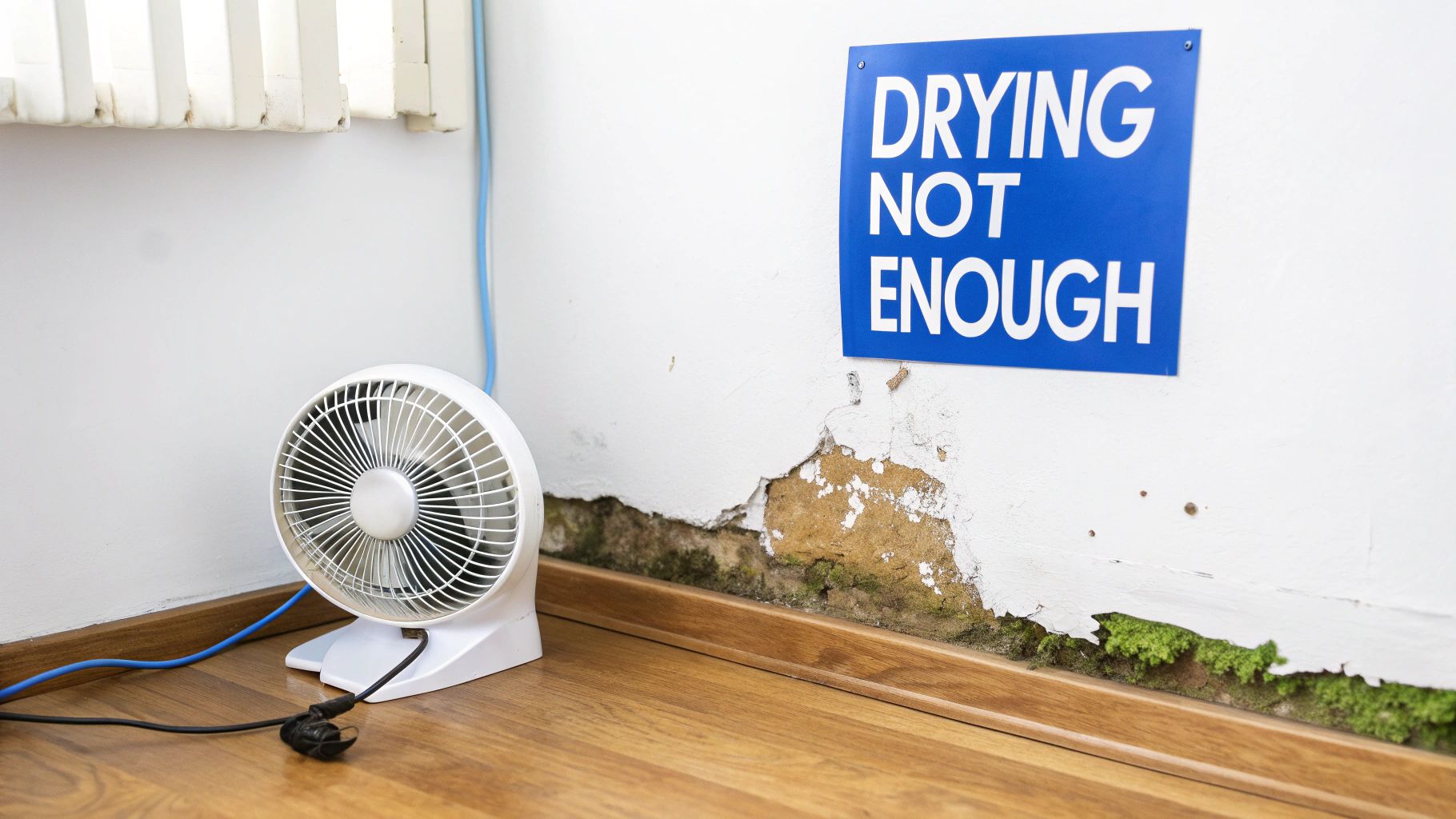
It’s a common scenario. A homeowner spots a small patch of mold after a minor leak, grabs a fan, and points it at the damp spot. The logic seems sound—if mold needs water, just take the water away, right?
Unfortunately, this is one of the biggest mistakes we see people make. It’s a temporary fix that ignores the two most critical parts of any real mold solution, guaranteeing the problem will pop back up later.
Relying on a fan is like pulling the top off a weed but leaving the roots buried in the soil. You're completely missing the original moisture source and failing to get rid of the physical mold colony that’s already taken hold. The problem isn’t solved; it’s just lying dormant, waiting for the next bit of humidity to spring back to life.
The Two Pillars of a Lasting Solution
If you want mold gone for good, your strategy has to attack both the cause and the effect. Miss one, and you're just setting the stage for a frustrating (and often costly) repeat performance.
- Eliminate the Moisture Source: This is non-negotiable. You have to play detective and figure out why the moisture was there in the first place. Was it a slow-dripping pipe, a crack in the foundation, or just a poorly ventilated bathroom? Whatever it is, it has to be fixed permanently.
- Physically Remove the Mold: The existing colony—even if it's dry and looks dead—has to go. That includes any contaminated porous materials like drywall, carpet, or insulation where its root-like structures have dug in deep.
Ignoring either of these is why so many DIY efforts fall flat. In fact, homes with poor ventilation are 70% more likely to have mold come back after a cleanup. Spores are always ready and can start a new colony in as little as two days once moisture returns.
Tracing Moisture Back to Its Hidden Source
Finding the source of the water isn't always as simple as it sounds. That mold patch on your ceiling might not be from a leaky roof. It could be condensation building up inside an uninsulated HVAC duct sweating behind the drywall. This is where professional expertise really shines.
A lasting solution requires a two-part strategy: fix the water problem and physically remove all contaminated materials. Anything less is just a temporary fix.
At Pacific Mold Pros, we use advanced tools to see what the naked eye can't. Thermal imaging cameras show us temperature differences inside walls that scream "hidden moisture," while moisture mapping lets us trace the water's path right back to its starting point. This tech helps us nail the exact cause, so the repair is targeted and complete.
This deep dive is the foundation of our entire process and a key part of our guide on how to prevent mold after water damage. By finding and fixing the root issue, we make sure that once the mold is gone, it stays gone.
The Hidden Health Risks of Dormant Mold Spores
It's one of the most dangerous myths we hear: if mold looks dry and isn't actively spreading, it's no longer a problem. Unfortunately, that couldn't be further from the truth. The health risks don't just vanish when mold dries out.
Think of it this way: the allergens and mycotoxins—toxic compounds some molds produce—don't simply disappear when a colony goes inactive. They remain on the dried mold and its spores, clinging to surfaces like an invisible, toxic dust.
This creates a hidden reservoir of health hazards just waiting to be disturbed. A simple vibration from walking across the floor, the airflow from your HVAC system, or trying to wipe it away can send these microscopic particles airborne.
Why Inactive Spores Still Pose a Threat
Once those dormant spores and their toxic hitchhikers are in the air, you can easily inhale them. This can trigger a whole host of health issues, even when there's no visible, active growth. Often, the symptoms are mistaken for seasonal allergies or a cold that just won't go away.
Common reactions include:
- Constant sneezing, coughing, or a runny nose.
- Itchy, watery eyes and skin irritation.
- Worsening asthma attacks and other respiratory issues.
- Headaches and chronic fatigue.
This is why simply asking "can mold die on its own?" misses the bigger picture. Even if it stops growing, the allergenic and toxic mess it leaves behind continues to tank your indoor air quality. To learn more about the specific dangers, you can explore the various health risks of mold exposure in our detailed guide.
The most crucial takeaway is that a dry, flaky patch of mold is not a resolved issue. It's a paused threat, fully capable of making your family sick and roaring back to life with the slightest reintroduction of moisture.
The Science Behind Mold Remediation
Leaving mold-damaged materials in place, even if they seem dry, offers zero health benefits. Scientific studies confirm that mold won't die off on its own without real intervention. Research shows that professional remediation in damp buildings significantly reduces respiratory problems, but only when it's done right. In contrast, homes with unrepaired mold damage show zero health improvements for the people living there.
This is why proper remediation always comes down to complete physical removal. Simply spraying a chemical on the area or drying it out isn't enough. The only way to truly protect your family’s health is to have certified professionals physically remove the contaminated materials and fix the moisture problem for good.
Knowing When to Call a Certified Mold Inspector
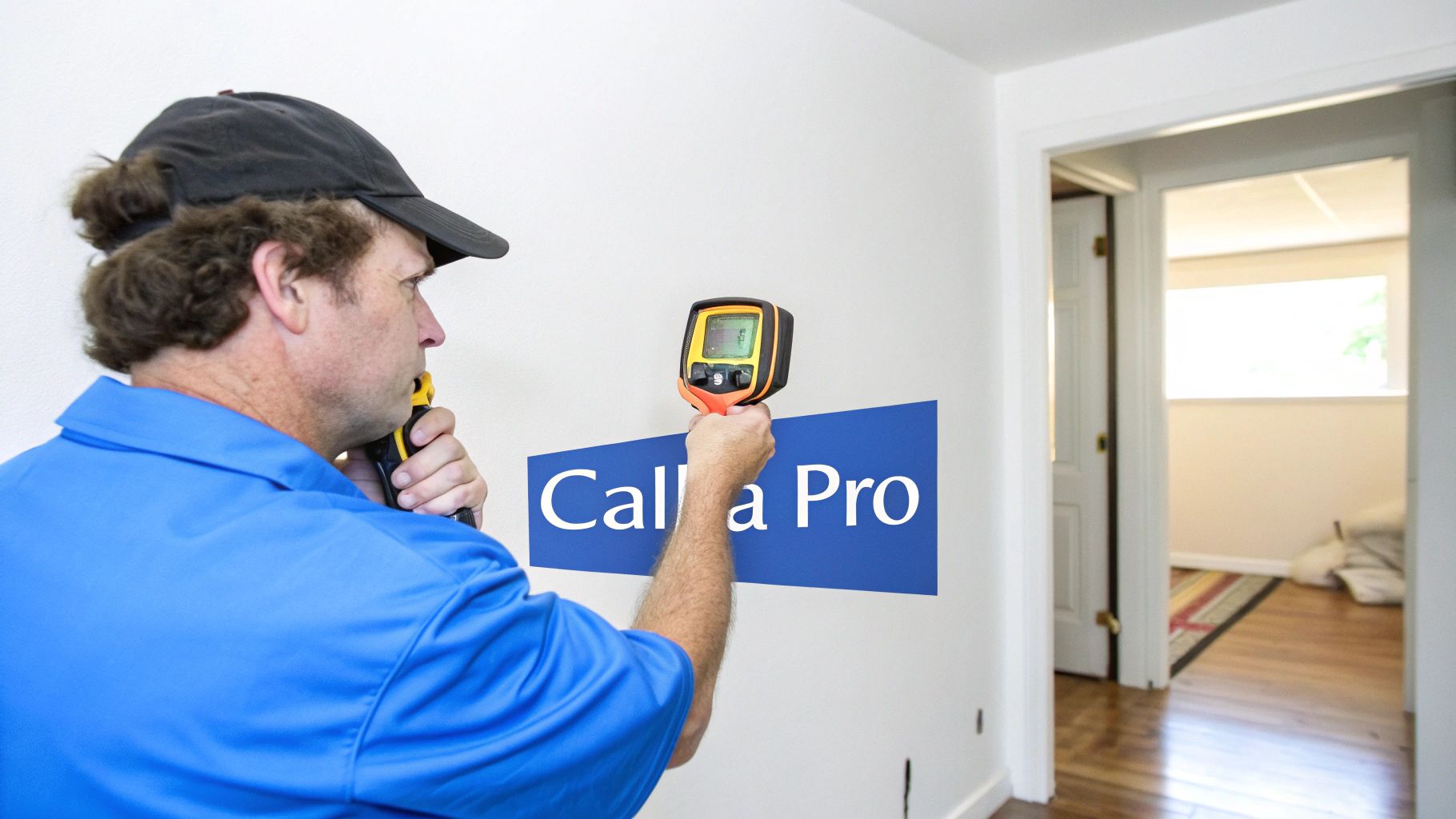
Understanding that mold doesn't just die on its own is a huge first step. But the next, and arguably most important, is knowing when to stop guessing and bring in a professional.
Sometimes the signs are obvious, but more often than not, they’re subtle clues that leave you wondering if you're overreacting. Let's be clear: DIY spot-checks and store-bought test kits can only get you so far. If you're running into any of the following situations, it's time to get an expert involved.
Key Signs You Need a Professional
It's easy to ignore the little things, but that's exactly how a small mold issue snowballs into a major contamination problem. Keep an eye out for these red flags—they often signal a much bigger problem hiding just out of sight.
- A Persistent Musty Odor: If your home has that distinct damp, earthy smell but you can't find a single spot of visible mold, that's a classic sign. It often means a colony is thriving inside your walls, under the floorboards, or deep within your HVAC system.
- Unexplained Allergy Symptoms: Are you or your family constantly sneezing, coughing, or dealing with watery eyes only when you're at home? This can be a direct reaction to airborne mold spores, even if the source is completely hidden from view.
- After Any Water Intrusion Event: A burst pipe, a leaky dishwasher, a roof leak, or a flooded basement should always be followed by a professional inspection. Water is sneaky and can seep into hidden cavities, creating the perfect breeding ground for mold that might not show itself for weeks.
What a True Mold Inspection Involves
A real professional inspection isn't just a quick look around with a flashlight. It’s a scientific investigation to get hard data about the health of your home's environment. At Pacific Mold Pros, we use specialized tools to see what the naked eye can't, ensuring nothing is overlooked. This is the core of our comprehensive mold inspection services.
Our process isn't about guesswork. It includes:
- Thermal Imaging: This technology is like having x-ray vision for moisture. It lets us see temperature differences inside your walls, instantly pinpointing hidden damp spots where mold loves to grow.
- Moisture Mapping: We use professional-grade moisture meters to trace the exact path and scope of water damage. This helps us find the source of the problem, not just the symptoms.
- Air and Surface Sampling: When it's necessary, we collect samples for a certified lab to analyze. This tells us exactly what types of mold are present and how concentrated the spores are in your air, giving us the data needed for a smart and effective remediation plan.
A certified inspector's goal isn't just to find mold—it's to find the why. By identifying and confirming the root cause, they provide a roadmap for a lasting solution, not just a temporary fix.
This thorough, data-driven approach is what separates successful mold removal from a failed attempt. In fact, the industry's low success rate of just 65% for mold removal often comes back to the myth that mold dies on its own. When remediation fails, it’s almost always because spores were left behind and the moisture source was never properly fixed—a common shortcut taken by uncertified contractors. You can learn more about avoiding this pitfall from the experts at Valor Mold.
Common Questions About Mold Dormancy
Knowing that mold doesn't really die but goes dormant naturally leads to some important questions. What does this mean for your home? Your health? Your cleanup plan? Let's walk through the most common questions we get from homeowners, moving from confusion to clear, confident action.
Can I Just Use Bleach to Kill the Mold Myself?
This is one of the most persistent—and dangerous—myths out there. While it feels like a powerful cleaner, bleach is the wrong tool for the job when it comes to mold on porous surfaces like drywall or wood.
Here’s the problem: bleach is mostly water. When you spray it on drywall, the chlorine might kill some surface mold, but the water component soaks deep into the material. This actually feeds the mold's root system, known as mycelium, which is hidden from view. You might remove the stain, but you’ve just given the underlying problem a drink of water.
Worse yet, bleach does nothing to neutralize the allergens and mycotoxins that mold leaves behind. These are the microscopic particles that often cause health issues. True, professional remediation isn't about spraying chemicals; it's about the complete physical removal of the contaminated material itself.
If My House Is Very Dry, Am I Safe from Mold?
Keeping your home dry is fantastic for preventing active mold growth, but it doesn't get you off the hook. Those dormant spores are incredibly tough. They can hang around for years, just waiting for their next chance to spring back to life. All it takes is a little bit of moisture.
And that moisture can come from anywhere:
- A slow, hidden leak inside a wall.
- A spill that wasn't dried out completely.
- A spike in humidity from cooking or showering without a fan.
This is why old water damage is such a big deal. That patch of "dead" mold you thought was harmless is really just a new problem waiting for the right moment. The real question isn't "can mold die on its own," but "will it stay gone?" Without removing the spores, the answer is always no.
How Do I Know if Mold Is Active or Dormant?
Trying to tell the difference can be tricky, but there are a few clues to look for. Active mold is a living, growing colony. It often looks damp, fuzzy, or even slimy and usually gives off that distinct, musty odor.
Dormant mold, on the other hand, typically looks dry and powdery. It might crumble if you touch it and may not have a strong smell. But don't let its appearance fool you. Disturbing a patch of dormant mold can send a cloud of spores into the air you breathe.
Crucial Takeaway: At the end of the day, it doesn’t matter if it’s active or dormant. Both pose significant health risks and point to a moisture problem that needs to be fixed. Any visible mold should be treated as a serious issue, period. The only way to know for sure what you're dealing with is to get a professional inspection.
What Should I Expect from a Professional Mold Inspection?
A real mold inspection is far more than a quick look around. A certified inspector from a company like Pacific Mold Pros is like a detective for your home. We use specialized tools and a methodical process to uncover the full story.
The inspection starts with a detailed visual assessment, but it goes much deeper. We use tools like thermal imaging cameras to find hidden moisture behind walls and moisture mapping to trace the full extent of water damage. If the situation calls for it, we might take air or surface samples for an independent lab to analyze. This tells us exactly what type of mold you have and how concentrated the spores are in your home.
The whole point is to give you a complete, data-driven report that doesn't just identify the mold, but also pinpoints the moisture source. From there, you get clear, actionable recommendations for getting rid of it safely and effectively.