The short, unequivocal answer is yes, mold can absolutely make you sick.
Think of a growing mold colony like a plant releasing invisible pollen. It pumps microscopic spores into the air you breathe, and when those spores get into your system, they can trigger everything from minor sniffles to serious, long-term health problems.
How Mold Exposure Actually Impacts Your Health
Have you ever noticed you feel under the weather at home but perfectly fine once you leave? Mold could be the hidden culprit. This is a huge concern for homeowners, especially here in the coastal climates of Santa Barbara and Ventura County, where our famous marine layer creates the perfect humid environment for mold to take hold indoors.
This isn't just an anecdotal hunch; the link between damp indoor spaces and poor health is a major public health issue.
A landmark study by the EPA and Berkeley National Laboratory found that building dampness and mold can increase the risk of respiratory and asthma-related health issues by a staggering 30% to 50%. Of the nearly 22 million people in the U.S. with asthma, an estimated 4.6 million cases are directly linked to dampness and mold in their homes. You can dig deeper into the health effects of household mold and the statistics behind them.
Understanding the Invisible Threat
So, how does this happen? The primary way mold gets you sick is through inhalation. As mold colonizes damp surfaces like drywall, wood, or carpet, it releases spores into your home’s air. These tiny particles can carry irritants and, in some cases, toxic substances known as mycotoxins.
Here’s a breakdown of what happens when you breathe them in:
- Allergic Reactions: For most people, the body treats mold spores just like any other allergen. This can kick off a familiar immune response: sneezing, coughing, itchy eyes, and a runny nose.
- Respiratory Issues: The spores can also directly irritate the lungs and throat, leading to more significant problems like bronchitis or triggering severe asthma attacks.
- Systemic Problems: For sensitive individuals or anyone with prolonged exposure, mycotoxins can cause chronic fatigue, debilitating headaches, and even cognitive issues like brain fog.
Mold sickness isn't always dramatic or immediate. It often starts as a persistent, low-grade illness that’s easy to dismiss as a common cold or seasonal allergies, making it incredibly difficult to pinpoint the source.
To give you a clearer picture, here’s a quick overview of the health risks associated with mold exposure.
Quick Guide to Mold Exposure Health Risks
| Risk Level | Common Symptoms | Affected Groups |
|---|---|---|
| Mild | Sneezing, runny nose, itchy/watery eyes, skin rash, sore throat | Anyone exposed, especially those with existing seasonal allergies. |
| Moderate | Chronic coughing, wheezing, shortness of breath, recurring sinus infections | Children, the elderly, and individuals with asthma or respiratory conditions. |
| Severe | Chronic fatigue, headaches, memory loss, neurological issues, lung infections | People with compromised immune systems or long-term, heavy exposure. |
This table is just a starting point. Since everyone’s body reacts differently, it’s crucial to listen to what yours is telling you.
This guide will walk you through everything you need to know about the health effects of household mold. We'll cover how to recognize the symptoms, identify which family members might be most vulnerable, and find a real solution so you can finally breathe easy in your own home.
Recognizing the Symptoms of Mold Sickness

One of the trickiest things about mold exposure is how well its symptoms blend in with other common health problems. You might write off a nagging cough as seasonal allergies or blame persistent headaches on a stressful week at work. The real key is learning to connect the dots between how you’re feeling and the air you’re breathing inside your own home.
So, can mold make you sick? It's a tough question because the signs are all over the map and so easy to attribute to something else. Have you ever noticed that a mysterious cough or sinus issue magically disappears a few days into a vacation, only to come roaring back when you get home? That’s a classic clue that your indoor environment—not a simple cold—could be the real culprit.
Getting familiar with these symptoms is your first line of defense in spotting a potential mold problem and protecting your family’s health.
Allergic Reactions and Respiratory Distress
For most people, the first battle with mold happens in the respiratory system. When you breathe in those microscopic mold spores, your immune system can flag them as unwanted invaders, kicking off a defensive response—just like it does with pollen or dust. This is where the initial, more obvious symptoms start to show up.
The catch is, these reactions often look and feel exactly like seasonal allergies, but they stick around long after the seasons change. They can linger for weeks or even months, often getting worse when you spend more time inside.
Common respiratory and allergic symptoms include:
- Persistent Coughing and Wheezing: A dry, annoying cough that just won't quit, or that tell-tale whistling sound when you breathe.
- Chronic Sinus Congestion: That feeling of a constantly stuffy or runny nose, sinus pressure, and post-nasal drip that never fully goes away.
- Itchy, Watery Eyes: Redness and irritation that make it feel like allergy season is a year-round event.
- Sore Throat: A scratchy, raw feeling that isn't joined by the other usual signs of a cold.
- Worsening Asthma: For anyone with asthma, mold is a well-known trigger that can lead to more frequent and severe attacks.
If this list sounds a little too familiar and over-the-counter allergy meds aren't cutting it, that's a huge sign that the problem is in your home's air.
Neurological and Systemic Issues
While breathing problems are the most common complaint, long-term or heavy exposure can trigger more alarming symptoms that affect your whole body—including your brain. This happens when certain types of mold release mycotoxins, which are toxic compounds that can disrupt neurological function and cause widespread inflammation.
These are often the most debilitating and confusing symptoms of all, simply because they get misdiagnosed so frequently.
The National Institute of Environmental Health Sciences points to a wide range of health effects, from skin rashes and headaches to more serious issues. Studies have even linked prolonged mold exposure to significant cognitive problems like short-term memory loss, dizziness, and that frustrating feeling of 'brain fog.'
This "brain fog" isn't just about feeling tired. It's a state of mental cloudiness that makes it incredibly hard to concentrate or even make simple decisions. Other systemic and neurological signs to watch for include:
- Chronic Headaches or Migraines: Frequent headaches that pop up without any clear reason.
- Unexplained Fatigue: A deep, profound exhaustion that sleep just doesn't seem to fix.
- Dizziness and Lightheadedness: Feeling off-balance, unsteady, or having bouts of vertigo.
- Skin Rashes: Itchy skin, hives, or other forms of dermatitis that appear out of nowhere.
Making the connection between these symptoms and mold can be a life-changing breakthrough, especially if you've already ruled out other medical conditions. To learn more about how specific molds can impact your health, check out our guide on black mold health symptoms. Recognizing this pattern is what shifts the focus from common sickness to an environmental trigger hiding right inside your house.
Identifying Who Is Most Vulnerable to Mold
While anyone can react to mold, the answer to "can mold make you sick" really depends on who you are. Think of mold spores as dust in the air—some people might barely sneeze, while for others, it triggers a full-blown hay fever attack. The difference all comes down to the strength and maturity of an individual's immune and respiratory systems.
Certain groups are far more likely to feel the effects of mold exposure, and often much more severely. Their bodies simply aren't as equipped to fend off the constant presence of airborne spores and mycotoxins, which can lead to faster and more serious health problems. For families in Santa Barbara and Ventura with vulnerable members, this shifts mold inspection from a simple home maintenance task to an essential health precaution.
Infants and Children
Young children are at the top of the list for a simple reason: their bodies are still a work in progress. A child's immune system is like a brand-new security system learning to tell friend from foe. Bombarding it with mold spores can overwhelm it, triggering heightened allergic responses that can stick around for years.
On top of that, their respiratory systems aren't fully developed. Their lungs are smaller and airways are narrower, making them extra sensitive to airborne irritants. Inhaling mold spores can cause inflammation that might be a minor cough for an adult but a significant issue for a child, potentially even contributing to the development of asthma.
The Elderly
As we get older, our bodies naturally change, and our defenses against environmental threats like mold can weaken. The immune system, after decades of hard work, often becomes less efficient at fighting off invaders. This process, known as immunosenescence, means seniors may struggle to clear mold spores from their bodies effectively.
Many elderly individuals also live with pre-existing health issues, especially chronic respiratory conditions like COPD. For someone whose lung function is already compromised, breathing in mold spores can trigger severe flare-ups, leading to shortness of breath, a nagging cough, and a major hit to their quality of life.
Individuals with Compromised Immune Systems
This group faces the highest risk because their body's primary defense force is already weakened. Their immune systems aren't running at full capacity, leaving them wide open to infections that a healthy person would easily fight off.
For someone with a compromised immune system, mold exposure isn't just an allergy problem—it can lead to serious opportunistic infections. Molds like Aspergillus can cause dangerous lung infections (aspergillosis) that can be life-threatening for this group.
This category includes people who are:
- Undergoing chemotherapy or radiation.
- Living with HIV/AIDS.
- Recipients of organ or stem cell transplants.
- Taking immunosuppressant drugs for autoimmune diseases.
People with Chronic Respiratory Conditions
If you're already managing a chronic respiratory illness, a moldy environment is a constant threat. Mold spores are a well-known trigger for asthma attacks and can make symptoms of other conditions significantly worse. You can learn more about the direct health risks of mold exposure in our detailed guide.
For someone with sensitive airways, inhaling mold is like pouring fuel on a fire. It causes inflammation and constriction, leading to more frequent and severe asthma attacks, a greater need for inhalers, and a constant feeling of not being able to take a full, deep breath in your own home. If you or a loved one falls into any of these categories, proactively tackling a potential mold issue is one of the most important things you can do for your health.
Where Mold Hides in Your Home
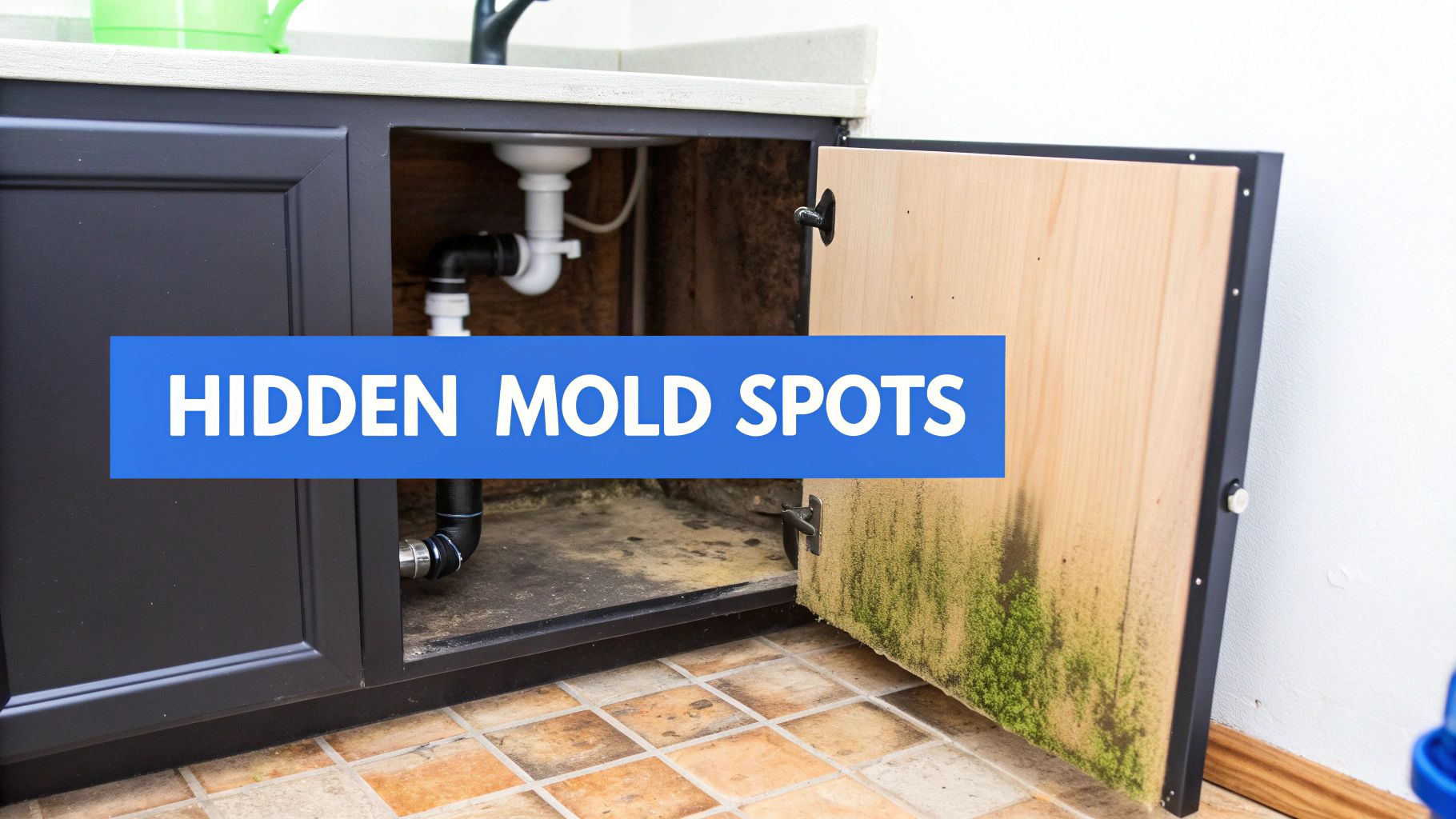
Mold is a master of disguise. It loves the dark, damp corners of a home that you rarely think to check. The question "can mold make you sick?" becomes a lot more urgent when you realize the source of your problems might be completely invisible.
All mold really needs to thrive is a little moisture, an organic food source like drywall or wood, and the right temperature. Those conditions are surprisingly common in any house.
The most dangerous mold is almost always the mold you can't see. While finding a patch on the wall is alarming, it’s the hidden colonies that grow for months or even years, silently pumping millions of spores into your air, that cause the most trouble. This is why a musty smell is such a critical warning sign—it’s often the only clue you’ll get.
Common Hotspots in Coastal Homes
Living in the beautiful coastal areas of Santa Barbara and Ventura County comes with its own unique challenge: the marine layer. That persistent humidity creates the perfect breeding ground for mold in some very specific places.
We see the same culprits over and over again:
- Bathrooms without Proper Ventilation: Steam from showers creates a constantly damp environment. Mold loves to hide in grout, behind tiles, and inside the drywall.
- Under-Sink Cabinets: A small, slow leak from plumbing under a kitchen or bathroom sink is one of the most common calls we get. It's a perfect storm for mold growth on particle board.
- Laundry Rooms: Poorly vented dryers and trapped humidity can lead to mold growth behind appliances where there's no air circulation.
- Attics and Crawl Spaces: These areas often suffer from poor ventilation and can trap moisture, especially if there are minor roof leaks or condensation builds up.
Because these spots are out of sight, a tiny issue can quietly escalate into a major contamination source before anyone notices.
The World Health Organization estimates that indoor dampness impacts 10% to 50% of homes in North America, with higher rates in coastal regions like ours. This is concerning because hidden growth means many homeowners don't know there's a problem until health symptoms appear. You can find more details in this report on indoor moisture and mold.
The HVAC System: Your Home’s Lungs
Perhaps the most critical—and often overlooked—hiding spot is your home's HVAC system. If mold starts growing inside the dark, damp ductwork or on the evaporator coils, it turns your heating and air conditioning into a spore superhighway.
Every time the system kicks on, it blows microscopic spores into every single room. This is how a small colony contained in one area can affect the entire house, tanking your indoor air quality and exposing everyone inside.
Why Seeing Nothing Means Nothing
Here’s the most important takeaway: the absence of visible mold doesn't mean your home is safe. Mold spores are microscopic and completely invisible. You could be breathing in a high concentration of them right now without a single spot of discoloration on your walls.
This invisible threat is precisely why a professional assessment is so vital. Waiting until you can see the mold often means the problem is already advanced and may have been impacting your health for a long time.
Uncovering these hidden sources is the first step toward breathing cleaner, healthier air and reclaiming your peace of mind. For more information, you can explore our guide on how to detect mold.
Knowing When to Get a Professional Mold Inspection
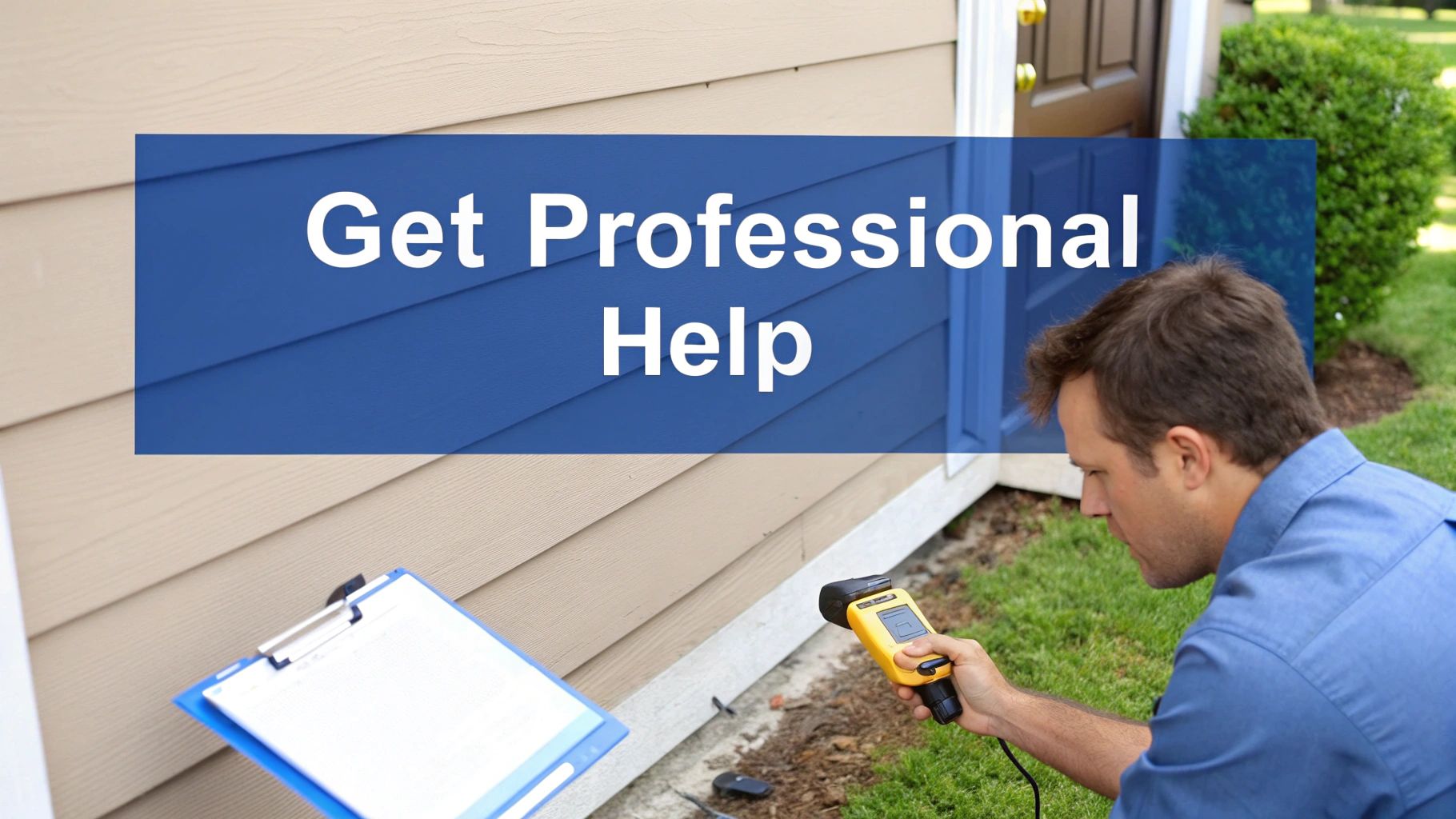
It’s one thing to know that mold can make you sick; it’s another to know exactly when to call for backup. You shouldn’t have to live with the nagging feeling of wondering if the air in your home is safe.
A professional mold inspection isn’t just about spotting a few discolored patches on the wall. Think of it as a comprehensive health check-up for your house, designed to find hidden problems before they spiral out of control. The key is learning to recognize the signals that it’s time for an expert to step in.
Key Triggers for a Mold Inspection
Consider these your early warning system. If you’re nodding along to one or more of these scenarios, it's a clear sign that a professional evaluation is the right next move.
- A Persistent Musty Odor: If your home has a damp, earthy, or mildew-like smell that just won't go away, that’s often the very first sign of hidden mold. This smell is actually caused by Microbial Volatile Organic Compounds (MVOCs)—gases released by active mold colonies. Trust your nose.
- Unexplained Health Symptoms: Are your allergies or sinus issues suddenly worse at home but seem to clear up when you leave? If you’re dealing with chronic coughing, sneezing, headaches, or fatigue that magically improves on vacation, your home's indoor environment is the prime suspect.
- Recent Water Damage: Any kind of water intrusion—a leaky roof, a burst pipe, a flooded basement, even a small appliance leak—creates the perfect breeding ground for mold. Growth can start in as little as 24 to 48 hours, making a post-leak inspection a non-negotiable safety step.
- Visible Signs of Growth: Seeing discolored splotches of black, green, or white on walls, ceilings, or baseboards is the most obvious red flag. But what you can see is often just the tip of the iceberg, hinting at a much larger colony hidden from view.
- Real Estate Transactions: Whether you're buying or selling a home in Santa Barbara or Ventura, a mold inspection provides critical peace of mind. For buyers, it uncovers potential health hazards and future repair costs. For sellers, it demonstrates transparency and protects your property's value.
DIY Mold Kits vs. Professional Inspection
It’s tempting to grab a DIY test kit from the hardware store, but these are notoriously unreliable and can be seriously misleading. They’re like taking a single, blurry snapshot. All they can do is tell you that mold spores exist in the air—which is true for any environment on earth, indoors or out. They completely miss the crucial context you actually need.
A professional inspection is a different beast entirely. It’s a systematic investigation that gives you definitive answers and a clear path forward. You can learn more about the specifics of what a mold inspection entails on our services page.
Deciding between a DIY kit and a professional inspection can feel confusing. This table breaks down what you're really getting with each option.
DIY Mold Kits vs. Professional Inspection
| Feature | DIY Test Kit | Pacific Mold Pros Inspection |
|---|---|---|
| Accuracy | Prone to false positives and negatives; can't determine spore concentration. | Utilizes certified lab analysis for precise identification and spore counts. |
| Scope | Only tests a single, passive location where the dish is placed. | Involves a comprehensive visual assessment, moisture mapping, and thermal imaging. |
| Analysis | Provides no insight into the source or extent of the contamination. | Identifies the root cause of moisture intrusion and pinpoints hidden mold colonies. |
| Solutions | Leaves you with a confusing result and no actionable next steps. | Delivers a detailed, easy-to-understand report outlining the scope and remediation needs. |
At the end of the day, a professional inspection is the only way to truly understand the health of your home. It replaces guesswork with data, empowering you to take effective action and ensure the air you and your family breathe is safe.
Your Next Steps Toward a Healthier Home
Knowing that mold might be making you sick is one thing. Doing something about it is what really protects your family and gives you back your peace of mind. The journey from suspicion to solution always starts with getting clear on the facts, and that's exactly what a professional mold inspection is for. It’s not about just spotting stains on the wall; it’s about scientifically figuring out what’s going on with the air you breathe every day.
Opting for a professional assessment is an investment in certainty. We’ve all seen those DIY kits at the hardware store, but they often create more questions than they answer. A certified inspection, on the other hand, delivers real data. Our inspectors use tools like thermal imaging cameras and moisture meters to uncover hidden water issues behind walls and under floors—the kind of problems that are the root cause of mold in the first place.
From Inspection to Action Plan
Our goal is to give you the information you need to make smart decisions. After a thorough visual check, we collect air and surface samples that get sent off to an accredited lab. This is the part that takes all the guesswork out of the equation.
It answers three critical questions:
- What type of mold is growing in my house? Identifying the species helps us understand the potential health risks.
- How much of it is in the air? The lab results give us a hard number on the spore count, so we know the level of contamination.
- Where is it coming from? Our investigation connects the dots between the moisture source and the mold growth.
Once the results are in, you get a detailed report that’s actually easy to understand. We translate the complex lab data into a straightforward action plan. We don't just email you a PDF and disappear; we walk you through the findings, making sure you know exactly what’s happening in your home and what the next steps for remediation should be. This report becomes your roadmap to a healthy home.
A professional mold inspection is the definitive answer to the question, "Is my home making my family sick?" It replaces fear and uncertainty with facts, giving you the confidence to move forward and protect what matters most: your family's health and your home's integrity.
Don't let unexplained symptoms or that persistent musty smell compromise your well-being any longer. For homeowners in Santa Barbara and Ventura County, the path to a healthier home is just a phone call away.
Take the first step today. Contact Pacific Mold Pros at (805) 232-3475 to schedule your comprehensive mold inspection and start breathing easier.
Got Questions About Mold and Your Health? We've Got Answers.
Even after learning how mold can impact your health, it's normal to have more specific questions. Homeowners ask us about these things all the time. Here are some straightforward answers to the most common queries we hear, designed to help you separate fact from fiction.
What's the Real Difference Between Mold and Mildew?
Think of mildew as mold’s less-aggressive cousin. It’s that powdery gray or white stuff you might find on your shower grout or a damp windowsill. Mildew stays on the surface, and while it can definitely kick up mild allergies, it's generally easier to deal with.
The real trouble starts with deeper-growing molds that work their way into materials like drywall, insulation, and wood. These are the types far more likely to produce mycotoxins and lead to more serious, long-term health issues. The only way to know for sure which one you're up against is with a professional inspection.
Can I Just Kill Mold with Bleach?
This is one of the biggest—and most damaging—myths out there. Sure, bleach might kill surface mold on something non-porous like tile or glass, but it’s completely useless on materials like drywall, wood, or carpet.
Here’s why: the water in the bleach solution soaks right into the porous material, feeding the mold's hidden root structure. Meanwhile, the active chlorine part evaporates off the surface. You've essentially just watered the problem, helping it grow back even stronger. Professional remediation uses entirely different techniques for a reason.
Using bleach on porous surfaces is like trimming the leaves off a weed while leaving the roots intact. The problem will always grow back, often stronger than before.
How Fast Can Mold Actually Make You Sick?
There’s no single timeline for mold sickness—it’s incredibly personal. The speed and severity depend on the specific mold species, how heavy the contamination is, and your own unique health and sensitivities.
Someone with a mold allergy or asthma might start sneezing, get itchy eyes, or feel a scratchy throat almost immediately upon entering a moldy room. For others, the effects are more insidious. Systemic problems like chronic fatigue, brain fog, or persistent headaches can build up slowly over weeks or even months of low-grade exposure.
Does My Homeowners Insurance Cover Mold Removal?
This is a classic "it depends" situation. Whether your insurance covers mold removal hinges entirely on your policy and what caused the mold in the first place.
Generally, you have a better chance of coverage if the mold was the result of a sudden, covered event, like a burst pipe that you had fixed right away. On the other hand, mold that grows because of long-term problems—like chronic humidity, a slow, dripping leak, or general lack of maintenance—is almost always excluded from standard policies. Your best bet is to review your policy carefully. A detailed report from a professional inspector can provide the critical documentation you’ll need if you decide to file a claim.