When you see water droplets gathering on your windows, it's easy to dismiss it as a minor annoyance. In reality, it’s your home sending up a flare—an early warning that conditions are ripe for a much bigger problem. This link between condensation on windows and mold is critical because all that moisture creates the perfect breeding ground for dormant mold spores.
While condensation itself isn't mold, it's the one ingredient mold absolutely needs to wake up and start growing, which can happen in as little as 24-48 hours.
Why Window Condensation Is a Red Flag for Mold
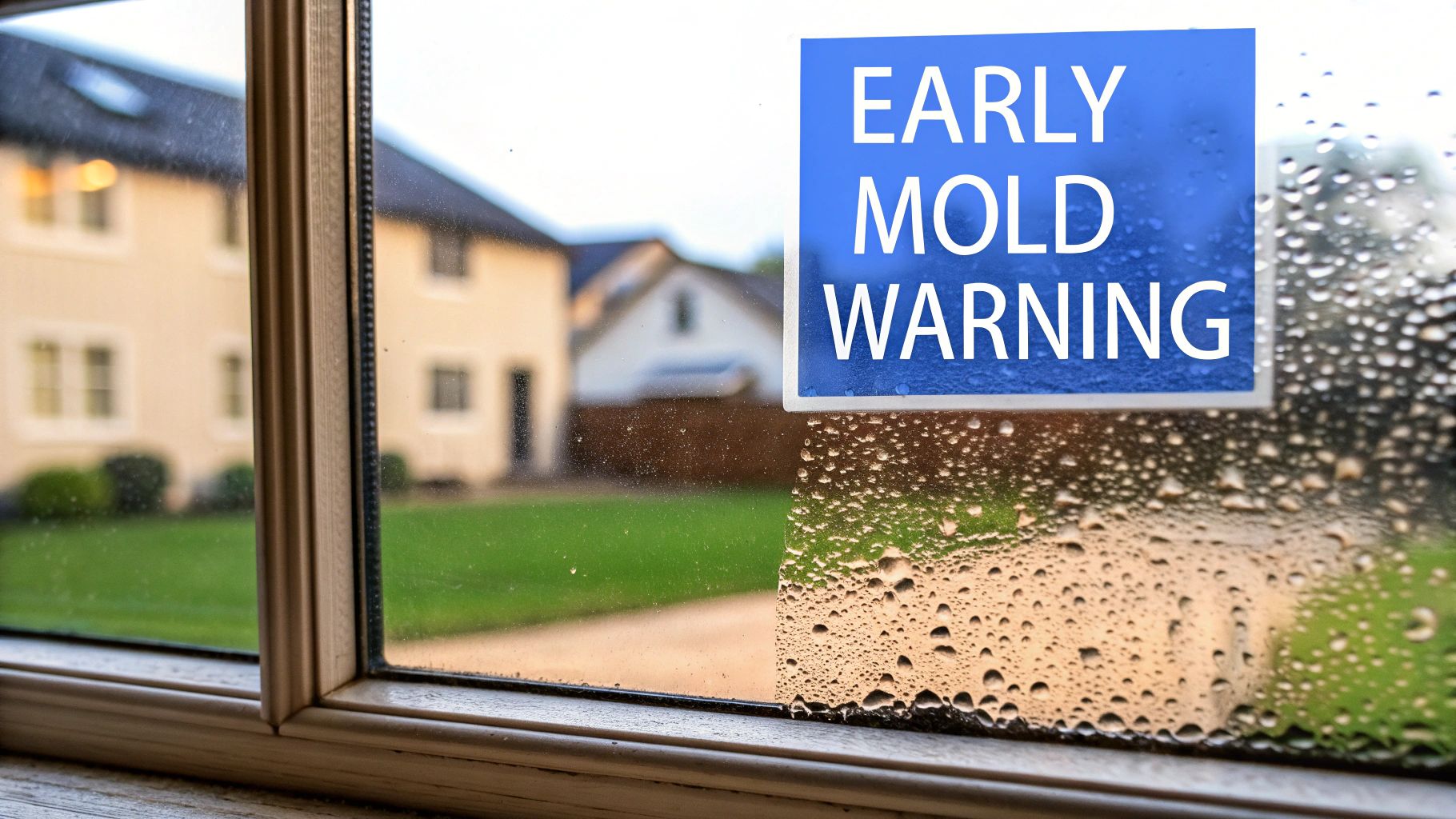
Think of window condensation as a tiny, localized rainstorm happening right inside your house. It forms when warm, humid indoor air hits a cold surface—in this case, your glass window pane. It’s the same exact process that makes a cold glass of iced tea "sweat" on a hot day. The air right around the glass cools down, can't hold its moisture anymore, and deposits the extra water onto the surface.
This constant supply of moisture is exactly what mold has been waiting for. Microscopic mold spores are everywhere, all the time, just floating harmlessly in the air. But when they land on a damp surface like a sweaty windowsill, they've found the perfect combination of water and food (like dust, wood, or drywall paper) to start growing and spreading.
The Science of "Window Sweat"
This isn't just a random fluke; it's basic physics. Everyday activities in your home—like cooking, showering, and even just breathing—release moisture into the air, jacking up its relative humidity. When this moisture-packed air bumps into a window chilled by the cold outdoor temperature, it hits its "dew point," and that's when condensation appears.
From there, the problem gets worse in a few key ways:
- A Constant Water Source: The daily cycle of condensation creates a perpetually damp environment around your window frames, sills, and the nearby drywall.
- Hidden Growth: Mold loves to start in places you can't see, like behind the window trim or under peeling paint, long before it becomes visible.
- Structural Damage: Over time, all that moisture can cause wood to rot, drywall to get soft and crumbly, and paint to bubble up and peel away, leading to some seriously expensive repairs.
A Deceptively Common Household Issue
Waking up to foggy windows is an incredibly common experience, but most people underestimate what it really means. It's a sneaky problem that affects homes everywhere, especially in cooler or coastal climates where there’s a big temperature difference between inside and out.
A major global study found that up to 55% of homes in parts of China deal with window condensation, and a shocking 12% already have visible mold growth. This isn't just happening overseas—indoor dampness and mold affect 10-50% of homes across Australia, Europe, and North America. You can dive into the details in the full study on global indoor mold prevalence.
Ignoring "window sweat" is a mistake. It’s a clear signal that the environment in your home is perfect for mold, which can spiral into serious property damage and health concerns. Understanding the early signs of mold in your home is the first step toward protecting your investment and your family. By tackling the root cause—too much indoor moisture—you can stop a small condensation problem from becoming a massive mold nightmare.
Understanding Why Condensation and Mold Form on Windows

To really stop condensation on windows mold, you have to look past the droplets and get to the root of the science. It all starts with the invisible moisture in your home’s air, a concept we call relative humidity. Just think of the air like a sponge; at any given temperature, it can only hold so much water vapor before it's full.
When this warm, moisture-heavy air hits a cold surface, it’s like squeezing that sponge. The air quickly cools and reaches its dew point—the exact temperature where it becomes completely saturated and has to release its excess water. That water appears as condensation on the coldest surface it can find. Nine times out of ten, that's your window.
The Role of Thermal Bridging
So, why are windows always the target? The culprit is a process called thermal bridging. It's a simple concept. Imagine putting a metal spoon in a hot cup of tea. The handle gets hot almost instantly because metal is a fantastic conductor.
Your window frames, especially older metal ones, act just like that spoon, but in reverse. They create a "bridge" for the cold to travel from the outside straight to the inside surface of your window. This creates a consistently cold spot that forces the warm, moist indoor air to hit its dew point, leaving behind those familiar water droplets that set the perfect stage for mold.
This isn't just a minor annoyance; it’s a big deal for your property and your health. In coastal areas like Santa Barbara, winter turns homes into condensation hotspots as cold ocean air clashes with heated interiors. In fact, a study of over 10,000 US properties found that a shocking 47% had mold issues, with problems peaking from September to December when central heating kicks on and moisture builds up on windows.
Conditions That Create the Perfect Mold Habitat
Some homes are simply more prone to window condensation and the mold that follows. Modern, tightly sealed homes are great for energy bills, but they can also trap moisture inside. If you're not careful, you can accidentally turn your home into a terrarium.
Even our daily routines add a surprising amount of moisture to the air:
- Cooking: Boiling a pot of pasta or simmering a soup sends clouds of steam right into your kitchen.
- Showering: A long, hot shower can spike the humidity in your bathroom and nearby rooms in minutes.
- Breathing: Believe it or not, just breathing releases a significant amount of moisture over the course of a day.
- Drying Clothes Indoors: Air-drying laundry inside can dump gallons of water into your home's air.
When all that excess moisture has nowhere to escape, it finds its way to your windows. This constant dampness creates the ideal environment for certain types of mold to take hold and thrive.
Mold isn’t just one thing; it's a huge family of different fungi. The condensation on windows mold you see is often a common culprit like Cladosporium (usually black or green) or Aspergillus (which comes in various colors). Both of them absolutely love damp, stagnant environments.
Getting a handle on these basics is the first real step toward prevention. Once you see how your daily habits and your home’s design contribute to moisture, you can start tackling the root causes. Learning about professional moisture intrusion solutions can also give you a much deeper understanding of how to protect your property for the long haul. It's about shifting from just cleaning up mold to creating a home where it simply can't grow in the first place.
The Hidden Dangers of Window Mold to Health and Property
That little patch of mold on your windowsill might look like nothing more than a cosmetic problem—something you can just wipe away and forget about. But ignoring the link between condensation on windows and mold is a bit like ignoring a small leak in your roof. It's a symptom of a much bigger issue, one that can cause real harm to your health and your home.
When mold starts to grow, it doesn't just stay put. It pumps microscopic spores into the air you breathe, turning your home into a potential hazard zone. For a lot of people, these airborne spores are powerful allergens that can kick off a whole host of frustrating symptoms.
How Mold Messes with Your Health
Think of mold spores as tiny, invisible invaders floating around your house. When you breathe them in, your body can go on the defensive, leading to ongoing health problems that are often hard to pin down. The very young, the elderly, and anyone with a weakened immune system are especially at risk.
Common health issues linked to mold include:
- Allergic Reactions, like constant sneezing, a runny nose, red eyes, and skin rashes.
- Respiratory Problems, such as a nagging cough, wheezing, or feeling short of breath.
- Asthma Attacks, which can be triggered or made worse by mold spores in the air.
- Headaches and Fatigue that hang around with no other obvious cause.
The connection between damp homes and poor health is no secret. A major study of over 40,000 adults discovered that homes with window condensation also had a 10.4% rate of moldy odors, which was directly tied to a higher chance of experiencing asthma symptoms. It’s a clear sign that a little water on the glass can quickly become a serious air quality problem. You can read more about how typical window problems can affect your health on facilitiesnet.com.
If you want to get into the weeds on specific symptoms and the science behind them, check out our guide on the health risks of mold exposure.
The Silent Destruction of Your Property
Beyond making you feel sick, mold is a destructive force that can quietly eat away at your home. It’s like a relentless, unwelcome guest that feeds on organic materials to survive. This can lead to serious, and often very expensive, structural damage that’s much worse than a simple stain.
Imagine mold as a slow-motion demolition crew. Once it sets up shop on a damp windowsill, it gets to work breaking down its food source.
- Wood Rot: If your window frames or sills are wood, mold can soften, weaken, and eventually rot them, wrecking the window's structural integrity.
- Drywall Damage: The moisture fueling the mold can soak into the surrounding drywall, making it soft, crumbly, and discolored. What you see on the surface is often just the tip of the iceberg.
- Paint and Finish Failure: As mold grows underneath, it can push the paint right off the surface, causing it to bubble, peel, and flake. Not only does this look awful, but it also leaves the material underneath exposed to even more moisture.
The financial cost of ignoring window mold can be huge. A small, treatable spot can balloon into a major remediation project that sets you back thousands. On top of that, unchecked mold growth can seriously tank your property's value, making it a critical issue to tackle quickly and correctly.
How to Safely Clean Mold from Your Windows

Spotting a patch of mold on your window frame can definitely be unsettling. But if you've caught it early, a thorough and safe cleanup is completely manageable. This guide will walk you through exactly how to handle small, localized spots of condensation on windows mold.
Just remember, these steps are only for minor issues covering less than 10 square feet. If the problem is bigger or keeps coming back, it’s a sign of a deeper issue that needs a professional eye.
Before you even think about scrubbing, your absolute first priority is safety and containment. The moment you disturb mold, it releases microscopic spores into the air, which can spread the problem to other areas of your home or irritate your lungs. This isn't just a friendly suggestion—it's the most critical part of the process.
H3: Gearing Up for Safety
Your first move is to put on the right Personal Protective Equipment (PPE). Think of it as your armor against those invisible mold spores. Never, ever try to clean mold without it.
Here’s your essential safety checklist:
- An N-95 Respirator Mask: This is non-negotiable for preventing you from breathing in airborne spores.
- Safety Goggles: Make sure they don't have ventilation holes. You need to protect your eyes from both spores and any cleaning solution splashes.
- Long Rubber Gloves: They should extend well past your wrists to keep your hands and arms totally protected.
- Old Clothes: Wear something you can either toss out afterward or wash immediately in hot water.
H3: Preparing the Cleaning Area
Next up, you need to isolate the work area to stop cross-contamination in its tracks.
Shut down your HVAC system and any ceiling or portable fans. You don't want air currents carrying spores on a tour of your house. If you can, seal the doorway to the room with plastic sheeting and tape to really lock it down.
Lay some plastic sheeting on the floor right below the window. This will catch any drips or debris, making the final cleanup much easier and protecting your floors.
H3: Choosing Your Cleaning Solution
You don't need to reach for harsh chemicals to get the job done. For non-porous surfaces like glass or vinyl window frames, one of the most effective weapons is a simple 1:1 mixture of white vinegar and water. Just mix it in a spray bottle. The acetic acid in vinegar is a natural antifungal that knocks out many common household molds.
Important Safety Note: Whatever you do, never mix bleach with ammonia or any other household cleaners. This combination can create toxic chlorine gas, which is extremely dangerous. While bleach can kill surface mold, we don't recommend it for porous materials like wood because its water base can soak in and feed the mold's roots that you can't even see.
H3: Step-by-Step Cleaning and Removal
Now you're ready to get to work. We've put together a simple checklist to guide you through the cleaning process safely and effectively.
DIY Window Mold Cleaning Checklist
| Step | Action Required | Safety Note |
|---|---|---|
| 1. Spray | Lightly spray the vinegar solution onto the moldy area. Don't oversaturate it. | Let the solution sit for about 1 hour to penetrate and kill the mold. |
| 2. Scrub | Use a disposable scrub brush or sponge to scrub the mold off the surface. | Work in small, manageable sections to stay in control. |
| 3. Wipe | Wipe the area clean with disposable rags or paper towels. | Using disposable materials is crucial to avoid spreading spores. |
| 4. Re-spray | Lightly mist the cleaned area again with the vinegar solution. | This final spray helps kill any lingering spores you can't see. |
| 5. Dry | Let the area air dry completely. Use fans or a dehumidifier to speed things up. | Ensure the frame, sill, and surrounding wall are 100% dry. |
| 6. Dispose | Bag all disposable materials (gloves, rags, sheeting), seal the bag tightly, and throw it in an outdoor trash can immediately. | Don't leave the bag sitting inside your home. |
This DIY approach is great for small, contained mold problems. But knowing when to stop is just as important as knowing how to start.
If the mold patch is large, if it comes back after cleaning, or if you can smell that strong musty odor even when you can’t see any mold, it’s time to put down the spray bottle and call a professional. Those are signs of a bigger moisture issue that needs expert attention.
Long-Term Strategies for Preventing Window Mold
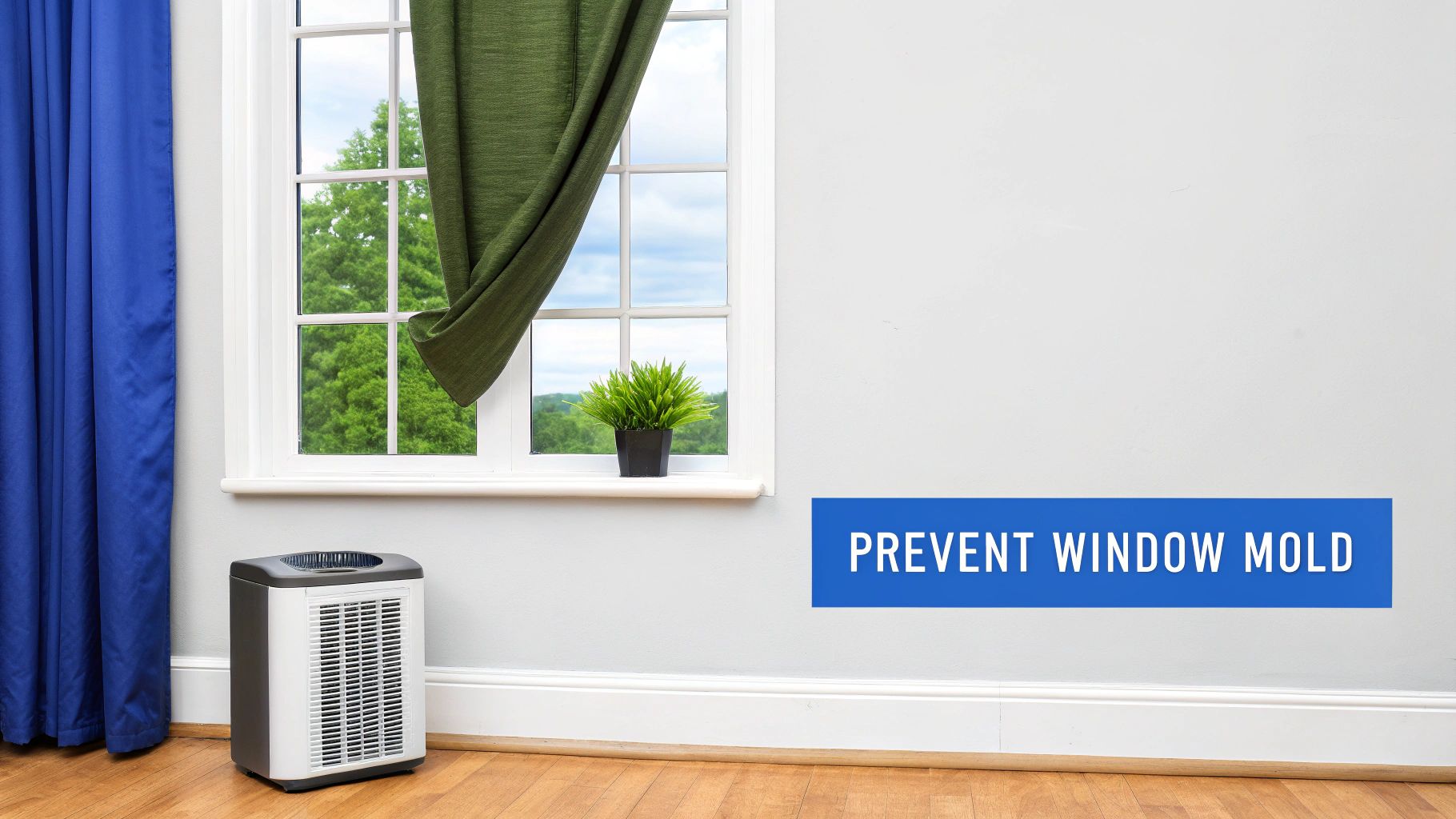
Cleaning up existing mold is a critical first step, but it’s just playing defense. To truly win the war against condensation on windows mold, you have to switch to an offensive strategy. It’s all about making your home an environment where mold simply can’t get the moisture it needs to survive.
Lasting prevention isn't about one magic bullet. It’s a three-pronged defense plan. By getting a handle on indoor humidity, improving air circulation, and warming up your window surfaces, you create a powerful barrier that keeps your home dry, healthy, and mold-free for the long haul.
Reduce Indoor Humidity Levels
Your first and most important mission is to lower the amount of moisture floating around in your air. Think of the air inside your home like a sponge—the less water it’s holding, the less it can squeeze out onto your cold windows.
Start by targeting the main culprits of moisture production in your home. You’d be surprised how much of a difference a few simple daily habits can make.
- Use Exhaust Fans: Make it a rule to run the exhaust fan in your bathroom during a shower and for at least 20-30 minutes afterward. Do the same in the kitchen when you're cooking, especially when boiling a big pot of pasta or simmering a stew.
- Vent Appliances Properly: Check that your clothes dryer vents directly outside. A dryer that’s not vented correctly can pump gallons of moisture into your home with every single load.
- Limit Indoor Plants: If you're an avid plant parent, consider spreading out your collection. A dense jungle of houseplants can create a high-humidity microclimate as they release moisture through transpiration.
The sweet spot for indoor humidity is between 30% and 50%. This range is comfortable for you but hostile to mold. Grab an inexpensive digital hygrometer to keep an eye on the numbers—it turns a guessing game into a science and lets you act before condensation even starts.
For a deeper dive, our guide to professional humidity control in homes offers more advanced strategies.
Improve Your Home's Air Circulation
Stagnant, still air is basically a welcome mat for condensation. When air doesn’t move, moisture gets a chance to settle on cool surfaces, especially your windows. The key is to keep it flowing.
Improving circulation is easier than it sounds. Small, consistent actions can stop humid air from lingering near cold glass.
- Run Ceiling Fans: Even on a low setting, a ceiling fan helps mix the air in a room, preventing warm, moist pockets from forming and settling on windows.
- Open Windows Strategically: When the weather is nice, open windows on opposite sides of your house for just 10-15 minutes a day. This creates a cross-breeze that flushes out all that stale, humid air and brings in fresh, dry air.
- Leave Interior Doors Open: This simple trick allows air to flow more freely between rooms, preventing humidity from getting trapped in moisture-prone areas like bathrooms and laundry rooms.
Increase Window Surface Temperature
Finally, if you can make the window glass itself warmer, you’ll dramatically reduce the chances of condensation. When the surface isn't cold enough to hit the dew point of the air, water vapor has nowhere to turn into liquid.
Some solutions are bigger investments, but others are simple and affordable.
- Install Double-Glazed Windows: This is a game-changer. Upgrading from old single-pane windows to double- or even triple-glazed units provides incredible insulation, keeping the interior pane of glass much closer to room temperature.
- Use Thermal Curtains: These heavy, insulated curtains act as a thermal barrier. They stop the warm indoor air from making direct contact with the cold glass, which is where condensation forms.
- Apply Window Insulation Film: Think of this as a DIY double-pane window. This clear film is an inexpensive way to create an insulating air gap that helps keep the glass surface just a little bit warmer.
When to Call a Professional Mold Inspector
Knowing how to clean up a small spot of mold is a great skill to have, but it’s even more important to know when a problem has grown beyond a simple DIY fix. Trying to tackle a serious mold issue on your own can be a recipe for disaster—it's often ineffective and can even spread spores throughout your home, making things much worse.
Figuring out where to draw the line between a manageable cleanup and a situation that needs an expert is key to protecting your property and your family’s health.
Sometimes, what you see is just the tip of the iceberg. The visible condensation on windows mold could be a warning sign of a much larger, hidden colony growing inside your walls or underneath the flooring. This is when calling in a professional becomes non-negotiable.
Red Flags That Demand a Professional
If you run into any of these situations, it’s time to put down the cleaning supplies and call a certified mold inspector. These are clear signs that the problem requires specialized equipment and expertise to handle safely.
- Large-Scale Growth: The general rule of thumb is if the mold covers an area larger than 10 square feet (think a 3×3 foot patch), it’s too big for you to handle alone.
- A Persistent Musty Odor: If you can smell that distinct, earthy mold odor but can't see where it's coming from, that’s a huge clue. It strongly suggests mold is growing somewhere hidden, like behind drywall, in the attic, or deep within your HVAC system.
- Recurring Mold Growth: You’ve scrubbed the mold off your windowsills more times than you can count, but it just keeps coming back. This means you haven't fixed the underlying moisture problem, and a professional is needed to hunt it down and solve it for good.
- Health Symptoms: Are people in your household dealing with chronic allergies, breathing problems, or headaches that magically seem to get better when they leave the house? This could be directly linked to indoor mold exposure.
A professional mold inspection is so much more than a quick look-around. Certified inspectors use advanced tools like thermal imaging cameras to find hidden moisture behind walls and moisture meters to pinpoint problem spots without tearing anything apart.
What to Expect from a Professional Inspection
When you hire a professional, you're getting a systematic, scientific approach to uncovering the true extent of your mold problem. They don't just look for what's visible; they dig into the "why" and "where" to give you a complete picture of your home's health. If you're wondering what that process looks like, you can learn more about what is involved in a professional mold inspection in our detailed guide.
A typical inspection from a pro includes:
- A Detailed Visual Assessment of your entire property, not just the area where you noticed the problem.
- Advanced Moisture Detection using special tools to find the hidden water sources that are feeding the mold growth.
- Air and Surface Sampling when it’s needed to identify the exact types and concentration of mold spores, which are then analyzed by a certified lab.
This thorough process ensures you get accurate answers and a clear, actionable plan for fixing the problem. It gives you the confidence that the issue will be handled correctly the first time.
Common Questions About Mold on Windows
Even after you've cleaned up, it's natural to have lingering questions about window condensation and mold. Let's tackle some of the most common ones we hear from homeowners.
Think of this as a quick reference guide to keep you on the right track and feeling confident about keeping your home healthy.
Is Black Mold on Windows Always Dangerous?
That scary-sounding term, "black mold," gets a lot of attention, but here’s the truth: any color of mold can be a problem for your health. Judging danger based on color alone is a classic mistake.
The only way to know the specific type of mold you're dealing with is through professional testing. But honestly, the type doesn't change the game plan. The best approach is to treat any visible mold as a potential hazard and get rid of it safely. Forget the color—focus on removing the growth and, more importantly, fixing the moisture problem that let it grow in the first place.
Will a Dehumidifier Stop Mold on Windows?
A dehumidifier is a fantastic tool in the fight against mold because it goes straight to the source: too much moisture in the air. By keeping your home’s indoor humidity in that sweet spot between 30-50%, you make it much harder for condensation to form on your windows.
A dehumidifier is for prevention, not a cure. It's great at stopping new mold from starting, but it won't kill an existing colony. It's a crucial part of your long-term strategy, along with good ventilation.
So, after you've cleaned up the existing mold, running a dehumidifier is a powerful next step to make sure it doesn't come back. It's a smart investment in a drier, healthier home.
Can I Just Paint Over Mold on My Window Sill?
Painting over mold is one of the worst things you can do. It might look like a quick fix, but it's really just hiding the problem and making it worse. The paint traps moisture against the surface, creating a perfect hidden environment for the mold to feast and expand.
Out of sight, the mold will quietly eat away at the wood or drywall of your window sill. Before you know it, the mold will push right through the new paint, and you'll be right back where you started, but with a much bigger, more ingrained problem.
There's only one right way to do this:
- Completely remove the mold with the proper safety gear and cleaning methods.
- Dry the area thoroughly until all moisture is gone.
- Fix the moisture source that's causing the condensation.
- Only then should you prime and repaint the clean, repaired surface.