Let's cut right to the chase: a standard home inspection is not a mold inspection.
It's a common misconception, and a dangerous one at that. While a good home inspector might notice obvious signs of moisture or even visible patches of what looks like mold, their job is to assess the home's overall health—the foundation, the roof, the electrical system, the plumbing. They're like a general family doctor who can spot a cough but isn't equipped to diagnose the complex lung infection causing it.
The Hidden Gap in a Standard Home Inspection
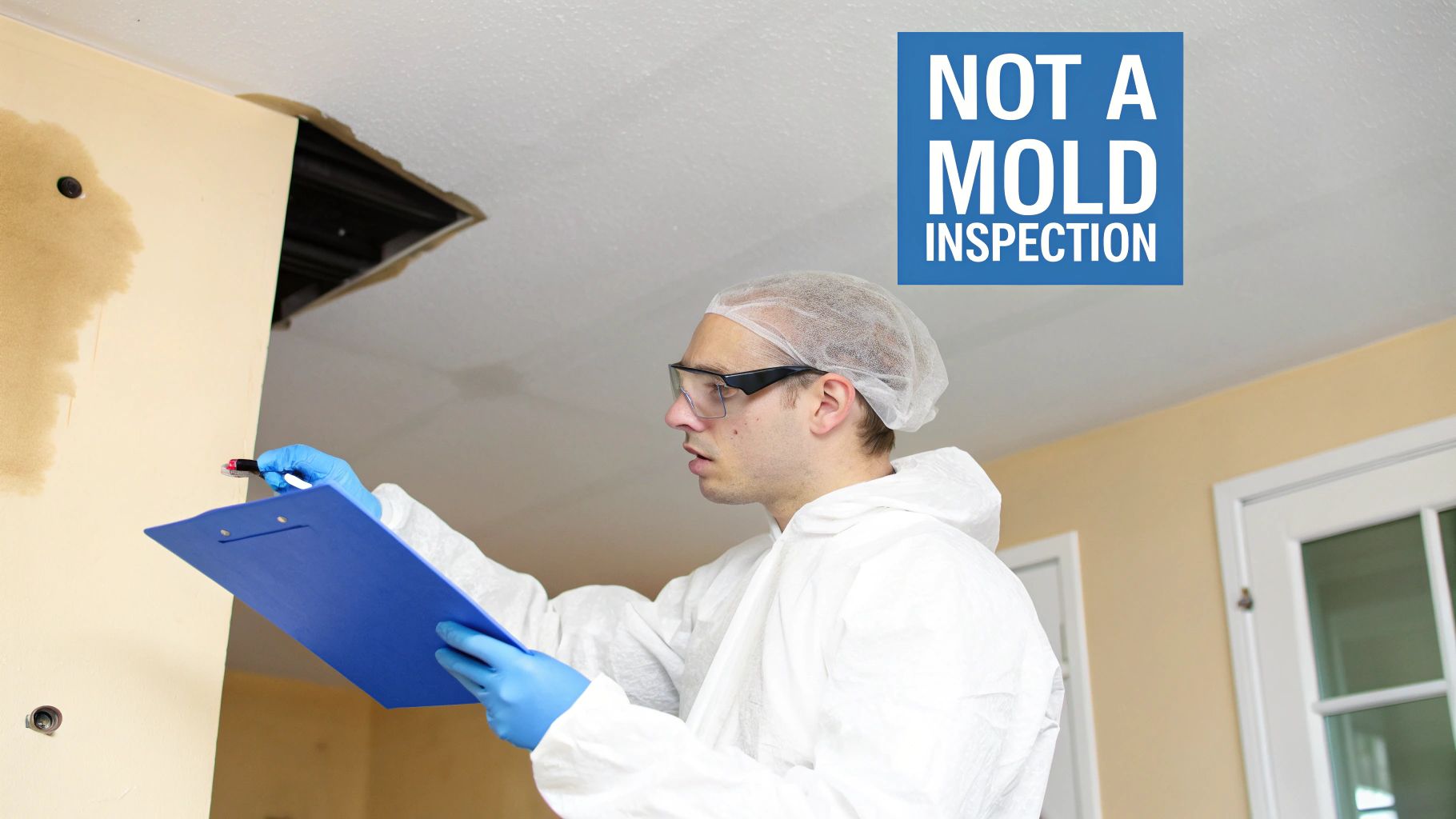
A general home inspector has a massive checklist, and they simply don't have the specialized training or tools to hunt for hidden mold. They're looking for the big, glaring issues that are visible to the naked eye.
This creates a critical gap, especially here in the coastal climates of Santa Barbara and Ventura County. Our "June Gloom" and marine layer provide the perfect humid environment for mold to thrive behind walls, under floors, and in attics.
An inspector might jot down "evidence of moisture" or "discoloration on drywall" in their report. But here’s the key thing to remember: they are ethically and legally barred from officially calling it mold. That's a specialist's job.
What Inspectors Look For vs. What They Miss
Think of a home inspector as someone who spots the clues, not solves the crime. They are trained to identify red flags that could point to a mold problem down the road, but they don't actually investigate the mold itself.
Their report might mention things like:
- Obvious water stains: Those tell-tale brown rings on a ceiling are an easy catch.
- Active leaks: A dripping pipe under the kitchen sink is a clear sign something’s wrong.
- Poor ventilation: A bathroom with no fan or a stuffy attic will definitely get a mention.
- High humidity: They might note a damp, musty feeling in a crawl space or basement.
A generalist's report flags the symptom—the water stain—but a specialist's report diagnoses the disease—the specific mold contamination hiding behind the wall.
This distinction is everything. A standard inspection won't include thermal cameras to see moisture trapped inside walls or moisture meters to get a precise reading. Most importantly, they don't take air or surface samples and send them to a lab. And that lab analysis is the only way to know for sure if you have mold, what type it is, and just how concentrated the spores are in your air.
To get a better handle on these limitations, check out our guide on the key things to look for when inspecting a home. It really highlights why a separate, dedicated mold inspection isn't just an add-on—it's essential for your peace of mind.
To make it even clearer, here’s a quick breakdown of the differences.
Home Inspection vs. Mold Inspection at a Glance
This table offers a clear, side-by-side comparison to quickly understand the different goals and tools used in each type of inspection.
| Feature | Standard Home Inspection | Specialized Mold Inspection |
|---|---|---|
| Primary Goal | Assess overall structural & system integrity | Identify and assess mold contamination |
| Scope | Broad and general (roof, HVAC, foundation, etc.) | Narrow and deep (moisture, humidity, air quality) |
| Tools Used | Flashlight, ladder, outlet tester | Moisture meters, thermal cameras, air samplers |
| Sampling | None | Air and surface samples for lab analysis |
| Outcome | General property condition report | Detailed report on mold type, location, & severity |
As you can see, they are two completely different services designed to protect you in different ways. Relying on a general home inspection to clear a property of mold is like asking your dentist to check on a heart condition—you're just not going to get the expert answers you need.
Why Home Inspectors Overlook Hidden Mold
Think of a standard home inspector like a family doctor doing a general check-up. They’re trained to spot the obvious symptoms—a leaky faucet, a water stain on the ceiling, or a stuffy attic with poor ventilation. They're looking for the big, visible clues that something is wrong with the home's overall health.
But mold is a master of disguise. It thrives in the dark, damp places that a generalist simply can't access during a routine visit. Its favorite hiding spots are behind drywall, underneath carpets and floorboards, deep inside your HVAC system, or in forgotten corners of a crawl space. An inspector isn't going to start tearing down walls to hunt for a problem they can’t see. That’s just not part of their job description.
This is where their general training and standard toolkit fall short. A home inspector isn’t a mycologist—a specialist in fungi. They don't carry the sophisticated equipment needed to perform a deep-dive investigation into your home's air and hidden cavities.
The Equipment and Liability Gap
To find hidden mold, you have to find hidden moisture. It’s the root cause of every mold problem. Without the right tools, an inspector is essentially working with one hand tied behind their back. Here’s the key equipment they typically don't carry:
- Thermal Imaging Cameras: These incredible devices let us see what the naked eye can't by detecting temperature differences inside walls and floors. Cold spots are a dead giveaway for hidden moisture from leaks or condensation. You can learn more about how a thermal imaging house inspection uncovers what’s really going on inside your walls.
- Professional Moisture Meters: We’re not talking about the simple pin-prick meter. Professional-grade meters have long probes that can measure the exact moisture content deep inside building materials like drywall and wood, confirming the presence of the water that mold needs to grow.
- Air and Surface Samplers: This is the only way to know for sure what's going on. Samples are collected and sent to a certified lab to identify the specific mold species and, more importantly, the concentration of spores you're breathing in.
Beyond the gear, there's a huge liability risk for a general inspector. They are trained to report what they can see, not make a scientific diagnosis. If an inspector writes "toxic black mold" in a report without lab confirmation, they could find themselves in serious legal trouble.
That’s why inspectors use careful, almost vague language. When a report mentions "evidence of moisture" or "discoloration observed," it's their way of waving a red flag without officially diagnosing a mold problem. It’s a coded message telling you to call a specialist, and to do it now.
You might be surprised how common hidden mold really is. Some data suggests that around 47% of homes in the U.S. have some form of mold issue, with other estimates putting that figure closer to 70%. The huge gap in those numbers often comes down to one thing: detection. So much of it grows completely out of sight. That's why a small note from an inspector about a little moisture should never, ever be ignored.
The Technology Behind a Professional Mold Inspection
So, where a standard home inspection stops, a professional mold inspection begins. This isn't about just spotting a few obvious clues on the surface. We're talking about a full-blown scientific investigation, using a specialized toolkit designed to find problems the naked eye could never catch.
At Pacific Mold Pros, we treat mold inspection like detective work. Our first and most important job is to find the culprit behind every mold problem: unwanted moisture. Without water, mold simply can't grow.
Seeing Through Walls With Thermal Imaging
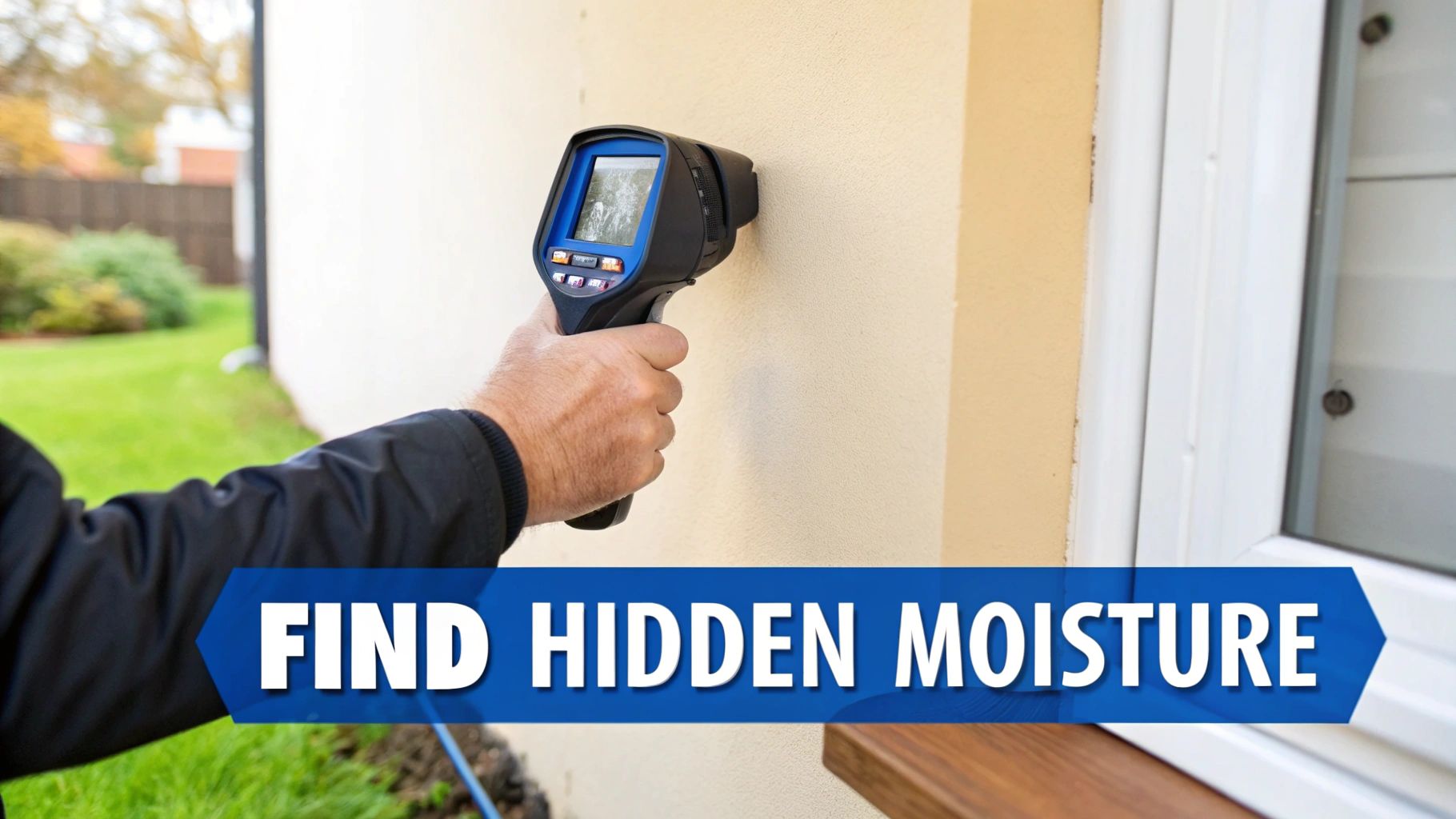
The most powerful tool in our arsenal for that initial search is a thermal imaging camera. Think of it like an X-ray for moisture. This incredible technology doesn't actually "see" mold, but it reveals the subtle temperature differences on a wall or ceiling caused by hidden water.
When an area behind drywall gets damp, it becomes slightly cooler than the surrounding material because of evaporation. Our thermal camera picks up these cold spots instantly, painting a clear, color-coded map that shows us exactly where we need to look closer. It essentially makes an invisible threat visible.
Once we've identified a suspicious area, we bring in other tools to confirm what the camera is telling us. This is where we get the hard data to understand just how bad the problem is.
- Moisture Meters: These handy devices give us precise readings of the moisture content inside building materials like drywall and wood framing.
- Hygrometers: We use these to measure the relative humidity in the air, which helps us spot rooms with poor ventilation that are just begging for mold to grow.
By combining thermal imaging with moisture mapping, we can trace the water all the way back to its source—whether it’s a slow leak in a pipe, a cracked window seal, or condensation from bad insulation.
Demystifying Mold Sampling and Analysis
After we’ve mapped out the moisture, the final piece of the puzzle is understanding the biology. This is where air and surface sampling comes in, giving us definitive answers. It’s the only way to know for sure what types of mold are present and just how concentrated the spores are inside your home.
A professional mold inspection moves beyond suspicion to scientific certainty. Lab results provide the concrete evidence needed to create an effective and targeted plan for remediation, ensuring you only fix what’s truly broken.
We collect samples from the air and from any visible growth, then send them off to an accredited lab for analysis. The report we get back is packed with crucial information:
- Mold Species Identification: It tells us exactly what kinds of mold are growing, such as Stachybotrys (the infamous black mold) or common culprits like Aspergillus.
- Spore Concentration Levels: The lab compares the spore counts inside your home to the normal, ambient levels outdoors. This tells us in black and white if your home’s air quality is compromised.
This detailed, data-driven approach takes all the guesswork out of the equation. To see how this all comes together, feel free to check out our step-by-step mold inspection process in Santa Barbara. In the end, this scientific method gives you a crystal-clear picture of your home’s health and a precise roadmap for making it safe again.
Red Flags That Signal You Need a Mold Inspection
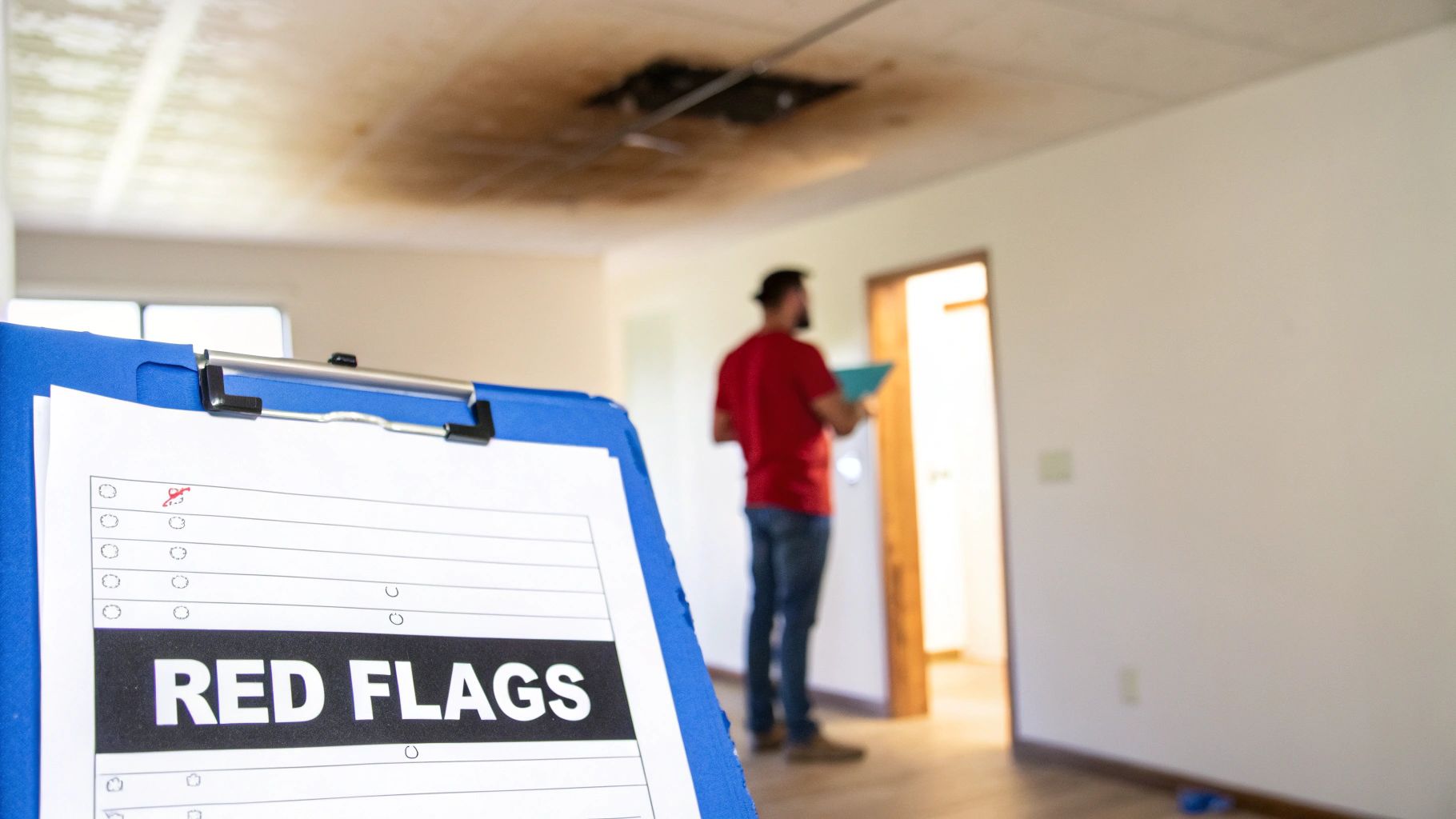
While a standard home inspector isn’t a mold specialist, their report is often the first place you'll find clues that a deeper investigation is needed. It’s up to you, as the buyer or homeowner, to spot these subtle warnings and take the next step. Knowing when to call in a pro is what protects your health and your investment.
Sometimes the signs are obvious, but often they’re easy to dismiss. Trust your gut—and your nose. If something just feels off, it probably is. The most reliable indicator is often a persistent musty or earthy smell you can’t quite pin down. That odor is caused by microbial volatile organic compounds (MVOCs), which are gases released by active mold growth.
Obvious Visual and Physical Clues
Some signs are impossible to ignore. These are the straightforward clues that moisture has been around for a while, creating a perfect environment for mold to take hold. If you spot any of these, a professional inspection isn't just a good idea—it's essential.
- Visible Water Stains: Discoloration on walls, ceilings, or floors is a huge red flag, even if the area feels bone dry. It’s a clear sign of past water intrusion.
- Recent Water Damage: If a property has recently flooded, had a burst pipe, or dealt with a major leak, it needs immediate attention. Mold can start growing in as little as 24 to 48 hours.
- Visible Growth: See any fuzzy, slimy, or discolored patches? Whether it’s black, green, or white, you’ve got a confirmed problem. The only question left is how far it has spread.
Unexplained Health Symptoms
Sometimes the most telling red flags have nothing to do with the building and everything to do with how you feel inside it. Are you dealing with persistent, allergy-like symptoms that magically seem to improve when you leave the house? That’s a classic sign of poor indoor air quality, which hidden mold often causes.
Pay close attention if you or your family members are experiencing:
- Chronic coughing or sneezing
- Itchy, watery eyes
- Persistent headaches
- Unexplained respiratory issues or asthma flare-ups
These physical reactions could be your body’s way of telling you that the air you’re breathing is contaminated.
In real estate deals, these red flags become powerful negotiating tools. A professional mold report gives buyers concrete evidence to request repairs or price adjustments. For sellers, it protects them from potential liability down the road.
Considering residential properties are the most vulnerable—making up about 58.7% of the mold remediation market—being proactive is just plain smart. Everyday activities like cooking and showering create moisture, making our homes a prime breeding ground. You can dig deeper into market trends and why homes are so susceptible by reading the full research on mold remediation services.
If you notice any of these signs in your Santa Barbara home, don't wait.
Decoding Your Mold Report and Planning Next Steps

After we’ve finished our on-site investigation, you’ll get a detailed report from us here at Pacific Mold Pros. At first glance, it might seem a bit overwhelming with all the scientific names and spore counts, but this document is your key to a healthy home. It's more than just a piece of paper confirming a problem; it's your roadmap forward.
Our job is to take all that complex lab data and translate it into clear, actionable information. Think of the report as a diagnostic chart for your house, pinpointing exactly where the moisture is coming from and outlining the precise scope of the contamination. It takes all the guesswork out of the equation.
From Diagnosis to Action Plan
You can think of your mold report like a prescription from a specialist. It doesn't just name the illness; it gives you the specific instructions for the cure. Our goal is to arm you with the data you need to take back control of the situation.
This detailed blueprint has a few critical parts:
- Moisture Source Identification: We zero in on the root cause—a leaky pipe, poor ventilation, or maybe a foundation issue. This is the most crucial step because fixing the moisture problem is the only way to stop mold from coming back.
- Contamination Scope: The report maps out every affected area, defining the boundaries of the problem. You'll know exactly what needs to be addressed and where.
- Lab Analysis Breakdown: We break down what the spore counts actually mean, comparing your home’s indoor air quality to the normal, ambient levels outside.
A professional mold report turns uncertainty into a clear plan. It’s an unbiased, scientific tool that guides the remediation process, ensuring you only pay for the work that is absolutely necessary.
Your Next Steps for a Mold-Free Home
Armed with this information, the path forward becomes much clearer. The report is an essential tool to use when you start talking to remediation companies. And because Pacific Mold Pros is a dedicated testing-only firm—we don't do the cleanup work ourselves—you know our findings are completely unbiased.
You can hand our report to any remediation contractor with confidence, knowing it lays out the exact work required. It protects you from being overcharged for unnecessary work and makes sure the job is done right the first time.
If you want to get even more familiar with the data, check out our guide on understanding mold test results. With our report in hand, you're fully equipped to get your home back to a safe, healthy state.
Your Santa Barbara and Ventura Mold Experts
Figuring out a potential mold issue can feel pretty overwhelming, but you don't have to tackle it alone. Living here in the unique coastal climate of Santa Barbara, Montecito, and Ventura means you need a local expert who gets our specific challenges—from foggy mornings to unexpected downpours. We're your neighbors at Pacific Mold Pros, and we’re dedicated to protecting your property and your family with clear, scientific precision.
Our approach is straightforward. We provide certified, independent inspectors who only focus on assessment and testing. This means our findings are always objective, giving you a data-driven report without any conflict of interest from a company that also sells cleanup services.
Our Commitment to You
We take a lot of pride in offering responsive, family-style service. We even offer same-day availability when we can because we know that peace of mind can't wait. Our core promises are simple:
- Certified and Unbiased Inspectors for objective, scientific analysis you can trust.
- Responsive Local Service that truly understands the Santa Barbara and Ventura climate.
- The Pacific Mold Pros 'Breathe Easy Guarantee' ensures you get clear, actionable answers.
This focus on quality is why more and more people are turning to professionals. The global mold detection market was valued at $1.2 billion in 2023 and is on track to nearly double to $2.3 billion by 2032 as homebuyers realize just how critical professional testing is. You can learn about the growing mold detection market and see why it's becoming a standard part of real estate.
We aren't just a service; we're your trusted partner in maintaining a healthy home. Our goal is to transform your uncertainty into confidence with a clear path forward.
Whether you're a homeowner worried about your family's health, a buyer trying to make a smart investment, or a real estate professional who needs reliable answers fast, we're here to help. We give you the expertise you need to make informed decisions and ensure your living space is safe.
Ready to take the next step? Find out more about our thorough approach to mold testing in Santa Barbara, CA.
Don't let a small worry turn into a major problem. Call Pacific Mold Pros today at (805) 232-3475 for a no-obligation chat and let us help you breathe easy again.
Common Questions About Mold Inspections
When you're dealing with a potential mold issue—especially during the stress of buying a home or worrying about your family's health—questions are bound to come up. We hear them all the time from homeowners in Santa Barbara and Ventura. Here are the clear, straightforward answers you're looking for.
How Much Does a Mold Inspection Cost in Santa Barbara?
The cost really depends on the size of your home and how complex the situation is, but it’s a small price to pay for peace of mind. Think of it as an investment to head off major remediation bills or health issues later on.
A standard inspection covers a full visual check, moisture mapping, thermal imaging, and the initial lab samples. At Pacific Mold Pros, we believe in transparent pricing. Just give us a call at (805) 232-3475, and we'll give you a personalized quote with no surprises.
Are DIY Mold Test Kits Reliable?
Those DIY kits you see at the hardware store might seem like a quick, cheap solution, but honestly, they’re highly unreliable. They can’t tell you where the mold is hiding, what’s causing it to grow, or how bad the problem truly is.
Worse, they're notorious for false positives because they just trap whatever spores are already floating around in the air—and there are always some spores. A professional inspection gives you the complete picture using certified labs and specialized tools.
A DIY kit is like a smoke alarm that goes off randomly—it creates panic without telling you where the fire is or how big it is. A professional inspection is the firefighter who finds the source and gives you the plan to put it out.
What Happens If You Find Mold During the Inspection?
If we confirm there's a mold problem, our detailed report becomes your roadmap to fixing it for good. It will pinpoint the exact moisture source that needs to be repaired and lay out the scope of work for a remediation company.
Because Pacific Mold Pros is an independent testing firm, our findings are 100% unbiased. We don’t do the cleanup work, so we have no stake in the results. Our only job is to provide the objective data you need to hire a contractor with confidence and make sure the job gets done right the first time.