Of course. Here is the rewritten section, crafted to sound human-written and match the provided style guide.
Yes, mold can absolutely cause sinus infections, but it's not always a straightforward A-to-B relationship. For people who are sensitive, those tiny airborne mold spores are like microscopic bullies, sparking chronic inflammation and allergic reactions that roll out the welcome mat for endless sinus misery. In some situations, mold can even move right in and start colonizing your sinus cavities.
The Hidden Link Between Mold And Your Sinuses
If you're stuck in a frustrating cycle of a stuffy nose that just won't quit, it's easy to point the finger at seasonal allergies or a cold that's overstaying its welcome. But what if the real culprit is hiding in the air you breathe every day at home? The connection between mold exposure and sinus problems is a huge piece of the puzzle, especially for anyone dealing with chronic sinusitis in damp, coastal areas like Santa Barbara and Ventura Counties.
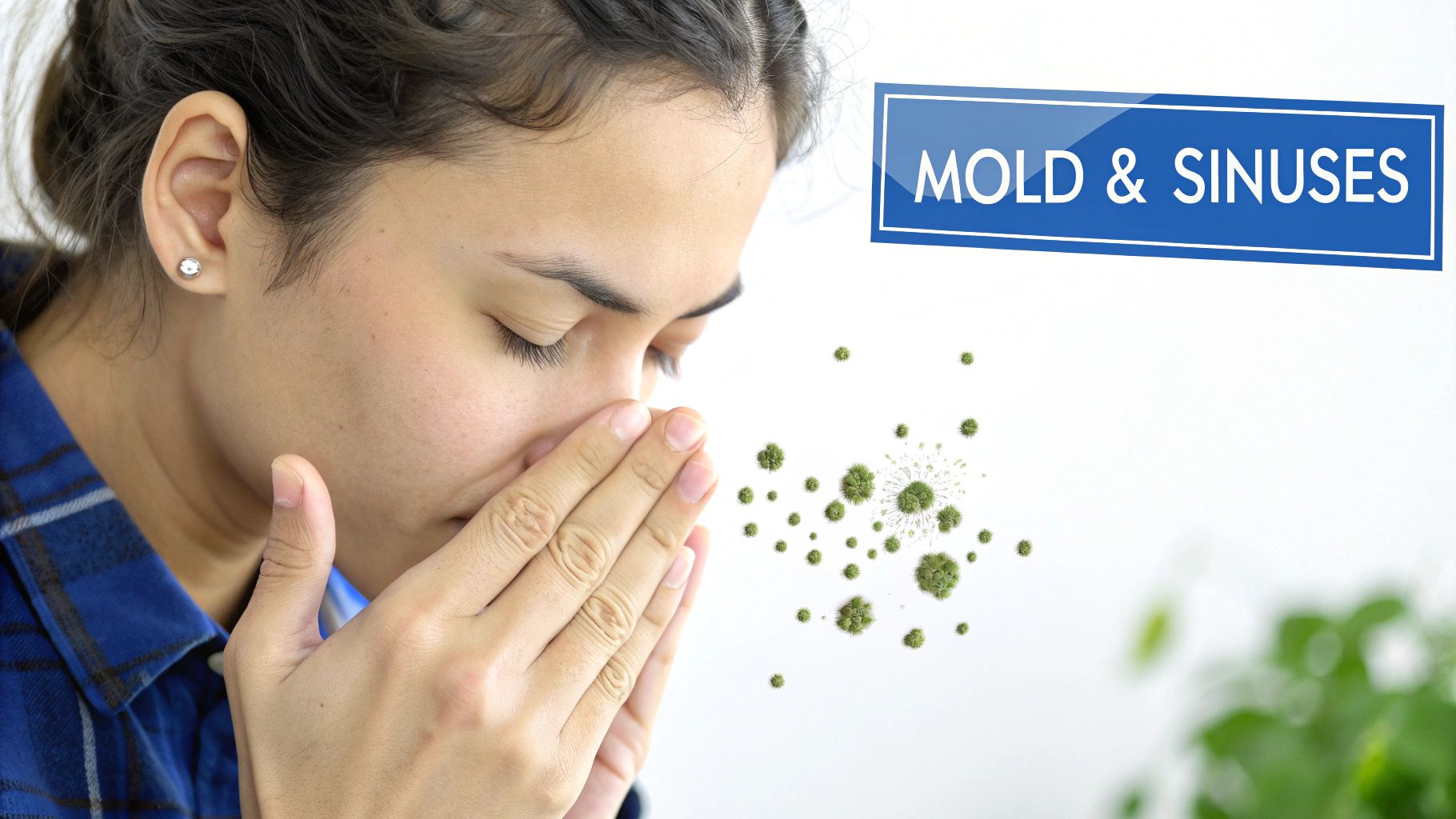
Picture your sinuses as little air-filled caves inside your head, designed to filter the air you breathe. When you inhale mold spores, your immune system can hit the panic button, reacting just like it would to a cloud of pollen. This defensive response makes the delicate lining of your sinuses swell up, trapping mucus and creating that familiar, painful blockage. That's the indirect route for how mold can trigger sinus issues—it's all about inflammation.
How Your Body Responds To Mold
The problem isn't always an "infection" in the classic sense of the word. More often, it's your body's own defense system working way too hard. This constant, low-grade inflammation creates a cycle of discomfort that over-the-counter cold and allergy meds can't fix, because they aren't getting to the root of the problem: the environmental trigger.
This reaction can show up in a few different ways. To help clear things up, here’s a quick look at the main types of mold-related sinus trouble.
How Mold Affects Your Sinuses At A Glance
| Type of Sinus Issue | What Happens in Your Body | Common Symptoms |
|---|---|---|
| Allergic Fungal Sinusitis (AFS) | Your immune system has a strong allergic reaction to fungal spores, causing severe inflammation and thick, rubbery mucus. | Chronic stuffiness, facial pressure, loss of smell, nasal polyps. |
| Fungal Colonization (Fungus Ball) | Mold spores form a dense clump inside a sinus cavity, like a tangled ball of yarn, but don't invade the surrounding tissue. | Often few symptoms, but can cause pressure or post-nasal drip. |
| Invasive Fungal Sinusitis | (Rare & Serious) The fungus actively grows into and invades the sinus tissues, typically in people with weakened immune systems. | Fever, facial pain, dark nasal discharge. Requires immediate medical care. |
As you can see, the most common issue by far is Allergic Fungal Sinusitis (AFS), where your body is simply reacting to the presence of the fungus. The other types are much less common but important to be aware of.
The link between fungi and sinus trouble is stronger than most people think. In fact, a landmark study from the Mayo Clinic was a real eye-opener. Researchers found fungus in the mucus of a staggering 96% of patients with chronic sinusitis, identifying an average of 2.7 different fungal species per person.
Why Your Environment Matters
This science brings us to a critical point: your indoor environment is directly tied to your respiratory health. If you're constantly breathing in mold spores at home, your immune system stays on high alert, meaning your sinuses never get a chance to calm down and heal.
Understanding the different health effects of household mold is the first step toward finding real, lasting relief. If your sinus symptoms flare up at home but seem to get better when you leave, that’s a massive clue that your home's air quality needs a closer look from a professional.
Distinguishing Allergy From Fungal Infection
When mold and sinus problems collide, it’s easy to jump to conclusions. But the answer to "does mold cause sinus infections?" isn't a simple yes or no. It’s more of a spectrum, ranging from a basic allergic reaction to a much more serious, invasive infection. For most people, the real fight is with their own overactive immune system, not an aggressive disease.
Think of your sinus cavities as a dark, damp, quiet garden. When mold spores—the tiny "seeds"—are inhaled, they find this environment pretty much perfect for settling in. Normally, your body just clears them out without a fuss. But if you have a mold sensitivity, your immune system sees these harmless spores as an invasive weed and launches an all-out inflammatory assault.
This intense immune response is the classic sign of Allergic Fungal Sinusitis (AFS), the most common mold-related sinus issue we see. It’s not an "infection" in the traditional sense, where the mold is attacking your body. It's an allergy—your body is just dramatically overreacting to its presence. The result? Chronic inflammation, thick, stubborn mucus, and congestion that never seems to quit.
The Different Types Of Fungal Sinusitis
While AFS is the most common culprit, mold can cause a few other sinus conditions. Knowing the difference is critical because each one requires a totally different treatment plan.
- Fungus Ball (Mycetoma): Sometimes, instead of sparking an allergy, mold spores just clump together and grow into a dense ball inside a sinus cavity. This fungal mass doesn't actually invade your tissue, but it can create a lot of pressure and blockage.
- Invasive Fungal Sinusitis: This is the most serious form, but thankfully, it's also the rarest. It almost exclusively affects people with severely compromised immune systems—think patients undergoing chemotherapy or those with uncontrolled diabetes. In these cases, the fungus actively grows into and destroys the surrounding sinus tissues.
These different scenarios really underscore why a professional diagnosis is so vital. Fungal sinusitis isn't a one-size-fits-all problem. While the non-invasive fungus ball is the most common type, making up 46.6% of cases, the acute invasive forms carry a mortality rate of around 50%. Getting it right is everything.
Why Air Quality Is A Critical Health Factor
For anyone with a weakened immune system, the stakes are sky-high. In these situations, keeping indoor air quality pristine isn't just about comfort—it's a non-negotiable health measure. A home with a high mold spore count can turn what would be a manageable allergy for one person into a life-threatening infection for another.
The key takeaway here is that for the vast majority of people with chronic sinus issues, the problem isn't a mold invasion; it's their own immune system's over-the-top reaction to mold. This is precisely why just treating the symptoms with medication often fails. For real, lasting relief, you have to find and eliminate the environmental source of the mold.
It also helps to understand what kind of mold you might be up against. While many different species can cause problems, learning about common culprits and their effects, like black mold health symptoms, can give you more context. Ultimately, though, any visible mold is a potential problem, and the only way to know for sure what's floating around in your air is to get your home professionally tested.
Recognizing The Symptoms Of Mold-Related Sinus Issues
How can you tell if that nagging sinus pressure is just a common cold, seasonal allergies, or something more stubborn lurking in your home? While the first signs might look the same, mold-related sinus issues have a few tell-tale clues that set them apart. The biggest difference is often their chronic, unrelenting nature.
Unlike a cold that runs its course in a week or two, mold-induced sinus problems just… stick around. They become a frustrating part of your daily life, and you'll probably notice that standard allergy meds and decongestants don't really touch them. That’s because you're only treating the symptom (inflammation) without getting rid of the environmental trigger (mold spores).
Beyond The Common Stuffy Nose
If your sinus issues are tied to your indoor environment, you’ll likely notice a specific pattern. Pay close attention to these warning signs, as they are strong clues that mold exposure could be the real root cause.
Common indicators include:
- Chronic Congestion: A stuffy or blocked nose that never seems to fully clear up, no matter the season.
- Persistent Post-Nasal Drip: That annoying feeling of mucus dripping down the back of your throat, leading to a constant need to clear it or a nagging cough.
- Diminished Sense of Smell or Taste: When your sinus passages are chronically inflamed, it can seriously dull your ability to smell and, by extension, taste your food.
- Nagging Facial Pressure or Pain: A dull, persistent ache around your eyes, cheeks, nose, or forehead is a classic sign of inflamed sinuses.
The most significant clue, however, is often situational. Do your symptoms get worse when you spend a lot of time in one building—like your home or office—but seem to improve when you’re away for a few days? If that sounds familiar, your environment is the likely culprit. For so many people, their home is unknowingly making them sick.
It's crucial to connect these physical symptoms to your indoor air quality. Mold’s impact extends beyond just sinus discomfort. Among the 21.8 million people with asthma in the U.S., an estimated 4.6 million cases are linked to dampness and mold exposure at home. Discover more about these respiratory health findings and how early-life exposure can increase asthma risks.
Recognizing these persistent symptoms is the first step toward getting answers. The next is understanding the various health risks of mold exposure and taking action to investigate the source. If this sounds like the cycle you’re stuck in, it’s time to look beyond the medicine cabinet and start looking at your home’s air.
How Professionals Diagnose The Root Cause
Getting to the bottom of a suspected mold-related sinus infection is a two-part mission. Think of it like a detective story where you need evidence from two different scenes: your body and your home. A doctor can figure out what's happening inside your sinuses, but they can't see what's going on behind your walls.
This dual approach is absolutely critical. Why? Because medical treatment alone often feels like a revolving door if the environmental trigger—that hidden mold source—is never found and removed. Your doctor and a professional mold inspector really need to work as a team, each providing a vital piece of the puzzle to solve your chronic sinus issues for good.
The Medical Investigation
Your journey to getting answers almost always starts at the doctor's office. An Ear, Nose, and Throat (ENT) specialist is the expert here. They’ll listen carefully to your symptoms and history, paying close attention to how long this has been going on and whether your symptoms flare up in specific places, like your home or office.
To get a clearer picture of what's happening inside, they have a few tools at their disposal:
- Nasal Endoscopy: A specialist can use a very thin, flexible tube with a tiny camera on the end to look directly inside your nasal passages. This lets them see inflammation, polyps, or the classic thick, peanut-butter-like mucin that screams Allergic Fungal Sinusitis (AFS).
- CT Scan: This provides a much more detailed, cross-sectional view of your sinus cavities. It’s great at revealing blockages, thickened sinus linings, or even a dense mass that might be a fungus ball.
- Allergy Testing: Simple skin or blood tests can confirm if your immune system is overreacting to specific mold species, which is a huge clue that a mold allergy is at the heart of your issues.
The Environmental Investigation
While your doctor is figuring out your body's reaction, a certified mold inspector tackles the other side of the mystery: the source. This is where we get to the root of the problem. A professional inspection goes far beyond just looking for visible spots on the wall; it’s about using specialized equipment to uncover the hidden moisture that mold needs to survive.
The real goal of a professional mold inspection isn't just to find visible mold. It's to identify the source of the moisture fueling the growth and to determine the types and concentrations of mold spores in your air. This gives your doctor invaluable context for your diagnosis.
A good inspector follows a systematic approach:
- Visual Assessment & Moisture Mapping: First, a thorough visual check. Then, they’ll use moisture meters to detect dampness in building materials like drywall, wood, and baseboards—places you’d never know were wet.
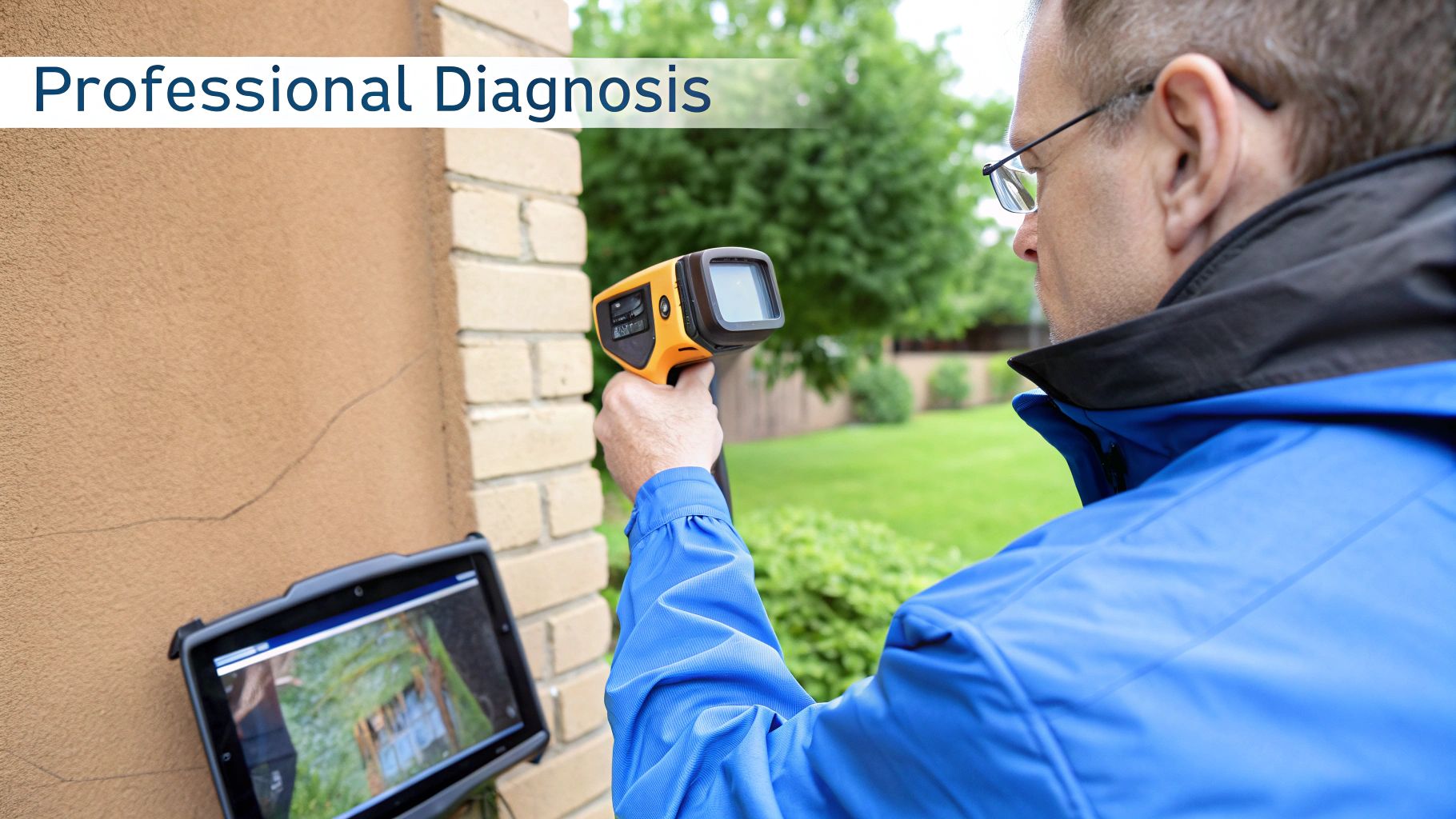
- Thermal Imaging: Infrared cameras are a game-changer. They help spot temperature differences behind walls that often point to hidden water leaks or condensation issues, which are basically five-star resorts for mold.
- Strategic Sampling: When needed, air and surface samples are collected from key areas and a "control" area for comparison. These get sent to an accredited lab to identify the exact mold species and how many spores are floating around.
When you absolutely need to know what's in your air, a comprehensive environmental mold testing assessment provides the hard data you and your doctor need to build an effective plan for both treatment and remediation.
Two Paths To A Diagnosis: Medical Vs. Environmental
To truly solve chronic sinus problems linked to mold, you need information from both your doctor and an environmental expert. One can't fully do the job of the other. Seeing how their roles fit together makes it clear why both are so important.
| Diagnostic Step | Medical Professional (Your Doctor) | Environmental Specialist (Mold Inspector) |
|---|---|---|
| Primary Goal | Diagnose the health condition in your body (e.g., AFS, allergy). | Identify the environmental cause in your property (e.g., water leak, mold type). |
| Key Questions | "Is your body reacting to fungus?" | "Is there a mold problem in your home, and why?" |
| Tools Used | Nasal endoscope, CT scanner, blood tests, skin prick tests. | Moisture meter, thermal imaging camera, air/surface sampling equipment. |
| What They Find | Inflammation, allergic mucin, fungus balls, immune system response. | Hidden moisture, water intrusion source, mold species, spore concentrations. |
| The Outcome | A medical diagnosis and a treatment plan (medication, surgery). | A detailed report with lab data and a remediation protocol (the cleanup plan). |
As you can see, the medical diagnosis confirms what is happening to you, while the environmental inspection confirms why it's happening. Without both pieces of the puzzle, you're only getting half the story—and likely, only half a solution.
A Practical Plan To Protect Your Home And Health
So, a professional inspection confirmed you have a mold problem. Now what? Your first instinct might be to grab a bottle of bleach and start scrubbing. Resist that urge. For anything more than a tiny spot on the surface, DIY remediation often backfires, making the situation much, much worse.
When you scrub at mold, you can accidentally release a massive cloud of spores into the air. This doesn't just fail to solve the problem—it actively spreads the contamination to other parts of your home, tanking your indoor air quality.

Professional remediation is a completely different ballgame. It's a systematic process that involves containing the area, carefully removing contaminated materials, and using specialized air filtration to trap any escaped spores. It's the only way to get to the root of the problem and truly protect your family's health.
Proactive Prevention For Coastal Homes
Honestly, the best way to deal with mold is to never let it get started in the first place. Living in coastal areas like Santa Barbara and Ventura means dealing with humid, marine air—a perfect breeding ground for mold. You have to stay one step ahead by controlling the moisture inside your home.
Here are a few essential strategies to keep your home dry and healthy:
- Master Your Indoor Humidity: Get a good dehumidifier and keep your indoor humidity levels between 30% and 50%. This is probably the single most effective thing you can do.
- Ventilate, Ventilate, Ventilate: Use the exhaust fans in your kitchen and bathrooms every single time you cook or shower. Let them run for another 20-30 minutes afterward to pull all that damp air outside before it settles.
- Fix Leaks Immediately: That tiny drip under the sink or the small water stain on the ceiling? That's a ticking time bomb for a major mold colony. Address any and all water issues right away, no matter how small they seem.
- Improve Air Circulation: Keep the air moving with ceiling fans or even a simple portable fan, especially in rooms that tend to feel stuffy. Stagnant air is moisture's best friend.
Protecting your home is fundamentally about moisture control. By managing humidity and ensuring proper ventilation, you create an environment where mold simply cannot thrive, turning your home into a safe haven from environmental triggers that contribute to sinus infections.
Building A Healthy Home Environment
Keeping your home mold-free isn't a one-time fix; it's an ongoing process. It means being mindful of the everyday habits that let moisture build up inside. For a deeper dive, you can learn more about how to prevent mold growth in our detailed guide.
A few small, consistent efforts to keep your home dry will pay off massively in the long run. You'll protect your property and your health, and you'll finally be able to breathe easy.
Got Questions About Mold and Sinus Infections? We've Got Answers.
When you're trying to connect the dots between mold in your home and your nagging sinus issues, a lot of questions pop up. We hear them all the time from homeowners in Santa Barbara and Ventura Counties. Here are some straightforward answers to the most common ones.
Is "Black Mold" the Only Type That Causes Sinus Infections?
It's a common misconception that Stachybotrys chartarum—the infamous "black mold"—is the only bad guy. While it can certainly contribute to sinus problems, it's not the only culprit, and honestly, it's not even the most common one we find.
In our experience, molds like Aspergillus and Penicillium are far more frequently linked to Allergic Fungal Sinusitis. The color of the mold is really just a distraction. What truly matters is that you have a significant colony of any type of mold pumping spores into your air. That's what triggers the immune response and the chronic inflammation that makes you miserable. A professional mold test is the only way to know for sure what's growing in your home.
How Fast Can Mold Make My Sinuses Act Up?
This is one of those "it depends" situations. Everyone's body reacts differently. Some people are incredibly sensitive and might start sneezing or feeling congested within a few hours of walking into a moldy environment.
For most people, though, it’s a slow burn. The problem builds up over time. Chronic sinusitis often develops after months or even years of low-level exposure that you might not even notice at first.
The biggest clue? Persistence. If your sinus symptoms just never seem to go away, no matter what treatments you try, it's a huge red flag that your indoor air quality is the real root of the problem.
If I Get Rid of the Mold, Will My Sinus Infection Go Away?
Getting the mold out of your house is the single most important thing you can do to get better. For people whose sinus problems are driven by an allergic reaction, professional mold remediation often brings dramatic improvement. Sometimes, the symptoms clear up completely.
But, if the situation has progressed to a fungal ball or an invasive infection inside your sinuses, removing the mold at home is only half the battle. You'll still need medical treatment from your doctor to clear the infection from your body. The best approach is always a two-pronged attack: work with a medical professional for your health and a certified mold inspector to fix your home. Tackling both at the same time is your fastest path to relief.