Think of environmental mold testing as a comprehensive health checkup for your home. It’s a process that goes way beyond just looking for visible spots on the wall; it's a deep, scientific dive into the invisible air quality you and your family are breathing every single day. For any homeowner, this means finally getting clear answers about hidden threats that could be impacting your well-being and your property's value.
Why Environmental Mold Testing Is a Home Health Checkup
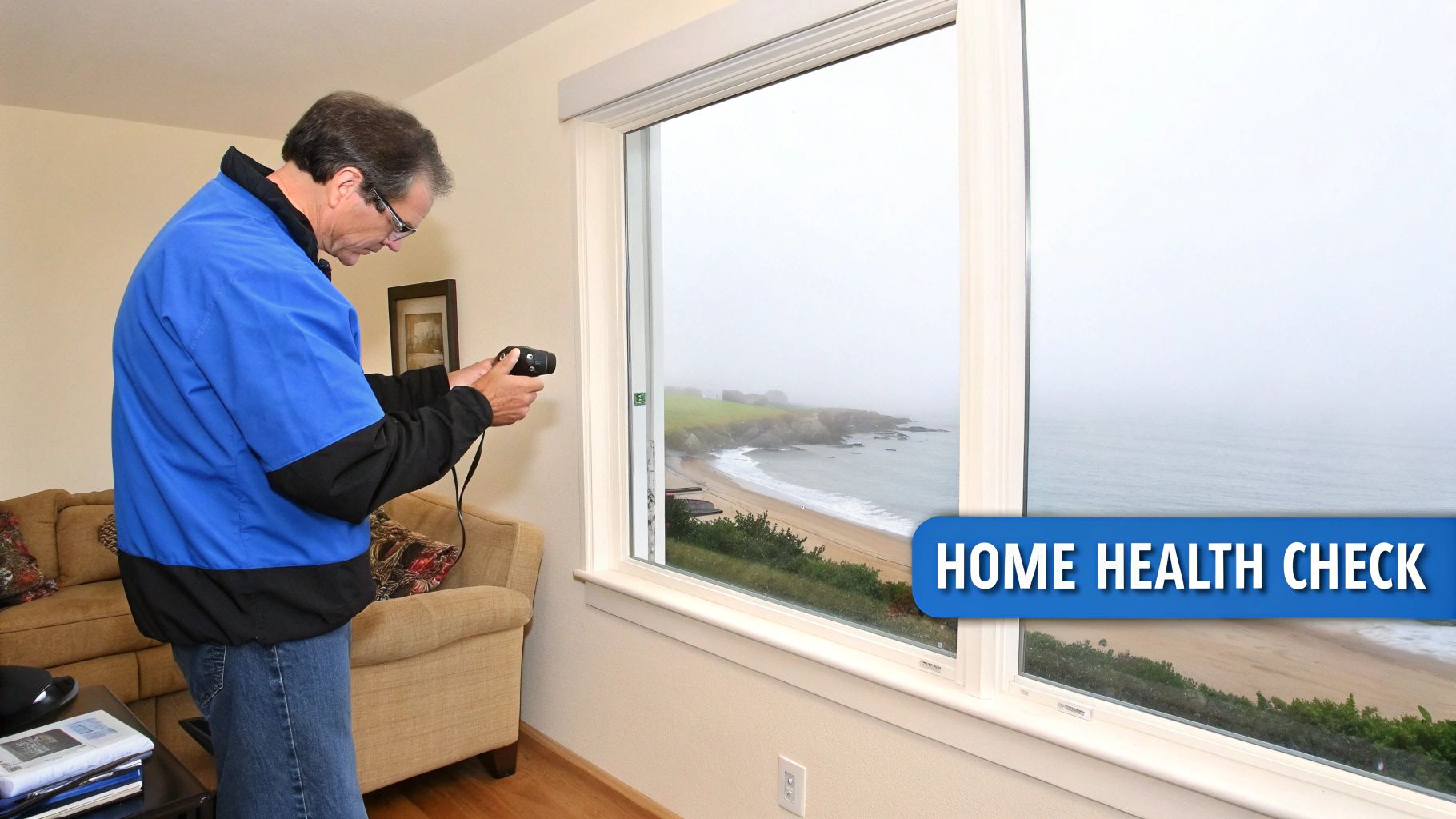
You wouldn’t ignore a persistent cough, so why would you ignore a musty smell or the lingering signs of water damage in your home? Environmental mold testing is the diagnostic tool we use to reveal what's really happening behind your walls and in your air, giving you definitive answers where guesswork just won’t cut it.
It’s all about moving from suspicion to certainty. That lingering odor you can't place, those unexplained allergy symptoms that only act up at home, or a recent plumbing leak are all red flags. A professional assessment from Pacific Mold Pros acts like an X-ray, using specialized equipment to detect elevated spore counts and identify specific mold types—something DIY kits simply can't do.
Beyond What the Eye Can See
The real danger with mold isn't always the fuzzy black spot you can see on a damp wall. The bigger threat comes from the microscopic spores that become airborne, circulating through your HVAC system and potentially affecting respiratory health or causing chronic issues.
This is especially true for us in coastal communities like Santa Barbara and Ventura, where the persistent humidity and ocean fog create the perfect breeding ground for mold. Older homes, with their unique construction quirks, can easily trap this moisture, leading to hidden colonies in places like:
- Crawl spaces and basements
- Attics with poor ventilation
- Wall cavities behind sinks, showers, and toilets
- Underneath flooring after a spill or hidden leak
Without professional testing, these problems can fester for years, slowly compromising your home's structural integrity and, more importantly, your family's health.
A professional environmental mold test provides a clear, data-driven picture of your indoor air quality. It’s the essential first step toward creating a targeted remediation plan and ensuring your home is a safe, healthy sanctuary.
A Growing Need for Certainty
More and more, people are realizing just how much indoor air quality impacts their health, and you can see it in the market trends. The global mould detection service market—a core part of environmental mold testing—was valued at USD 1.2 billion in 2023 and is projected to skyrocket to USD 2.3 billion by 2032. This incredible growth is fueled by a better public understanding of the health risks tied to mold exposure. You can discover more insights about this growing market and its impact on homeowner awareness.
This data highlights a critical point: homeowners are done guessing about their indoor environment. They demand accurate information to protect their families and their biggest investment. At Pacific Mold Pros, we deliver that certainty with precise, lab-verified results that give you the peace of mind you deserve.
When Professional Mold Testing Makes Sense
Not sure if you need a test? This quick-reference table covers the most common situations we see that signal it's time to call in a professional.
| Situation or Symptom | Why Testing Is Recommended | Who Benefits Most |
|---|---|---|
| Persistent Musty Odors | That "old basement" smell is often caused by mold off-gassing, even if you can't see it. | Homeowners with older properties or damp basements. |
| Unexplained Health Symptoms | Chronic allergies, asthma flare-ups, or headaches that improve when you leave the house. | Families with children, elderly individuals, or anyone with a compromised immune system. |
| After Water Damage | Following a leak, flood, or burst pipe, even after the area is "dry." | Anyone who has experienced a recent water event, big or small. |
| Visible Mold Growth | When you see spots but need to know the extent of the contamination in the air. | Homeowners who need a clear remediation plan and want to ensure the problem is fully resolved. |
| Real Estate Transactions | To ensure a healthy living environment before buying or to provide confidence to potential buyers. | Home buyers, sellers, and real estate agents. |
If any of these scenarios sound familiar, a professional test is the smartest, safest next step to protect your home and health.
Understanding Different Types of Mold Tests
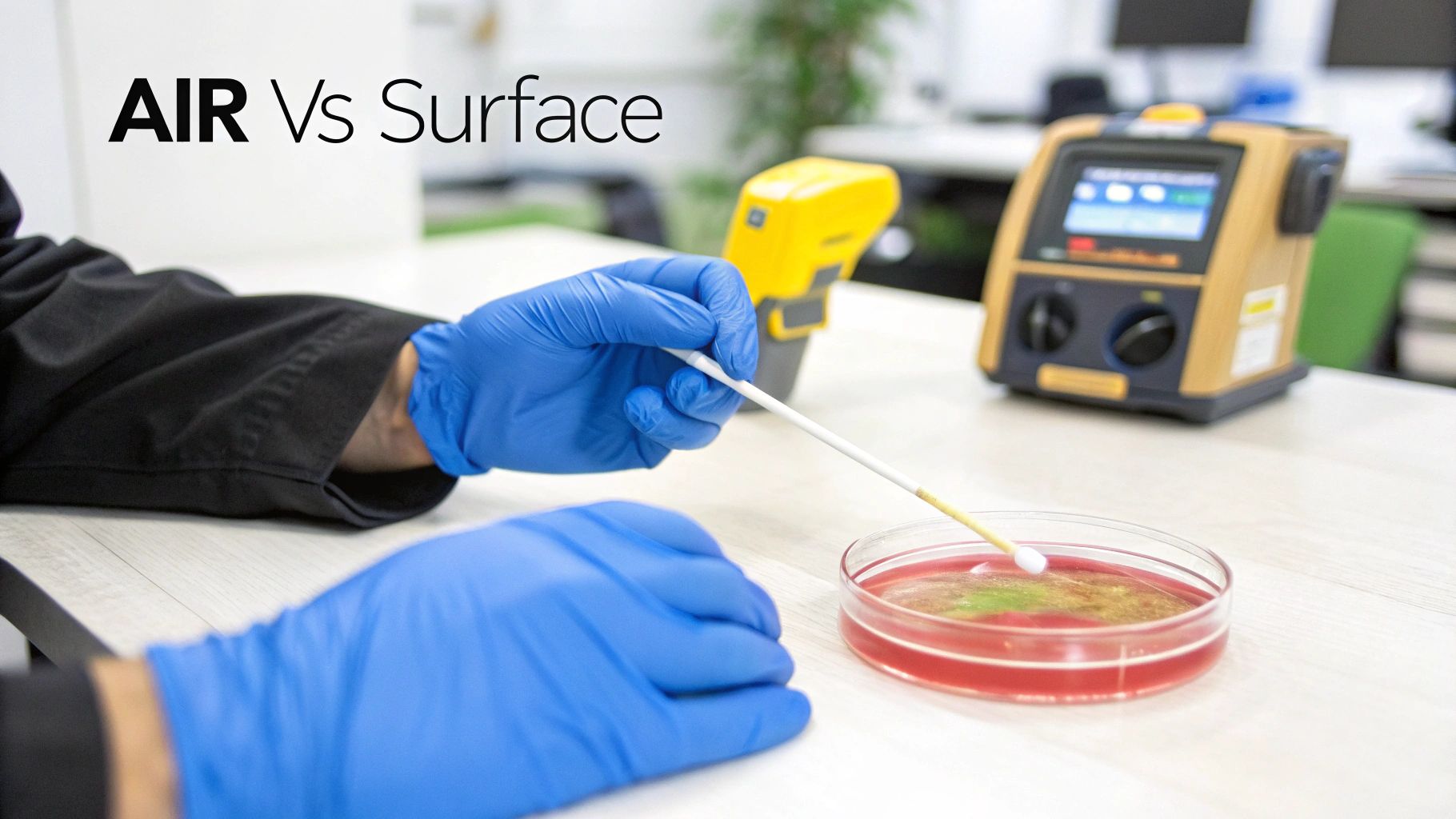
When you suspect a mold issue, getting an accurate diagnosis is everything. A professional inspector doesn't just show up and look around; we come equipped with a specialized toolkit designed to uncover the full story of your home's air quality.
Think of it like being a detective at a crime scene. You need the right tools to gather different kinds of evidence. In environmental mold testing, we primarily rely on two key methods: air sampling and surface sampling. Each one tells us a unique part of the story—one reveals what you're breathing, and the other identifies the culprit you can see. Understanding how they work is the first step toward a real solution.
Air Sampling: What’s Really in Your Air?
Air sampling is our go-to method for figuring out what’s floating around in your home. It’s designed to capture the microscopic, airborne mold spores that are completely invisible. To do this, we use a calibrated air pump that pulls a very specific volume of air through a small cassette with a sticky slide inside.
It’s a bit like trying to count the specks of dust floating in a sunbeam—you can't just grab them out of the air. Our equipment acts like a high-tech vacuum, trapping a perfect snapshot of airborne particles. This is absolutely crucial for finding hidden mold problems because spore counts can be dangerously high long before you ever see or smell a thing.
The most important part of any professional air sampling is the control sample. We always take a sample of the outdoor air right outside your home to create a baseline. A healthy indoor environment should have roughly the same types and amounts of mold spores as the air outdoors.
This comparison is what separates a real, scientific test from those unreliable DIY kits. It allows us to see if there’s an indoor source—like a hidden colony behind a wall or inside your HVAC system—that’s actively pumping spores into your living space. While many homeowners are curious about DIY options, our guide on choosing the best mold test kit for home use explains why they often fall short of providing the reliable answers you need.
Surface Sampling: Identifying the Culprit
While air sampling tells us what's floating around, surface sampling helps us identify a specific suspect. If you've got a patch of visible discoloration or something that just looks like mold, we can take a direct sample to find out exactly what it is.
This is the fingerprinting part of the investigation. A surface sample gives us a definitive ID on the mold species growing in that particular spot. We generally use two trusted methods to do this:
- Tape Lifts: We press a piece of special, clear adhesive tape against the growth. This lifts the fungal structures and spores right off the surface, preserving them perfectly for the lab.
- Swab Samples: A sterile cotton swab is wiped across the area to collect the sample. This works great for getting into tight corners, damp spots, or textured surfaces.
This type of testing is non-negotiable when you see something suspicious but aren’t sure if it’s just dirt, mildew, or a more serious mold problem. The lab results confirm what we’re dealing with, which is critical for planning the right remediation strategy.
Advanced Diagnostic Tools: Seeing Behind the Walls
But truly effective environmental mold testing goes beyond what we can see or sample. At Pacific Mold Pros, our certified inspectors use advanced technology to hunt for the one thing mold absolutely needs to survive: moisture. Samples tell us if you have a problem, but these tools help us find why.
Our primary diagnostic tools include:
- Thermal Imaging Cameras: These incredible cameras let us see temperature differences on surfaces. Because wet areas behind walls or under floors are cooler than dry materials, they show up as distinct blue or purple patterns on our screen, instantly revealing hidden leaks and moisture pockets.
- Moisture Meters: Once thermal imaging points to a potential problem, we use moisture meters to get hard numbers. These devices have probes that measure the exact moisture content inside drywall, wood, and insulation, giving us concrete data on just how extensive the water damage is.
By combining a thorough visual inspection, advanced diagnostics, and precise lab sampling, we build a complete, undeniable picture of your home’s health. This comprehensive approach ensures we don't just find the mold—we pinpoint the source, paving the way for a permanent fix.
What to Expect During a Professional Mold Inspection
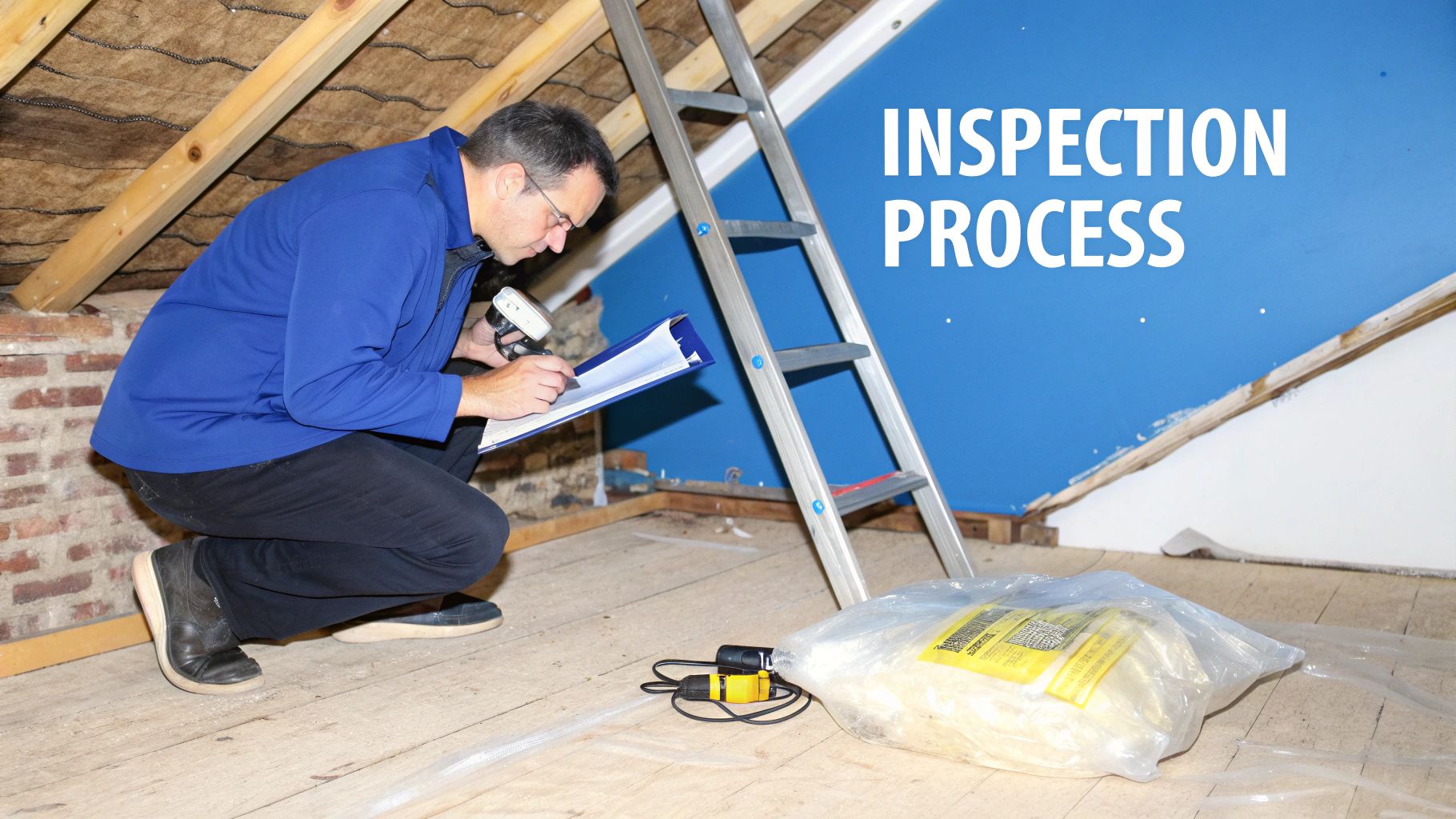
Knowing what happens during a professional inspection can take the uncertainty out of the equation. When a certified Pacific Mold Pros inspector arrives at your home, our process is designed from the ground up to be thorough, transparent, and respectful of your space. Our goal is to tell the complete story of your home's indoor environment, from the first visual check all the way to the final lab-verified report.
It all starts with a conversation. We’ll take the time to listen to your concerns—whether it’s a nagging musty smell, a recent water leak, or health symptoms you can’t quite explain—and then lay out our plan of action. This way, you know exactly what we're doing and why, making you an informed partner in protecting your home.
The Initial Visual Assessment
The first phase is a meticulous visual walkthrough of your property. This isn’t just a quick glance around; it's a systematic hunt for any evidence of moisture intrusion and the conditions that let mold thrive. Our inspectors are trained to spot the subtle clues that most people miss, paying extra attention to known problem areas.
Especially in coastal communities like Santa Barbara and Ventura, we zero in on zones vulnerable to humidity and fog:
- Attics and Crawl Spaces: We’re looking for poor ventilation, condensation, and tell-tale signs of roof leaks.
- Windows and Doors: That persistent coastal fog can create chronic dampness around seals and sills.
- Kitchens and Bathrooms: We check for slow leaks under sinks, behind toilets, and around showers.
- HVAC Systems: These systems can become highways for mold spores, circulating them throughout your home if the unit or ductwork is contaminated.
This hands-on assessment creates the blueprint for our environmental mold testing strategy. It tells us where to look closer and helps us pinpoint the most effective spots for collecting scientific samples. You can learn more about the whole process by reading our guide explaining what a mold inspection entails.
Scientific Sample Collection and Lab Analysis
Once we’ve completed the visual inspection, it’s time to gather the hard evidence. Based on what we found, we'll recommend specific air or surface samples to get a crystal-clear picture of your indoor air quality. Each sample is a critical piece of the puzzle, collected with precision and care.
To ensure our results are airtight, we follow a strict chain of custody protocol. This is a formal process that documents every single step, from the moment a sample is collected at your home to its arrival at an accredited, third-party laboratory. This procedure guarantees that your samples are never contaminated and that the results you get back are undeniably accurate for your property.
We are 100% committed to unbiased results. By using an independent, accredited lab for all our analysis, we completely eliminate any conflict of interest. Our job is to give you the facts, not sell you on expensive remediation. That dedication to transparency is the core of the Pacific Mold Pros promise.
Market Context and Homeowner Awareness
Our work is part of a growing movement toward creating healthier homes. As more people connect their well-being to indoor air quality, the demand for mold-related services is on the rise. In fact, the global mold remediation market was valued at USD 1,234.6 million in 2023 and is projected to hit USD 1,516.8 million by 2030.
Residential services make up the largest chunk of that (58.7% in 2023), simply because everyday life—cooking, showering, doing laundry—creates moisture. This is especially true in homes with poor ventilation, a common issue here in California's coastal areas. You can find more insights on these industry trends and their drivers here.
Clear Communication and Reporting
After the lab finishes its analysis—which usually takes just a few business days—we don’t just forward you a complicated report and call it a day. A member of our team will personally call you to walk through the findings in plain, simple English. We’ll explain what the spore counts mean, what types of mold were found, and what it all means for your home's health.
Our final report is detailed but easy to digest, giving you:
- A clear summary of the inspection findings.
- The complete, unbiased lab analysis.
- Photos of any areas of concern.
- Actionable next steps based on real data.
From your first call to the final report, our process is built on clarity, professionalism, and scientific accuracy. We’re here to empower you to make the best possible decisions for your property and your family.
How to Read and Understand Your Mold Test Results

Getting a lab report back can be a little intimidating. It’s packed with scientific names and columns of numbers, and it’s easy to see a word like Stachybotrys and feel a jolt of anxiety.
But this is actually the most powerful part of the entire environmental mold testing process. This is where confusing data turns into a clear, actionable roadmap for making your home healthy again. At Pacific Mold Pros, our job isn't just to hand you a report—it's to translate it for you, so you feel confident, not confused.
Think of it like getting a blood test for your house. The goal isn’t to find zero mold spores. That’s impossible, since mold is everywhere in our natural environment. The real goal is to see if your home’s indoor "levels" are normal and balanced, or if they’re pointing to a hidden problem that needs to be fixed.
Spore Counts and the Outdoor Baseline
The most critical piece of the puzzle is the comparison between your indoor air samples and the outdoor "control" sample we take. This outdoor sample acts as our baseline—it shows us what’s normal for your specific neighborhood on that exact day.
A healthy home should generally mirror what's happening outside, with similar mold types at concentrations that are the same or, ideally, lower.
When we see indoor spore counts that are way higher than the outdoor baseline, that's a huge red flag. This imbalance tells us there’s almost certainly an active mold colony growing somewhere inside your home, pumping spores into the air you breathe.
For example, if the outdoor air has 500 spores of Cladosporium per cubic meter, but your living room sample shows 10,000, we know there's a problem. This is the hard data that confirms a hidden issue needs to be found and fixed. For a deeper dive into a sample report, check out our guide on understanding mold test results and what those numbers really mean.
"The key to interpreting a mold report is context. A single number means very little on its own. It's the relationship between the indoor and outdoor samples that tells the real story of your home's air quality."
What Are Those Different Mold Types?
Your lab report will also break down the specific types of mold present. While there are thousands of species out there, only a handful commonly show up in homes. It’s important to remember that just seeing a certain type of mold isn’t an automatic cause for panic—it’s the quantity and location that really matter.
Some molds, like Stachybotrys chartarum (often called "black mold"), raise an eyebrow even at lower counts because they simply shouldn't be growing indoors unless there's been some serious, long-term water damage. Other common types are always in the air outside and only become a concern when their indoor numbers are unnaturally high.
Here’s a quick rundown of some of the names you might see on your report and what they generally mean.
Common Mold Types and What They Mean
This table is a quick guide to help you make sense of the common mold types that appear in lab reports and what they might mean for your home.
| Mold Type | Where It's Often Found | Potential Significance |
|---|---|---|
| Penicillium/Aspergillus | Extremely common, found in soil, on food, and in household dust. | Generally harmless at normal levels, but elevated indoor counts can point to damp materials like drywall or insulation. |
| Cladosporium | One of the most common outdoor molds, often found on plants. | High indoor counts often suggest poor filtration or ventilation, letting too much outdoor air inside, but can also grow on damp surfaces. |
| Stachybotrys | Grows on high-cellulose, low-nitrogen materials like drywall, paper, and ceiling tiles that have been wet for a long time. | Its presence is a strong indicator of a serious, long-term water intrusion problem that requires immediate attention. |
| Chaetomium | Frequently found on materials that have suffered long-term water damage, similar to Stachybotrys. | Often found alongside "black mold," it confirms a significant moisture issue and produces a musty odor. |
Remember, this is just a starting point. The real story comes from how these numbers compare to your home's unique baseline.
Your Simplified Report and Next Steps
We know you're not a microbiologist, and you shouldn't have to be. That's why every Pacific Mold Pros lab analysis comes with a clear, easy-to-understand summary from one of our certified inspectors.
We’ll personally call you to walk through the results, explaining exactly what we found, what it means for your home, and what the recommended next steps are.
Our job is to provide unbiased, factual information. If the results show a problem, we will give you a clear protocol for remediation and advise you to hire a separate, certified remediation company. This separation is critical—it ensures there's no conflict of interest. Our only goal is to give you accurate data so you can make the best decision for your home and family.
Mold Testing for Real Estate Deals and Rentals
In the Santa Barbara real estate market, surprises are the last thing anyone wants. A smooth, transparent deal is everything, whether you're a buyer, seller, agent, or property manager. An unexpected mold problem can quickly unravel a closing or spark a dispute down the road. This is where professional environmental mold testing becomes a game-changer, turning potential liabilities into clear, manageable facts.
Think of it as a pre-flight check before making one of life’s biggest investments. A pre-purchase mold inspection digs deeper than a standard home inspection, specifically hunting for hidden moisture and elevated spore counts that signal a costly problem in the making. Catching these issues upfront protects everyone involved and prevents last-minute headaches that could kill the deal.
Protecting Buyers and Empowering Sellers
For a home buyer, finding a hidden mold issue after closing is a total nightmare. It means surprise remediation bills and worries about your family's health. A thorough mold inspection from Pacific Mold Pros gives you the confidence that you're investing in a safe, healthy home, free from undisclosed water damage.
For sellers, proactive testing is a seriously smart move. It shows you're transparent and helps build trust with buyers. Identifying and fixing a minor moisture issue before you even list the property can stop it from becoming a major negotiation sticking point later, helping you secure the best possible price for your home.
A professional mold test delivers an unbiased, third-party assessment of a property's true condition. This data-driven report protects the buyer from future risk and the seller from post-sale liability, making the entire transaction cleaner and more confident for everyone.
At Pacific Mold Pros, we know that real estate moves fast. We offer rapid reporting to make sure you get the clear, actionable results you need without holding up your closing schedule.
Essential for Landlords and Property Managers
Being a landlord or property manager is about more than just collecting rent. You have a legal and ethical duty to provide a safe, habitable living space. Here in Santa Barbara's coastal climate, humidity is a constant battle. Proactive mold management isn’t just good practice—it’s critical risk management.
Regular environmental mold testing in rental properties helps protect your tenants' health, reduces your liability, and preserves the property's value. It allows property managers and HOAs to tackle moisture problems before they balloon into widespread contamination, leading to expensive repairs and tenant conflicts. It's also vital to know the rules; you can get the specifics on our detailed article covering California landlord-tenant law and mold.
Specialized Services for the Real Estate Community
We’ve fine-tuned our services to meet the specific demands of Santa Barbara’s real estate pros. Our mission is to be a reliable partner who gets the local climate and the urgency of your deals.
- Pre-Purchase and Pre-Sale Inspections: We deliver detailed reports that clearly lay out a property’s condition, giving buyers confidence and sellers a powerful tool for a transparent sale.
- Rapid Reporting for Tight Deadlines: We prioritize fast lab turnaround and clear communication to ensure your real estate transactions stay on schedule.
- Mold-Free Certifications: After a remediation job or for new construction, our certification provides official proof that a property meets healthy indoor air quality standards, adding serious value and appeal.
When you partner with Pacific Mold Pros, you get a trusted ally dedicated to protecting investments, ensuring smooth transactions, and creating healthier homes for owners and tenants across Santa Barbara and Ventura counties.
What to Do After Your Mold Test Results Come In
Getting your mold testing report back is where uncertainty ends and a clear plan begins. This is the moment you get to move forward, armed with real data about your home’s health. At Pacific Mold Pros, we make sure that path forward is simple and straightforward, whether your results show a problem or give you the all-clear.
If your report flags elevated mold levels, the first and most critical step is remediation. We exist to provide unbiased testing, which is why we will always recommend hiring a separate, certified remediation company. This separation is your guarantee against a conflict of interest; our job is to give you purely scientific findings that empower you to find the right solution, with zero pressure from us. You can learn more about the crucial differences between mold removal vs. remediation in our guide.
Creating a Mold-Resistant Home
Got a clean report? Fantastic! Your focus now shifts from fixing a problem to preventing one, which is especially important in our coastal climate. Keeping your home healthy really just boils down to controlling moisture.
- Boost Your Ventilation: Always use the exhaust fans in your kitchen and bathrooms. It’s a simple habit that pushes humid air outside where it belongs.
- Keep an Eye on Humidity: Try to keep your indoor humidity between 30% and 50%. A cheap hygrometer from the hardware store makes this easy to track.
- Fix Leaks Fast: That tiny drip under the sink might seem harmless, but it’s a perfect invitation for mold. Get those small leaks fixed right away.
Your test results aren't just numbers on a page; they're the blueprint for a healthier home. A clean report helps you keep things in balance, while an elevated one gives you the exact information you need to restore it.
This focus on professional assessment and prevention is why our industry is growing so fast. The mold and moisture assessment market, a core part of environmental mold testing, was valued at a whopping USD 2.1 billion in 2023 and is projected to hit USD 3.8 billion by 2032. It’s a clear sign that homeowners everywhere are prioritizing healthy indoor spaces—a mission we are proud to lead right here in Santa Barbara and Ventura counties. You can learn more about these market findings here.
Whether you need help figuring out your next steps or just want to schedule a routine check-up, think of Pacific Mold Pros as your long-term partner in home health. Give us a call today at (805) 232-3475 to make sure your home stays the safe, healthy sanctuary it should be.
Got Questions About Mold Testing? We Have Answers.
Even after you've learned a bit about the process, it's completely normal to still have questions. We get it. At Pacific Mold Pros, we're all about giving our neighbors in Santa Barbara and Ventura straight, honest answers so you can make decisions with confidence.
Here are a few of the most common questions we hear about environmental mold testing. We want to take the mystery out of it, making sure you feel in control from the first phone call to the final report. Your peace of mind is what matters most to us.
How Much Does Professional Mold Testing Cost in Santa Barbara?
This is usually the first question people ask, and the honest answer is: it depends. The cost of a professional mold inspection is tied to a couple of key things, mostly the size of your property and how many samples are needed to get a full, accurate picture.
For a smaller home or apartment, a basic assessment might start in the low hundreds. A larger, more complex property with multiple areas of concern will naturally need a more in-depth investigation. At Pacific Mold Pros, we give you clear, upfront pricing with zero hidden fees. Think of it as a critical investment in your home’s health and your family's well-being. Catching a problem early with precise testing can save you thousands in remediation costs down the line.
For a free consultation and a detailed quote designed specifically for your home, give us a call at (805) 232-3475.
Are Those DIY Mold Test Kits from the Hardware Store Any Good?
While the low price tag on a DIY kit is tempting, they are notoriously unreliable and often give you misleading results. Most of them are just simple settlement plates that catch whatever spores happen to be floating by and land on them. They can’t tell the difference between the normal, everyday spores found in any healthy home and a real contamination problem coming from a hidden source.
This is a huge problem. It either leads to unnecessary panic over a harmless result, or a false sense of security when a serious, hidden issue gets missed entirely. Most importantly, a DIY kit will never find the root cause—the moisture source—which is the absolute key to any permanent fix.
Professional environmental mold testing, on the other hand, uses calibrated, scientific equipment for precise air and surface sampling. Every sample is then analyzed by an accredited, third-party lab. This process delivers reliable data you can actually trust to make important decisions about your health and your home.
How Long Does The Whole Mold Testing Process Take?
We know that when you think you have mold, you want answers, and you want them fast. The on-site inspection part is quick and efficient. It usually takes between one to three hours, depending on how big and complex your home is. During that visit, our certified inspector will do a thorough visual check and collect all the necessary samples.
Once we have the samples, we send them straight to our certified lab for analysis. You can typically expect your complete, detailed report back within just 2-3 business days. If you're in a time crunch—like a pending real estate deal—we also offer rush services to help you meet your deadline. The moment we get the lab report, we'll call you personally to walk you through the findings in plain English and lay out your clear next steps.