When you find mold in your home, it's natural to worry about more than just the ugly spots on the wall. Exposure to indoor mold can lead to a whole host of health issues, ranging from nagging allergies to more serious, long-term conditions.
The health effects of mold exposure really boil down to three main categories: allergic reactions, infections, and toxic effects from mycotoxins. How your body reacts depends on a few things: the type of mold you're dealing with, how long you've been exposed, and your own individual health.
Decoding Mold's Impact on Your Health
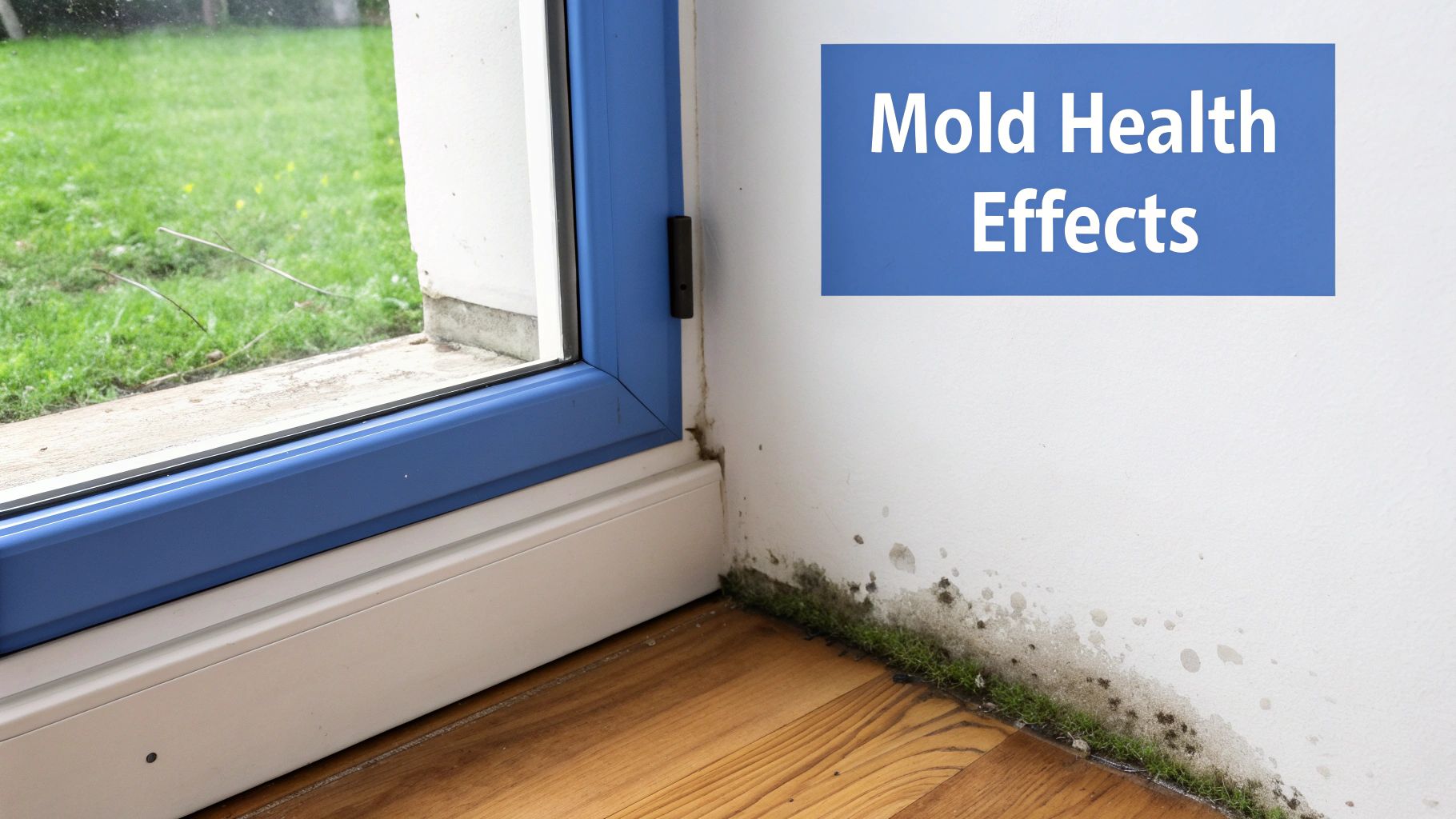
Think of mold as an unwelcome guest that messes with your home’s air quality. It releases microscopic spores and chemical byproducts that you and your family end up breathing in day after day. While not every mold species is a cause for alarm, certain types can definitely compromise your well-being, especially if you're living with them for a while.
The key thing to remember is that mold's health effects are not one-size-fits-all. They show up differently depending on how your body responds. For most healthy people, the immune system treats mold spores like pollen or dust, which is why you might get those familiar allergy symptoms. For others, though, the impact can be much more severe.
The Three Ways Mold Can Affect Your Health
To really get a handle on the risks, it helps to break down how our bodies can react into three distinct buckets. Each one works through a different biological process and comes with its own set of symptoms.
Here's a quick look at the main categories of health reactions to mold.
Three Ways Mold Can Affect Your Health
| Type of Reaction | How It Happens | Common Symptoms |
|---|---|---|
| Allergic | Your immune system overreacts to inhaled mold spores, causing inflammation. | Sneezing, coughing, itchy eyes, runny nose, asthma attacks, skin rashes. |
| Infectious | Mold spores colonize and grow inside the body, typically in the lungs or sinuses. | Fever, cough, chest pain, shortness of breath (primarily in the immunocompromised). |
| Toxic | You inhale or ingest mycotoxins, which are harmful chemicals produced by certain molds. | Headaches, fatigue, brain fog, neurological issues, respiratory irritation. |
As you can see, the reactions can range from simply annoying to genuinely serious.
Allergic Reactions: This is by far the most common response. Your immune system sees the inhaled mold spores as invaders and overreacts, triggering inflammation. This leads to symptoms we all know too well: sneezing, coughing, itchy eyes, and even skin rashes.
Infectious Reactions: This is much less common and mostly a concern for people with weakened immune systems. In these rare cases, mold spores can actually start growing inside the body, causing serious fungal infections in the lungs or sinuses.
Toxic Reactions (Mycotoxicosis): Some types of mold produce toxic chemical compounds called mycotoxins. When you breathe in or ingest these substances, they can cause a wide array of problems, from acute poisoning to chronic health issues that affect your neurological and respiratory systems.
Mold isn't just an unsightly nuisance; it's a potential health hazard silently growing within your walls. In fact, studies show that roughly 21% of asthma cases in the U.S. can be attributed to dampness and mold in homes.
For those of us living in coastal California—including Santa Barbara and Ventura counties—the persistent humidity and marine layer create a perfect breeding ground for mold. This extra moisture significantly increases the risk of exposure and the health problems that come with it, making proactive inspection and moisture control an absolute must.
How Mold Can Affect Your Health
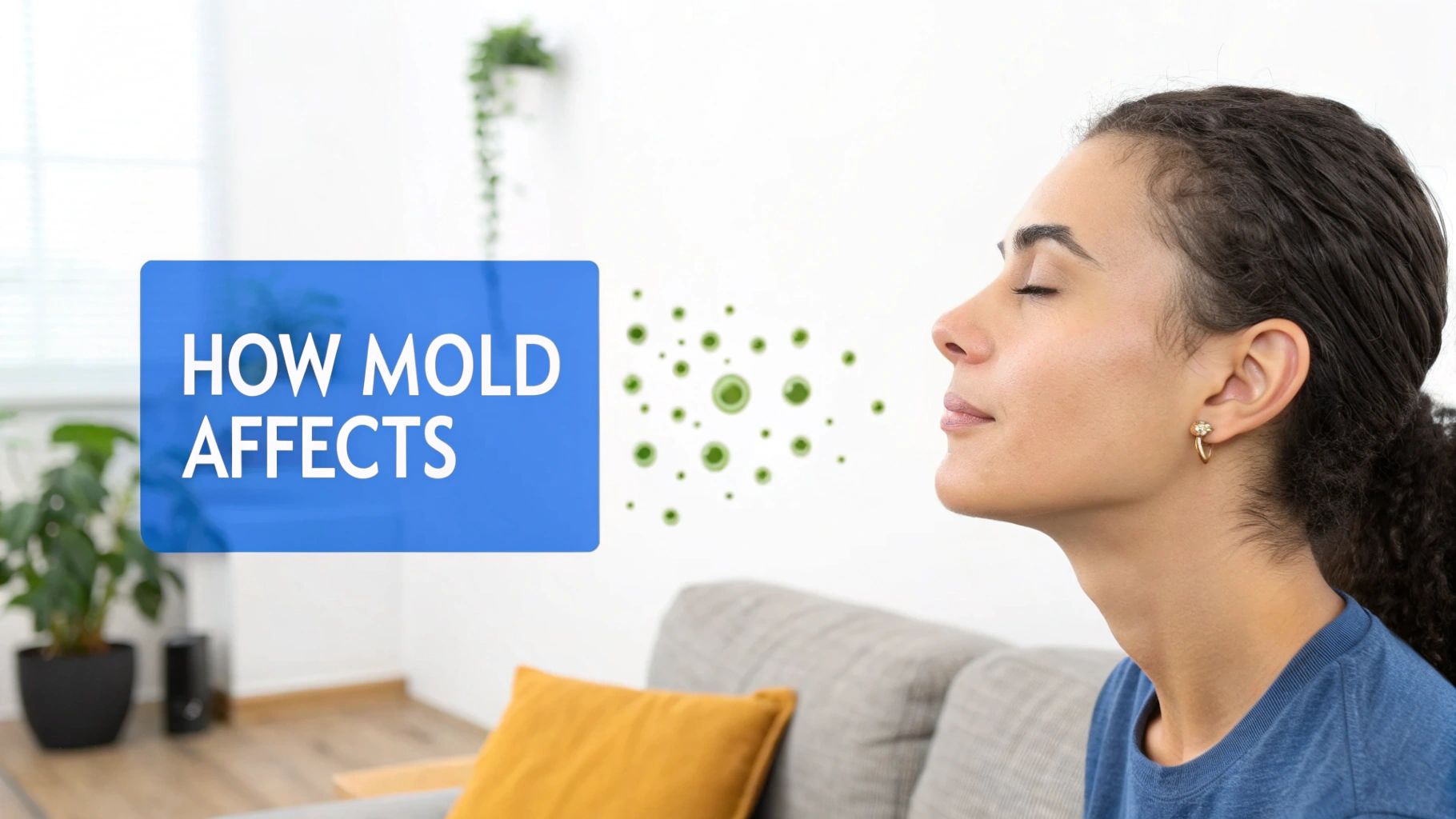
To really understand the health risks of mold, you have to know how it gets into your system and what it does once it’s there. It’s not a one-size-fits-all problem.
Think of your body as a high-tech security system. When mold spores show up, that system can react in three very different ways: an allergic reaction, an infection, or a toxic response. Each path causes its own set of symptoms, and figuring out which one you’re dealing with is the first step toward connecting how you feel to a potential mold issue in your home.
Let's break down each one.
Allergic Reactions: The Body's False Alarm
By far, the most common way people react to mold is through allergies. Imagine mold spores as tiny, invisible bits of pollen floating around your house. For a lot of people, the immune system mistakes these spores for dangerous invaders and hits the panic button.
This overreaction is what we call an allergic response. Your body unleashes chemicals like histamine to fight off a threat that isn't really there, causing inflammation in your sinuses, airways, and skin. It’s like a false fire alarm that floods your system with emergency responders you don't actually need.
The result is a list of symptoms that can easily be mistaken for a cold or seasonal allergies:
- Breathing Issues: Constant sneezing, a runny or stuffy nose, coughing, and wheezing.
- Irritation: Itchy, watery eyes and a scratchy, sore throat.
- Skin Problems: Rashes or hives, especially after direct contact.
For anyone with asthma, this is especially dangerous. The inflammation can trigger serious asthma attacks, making it hard to breathe. And this isn't a rare occurrence. A major 2007 assessment found that of the 21.8 million Americans with asthma, an estimated 4.6 million cases—a shocking 21%—are directly linked to dampness and mold in their homes.
Infectious Reactions: When Mold Starts to Colonize
While less common, infectious reactions are a whole lot more serious. This isn't just about an allergic trigger; this is when mold spores actually start to grow and colonize inside the body.
Thankfully, this is extremely rare in healthy people. A strong immune system usually wipes out the spores before they can get a foothold.
But it’s a different story for anyone with a compromised immune system—people undergoing chemotherapy, those with autoimmune diseases, or organ transplant recipients. Their bodies don't have the defenses to stop the fungal invaders, allowing mold to cause an infection, typically in the lungs or sinuses. These are serious forms of biological contamination that demand immediate medical care.
Toxic Reactions: The Silent Threat
Finally, let’s talk about toxic reactions. You’ve probably heard horror stories about "toxic black mold," and while there's a lot of myth out there, the core danger is real. Certain molds, under the right conditions, produce chemical byproducts called mycotoxins. These aren't the spores themselves but harmful substances you can inhale, swallow, or absorb through your skin.
If an allergic reaction is a false fire alarm, a toxic reaction is more like a slow, silent poison. It doesn't set off a loud immune response. Instead, mycotoxins can quietly build up in your body, disrupting cells and leading to chronic health issues.
This process, known as mycotoxicosis, can cause a frustrating range of symptoms that are often hard to pin down. These can include:
- Debilitating fatigue and weakness
- Headaches and sensitivity to light
- Brain fog, memory loss, and difficulty concentrating
- Chronic muscle aches and joint pain
Because these symptoms overlap with so many other illnesses, it can be incredibly difficult for doctors to trace them back to mycotoxin exposure. This is why it’s so critical to have any mycotoxin-producing molds professionally removed from your home—it's not just about cleaning a stain, it's about protecting your long-term health.
Who Is Most Vulnerable to Mold Sickness?
Ever notice how one person can live in a damp, musty house and seem perfectly fine, while another develops a whole host of health problems from the exact same environment? It’s not just in your head. When it comes to mold, everybody—and every body—is different.
Think of it like a peanut allergy. For most people, peanuts are a harmless snack. But for a sensitive few, even the tiniest exposure can trigger a serious reaction. Mold works in a similar way. Factors like your age, the strength of your immune system, and any existing health issues all play a huge role in how your body handles mold spores.
For some people, a little mold is just a nuisance. For others, it’s a legitimate health crisis. Knowing who falls into that higher-risk category is the first step in keeping your loved ones safe.
Children and Infants
A child’s body is a construction zone. Their immune systems and lungs are still developing, which is precisely why they are so susceptible to mold. They simply don't have the fully-formed defenses to fight off the irritants that mold spores pump into the air.
Because their respiratory systems are still growing, early-life mold exposure can pave the way for long-term issues. We see it lead to nagging coughs, wheezing, and a significantly higher risk of developing asthma that can stick with them for life. Kids also breathe more rapidly than adults, meaning they inhale a larger volume of air—and any contaminants in it—relative to their small body size. This amplifies their dose of whatever is floating around.
The Elderly
As we get older, our immune systems naturally lose a bit of their fighting power. For seniors, this means that an environmental annoyance they might have brushed off in their younger years can become a major health battle.
This decline in their body's defenses makes them more vulnerable to the respiratory infections and inflammation that mold spores can cause. On top of that, many older adults are already managing conditions like heart disease or COPD. Poor indoor air quality from mold can aggravate these issues terribly, making a mold-free home absolutely critical for their health and well-being.
Immunocompromised Individuals
For someone with a compromised immune system, mold isn't just an allergen—it's a potential invader. This group is broad and includes people undergoing chemotherapy, those with autoimmune diseases like Lupus or MS, organ transplant recipients, or individuals living with HIV/AIDS. Their bodies' defense systems are already working overtime or are suppressed, leaving them wide open.
In these situations, mold exposure can lead to systemic fungal infections where the mold actually starts to grow inside the body, usually in the lungs.
This is a crucial distinction: while a healthy person’s body fights off spores, an immunocompromised person’s body may not be able to stop them from colonizing. This transforms an environmental problem into a direct, internal threat that requires immediate medical intervention.
People with Pre-Existing Respiratory Conditions
If you already live with asthma, COPD, or another chronic respiratory condition, your airways are in a constant state of heightened sensitivity. For you, mold spores are a powerful trigger that can cause a severe and sudden flare-up, often called an exacerbation.
Imagine your airways are already inflamed and irritated—introducing mold is like throwing fuel on a fire. It can lead to more frequent and intense asthma attacks, debilitating shortness of breath, and a much heavier reliance on rescue inhalers and other medications.
Mold is a silent contributor to the indoor air pollution that the World Health Organization reported claims 7 million lives globally each year back in 2014. This figure covers all air pollution, but mold is a major player, making it one of the top threats to human health—especially in damp climates like California's Central Coast. Learn more about these global health findings.
Recognizing the Symptoms of Mold Exposure
Is that nagging cough just a lingering cold? Are your constant headaches from stress, or could it be something in your home? It can be incredibly hard to connect the dots between how you feel and a hidden mold problem, mainly because the symptoms are masters of disguise, often mimicking everyday ailments.
The real key is spotting the patterns. Do you feel worse when you're at home but better when you're out? Do your symptoms just hang around for weeks or months with no clear explanation? Getting a handle on the difference between short-term (acute) and long-term (chronic) signs is the first real step to uncovering the source.
Immediate Reactions and Short-Term Signs
Think of short-term symptoms as your body's alarm system going off. When you breathe in mold spores, your immune system flags them as intruders and mounts an immediate defense. These signs can pop up suddenly and are easily confused with seasonal allergies or the common cold.
This initial fight is mostly inflammatory, zeroing in on the parts of your body that first met the spores—your eyes, nose, throat, and lungs.
Common short-term symptoms include:
- Respiratory Irritation: A persistent dry cough, sneezing fits, wheezing, and a frustrating shortness of breath.
- Sinus and Nasal Issues: A nose that’s always runny or stuffy, sinus pressure, and that annoying post-nasal drip.
- Eye and Throat Discomfort: Itchy, watery, or red eyes, often paired with a scratchy or sore throat.
- Skin Reactions: Unexplained rashes, hives, or sudden eczema flare-ups.
Neurological signs can show up quickly, too. It's common for people to report frequent headaches, sensitivity to light, and a nagging "brain fog" that makes it hard to focus. These acute symptoms are your body telling you it's battling an environmental threat. If you've been asking yourself, "can mold make you sick" with these kinds of issues, our in-depth guide has more answers.
Chronic Issues and Long-Term Effects
When you're living with mold for months or even years, the health effects can dig in and become much more serious. Long-term symptoms aren't just an immediate reaction; they're the result of your body being stuck in a state of chronic inflammation, weighed down by the cumulative burden of mycotoxins.
At this stage, the problems often become systemic, impacting multiple body systems and leading to complex health conditions that are tough for doctors to diagnose.
Long-term exposure goes way beyond simple allergies. It can push your body into a state of chronic illness where the inflammatory response goes haywire, causing widespread, persistent symptoms that can seriously degrade your quality of life.
This prolonged battle can lead to some severe health challenges:
- Chronic Fatigue Syndrome: A profound and persistent exhaustion that no amount of rest seems to fix.
- Neurological Problems: Worsening brain fog, memory loss, anxiety, depression, and even numbness or tingling in your hands and feet.
- Immune System Dysfunction: Finding yourself getting sick all the time or even developing conditions that look a lot like autoimmune disorders.
- Chronic Inflammatory Response Syndrome (CIRS): A complex, multi-symptom illness that happens when a person's body can't clear biotoxins from mold effectively.
To help you see the difference more clearly, here’s a breakdown of how symptoms can shift from a nuisance to a serious health crisis over time.
Short-Term vs. Long-Term Symptoms of Mold Exposure
This table compares the immediate signs of mold exposure with the more severe, chronic conditions that can develop from living with it long-term.
| Symptom Category | Short-Term (Acute) Signs | Long-Term (Chronic) Signs |
|---|---|---|
| Respiratory | Coughing, sneezing, runny nose, asthma flare-ups | Chronic sinusitis, persistent shortness of breath, lung inflammation |
| Neurological | Headaches, brain fog, light sensitivity | Severe memory loss, difficulty concentrating, anxiety, depression, mood swings |
| General Health | Occasional fatigue, itchy skin, watery eyes | Debilitating chronic fatigue, muscle and joint pain, digestive issues |
| Immune System | Allergic reactions, temporary inflammation | Chronic Inflammatory Response Syndrome (CIRS), frequent infections |
It's so important to remember that these symptoms overlap with countless other medical issues. What really points toward mold is their persistence and the fact that they often get better when you leave your home for an extended period. That pattern is a huge red flag that your environment could be the real culprit.
Why Coastal Homes Are a Magnet for Mold
Living on the California coast is a dream, but that same beautiful environment can create the perfect storm for stubborn mold growth. Homes in Santa Barbara and Ventura counties face a unique set of challenges that turn them into ideal incubators for mold, often in places you'd least expect.
The biggest culprit? Constant, inescapable moisture. Think of that iconic marine layer that rolls in each morning—it’s basically a low-lying cloud blanketing everything in damp, cool air. This sends the ambient humidity skyrocketing, creating a five-star resort for mold spores looking to settle down and multiply.
Unlike dry, inland climates where a little moisture evaporates in a flash, our coastal air is heavy and saturated. This means water from a leaky pipe or a bad window seal doesn't just dry out on its own. It lingers, providing the sustained dampness mold absolutely needs to thrive.
The Coastal Climate's Triple Threat
Three specific environmental factors team up to create a constant moisture problem for local homeowners. Understanding this unique combination is the first step toward protecting your home and health.
High Ambient Humidity: The air itself is just thick with moisture, making it a constant battle to keep our homes dry. This persistent dampness leads to condensation on windows, walls, and other cool surfaces—a primary source of water for mold.
The Marine Layer: This daily fog isn't just scenic; it's a direct delivery system for moisture. It soaks exterior surfaces and gets easily drawn into the home through open windows or even an inefficient HVAC system.
Salty Sea Air: The salt carried in our coastal breeze is both corrosive and hygroscopic, meaning it actually attracts and holds onto water molecules. Over time, it degrades building materials like window frames and seals, creating tiny entry points for moisture to seep inside. If you're wrestling with this, our guide on how to reduce humidity in your house has some practical solutions.
Common Vulnerabilities in Coastal Homes
This constant fight against moisture makes certain parts of a coastal home especially prone to hidden mold. While any house can get mold, these areas demand extra vigilance in our local climate.
- Poorly Ventilated Crawl Spaces: Damp soil and humid air get trapped under the house, creating a dark, moist haven perfect for mold to grow completely unseen.
- Sea-Facing Window Frames: Windows that take the brunt of the ocean breeze are constantly exposed to damp, salty air. This can compromise their seals and allow water to slowly work its way into the surrounding walls.
- Struggling HVAC Systems: An HVAC unit on the coast works overtime trying to dehumidify the air. If not maintained, its coils and ductwork can become collection points for condensation, breeding mold that then gets blown all through your home.
Because moisture can be trapped behind walls and under floors, a simple visual check often isn't enough. Specialized tools are essential for uncovering the full extent of a moisture problem in coastal properties.
For homes in Santa Barbara and Ventura, thermal imaging is a game-changer. A thermal camera can spot subtle temperature differences behind drywall, revealing hidden pockets of moisture from a slow leak or condensation that you'd otherwise never see. It allows for precise, non-invasive detection, making sure we find the real source of the problem and fix it for good.
Taking Action Against Mold in Your Home

Realizing that mold could be making your family sick is a heavy weight to carry. But the most empowering thing you can do is turn that worry into a clear plan of action.
Taking action doesn't mean grabbing a spray bottle and hoping for the best. It means getting real answers through a professional mold inspection. This is your first—and most important—step toward reclaiming a safe and healthy home.
A certified mold inspector does far more than just look for visible spots on the wall. They’re like detectives, systematically hunting for the full extent of the problem, including what’s hiding out of sight. Most importantly, they trace it back to the source: the moisture that’s letting it grow in the first place.
The Professional Inspection Process
A true professional assessment is a deep dive, not a quick walkthrough. It’s a blend of hands-on expertise and advanced technology, all designed to give you a complete picture of your home’s health. The goal isn’t just to find mold, but to figure out why it’s there.
Here’s what a thorough inspection really looks like:
- A Detailed Visual Assessment: The inspector will check known problem areas, of course, but also the usual hiding spots—attics, crawl spaces, and behind appliances.
- Advanced Diagnostic Tools: Experts come equipped with tools like moisture meters to find dampness inside walls and thermal imaging cameras to spot temperature differences that signal hidden leaks.
- Strategic Sample Collection: If needed, air and surface samples are carefully collected. This isn't random; it's a controlled process to identify the exact types and concentrations of mold spores you're breathing.
An independent, third-party lab analysis is non-negotiable. It provides unbiased scientific data, taking all the guesswork out of the equation. You’ll know precisely what you're dealing with and how serious it is.
From Data to a Detailed Roadmap
Once the inspection and lab work are done, you’ll get a comprehensive report. Think of this document as your roadmap to a mold-free home.
It will break down the types of mold found, their precise locations, the moisture sources feeding them, and a clear, step-by-step plan for removal. This is the crucial tool you need to confidently hire a remediation company, ensuring the cleanup is thorough and targeted. You’re not just treating the symptom (the mold); you’re curing the disease (the moisture).
The health risks from mold are too serious to leave to chance. A professional inspection gives you the certainty and direction you need to get your home back to being a safe, healthy space. For a closer look at what the cleanup involves, check out our guide on how to remove mold from walls.
When you find mold in your home, a million questions probably race through your mind. It’s a stressful discovery, and it's essential to cut through the noise and get straight answers. Let’s tackle some of the most common concerns we hear from homeowners every day.
Can Mold Exposure Cause Permanent Health Problems?
The short answer is yes, long-term exposure to certain molds can absolutely lead to lasting health issues. While many initial symptoms like a stuffy nose or itchy eyes will clear up once the mold is gone, chronic exposure can unfortunately trigger more serious, persistent conditions.
For instance, multiple studies have linked ongoing mold exposure in childhood to the development of asthma. In more severe cases, some individuals develop Chronic Inflammatory Response Syndrome (CIRS). This is a complex illness where the body can't clear the biotoxins produced by mold, leading to long-term neurological problems, chronic fatigue, and a whole host of other debilitating symptoms.
How Long Does It Take for Symptoms to Appear?
This is a tricky one because the timeline is different for everyone. It really depends on the individual's sensitivity and the environment.
For people who are already sensitive—especially those with allergies or asthma—reactions can pop up almost immediately. They might start sneezing, coughing, or getting watery eyes within just a few hours of being in a moldy room.
For others, the symptoms creep in slowly over weeks, months, or even years of low-level exposure. This is where it gets tough. Chronic issues like persistent headaches, brain fog, or unrelenting fatigue are often blamed on stress or other lifestyle factors, making it incredibly difficult to connect the dots back to your home's air quality without a professional eye.
Myth vs. Fact: Can I Just Use Bleach to Kill Mold?
This is probably the biggest myth in the mold world. We’ve all been told that a bottle of bleach will solve a mold problem, but it's simply not true. While bleach might kill surface mold on non-porous materials like glass or tile, it’s completely ineffective on porous surfaces like drywall, wood, or carpet.Why? Because mold's roots—its hyphae—grow deep into these materials. Bleach can't penetrate far enough to kill them at the source.
Worse yet, bleach often just whitens the visible mold, tricking you into thinking the problem is solved while the roots are left to thrive. The water content in the bleach can even feed the remaining mold, potentially making the infestation even more aggressive over time.
To really understand what's hiding behind your walls, you need proper analysis. You can learn more about how we identify these hidden threats in our guide to mold and environmental testing.
The only surefire way to know that the mold and its toxic byproducts are gone for good is through professional remediation that tackles both the growth and the moisture source that allowed it to grow in the first place.