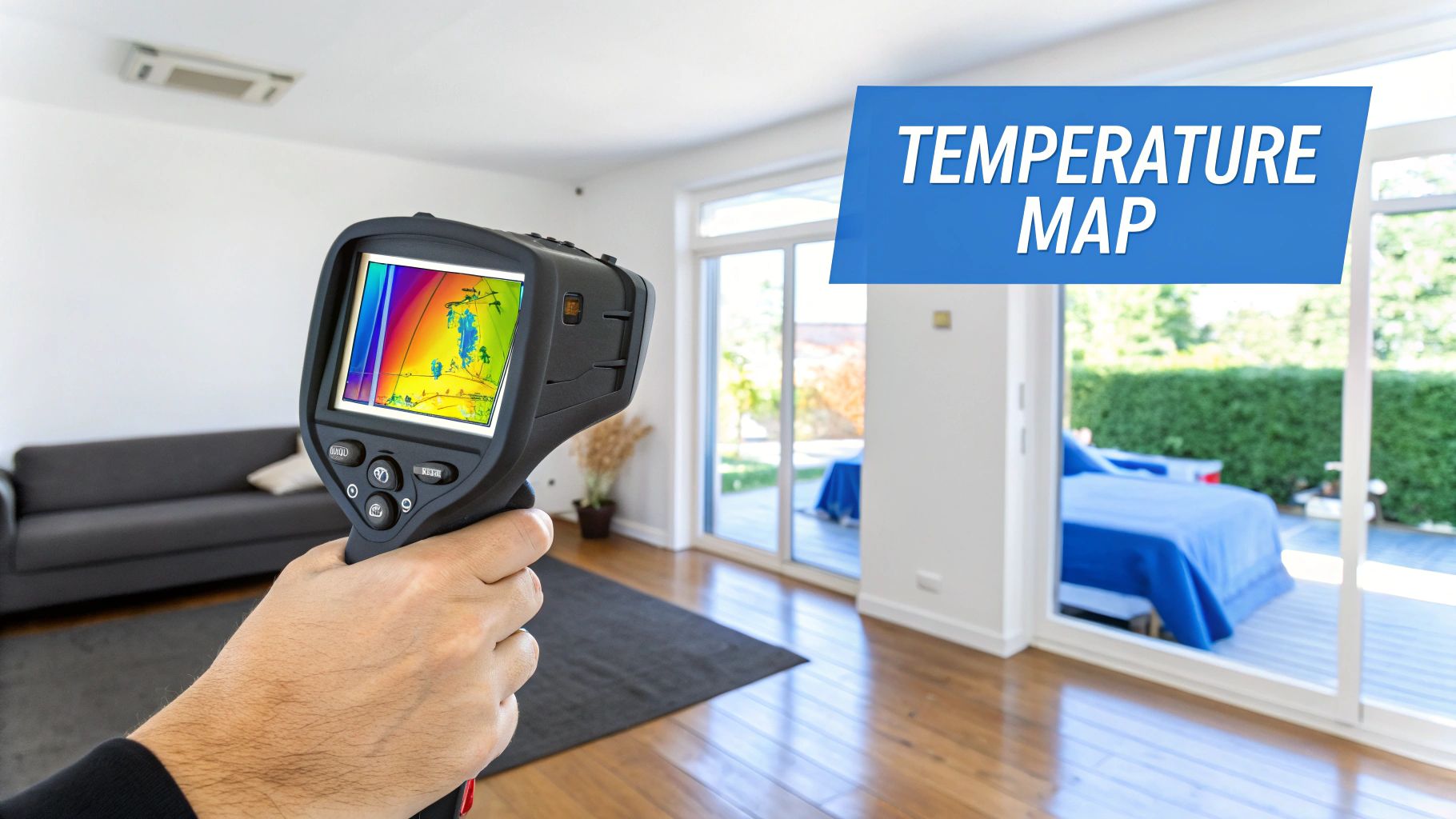
Imagine having a way to see a "temperature map" of your home—one that instantly reveals hidden issues the naked eye could never spot. That's the power of a home inspection infrared camera. It's a non-invasive tool that detects incredibly subtle temperature differences on surfaces, pointing to problems like hidden water leaks, missing insulation, or electrical hotspots long before they turn into disasters.
Seeing Your Home in a New Light with Infrared Inspections
A home inspection that uses infrared technology gives you a much deeper layer of insight than a typical visual check-up. Don't think of it like an X-ray that sees through walls. It's more like a highly sensitive thermometer that paints a detailed thermal picture of your entire home.
This "temperature map" highlights anomalies that often point directly to an underlying problem, protecting both your property's value and your family's health.
This technology is especially critical for homeowners in coastal areas like Santa Barbara, where the persistent humidity and salty marine air create a constant threat of moisture getting in. An infrared scan is your first line of proactive defense against water damage and the nasty mold growth that can thrive unseen.
What an Infrared Camera Really Detects
An inspector isn't looking for mold or pipes directly. Instead, they’re analyzing patterns of heat and cold. The principle behind it is simple but incredibly effective: different materials and conditions give off thermal energy differently. A certified thermographer is trained to read these patterns like a book, uncovering a whole range of potential issues.
An infrared scan can help find all sorts of hidden problems. Here's a quick look at some of the most common discoveries.
What an Infrared Inspection Uncovers
| Problem Area | Why It's a Concern | What the Camera Reveals |
|---|---|---|
| Moisture Intrusion | Leads to mold, rot, and structural damage. | Wet spots from leaks are almost always cooler due to evaporation, showing up as distinct blue or purple areas. |
| Insulation Gaps | Causes high energy bills and uncomfortable rooms. | Missing insulation shows as cold spots in winter (heat escaping) or hot spots in summer (heat getting in). |
| Electrical Hazards | A serious fire risk from overloaded circuits or bad connections. | Faulty wiring generates excess heat, glowing bright red or yellow on the thermal image—a clear warning sign. |
| HVAC Leaks | Wastes energy and reduces heating/cooling efficiency. | Leaks in ductwork appear as streaks of cold or warm air escaping into walls, attics, or crawlspaces. |
| Pest Infestations | Nests from rodents or termites can create heat signatures. | The metabolic heat from a colony or nest can sometimes appear as an unexplainable warm spot. |
Basically, an infrared camera turns abstract worries into visible, actionable data. It takes the invisible threats hiding in your walls and turns them into a clear picture, allowing for targeted and efficient repairs before a minor issue becomes a major headache.
An infrared inspection turns abstract concerns into visible, actionable data. It transforms the invisible threats within your walls into a clear picture, allowing for targeted and efficient repairs before minor issues escalate.
For anyone wanting to dive deeper into the science behind this, you can learn more about what thermal imaging is used for in our detailed guide. This advanced tool gives homeowners information that a standard visual inspection simply can't, offering genuine peace of mind.
How Thermal Imaging Finds Hidden Moisture and Mold Risks
Moisture is public enemy number one when it comes to mold. It's the one thing mold absolutely needs to grow, which is why finding it is our top priority during any thorough home inspection. This is where infrared technology becomes our secret weapon, especially in coastal climates like Santa Barbara and Ventura.
An infrared camera is like a detective's pair of high-tech glasses, letting us see clues about hidden water that would otherwise be completely invisible to the naked eye.
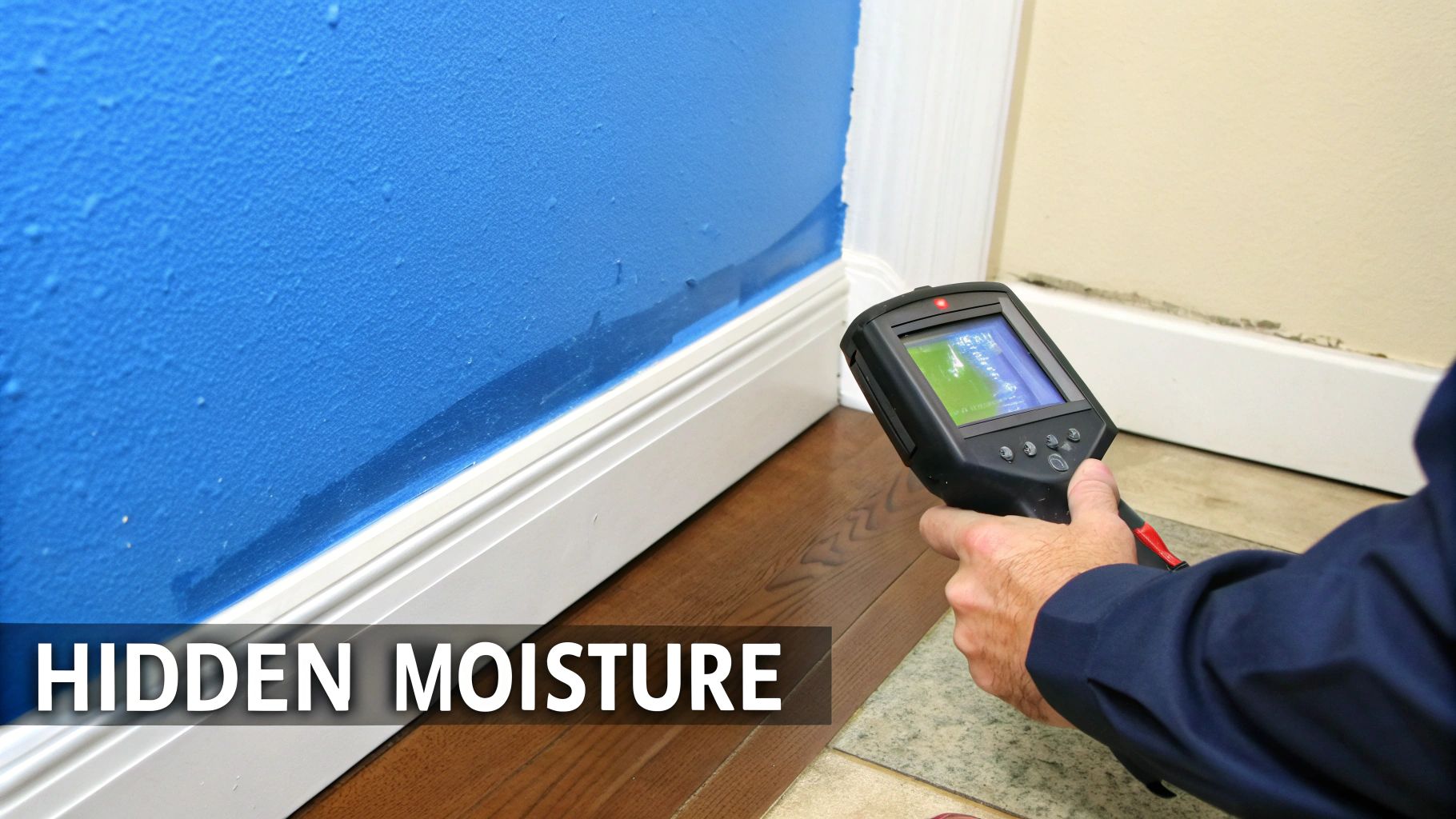
The science behind it is actually pretty straightforward. It all comes down to a simple principle called evaporative cooling. When water evaporates from a surface, it pulls heat away, making that surface cooler. Even a little bit of moisture trapped behind drywall or under your floorboards will create a subtle but distinct temperature drop on the outside.
A trained inspector using a high-resolution thermal camera will spot this cool area instantly. On the screen, it shows up as a dark blue or purple patch—a clear thermal signature that tells us exactly where to investigate further. Best of all, it lets us pinpoint potential problem spots without drilling a single hole.
From Thermal Clues to Moisture Mapping
Finding a single cold spot is just the beginning. A certified inspector takes these thermal clues and uses them for moisture mapping—a process where we trace the water intrusion all the way back to its source. This is absolutely critical, because where you see the water stain is almost never where the leak actually started.
For example, a thermal scan might show a cool, damp spot along the baseboard in your dining room. We can then use the camera to follow that thermal pattern up the wall, across the ceiling, and—voila—discover the real culprit is a slow, hidden leak from the shower drain in the upstairs bathroom.
This methodical approach helps us map out the full extent of the water damage. It prevents you from fixing the symptom (the stained baseboard) while completely ignoring the root cause (the leaking pipe). Some of the most common sources we uncover with a home inspection infrared scan include:
- Leaking plumbing fixtures hidden away inside walls or under floors.
- Roof leaks that let water travel down rafters and pool in ceiling cavities.
- Failed window and door frames that allow rainwater to seep into the wall structure.
- Foundation cracks that let groundwater into a crawl space or basement.
What Infrared Cameras Cannot See
Now, here’s a crucial distinction every homeowner needs to understand: an infrared camera does not see mold directly. Mold itself doesn't give off a heat signature that a thermal camera can pick up. What the camera excels at is finding the underlying moisture conditions that mold needs to survive and thrive.
A thermal camera is the best tool for finding potential mold habitats, but it cannot confirm its presence. Think of it as a highly advanced moisture detector, not a mold detector.
This is why a professional inspection is always a multi-step process. Once a thermal scan points to moisture, we bring out a moisture meter to confirm that the material has elevated moisture levels. If the readings are high, the next logical step might be professional environmental mold testing to determine if a mold colony has actually taken root.
This scientific approach ensures you get accurate, reliable information to make smart decisions about your home’s health and safety.
What to Expect During Your Thermal Inspection
Knowing what goes on during an infrared inspection can take the mystery out of the process and give you confidence in the results. A home inspection infrared scan isn't disruptive at all—it's a quiet, non-invasive process that lets us methodically check out your property's condition. The whole thing is designed to be both efficient and incredibly thorough.
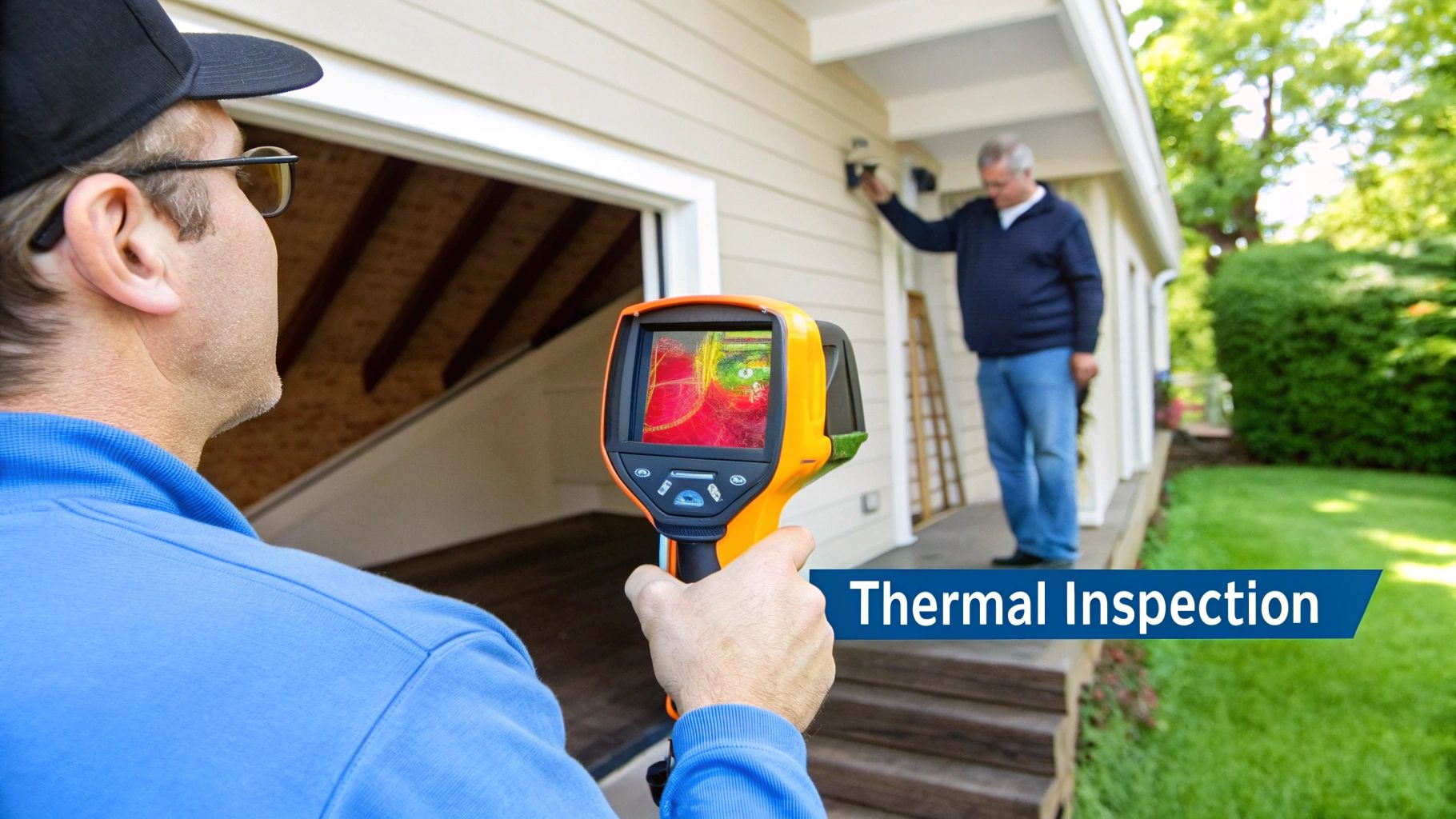
We'll likely start by scanning the home's exterior, checking for any thermal quirks around windows, doors, and the foundation. This first look helps us spot potential water intrusion points or major energy loss before we even set foot inside.
Preparing for the On-Site Scan
A little bit of prep can make a huge difference in the quality of the thermal images we get. To see things clearly, we need a good temperature difference between the inside and outside of your home. We call this creating a thermal delta.
- Winter Months: About 24 hours before we arrive, please set your thermostat to at least 68°F (20°C) and keep it there. This really helps highlight where expensive heat is escaping.
- Summer Months: Run your air conditioning to cool down the interior. This makes it much easier to spot where hot outdoor air is sneaking into your home.
It also helps a lot if you close all the windows and doors and turn off any ceiling fans. This creates a stable indoor environment, letting us capture the most accurate thermal data without drafts messing with the readings.
The Inspection Process Step-by-Step
Once inside, our certified inspector will move methodically from room to room, focusing on areas most likely to have moisture, energy loss, or electrical issues.
- Scanning Critical Areas: We'll use the thermal camera to scan walls, ceilings, and floors, paying close attention to spots around plumbing fixtures, underneath windows, and near the foundation.
- Evaluating Systems: We'll also take a look at key systems, like checking the electrical panel for overheating breakers and the HVAC ductwork for air leaks.
- Real-Time Analysis: As we scan, we're analyzing the thermal patterns on the camera's screen right then and there. We're looking for unexpected cool spots (which could mean moisture) or hot spots (a sign of electrical faults or heat loss).
An inspector doesn't just take pictures; they interpret a dynamic thermal landscape. Each temperature anomaly is a clue that points toward a deeper story about the home's performance and health.
When we spot an anomaly, we'll pull out a moisture meter to confirm if there’s elevated moisture in that specific area. This gives us a second layer of verification. This comprehensive approach is one of the key things to look for when inspecting a home and ensures you get a complete picture, not just a bunch of colorful images.
Uncovering Energy Loss and Electrical Hazards
While a home inspection infrared scan is a champion at finding hidden moisture, its value extends much further—protecting your wallet and ensuring your family's safety. Think of it as a comprehensive health checkup for your house, revealing invisible issues that drain your bank account and pose serious risks.
This technology gives us a visual roadmap to a more efficient and secure home.
This dual capability is exactly why infrared cameras have become a staple in home inspections over the last decade. Around 2015, their popularity really took off as inspectors aimed to deliver more detailed, insightful reports that modern buyers demand. You can learn more about how infrared cameras have become essential tools in modern home inspections from this insightful article.
Pinpointing Costly Energy Leaks
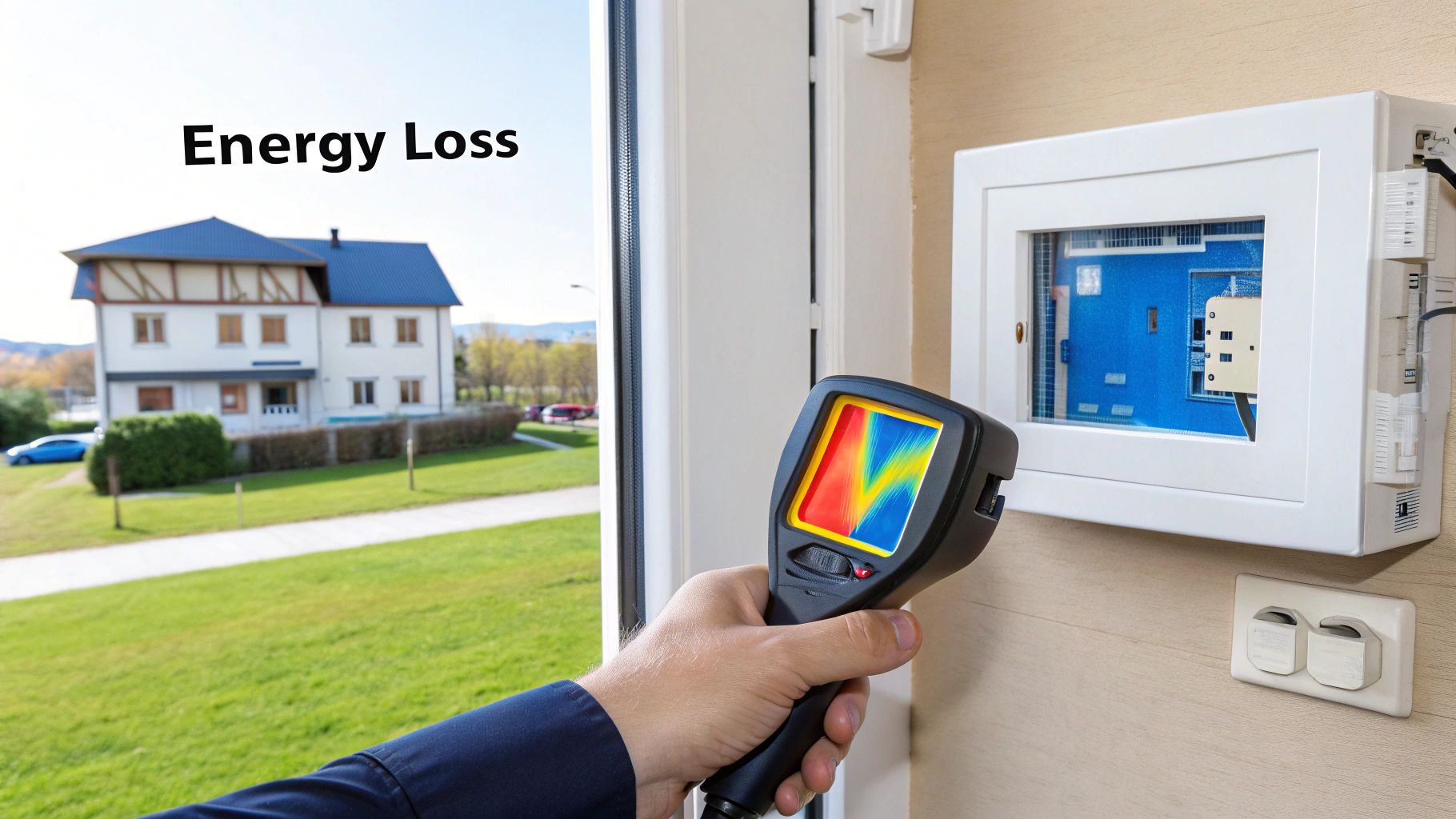
Are your utility bills surprisingly high? An infrared inspection acts like a powerful energy audit, showing you exactly where conditioned air—and your money—is escaping. Your home is constantly trying to balance its temperature with the outside world, and any weak points in its thermal envelope become glaringly obvious on our screen.
With thermal imaging, we can clearly see:
- Insulation Deficiencies: Gaps, settled insulation, or sloppy installation work show up as distinct cold spots in the winter or hot spots in the summer.
- Air Infiltration: Those tiny, nagging drafts around windows, door frames, and even electrical outlets appear as visible streaks of cold air sneaking into your home.
- Ductwork Leaks: Leaky HVAC ducts hidden away in attics or crawlspaces create clear thermal patterns, pinpointing exactly where your heated or cooled air is being wasted.
By visually identifying these "energy vampires," you can make targeted, effective repairs that significantly lower your monthly bills and make your home feel much more comfortable.
Identifying Dangerous Electrical Hotspots
Beyond saving money, a thermal scan is a critical tool for electrical safety. Electrical components generate a lot of heat when they're malfunctioning, a problem that’s often completely invisible until it’s far too late. An infrared camera makes these hidden dangers stand out.
An overheating circuit breaker or a faulty outlet glows brightly on a thermal camera, appearing as a distinct 'hot spot.' This is often the first and only warning sign of a potential fire hazard.
An inspector can scan your entire electrical panel, outlets, and switches without ever touching a single wire. This lets us spot dangerous conditions like:
- Overloaded circuits struggling to handle too much current.
- Failing circuit breakers that aren't tripping when they're supposed to.
- Loose or corroded wiring connections that create resistance and dangerous heat buildup.
Finding these electrical issues before they have a chance to cause a fire is one of the most valuable benefits of a comprehensive home inspection infrared service.
How to Choose a Qualified Infrared Inspector
An infrared camera is an incredibly powerful tool, but it’s only as good as the person operating it. The technology itself doesn't find problems—a skilled and experienced thermographer does.
Choosing the right professional for your home inspection infrared scan is what separates getting reliable information from expensive guesswork. It's the difference between finding a real leak and getting a false alarm over a stud in the wall.
Look for Proven Expertise and Certification
Not all inspectors who own a thermal camera are actually certified to use it for diagnosing building issues. The real skill isn't just pointing and shooting; it's understanding the complex science of heat transfer, how different building materials behave, and how environmental conditions can skew the readings.
A true pro can instantly tell the difference between a genuine water leak and a thermal anomaly caused by something simple like a patch of thicker plaster.
As thermal imaging becomes a bigger part of the home inspection industry—a market set to grow from USD 4.72 billion in 2025 to USD 7.8 billion by 2035—it's more important than ever to find properly trained professionals. You can dive deeper into the home inspection service market on wiseguyreports.com.
When you're looking for a competent provider, especially here in Santa Barbara or Ventura, keep an eye out for these specific credentials:
- Certified Residential Thermographer (CRT): This shows they've had specialized training focused on using infrared for home inspections.
- InterNACHI Certification: The International Association of Certified Home Inspectors has a solid infrared training program.
- ITC (Infrared Training Center) Certification: ITC is a global leader in thermography training. A Level I, II, or III certification from them is a strong sign of in-depth knowledge.
Beyond the paper, ask about their hands-on experience. How many thermal inspections have they actually done on homes like yours? You want someone with a background in building science, not just photography.
Key Questions to Ask Your Inspector
A real professional will welcome your questions and give you clear, confident answers. Before you book an inspection, have this list ready:
- What level of infrared certification do you hold? This tells you they have formal training and aren't just winging it.
- Do you always confirm thermal anomalies with a moisture meter? The only acceptable answer is "yes." An infrared camera finds potential issues; a moisture meter confirms them.
- What kind of thermal camera do you use? You want to hear that they use a high-resolution camera (at least 320×240 pixels). A cheap, low-end model just won't provide the clear, reliable images needed for an accurate diagnosis.
- What will the final report include? Ask to see a sample. A good report should show both the regular visual photo and the matching thermal image side-by-side, with a clear explanation of what each anomaly means.
A qualified inspector’s job isn't just to take thermal pictures. Their role is to analyze data, verify findings with secondary tools, and provide you with a clear, actionable report that explains the 'what' and the 'why' behind every discovery.
Taking the time to find the right expert is a critical step. For those in our local area, our guide on choosing the best mold inspectors near you offers additional tips on vetting professionals for moisture-related concerns. Ultimately, investing in a certified thermographer protects your largest asset.
Turning Your Inspection Report Into an Action Plan
An infrared scan itself just gives you raw data. It’s the inspector's report that transforms those colorful thermal images into a clear path forward. Once we’ve finished the on-site scan, you’ll get a detailed document that translates everything into an easy-to-understand roadmap for action.
This report is your most valuable tool. It shouldn’t be a confusing collection of pictures, but a straightforward guide that pinpoints problem areas, explains what’s likely causing them, and lays out concrete next steps. The goal is to give you the knowledge to solve issues for good, not just put a band-aid on them.
From Data to Decisions
A high-quality report will always show you the thermal images side-by-side with regular digital photos. This comparison is critical because it gives you context and shows you exactly what the inspector saw. Each anomaly we find—whether it’s a cool spot suggesting moisture or a hot spot on a circuit breaker—will come with a clear explanation.
The document should recommend specific actions, such as:
- Further Evaluation: Suggesting you bring in a licensed roofer, plumber, or electrician to dig deeper into a specific finding.
- Targeted Testing: Recommending we use moisture meters or take air quality samples in areas where the thermal camera flagged potential water intrusion.
- Immediate Repairs: Highlighting urgent safety issues, like an overheating electrical component, that need attention right away.
This approach turns a simple assessment into a strategic plan for keeping your home healthy and safe.
A great inspection report doesn’t leave you guessing. It gives you a prioritized list of concerns and empowers you to make informed decisions, whether you're negotiating repairs in a real estate deal or just planning your home maintenance.
Ultimately, this detailed plan helps you get to the root cause of any problems. For instance, by pinpointing hidden leaks, we can develop effective moisture intrusion solutions that stop mold before it starts and protect your property for the long haul. The global infrared thermography market is expected to hit USD 820.8 million by 2035, which just shows how vital this technology has become in building diagnostics. You can read more about the growth of the infrared thermography market on futuremarketinsights.com. This investment in technology truly gives you lasting peace of mind.
Got Questions? We’ve Got Answers.
Even after seeing how it works, it’s totally normal to have questions about what a home inspection infrared scan really means for your property. Let’s tackle a few of the most common ones we hear from homeowners.
Can an Infrared Camera See Through Walls?
This is the number one question we get, and it’s a great one. The short answer is no, an infrared camera can't actually see through walls, floors, or ceilings like an X-ray machine.
Instead, it does something even smarter: it reads the surface temperature of those materials with incredible accuracy. If there’s a hidden water leak inside a wall, the evaporation process makes the outside surface of the drywall just a tiny bit cooler. The camera picks up on that subtle temperature difference, showing it as a distinct, cooler-colored splotch on the screen. It's a brilliant, non-damaging way to see what's happening behind the scenes.
Is an Infrared Inspection Really Worth the Extra Cost?
In a word: absolutely. A standard visual inspection is limited to what the eye can see. That means it can easily miss hidden moisture festering behind a wall, entire sections of missing insulation, or dangerously overheating electrical circuits that are ticking time bombs.
An infrared inspection gives you a much deeper, non-invasive look into your home’s true condition. Think of it as a smart investment that can save you thousands in surprise repairs and protect your family's health down the road.
How Accurate Is Thermal Imaging for Finding Mold?
This is where it's important to be crystal clear. Thermal imaging is extremely accurate at finding the one thing mold absolutely needs to grow: moisture. It is, without a doubt, the best tool available for pinpointing potential mold colonies behind walls or in hard-to-reach attic spaces without tearing anything apart.
But—and this is a big but—the camera does not detect mold itself. It only finds the wet spots where mold might be thriving. That’s why a true professional inspection always combines thermal imaging with other tools, like moisture meters, to confirm a moisture problem. If we find a serious issue, we’ll then recommend lab-tested samples to confirm exactly what type of mold you’re dealing with.