When you first suspect mold, the question that almost always pops into your head is: “What’s this going to cost me?” It’s a fair question. Knowing what to expect financially is the first step toward protecting your home and your family’s health.
The good news is, a professional mold inspection isn't as expensive as you might think. Nationally, the typical home mold inspection cost falls somewhere between $300 and $1,000. Most homeowners end up paying around $650. Think of it less as an expense and more as a diagnostic investment—like getting a check-up to figure out what's really going on beneath the surface.
A Clear Look at Home Mold Inspection Costs
This initial fee gets you a certified expert who knows exactly where to look for hidden water sources, can spot visible growth you might have missed, and can determine if the air you’re breathing every day is safe. It’s an absolutely crucial service, especially here in coastal communities like Santa Barbara and Ventura, where the ocean air and humidity create the perfect breeding ground for mold.
To give you a quick snapshot, here’s a breakdown of what you can generally expect to pay for different levels of mold inspection.
Estimated Mold Inspection Costs at a Glance
| Inspection Type | Typical National Cost Range | What It Usually Includes |
|---|---|---|
| Basic Visual Inspection | $300 – $450 | A thorough visual check of accessible areas, moisture meter readings, and a report of findings. |
| Standard Inspection with Sampling | $500 – $750 | Includes everything in a basic inspection, plus 2-3 air or surface samples for lab analysis. |
| Comprehensive Inspection | $750 – $1,000+ | A full assessment with multiple samples, thermal imaging, and inspection of hard-to-reach areas. |
This table gives you a solid baseline, but remember that the final price will depend on the unique details of your property.
What Does a Standard Inspection Fee Cover?
A baseline inspection fee is designed to give you a complete picture of your home's health. It’s far more than just a quick look-around; it's a systematic process designed to uncover problems you can't see.
A standard inspection almost always includes:
- A Detailed Visual Assessment: The inspector will methodically search for visible signs of mold and water damage in the usual suspect areas—attics, basements, crawl spaces, and bathrooms.
- Moisture Detection: Professionals come equipped with tools like moisture meters and thermal imaging cameras. These gadgets are key to finding hidden moisture lurking behind walls or under floors.
- Initial Sample Collection: The cost typically covers a set number of air or surface samples (usually 2-3) that are sent off to a certified lab for analysis.
This initial assessment gives you a clear, actionable report on what's going on in your home.
A professional inspection gives you concrete data, not guesswork. It clarifies whether that musty smell is a minor issue or a sign of a significant, hidden problem that needs immediate attention.
National Averages and Local Realities
Nationally, the cost for a home mold inspection is fairly consistent. Industry data shows that homeowners across the country typically pay between $300 and $1,000, with the national average sitting right around $657.
For smaller homes (under 4,000 square feet), costs often land in the $300 to $400 range. This is simply because the inspector can get the assessment and sampling done more quickly.
Of course, these numbers are just a starting point. The specific factors for your property—which we'll dive into next—will ultimately determine your final price. For a more detailed look at pricing in our area, check out our guide on the cost of mold inspection in Santa Barbara. Think of this as your executive summary to help you make an informed decision.
What Really Drives Your Mold Inspection Price

When you start looking into the home mold inspection cost, you’ll quickly notice there’s no single, flat-rate fee. It’s a fair question to ask why, and the answer is simple: every home is different. Think of it like a doctor’s visit—a routine check-up isn't the same as a full physical with specialized diagnostic tests. A mold inspection is scaled the same way to fit exactly what your property needs.
Several key variables come together to determine the final price. Once you understand these, you'll see precisely what you’re paying for and why a customized approach is the only way to get accurate, reliable results. It’s not about finding the cheapest option; it's about investing in the right level of investigation for your unique situation.
The Impact of Property Size and Layout
The biggest factor by far is the size of your home. A larger property simply takes more time and resources to inspect from top to bottom. It’s one thing to inspect a cozy 1,200-square-foot condo in downtown Santa Barbara and another entirely to assess a sprawling 5,000-square-foot estate in Montecito.
A bigger home means more rooms, more walls, and more potential trouble spots like multiple bathrooms, attics, and separate HVAC zones. Our inspectors have to methodically cover every inch to make sure nothing gets missed, which naturally takes more time on-site and adds to the job's complexity.
But it’s not just about the square footage. The layout and accessibility are just as important.
- Complex Layouts: Homes with unique designs, multiple levels, or additions require a far more detailed eye than a straightforward, open-plan layout.
- Hard-to-Reach Areas: Getting into a tight, cluttered crawlspace or a hard-to-access attic takes a lot more effort—and specialized safety gear—than walking through a clean, finished basement.
Think of it like this: A standard visual inspection is your general physical—it provides a great overview. Adding comprehensive testing with thermal imaging is like getting an MRI—it offers a deeper, non-invasive look inside your walls to find issues that are otherwise invisible.
Both are incredibly valuable, but they serve different diagnostic needs and come at different price points.
The Scope of Mold Testing and Sampling
The next major variable is the level of scientific testing you need. A basic visual inspection is great for spotting red flags, but collecting samples for a lab to analyze is what confirms the presence, type, and concentration of mold. The number and type of samples we take will directly influence your final home mold inspection cost.
For instance, the cost of an inspection scales dramatically with the scope of testing. A basic visual check might start around $150-$300, but a full-home assessment with multiple samples can easily climb to $1,150-$3,400. For most homes under 4,000 square feet, an inspection averaging $300-$400 typically covers the essentials—like spotting visible mold in basements, attics, and crawl spaces.
Here are the main types of samples we might recommend:
- Air Samples: These are critical for figuring out the concentration of mold spores inside your home versus the fresh air outside. We often need several samples to get an accurate picture of different zones in the house.
- Surface Samples (Swabs/Tape Lifts): When we find visible discoloration, a surface sample can confirm if it’s actually mold and tell us the species. This is key for understanding any potential health risks.
Each sample comes with a lab fee for analysis, which gets added to the base inspection cost. An inspector might suggest more samples if there are multiple areas of concern, you’ve had past water damage, or your family is experiencing unexplained allergy-like symptoms. Our detailed guide on the factors affecting your mold inspection price breaks this down even further.
Ultimately, our goal is to gather just enough data to build a complete picture of your home’s indoor air quality without running unnecessary tests. A true professional will always explain why each sample is recommended, so you know exactly what value it adds to the investigation.
Understanding What Your Inspection Includes
When you pay for a mold inspection, you're not just paying for a quick look-around. You're investing in a detailed, systematic investigation designed to protect your property and your family's health. It’s a process that pulls back the curtain on what’s happening behind your walls, turning a mysterious worry into a clear, actionable plan.
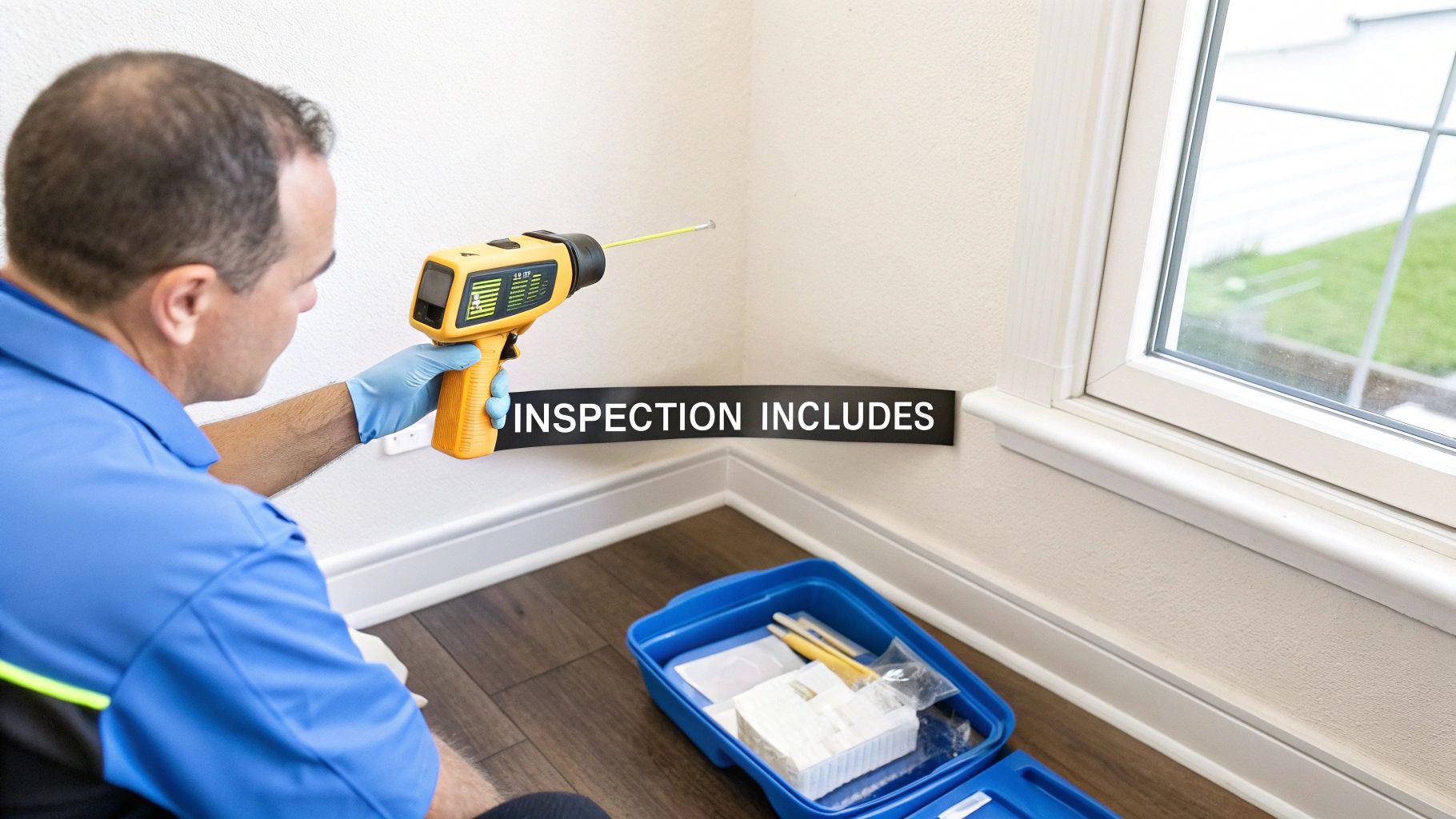
A professional mold inspection isn't just about spotting fuzzy stuff on a wall. It’s a multi-layered process that combines a trained eye with advanced technology. We look at your home as a complete system to find not only the mold itself but, more importantly, the hidden moisture that’s letting it grow in the first place.
The Initial Visual Assessment
Every inspection starts with a thorough visual sweep of the property. A certified inspector methodically examines the usual suspects—bathrooms, basements, attics, and around plumbing fixtures—where moisture loves to hide. This isn't just a casual walkthrough; it's a strategic hunt for clues.
During this phase, the inspector is on the lookout for:
- Visible Mold Growth: The obvious signs of discoloration on walls, ceilings, or baseboards.
- Water Staining or Damage: Telltale evidence from past or present leaks, like yellowed drywall or peeling paint.
- Musty Odors: That distinct "old basement" smell, which is often caused by mold releasing gases called microbial volatile organic compounds (MVOCs).
This initial assessment sets the stage for the rest of the investigation, helping us zero in on the areas that need a much closer look.
Advanced Diagnostic Tools
Here’s where a professional inspection really separates itself from a DIY check. Certified inspectors bring specialized equipment to see what the naked eye can’t. Think of these tools as an X-ray for your home’s health, revealing problems buried deep within its structure.
A professional inspection uses technology to turn suspicion into certainty. Tools like thermal imagers and moisture meters find the exact source of moisture, which is the root cause of any mold problem.
Some of the key tools in our arsenal include:
- Moisture Meters: These devices measure the moisture content inside materials like drywall and wood. A wall might look perfectly dry on the outside, but a moisture meter can tell us if it’s secretly damp within.
- Thermal Imaging Cameras: These cameras detect tiny temperature differences on surfaces. A cold spot on an interior wall is often a dead giveaway for hidden moisture from a slow leak or condensation.
- Hygrometers: We use these to measure the relative humidity in the air, identifying rooms or zones where the environment is just right for mold to thrive.
This scientific approach allows the inspector to trace the moisture back to its source, creating a clear map for effective repairs.
Scientific Sampling for Lab Analysis
If the visual inspection and instrument readings point to a potential problem, the next step is often collecting samples for a lab to analyze. This is how we get concrete proof of what type of mold is present and how concentrated it is in your home's air.
- Air Sampling: This captures airborne spores to see if the indoor spore counts are abnormally high compared to the air outside.
- Surface Sampling: We use special swabs or tape lifts to collect a sample from a visible, mold-like substance to identify the exact species.
These samples are sent to an accredited third-party lab for impartial analysis, giving you unbiased, scientific data. You can get a complete overview of this process in our guide on what a mold inspection is.
Finally, all these findings—visual notes, photos, instrument readings, and lab results—are compiled into a comprehensive report. This document is your roadmap, giving you a clear summary of the situation and straightforward, actionable recommendations for what to do next.
Of course. Here is the rewritten section, crafted to sound like an experienced human expert, following all the provided guidelines and examples.
Real Pricing Scenarios in Santa Barbara
National averages are a great starting point, but let's be honest—they don't mean much until you see how the numbers play out in your own backyard. To make the home mold inspection cost crystal clear, let's walk through three common situations we see every week right here in Santa Barbara and Ventura County.
These aren't just random examples. They're based on real calls we get, from the cautious homebuyer doing their due diligence to the concerned family dealing with a mystery smell. Seeing how the details of a property and the specific concerns of a homeowner shape the final price will help you know exactly what to expect.
Scenario 1: The Goleta Pre-Purchase Inspection
Picture this: a family is in escrow on a lovely 2,000-square-foot home in Goleta. It's an older house, built back in the 70s, but it looks like it’s been cared for. The general home inspector, however, flagged some old water stains under a bathroom sink. Smartly, their real estate agent recommended a specialized mold inspection before they sign on the dotted line.
This is all about due diligence—making sure there are no expensive surprises hiding behind the walls.
- Inspection Scope: We’d conduct a full visual assessment of the entire property, paying close attention to the attic, crawl space, and of course, that bathroom cabinet. We'll use a moisture meter and a thermal camera to hunt for any hidden dampness that the naked eye can't see.
- Sampling Strategy: To get a clear baseline, we'd take three samples. One outdoor "control" sample, one indoor air sample from the main living area, and one direct surface sample from the stained cabinet itself. This tells us what's normal for the area and what's happening inside the home.
- Estimated Cost: For a home this size with this straightforward sampling plan, the family can expect the home mold inspection cost to fall somewhere between $550 and $750.
It’s a small price to pay for total peace of mind. They’ll either confirm the home is healthy or identify a problem they can negotiate with the seller before closing.
Scenario 2: The Carpinteria Condo with a Musty Odor
Now, let's imagine a condo owner in Carpinteria. For weeks, they've been noticing a persistent musty smell coming from their master bedroom closet. There's no visible mold, no obvious leaks—just that nagging odor that signals something is wrong. Their top priority is protecting their family's health.
This isn't a whole-home checkup; it's a targeted investigation to find the source of a specific problem.
A focused inspection is like calling in a specialist. Instead of a full physical, it zeroes in on a particular symptom—like a musty smell—to diagnose the root cause and recommend the right cure.
Here, the scope is much more contained.
- Inspection Scope: The inspector will concentrate on the master bedroom, the attached bathroom, and the walls they share. A thermal imaging camera is key here, as it helps spot temperature differences inside the wall that could point to a slow, hidden plumbing leak—a classic issue in condos.
- Sampling Strategy: We’d take a targeted air sample from inside the closet to see exactly what spores are lurking in there. A second air sample from the bedroom helps us understand if the problem is isolated or has spread into the main living space.
- Estimated Cost: Because the inspection is focused on a smaller area and requires fewer lab samples, the cost for this kind of targeted assessment would likely be between $400 and $600.
Scenario 3: The Montecito Estate with a History of Water Intrusion
Finally, a more complex case. The owner of a beautiful 4,500-square-foot estate in Montecito knows their basement has had issues with water intrusion after heavy winter rains. Now, they've spotted some discoloration along the baseboards in a downstairs guest room and are worried the problem is spreading.
This situation calls for a deep dive, given the home's size, its history, and the multiple areas of concern.
- Inspection Scope: This is a comprehensive, multi-front investigation. It involves a meticulous visual inspection of the entire lower level, using advanced thermal imaging to map out just how far the moisture has traveled. We'd also check the HVAC system to ensure it's not circulating spores throughout the house.
- Sampling Strategy: A more robust sampling plan is a must. This would likely include an outdoor control sample, two indoor air samples (one from the basement and another from the guest room), and at least two surface samples from different discolored areas. This level of detail is crucial for creating an accurate remediation plan.
- Estimated Cost: With the larger square footage, the use of advanced diagnostic tools, and the increased number of lab samples, the home mold inspection cost for an extensive project like this would range from $900 to $1,400.
Sample Mold Inspection Costs in Santa Barbara & Ventura County
These scenarios give you a good idea of how pricing works, but here’s a quick-reference table to help you visualize potential costs for different situations you might encounter right here in our local area.
| Scenario | Property Type & Size | Inspection Scope | Estimated Cost Range (Local) |
|---|---|---|---|
| Pre-Purchase Due Diligence | Single-Family Home (~2,200 sq. ft.) | Full visual inspection, thermal imaging, 3 lab samples (2 air, 1 surface) | $550 – $800 |
| Targeted Odor Investigation | Condo or Townhome (~1,400 sq. ft.) | Focused inspection of one area (e.g., bathroom/closet), 2 air samples | $400 – $650 |
| Post-Leak Assessment | Apartment Unit (~900 sq. ft.) | Inspection of water-damaged area, moisture mapping, 2-3 surface/air samples | $450 – $700 |
| Comprehensive Health Concern | Large Home (~4,000+ sq. ft.) | Extensive visual inspection, HVAC check, 5+ lab samples for detailed analysis | $900 – $1,500+ |
Remember, these are estimates. The final cost will always depend on the unique circumstances of your property and the specific testing needed to give you clear, actionable answers.
Inspection Costs Versus Remediation Expenses
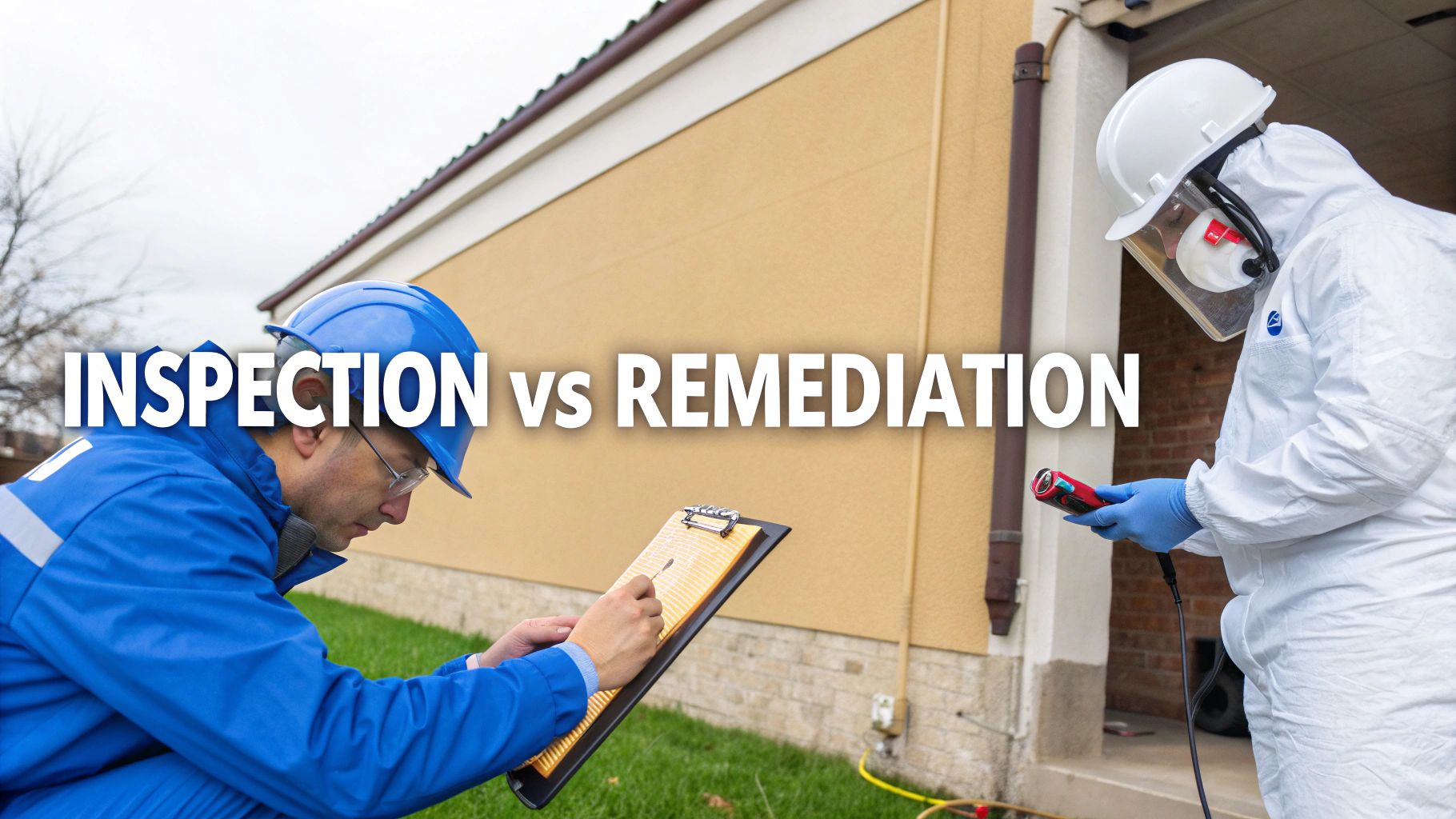
It’s tempting to look at a mold inspection as just one more bill to pay. But that’s missing the forest for the trees. The home mold inspection cost isn't a reactive expense—it’s a proactive investment in protecting your biggest asset. The real financial danger isn't the inspection fee; it's the staggering cost of a full-blown remediation project that you could have stopped in its tracks.
Think of it this way: an inspection is the diagnostic tool, while remediation is major surgery. A $650 inspection might feel like a lot right now, but it’s a drop in the bucket compared to the $5,000 to $15,000 you could shell out if a hidden mold problem gets out of hand. Trying to "save" a few hundred dollars by delaying an inspection is a gamble that almost never pays off.
The Financial Snowball Effect of Delay
Mold isn't a problem that sits still. It's a living, growing organism that literally eats your home's building materials—drywall, wood studs, and insulation. The longer it hides, the more it consumes, and the more widespread the damage becomes.
A small, contained issue that might have been a simple fix can quickly spiral into a massive project that involves tearing out entire walls or sections of flooring.
Procrastination is mold’s best friend. Delaying an inspection doesn't just give mold more time to grow; it gives it time to cause expensive structural damage, turning a manageable issue into a financial nightmare.
The numbers don't lie. A minor remediation in an easy-to-reach spot like a bathroom might run $500 to $1,500. But if that same mold works its way into your HVAC system, the price tag can easily jump to $10,000 or more. That’s when the initial inspection fee shows its true value—as an affordable insurance policy against catastrophic repair bills.
Protecting Your Property Value
Beyond the immediate cost of repairs, an unresolved mold problem can tank your home's market value. Studies show that a history of mold can slash a property’s resale value by as much as 20% to 37%.
On top of that, nearly half of all potential buyers will walk away from a deal if they find out the property has or had a mold issue, even if it's been fixed. The stigma is real.
A professional inspection—and, if needed, a properly documented remediation—protects your investment. It gives you verifiable proof that your home is safe and sound, preserving its value and making it far more appealing to future buyers. It changes the conversation from "Does this house have a mold problem?" to "This house has a clean bill of health."
Inspection, Remediation, and Removal
It's also important to know the lingo. An inspection identifies the problem. Remediation and removal are the solutions, but they aren't the same thing. Understanding the crucial differences between mold removal and remediation will help you grasp the full scope of what a cleanup project might look like.
Ultimately, the choice is clear. The modest home mold inspection cost is a strategic move to get information and take back control. It empowers you to handle a potential issue on your own terms—before it grows into an expensive, damaging crisis that starts calling the shots for you.
Choosing a Local Expert for Your Inspection
When you’re staring down a potential mold problem, it’s tempting to just call the first big name that pops up. But not all inspectors are created equal, especially here on the Central Coast.
The national chains might have a slick marketing budget, but nothing beats the boots-on-the-ground knowledge of a local expert who lives and breathes Santa Barbara’s unique environment. Our climate is the perfect storm for mold—from the persistent sea mist that rolls into Carpinteria to the specific construction of older Montecito homes, the challenges we face are unique.
An inspector from out of town might follow a checklist, but they’ll almost certainly miss the subtle cues a local pro spots instantly. They understand how our specific weather patterns impact different types of architecture. That deep familiarity means we can connect the dots between a damp ocean breeze and a hidden moisture source that others would completely overlook.
The Pacific Mold Pros Difference
At Pacific Mold Pros, we bring that essential local insight and pair it with the best diagnostic tools in the business. We use gear like thermal imaging cameras that let us see what’s happening inside your walls without ever swinging a hammer. Our team is certified, deeply experienced, and committed to giving you clear, straightforward answers.
We don't just hand you a confusing lab sheet and walk away. We take the time to walk you through our findings so you know exactly what’s going on in your own home.
Your peace of mind is our top priority. A home mold inspection should provide clear answers, not more questions. It should empower you to take the right next steps with confidence.
Choosing a certified local inspector means you're not just another number on a work order; you're our neighbor. We’re invested in the health of this community because we're part of it. We're dedicated to making sure your home is a safe, healthy place for your family.
If you want more guidance on what to look for, our article on finding the best mold inspectors near you is a great resource.
Ready to get clarity? Take the first step toward a healthier home. Call Pacific Mold Pros today at (805) 232-3475 to schedule your comprehensive inspection.
Your Top Mold Inspection Questions, Answered
When you're thinking about the cost of a home mold inspection, a lot of questions probably come to mind. It’s totally normal. Most homeowners in Santa Barbara and Ventura haven't dealt with this before, and you want straight answers.
Our job is to clear up the confusion. Let’s tackle some of the most common questions we hear so you can make a smart, confident decision for your home and family.
Are DIY Mold Kits a Good Alternative?
It's tempting to grab a cheap DIY mold kit off the shelf at a hardware store, I get it. But honestly, they usually create more questions than they answer. These kits typically just involve a petri dish that collects whatever spores happen to be floating by. They can't tell you the most important things: where the mold is, what’s causing it to grow, or how bad the problem really is.
A professional inspection, on the other hand, is a full diagnostic process. We use specialized gear to find the hidden moisture—the root of the problem—and take specific samples that actually give you context.
A DIY kit is like taking your own blood pressure once and trying to guess what it means. A professional inspection is like getting a full physical from a doctor who can interpret the results and give you a clear plan of action.
Will My Homeowners Insurance Cover the Inspection?
This is a tricky one, and the short answer is usually no. Most standard homeowners insurance policies won't cover the cost of a mold inspection. Insurance is really designed for sudden and accidental damage, like a burst pipe flooding your kitchen. A mold issue that grows slowly over time from high humidity or a small, hidden leak is often seen as a maintenance issue.
Now, there are exceptions. If the mold is a direct result of a covered event (like the water damage from firefighters putting out a small fire), the inspection cost might be covered. The best thing to do is pull out your policy or just call your insurance agent to be sure.
What Is the Difference Between Inspection and Testing?
People often use these terms interchangeably, but they’re actually two distinct steps in figuring out what's going on in your home.
- Mold Inspection: This is the hands-on investigation. A certified professional does a full visual walkthrough, hunts for signs of water damage, and uses tools like thermal cameras and moisture meters to pinpoint potential trouble spots.
- Mold Testing: This is the science part. During the inspection, we might collect air or surface samples. Those samples go to an accredited lab for analysis. The lab report tells us exactly what types of mold are present and at what levels.
Think of it this way: the inspection is the detective work that finds the clues. The testing is the forensic analysis that gives you the hard evidence. Together, they create a complete, accurate picture of your home’s health.