Think of household environmental testing as a health check-up for your home. It’s a lot like the annual physical we get from a doctor to catch potential issues before they become big problems. This process uses professional, scientific assessments to find invisible threats—like mold, radon, and VOCs—that can quietly impact your family’s well-being and the air you breathe every day.
Why Your Home Needs a Health Check-Up
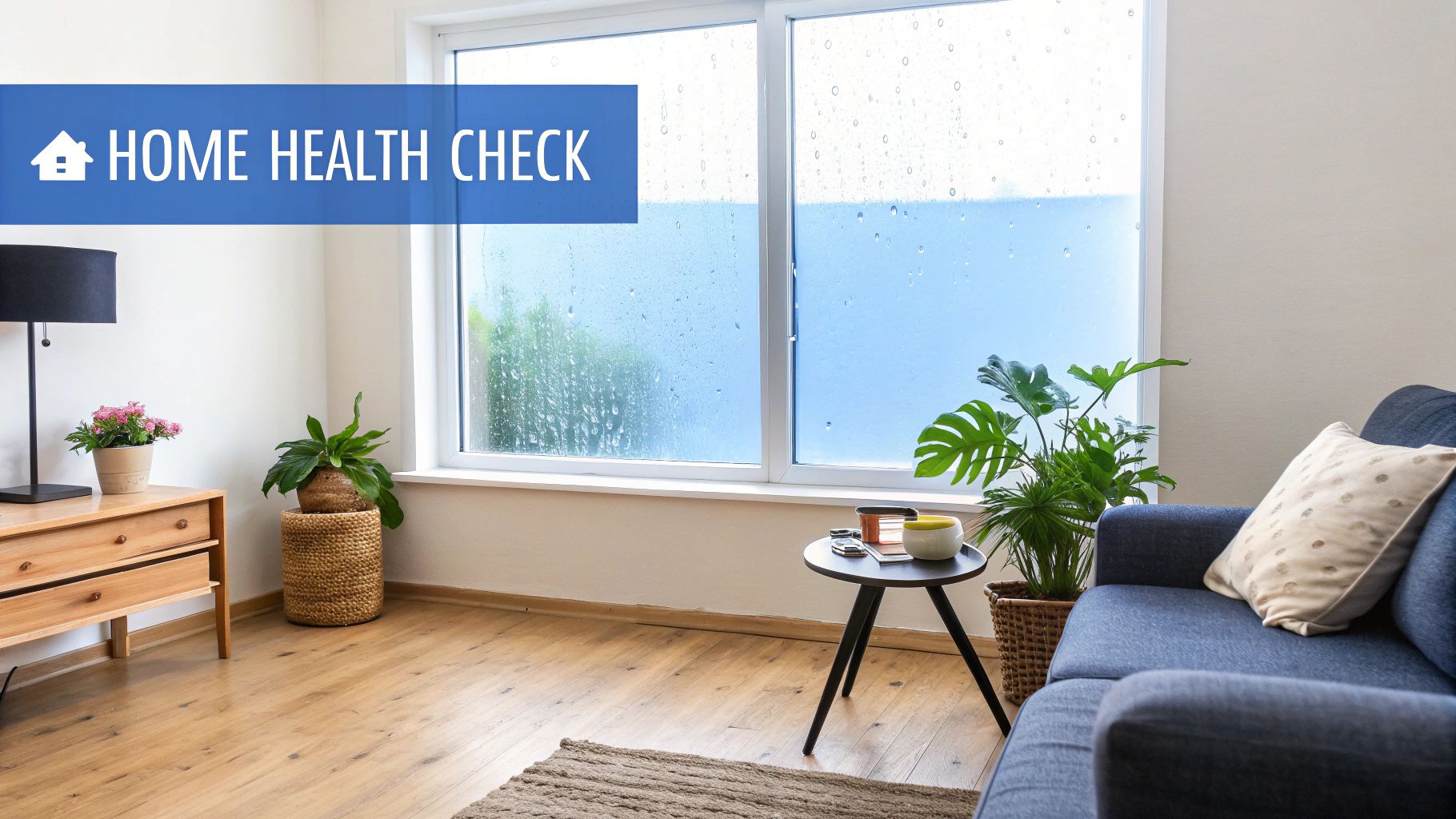
It’s easy to focus on the things we can see—a fresh coat of paint, new furniture, or a spotless kitchen. But some of the biggest risks to our health are completely invisible, lurking behind walls, under floors, or circulating silently in the air. Household environmental testing goes beyond what the eye can see to identify and measure these hidden dangers.
This isn't just a quick walkthrough; it's a deep dive into your home's unique ecosystem. Certified inspectors use specialized equipment to test for a whole range of contaminants that often build up indoors without any obvious signs.
The Unseen Dangers Within Your Walls
Many homeowners are surprised to learn what could be present in their living spaces. The issues can range from naturally occurring gases seeping up from the ground to chemical byproducts of modern building materials. A professional assessment is designed to bring these concerns out into the open.
Here's a quick look at the most common household contaminants we test for.
Common Household Contaminants at a Glance
This table breaks down the invisible threats that could be present in your home, where they come from, and why they matter for your health.
| Contaminant | Common Sources | Potential Health Impact |
|---|---|---|
| Mold | Damp areas, leaks, poor ventilation, high humidity | Allergies, asthma, respiratory infections, headaches |
| Radon Gas | Natural decay of uranium in soil, rock, and water | Lung cancer (leading cause for non-smokers) |
| Lead | Paint in homes built before 1978, old pipes, contaminated soil | Developmental delays in children, kidney damage, nerve issues |
| Asbestos | Insulation, flooring, and ceiling tiles in older homes | Lung cancer, mesothelioma, asbestosis |
| VOCs | Paints, new furniture, carpets, cleaning products, air fresheners | Headaches, nausea, dizziness, long-term organ damage |
For those of us living in coastal California, especially in Santa Barbara and Ventura, the persistent marine layer adds another layer of risk. That constant humidity provides the perfect breeding ground for mold, making proactive testing not just a good idea, but a critical step for maintaining a healthy home.
The prevalence of mold in American homes is truly staggering. Research suggests that approximately 47% of buildings have unhealthy levels of mold. Even more concerning, mold is believed to contribute to over 20% of all asthma cases in the USA.
Protecting Your Family and Your Investment
Ultimately, household environmental testing is an investment in two of your most important assets: your family's health and your property's value. Catching a mold problem early, for instance, can save you from thousands in structural repairs and protect your loved ones from chronic respiratory issues. You can learn more about the specific health risks of mold exposure in our detailed guide.
An inspection gives you the data-driven facts you need to create a truly safe and healthy living space. It’s about gaining peace of mind that your home is the sanctuary it’s meant to be.
Uncovering the Invisible Threats in Your Home
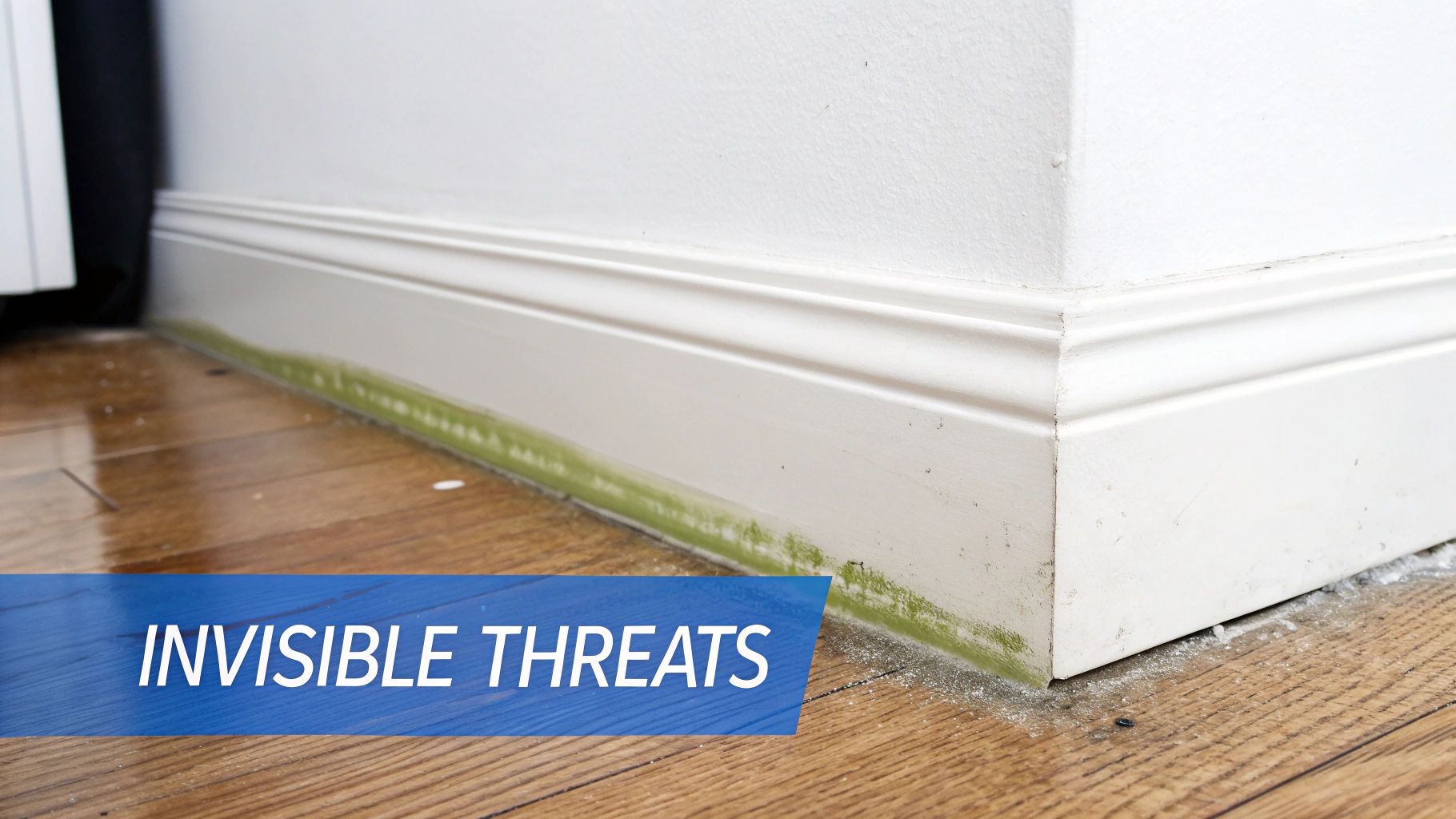
Some of the biggest risks to your family’s health are the ones you can’t see, smell, or touch. They grow silently behind walls, seep up from the ground below, or slowly release from everyday items, creating a hidden cocktail of indoor pollution. This is where household environmental testing comes in—it’s how we shine a light on these invisible issues and give you a clear picture of what’s really in your air.
These aren't just far-off scientific theories; they're real-world problems with real consequences. Each of these hidden threats has its own story about how it gets into our homes and the problems it can cause, especially here in coastal California.
Mold: The Persistent Unwanted Guest
It almost always starts small. A tiny, forgotten drip from a pipe inside a wall, a bathroom that never seems to dry out, or dampness creeping into a crawl space. In the temperate, humid climate of Santa Barbara or Ventura, that’s all mold needs to take hold.
What begins as a few microscopic spores can explode into a massive colony, completely hidden from sight but pumping millions of new spores into your living space. And that's where the health issues start.
Inhaling mold spores can set off a chain reaction of health problems, from nagging allergy-like symptoms like coughing and sneezing to more severe respiratory issues, chronic fatigue, and even neurological symptoms in sensitive people.
For anyone with asthma or a compromised immune system, the effects can be even worse. A professional test doesn't just tell you "yes, there's mold." It identifies the specific type and how concentrated it is in your air, which is critical for understanding the risk and getting rid of it for good.
Radon: The Silent Intruder from Below
Picture an invisible, odorless gas that rises from the natural breakdown of uranium in the soil right under your home. That’s radon. It’s a quiet intruder that can slip into your house through tiny foundation cracks, gaps around pipes, and other small openings you'd never notice.
Because you can't detect it with your senses, a home can have dangerously high radon levels for years without anyone knowing. The gas gets trapped inside and builds up over time, and its radioactive particles become a serious health hazard.
In fact, the Environmental Protection Agency (EPA) has identified radon as the number one cause of lung cancer among non-smokers. It’s blamed for about 21,000 lung cancer deaths in the U.S. every single year. Testing is literally the only way to know if your home is safe.
The Legacy of Lead and Asbestos
Many older homes, particularly those built before the 1980s, are hiding materials that were once considered state-of-the-art but are now known health risks. Lead and asbestos are two of the most infamous culprits.
Lead was a standard ingredient in paint until it was banned for home use back in 1978. As that paint gets old, it starts to crack, peel, and flake, creating a fine dust loaded with lead. Even a microscopic amount is harmful, especially to kids, where it can cause developmental delays and permanent neurological damage.
Asbestos, a mineral fiber loved for its fire resistance, was used in everything from insulation and floor tiles to ceiling textures. When these materials are disturbed—whether from a renovation or just normal aging—they release tiny, sharp fibers into the air. If inhaled, these fibers can get stuck in the lungs for good, leading to devastating diseases like asbestosis and mesothelioma decades down the road.
VOCs: The Chemical Soup of Modern Life
Don't assume new homes are free from invisible threats. Volatile Organic Compounds (VOCs) are chemicals that are released as gases from tons of modern products. That "new car smell" or the odor of fresh paint? You're smelling a mix of VOCs.
These chemicals are off-gassing all around us, from sources like:
- New Furniture and Carpets: The adhesives and synthetic materials can release formaldehyde and other VOCs for months.
- Paints and Finishes: Even "low-VOC" paints release some chemicals as they dry.
- Cleaning Products and Air Fresheners: These often spray a complex cocktail of chemicals into your air.
- Building Materials: Engineered wood products like particleboard are often held together with resins that off-gas.
Short-term exposure can bring on headaches, dizziness, and irritation of the eyes, nose, and throat. Long-term exposure is much more serious, linked to potential damage to the liver, kidneys, and central nervous system.
Moisture and HVAC: The Hidden Network
Finally, your home’s moisture levels and HVAC system are the unsung heroes—or villains—of your indoor air quality. If not properly maintained, your HVAC system can act like a superhighway, spreading contaminants like mold spores and dust into every single room.
Hidden moisture is the fuel that powers many of these environmental problems, especially mold. Inspectors use sophisticated tools to find it. You can learn more about how specialists leverage technology to find hidden water leaks by understanding what thermal imaging is used for during home inspections. Finding and controlling moisture is always the first step to fixing—and preventing—a whole host of environmental issues.
How Professional Environmental Testing Works
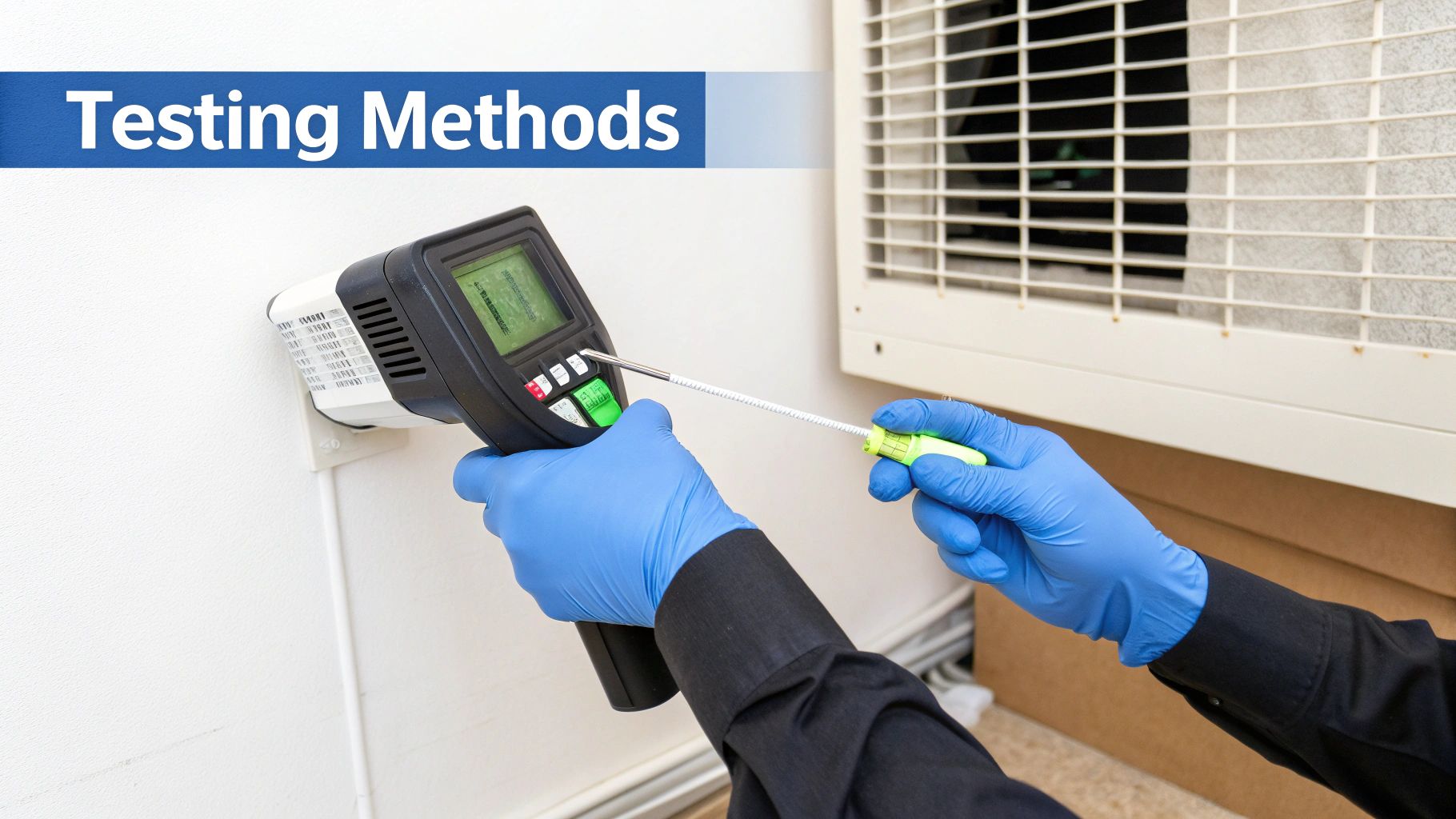
So, what really happens during professional household environmental testing? It might sound complex, but at its core, it’s a methodical process designed to give you clear, science-backed answers about your home.
Think of a certified inspector as a detective for your home’s health. They use specialized tools and proven techniques to uncover clues that are completely invisible to the naked eye. Each sampling method is chosen for a specific reason, much like a doctor selects different tests to get a complete diagnosis. This process gets rid of the guesswork and replaces uncertainty with solid data.
The goal isn't just to find out if a contaminant is present. It’s to understand where it is, what kind it is, and exactly how concentrated it might be.
Taking a Snapshot of Your Indoor Air
One of the most common methods we use is air sampling. You can think of it like taking a high-resolution snapshot of your home's respiratory system at a specific moment in time.
An inspector uses a calibrated air pump to pull a precise volume of air through a sterile collection cassette. This little device traps everything floating around that you and your family are breathing—from mold spores to dust and other microscopic particles. That sample is then sent off to an accredited lab, giving us a clear picture of your indoor air quality.
Gathering Fingerprints from Surfaces
Next up is surface sampling. This is a lot like a detective dusting for fingerprints at a crime scene. If we see a suspicious stain or visible growth, we need to know exactly what we’re looking at.
There are two main ways we do this:
- Swab Sampling: We use a sterile cotton swab to collect a sample directly from a surface. This works great for testing areas that are wet or in hard-to-reach spots.
- Tape Lift Sampling: A special piece of clear, sticky tape is pressed against a surface to lift a sample. This preserves the physical structure of any potential mold, which is incredibly useful for lab analysis.
These methods are the only way to confirm what’s growing on a surface and identify the specific species, which helps us understand the potential risk.
Understanding the science behind sampling is the first step toward effective solutions. Each test provides a different piece of the puzzle, combining to create a complete and accurate diagnosis of your home’s environmental health.
It’s no surprise that as people become more aware of these risks, the demand for reliable testing has skyrocketed. Valued between USD 1.5 to 2.1 billion in 2023, the mold and moisture assessment market is expected to grow to as much as USD 3.8 billion by 2033. This shows just how much homeowners want data-driven information about the safety of their indoor spaces.
Analyzing the Core of the Problem
Sometimes, the issue isn’t just on the surface—it’s deep inside your home’s structure. That’s where bulk sampling comes in. Think of it as taking a core sample from a tree to understand its history and health.
An inspector might take a small, physical piece of a contaminated material, like drywall, carpet, or insulation. This sample is carefully sealed and sent to the lab for a deep dive. Bulk sampling is the most direct way to confirm what is growing within your home’s building materials, helping us pinpoint the source of a widespread problem.
Our team explains these methods in more detail during our professional mold inspection services. When you understand the techniques, you can feel confident in the methodical approach we use to protect your home.
What to Expect During a Professional Inspection
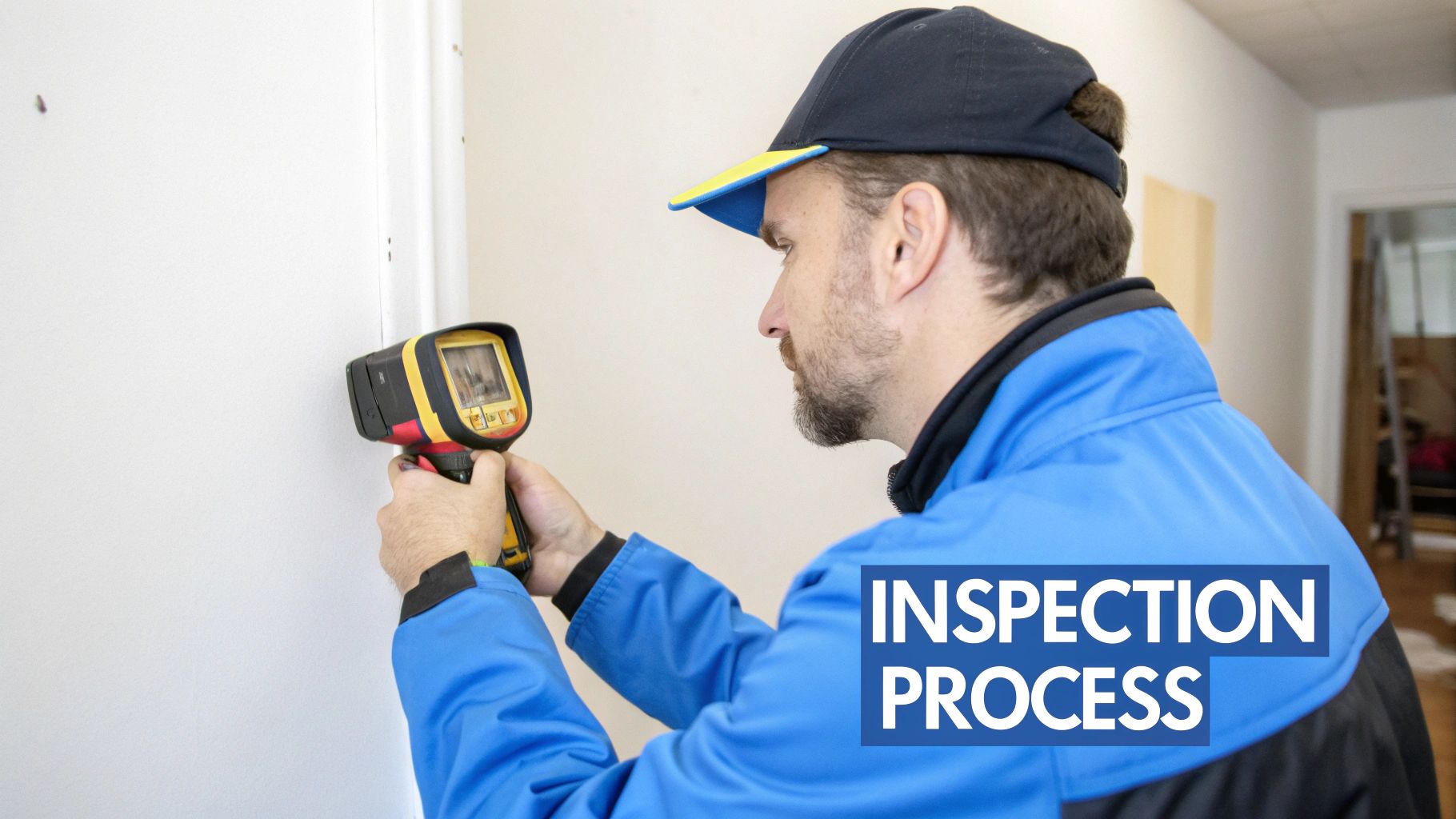
Knowing what happens during professional household environmental testing can take the mystery out of the process and give you confidence. Far from being a disruptive mess, a certified inspection is more like a quiet, methodical health check-up for your home. It’s a step-by-step investigation that goes from a broad overview to a detailed, scientific diagnosis.
Think of it like calling in a specialist. The inspector doesn't just show up with a clipboard; they arrive with a full suite of advanced tools designed to see, measure, and detect problems completely hidden to the naked eye. The whole process is designed to be efficient, non-invasive, and above all, thorough.
The Initial Conversation and Walk-Through
It all starts with a simple conversation. Your inspector will want to know about your concerns. Have you been smelling a musty odor? Are your allergies acting up for no reason? Did you recently have a water leak? Your answers provide crucial clues that help guide the entire investigation.
After that, the inspector will do a careful walk-through of your property. They’re trained to spot subtle red flags most of us would miss, like faint discoloration on baseboards, almost-invisible water stains on the ceiling, or minor warping in the floorboards. This is where the real detective work begins.
Bringing in the High-Tech Tools
Once the visual sweep is done, the inspector breaks out the technology. This is how they can peer behind your walls and under your floors without tearing anything apart.
You'll likely see them use a few key tools:
- Moisture Meters: These handy devices measure the moisture content inside materials like drywall and wood. They can instantly tell if a suspicious-looking spot is actually damp.
- Thermal Imaging Cameras: An infrared camera is a game-changer. It detects temperature differences on surfaces, making it invaluable for spotting hidden moisture sources—like a slow pipe leak or a patch of missing insulation—that would otherwise be impossible to find.
Using these tools together, the inspector creates a detailed "moisture map" of your home, pinpointing potential problem areas that need a closer look and targeted sampling.
A professional inspection is a systematic process, not a random search. Every tool used and every sample taken is part of a deliberate strategy to gather accurate, actionable data about your indoor environment.
Strategic, Scientific Sampling
Based on what they found during the visual check and with their tools, the inspector will identify the best spots to take samples. This is a critical step, because the quality of the samples directly affects the accuracy of the lab results. They won’t just take a random sample from the middle of a room; they’ll target specific areas of concern.
For instance, an air sample might be taken near a wall that showed high moisture readings, while a surface swab might be used on a visible stain in the bathroom. Each sample is carefully collected, documented, and sealed to prevent contamination before it’s sent off to an accredited, third-party lab. To see exactly how this works in practice, you can learn more about a professional mold inspection process in Santa Barbara, CA.
Making Sense of the Lab Report and Action Plan
A few days later, the lab results are in. This is where a true expert’s value really becomes clear. The lab report itself is usually dense with scientific terms and data points that can be pretty overwhelming if you're not trained to read them.
Your inspector’s job is to translate that complex data into a clear, easy-to-understand report. They'll walk you through the findings, explaining exactly what was found, where it was, and what the concentration levels mean for your home’s health.
But a good report doesn't just point out problems—it offers solutions. It will include a straightforward summary and, if needed, a detailed remediation protocol. This protocol acts as a precise blueprint for a separate remediation company to follow, ensuring the cleanup is done right and your home is brought back to a healthy state.
DIY Testing Kits Versus Professional Services
When you spot a problem or smell something "off" in your home, figuring out how to test your air quality can feel overwhelming. Most homeowners end up at a fork in the road: grab a DIY kit from the hardware store, or call in a certified professional?
These two paths lead to very different places. Understanding what each one really offers is the key to making a smart choice that actually protects your home and family.
The Limits of a DIY Approach
Think of a DIY test kit like a home thermometer. It’s a simple, affordable first-alert system that can tell you if you have a "fever"—in this case, a potential mold problem. It’s an easy first step, which is why so many people start there.
But just like a thermometer, a DIY kit gives you very limited information.
Typically, a store-bought kit is just a petri dish you leave out to see what grows. It can confirm the presence of mold spores, but that's where its usefulness ends.
Here’s what these kits can't do:
- They can't identify the type: The test won’t distinguish between a common, harmless mold and a more hazardous species like Stachybotrys (black mold).
- They don't measure quantity: A positive result doesn't tell you if the spore count is normal for your area or dangerously elevated compared to the air outside.
- They can't find the source: This is the biggest issue. A DIY kit gives you zero information about where the mold is coming from, which is the most critical piece of the puzzle.
Ultimately, a positive result from a DIY kit often creates more questions than answers. You're left with a petri dish of mold and a whole lot of anxiety, but no real plan. If you're considering this route, it's wise to first understand the limitations and what makes for the best mold test kit for home use.
The Value of Professional Expertise
Hiring a certified professional is like seeing a medical specialist for a full diagnosis. Instead of just confirming a "fever," they use their experience and advanced equipment to identify the specific illness, determine its severity, and create a precise treatment plan.
A professional inspection provides what a DIY kit never can: context and clarity.
The inspector doesn't just collect a sample. They conduct a thorough visual assessment, use moisture meters to find hidden leaks, and employ thermal imaging to see behind walls. They take strategic air and surface samples based on their findings, not just random chance.
A professional service transforms uncertainty into actionable data. You get a detailed lab report that identifies mold species, quantifies contamination levels, and provides a clear protocol to solve the problem at its source.
This scientific, methodical approach removes all the guesswork. You’ll understand not just what is in your home, but why it's there and exactly what steps are needed to make your environment healthy again.
Comparing DIY Kits and Professional Inspections
To make it even clearer, let's break down the key differences between the two approaches.
| Feature | DIY Test Kits | Professional Inspection |
|---|---|---|
| Accuracy | Prone to false positives/negatives. Cannot differentiate indoor vs. outdoor levels. | Highly accurate. Compares indoor and outdoor samples for a clear baseline. |
| Information Provided | Simple "yes" or "no" for mold presence. No species or quantity data. | Detailed lab report with mold species, spore counts, and moisture readings. |
| Source Identification | None. Cannot locate the hidden source of the mold growth. | Pinpoints the exact source of moisture and mold using specialized tools. |
| Action Plan | No guidance. Leaves you wondering what to do next. | Provides a clear, step-by-step remediation protocol to fix the problem. |
| Cost | $10 – $50 (plus optional lab fees) | $300 – $1,000+ depending on home size and scope. |
| Expertise | Relies entirely on user interpretation. | Conducted by a certified, experienced inspector who provides context. |
| Best For | A very basic, low-cost initial check with the understanding it's not a diagnosis. | Getting a definitive diagnosis, finding the root cause, and creating a safe fix. |
While the initial investment for a professional inspection is higher, the long-term value of a definitive diagnosis and a clear solution is immeasurable. You're not just buying a test; you're investing in peace of mind and a truly healthy home.
Choosing a Certified Inspector You Can Trust
Hiring a professional for household environmental testing is one of the most important calls you'll make for your home's health. Let's be honest, not all inspectors are the same. The quality of your assessment—and the accuracy of your results—hinges entirely on the expertise and integrity of the person you bring into your home. This isn't just about getting a report; it's about finding a partner who will give you unbiased, scientific facts.
Think of it like choosing a medical specialist. You wouldn't trust a serious diagnosis to just anyone. You'd want someone with credentials, real-world experience, and a commitment to ethics. The same standard applies here, especially in coastal communities like Santa Barbara and Ventura, where local knowledge of humidity and weather patterns is a game-changer.
Key Credentials to Look For
Before you even book an inspection, do a quick credentials check. These aren't just fancy acronyms; they are non-negotiable marks of a true professional. A reputable inspector should be able to show you proof of these without a second thought.
Look for certifications from respected industry bodies, such as:
- IICRC (Institute of Inspection, Cleaning and Restoration Certification): This is the gold standard for professionals in the restoration and inspection industry.
- ACAC (American Council for Accredited Certification): This organization offers board-awarded certifications that prove an inspector has a high level of knowledge and field experience.
Always ask if the company carries both general liability and Errors & Omissions (E&O) insurance. It’s a simple way to confirm they’re a legitimate business that stands behind their work.
An inspector’s primary role is to provide an unbiased, scientific diagnosis of your home's environmental health. The most ethical companies specialize exclusively in testing and do not perform remediation, which avoids any potential conflict of interest.
Questions Every Homeowner Should Ask
Once you have a shortlist, a quick phone call can tell you everything you need to know. This is your chance to get a feel for their process and make sure they’re the right fit for you.
Here are a few critical questions to get the conversation started:
- Do you also perform remediation work? The best answer here is a firm "no." A company that only does testing has zero financial incentive to find problems that aren't there.
- What does your final inspection report look like? You're looking for a report that is easy to understand, details all the findings, includes the lab results, and gives you a clear, actionable plan if issues are found.
- Are your samples analyzed by an accredited third-party lab? This is non-negotiable. It guarantees the results are objective and scientifically sound.
- Can you provide references from local clients or real estate agents? A solid track record in your community speaks volumes about their reliability.
As more people understand the risks of poor indoor air quality, the demand for these services has shot up. The global mold remediation market was valued at around USD 1.23 billion in 2023 and is expected to keep climbing. You can see more data on this trend and what it means for homeowners on Grand View Research. This growth just highlights how important it is to choose a trustworthy expert like Pacific Mold Pros to help you navigate your concerns with confidence.
Your Questions About Home Environmental Testing, Answered
Even after you understand why environmental testing is so important, it's natural to have a few practical questions. The process can sound complex, but once you know what to expect, it’s actually pretty simple. Let's tackle some of the most common questions we hear from homeowners.
Our goal here is to clear up any lingering doubts and give you the confidence to move forward. Think of this as putting the final puzzle pieces in place, so you feel fully prepared for an inspection.
How Often Should I Get My Home Tested?
There isn’t a single, hard-and-fast rule, but some situations are non-negotiable. You should absolutely get your home tested after any kind of water damage, the moment you notice a musty smell or see visible growth, or if anyone in your family is struggling with persistent, unexplained allergy-like symptoms. It's also a critical step before buying a new home to make sure you aren't inheriting someone else's hidden problem.
For proactive homeowners, testing every 3-5 years is a smart move to maintain a healthy home. This is especially true here in coastal California, where the persistent humidity around Santa Barbara makes moisture a constant battle.
Will the Inspection Disrupt Our Daily Routine?
Not at all. A professional inspection is designed to be non-invasive and surprisingly quiet. A certified inspector usually only needs 2-4 hours to conduct a thorough visual check, take readings with their instruments, and collect any air or surface samples they need.
You can almost always stay in your home while the inspection is happening. The entire process is clean, efficient, and planned to cause the least possible disruption to your family's day.
An inspection is the first step toward a solution. Finding a high level of contamination equips you with a "remediation protocol"—a precise action plan for a separate, qualified remediation company to follow, ensuring the cleanup is done correctly.
What Happens if We Find a Serious Problem?
First off, don't panic. Discovering an issue is the first step toward fixing it for good. Your detailed report will come with something called a remediation protocol—think of it as a clear, step-by-step instruction manual for a separate, qualified remediation company to follow.
An ethical testing company like ours focuses only on the inspection. This ensures our diagnosis is completely unbiased. We arm you with the professional documentation you need to make sure the cleanup crew does the job right, bringing your home back to a safe and healthy state.
Is This Going to Be Expensive?
The final cost really depends on the size of your home and the specific tests needed. But it's much more helpful to think of it as an investment—both in your property's value and, more importantly, in your family's health.
When you weigh the cost of an inspection against the potential expense of a massive remediation project, major structural repairs from hidden water damage, or chronic health problems from poor air quality, it's a small price to pay. Reputable companies like Pacific Mold Pros will always give you clear, upfront pricing so there are no surprises.