Before you can tell the difference between Stachybotrys and Cladosporium, you have to learn how to spot the subtle, often-ignored clues that something is wrong in the first place. Mold is an expert at hiding, and the most obvious signs don't always appear first.
So, how do you catch a problem before it gets out of control? It starts with your senses.
Recognizing the First Signs of a Mold Problem
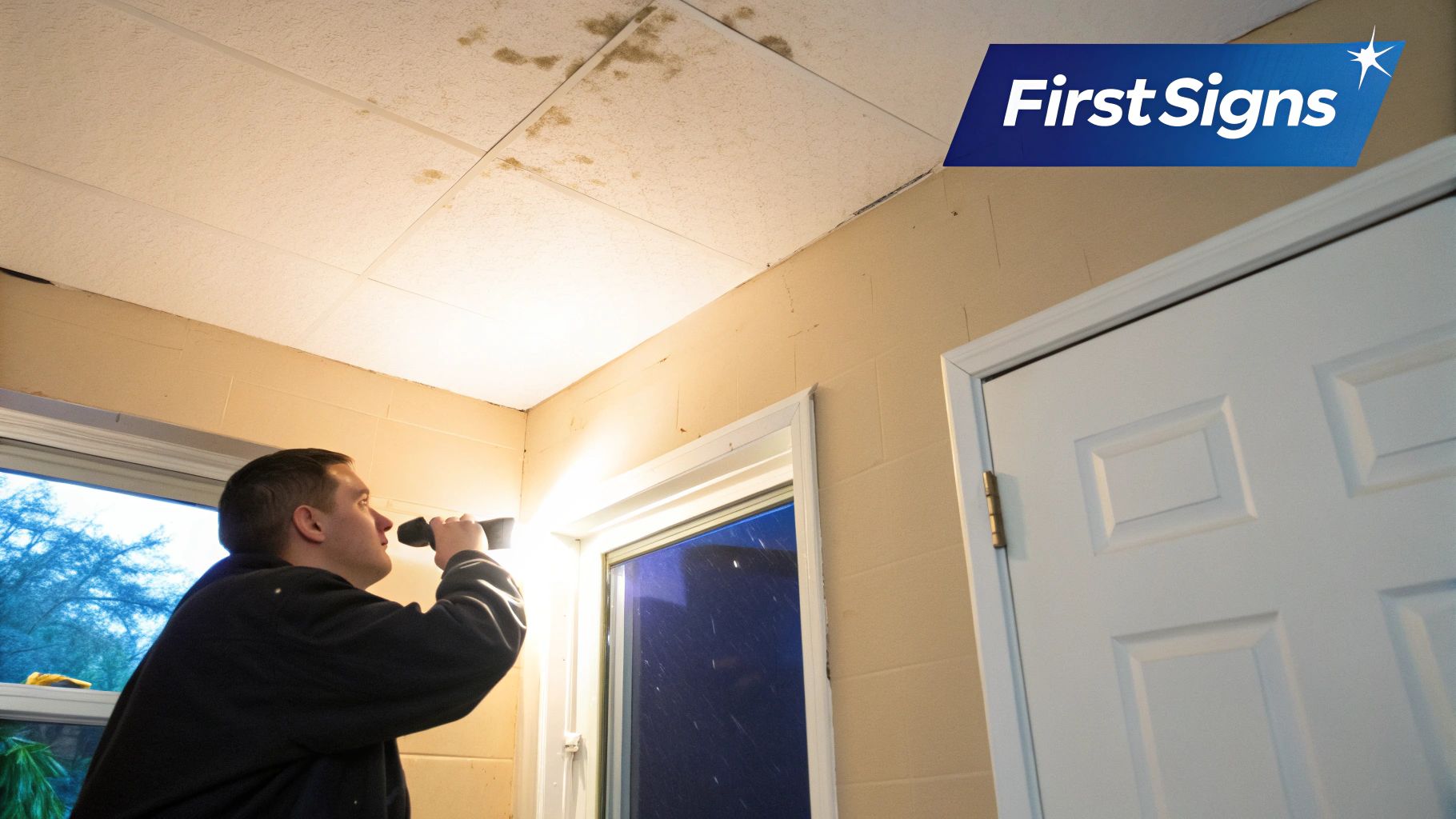
The very first warning sign is often something you smell, not something you see. If you walk into your basement or open a closet and get hit with a distinct musty, damp, or earthy odor, trust your nose. That smell is a dead giveaway.
What you're smelling are gases called microbial volatile organic compounds (MVOCs), which are released by active mold colonies. Even if you can’t see a single spot, that odor is a huge red flag that mold is growing somewhere nearby—maybe behind the drywall, under the carpet, or deep inside your HVAC system.
Visual Clues and Common Triggers
After the smell, you start looking for visual clues. It's so easy to dismiss a small, dark spot on the ceiling as just a bit of dirt. But any new or spreading discoloration, especially in areas that get damp, needs to be treated with suspicion. Mold doesn't always look like a fuzzy science experiment; it can show up as simple spots, stains, or even slimy patches.
Keep an eye out for these common indicators:
- Discolored Patches: Look for black, green, brown, or even white spots. Pay close attention to corners where walls meet ceilings—it’s a prime location for growth.
- Peeling or Bubbling Paint: When moisture gets trapped behind paint, it can bubble or crack. This is often a sign of a water issue that’s creating a perfect breeding ground for mold.
- Warped Materials: Drywall, wood, and ceiling tiles will often warp or swell when they get wet, another sign of a hidden moisture problem.
- Persistent Condensation: If you constantly see "sweat" on your windows, pipes, or walls, it means your humidity is too high. And high humidity is exactly what mold needs to thrive.
A lot of people mistake mildew for more serious mold. Mildew is usually a gray or white powdery fungus you’ll find on shower tiles. While it’s still a type of mold, it’s a surface-level problem and easier to clean. The real red flag is deeper, embedded discoloration on porous materials like drywall or wood—that points to a much bigger issue.
The Role of Moisture
Here’s the bottom line: every mold problem is a water problem. Mold simply cannot grow without moisture. One of the most critical steps in dealing with mold is finding the water source, because if you don't fix the leak, the mold will just keep coming back.
Think about any recent issues in your home. A slow leak under the sink? A bit of water intrusion after a big storm? A bathroom fan that doesn't quite do its job? It only takes 24-48 hours for mold to start growing once the conditions are right. For a deeper dive, check out our guide on the key signs of mold in your home.
Catching these signs early lets you get to the root of the problem and stop an infestation in its tracks.
A Visual Guide to Common Household Molds
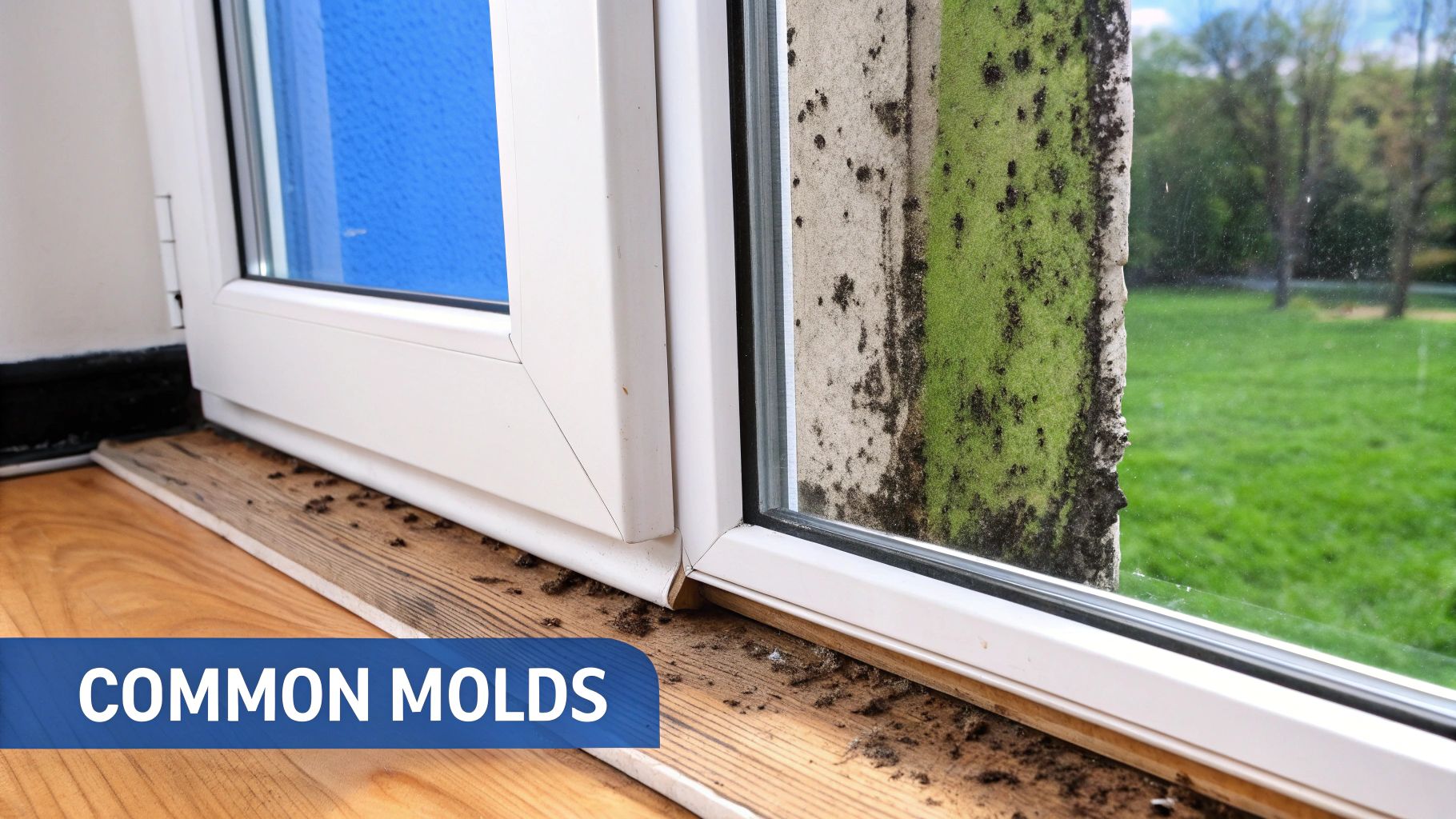
So, you’ve spotted something that looks suspiciously like mold. Now what? Learning how to identify different types of mold is your next move, and it can feel a bit like being a detective in your own home.
Think of this as a field guide to the usual suspects. While only a certified lab can give you a definitive ID, getting familiar with the common players—their looks, textures, and hangouts—helps you understand the potential scope of the problem. Knowing what to look for makes your conversation with a professional inspector that much more productive.
Stachybotrys Chartarum: The Infamous Black Mold
This is the one everyone’s heard of, often called "toxic black mold." Stachybotrys has a very distinct look. It typically shows up as slimy, dark green or almost black patches and often has a wet sheen, which sets it apart from other fuzzy or powdery molds.
Here's the key: Stachybotrys is picky. It needs constant, serious moisture to survive. You won't find it just anywhere. It grows on materials high in cellulose that have been soaked for a long time—think drywall, wood, or gypsum board. A classic scenario is discovering it behind a wall after a slow, hidden plumbing leak has been dripping for weeks or months.
Important Takeaway: Just because it's black doesn't mean it's Stachybotrys. Lots of molds are black. The slimy texture and its presence on severely water-damaged materials are the biggest clues, but never rely on sight alone for confirmation.
Cladosporium: The Versatile Invader
Cladosporium is one of the most common molds we find, both indoors and out. It usually appears in shades of olive-green to dark brown or black, with a texture that feels velvety or almost like suede.
You’re most likely to find this mold where humidity or condensation is high. It’s a frequent guest on window frames, painted surfaces, and even fabrics. Those dark spots forming around a poorly ventilated bathroom window? That's often Cladosporium. It’s incredibly adaptable and can grow in both cool and warm conditions.
In fact, studies show Cladosporium is found in 27% of indoor home samples. It's also a dominant mold in outdoor air, so it gets inside easily. In coastal areas like Santa Barbara and Carpinteria, its dark color often gets it mistaken for its more notorious cousins.
Penicillium and Aspergillus: Common Indoor Culprits
I often group these two together because they can look alike to the naked eye and thrive in similar spots. You really need a microscope to tell them apart with certainty.
- Penicillium: Famous for giving us antibiotics, but you don't want it growing in your house. It usually looks like blue-green spots with a velvety texture. If you’ve ever seen mold on an old orange or piece of bread, you know what it looks like—it has that same appearance on water-damaged wallpaper or insulation.
- Aspergillus: This is another incredibly common indoor mold that comes in a whole range of colors—yellow-green, brown, and even black. Its texture is often more powdery or even hair-like, which helps distinguish it from the velvety feel of Penicillium. You'll find Aspergillus in HVAC systems, dusty corners, and on insulation.
We cover more species in our detailed guide on the different types of mold found in homes.
Common Indoor Mold Identification Chart
Visual identification is just the first step, but this chart is a great quick-reference guide for what you might be looking at in your home.
| Mold Type | Common Colors | Typical Texture | Where to Look | Associated Odor |
|---|---|---|---|---|
| Stachybotrys | Dark Green to Black | Slimy, Wet Sheen | Severely water-damaged drywall, wood, paper | Strong, musty, earthy |
| Cladosporium | Olive-Green to Brown/Black | Velvety or Suede-like | Window frames, painted surfaces, fabrics, cabinets | Mild, musty |
| Penicillium | Blue-Green | Velvety, Powdery | Wallpaper, insulation, damp carpets, food | Musty, damp socks |
| Aspergillus | Yellow-Green to Black | Powdery, Hair-like | HVAC systems, insulation, dust, building materials | Musty, slightly acrid |
Just remember, this chart is a starting point. Multiple types of mold can grow side-by-side, and their appearance can change depending on the surface and conditions. The only way to know for sure what you're dealing with is to have a professional from a company like Pacific Mold Pros collect samples for proper lab analysis.
The Usual Suspects: Penicillium and Aspergillus
If you ever get a professional lab report back for your home, two names will almost certainly show up: Penicillium and Aspergillus. They’re the undisputed champions of indoor mold, and labs often group them together because their spores look nearly identical under a microscope. For you as a homeowner, seeing this pair is a classic sign of water damage.
These molds might not look as dramatic as the slimy, black stuff you see in horror movies, but they are far, far more common. In fact, they thrive in the exact conditions found in countless homes—from a bit of damp drywall to a dusty corner in your HVAC system.
And they are a huge deal when it comes to indoor air quality. An extensive study of fungi in U.S. homes found this duo was the most common toxic mold group, popping up in an incredible 38% of properties. These guys move fast, often setting up shop just 24-48 hours after a water event, which is why quick action is so important. You can dig into the science yourself over at the National Center for Biotechnology Information.
Spotting Penicillium In Your Home
Ever seen that fuzzy, blue-green mold on a forgotten loaf of bread or an old orange? That’s Penicillium. When it grows in your house, it keeps that signature look: velvety, round colonies that are usually blue, green, or sometimes white.
You’ll typically find Penicillium feasting on porous, water-damaged materials. A real-world example we see all the time is on the back of wallpaper that’s peeling due to a slow roof leak. Another classic spot is inside a wall where insulation got damp. If you smell something distinctly musty, that’s another big clue.
- Common Colors: Blue, green, bluish-green.
- Typical Texture: Velvety or cottony, like felt.
- Prime Locations: Water-damaged wallpaper, carpets, insulation, and even the stuffing in your furniture.
Because it’s such a fast grower, a tiny spot of Penicillium can blow up into a major problem if you don’t fix the moisture source feeding it.
Identifying Aspergillus: The Powdery Cousin
Aspergillus often hangs out in the same places as Penicillium, but it looks a little different up close. Instead of that dense, velvety texture, it’s more powdery or even hair-like. It also comes in a wider variety of colors, from yellow-green to brown or black.
Picture this: you're in your attic and notice a dusty, yellowish-green film coating the insulation near a vent. That's a textbook case of Aspergillus. It’s notorious for colonizing HVAC systems, ductwork, and dusty corners, which is bad news because it can easily spread spores through your entire home every time the air kicks on.
A Pro Tip: If you even think you have mold in your HVAC system, shut it off immediately. Don’t run it. You’ll just be blowing spores everywhere, turning a small, localized issue into a whole-house contamination nightmare. Your next call should be to a professional inspector.
The health side of this is a major concern, too. While not everyone has a reaction, these spores are well-known allergens that can trigger asthma and other respiratory problems. You can learn more about how mold exposure can make you sick in our detailed guide.
Key Differences at a Glance
Telling these two common molds apart visually is a great first step before getting professional confirmation. While they often grow side-by-side, their textures are usually the biggest giveaway.
| Feature | Penicillium | Aspergillus |
|---|---|---|
| Texture | Velvety and dense, like felt | Powdery or granular, sometimes hair-like |
| Color | Classic blue-green tones | Wide range: yellow-green, brown, black |
| Growth Pattern | Often forms in distinct, circular colonies | Tends to be more widespread and dusty in appearance |
Seeing either of these molds is a clear signal of an active moisture problem that needs to be handled right away. Just because they’re common doesn’t mean they’re normal. A professional inspection from Pacific Mold Pros can confirm what you’re seeing and, more importantly, track down the water source that’s letting it grow.
Safe Inspection Practices: What to Do and What to Avoid
Knowing how to spot the different types of mold is a great skill, but approaching a potential infestation without the right precautions can make a bad situation much, much worse. A casual poke or scrape might seem harmless, but it can release millions of microscopic spores into your home's air, spreading the contamination and ramping up health risks.
When it comes to mold, safety always comes first. Before you even think about getting close to a suspicious patch, you need to gear up properly. This isn't about being overly dramatic; it's about protecting your respiratory system and skin from some pretty potent allergens and irritants.
Your Essential Safety Toolkit
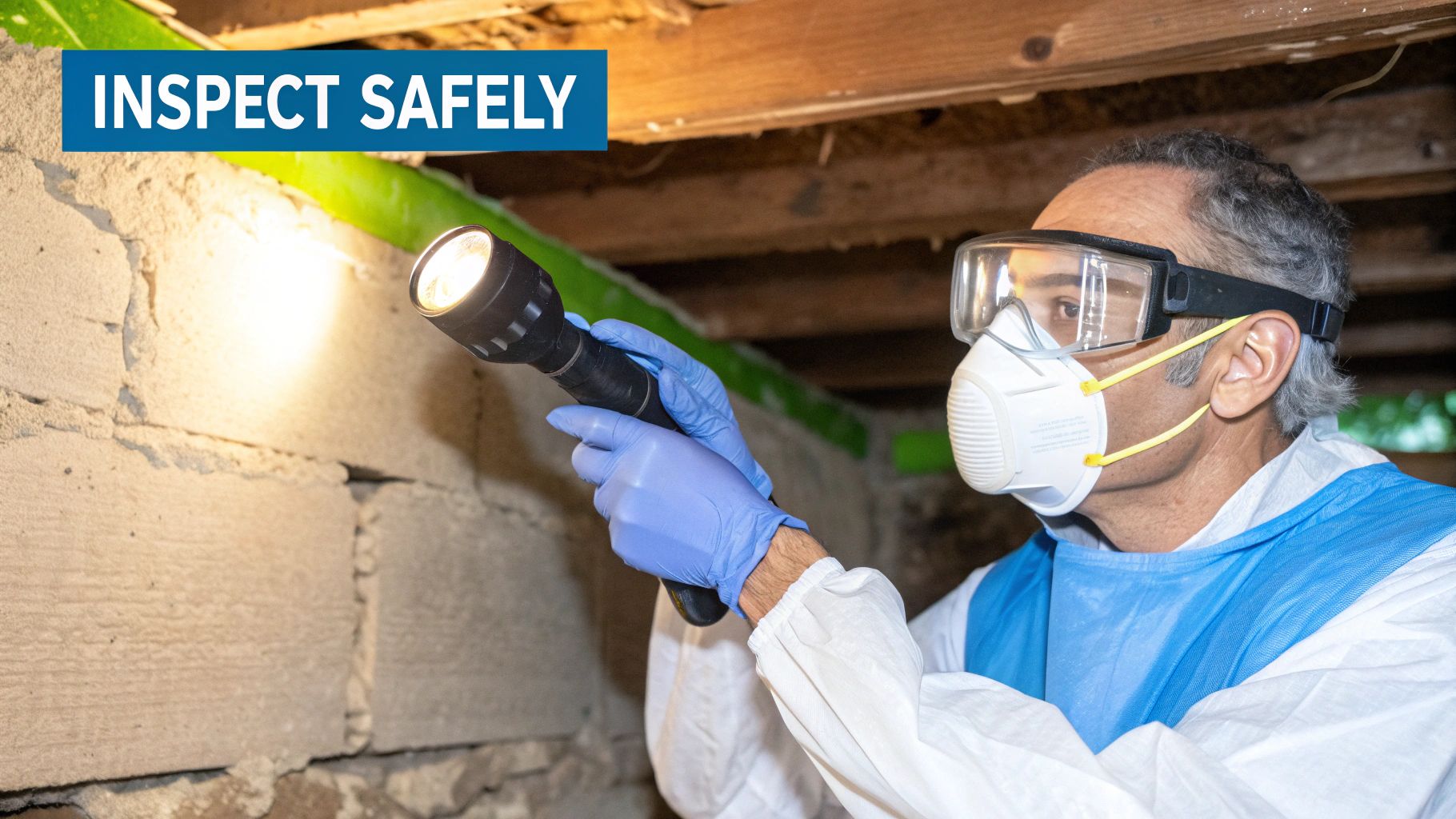
Your first line of defense is Personal Protective Equipment (PPE). Even for a quick visual check in a musty basement or attic, don't skip these basics. Think of it as your non-negotiable uniform for any preliminary mold investigation.
Your DIY inspection kit should include:
- An N95 Respirator: A simple paper dust mask won't cut it. An N95 is designed to filter out the microscopic mold spores you can easily inhale.
- Gloves: Use disposable, non-porous gloves (like nitrile or vinyl) to create a barrier between your skin and any mold colonies.
- Safety Goggles: Spores are notorious eye irritants. Goggles that create a seal around your eyes offer far better protection than your everyday glasses.
Once you're protected, you can begin your initial, non-invasive check. The goal is simply to gather information from a safe distance.
The number one rule of a DIY mold inspection is to look but don't touch. Disturbing a mold colony is like kicking a dandelion puffball—spores will go everywhere. This simple act can seriously tank your indoor air quality in a matter of seconds.
The Do's of a Safe Preliminary Check
Think of yourself as a detective, not a demolition expert. You're just gathering clues for the professionals. A good flashlight is your best friend here, letting you peer into dark corners, behind appliances, and under sinks without having to move or disturb anything.
You can also use your other senses safely. The "sniff test" is a real thing. If a closet, cabinet, or room has that distinct musty, earthy odor, make a note of it. That smell is often a dead giveaway for hidden growth that you might not be able to see.
Critical Mistakes to Avoid at All Costs
This is where so many well-intentioned homeowners go wrong. Certain actions don't just fail to solve the problem—they can actively make it more dangerous. Be sure to avoid these common pitfalls.
Don't Use Bleach on Porous Surfaces
This is probably the biggest myth in mold cleanup. While bleach can kill surface mold on non-porous materials like tile or glass, it's completely ineffective on porous surfaces like drywall, wood, or ceiling tiles. Why? The water in the bleach soaks into the material, feeding the mold's "roots" (its mycelia) deep inside while only killing what's on the surface.
Don't Disturb or Scrape the Mold
Scraping at a patch of mold to "see what's under it" is one of the worst things you can do. This aerosolizes the spores, sending them airborne to find new damp spots to colonize.
Don't Run Fans or Your HVAC System
If you suspect mold, especially if it's near vents, turn off your HVAC system immediately. Running it will efficiently distribute spores throughout your entire home, turning a localized issue into a widespread contamination event. For the same reason, never point a fan at a damp or moldy area to "dry it out."
Following these simple but crucial guidelines helps you assess the situation without compromising your home's air quality or your health. While DIY kits might seem like a good idea, professional testing is a much more reliable path—you can read more about the accuracy of home mold test kits to see why. Your safe, visual inspection provides the valuable initial data we need before an expert from Pacific Mold Pros comes in for a thorough assessment.
When to Call a Professional Mold Inspector
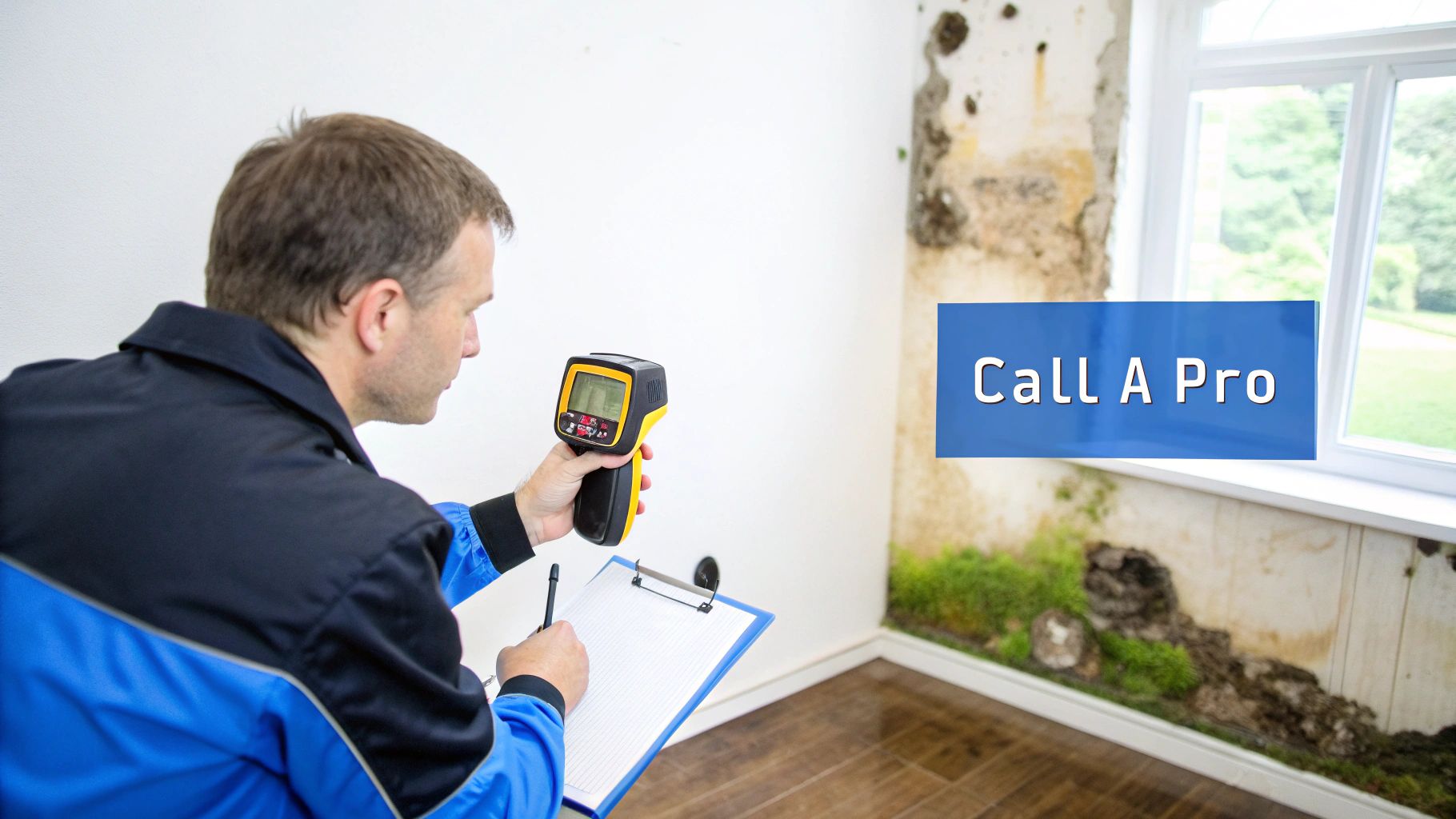
While it’s great to be proactive, knowing your limits is the most important part of tackling a potential mold problem. A small patch of surface mildew on your shower tile is one thing; a persistent musty smell with no visible source is a completely different ballgame.
Recognizing the line between a DIY cleanup and a situation that demands expert help is crucial for protecting both your property and your health. Trying to handle a serious issue on your own can backfire, leading to cross-contamination and prolonged exposure to harmful spores.
Clear Signs You Need an Expert
If you run into any of these scenarios, it’s time to put down the flashlight and pick up the phone. These are definitive red flags that a professional assessment isn't just a good idea—it's necessary.
You Smell Mold but Can’t See It: That distinct earthy or musty odor is caused by active mold growth. If you can smell it but can't find the source, the colony is almost certainly growing in a hidden spot like behind drywall, under flooring, or deep inside your HVAC system. Professionals use specialized tools to find these hidden sources without tearing your house apart.
The Affected Area is Large: The general guideline from health and safety organizations is to call a pro for any mold growth covering more than 10 square feet. That’s roughly a 3×3 foot patch. A large colony points to a significant underlying moisture issue and requires professional containment procedures to remove safely.
You Suspect HVAC Contamination: See mold-like spots on your air vents? Smell a musty odor only when the heat or AC is running? This is a major concern. An HVAC system can efficiently spread spores throughout your entire home, and cleaning it requires a specialized approach.
Family Members Have Unexplained Symptoms: Are people in your household experiencing persistent allergy-like symptoms—coughing, sneezing, headaches, or itchy eyes—that seem to improve when they leave the house? This can be a sign of poor indoor air quality caused by a hidden mold problem.
A professional inspection is about more than just finding mold; it’s about finding the moisture source that’s feeding it. Without fixing the underlying water problem, any cleanup effort is just a temporary fix. The mold will simply grow back.
The Professional Inspection Process
When you call a certified team like Pacific Mold Pros, you’re getting far more than a simple visual look-around. Our process is a systematic investigation designed to give you a complete picture of your home’s health. We move beyond what the eye can see to uncover the full extent of any issue and provide a clear roadmap for fixing it.
We always start with a detailed visual assessment, but we quickly deploy advanced diagnostic tools. This is where the real detective work begins.
Moisture Mapping and Thermal Imaging
We use non-invasive moisture meters and thermal imaging cameras to "see" inside your walls and floors. These tools detect temperature differences and moisture concentrations that are invisible to the naked eye, allowing us to pinpoint hidden leaks and damp spots where mold loves to grow. This technology helps us trace the problem back to its source without unnecessary demolition.
Strategic Air and Surface Sampling
Based on our findings, we may recommend collecting air and surface samples from strategic locations. An air sample from the middle of a room might show normal spore levels, but one taken near a damp wall could tell a very different story. These samples are sent to an accredited third-party lab for analysis.
This scientific data is critical. It tells us:
- What types of mold are present in your home.
- How concentrated the spores are compared to normal outdoor levels.
- Whether you’re dealing with an active, indoor colony.
The lab results remove all guesswork. You get definitive answers, which are essential for creating an effective remediation plan. For homeowners and real estate agents, this documentation is invaluable.
Learn more about the specifics of what a professional mold inspection entails in our comprehensive guide. Getting this level of detail is the only way to achieve true peace of mind and ensure your indoor environment is healthy and safe.
Your Top Mold Questions, Answered
When you suspect mold, a million questions can start racing through your mind. It's a confusing topic, and even with a good visual guide, homeowners often bump into the same myths and uncertainties. Let's tackle some of the most common questions we hear from clients every day.
Can I Tell if Mold Is Toxic Just by Looking at It?
This is probably the biggest misconception out there, and the answer is a firm no. You simply cannot tell if mold is dangerous just by its color or appearance.
While species like Stachybotrys chartarum (the infamous "black mold") are known for producing mycotoxins, plenty of other harmless molds can also look black. On the flip side, molds of any color—green, white, orange, you name it—can trigger serious allergic reactions and respiratory problems for sensitive people. The only way to be certain about the specific species and its potential health risk is through professional sampling and lab analysis. Trying to eyeball it is just a guess.
Here's what you really need to remember: The risk isn't just about "toxicity." Any active mold colony inside your home is bad news for your air quality and can affect your health. The real focus should be on finding the moisture source and getting rid of the growth, no matter what it looks like.
What Is the Difference Between Mold and Mildew?
It's easy to get these two mixed up. Here’s a simple way to think about it: all mildew is a type of mold, but not all mold is mildew.
Mildew is the term for specific types of mold that grow flat on surfaces. You've probably seen it before—that powdery, downy stuff that shows up on shower curtains, tile grout, or windowsills where condensation builds up. It's usually white or gray and is fairly easy to wipe away from non-porous surfaces.
Mold, as a broader category, is the fuzzy, slimy, or velvety growth that often digs deep into the materials it’s on, like drywall, wood, and insulation. While mildew is less destructive, both can release spores and cause allergic reactions. When in doubt, it’s always smarter to treat it like the more serious problem and find out what’s causing it.
How Quickly Can Mold Grow After Water Damage?
It can happen astonishingly fast. Given the right conditions—moisture, a food source like drywall, and a comfortable temperature—mold colonies can start forming in as little as 24 to 48 hours.
This is exactly why a quick and thorough response to any water intrusion is so critical. Whether it's a pipe leak, a roof issue, or a small flood, just letting a damp spot "air dry" often isn't enough, especially in humid climates or rooms with poor ventilation. You have to get all affected materials completely dry to stop a small moisture problem from exploding into a major infestation.
Are DIY Mold Test Kits Reliable?
Those petri dish test kits you can buy at the hardware store? As professionals, we generally advise against using them. They're notorious for producing misleading, and often alarming, false-positive results.
Here’s a breakdown of why they just don't cut it:
- They lack all context. Mold spores are literally everywhere, inside and out. A DIY kit will almost always grow something, but it can't tell you if the spore levels in your home are normal or dangerously elevated.
- They can't find the source. A dish sitting on your counter is useless for pinpointing a hidden colony growing behind a wall or inside your HVAC system.
- They aren’t really accurate. These kits can't give you the quantitative data that matters, like the concentration of spores per cubic meter of air, which is what a real lab analysis provides.
If you want accurate, actionable results, you need professional air and surface sampling from a certified inspector. It's the only way to get a true picture of what’s happening with your home’s air.