To keep mold out of your bathroom for good, you have to get aggressive about moisture control. That means making sure you have proper ventilation, fixing leaks the moment you spot them, and actively working to reduce humidity.
It comes down to a few simple, proactive habits: consistently running the exhaust fan, cleaning surfaces to get rid of food sources like soap scum, and keeping your grout and caulk sealed to block water from sneaking in. These small steps make your bathroom a terrible place for mold spores to set up shop.
Understanding Why Your Bathroom Grows Mold
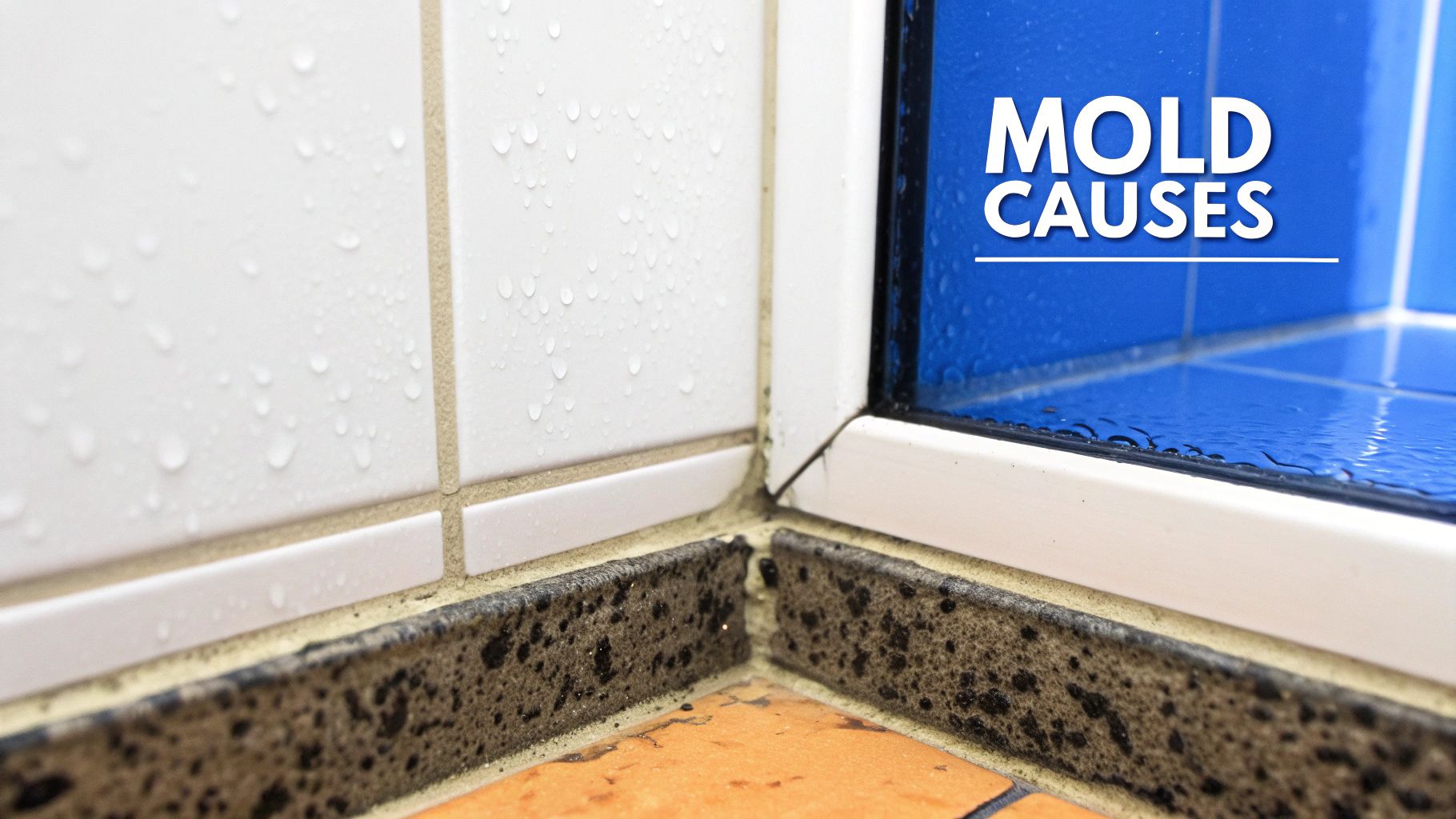
Ever wonder why that stubborn black or pink stuff seems to reappear no matter how much you scrub? The answer is simple: your bathroom is the perfect breeding ground for mold. It creates an ideal habitat that other rooms in your home just can't match.
I like to think of it as the "mold triangle"—three things mold absolutely needs to thrive:
- Moisture: This is the big one. Steam from hot showers, splashes from the sink, and even condensation on the toilet tank provide a constant supply of water.
- Warmth: Bathrooms are usually kept warm and cozy, creating an incubator-like atmosphere that helps mold spores germinate faster.
- Organic Material: This is the surprising ingredient. Mold doesn’t just grow on drywall. It happily feasts on soap scum, dead skin cells, shampoo residue, and even the dust that settles on damp surfaces.
The Science of Bathroom Mold
When you take a hot shower, that steam—which is just water vapor floating in the air—rises and clings to cooler surfaces like walls, ceilings, and mirrors. This condensation creates a microscopic layer of moisture, which is exactly what the dormant mold spores floating in the air have been waiting for. Without it, they can't do a thing.
This isn’t just a fluke; it's a widespread issue. Studies show that roughly 30% of homes worldwide have some form of mold damage linked to dampness and poor ventilation, and bathrooms are a major hotspot. Interestingly, homeowners see a much higher rate of mold (39.7%) compared to renters (25.5%), likely due to differences in long-term maintenance and who's responsible for it. You can dig into the data yourself in this study on residential dampness.
Mold isn’t a sign that your home is dirty; it's a sign that your home has a moisture problem. Once you understand what feeds it, you can starve it out before it ever takes hold.
The key is to break that mold triangle. You can't really get rid of the warmth or completely eliminate the organic food sources, but you absolutely can control the moisture. By managing condensation and keeping humidity in check, you remove the single most critical element mold needs to survive. A great first step is understanding the specific humidity levels that trigger mold growth.
Defeating Humidity with Smarter Ventilation
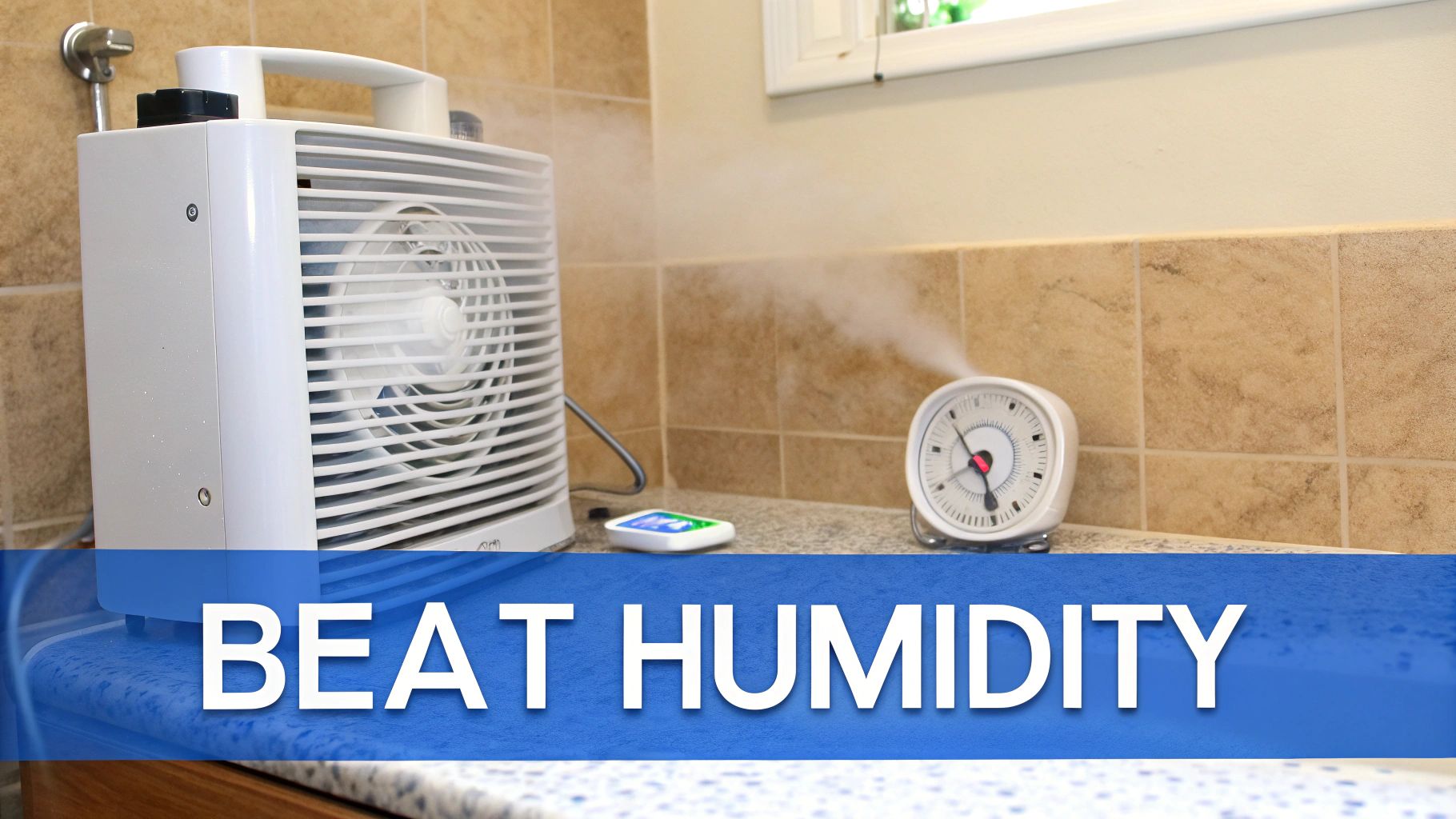
If your bathroom feels like a constant battleground against mold, then humidity is the enemy’s main supply line. Cutting off this airborne moisture is the single most effective thing you can do to stop mold in its tracks.
We all know to flip on the exhaust fan, but smart ventilation goes way beyond that one little switch.
Poor airflow is the top culprit behind almost every bathroom mold problem I've seen. Airborne moisture fuels mold and yeast growth on everything from faucet handles to toothbrush holders. It's a widespread issue—studies show that a staggering 47% of US homes battle mold, and it gets worse in colder months when our heating systems trap that damp air indoors.
Is Your Exhaust Fan Actually Doing Its Job?
Just having a fan isn't enough; it has to be the right fan, and it has to be working correctly. A fan that’s too small for your bathroom or—even worse—vents directly into the attic is just moving the problem from one spot to another.
Here’s a quick way to check its power: the "tissue test."
Turn the fan on and hold a single square of toilet paper up to the vent cover. If the fan can hold the tissue in place, you’ve got decent suction. If it falls right off, your fan is either underpowered or clogged with dust and needs some attention.
A properly sized exhaust fan is measured in CFM (cubic feet per minute). For most home bathrooms, a fan rated between 50 and 100 CFM is what you need to effectively pull steam and moisture out of the room and send it safely outside.
Creating a Proactive Airflow Routine
Good habits are everything when it comes to ventilation. It’s not just about what you do during a shower, but what happens in the minutes and hours that follow. A simple, consistent routine can make a massive difference.
- Run the Fan Longer: Don't shut the fan off as soon as you step out of the shower. Keep it running for at least 30 minutes afterward to clear out all that lingering steam.
- Create a Cross-Breeze: Crack the bathroom door open when you're done. This simple move allows drier air from the rest of the house to circulate in, helping push the damp air out much faster.
- Open a Window: If you have one, opening a window even an inch gives you a powerful, free ventilation boost.
Choosing the right ventilation approach can feel overwhelming, so here’s a quick breakdown of the common strategies we see.
Bathroom Ventilation Strategy Comparison
| Ventilation Method | Effectiveness | Cost | Best For |
|---|---|---|---|
| Exhaust Fan | High (when properly sized and vented) | Moderate | All bathrooms, especially those without windows. Essential for modern homes. |
| Open Window | High (excellent for cross-ventilation) | Free | Bathrooms with exterior walls. Great in combination with a fan. |
| Dehumidifier | Moderate (actively removes moisture from the air) | Moderate | Fan-less bathrooms, basements, or areas with persistent high humidity. |
| Door Open/Fan In | Low (provides some air exchange but is not a solution) | Free to Low | A temporary measure in a pinch, but not a long-term strategy. |
Ultimately, a combination of an exhaust fan and cracking a window or door is the gold standard for keeping your bathroom air fresh and dry.
What to Do If You Don't Have a Fan
No exhaust fan? You’re not defenseless. A small, portable dehumidifier can be your best friend.
Just place one in the corner of the bathroom and run it for about an hour after you shower. It will actively pull moisture from the air, making the environment much less inviting for mold.
Your goal is to keep the bathroom's relative humidity below 50%. You can easily track this with an inexpensive digital hygrometer. By actively managing airflow, you take away mold’s most vital resource. For a deeper look at this topic, check out our guide on effective humidity control in homes.
Fortifying Surfaces with Proactive Maintenance
Managing the moisture in the air is a huge part of the battle, but it’s only half the story. The real secret to a mold-free bathroom lies in creating surfaces that are completely impenetrable to water.
Even with a top-notch ventilation fan, water can silently seep through tiny cracks in old grout and failing caulk. This creates hidden pockets of moisture behind your walls and under your floors—exactly where mold loves to grow.
This is where proactive maintenance comes in. Instead of just cleaning up mold after it appears, we’re going to fortify your bathroom’s defenses, making it nearly impossible for water to get where it doesn’t belong.
Your Monthly Sealant Check-Up
Set a reminder once a month to take five minutes and get up close with the seals around your bathtub, shower, sink, and toilet base. You’re looking for any caulk that is peeling, cracked, discolored, or pulling away from the wall. These tiny gaps are gateways for water damage.
Don’t forget the grout lines. Grout is naturally porous, so it acts like a tiny sponge. If it isn't sealed properly, it will absorb water every single time you shower, holding onto that moisture long after you’ve turned the fan off.
Proactive maintenance is a shift in mindset. It’s moving from a cycle of endless scrubbing to a strategy of smart prevention. A small investment of time each month saves you from major headaches down the road.
A 2023 worldwide survey found that a staggering 30% of homes are damaged by mold from moisture issues, with hidden leaks being a major cause. The study also suggests that simple monthly inspections can prevent up to 80% of new growth, and using fresh silicone seals can cut mold recurrence by half in high-risk bathrooms.
Mastering Caulk and Grout Sealing
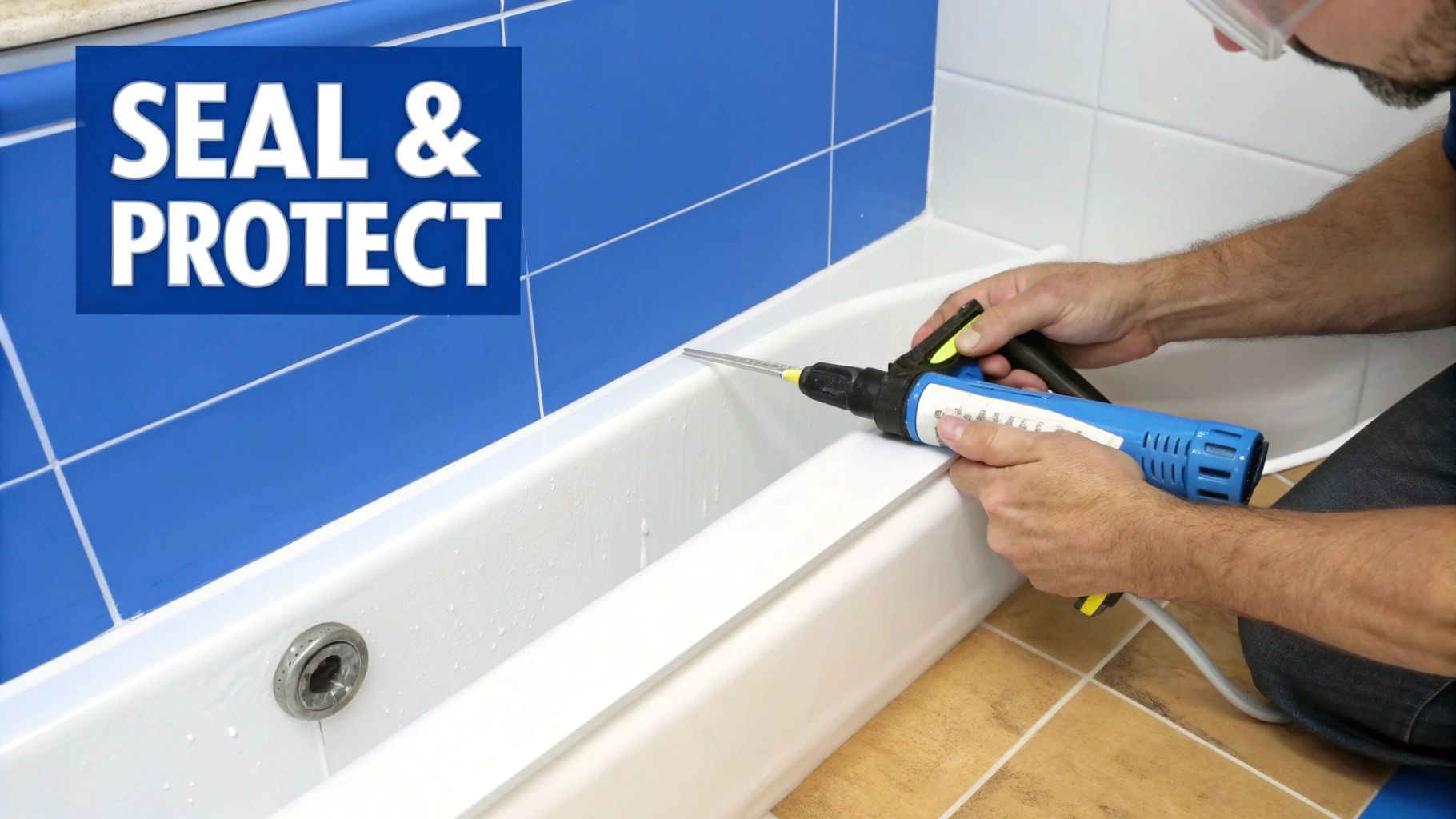
If you find damaged caulk, the fix is straightforward but requires some attention to detail. Whatever you do, don’t just apply new caulk over the old stuff—that traps moisture and creates an even bigger problem. You have to remove the old bead completely.
Here's how to do it right:
- Remove the Old Stuff: Grab a caulk removal tool or a sharp utility knife and carefully cut and scrape away all the old material.
- Deep Clean the Joint: Once the old caulk is gone, thoroughly clean the joint with rubbing alcohol. This gets rid of any soap scum, residue, or lingering mold spores. The surface absolutely must be clean and bone-dry.
- Apply a Fresh Bead: Use a 100% silicone, mold-resistant caulk. Cut the tube’s tip at a 45-degree angle and apply steady, even pressure for a smooth, professional-looking line.
For your grout, the process is even simpler. After giving it a good, deep clean, apply a quality penetrating grout sealer with a small brush or applicator bottle once a year. This fills the microscopic pores in the grout, causing water to bead up and roll right off instead of soaking in.
This entire process can be a key part of a larger maintenance routine. For more ideas on what to check around your house, our home spring maintenance checklist offers a great starting point for any proactive homeowner.
Your Weekly Routine for a Mold-Free Zone
Lasting prevention isn’t about one massive deep clean. It's about building simple, consistent habits that make your bathroom an unwelcome place for mold to even start.
Think of this as a quick, high-impact checklist, not some overwhelming chore list. We're going to focus your efforts on the high-risk "hot spots" where moisture and grime love to hang out. By hitting these areas consistently, you make a huge difference with minimal effort.
Daily Habits with a Big Payoff
Your first line of defense is what you do every single day. These small actions take mere seconds but are incredibly effective at stopping moisture from lingering.
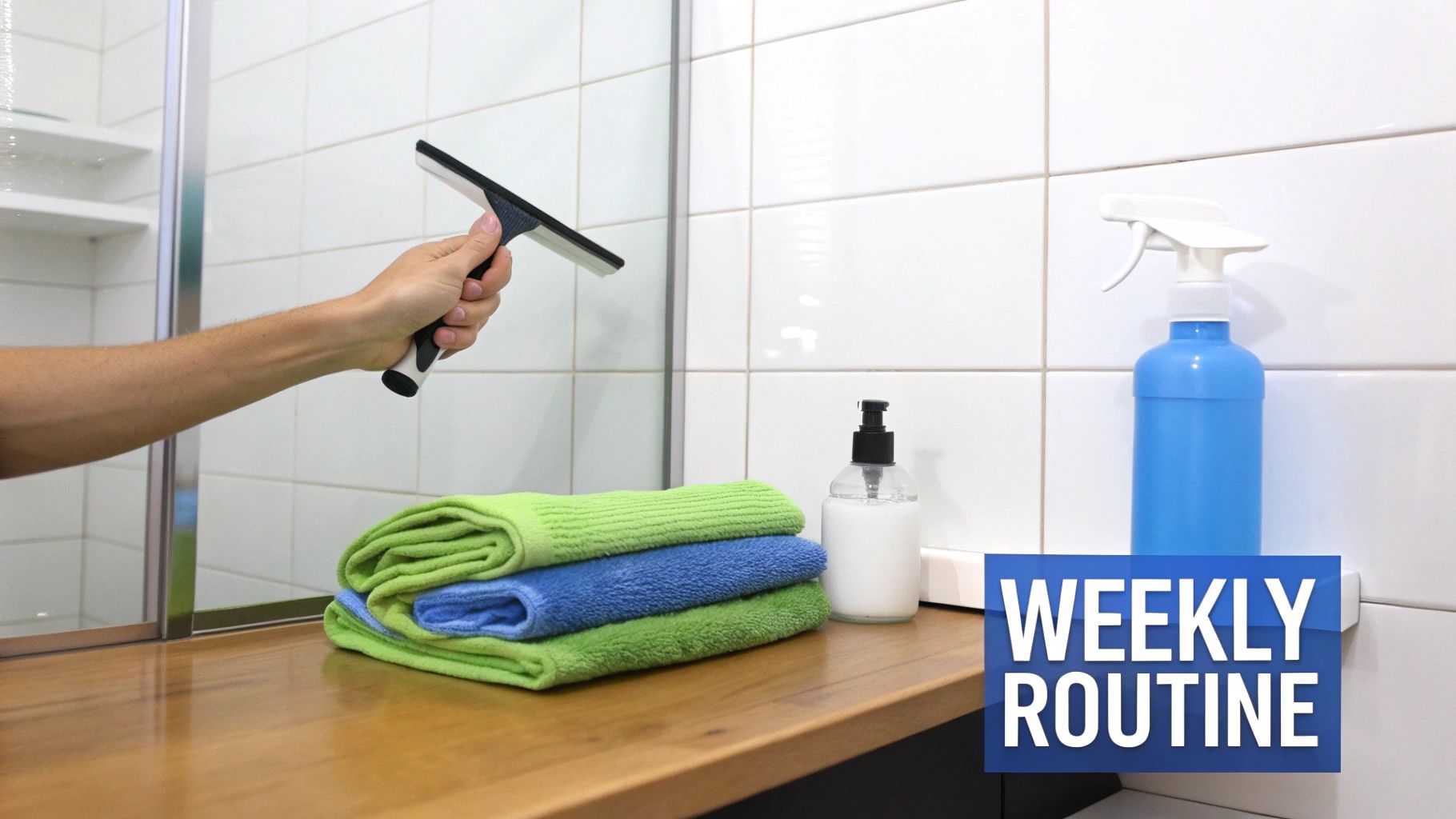
- Squeegee Shower Surfaces: After every shower, take 30 seconds to squeegee water off the shower walls, glass doors, and the tub floor. This physically removes the water that mold spores need to germinate and thrive.
- Stretch the Shower Curtain: Done showering? Pull the curtain or liner fully closed so it can air out. If you leave it bunched up, you’re creating a dark, damp petri dish in the folds—perfect for mildew.
- Wipe Up Puddles: Quickly wipe down any water that’s splashed onto the floor, countertop, or around the base of the toilet. A dry surface is a mold-free surface. It's that simple.
These tiny habits are all about disrupting the "mold triangle" by taking away the moisture before it can cause trouble.
The Weekly Reset Checklist
Once a week, set aside just 15-20 minutes for a few targeted tasks. This quick routine reinforces your daily efforts and gets rid of the soap scum and other gunk that mold loves to eat.
My go-to solution is a simple DIY spray made from equal parts white vinegar and water. The acetic acid in vinegar is fantastic for breaking down soap scum and killing mold spores without any harsh chemicals. Just spray it on, let it sit for a few minutes, then wipe it clean.
Your weekly routine shouldn't feel like a deep clean. It's a strategic maintenance plan. By consistently addressing high-risk areas, you stop mold from ever becoming a visible, problematic issue in the first place.
Here’s a simple checklist to keep your bathroom in top shape.
Weekly Bathroom Mold Prevention Checklist
This table breaks down the simple but powerful tasks that keep mold from getting a foothold. Following this schedule will make your bathroom a much healthier space.
| Frequency | Task | Purpose |
|---|---|---|
| Weekly | Spray and wipe down the shower, tub, & sink with a vinegar solution | Eliminates soap scum and skin cells, which act as a food source for mold. |
| Weekly | Wash bath mats & towels in hot water | Kills any spores hiding in the fabric and prevents a musty, damp environment. |
| Monthly | Wash the shower curtain & liner | Removes built-up soap scum and mildew from one of the most common mold hotspots. |
This sustainable approach makes mold prevention feel manageable and highly effective. It’s the easiest way to ensure your bathroom remains a healthy, clean space for you and your family.
Knowing When to Call in a Mold Remediation Pro
While staying on top of cleaning and ventilation can handle most minor mildew, some mold problems are simply out of a homeowner's league. It's tough, but you have to know when to put down the spray bottle and pick up the phone.
Calling a certified expert isn't giving up; it’s making a smart, responsible choice for your house and your family's health. The trick is learning to tell the difference between a few spots on the shower grout and a serious infestation that needs professional muscle.
Red Flags That Demand an Expert
If you run into any of these signs, it's time to stop what you're doing and get an expert on the line. These aren't just surface issues—they usually point to hidden water sources or widespread growth that can pose a real risk.
- That Persistent Musty Smell: You've scrubbed everything, aired out the room, and still smell that damp, earthy odor. That's the classic calling card of hidden mold growing behind your walls, under the floorboards, or in the ceiling cavity. You can't clean what you can't see.
- Widespread Visible Growth: The industry rule of thumb is pretty clear: if you're looking at a patch of mold bigger than 10 square feet, it's too large to tackle safely yourself. Trying to clean a large colony without proper containment gear can blast a massive cloud of spores all over your home. Not good.
- Signs of a Major Water Event: Did a pipe burst? Toilet overflow? Find a leak from the roof after a big storm? If you see or smell mold after a major water incident, you have to assume the problem is bigger than what's on the surface. Water soaks into drywall and insulation, creating a perfect hidden breeding ground that requires professional drying equipment and know-how.
- Unexplained Health Symptoms: Are family members suddenly dealing with allergy flare-ups, persistent coughing, headaches, or respiratory issues that seem to get worse after they've been in the bathroom? This could be a direct reaction to mold spores in the air.
When you hire a certified mold inspector, you're not just paying for a cleanup crew. You're investing in a diagnosis. They bring in tools like moisture meters and thermal imaging cameras to pinpoint the root cause, making sure the problem is fixed for good.
Trying to manage a large-scale mold problem on your own is often a recipe for making things worse. Without professional containment and the right safety gear, you can easily cross-contaminate other parts of your house.
Professionals are trained to handle this safely. They understand the crucial differences between just cleaning the surface and what true remediation involves, which you can learn more about by exploring mold removal versus remediation. They have the equipment and training to safely contain the area, remove the mold at its source, and ensure it doesn't come back.
If you're in the Santa Barbara area and any of these warning signs feel familiar, don't wait. Contacting a specialist like Pacific Mold Pros is the fastest way to get peace of mind and know the job is done right.
Got Questions About Bathroom Mold? We've Got Answers.
Let's wrap up by tackling some of the questions we hear all the time from homeowners trying to keep their bathrooms mold-free. These are the quick, no-nonsense answers you need to feel confident in your prevention strategy.
Can I Just Paint Over Mold in My Bathroom?
Absolutely not. We see this attempted all the time, and it never ends well. Painting over mold is like putting a band-aid on a broken bone—it hides the problem but does absolutely nothing to fix it.
Mold is a living thing. It will happily continue to grow and eat right through the drywall and even the new paint, eventually causing it to bubble, peel, and look even worse than before. Before you even think about picking up a paintbrush, the mold has to be completely removed and the entire area must be bone-dry. Once you’re certain it's gone, using a high-quality, mold-resistant primer and paint is a great final step for an extra layer of defense.
Are Dehumidifiers Really Effective in a Bathroom?
Yes, they can be a total game-changer. This is especially true for bathrooms without windows or those stuck with a weak, ineffective exhaust fan. A small, portable dehumidifier is one of the best tools in your arsenal for preventing bathroom mold.
Just running one for an hour after showering can make a huge difference. It actively pulls moisture out of the air, bringing the relative humidity down below the 50% threshold that mold needs to start growing. This simple habit makes your bathroom a far less inviting home for stubborn spores.
Quick Tip: Think of mildew as mold's less-aggressive cousin. Mildew is a surface fungus, usually appearing as a gray or white powdery substance that's relatively easy to clean off. Mold, on the other hand, is often fuzzy or slimy and can penetrate deep into materials, causing more significant damage.
How Can I Prevent Mold on My Fabric Shower Curtain?
This is a classic bathroom frustration, but the fix is surprisingly simple. The single most important thing you can do is stretch the curtain out fully after every shower. Never leave it bunched up; it needs to air dry completely.
About once a month, give it a proper wash. Just toss it in the washing machine on a hot cycle with your usual detergent and add a cup of white vinegar. That’s enough to kill any budding spores and knock out that musty smell. Investing in a quality, machine-washable liner makes this routine even easier.
What If I Find Mold But Cannot Find the Source?
If you can see mold patches popping up or there's a persistent musty smell you can't shake, it almost always points to a hidden issue. You're seeing the symptom, not the cause.
The culprit is often a slow leak behind a wall, condensation building up inside the vanity, or a problem lurking under the flooring. You can't clean what you can't see, and this is where you need to call in a professional. Ignoring an unknown source just allows the problem to get worse, leading to more damage and much costlier repairs down the road.
For situations like this, you need to know how to detect mold with professional methods. Experts use tools like moisture meters and thermal imaging to find the root cause without tearing your walls apart. Catching it early is always the smartest—and cheapest—move.