In California, a landlord's responsibility for mold isn't just a courtesy—it's the law. When mold growth makes your rental unit unsafe or unlivable, the buck generally stops with them. This is all tied to a legal concept called the implied warranty of habitability, which is basically a guarantee that the property you're renting is safe and sound.
If the mold is a direct result of a structural problem, like a leaky roof, a cracked pipe behind a wall, or faulty plumbing, your landlord is required to step in and fix it.
Defining Landlord Responsibility for Mold
When you sign a lease in Santa Barbara or Ventura County, you're not just renting space; you're entering into a contract. Baked into that contract is an unspoken promise from your landlord that your home is safe to live in. A serious mold problem can shatter that promise, making it the property owner's legal duty to handle the cleanup.
This isn't some vague guideline—it's a firm legal standard. Think of it like buying a car; you inherently expect the brakes and seatbelts to work correctly. In the same way, you have a right to a home that's free from major hazards, and that includes toxic mold stemming from the building's infrastructure itself.
At its core, landlord responsibility for mold is all about maintaining a healthy, livable environment for their tenants.
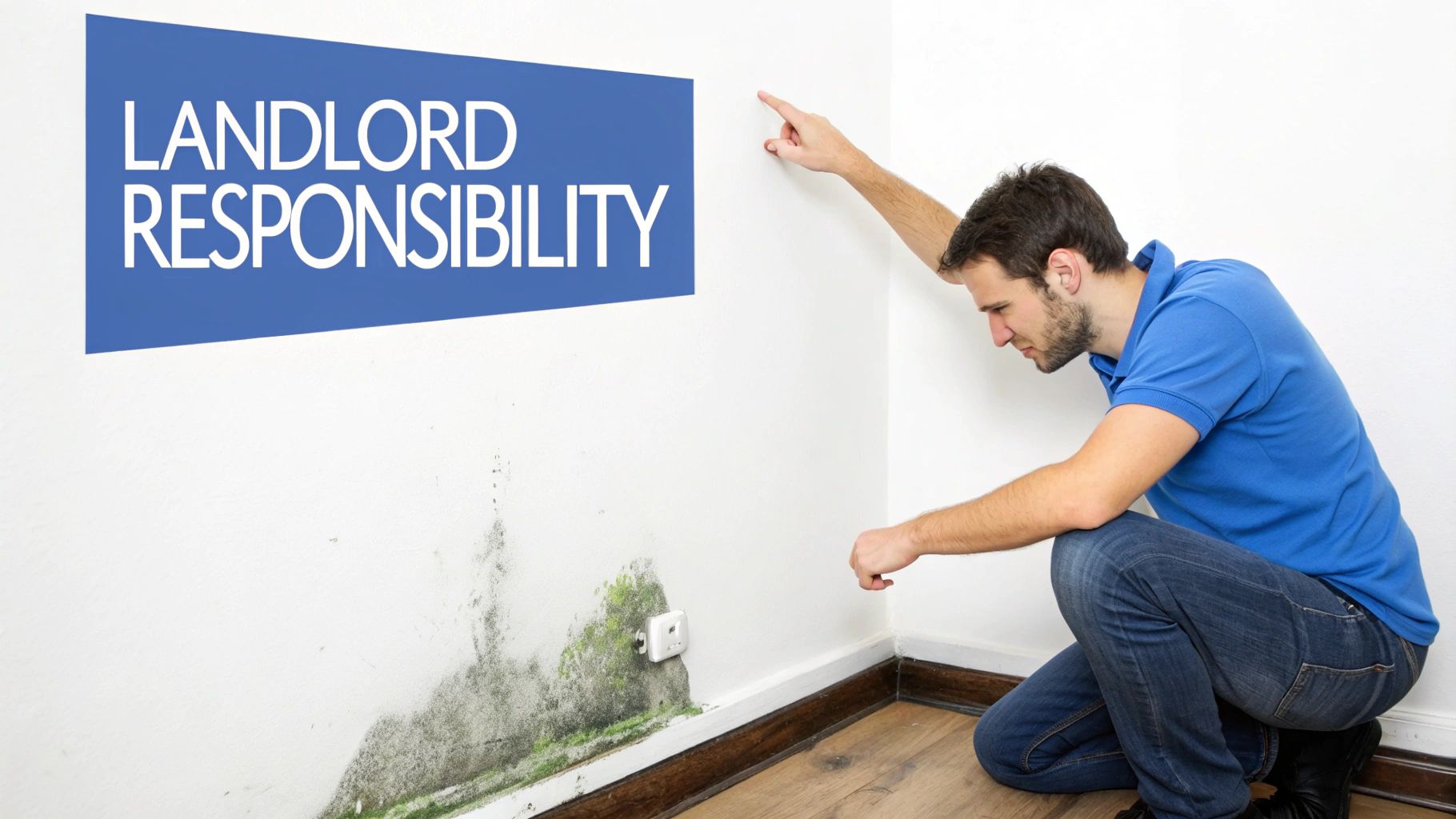
Landlord vs. Tenant: Who Is Responsible?
Figuring out who's on the hook for a mold problem usually comes down to one simple question: where did the moisture come from? The answer typically draws a pretty clear line in the sand.
- Landlord's Duty: If the moisture is from the building itself—think leaky pipes, a damaged roof, or failing window seals—it’s squarely the landlord's problem to fix.
- Tenant's Duty: On the other hand, if the problem was caused by a tenant's actions, the responsibility might shift. This could be something like never using the bathroom fan, letting a spill sit for weeks, or failing to report a small leak before it becomes a huge issue.
This is a bigger deal than most people realize. Nationwide, studies show that a staggering 47% of properties deal with dampness or mold, putting millions of tenants at risk. The danger often spikes in colder months when heaters create condensation in homes without enough ventilation, a trend explored by researchers at Minut.com.
To make it easier, we've put together a quick reference guide. It's a great starting point for figuring out where your situation falls before you take the next step, like getting professional mold testing in Santa Barbara.
Mold Responsibility Quick Reference Guide
This table breaks down some of the most common causes of mold and helps clarify who is generally responsible for dealing with it.
| Mold Cause | Likely Landlord Responsibility | Likely Tenant Responsibility |
|---|---|---|
| Leaky Roof or Pipes | Yes – this is a structural failure. | No – this is a pre-existing condition. |
| Window Condensation | Maybe – if windows are old or failing. | Maybe – if ventilation is poor. |
| Bathroom Mold | Yes – if caused by a hidden plumbing leak. | Yes – if from not using the exhaust fan. |
| Flooding from Outside | Yes – if from foundation cracks. | No – unless directly caused by the tenant. |
Remember, this guide is for general reference. Every situation is unique, and sometimes the lines of responsibility can get blurry. When in doubt, getting an unbiased, expert opinion is the best way to get clarity.
Understanding the Implied Warranty of Habitability
Every lease in California comes with a powerful, unspoken promise known as the implied warranty of habitability. Think of it as a built-in safety net that’s part of your rental agreement, whether it's written down or not. This legal standard automatically requires your landlord to provide a property that is safe, healthy, and fundamentally livable from the moment you get the keys.
It’s a lot like buying a new refrigerator. You just expect it to keep your food cold and operate safely without having to spell it out. The implied warranty of habitability works the same way for your home—it’s a guarantee that the basic systems are functional and the structure is free from serious hazards.
What Makes a Home Uninhabitable?
Under this warranty, certain issues can legally render a property "uninhabitable." This isn't just about things being unpleasant or inconvenient; it means the living conditions have gotten so bad they could genuinely endanger your health. A significant mold problem often falls squarely into this category.
California law gets very specific here. Several Civil Codes lay out the conditions that break this promise, and they tie directly back to the landlord's responsibility for mold.
Key problems that can make a property uninhabitable often include:
- Defective Plumbing: We’re talking about leaky pipes, broken fixtures, or poor drainage—all classic culprits that create the moisture mold loves.
- Inadequate Weatherproofing: Compromised roofs, leaky windows, or failing walls that let water in during a storm are a huge problem, especially in coastal areas like Santa Barbara.
- Lack of Necessary Utilities: This also covers things like proper ventilation systems, which are critical for stopping moisture from building up in the first place.
When you see visible mold that’s a direct result of these kinds of building failures, it’s no longer just a cleaning issue. It’s a potential breach of the warranty of habitability, which puts the legal responsibility for fixing it squarely on the landlord.
The Legal Framework in California
Because of this legal foundation, a landlord can't just brush off a mold complaint that stems from a leaky pipe or a bad roof. They have a proactive duty to maintain their property to a standard that prevents these issues from happening.
Honestly, the best way for landlords to stay on the right side of this is through routine check-ups. For tenants who are worried about small issues turning into big ones, understanding the value of a preventative maintenance inspection can bring incredible peace of mind.
At the end of the day, the implied warranty of habitability is your strongest protection as a tenant. It’s the law that says your landlord must provide a safe environment. When mold threatens that safety, they are legally required to step up. Ignoring that duty isn't just a violation of your rights—it exposes them to serious legal and financial trouble.
Pinpointing the Source of Your Mold Problem
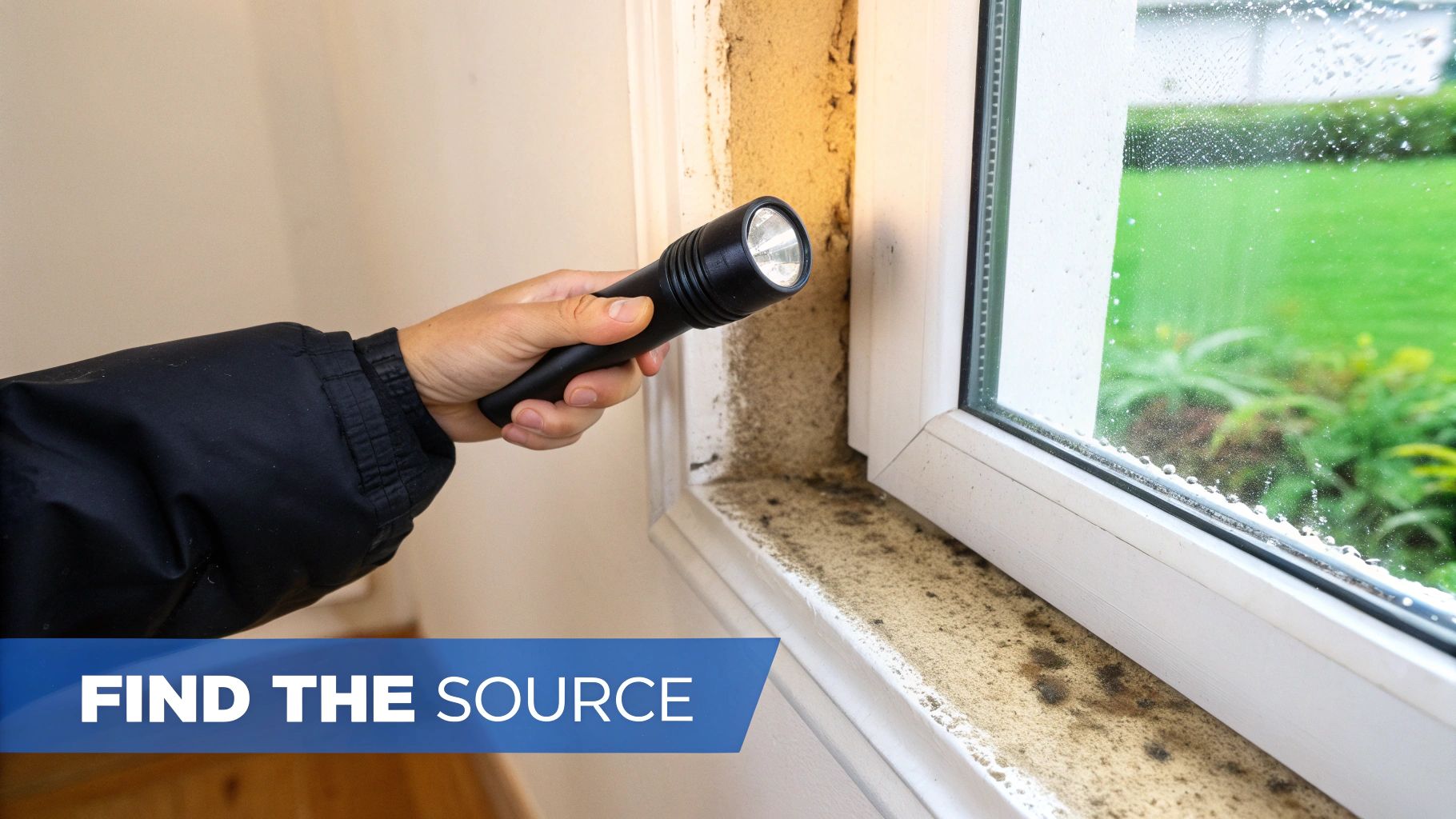
Before you can figure out if your landlord is on the hook for a mold problem, you have to play detective. The real key isn’t just spotting the mold itself—it’s finding the water source that’s feeding it. Think of the mold as smoke; the moisture is the fire you need to put out.
This one step is what separates a major building failure from a minor cleanup. For instance, that musty smell in a closet after a heavy Santa Barbara winter storm probably points to a slow roof leak. That’s a clear landlord responsibility. Same goes for warped baseboards under a window—that’s a classic sign of a failing seal letting rain seep in.
Common Culprits Landlords Must Address
Certain moisture problems almost always fall under the landlord's responsibility for mold because they’re tied directly to the building's structural integrity. These are the kinds of issues a tenant has no control over and simply can't fix themselves.
You're typically looking at things like:
- Hidden Plumbing Leaks: That slow, sneaky drip from a pipe behind drywall or under the floor can go unnoticed for ages, creating a perfect, hidden breeding ground for mold.
- Roof and Window Failures: Damaged shingles, cracked flashing around vents, or old, dried-out window seals are common entry points for rain and moisture.
- Foundation Cracks: In older properties, cracks in the foundation can let groundwater seep into basements or crawl spaces, leading to widespread dampness.
- HVAC System Issues: A leaking air conditioning unit or a poorly maintained ventilation system can also pump excessive moisture right into your home.
And this isn't a rare occurrence. Studies have shown that tenants face nearly double the risk of living with dampness and mold compared to homeowners. Why? It often comes down to these exact types of structural problems that only a landlord is required to fix. You can read more about these findings on the prevalence of mold in rental homes.
Distinguishing Building Failures from Tenant Issues
Your goal here is to confidently determine if the problem is coming from the building itself or from day-to-day living. While a landlord absolutely has to fix a leaking pipe, they generally aren’t responsible for mold caused by a tenant who consistently lets the bathroom steam up without ever turning on the exhaust fan.
A good rule of thumb: If the moisture source is part of the building’s infrastructure—the roof, walls, pipes, or foundation—the responsibility to repair it and clean up the resulting mold falls squarely on the landlord.
This distinction is everything. By understanding where the water is coming from, you arm yourself with the facts you need to take action. A professional can help confirm your suspicions, and our guide on how to detect mold offers even more tips for your initial investigation. Knowing the source is the first and most critical step toward getting this resolved.
Your Action Plan for Reporting Mold to Your Landlord
Finding mold in your rental is one of those sinking feelings, but having a clear game plan can turn that stress into productive action. How you report the problem is every bit as important as discovering it. A calm, methodical approach doesn't just protect your rights—it also encourages your landlord to respond quickly and effectively.
Before you even draft an email or make a call, the first step is documentation. Grab your smartphone and start creating a visual record. You'll want clear, well-lit photos and videos of every spot, showing the mold itself, any related water stains, and the general area around it.
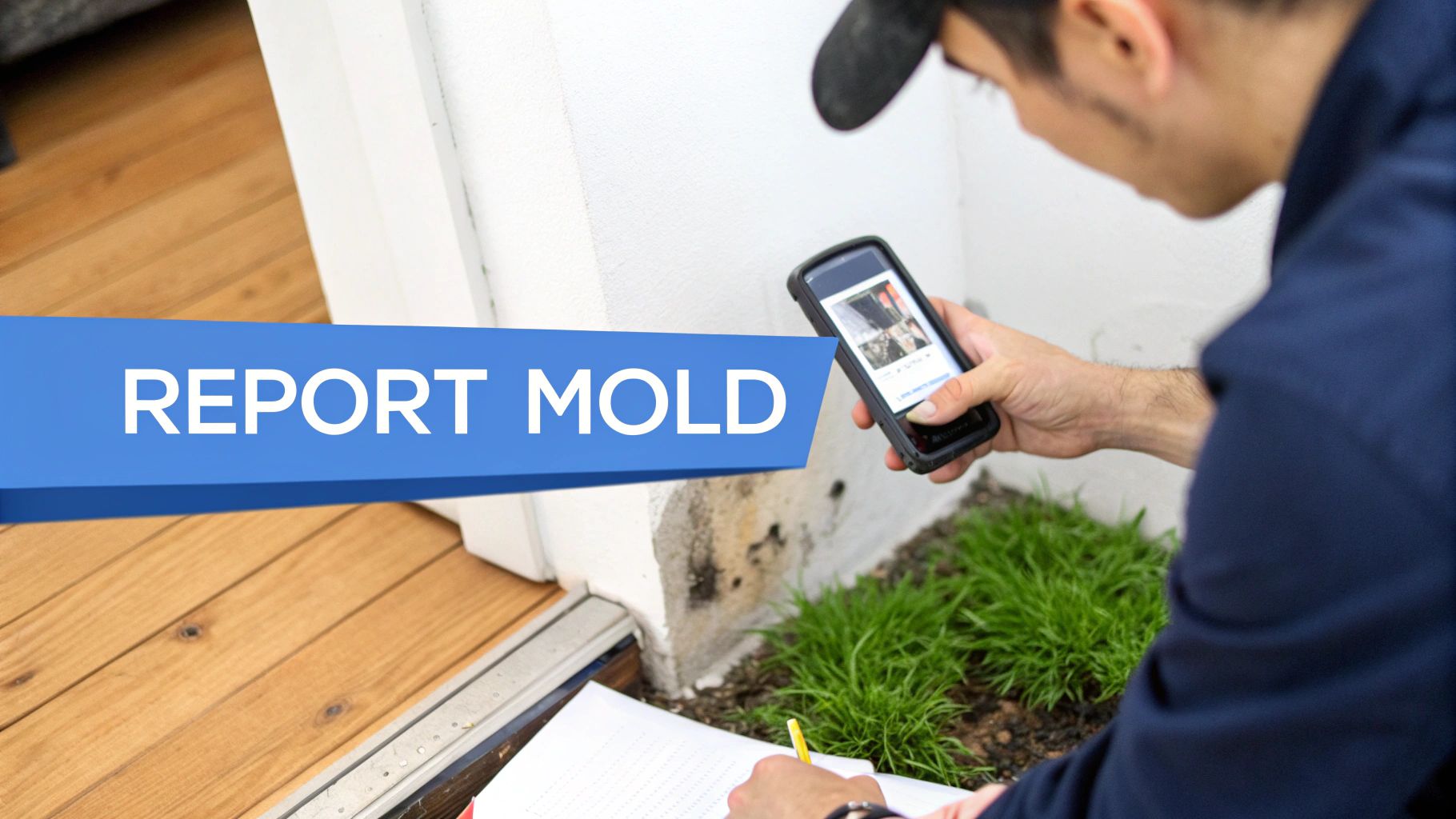
Step 1: Document Everything Immediately
Your mission here is to create a record that can't be disputed. Think of yourself as an investigator building a case file.
- Take Detailed Photos: Get up close to the mold growth, then take wider shots to show its location in the room. It’s a great idea to place a coin or ruler next to the spot for scale.
- Keep a Written Log: Start a simple journal or a note on your phone. Log the date you first saw the mold, where it is, any musty smells you’ve noticed, and any health symptoms you think might be connected.
- Find the Source: If you can see an active leak or a clear source of moisture, document that too. A short video of a dripping pipe under the sink is incredibly powerful evidence.
This initial file of evidence is your foundation. It elevates your request from a casual complaint to a formally documented issue that demands a serious response.
Step 2: Provide Formal Written Notice
A quick text or a phone call might feel faster, but they don't carry the legal weight of a formal, written notice. This is a critical step in establishing landlord responsibility for mold. A paper trail creates an official timeline and serves as undeniable proof that you notified the property owner about a habitability problem.
Keep your notice polite, professional, and stick to the facts. The best practice is to send it via certified mail (with a return receipt) and follow up with an email copy to create a digital timestamp. This two-pronged approach ensures your landlord gets the message and you have proof it was delivered.
Sample Notice Language: "This letter serves as formal notice of a significant mold issue I discovered at [Your Address, Unit #] on [Date]. The growth is located in the [Specific Location, e.g., northwest corner of the bedroom closet], and I have attached photographs for your reference. Pursuant to my rights under California's implied warranty of habitability, I request that you inspect and remediate this issue promptly."
Step 3: Allow a Reasonable Time for a Response
California law requires landlords be given a "reasonable" amount of time to handle repairs after you’ve notified them. While the law doesn’t set a hard deadline like 24 or 48 hours for mold, courts generally consider 30 days a reasonable window for non-emergency issues.
Of course, your cooperation is part of the deal. Be flexible when they need access for inspections or repairs. Just make sure to document every interaction—every phone call, every visit from maintenance—noting dates and times. If your landlord drags their feet or fails to act within that period, your detailed communication log becomes absolutely essential for any next steps. A slow or non-existent response is often the exact moment tenants decide to get an independent assessment by searching for professional mold testing near me.
What to Do When Your Landlord Goes Silent
So, you’ve done everything by the book. You documented the mold, sent a formal written notice, and waited for a responsible reply. But what happens when all you get is silence? Or worse, a quick paint-over job that does nothing to fix the moisture problem underneath?
This is the point where your strategy needs to shift. An ignored request is a clear sign that you need to stop just reporting the issue and start proving it in a way that’s impossible to dismiss. This is where objective, third-party validation becomes your strongest ally.
Hire an Independent Mold Inspector
Think of a professional mold testing report as an unbiased expert witness stepping in on your behalf. An independent assessment from a certified inspector does more than just confirm what you already suspect—it creates an official, scientific record of the problem. A good report will detail the specific types of mold present, their concentration levels, and most importantly, pinpoint the moisture source that’s fueling the growth.
This documentation is a game-changer for a few key reasons:
- It provides undeniable proof: Hard data from a lab replaces subjective arguments. The conversation is no longer about "a musty smell," but about elevated levels of Aspergillus or Stachybotrys.
- It creates a remediation roadmap: The report outlines the full scope of the problem, so a landlord knows exactly what needs to be fixed. There’s no more guesswork.
- It builds your legal case: This evidence is absolutely crucial if you later need to involve code enforcement or an attorney.
Contact Local Code Enforcement
If your landlord still won’t take action even after receiving a professional report, it’s time to bring in a higher authority. Both the City of Santa Barbara and Ventura County have code enforcement departments whose job is to uphold health and safety standards in rental housing.
When you file a complaint, they can send an inspector to your property. If that inspector finds conditions that violate local health codes—and a significant mold problem almost always does—they can issue an official notice or order to your landlord. This legally compels them to make the necessary repairs within a set timeframe and adds serious weight to your request.
A violation notice from a government agency often lights a fire under an unresponsive landlord. Suddenly, ignoring the problem can lead to fines and legal penalties. The landlord responsibility for mold isn't just a civil matter between you and them; it's a public health requirement they have to meet.
Know When to Seek Legal Advice
Finally, there are times when you need to protect yourself legally. If your landlord becomes retaliatory, threatens eviction because of your complaints, or if the mold has caused documented health issues for you or your family, it's time to consult an attorney. They can advise you on your rights, which might include breaking your lease without penalty or seeking damages for health costs and other losses.
Don’t underestimate the health risks. The World Health Organization linked 12% of new childhood asthma cases in Europe directly to indoor mold exposure. This isn't just an inconvenience; it's a serious health hazard. You can explore more data on the health impact of mold and dampness in homes to understand the gravity of the situation. Your health always comes first.
Finding a Professional Partner for Mold Resolution
When you've done everything right—sent the notices, documented the problem, and followed up—but your landlord still won't act, it's time for a new strategy. You have to shift from simply reporting the problem to proving it exists, and that’s where an independent, professional assessment becomes your most powerful tool.
This is the point where you need undeniable evidence that your landlord can't ignore or dismiss. At Pacific Mold Pros, we step in as your dedicated ally, serving residents across Santa Barbara and Ventura County. Think of us as the objective third party who brings scientific clarity to the situation.
We’re here to transform your valid concerns into hard, factual data, giving you the leverage needed to get things moving.
Your Ally in Mold Disputes
A comprehensive inspection does more than just confirm what you already suspect. It validates your claims with scientific proof, creating a clear, court-admissible roadmap for remediation that your landlord simply can't dispute. This professional documentation is critical if the situation escalates.
A professional assessment takes the argument out of the equation. It replaces subjective claims with objective data, outlining the exact nature and scope of the mold contamination and establishing a clear path forward for remediation.
With Pacific Mold Pros, you get peace of mind and the factual backing needed to hold your landlord accountable. You can explore our mold inspection services to see how we create the detailed, scientific reports that get results and help you finally reclaim a healthy living environment.
Navigating mold issues as a renter can feel like walking through a minefield of questions. You know there's a problem, but figuring out who's responsible for what—and what your rights are—isn't always clear.
Let's break down some of the most common questions we hear from tenants trying to understand their landlord's obligations.
Can My Landlord Evict Me for Reporting Mold?
Let’s be crystal clear: Absolutely not. In California, threatening a tenant or starting an eviction process just because they asked for necessary repairs is illegal. It’s called retaliation, and it’s a protected right under state law.
If you’ve sent a formal, written notice about a mold problem and suddenly face eviction threats, don't ignore it. This is a serious situation. Start documenting every single interaction immediately and consider getting legal advice. Your paper trail is your best defense.
Is the Landlord Responsible for Mold on My Personal Belongings?
This is one of those tricky gray areas. The answer usually boils down to one thing: what caused the mold in the first place? If mold grew on your furniture, clothes, or other belongings because of a problem the landlord knew about but didn't fix—like a leaky roof or a busted pipe—then they may be on the hook for the damages.
The hard part is proving it. This is precisely why getting a professional mold inspection report is so critical. An independent report can pinpoint the moisture source, linking the damage directly to the building's failure and giving you the leverage you need. Also, don't forget to check your renter's insurance policy; it might cover personal property damage.
What if the Mold Is in the Bathroom From Shower Steam?
This scenario often blurs the lines of landlord responsibility for mold. If your bathroom has a working window or an exhaust fan, and the mold is just surface-level stuff from normal shower steam, then routine cleaning is generally on you, the tenant.
But here’s the exception: if you’re cleaning regularly and using the fan, but the mold keeps coming back with a vengeance, it could signal a bigger problem. Persistent mold might mean there’s a hidden plumbing leak behind the wall or that the ventilation system is totally inadequate. If that’s the case, the responsibility shifts right back to the landlord to find and fix the root cause.