That unsettling, musty odor you can't quite place in your closet? It's often the first sign that mold has made a home among your favorite clothes. This problem almost always boils down to a frustrating combination of poor air circulation and excess moisture, which creates the perfect breeding ground for mold spores to take hold on your garments.
Getting to the bottom of this environment is the only way to eliminate the issue for good.
Why Mold Keeps Appearing on Your Clothes
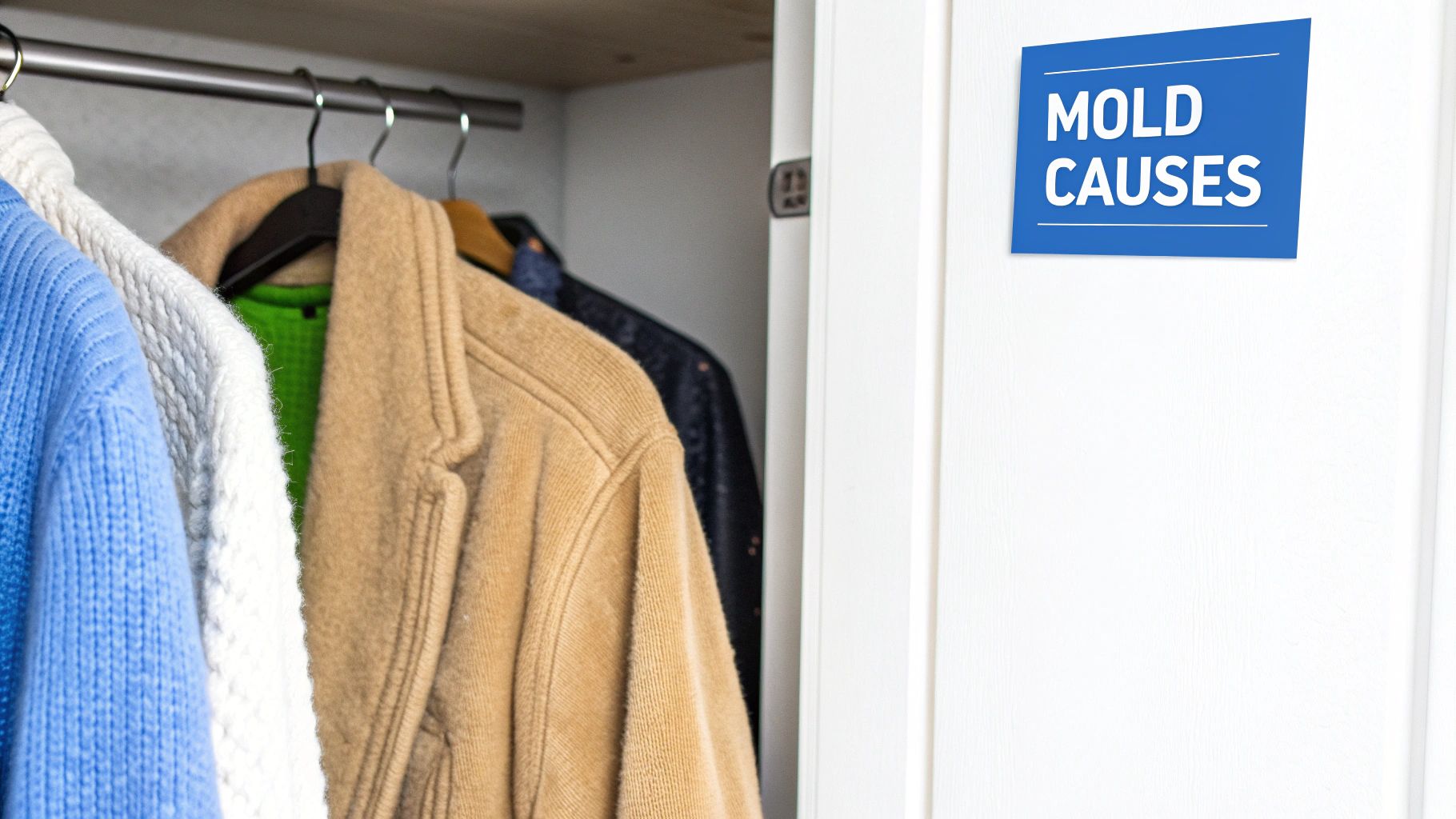
That distinct, earthy smell clinging to your jacket is more than just an annoying scent—it's a clear warning sign. Your closet, being a dark and typically enclosed space, can easily become an ideal habitat for mold. Let's break down the core reasons why this frustrating problem keeps coming back.
The primary culprits are trapped humidity and stagnant air. When you shut the closet door, you effectively seal off airflow, allowing any moisture present to just sit there. And that moisture can come from some pretty surprising, everyday sources.
Common Moisture Sources
Many of our daily habits introduce moisture into our closets without us ever realizing it. Tossing a slightly damp towel or a recently worn sweater in with everything else traps humidity directly against other fabrics. Even clothes that feel dry after being ironed can release residual steam, raising the moisture level in that confined space.
Living right here in coastal communities like Santa Barbara or Ventura Counties adds another layer to the problem. The naturally higher ambient humidity means that without proper ventilation, your closet is already halfway to becoming a mold incubator. This is especially true for closets built against exterior walls, which tend to be cooler and more prone to condensation.
Why Some Fabrics Are More Vulnerable
Not all clothing is created equal in the eyes of mold. Spores need an organic food source to grow, which makes certain materials a prime target. Natural fibers are especially vulnerable because they are fantastic at absorbing and holding onto moisture.
- Cotton and Linen: These plant-based fabrics are highly absorbent and provide a perfect meal for mold.
- Wool and Silk: As animal-based fibers, their protein structure can also support mold growth, especially if they're stored improperly for long stretches.
- Synthetics (Polyester, Nylon): These are less appealing to mold because they are essentially plastic and don't offer the organic nutrients mold craves. However, if they are covered in surface dirt, skin cells, and oils, that grime can become the food source.
The EPA recommends keeping your indoor humidity between 30% and 60% to keep mold from taking over. This balance is critical. You can learn more about exactly at what humidity does mold grow to better protect your home.
When you overstuff your closet, you just make the situation worse by restricting airflow even more. This guarantees that any dampness stays trapped for longer, creating a perfect storm for a recurring mold problem.
Safely Treating and Restoring Your Moldy Garments
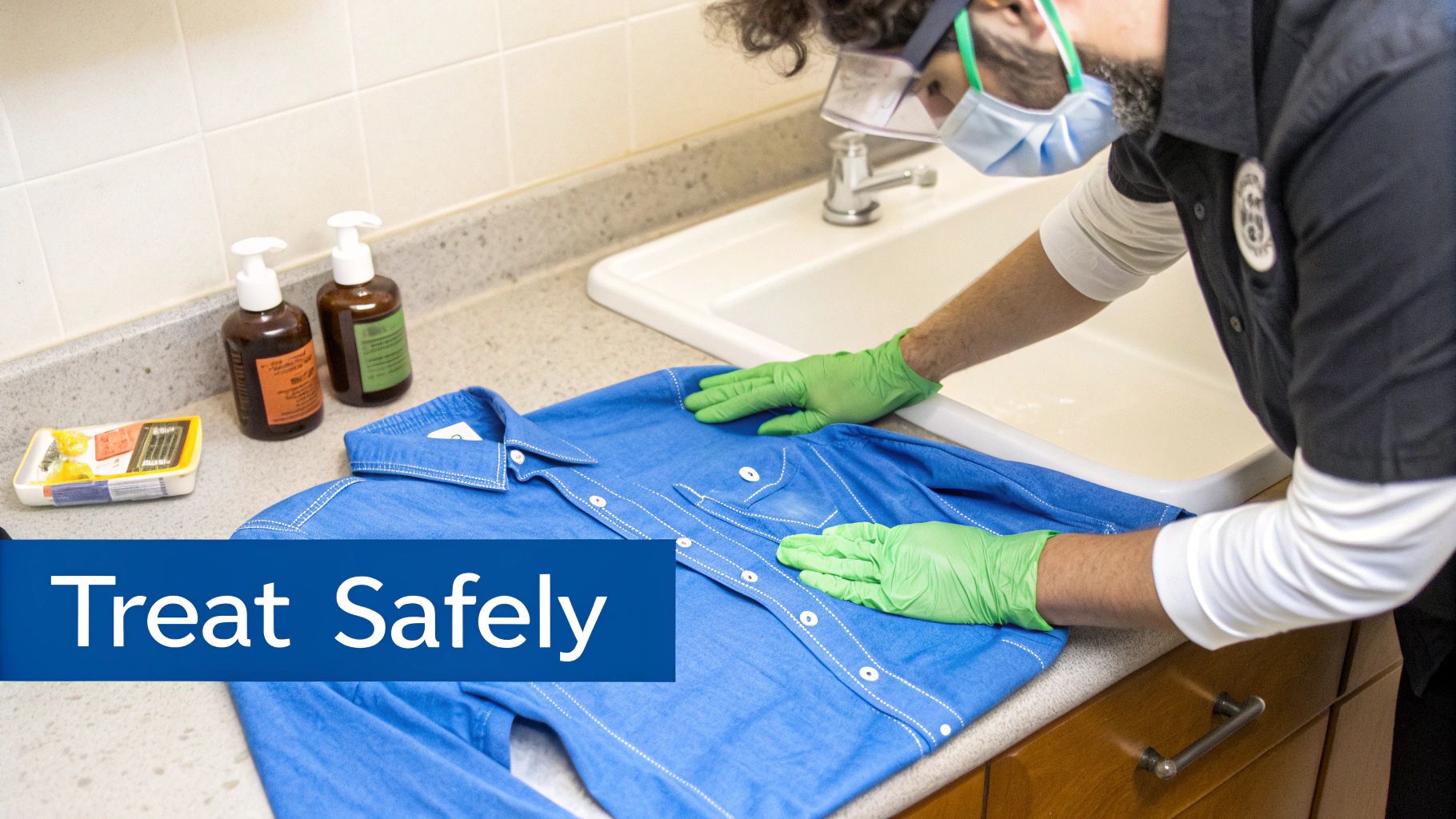
Finding moldy clothes in your closet is a gut-wrenching moment, but don't panic. With quick, smart action, you can salvage most of your favorite pieces. The first order of business is containment—you have to stop those mold spores from taking over your entire house.
Take the affected clothes outside immediately. The absolute worst thing you can do is shake or brush them indoors. That sends a cloud of invisible spores into the air, ready to settle on other surfaces or get sucked into your HVAC system, creating a much bigger problem. Once you're outdoors, use a soft-bristled brush to gently sweep away as much of the visible, loose mold as you can.
Choosing Your Cleaning Method
How you tackle the cleaning process depends entirely on the fabric. You can't treat a silk blouse the same way you'd treat a pair of denim jeans. This is why sorting your clothes is a critical, non-negotiable step. Make two piles: durable fabrics like cotton and denim, and delicates like wool, silk, or certain synthetics.
Before you start, gear up. Always wear gloves and a protective mask (an N95 is your best bet) to keep from inhaling spores, which can cause allergic reactions and respiratory trouble. When you're dealing with mold, even a small amount, your safety comes first.
For your durable, machine-washable clothes, a pre-soak is your secret weapon. A simple solution of one part white vinegar to one part water works wonders. Let the clothes soak for at least an hour before they hit the washing machine; the acetic acid in the vinegar is fantastic at killing mold.
Pro Tip: Whatever you do, never mix bleach and vinegar. The combination creates toxic chlorine gas. For safe and effective cleaning, stick to one disinfecting agent at a time.
Laundering Different Fabric Types
After the pre-soak, it's time for the main event. For sturdy fabrics like cotton and denim, use the hottest water setting the garment can handle. High heat is one of your best allies in making sure every last spore is eliminated.
Along with your usual detergent, throw in one of these boosters for extra power:
- One cup of white vinegar: Pour it right into the wash basin or use the fabric softener dispenser.
- A half-cup of borax or baking soda: These not only help kill mold but are also great for neutralizing that awful musty smell.
Delicate fabrics need a much gentler approach. Hand-washing is usually the safest bet for things like wool, silk, and some rayons. Use a mild detergent in cool water, and mix in a small amount of borax. Gently swish the item in the water and let it soak for about 30 minutes before rinsing it out completely. If you're dealing with really stubborn spots, our guide on how to treat white mold on clothing has some more detailed strategies you can try.
Proper Drying Is Essential
Drying is the final, make-or-break step. Get this wrong, and you'll be right back where you started.
If you can, hang your clothes to dry outside in direct sunlight. The sun’s UV rays are a natural disinfectant and are brilliant at killing off any stubborn spores that might have survived the wash.
No sun? Your machine dryer is the next best thing. Tumble dry on the highest heat setting that's safe for the fabric. The goal here is to get every single item bone dry. Any trace of dampness is an open invitation for mold to come right back.
Deep Cleaning Your Closet to Eradicate Spores
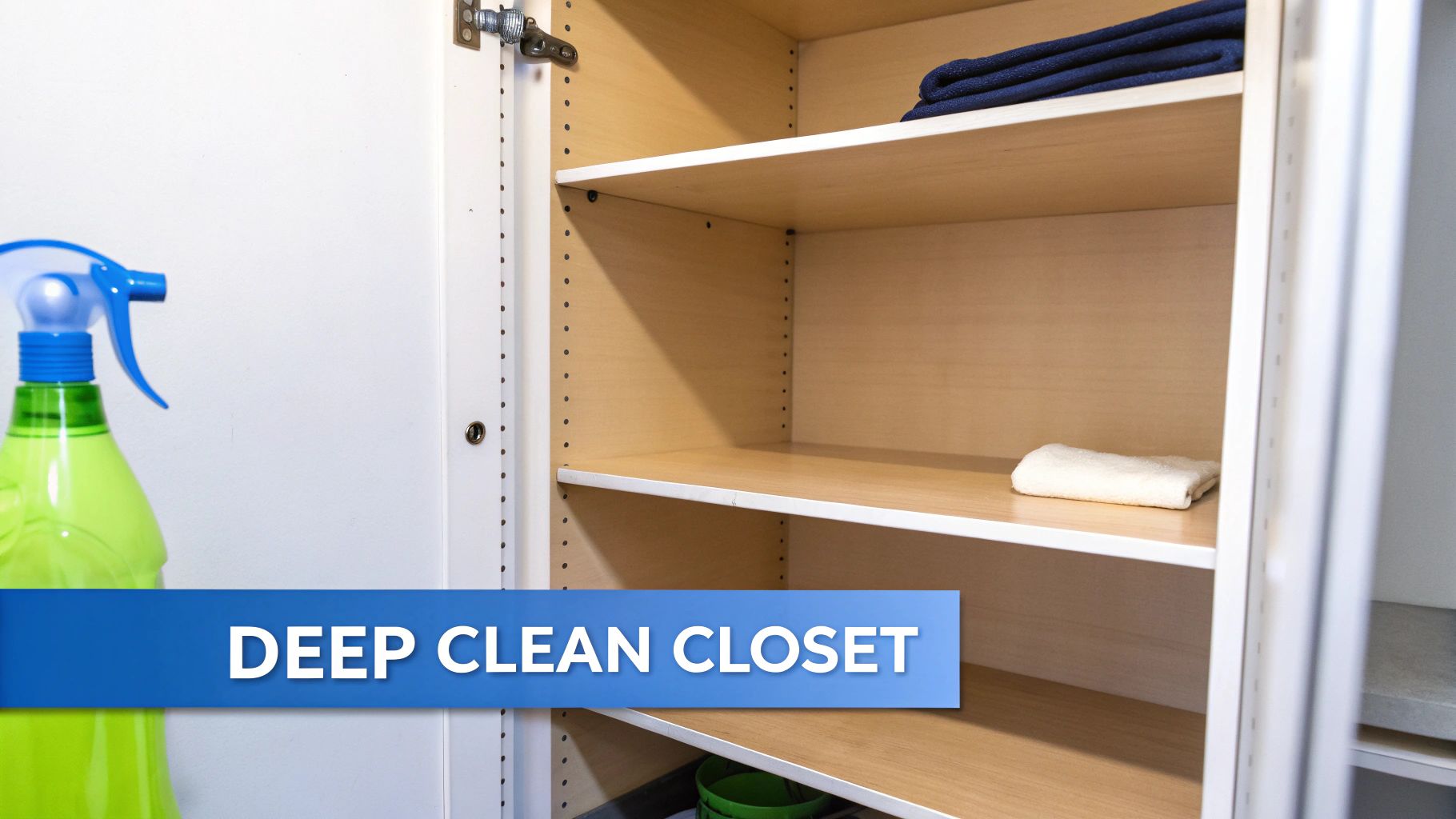
Washing your clothes is a great start, but it’s only half the job. If you just toss your freshly cleaned items back into a contaminated closet, you're setting yourself up for disappointment. Finding mold on clothes in your closet will become a recurring nightmare.
To really stop the cycle, you have to treat the source. Let's get that closet from a damp, spore-friendly zone back to a clean, dry, and safe space for your belongings.
First things first: empty it out. Completely. We're talking clothes, shoes, boxes, that forgotten suitcase—everything. You need a blank canvas to see what you're really up against and ensure spores have nowhere left to hide. Don't skip this; it's the most important step.
Inspecting and Sanitizing Surfaces
With the closet empty, it's time to play detective. Grab a good flashlight and get up close and personal with every surface. Check the corners, the seams where shelves meet the wall, and the baseboards. I always tell clients to pay extra attention to walls that back up to a bathroom or face the outside—they tend to be cooler and collect condensation, creating a perfect spot for mold to take hold.
You're looking for the obvious fuzzy spots, but also be on the lookout for subtle discoloration or faint stains on the drywall and wood. And don't just use your eyes; use your nose. That distinct musty smell is a dead giveaway that mold is lurking nearby, even if you can’t see it.
A musty smell that sticks around even after you've cleaned is a sign that spores have worked their way deeper into the drywall or wood. We have a whole guide on how to get rid of that persistent mold smell.
When it comes to sanitizing, the right cleaner depends on the surface. And a critical safety tip: never, ever mix cleaning products, especially bleach with ammonia or even vinegar.
- Painted Drywall: For this, a solution of one part bleach to ten parts water works well. Use a sponge to apply it, let it sit for about 15 minutes to do its work, then give it a gentle scrub and wipe it down with a clean, damp cloth.
- Wood Shelves and Rods: Bleach is a no-go for wood; it can cause damage and ugly discoloration. Your best friend here is a simple 50/50 mix of white vinegar and water in a spray bottle. Mist the surfaces, give it an hour to kill the mold, and then wipe everything clean.
- Carpet: If you have carpet in your closet, vacuum it thoroughly with a machine that has a HEPA filter—this is key to actually trapping the spores instead of just blowing them around. For any visible spots, you'll want to use a carpet-safe mold and mildew cleaner.
Ensuring Complete Dryness
After all that wiping and scrubbing, this last part is where most people get impatient—and where the whole effort can fail. You have to get the closet bone dry.
Bring in a fan and a small dehumidifier, close the door, and let them run for at least 24-48 hours. It might seem like overkill, but trust me. Putting your clothes back into a closet that's even slightly damp is an invitation for the mold to come right back.
Only when you can run your hand over every wall, shelf, and floorboard and feel absolutely zero moisture is it safe to bring your clean clothes back into their fresh, mold-free home.
Creating a Mold-Proof Closet Environment
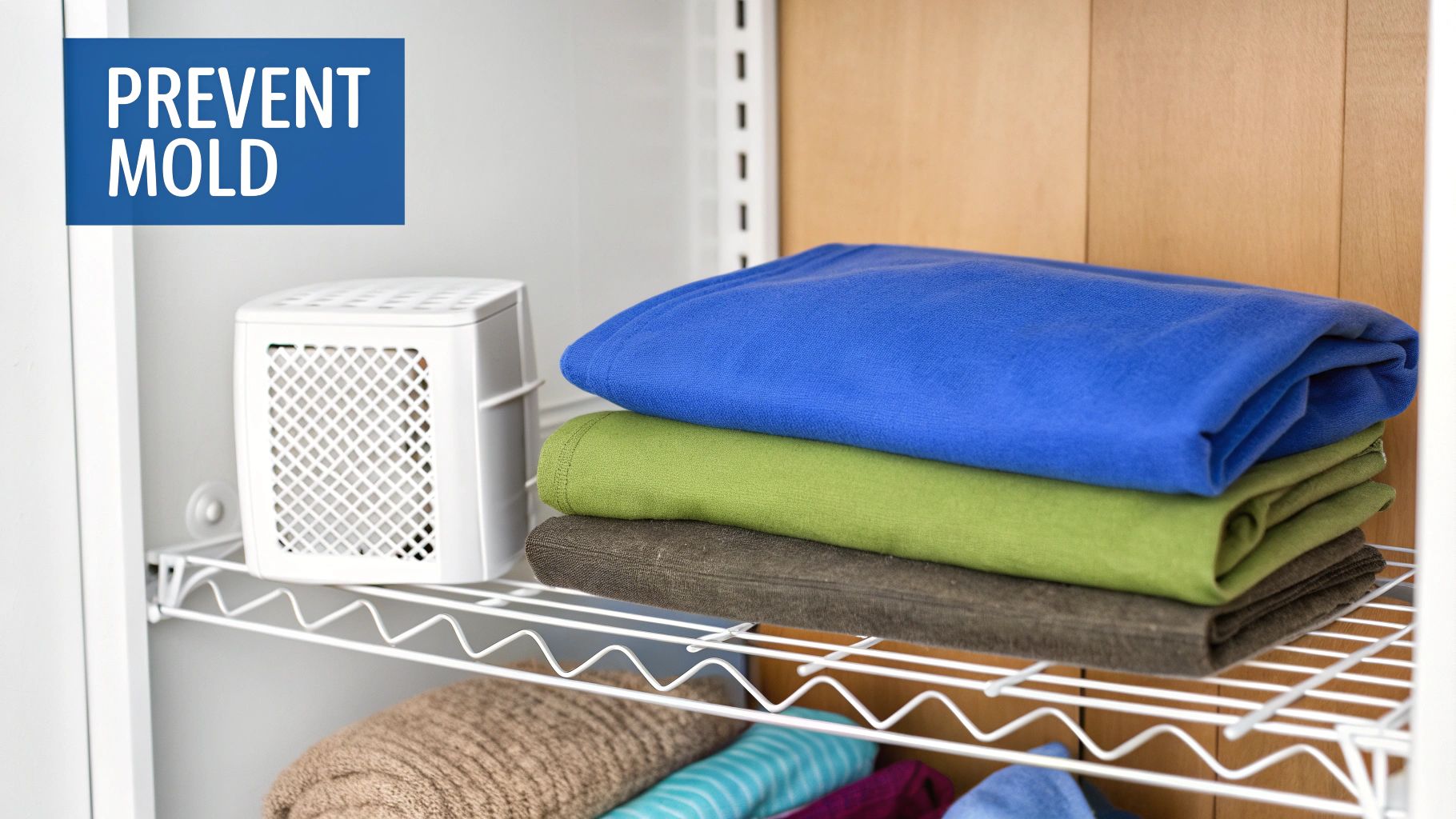
After all the hard work of getting mold out of your clothes and closet, the last thing you want is to do it all over again in a few months. The real goal isn't just cleaning up the mess; it's creating a space where mold simply can't get a foothold.
This is about shifting from a reactive mindset to a proactive one. By changing the conditions inside your closet, you can make it a place where mold spores just can't thrive. It all comes down to two things: moisture and airflow. Get those right, and you can break the cycle for good.
Master Your Closet's Humidity
Humidity is the number one ingredient for a mold problem. Once the moisture level in a closed space like a closet creeps above 60%, you’re practically inviting trouble. Your mission is to keep that number well below the danger zone.
A small, quiet dehumidifier is a fantastic tool for this, especially in walk-in closets or closets located in naturally damp parts of the house, like a basement or near a steamy bathroom. These little workhorses actively pull moisture right out of the air, keeping things consistently dry. For best results, set it to maintain a humidity level between 40% and 55%.
If a powered device isn't practical for your space, moisture absorbers are an excellent low-tech solution.
- Silica Gel Canisters: These are super effective and, even better, reusable. They soak up moisture until they're full, and then you can "recharge" them in the oven to use over and over.
- Activated Charcoal Bags: Not only do these absorb moisture, but they're also great for neutralizing those musty smells that are often the first warning sign of a problem.
- Calcium Chloride Crystals: Products like DampRid use these crystals to pull a surprising amount of water from the air. It collects in a reservoir that you just have to empty out.
Tossing a few of these absorbers on a shelf or the floor can make a huge difference. For a deeper dive into managing moisture throughout your home, check out our guide on humidity control in homes.
A quick pro tip: passive absorbers only work until they're saturated. Once they're full of water, they're done. I always recommend setting a monthly reminder on your phone to check and either replace or recharge them.
Comparing Closet Moisture Control Methods
Choosing the right tool for the job depends on your closet's size, your budget, and how much effort you want to put in. Here’s a quick breakdown of the most common methods.
| Method | Best For | Cost | Maintenance Level |
|---|---|---|---|
| Electric Dehumidifier | Larger walk-in closets, basements, or chronically damp areas | Moderate to High | Low (empty reservoir) |
| Silica Gel Canisters | Small to medium closets, drawers, and storage bins | Low (one-time purchase) | Medium (periodic recharging) |
| Calcium Chloride (DampRid) | Any size closet where power isn't an option; highly effective | Low (ongoing refills) | Medium (replace when full) |
| Activated Charcoal Bags | Odor control in addition to moisture absorption in smaller spaces | Low | Low (reactivate in sunlight) |
Ultimately, the best method is the one you'll stick with. Even a simple, inexpensive solution is better than doing nothing at all.
Optimize Airflow and Storage
Stagnant, still air is just as bad as high humidity. When air doesn't circulate, any moisture present gets trapped in little pockets, creating the perfect damp breeding ground for mold. The key is to get things moving.
One of the easiest fixes is to simply not overstuff your closet. When your clothes are crammed together so tightly that you can't slide a hanger, air has nowhere to go. A good rule of thumb is to leave at least a finger's width of space between hangers.
The hardware in your closet plays a big role, too.
- Shelving: Solid wood or MDF shelves are like roadblocks for air. Swapping them for plastic-coated wire shelving is a total game-changer, as it lets air circulate freely all around your folded clothes.
- Doors: If you have a solid closet door, think about replacing it with a louvered one that has built-in slats for ventilation. If that's not an option, just leaving the door cracked open for a few hours each day can make a big difference.
Small Habits That Make a Big Impact
Finally, a couple of small tweaks to your routine can prevent moisture from getting into your closet in the first place.
Never, ever put clothes away if they are even the slightest bit damp. This goes for freshly ironed shirts that still have some steam in them or a jacket you wore in a light drizzle. Always let them air out completely in an open space before hanging them up.
Along those same lines, don't store your dirty laundry hamper inside your closet. The sweat, body oils, and skin cells on worn clothes are a perfect food source for mold spores. Keep your hamper in a well-ventilated spot, like your bedroom or the laundry room.
When to Call in a Professional for Mold Removal
While you can often handle a small patch of mold on a few items, some situations are just too big or too risky for a DIY approach. Knowing when to step back and call a certified professional is key to protecting your health and your home.
The most obvious red flag is the sheer size of the problem. If you find mold covering an area larger than 10 square feet—think a 3×3 foot patch—it's time to stop what you're doing and pick up the phone. An issue that widespread almost always points to a deeper, more systemic moisture problem that surface cleaning simply won't fix.
Another clear sign is when the mold keeps coming back. You've cleaned your clothes, sanitized the closet, and aired everything out, but that musty smell and fuzzy growth return. This is a classic sign that the source isn't on the surface; it's likely hidden inside the walls, under the floor, or in the ceiling, completely out of reach.
Health Concerns Are a Hard Stop
The health risks tied to indoor mold are serious and should never be underestimated. For anyone with allergies, asthma, or a compromised immune system, even a tiny amount of mold can trigger significant respiratory issues.
Indoor mold and dampness are estimated to contribute to roughly 4.6 million asthma cases in the United States. The stakes are incredibly high, especially for vulnerable family members, yet many doctors lack specific training in diagnosing these environmental health issues. You can find more data on mold's health impact over at RealTimeLab.com.
If someone in your home is dealing with persistent coughing, sneezing, headaches, or skin irritation that seems to get worse indoors, that’s a compelling reason to get a professional opinion. Don't wait.
When You Can't Find the Source
Sometimes, the problem isn't what you can see—it's what you can smell. A strong, musty odor that seems to cling to your clothes and the closet itself, even with no visible mold, is a tell-tale sign of a hidden issue. It could be a slow plumbing leak, a small roof issue, or condensation building up inside your walls.
Trying to hunt this down on your own can easily lead to more damage. This is where a professional becomes essential. Here in Santa Barbara and Ventura Counties, a certified team can perform comprehensive mold inspection services using tools like moisture meters and thermal imaging cameras. They can pinpoint the hidden source without having to tear your closet apart.
Calling in an expert ensures the problem is identified and resolved correctly—the first time—giving you real peace of mind that your home is healthy again.
Your Top Questions About Closet Mold Answered
Even after you've dealt with a mold problem, it's natural to have a few lingering questions. Finding mold on your favorite clothes or in your closet is stressful, and you want to be absolutely sure you’ve handled it correctly. Let's walk through some of the most common questions we hear from homeowners.
Getting these details right is the difference between a one-time cleanup and a recurring nightmare.
Can I Just Wash Moldy Clothes with Regular Detergent?
While your go-to laundry detergent is fantastic for everyday dirt, it’s just not built to kill stubborn mold spores on its own. It needs a helping hand to really disinfect the fabric.
A great first step is to pre-treat the visible spots. A simple spray bottle with a 50/50 mix of white vinegar and water works wonders. After that, add one cup of white vinegar or a half-cup of borax directly to the wash cycle along with your detergent. This gives your wash the antimicrobial punch it needs to eliminate spores and prevent them from spreading to the rest of the load.
What's the Best Way to Dry Clothes to Keep Mold Away?
Hands down, the best method is a machine dryer on a high heat setting. That intense heat is your final line of defense, killing off any spores that might have survived the wash. If you’re a fan of air-drying, make sure to do it outside in direct sunlight.
The sun's UV rays are a powerful natural disinfectant. It's an old-school trick for a reason—it’s incredibly effective at killing microscopic organisms like mold spores while your clothes get that fresh, sun-dried smell.
Whatever you do, try to avoid hanging damp laundry to dry indoors, especially in places with poor airflow like a basement or bathroom. It’s a common mistake that just puts moisture right back into your home, creating the perfect conditions for the mold cycle to start all over again.
How Can I Get Better Airflow in a Cramped Closet?
Improving circulation in a tight space is actually easier than you might think. It starts with decluttering—just creating a little breathing room between items can make a big difference. From there, a few smart swaps can completely change the environment:
- Slim hangers are your best friend. They instantly create more space between garments.
- A louvered door is a game-changer, allowing air to move in and out naturally.
- Leave the closet door ajar for a few hours each day. It’s simple, but it works.
- Wire shelving is far superior to solid wood, as it lets air circulate freely from top to bottom.
Even a small, battery-operated fan tucked on a shelf can dramatically boost air movement and help keep things dry.
Is All Black-Colored Mold Dangerous?
This is a huge misconception. It's easy to see dark spots and immediately think of toxic "black mold," or Stachybotrys chartarum. The truth is, many common household molds are dark in color but don’t carry the same level of risk.
However, let’s be clear: any type of mold can trigger allergies, asthma, and other respiratory issues, particularly in sensitive people, children, and the elderly. It should always be taken seriously and removed safely. If you’re dealing with a patch of mold larger than a few square feet, or if it comes back after you’ve cleaned it, that’s a clear sign it’s time to call in a professional for proper identification and remediation.