That persistent musty smell in the hallway, the strange-looking spot behind the dresser, or that allergy flare-up that only seems to happen at home? That's your house trying to tell you something. Especially for those of us living in coastal communities like Santa Barbara and Ventura, these little signs often point to a bigger, hidden moisture issue.
A professional mold inspection is your first move. It’s how you get a real diagnosis of your home’s health and make sure the air you're breathing is safe.
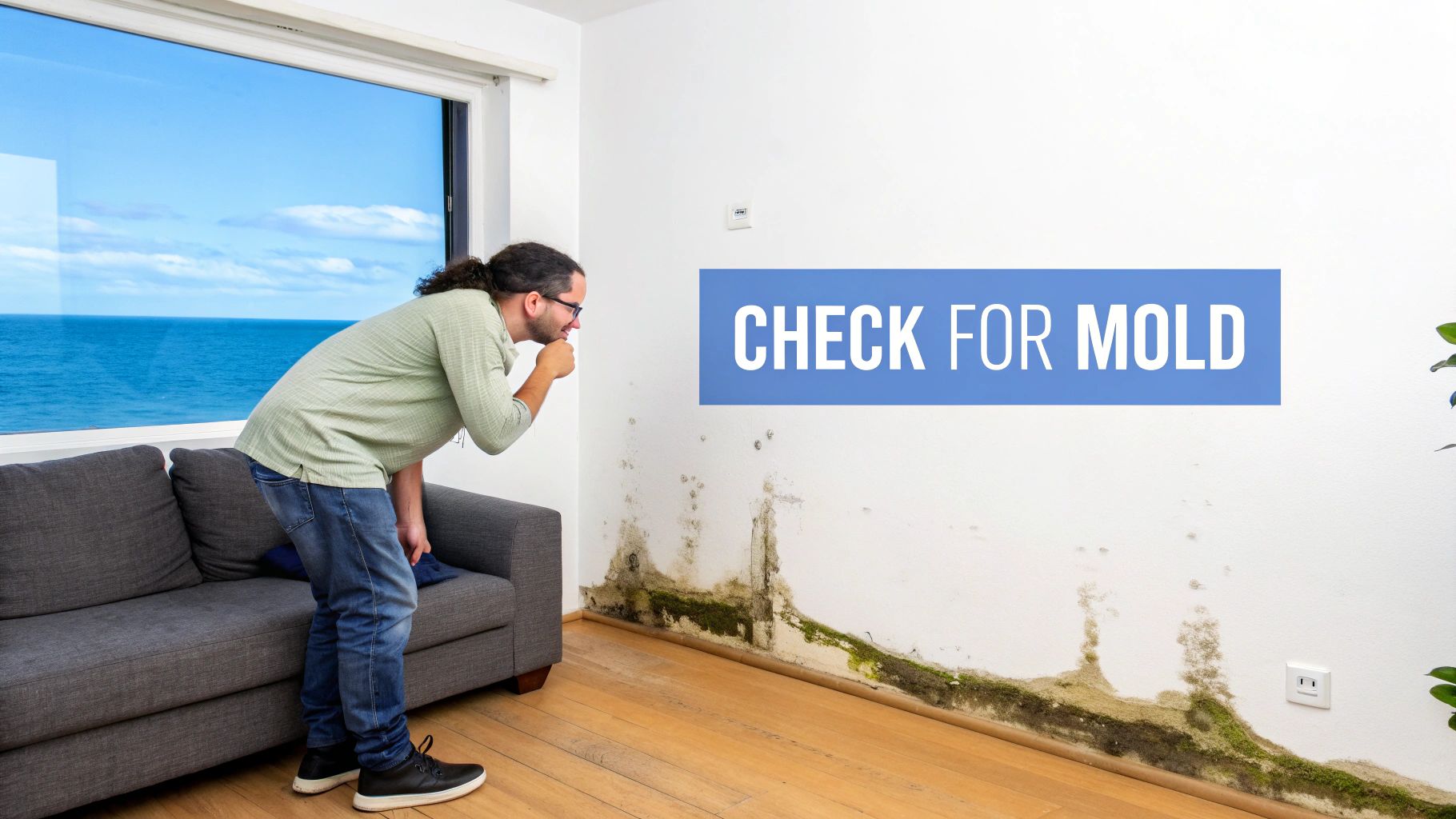
Do I Really Need a Mold Inspection?
You might be wondering if that little issue is really worth calling a professional over. In our experience, the answer is almost always a resounding yes. Mold is deceptive. What you can see is usually just the tip of the iceberg—the visible evidence of a much larger problem growing out of sight.
Think of it like a weed. The discolored spot on your wall is the flower, but the roots (the mycelium) are spreading deep inside your walls, floors, or ceiling, feeding on moisture.
This is particularly true here in Santa Barbara and Ventura Counties. Our unique coastal climate, with its marine layer and constant humidity shifts, creates a perfect breeding ground for mold. It doesn't take much—a tiny, slow leak behind a cabinet or some condensation buildup in an attic can be all it needs to get started.
Connecting the Dots: From Symptoms to Source
It’s so easy to brush off the early warning signs. That faint, earthy smell in a closet? It’s a classic signature of active mold growth. Allergies or asthma suddenly acting up the second you walk in the door? Your indoor air quality is the likely culprit.
These aren't just minor annoyances; they're urgent signals that something is off.
Ignoring these clues is a recipe for bigger trouble. A small patch of mold behind a dresser in a Montecito bedroom could be feeding on a massive colony trapped inside the wall. Understanding how to know if that musty smell is mold is one of the most important things a homeowner here can do.
Here's a quick checklist to help you decide if it's time to call in a professional.
Quick Signs You Need a Mold Inspection
| Symptom or Event | What It Could Mean | Recommended Action |
|---|---|---|
| Persistent Musty Odor | Active mold growth is releasing microbial volatile organic compounds (MVOCs), even if it's hidden. | Don't ignore it. A professional inspection can pinpoint the hidden source. |
| Visible Discoloration | You're seeing the "fruiting body" of a mold colony. The problem is likely larger than what's visible. | Avoid touching it. Schedule an inspection to assess the full scope. |
| Recent Water Damage | Mold can begin growing in as little as 24-48 hours after a leak, flood, or plumbing issue. | Get an inspection right away to prevent a small issue from becoming a huge one. |
| Worsening Allergies at Home | Airborne mold spores are a common indoor allergen and can trigger respiratory issues. | An inspection with air quality testing can confirm if spores are contaminating your air. |
If you checked off even one of these, it's a strong sign that you need to investigate further.
Why Being Proactive Matters
A mold inspection isn't about looking for trouble—it's an investment in your property's value and your family's health. More and more homeowners are realizing this. The global mold detection service market was valued at USD 1.2 billion in 2023 and is on track to hit USD 2.3 billion by 2032, all because people are taking indoor air quality more seriously.
A professional inspection gives you definitive answers. You stop guessing and start getting clear, scientific data about what's happening in your home.
A professional mold inspection is a first-line diagnostic for your home's health. It moves you from uncertainty and worry to a clear action plan based on facts, not fear.
By finding the source and seeing the full extent of the issue, you can fix the root cause, not just scrub the surface. This is how you break the cycle of cleaning and regrowth for good and finally get back to a truly healthy living environment.
Breaking Down the Professional Mold Inspection Process
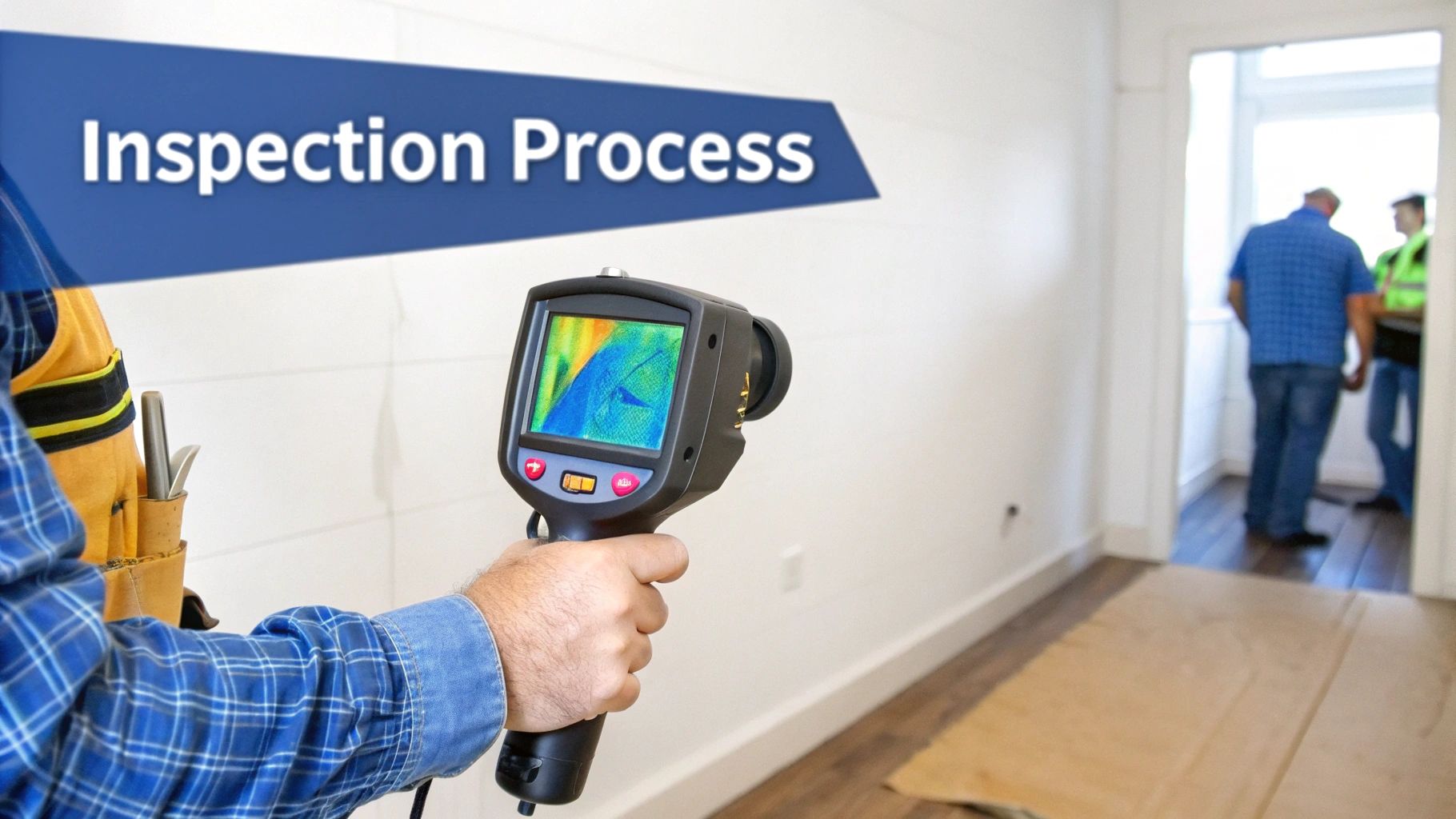
When one of our certified inspectors arrives at your home, they’re not just looking for a few spots on the wall. They’re kicking off a full-scale investigation into your home’s environmental health. Forget a simple walkthrough; think of it more like a CSI investigation for your home, where we follow every clue to uncover the real story.
Our process is systematic and scientific, designed to build a complete picture of what's happening inside your walls. It always starts with a detailed conversation and a thorough visual sweep.
The Initial Visual Assessment
First things first, we talk. We want to hear your concerns, learn about any recent water issues, and understand any health symptoms you've noticed. This history gives us crucial context and helps us focus our search.
Then, the hands-on inspection begins.
We meticulously examine your property, zeroing in on the usual suspects—attics, crawlspaces, bathrooms, and basements. We’re on the hunt for the telltale signs of moisture intrusion:
- Water staining on ceilings or walls
- Peeling or bubbling paint or wallpaper
- Warped flooring or baseboards
- Any visible discoloration or suspected fungal growth
This initial step is the foundation for everything that follows. It helps us form a hypothesis about where the hidden problems might be lurking.
Going Beyond the Naked Eye with Advanced Tools
Visible signs are just one piece of the puzzle. The frustrating truth is that mold loves to hide where you can't see it—behind drywall, under carpets, and deep within wall cavities. To find it, we bring in some specialized technology.
One of our most powerful tools is a thermal imaging camera. This device doesn’t see mold, but it sees what mold needs: moisture. By detecting subtle temperature differences on surfaces (wet areas are usually cooler), the camera can "see" hidden moisture inside your walls that would otherwise go completely unnoticed.
We also use professional-grade moisture meters to get hard numbers, confirming the presence and extent of dampness in building materials. By mapping out these wet zones, we can pinpoint exactly where mold is likely growing, even if it's totally out of sight.
A professional mold inspection isn’t just about what you can see. It's a scientific method using advanced tools to reveal the full extent of moisture and mold that is hidden from view.
Gathering Evidence Through Sampling
Once we’ve identified potential problem areas, the next step is to gather hard evidence. This means collecting samples that get sent off to a third-party lab for analysis, giving us undeniable data about your indoor air quality.
There are two main types of samples we collect:
- Air Samples: Using a calibrated air pump, we capture airborne spores. We always take one sample outdoors to establish a normal baseline for your area, then take others indoors in areas of concern. This tells us if your indoor spore count is elevated compared to the natural environment.
- Surface Samples: If we find visible suspected growth, we might take a direct sample with a sterile swab or a tape lift. This is the best way to identify the specific types of mold present in that colony.
This scientific approach takes all the guesswork out of the equation. For a more detailed breakdown, you can learn more about our specific mold inspection process in Santa Barbara and see how these steps come together.
Finally, we pull all this data—the visual findings, moisture mapping, thermal scans, and lab results—into a comprehensive, easy-to-read report. This document doesn't just give you data; it gives you a clear roadmap with actionable recommendations for whatever comes next.
Choosing the Right Type of Mold Inspection
When you search for a "mold inspection near me," you’ll quickly find that not all inspections are the same. It’s a bit like going to the doctor—they wouldn't order an X-ray for a fever, and a good mold inspector won't use a one-size-fits-all approach for your home. Picking the right inspection is key to getting the answers you need without paying for things you don’t.
Understanding the differences helps you become a smarter homeowner. Whether you’re worried about a strange smell, closing a real estate deal on a tight deadline, or managing a property, knowing your options makes sure your money is well spent.
Each type of inspection serves a very different purpose. Think of it as choosing between a routine health check-up, a specialist consultation before a major surgery, or a follow-up visit to make sure a treatment actually worked.
Standard Indoor Air Quality Inspection
This is our most requested inspection, usually for homeowners who are dealing with musty odors or unexplained allergy-like symptoms. You can think of it as a general wellness check for your home’s air. The main goal here is simple: to find out if the air inside your home has higher levels of mold spores than the natural environment right outside your door.
An inspector will perform a thorough visual assessment and take air samples to figure out what types and concentrations of mold you and your family are breathing. This is the go-to choice when your primary concern is the overall health and safety of your indoor space.
Pre-Purchase Real Estate Inspection
If you're buying a property in places like Goleta or Carpinteria, a pre-purchase mold inspection is an absolute must. This isn't just a quick look-around; it’s an intensive investigation, kind of like a full diagnostic workup before you make a huge financial commitment. The entire point is to uncover any current or hidden mold and moisture problems that could turn into expensive nightmares down the road.
Inspectors get extra-thorough here, hunting for signs of old water damage, hidden leaks, and bad ventilation that could signal future trouble. This inspection not only protects your investment but also gives you serious leverage when it comes to negotiating the final price.
A pre-purchase inspection is a critical due diligence step. It gives you a clear, unbiased picture of a property's true condition, so you can walk into a real estate deal with your eyes wide open.
Post-Remediation Verification Testing
This inspection is the final, crucial step after a mold removal job is complete. It acts as an independent, third-party confirmation that the remediation company did their job right and your home is officially safe again. You wouldn't leave the hospital without a doctor giving you a clean bill of health, and you shouldn't sign off on a remediation project without this verification.
The inspector will take new air and surface samples to prove that mold levels are back to normal and no contamination is left behind. This test delivers the ultimate peace of mind. While many homeowners are tempted to go the DIY route, it's important to know the limits of even the best mold test kit for a home when compared to professional, unbiased verification.
The entire mold services industry, from inspection to cleanup, is expanding as more people understand the risks. The global mold remediation market is currently valued at around USD 1.5 billion and is expected to hit USD 2.0 billion by 2032, all because of a growing awareness of mold's impact on our health. You can find more data on this trend over at Stellar Market Research. By choosing the right type of inspection, you’re making an informed decision to protect your property and your family.
Breaking Down Mold Inspection Costs and Timelines
When you suspect mold, two questions usually pop into your head right away: "How much is this going to cost?" and "How long will this all take?"
Getting clear answers upfront is the key to moving forward with confidence. The truth is, there's no single, flat-rate price for a mold inspection because every home and situation is unique.
Think of it like calling a detective to investigate a mystery. A small, straightforward case in a one-bedroom apartment is going to require fewer resources than a complex investigation in a large home with a long history of water issues. The scope of the work determines the price.
What Influences the Final Cost
Several key factors shape the total price of a professional mold inspection. We believe in total transparency, so you'll always know exactly what you’re paying for.
- Property Size and Complexity: A larger home with more areas to inspect—like multiple bathrooms, an attic, and a crawlspace—naturally takes more time and effort.
- Number of Samples: The quantity of air and surface samples needed for accurate lab analysis is a major factor. More samples give us a much clearer, more detailed picture of your home's indoor environment.
- Accessibility: If we need to get into hard-to-reach areas that require special equipment or extra effort, that can also affect the final price.
For a deeper dive into these variables, our guide on the cost of a mold inspection breaks everything down even further.
Mapping Out the Inspection Timeline
Just as important as the cost is knowing how long the whole process will take. We’ve streamlined our process to be as efficient as possible without ever sacrificing accuracy.
An investment in a thorough, professional mold inspection is an investment in certainty. It provides a clear, data-driven roadmap to restore your home's health and protect your property's value.
Here’s a typical timeline you can expect when you work with our team:
- Initial Call & Scheduling: This first step is quick and easy. We'll listen to your concerns and can often get your inspection on the calendar for the very same day or the next.
- On-Site Inspection: The actual hands-on inspection usually takes between 1-3 hours. This can vary depending on your property's size and how complex the investigation needs to be.
- Laboratory Analysis: After we collect the samples, they're sent overnight to a certified, independent lab. The standard turnaround time for results is typically 2-3 business days.
- Receiving Your Report: The moment we get the lab results, we put together a comprehensive report. It includes all our findings and clear, actionable recommendations. You'll have this detailed report in your hands shortly after, empowering you to take the right next steps.
How to Prepare Your Home for an Inspection
You actually play a surprisingly important role in getting an accurate mold inspection. Think of your home as a patient before a medical test—for the most reliable diagnosis, we need to create a stable, controlled environment. By taking a few simple steps before your inspector arrives, you can help us get a clear picture and deliver results you can trust.
This preparation helps create a baseline condition, allowing our air samples to reflect your typical daily living environment. It’s also a good idea to turn off any air purifiers or humidifiers during this time, as they can alter the natural state of your indoor air and affect the readings.
Create a Controlled Environment
To get a true reading of your home’s indoor air quality, the most critical thing you can do is minimize outside influences.
- Close All Windows and Doors: For at least 24 hours before our scheduled arrival, please keep all exterior windows and doors shut. This simple step prevents outdoor spores from blowing in and diluting the indoor air sample.
- Keep Your HVAC on Normal: Just run your heating or air conditioning as you normally would. This keeps air circulating and ensures the samples we collect represent what you and your family breathe every day.
This creates what we in the industry call "closed-building conditions," which is the standard for accurate air sampling.
Preparing your home isn't about cleaning up for a guest; it's about preserving the scene for a scientific investigation. An undisturbed environment provides the most honest and accurate clues.
Don't Disturb the Evidence
While it’s tempting to tidy up before we arrive, it’s vital to leave any areas you’re concerned about completely untouched.
Do not clean, wipe, or spray any visible spots you think might be mold. Disturbing a mold colony can release a massive cloud of spores into the air, which can easily cross-contaminate other parts of your home and throw off the test results.
Ensure Clear Access
Finally, please help our inspectors safely get to the key areas where mold loves to hide. If you can, clear any boxes, furniture, or other items that might be blocking access to:
- Attic hatches or entrances
- Crawl space access points
- Cabinets under sinks
- Closets where you’ve noticed musty smells
- Utility rooms, especially around water heaters
Following these steps makes you a partner in the process. It helps us conduct an efficient, thorough, and precise "mold inspection near me" that delivers the clear answers you need to move forward.
Finding Your Certified Local Mold Experts

When you type "mold inspection near me" into a search bar, you're not just looking for a service. You're looking for a partner you can trust to protect your home and your family's health. The quality of that partnership comes down to two things that should be non-negotiable: real-world expertise and a deep understanding of our local Santa Barbara and Ventura County conditions.
A true professional isn't there to sell you on expensive repairs. Their one and only job is to give you a clear, scientific, and unbiased assessment of your indoor environment. That commitment to integrity is what empowers you to make smart, informed decisions without the pressure.
The Gold Standard of Certification
So, how do you know you're getting genuine expertise? Look for industry-leading certifications. These credentials aren't just fancy acronyms; they're a clear signal that an inspector is committed to the highest standards and stays current on the latest science.
- IICRC (Institute of Inspection, Cleaning and Restoration Certification): Think of this as the global benchmark for best practices in inspection and remediation.
- ACAC (American Council for Accredited Certification): This council offers board-awarded certifications that prove an inspector's knowledge has been tested and their field experience verified.
These certifications guarantee your inspector is using a methodical, science-backed approach on every single job, whether it's a small condo in Goleta or a sprawling estate in Montecito. You can learn more about our local focus and see the areas we service right here.
A certified inspector's loyalty is to the data. Their mission is to provide an accurate, unbiased report that gives you a clear path forward, ensuring you only invest in necessary and effective solutions.
As more people understand the health risks tied to mold, the demand for qualified professionals is growing. In fact, the global mold abatement market is projected to hit USD 15.8 billion by 2025. Choosing a certified expert means you’re getting the best in a field that matters more than ever.
Common Questions About Mold Inspections
When you first suspect mold, a dozen questions can start racing through your mind. It’s totally normal. Getting clear, straightforward answers is the best way to get a handle on the situation. Let's walk through some of the most common questions we hear from homeowners right here in Santa Barbara and Ventura.
Are DIY Mold Test Kits Reliable?
It's tempting to grab a DIY kit from the hardware store. They seem like a quick and cheap fix, but honestly, they usually create more confusion than they solve. Most of these kits are just a petri dish designed to catch whatever spores are floating around.
Here's the problem with that: mold spores are literally everywhere, inside and out. A DIY kit will almost always show a "positive" result, but it gives you zero context. It can't tell you where the mold is coming from, how high the concentration is, or if the types it found are actually a problem for your home.
A professional inspection gives you the full story, not just a confusing snapshot. It’s the difference between a random photo and a complete diagnostic report that pinpoints the source, type, and severity of the problem.
Does Homeowners Insurance Cover Mold Inspections?
This is a tricky one, and the answer almost always comes down to your specific policy and what caused the moisture in the first place. Generally, if mold growth is the direct result of a “sudden and accidental” event—think a burst pipe that floods the kitchen—the inspection and remediation might be covered.
However, if the mold is from a slow, gradual leak, poor maintenance, or just high humidity, insurance typically won't cover it. The best advice is to pull out your policy and call your insurance agent directly. You need to understand your specific coverage before you assume anything.
What Is the Difference Between Mold and Mildew?
Think of mildew as mold’s less destructive cousin. They're both types of fungi, but mildew is a surface-level problem. It's usually gray or white with a powdery texture and you can often scrub it off non-porous surfaces with a standard household cleaner.
Mold is a different beast entirely. It’s far more invasive, often appearing fuzzy or slimy in shades of green, black, or other colors. The critical difference is that mold grows roots (called mycelium) that dig deep into materials like drywall, insulation, and wood, causing real structural damage.
How Do I Know If Mold Is Toxic?
The term "toxic mold" usually refers to mold species that can produce mycotoxins—nasty compounds that can be harmful to your health. But you can't tell which molds these are just by looking at them. While Stachybotrys chartarum (the infamous "black mold") gets all the attention, many other common molds can produce mycotoxins, too.
The only way to know for certain what you're dealing with is through professional lab analysis. When an inspector takes air or surface samples, that scientific testing removes all the guesswork. It's a non-negotiable step when you're searching for a reliable "mold inspection near me" and want real answers.