For anyone living in Santa Barbara, professional mold testing isn't a luxury—it's a critical health checkup for your home. It’s the only way to uncover hidden threats that can quietly harm your family’s well-being and tank your property's value.
Why Mold Is a Unique Threat to Santa Barbara Homes
We all love living in Santa Barbara. The beautiful beaches, the perfect weather, that iconic marine layer that rolls in each morning. But here's the catch: that same coastal climate that makes this place paradise also creates the perfect breeding ground for mold.
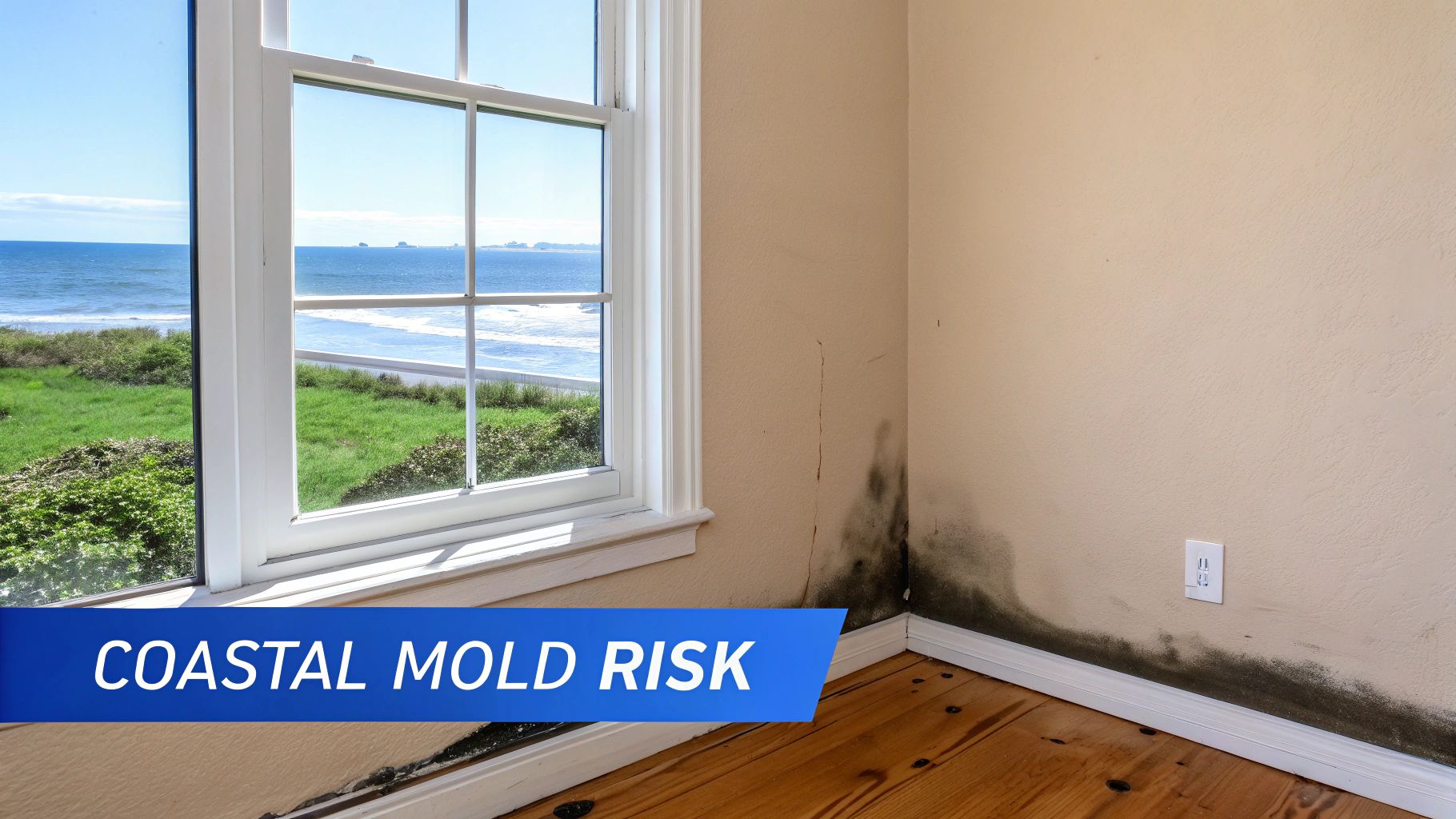
Unlike drier, inland areas, our environment constantly pushes moisture into our homes. This isn’t just about the obvious stuff like a leaky pipe. It's about a pervasive dampness that gets trapped inside walls, attics, and even your HVAC system, often with zero visible signs. Good ventilation and regular cleaning just can't compete with this relentless threat.
The Hidden Dangers of Coastal Air
Here, the air itself can be the problem. When that humid ocean air gets inside and cools, condensation forms on all sorts of surfaces. It’s a subtle process, often happening completely out of sight behind your drywall or under the floorboards, but it’s giving mold exactly what it needs to thrive.
This is precisely why a musty smell is such a massive red flag. It’s often the very first—and sometimes only—clue you'll get that a hidden mold colony is growing. We see this all the time in Southern California, where common molds like Cladosporium absolutely flourish in our Mediterranean climate.
For coastal cities like Santa Barbara, where fog and humidity are just part of life, the number of affected homes can easily climb above the national average of 30%. You can dig into the data on common regional molds yourself by checking out this research on Southern California's environmental mold challenges.
A professional mold test isn’t just about confirming what you can see. It's about uncovering the problems you can't, protecting your health and preserving your home's structural integrity from the inside out.
For anyone who owns a home in Santa Barbara, getting proactive with mold testing isn't an overreaction. It’s a smart, essential part of home maintenance that ensures your coastal home stays the safe, healthy sanctuary it’s supposed to be.
A Look Inside the Professional Mold Inspection Process
Knowing what to expect during a professional mold inspection can take the anxiety out of the equation and give you a clear path forward. It's less like a clinical procedure and more like a detective showing up to solve a mystery. The real goal isn't just to spot mold—it's to figure out the why and the how behind it. When a certified inspector from Pacific Mold Pros arrives at your Santa Barbara property, they come with a methodical game plan to uncover the full story of what's happening inside your home.
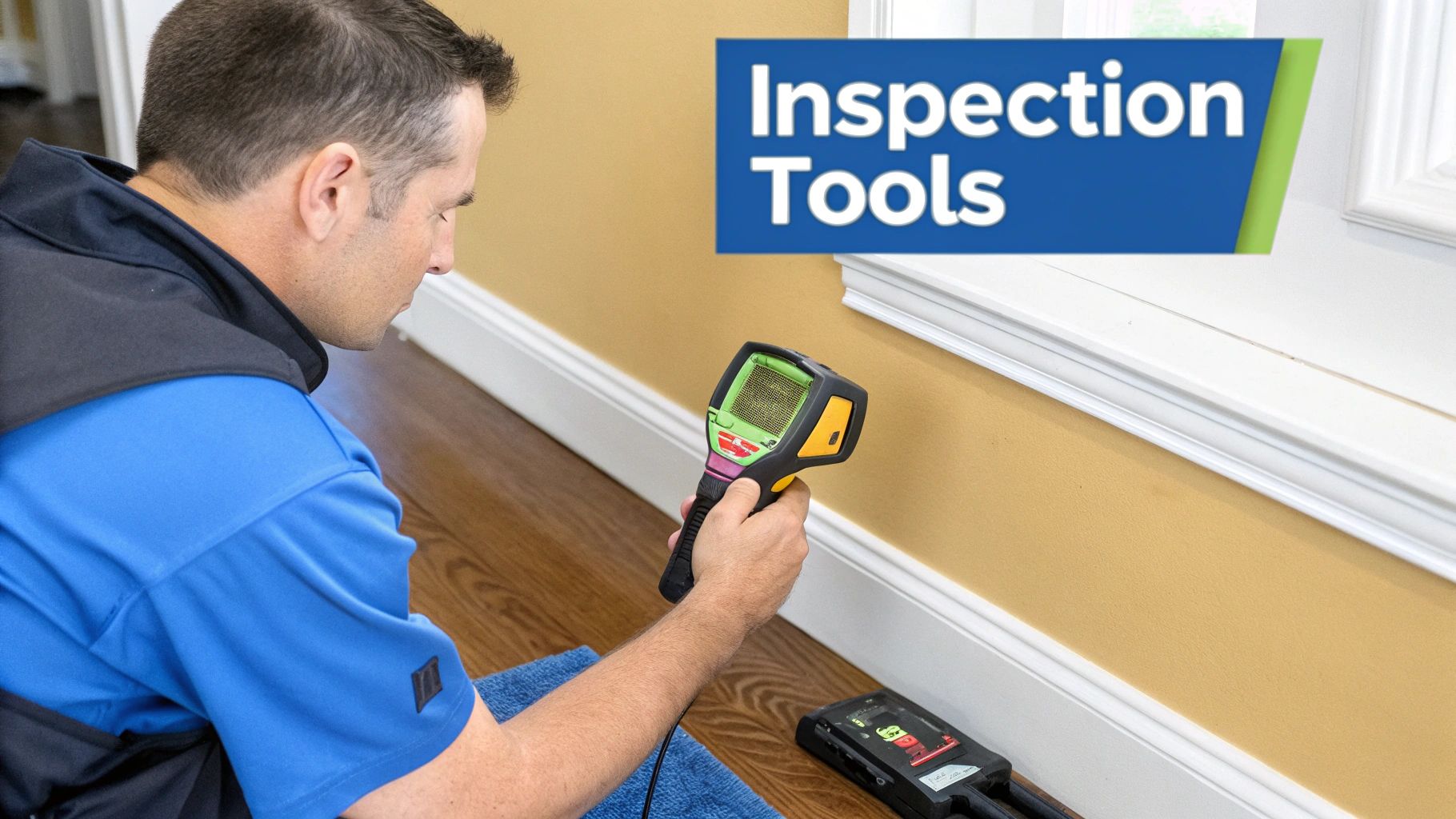
It all starts with a thorough visual assessment. A trained inspector knows how to spot the subtle clues most people would walk right past—a faint water stain on the ceiling, a slight discoloration behind a bookshelf, or the almost imperceptible warping of a baseboard. This initial walkthrough is all about gathering evidence and flagging high-risk areas where moisture might be getting in. It’s the critical first step that directs the rest of the investigation.
Bringing in the High-Tech Gear
After the visual survey, the inspector breaks out the specialized equipment to see what's going on behind the scenes. This is where professional mold testing in Santa Barbara CA really shows its value and separates itself from any DIY attempt. The tools we use are non-invasive but incredibly powerful.
- Moisture Meters: These handy devices give us precise readings of the moisture content inside materials like drywall, wood, and even concrete. High readings immediately pinpoint areas that are currently wet or have been in the past, even if they look bone-dry on the surface.
- Thermal Imaging Cameras: An infrared camera is like having x-ray vision for moisture. It detects tiny temperature variations across surfaces, which can reveal hidden water leaks or pockets of damp insulation inside your walls that are completely invisible to the naked eye.
By combining a sharp eye with this advanced technology, the inspector builds a detailed "moisture map" of your home. This map doesn't just show where mold is; it shows where it could start growing next. You can get a closer look at our methodology in our detailed guide to the mold inspection process in Santa Barbara.
A professional inspection is a systematic investigation. It moves from broad observation to specific, data-driven analysis, ensuring that any subsequent testing and remediation plans are based on solid evidence, not guesswork.
Putting all these pieces together, our certified inspectors get a complete picture of your home’s health. This scientific approach delivers the accurate data you need to make informed decisions, so you only fix what's truly necessary to get your home back to being a safe, healthy space. It turns uncertainty into a clear, actionable roadmap for a mold-free home.
Understanding Your Mold Testing Options
Once we've done a thorough visual sweep and identified potential trouble spots, the next step is to gather hard data. Professional mold testing in Santa Barbara, CA isn't a one-size-fits-all service; it's a strategic decision based on the evidence we find in your home.
Think of us like a doctor choosing the right diagnostic test. You wouldn't get an MRI for a scraped knee, right? In the same way, a certified inspector selects the sampling method that will give us the most accurate and useful information for your specific situation.
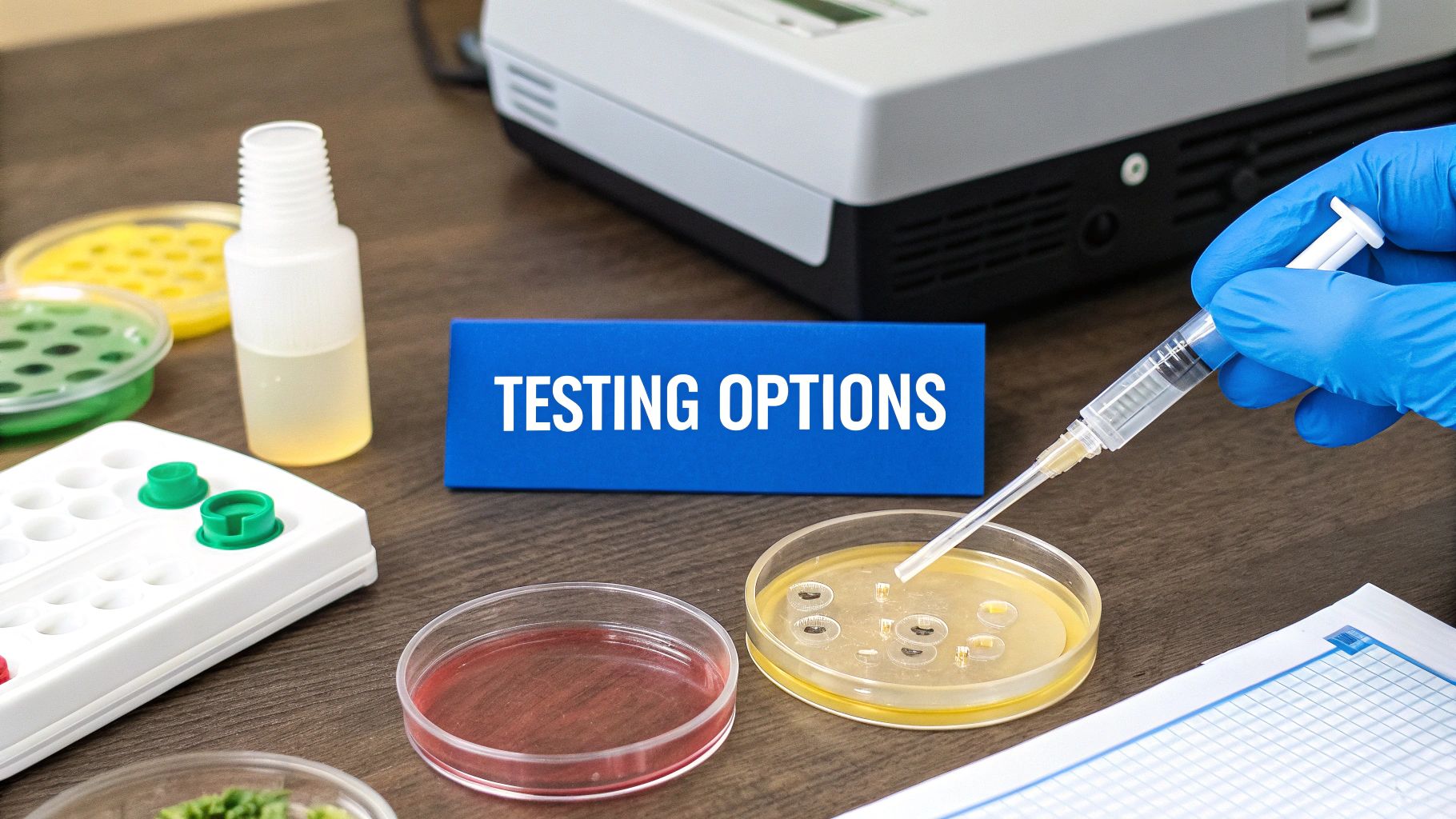
This methodical approach is a world away from what you get with an off-the-shelf kit from a hardware store. While those kits can sometimes hint at the presence of mold, they almost always lack the scientific controls and context needed for a true diagnosis. You can explore a deeper comparison in our guide to the best mold test kits for home use to see exactly why professional sampling is the only reliable choice.
Air Sampling: A General Health Checkup
Air sampling is one of the most common and valuable tools in our arsenal. It’s like giving your home a respiratory checkup by capturing a snapshot of what your family is actually breathing in every day.
We use a specialized pump to draw a very specific, calibrated volume of air through a collection cassette. This sample is then sent straight to an accredited lab, where technicians can identify both the types and concentrations of mold spores floating in your air.
Crucially, we always take an outdoor "control" sample for comparison. This baseline is absolutely essential here in Santa Barbara, since our coastal air naturally carries a certain level of mold spores. The lab report shows us if your indoor spore counts are significantly higher than what's normal for our area, which is a classic red flag for an active, indoor mold problem. This test is perfect for uncovering hidden issues or getting to the bottom of that persistent musty smell.
Air Sampling is used to answer the question: "Is the air in my home carrying an abnormal amount of mold spores, and what kind are they?"
Surface And Bulk Sampling: A Targeted Biopsy
While air sampling gives us the big picture, sometimes we need to zoom in on a specific, suspicious area. That's where surface and bulk sampling come into play. They’re much more direct.
-
Surface Sampling (Swab or Tape Lift): If we see visible discoloration or suspected growth on a surface—think drywall, a window sill, or bathroom grout—we'll use a sterile swab or special bio-tape to collect a sample right from the spot. This is like a targeted biopsy, confirming whether that mystery substance is, in fact, mold and telling us exactly what species it is.
-
Bulk Sampling: In situations where building material is already damaged or being removed, we might take a small physical piece of it. A sliver of drywall or a piece of carpet backing can give us an undeniable look at what's growing within the material itself.
To help you see how these methods compare, here’s a quick breakdown:
Mold Testing Methods At-a-Glance
| Testing Method | What It Measures | Best For |
|---|---|---|
| Air Sampling | The concentration and types of mold spores in the air you breathe. | Assessing overall indoor air quality, detecting hidden mold sources, and confirming if a musty odor is mold-related. |
| Surface Sampling | The specific type of mold growing on a visible surface (e.g., wall, ceiling). | Confirming if visible discoloration is mold and identifying the species in a specific location. |
| Bulk Sampling | The mold species growing within a piece of contaminated material. | Investigating heavily damaged materials to understand the full extent of contamination within the structure. |
These methods are incredibly precise, but it's important to remember they only tell the story of one specific spot. That’s why at Pacific Mold Pros, we almost always recommend a combination of air and surface sampling. This multi-faceted strategy provides a complete picture, identifying both airborne threats and their physical sources. This allows us to create an effective and targeted plan to get your home healthy again.
How to Decode Your Mold Lab Report
When we finish our inspection, you’ll get a detailed lab report. I’ll be honest—at first glance, it can look a little intimidating with all the scientific names and numbers. But don't let that fool you. Think of it less like a complex medical chart and more like a clear, straightforward roadmap to getting your home healthy again. Understanding what it says is the first step toward taking confident, effective action.

You'll see terms like spore counts or colony-forming units (CFUs) right away. That’s just a fancy way of measuring how concentrated the mold spores are in a sample. While bigger numbers can point to a bigger problem, what really matters is the context.
The Power of the Control Sample
This is where that outdoor "control" sample we take becomes so important. It gives us a baseline of what’s normal for the Santa Barbara area on that particular day. Mold is everywhere in our natural environment, so seeing zero spores isn’t a realistic goal.
What we’re really looking for is whether your indoor air is significantly worse than the air right outside your door. For instance, if your indoor sample shows an Aspergillus count of 5,000 spores/m³ but the outdoor sample is only at 200 spores/m³, that’s a dead giveaway. It tells us there's an indoor source that needs to be located and dealt with.
A lab report isn't just about identifying mold; it's about comparing your indoor environment to the natural world outside. This comparison is what separates a true problem from normal environmental conditions.
Understanding Common Mold Types
The report will also list the specific types of mold we found. Don’t worry about the long, complicated names. Here are a few we see all the time and what they usually mean:
- Cladosporium: This one is extremely common, both inside and out. Slightly elevated levels might not be a huge issue, but really high counts are a good sign you’ve got a moisture problem somewhere.
- Aspergillus/Penicillium: We often find these in buildings with water damage. They can be a major trigger for allergies and sensitivities.
- Stachybotrys chartarum: This is the infamous "black mold." It needs constant, serious moisture to grow, so finding it is a massive red flag for an ongoing water issue that needs immediate attention.
Each type of mold tells part of the story about what’s been happening with moisture in your home. For a deeper dive, Pacific Mold Pros has a great guide on understanding mold test results that breaks these concepts down even further.
At the end of the day, your lab report is a powerful tool. It takes the guesswork out of the equation and gives us a precise action plan. It shows us exactly where the problems are and what kind of threat you're facing. This data-driven approach means any remediation work is targeted, efficient, and gets to the root cause—saving you time and money while making sure your Santa Barbara home is safe again.
What to Budget for Mold Testing in Santa Barbara
If you think you have a mold problem, two questions probably jump to mind right away: "How much is this going to cost?" and "How long will this take?"
Getting a handle on the budget and timeline for professional mold testing in Santa Barbara CA is the first step to taking control of the situation and getting rid of that nagging uncertainty. It's helpful to think of it not just as paying for a test, but as an investment in peace of mind and getting a clear, actionable plan to protect your home and your health.
The final price tag for a mold inspection isn't a simple, one-size-fits-all number. A few key factors come into play, which actually ensures you’re only paying for what your specific situation requires. Things like the size of your property, how complex the inspection needs to be, and—most importantly—how many samples are needed to get an accurate picture all influence the cost. A larger home or one with several problem areas will naturally need a more in-depth investigation than a small condo.
Factors That Shape Your Final Cost
To give you a clearer idea, here are the main things an inspector considers when putting together a quote for you.
- Size of the Property: A sprawling Montecito estate is going to take more time and a broader scope to inspect than a downtown Santa Barbara condo.
- Number of Samples: The number of air and surface samples we need really depends on what we find during the initial visual walkthrough. More suspicious spots mean more samples are necessary to build a complete profile of your home’s air quality.
- Accessibility: Getting into tight or tricky spots like crawl spaces or complicated attic systems can also add to the time and overall cost.
For a really detailed look at how pricing works, our guide on the cost of a mold inspection breaks it all down even further.
A Typical Santa Barbara Mold Testing Timeline
From the moment you call us to the moment you're reading your lab results, we've made the process as efficient as possible. The on-site inspection itself usually takes about 1 to 2 hours.
Once we have the samples, they're sent directly to an accredited, third-party lab. You can typically expect to see the results in just 2 to 3 business days.
Knowing what to expect financially is crucial. Some companies offer transparent, flat-rate packages to simplify the process for homeowners.
For example, it's common to see standardized packages from certified inspectors in the area. One established environmental services company in Santa Barbara advertises a flat-rate mold testing package priced at $599, which includes four indoor air samples, two surface samples, and a professional inspection. Learn more about local mold inspection services and pricing to see how this compares. At Pacific Mold Pros, we believe in being upfront—we provide a clear, detailed quote so there are absolutely no surprises.
What to Do After Your Mold Test
So, the lab report is in. This is the moment that turns all that guessing and worrying into a clear picture of what’s happening in your home. Whether the results give you the all-clear or confirm a mold problem, what you do next is what really counts for keeping your home healthy.
A clean report is great news and brings a ton of peace of mind. But it’s not the end of the story. Use it as a reminder to stay on top of moisture control and prevent any future issues from popping up.
If your report shows high spore counts, the first thing to do is take a deep breath. Don't panic. That report is your roadmap. It gives you the hard data needed to fix the problem correctly, without throwing money at solutions that don't work. Now, the goal isn't just about finding mold—it's about finding and fixing the moisture source that’s letting it grow.
From Report to Remediation
With lab results in hand, you can confidently find a qualified remediation company. A true professional will use your report to build a precise game plan. This isn't just about scrubbing walls; it involves detailed containment setups, specific removal methods, and follow-up testing to prove the job was done right.
It’s really important to know that simple "mold removal" is not the same as a full-scale remediation process. We've put together a guide to help you understand the crucial differences between mold removal vs. remediation.
A detailed lab report is the essential bridge between testing and effective remediation. It ensures that the professionals you hire can target the problem with precision, saving you time and ensuring the issue is resolved permanently.
Choosing a certified and insured remediation team that sticks to industry standards is a must. This is how you ensure the problem is truly solved without spreading contaminants to other parts of your home. By taking these informed steps after your mold testing in Santa Barbara CA, you can get your home's air quality back to normal and protect your family's health for good.
Have Questions About Santa Barbara Mold Testing? We Have Answers.
Walking into the world of mold testing can feel a little overwhelming, and it's natural to have questions. We get it. To help clear things up, we've put together some straightforward answers to the questions we hear most often from homeowners right here in Santa Barbara.
Are Those DIY Mold Test Kits from the Hardware Store Any Good?
It’s tempting to grab a cheap DIY kit off the shelf, but honestly, they usually cause more problems than they solve. These kits are notorious for giving misleading results because they can't tell the difference between the normal, everyday mold spores floating around outside and a real contamination problem brewing inside your home.
Think of it this way: a DIY kit is like a smoke detector that goes off every time you light a candle. It tells you there's smoke, but it can't tell you if the house is actually on fire. A professional inspection, on the other hand, is like having a firefighter come in to find the source of the smoke, see how big the fire is, and figure out how to put it out. Professional mold testing in Santa Barbara CA gives you the whole story, so you can actually fix the problem.
Should I Bother with a Test if I Can't See Any Mold?
Yes, absolutely. One of the biggest myths about mold is that if you can't see it, it's not there. The truth is, mold loves to grow in the dark, hidden spots—behind your drywall, tucked away under the floorboards, or deep inside your HVAC system. Many times, the only clue you'll get is a lingering musty smell or allergy symptoms that just won't go away.
If you have a gut feeling something is off—maybe because of a past water leak or a dampness you can't quite pinpoint—testing is the only way to know for sure what's going on in the air you breathe every day.
Peace of mind is priceless. Professional testing is designed to do one of two things: confirm your suspicions with real data you can act on, or give you the all-clear so you can stop worrying and breathe easier.
Is Professional Mold Testing Required by California Law?
The legal ground is definitely shifting here. While it's not a blanket requirement for every single home sale, recent developments are making professional testing more important than ever. A landmark 2023 California Court of Appeal decision confirmed that medical experts can use professional mold testing results as evidence in court cases about health problems.
This has really changed the game. Now, property owners and landlords are increasingly getting documented assessments to protect themselves from liability in disputes with tenants. In fact, many local inspectors are reporting that 30–40% of their work is now driven by these kinds of legal or insurance concerns. You can learn more about how this court decision impacts property owners.