For anyone with a coastal home in Santa Barbara, what you can’t see often poses the biggest risk. Think of professional mold testing as a scientific investigation into your home's health, designed to uncover the hidden moisture and airborne spores that those off-the-shelf DIY kits always miss. It’s the critical difference between guessing and knowing for sure, giving you the real data needed to protect your property and your family.
The Invisible Threat in Coastal Homes

Living along the beautiful Santa Barbara coast means you get used to the marine layer and that persistent humidity. While it’s fantastic for beach days, this climate also happens to be a perfect breeding ground for mold. It loves to grow in places you'd never suspect—inside your walls, beneath the floorboards, or deep within your HVAC system.
This isn’t about just looking for obvious dark spots on the ceiling. Mold can thrive completely undetected, quietly degrading your home’s structural integrity and, more importantly, your indoor air quality. Those spores are microscopic, and they can easily become airborne and circulate throughout your entire home.
Why DIY Kits Fall Short
It’s tempting to grab a DIY mold kit from the hardware store, hoping for a quick, cheap answer. But here’s the problem: these kits often create a false sense of security. They are built to find mold, and since mold spores are literally everywhere, they almost always come back positive without giving you any real context.
A simple petri dish can’t answer the questions that really matter:
- What type of mold is it? Different species carry different levels of risk, from allergenic to genuinely toxigenic.
- How concentrated are the spores? A professional lab analysis compares your indoor air to an outdoor baseline to see if the levels are actually elevated.
- Where is the moisture source? This is the most important one. Without finding and fixing the water source, the mold will just keep coming back.
When it comes to understanding the potential risks in your home, it's crucial to have accurate information. Many homeowners are surprised to learn just how unreliable DIY kits can be.
DIY Kits vs Professional Mold Testing
| Feature | DIY Mold Kits | Professional Testing |
|---|---|---|
| Accuracy | Prone to false positives and negatives. Can't quantify spore levels. | Uses accredited labs for precise, quantifiable data. |
| Scope | Only detects what lands on the dish. Misses hidden sources. | Comprehensive visual inspection, moisture mapping, and air/surface sampling. |
| Context | No interpretation. A positive result tells you nothing useful. | Provides a detailed report explaining spore types, concentrations, and next steps. |
| Source ID | Cannot identify the underlying moisture problem causing the growth. | Uses tools like thermal imaging to pinpoint the exact water source. |
| Reliability | Not recognized by insurance or for legal/real estate purposes. | Certified reports provide credible, actionable evidence. |
Ultimately, a DIY kit can tell you that mold exists—which we already know is true for virtually every environment—but it can't give you the actionable intelligence you need to solve the problem.
The Value of a Scientific Approach
Opting for professional mold testing means you’re choosing certainty over speculation. Certified inspectors don’t just look around; they use specialized equipment like moisture meters and thermal imaging cameras to "see" behind walls and pinpoint hidden water intrusion. By collecting strategic air and surface samples, they build a detailed map of your home's environmental health.
This scientific data is invaluable. It not only confirms the presence and type of mold but also guides an effective remediation strategy, making sure the problem is handled correctly the first time. Understanding the complete picture is the first step, and you can learn more about how to prevent mold growth in our detailed guide.
What Happens During a Professional Mold Inspection
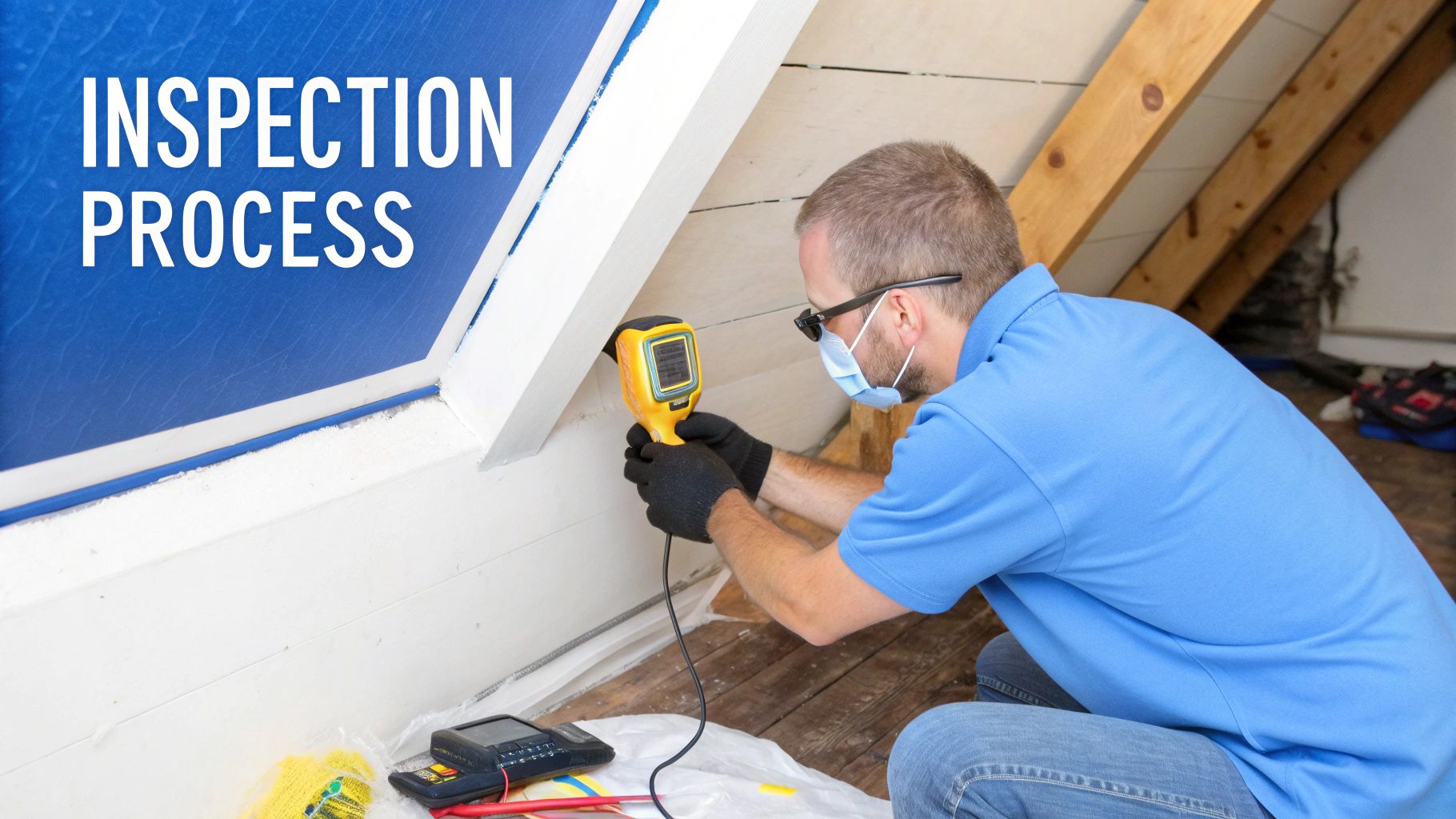
A professional mold inspection isn’t just a quick look-around. It’s a full-blown investigation, blending a trained eye with some seriously advanced tech to figure out what's really going on inside your walls and in the air you breathe. Think of us as detectives following a trail of clues—some obvious, some hidden—to get to the root of the problem.
This whole process is built to be methodical and thorough. We’re not just looking for the mold you can see; we’re hunting for the sneaky conditions that let it grow and thrive in the first place.
The Initial Visual Assessment
Every professional mold testing job starts the same way: with a comprehensive visual assessment. Our certified inspectors are trained to spot the subtle warning signs most people would walk right past. This is about more than just finding black spots on a wall; it’s about recognizing the tiny clues that point to a much bigger issue hiding out of sight.
We know exactly where mold loves to hide, so we focus on the high-risk zones known for moisture and poor airflow. These problem areas often include:
- Crawl Spaces and Basements: We're on the lookout for dampness, signs of water intrusion, and that unmistakable musty smell.
- Attics: We check for roof leaks, poor insulation, or bad ventilation that can trap moisture and cause condensation.
- HVAC Systems: Drain pans, coils, and ductwork are common culprits where moisture can collect and spread spores throughout your home.
- Under Sinks and Around Appliances: We inspect every plumbing connection for those slow, unnoticed drips that can cause serious damage over time.
This detailed visual sweep really sets the stage for the rest of the inspection. Things like faint water stains, peeling paint, or patterns of discoloration all tell a story, pointing us toward the areas that need a closer, more technical look.
Using Advanced Technology to See the Unseen
After the initial walkthrough, we bring out the specialized tools to confirm our suspicions and find moisture that’s totally invisible to the naked eye. This is where professional gear makes all the difference, letting us see what's happening behind your walls without having to tear anything apart.
We use Moisture Meters to get exact readings of the moisture content in materials like drywall, wood, and concrete. By taking readings in different spots, we can map out precisely how far any water damage has spread.
Thermal Imaging Cameras are like having x-ray vision for your home. These powerful cameras detect tiny temperature differences on surfaces, which are often a dead giveaway for hidden moisture or missing insulation. A cool spot on an otherwise warm wall could be the smoking gun that points to an active leak feeding a hidden mold colony.
This technology transforms the inspection from a guessing game into a data-driven process. It pinpoints the exact location and scale of the water problem—which is always the root cause of any major mold issue. For a more detailed breakdown of these steps, check out our guide on the mold inspection process in Santa Barbara.
Strategic Air and Surface Sampling
Once we’ve identified potential problem areas and have a good handle on the moisture situation, the final step is collecting samples for lab analysis. We don't just take samples randomly; it’s a strategic process designed to build an accurate picture of your indoor environment and confirm what kind of mold we’re dealing with.
We typically take two main types of samples:
- Air Samples: These are critical for knowing what you’re actually breathing. We’ll take samples from inside the areas we suspect have a problem and compare them to an outdoor "control" sample. This comparison tells us, scientifically, if your indoor spore counts are elevated and potentially harmful.
- Surface Samples: If we find visible growth, we’ll take a direct sample using a swab or a tape lift. This helps us identify the specific species of mold, which is vital information for planning an effective and targeted remediation strategy.
By combining the visual evidence, moisture data, and lab-verified samples, we can give you a complete and definitive diagnosis of your home’s health. This methodical approach ensures you get clear, actionable information to protect both your property and your family.
How to Understand Your Mold Lab Report
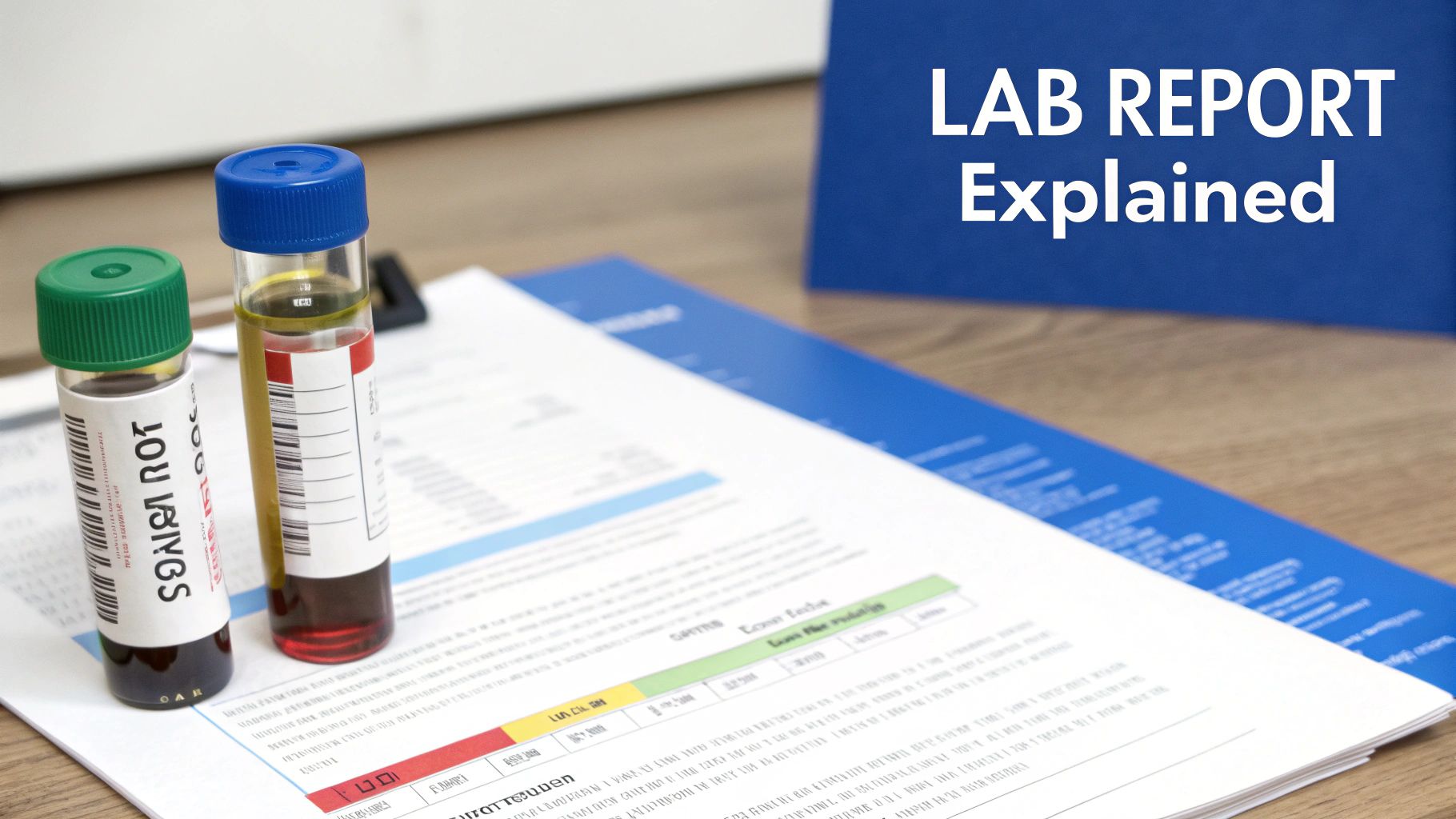
Getting a lab report back from a professional mold testing service can feel a bit like trying to read a foreign language. It's packed with scientific names and numbers that, without the right context, can look more than a little intimidating.
But this document isn't meant to cause alarm. Think of it as a detailed health chart for your home. Our job is to translate that complex data into clear, straightforward information so you know exactly what’s going on and can move forward with confidence.
Decoding Spore Counts and Types
The first things that usually jump out on a report are the columns listing different mold types (spore types) alongside their numbers (spore counts). These are the two most critical pieces of the puzzle. The spore types tell you what kind of mold is present, while the counts tell you how much of it is floating in your air.
You’ll see names like Aspergillus/Penicillium or Cladosporium, and sometimes the more infamous ones like Stachybotrys (often called "black mold"). The key is not to panic when you see these names. Mold spores are everywhere in our natural environment, so it’s completely normal to find some indoors.
The real story is in the context. This is why every legitimate mold inspection must include an outdoor "control" sample. This sample sets the baseline—it shows us what’s considered a normal mold level for your specific area on that day.
Your indoor spore counts are only considered "elevated" if they are significantly higher than the outdoor control sample. This comparison is the single most important factor in determining if an active, indoor mold problem exists.
For instance, if your indoor sample shows an Aspergillus count of 1,000 spores/m³ but the outside sample is 5,000 spores/m³, your indoor air is actually cleaner in that respect. But if the outside count is 200 and your indoor count is 5,000, that’s a clear red flag pointing to an indoor source that needs to be found and fixed.
Differentiating Allergenic and Toxigenic Molds
Not all molds carry the same risks, and your lab report helps distinguish between them. This is crucial for understanding potential health effects.
- Allergenic Molds: These are the most common and are most likely to bother people with allergies or asthma. Species like Alternaria and Cladosporium fall into this group.
- Pathogenic Molds: These types can cause infections, especially in people with weakened immune systems. Aspergillus fumigatus is a well-known example.
- Toxigenic Molds: This is the group that produces mycotoxins, which can pose serious health risks to everyone. The most famous one is Stachybotrys chartarum.
Finding a toxigenic mold like Stachybotrys is always a call to action, even at low levels. It isn’t typically found floating in outdoor air, so its presence almost always signals a significant water damage problem inside the home that requires immediate attention.
For a deeper look into the specifics, check out our guide on understanding mold test results.
Turning Data into a Clear Action Plan
At the end of the day, your mold lab report isn't just a collection of data—it's a diagnostic tool that provides clarity. It answers the critical questions that a simple visual inspection just can't.
- Confirmation: It scientifically confirms whether you have a mold issue and how severe it is.
- Identification: It pinpoints the specific types of mold, which helps in assessing potential health risks.
- Guidance: The results create a precise roadmap for mold remediation professionals, ensuring they can target the right areas and solve the problem effectively.
By understanding these core components—spore counts, types, and that all-important outdoor baseline—you’re empowered to make informed decisions. The report cuts through the guesswork and lays out a clear, evidence-based path to getting your home healthy again.
Your Next Steps After a Mold Diagnosis
Getting confirmation that your home has elevated mold levels can feel unsettling, but it’s actually the most important first step toward a real solution. A positive diagnosis from a professional mold testing service isn't the end of the story; it’s the beginning of a clear, actionable plan to get your home’s environment healthy again.
This diagnosis provides crucial clarity. You’re no longer dealing with suspicions or guesswork—you have scientific data that pinpoints the exact nature and extent of the problem. Now, you can move forward with targeted, effective action.
Using Your Report as a Remediation Roadmap
Think of your detailed mold lab report as a precise roadmap for a remediation company. Without it, mold removal specialists are essentially working blind. They might clean the visible mold but completely miss a hidden colony growing inside a wall or fail to address the underlying moisture issue that started it all.
Your report prevents this by providing a clear scope of work. It shows remediation experts exactly where to focus their efforts, what materials are contaminated, and the specific types of mold they need to eliminate.
A professional mold test report is the essential link between diagnosis and effective remediation. It ensures that the removal process is based on data, not assumptions, saving you time, money, and the stress of a recurring problem.
This targeted approach makes the remediation far more efficient. There’s no need for unnecessary demolition or treating unaffected areas of your home. The process is streamlined, focusing resources only where they’re needed to resolve the issue completely.
The demand for these specialized services is huge, reflecting just how many homeowners prioritize getting this right. The global mold remediation service market was valued at $1,340.3 million in 2025 and is projected to climb to $1,751.9 million by 2032, with North America making up over a third of the industry. This growth just underscores the value homeowners place on professional, data-driven solutions.
Fixing the Source Is the Top Priority
Successful mold removal isn’t just about cleaning up what you can see. The single most important part of the entire process is identifying and permanently fixing the moisture source that allowed the mold to grow in the first place.
If this step is skipped, the mold is guaranteed to return. Period.
Your inspector’s report, with its moisture mapping and thermal imaging data, is critical here. It points directly to the cause—whether it’s a leaky pipe behind a wall, poor attic ventilation, or something else entirely.
A reputable remediation company will use this information to address the root cause first. This might involve:
- Repairing plumbing leaks or roof damage.
- Improving ventilation in bathrooms or crawl spaces.
- Regrading landscaping to direct water away from the foundation.
Only after the water problem is solved can the actual mold removal begin. To get a better handle on the technical differences, you can read our guide that explains mold removal vs remediation.
The Final Step: Post-Remediation Verification
Once the remediation work is complete, how do you really know if it was successful? The final, essential step is post-remediation verification testing, sometimes called a clearance test. This involves a follow-up inspection and taking new air samples.
This independent, third-party verification provides unbiased proof that the job was done right. The new samples are sent to the lab and compared against the original report and outdoor air levels.
A successful clearance test confirms three things:
- The contaminated materials were properly removed.
- The cleanup process didn't accidentally spread spores to other areas of the home.
- Your home's indoor air quality has returned to a normal, healthy state.
This final check gives you documented proof and, more importantly, complete peace of mind. It’s the official sign-off that your home is safe, healthy, and ready for you to breathe easy again.
How to Choose a Certified Mold Inspector
Picking the right expert for a mold test is just as important as the test itself. It’s a bit like choosing a specialist for a critical medical diagnosis—you wouldn’t just go to anyone. You need someone with the right credentials, real-world experience, and an unbiased approach to give you the straight story on your home's health.
Making the right choice arms you with reliable data. It ensures you don’t waste money on work you don’t need or, worse, leave a serious problem to fester. This is about finding a trusted partner to guide you with clarity and integrity.
Look for Industry-Recognized Certifications
The first thing to do when vetting an inspector is to check their credentials. The mold industry isn't heavily regulated across the board, so certifications from respected, third-party organizations are a huge indicator of competence and professionalism. They prove an inspector has gone through serious training and passed exams on how to properly inspect and sample for mold.
Keep an eye out for credentials from leading bodies like:
- IICRC (Institute of Inspection, Cleaning and Restoration Certification): A major name that sets the standards for the entire inspection and remediation industry.
- ACAC (American Council for Accredited Certification): This council offers board-awarded certifications you can trust, like the Certified Indoor Environmentalist (CIE) or Certified Mold Inspector (CMI).
These aren’t just fancy letters after a name; they represent a baseline of knowledge that separates a true professional from someone just trying their hand at inspections.
Verify Their Insurance and Local Experience
Beyond certifications, make sure the company is fully insured. A legitimate inspector will carry both General Liability and Errors & Omissions (E&O) insurance. This is non-negotiable, as it protects you from any liability if there’s accidental property damage or if a mistake is made during the inspection. Don’t be shy about asking for proof.
Local experience is another game-changer. An inspector who knows Santa Barbara’s coastal climate and common building styles will know exactly where to hunt for the hidden issues specific to our area. You can learn more about what to look for when you search for the best mold inspectors near you in our detailed guide.
The Most Important Rule: Avoid Conflicts of Interest
If you remember one thing, make it this: never hire a company that performs both testing and remediation. It’s a massive conflict of interest. A company that stands to make money from finding mold has a clear financial incentive to exaggerate the problem or "find" issues that aren't really there.
An ethical mold assessment must be completely independent and unbiased. By choosing a company that only performs testing and inspection, you ensure the lab results and recommendations you receive are based purely on scientific data, not on a potential remediation sale.
This separation is your single best defense against inflated quotes and unnecessary, expensive repairs. A dedicated testing company's only job is to give you an accurate, unvarnished report on your home’s condition. This approach is becoming more critical as homeowners get smarter about the process. The global mold detection service market is projected to hit $512.5 million by 2033, driven by the demand for trustworthy, certified inspectors who provide detailed, unbiased analysis. You can learn more about the growing mold detection market on datainsightsmarket.com.
This focus on unbiased, scientific assessment is the bedrock of trustworthy professional mold testing. It guarantees your next steps are guided by facts, empowering you to make the best decisions for your home and family.
Common Questions We Get About Mold Testing
Even after walking through the process, it's natural to have a few more questions. We get it. Below, we've answered some of the most common things homeowners ask us, giving you the straightforward information you need to move forward with confidence.
How Long Does a Professional Mold Test Actually Take?
The on-site part is surprisingly quick. For most homes, we can complete the visual inspection, moisture mapping, and sample collection in just 1 to 3 hours. It really just depends on the size of your house and how complex the situation is.
Once we’ve collected the samples, they're securely sent off to an accredited, third-party lab for analysis. That part of the process usually takes about 2-3 business days. All in all, you can expect a full, detailed report in your hands within 3-4 business days of our visit.
Is Professional Mold Testing Really Worth the Money?
Absolutely. Think of it less as a cost and more as an investment in your property's health and your family's well-being. A DIY kit from the hardware store just can't give you the scientific certainty that a professional assessment can.
An accurate diagnosis saves you a ton of money in the long run. It stops you from wasting cash on the wrong repairs, paying for remediation you don't need, or fixing a problem that isn't even the root cause. Plus, that certified report is gold if you're dealing with a real estate transaction or an insurance claim.
Can't I Just Scrub Visible Mold with Bleach?
This is easily one of the biggest—and most damaging—mistakes we see people make. Using bleach on mold is not only ineffective, but it can actually make the problem much, much worse. Bleach only cleans the surface of non-porous things like tile or glass.
But on porous materials like drywall, wood, or grout, the mold has roots that go deep into the material. The water in the bleach soaks right in, feeding the hidden part of the mold colony and helping it grow back even stronger. Worse yet, scrubbing at a mold colony can send millions of spores airborne, spreading the contamination to other parts of your home.
What Are the Big Red Flags That I Need a Mold Test?
You should definitely consider calling a professional if you spot any of these signs. They often point to a hidden issue that needs an expert eye.
- That Persistent Musty Smell: If you keep noticing a damp, earthy odor that just won’t go away, that’s the classic calling card of hidden mold.
- Any Recent Water Damage: A past leak, flood, or even just a bit of condensation dramatically increases your risk. Mold loves moisture.
- Visible Growth of Any Kind: See some discoloration or fuzzy spots? Even if they look small, they often signal a much larger problem hiding behind the wall or under the floor.
- Unexplained Health Issues: Are family members dealing with constant allergy-like symptoms (sneezing, coughing, itchy eyes) that seem to get better when they leave the house? Your indoor air quality could be the culprit.
- Buying or Selling a Home: A mold inspection is a smart, non-negotiable part of due diligence. It ensures you’re not buying—or selling—a hidden health hazard.