Purchasing property in Santa Barbara or Ventura County is a significant investment, one that extends far beyond scenic views and architectural charm. The critical phase that protects this investment is due diligence. This process is not merely a formality or a standard home inspection; it is a deep, comprehensive investigation into every aspect of a property’s physical health, structural integrity, and legal standing. Particularly in our coastal climate, where persistent moisture can lead to hidden issues like mold, a thorough approach is essential. Overlooking a single detail can transform a dream home into a costly, long-term problem.
This comprehensive real estate due diligence checklist is designed to guide you through the ten most crucial steps for a secure transaction. It provides a clear, actionable framework for buyers, sellers, and their agents, ensuring no stone is left unturned. From advanced moisture mapping in a Montecito estate to checking crawl space ventilation in a Ventura bungalow, we will detail what to look for, what questions to ask, and how to interpret the findings.
We'll cover everything from professional mold inspections and lab-verified air sampling to reviewing disclosures and coordinating remediation. This guide clarifies the non-negotiable checks that safeguard your financial and physical well-being. By following these steps, you will gain the clarity and confidence needed to move forward, knowing you have a complete picture of the property’s condition and when to bring in specialized experts like Pacific Mold Pros for definitive answers.
1. Professional Mold Inspection and Visual Assessment
The first and most critical step in a comprehensive real estate due diligence checklist is a professional mold inspection. This is far more than a cursory glance; it's a foundational assessment conducted by certified inspectors who meticulously examine a property for any sign of mold, water damage, or moisture intrusion. In coastal communities like Santa Barbara and Ventura, where marine layers and salt air can accelerate moisture issues, this step is non-negotiable.
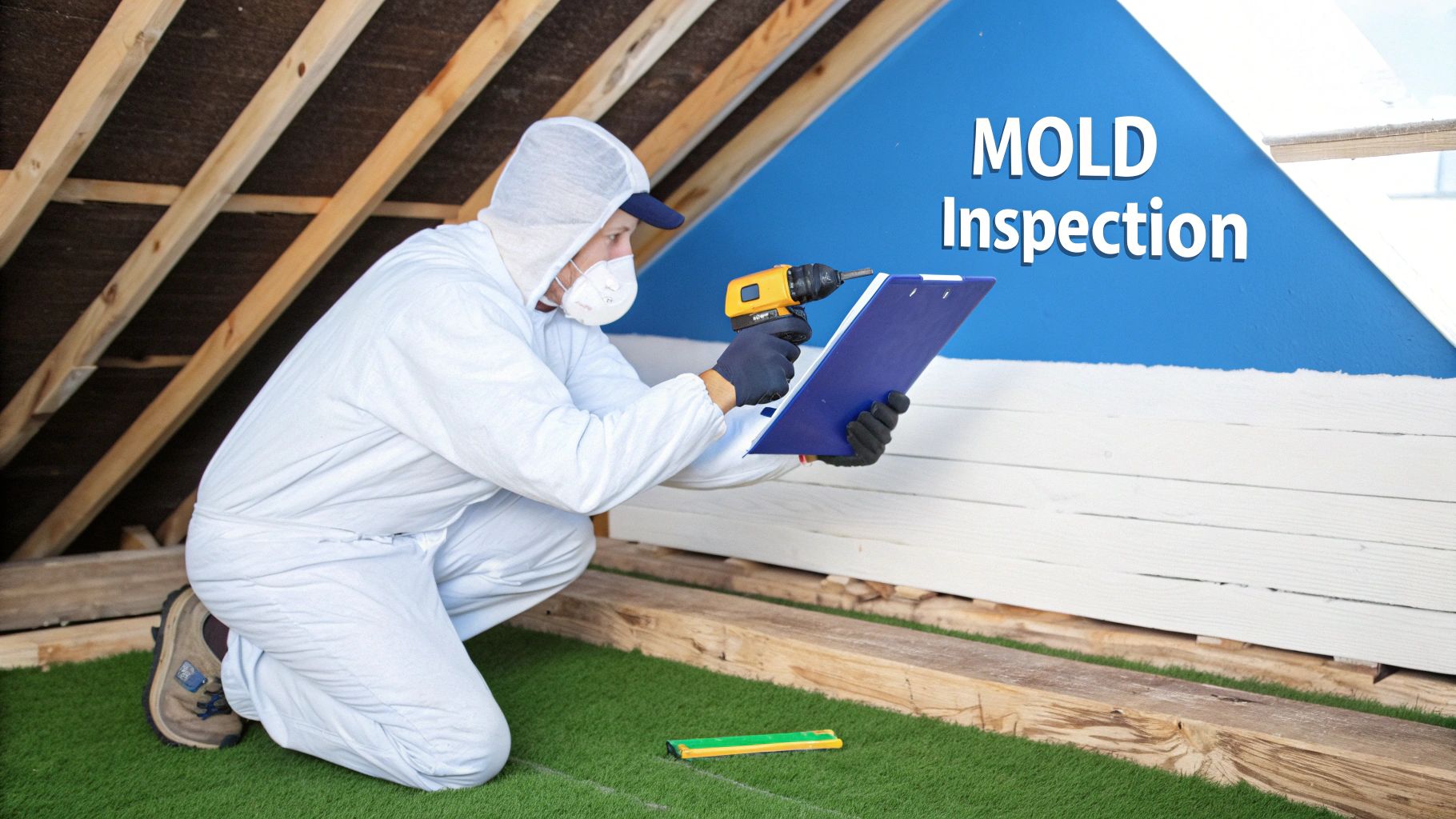
This process involves a detailed visual examination of moisture-prone areas like attics, crawl spaces, basements, and bathrooms. Specialists, guided by standards from the IICRC, use advanced tools like thermal imaging cameras to detect temperature anomalies behind walls that indicate hidden moisture. Moisture mapping then helps pinpoint the exact source and extent of the water intrusion, identifying potential problems long before they become visible or lead to costly structural damage.
Real-World Application
For buyers, a pre-purchase inspection can be a powerful negotiation tool. For example, a Pacific Mold Pros inspection for a Santa Barbara home buyer recently uncovered significant moisture in a crawl space that was not disclosed, saving the buyer thousands in future remediation costs. Similarly, sellers in Montecito can benefit from a pre-sale inspection to proactively address issues, making their property more attractive and avoiding last-minute closing delays.
Key Insight: A visual mold inspection is not just about finding mold; it's about identifying the conditions that allow mold to grow. This proactive approach protects your investment and health.
Actionable Tips
To maximize the value of your inspection, follow these steps:
- Schedule Early: Book the inspection as soon as you enter escrow to allow ample time for follow-up and negotiation.
- Ensure Full Access: Confirm the inspector can access all areas, including locked closets, attics, and crawl spaces.
- Request Thermal Imaging: Make sure thermal imaging is part of the standard package to uncover hidden issues.
- Document Everything: Ask for a detailed report with high-resolution photographs of all findings for your records.
By prioritizing a professional mold inspection, you build a solid foundation for your due diligence, ensuring you understand the true condition of the property. Understanding why a mold inspection is crucial when buying a house in Santa Barbara can protect your investment and ensure a healthy living environment for years to come.
2. Air and Surface Sampling for Laboratory Analysis
Following a visual assessment, the next crucial step in a thorough real estate due diligence checklist is scientific testing. Air and surface sampling provides objective, data-driven evidence of a property's condition by collecting physical samples and sending them to a certified laboratory for analysis. This process identifies the specific mold species present, quantifies spore concentrations, and determines if indoor air quality is compromised.
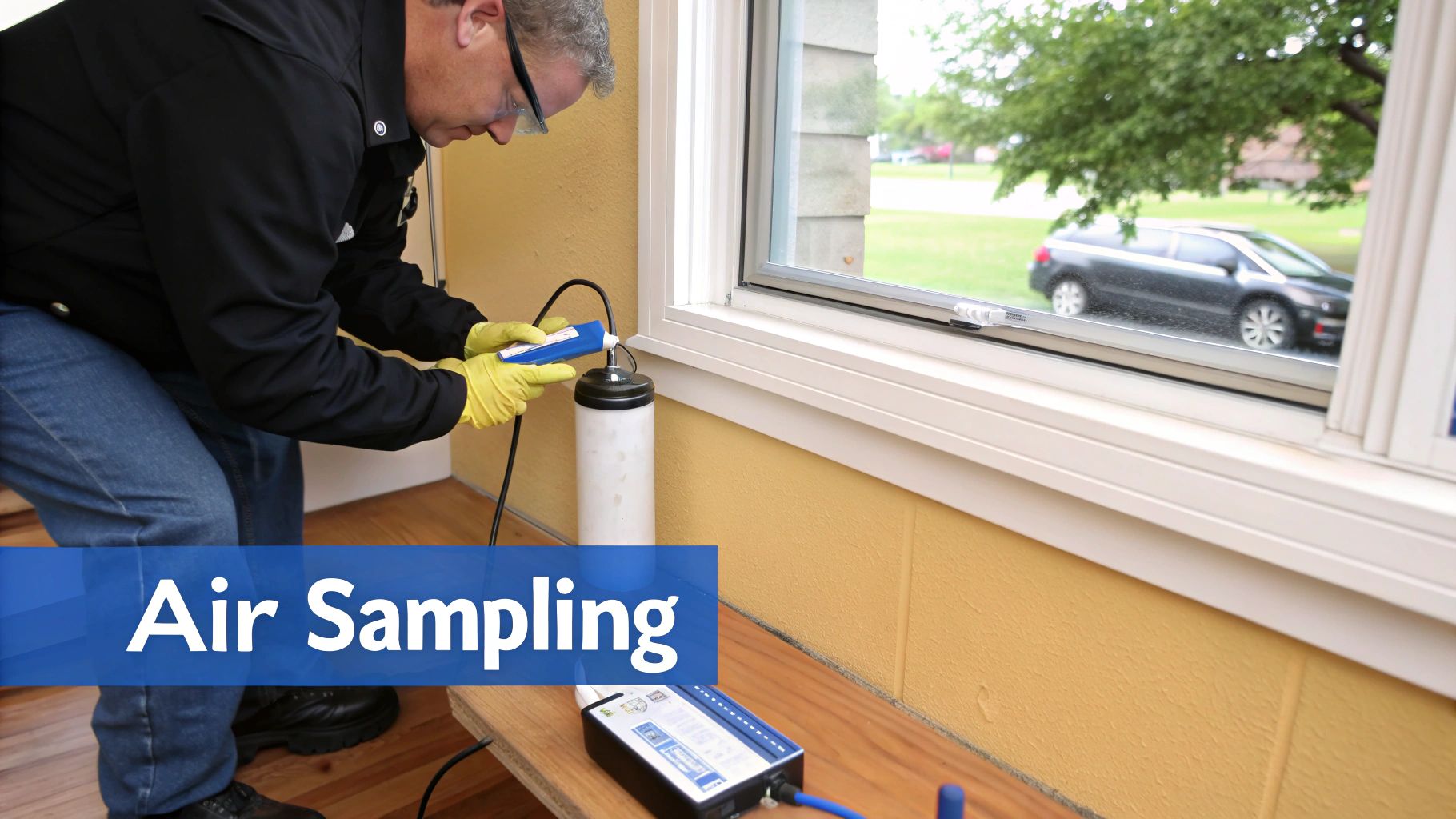
Certified technicians use specialized equipment to capture airborne spores or collect samples directly from surfaces showing suspected growth. The samples are then analyzed by an accredited lab, which generates a detailed report. This scientific evidence moves beyond speculation, distinguishing between normal background spore levels and a genuine contamination problem that could impact health and property value, guiding precise remediation decisions.
Real-World Application
Laboratory analysis provides undeniable proof during real estate negotiations. For instance, air sampling in a Carpinteria coastal home can reveal elevated spore counts from salt-tolerant molds not easily seen. Surface sampling in a Goleta attic might detect Stachybotrys (black mold), confirming the need for professional remediation. For buyers in Ventura County, this testing can identify harmful Aspergillus species, providing a clear reason to renegotiate or withdraw an offer.
Key Insight: While a visual inspection identifies potential issues, laboratory sampling confirms the presence, type, and severity of mold, turning assumptions into actionable facts.
Actionable Tips
To ensure your sampling provides accurate and defensible results, follow these best practices:
- Take a Baseline Sample: Always collect an outdoor air sample as a baseline to compare against indoor spore counts.
- Sample Multiple Areas: Collect samples from various rooms, especially those with suspected moisture, for a comprehensive overview.
- Use a Certified Lab: Insist that samples are sent only to laboratories accredited by recognized standards bodies.
- Request Rush Analysis: For time-sensitive escrow periods, request a rush analysis to get results quickly.
Scientific data is your strongest ally in due diligence. Learning how to start understanding mold test results is essential for making an informed decision about a property's health and safety.
3. Moisture Intrusion and Water Damage Assessment
Beyond looking for active mold, a crucial part of any real estate due diligence checklist is a thorough assessment of moisture intrusion and past water damage. This evaluation goes deeper to identify the property's vulnerability to water-related issues, uncovering the root causes of potential mold growth. In coastal areas like Santa Barbara and Ventura County, factors like heavy winter storms, persistent salt spray, and groundwater seepage make this step indispensable for protecting your investment.
This process involves a comprehensive examination of potential moisture sources, from roof leaks and plumbing problems to poor landscape grading and condensation. Specialists look for tell-tale signs like water stains, peeling paint, warped flooring, and musty odors that indicate both past and present moisture problems. By identifying how and where water is entering the home, you can address the source directly, preventing future mold outbreaks and costly structural repairs.
Real-World Application
A water damage assessment can reveal hidden liabilities that are not immediately obvious. For instance, in Montecito, a Pacific Mold Pros evaluation for a home buyer discovered water intrusion in the attic caused by poorly maintained gutters, which led to mold growth that was invisible from the living areas. In a Goleta property, persistent crawl space moisture was identified as the source of a musty smell throughout the home, a problem the sellers had been unable to solve. Identifying these issues early provides significant leverage in negotiations.
Key Insight: Water damage is the precursor to mold. Identifying and resolving moisture intrusion issues is the most effective way to prevent mold problems before they begin.
Actionable Tips
To ensure a comprehensive water damage assessment, follow these guidelines:
- Document All Stains: Take photos of any visible water stains, discoloration, or peeling paint on walls, ceilings, and floors.
- Check Key Areas: Inspect basements, crawl spaces, and attic corners for dampness, especially after recent rainfall.
- Evaluate Exterior Drainage: Assess the effectiveness of gutters, downspouts, and the property's grading to ensure water is directed away from the foundation.
- Inspect Seals: Carefully check the seals around all windows, doors, and exterior wall penetrations for any signs of water entry. You can learn more about the subtle signs of water damage in walls to better prepare for your inspection.
4. HVAC System Evaluation and Ductwork Inspection
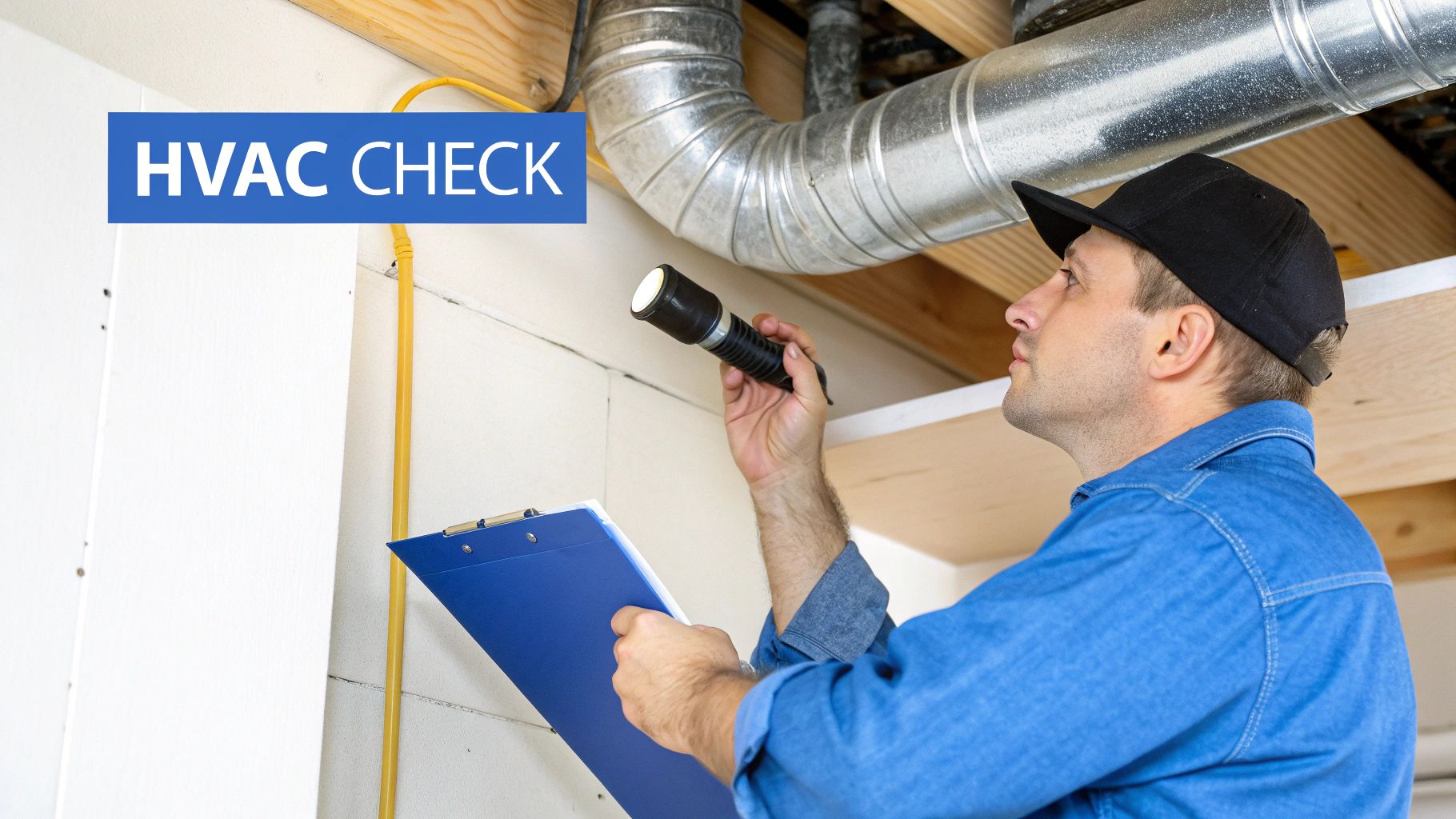
An often-overlooked yet critical part of a real estate due diligence checklist is a thorough evaluation of the property's HVAC system. Beyond ensuring the heating and air conditioning works, this inspection focuses on identifying conditions that foster mold growth, such as condensation, poor air circulation, or moisture accumulation. In coastal climates like Ventura and Santa Barbara, humid air can cause HVAC systems to become primary breeding grounds for mold, which can then be circulated throughout the entire home.
The inspection involves a detailed examination of filters, condensation lines, drain pans, and accessible ductwork. Specialists check for blockages, leaks, and visible microbial growth that could compromise indoor air quality. Because these systems are largely hidden within walls and ceilings, identifying problems early prevents widespread contamination and costly repairs, making it an essential step for protecting both health and property value.
Real-World Application
For a buyer in Ventura, an HVAC inspection recently revealed a clogged condensation line that had caused significant water backup and hidden mold growth in the attic insulation. This finding allowed the buyer to negotiate for a full system cleaning and attic remediation. Similarly, a seller preparing a property for market can use an HVAC inspection to identify and fix issues like moldy ductwork, preventing discoveries that could derail a sale during the buyer's due diligence period.
Key Insight: A functioning HVAC system is not necessarily a healthy one. An inspection specifically targeting moisture and mold reveals the true condition of your indoor air delivery system.
Actionable Tips
To get the most out of your HVAC evaluation, follow these practical steps:
- Check Condensation Lines: Ensure the system's condensation lines drain properly and are clear of any blockages.
- Inspect Air Filters: Replace filters regularly, especially during humid seasons, to capture spores and improve airflow.
- Schedule Annual Maintenance: A professional HVAC technician can perform preventative maintenance to keep the system clean and efficient.
- Visually Inspect Ductwork: Look for any signs of visible mold or moisture stains in accessible duct areas and around vents.
- Consider Humidity Control: In high-moisture coastal areas, integrating a dehumidifier with your HVAC system can prevent mold-friendly conditions.
5. Crawl Space and Foundation Moisture Control
A critical, yet often overlooked, component of any real estate due diligence checklist is a thorough evaluation of the crawl space and foundation. These subterranean areas are the first line of defense against ground moisture and are highly susceptible to water intrusion, condensation, and mold growth. In coastal areas like Santa Barbara and Ventura, the high water table and humid air make this inspection an absolute necessity for protecting a property's structural integrity and indoor air quality.
This specialized assessment involves inspecting for standing water, evaluating the condition of vapor barriers, checking for efflorescence on foundation walls, and ensuring proper ventilation. Inspectors look for signs of foundation seepage, inadequate exterior grading that directs water toward the home, and any existing mold colonization. Since the air in a crawl space naturally rises into the living areas above, controlling moisture here is fundamental to preventing widespread mold issues.
Real-World Application
For buyers, this inspection can reveal hidden liabilities. For instance, an inspection of a Goleta home might uncover a torn, inadequate vapor barrier that has allowed ground moisture to saturate the subfloor, a costly future repair. In Montecito, a professional assessment could identify foundation seepage issues that only manifest during the rainy season, allowing the buyer to negotiate for drainage improvements or remediation before closing the deal.
Key Insight: The health of a home starts from the ground up. A damp, neglected crawl space can compromise the entire structure and introduce mold spores directly into your living environment.
Actionable Tips
To ensure your crawl space and foundation are properly evaluated, follow these steps:
- Insist on Access: Always include the crawl space in your pre-purchase inspection scope. Never skip it.
- Check Exterior Grading: Walk the property to see if the ground slopes away from the foundation, directing water away.
- Evaluate the Vapor Barrier: Ensure there is a properly installed vapor barrier covering the entire ground surface.
- Consider Encapsulation: In areas with chronic moisture, ask about the benefits of full encapsulation. Proper crawl space moisture control is key to long-term property health.
6. Attic Ventilation and Insulation Review
Often overlooked, a thorough attic ventilation and insulation review is a vital component of a comprehensive real estate due diligence checklist. This inspection goes beyond simply noting the presence of insulation; it assesses the attic's entire ecosystem, evaluating airflow, insulation integrity, and signs of moisture buildup. In coastal climates like Carpinteria, salt air and humidity make proper attic ventilation essential to prevent the condensation that fuels destructive mold growth and compromises structural integrity.
A professional evaluation checks that soffit, gable, and ridge vents are clear and functional, creating a balanced system where cool, dry air enters and hot, moist air escapes. The inspector examines the insulation for compaction, gaps, or signs of water staining, which can indicate roof leaks or condensation problems. They also look for discoloration on the underside of the roof sheathing, a classic sign of poor ventilation trapping warm, moist air from the living spaces below.
Real-World Application
An attic inspection is a critical safeguard for buyers and sellers. For instance, an inspection on a Montecito property revealed that newly installed insulation had completely blocked the soffit vents, effectively trapping moisture and leading to early-stage mold on the roof decking. Identifying this allowed the buyer to negotiate for proper remediation, preventing a major issue. In Santa Barbara, a seller who proactively corrected poor attic ventilation made their home more appealing by demonstrating diligent maintenance.
Key Insight: An attic should be a cold, dry space. If it feels warm or humid, it's a sign the ventilation system is failing, creating a perfect breeding ground for mold.
Actionable Tips
To get the most out of your attic assessment, ensure the following steps are taken:
- Verify Vent Clearance: Physically check that soffit and ridge vents are unobstructed by insulation, debris, or paint.
- Check for Air Leaks: Look for dark, stained areas on insulation, which can indicate air leaks from the conditioned living space below.
- Assess Insulation Condition: Document any insulation that is wet, compressed, or in direct contact with the roof sheathing.
- Calculate Ventilation Ratio: Confirm the attic has an adequate ventilation ratio, typically one square foot of net-free vent area for every 150 square feet of attic floor space.
By including an attic review in your due diligence, you gain a clearer picture of the property's overall health and protect your investment from hidden moisture-related problems. This step helps ensure the home can breathe properly, safeguarding it against mold and decay.
7. Indoor Air Quality Testing and Baseline Establishment
Beyond a visual check, a comprehensive real estate due diligence checklist must include scientific data. Indoor air quality (IAQ) testing provides this by establishing a quantitative baseline of a property's airborne mold spore concentrations and other pollutants. This process involves collecting air samples and comparing them to outdoor control samples to determine if indoor spore levels are abnormally elevated, which often indicates hidden mold growth. In coastal areas like Goleta or Ventura, where humidity is a constant factor, this objective data is invaluable.
Certified technicians use specialized equipment to capture airborne particulates, which are then analyzed by an accredited laboratory. The resulting report identifies the types and concentrations of mold spores present, creating a scientific snapshot of the home's respiratory environment. This data is crucial for identifying hidden contamination, verifying the success of remediation efforts, and providing concrete evidence during property negotiations. It moves the conversation from subjective observation to objective fact.
Real-World Application
For a buyer in Ventura County, pre-purchase IAQ testing can establish a clean baseline before committing, providing peace of mind. After a water leak, a Santa Barbara homeowner can use post-remediation testing to scientifically prove that the mold problem has been fully eliminated and the air is safe to breathe. This documentation is essential for health, property value, and future disclosures.
Key Insight: Air quality testing translates potential invisible threats into measurable data. It's the only way to objectively know if a property's indoor environment is healthy or harbors a hidden contamination issue.
Actionable Tips
To ensure your IAQ test is accurate and useful, follow these best practices:
- Test Multiple Areas: Collect samples from different rooms, including a baseline area, the area of concern, and an outdoor control sample for comparison.
- Maintain Normal Conditions: Keep windows and doors closed for 12-24 hours before the test to simulate typical living conditions.
- Verify Remediation: If mold was removed, schedule a clearance test 24-48 hours after the work is complete to confirm its success.
- Identify Spore Types: For allergy sufferers, request a detailed analysis that identifies specific mold species to understand potential health impacts.
Understanding the scientific data behind your property's air is a powerful due diligence step. You can learn more about what air quality testing is to see how it protects both your health and your real estate investment.
8. Real Estate Transaction Documentation and Disclosure
Proper documentation is where your due diligence efforts crystallize into actionable legal and financial instruments. This step involves compiling all inspection findings, test results, and professional recommendations into clear, comprehensive reports. For real estate transactions in Santa Barbara and Ventura County, this documentation is the backbone of the disclosure process, ensuring all parties are fully aware of the property's condition.
A thorough report from a specialist, like Pacific Mold Pros, translates complex technical data into an easy-to-understand format. It documents not just the presence of mold but also the underlying moisture issues, complete with photographic evidence and thermal imaging scans. This official record is crucial for satisfying California's stringent disclosure laws, protecting sellers from future liability and empowering buyers to make informed decisions.
Real-World Application
In a recent transaction, a Pacific Mold Pros pre-purchase inspection report enabled a Santa Barbara buyer to successfully negotiate a significant credit for undisclosed water damage repairs before closing. Conversely, a Montecito seller used our pre-sale inspection report to proactively address a minor attic moisture issue, presenting a clean bill of health to potential buyers and streamlining the sale process. These clear, detailed reports are vital for successful and transparent real estate closings.
Key Insight: Comprehensive documentation transforms an inspection from a simple assessment into a powerful negotiation and legal protection tool. It ensures transparency and accountability for everyone involved.
Actionable Tips
To ensure your documentation is effective and compliant, follow these guidelines:
- Demand Clarity: Ensure reports are written for non-technical readers, avoiding jargon.
- Insist on Visuals: Confirm the report includes high-resolution photos and thermal images to clearly illustrate problem areas.
- Request Recommendations: The report should provide specific remediation steps, ideally with cost estimates.
- Verify Compliance: Ensure all documentation meets California's real estate disclosure requirements.
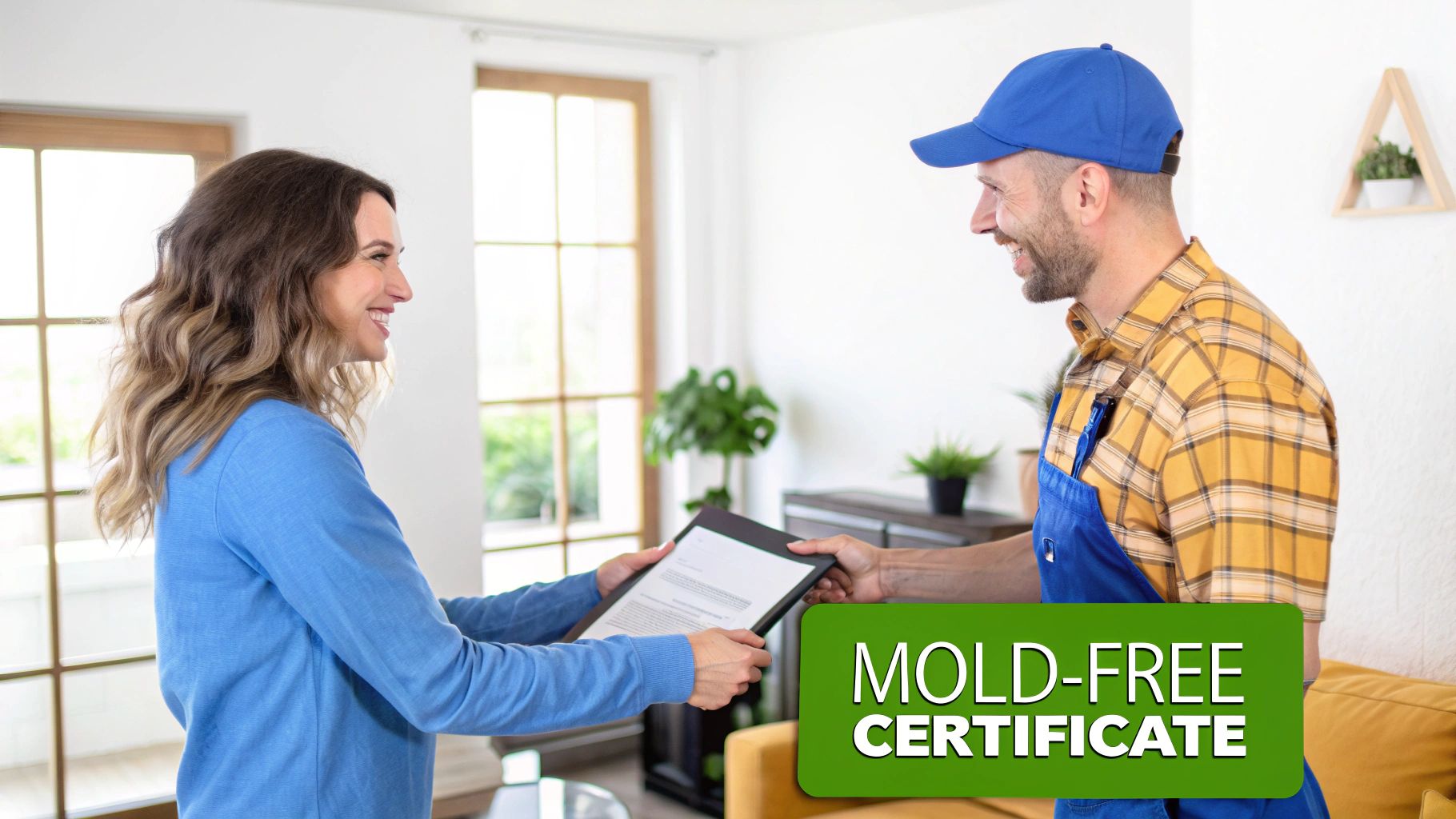
- Seek Certification: When remediation is complete, ask for a Mold-Free Certification to provide official clearance for the property file.
By focusing on meticulous documentation, you complete a critical phase of your real estate due diligence checklist, ensuring a smooth, transparent, and legally sound transaction.
9. Remediation Plan Development and Contractor Coordination
Once a mold or moisture issue is identified, the next step in a thorough real estate due diligence checklist is creating a detailed remediation plan. This is not simply about cleaning the visible mold; it's a strategic blueprint developed from inspection findings to eliminate the contamination and, crucially, address the underlying moisture source. This plan ensures a coordinated, professional approach that prevents recurrence.
A comprehensive remediation plan outlines the specific scope of work, provides clear cost estimates, and establishes a timeline. It details the required containment procedures to prevent cross-contamination, the methods for safe mold removal, and the necessary structural repairs. Coordinating with qualified, licensed contractors is essential to execute the plan effectively, turning inspection data into tangible solutions that restore the property to a safe condition.
Real-World Application
For a Santa Barbara home with attic mold, a proper plan would include not just removing the mold but also improving ventilation to prevent future buildup. In a Montecito property with a damp crawl space, the strategy might involve installing a vapor barrier and improving drainage around the foundation. These integrated solutions ensure the problem is solved permanently, protecting the home's value and the health of its occupants.
Key Insight: A remediation plan’s success is measured by its ability to solve the root cause of the moisture intrusion, not just its ability to remove the existing mold. Effective coordination ensures this holistic approach is executed correctly.
Actionable Tips
To ensure your remediation is successful, follow this process:
- Verify Credentials: Confirm all contractors are licensed, insured, and hold relevant certifications (e.g., IICRC).
- Request Detailed Bids: Obtain multiple bids based on the same scope of work to compare costs and approaches accurately.
- Address the Source: Ensure the chosen plan explicitly addresses the root moisture cause, whether it's a leak, poor ventilation, or drainage issue.
- Include Post-Remediation Verification: The plan’s scope should include post-remediation testing by an independent third party to confirm the work was successful.
10. Mold-Free Certification and Post-Remediation Verification
The final, conclusive step in a thorough real estate due diligence checklist, especially after mold issues have been addressed, is post-remediation verification and obtaining a Mold-Free Certification. This isn't just a receipt for work done; it's an independent, scientific validation that the remediation was successful and the property is safe. This step provides critical assurance to buyers, sellers, lenders, and insurers that the property meets health and safety standards.
The process involves a third-party inspector, like Pacific Mold Pros, returning to the property after remediation is complete. They conduct air and surface sampling in the previously affected areas to confirm that mold spore counts have returned to normal, acceptable levels (often compared to an outdoor baseline). This verification ensures the root cause of the moisture was fixed and that no cross-contamination occurred, effectively closing the loop on the entire mold-related due diligence process.
Real-World Application
For a buyer in Santa Barbara, receiving a Mold-Free Certification after a seller completes a disclosed crawl space remediation offers peace of mind and protects their investment. In Montecito, a seller who proactively remediates attic ventilation issues and obtains certification can present their home as a premium, worry-free property, potentially increasing its market value and speeding up the sale. This documentation is a powerful asset that demonstrates a commitment to property health.
Key Insight: Remediation is only complete when it's scientifically verified. A Mold-Free Certification transforms a property with a history of mold into one with a documented clean bill of health.
Actionable Tips
To ensure the verification process is effective and meaningful, follow these guidelines:
- Schedule Wisely: Book the post-remediation verification testing for 24-72 hours after the work is finished to allow dust to settle.
- Confirm Completion: Verify that the remediation contractor has completed all work specified in the original protocol before the inspector arrives.
- Request Consistency: If possible, use the same certified lab for post-remediation testing that was used for the initial inspection to ensure consistent analysis.
- Document and Share: Keep the Mold-Free Certification with your important property records and provide copies to your real estate agent, lender, and insurance company.
Real Estate Due Diligence: 10-Point Comparison
| Service | Implementation Complexity 🔄 | Resource Requirements | Speed / Efficiency ⚡ | Expected Outcomes / Impact 📊 | Effectiveness ⭐ / Ideal Use Cases & Tips 💡 |
|---|---|---|---|---|---|
| Professional Mold Inspection and Visual Assessment | Moderate — certified inspector, access to all areas | Moderate — inspector time, thermal camera, moisture meters | Fast — often same-day reports | Detects visible/hidden moisture; baseline for further testing | High ⭐⭐⭐⭐ — Pre-purchase/pre-sale; schedule daylight, request thermal imaging |
| Air and Surface Sampling for Laboratory Analysis | Moderate — proper sampling protocols and chain-of-custody | High — multiple samples, certified lab fees | Slower — typically 3–7 days for lab results | Identifies species and spore counts; objective evidence for decisions | Very High ⭐⭐⭐⭐⭐ — Use to confirm contamination, insurance/legal cases; collect outdoor baseline |
| Moisture Intrusion and Water Damage Assessment | Moderate–High — interior and exterior investigation | Moderate — may need specialists for roof/foundation | Variable — depends on scope of investigation | Identifies moisture sources and structural risk; prevents recurrence | High ⭐⭐⭐⭐ — Root-cause work; check gutters, grading, and penetrations |
| HVAC System Evaluation and Ductwork Inspection | Moderate — technical HVAC checks and duct access | Moderate — HVAC tech, access tools, possible cleaning | Moderate — inspection quick; remediation may take longer | Reduces spread of spores; improves overall IAQ and system efficiency | High ⭐⭐⭐⭐ — Critical for allergies; verify condensation lines, filters, airflow |
| Crawl Space and Foundation Moisture Control | High — requires confined-space access and structural assessment | High — encapsulation, drainage, foundation repairs may be needed | Slow — remediation and repairs can be time-consuming | Prevents structural damage and upward moisture migration | High ⭐⭐⭐⭐ — Essential for older/coastal homes; consider vapor barriers and documentation |
| Attic Ventilation and Insulation Review | Low–Moderate — visual inspection of vents and insulation | Low–Moderate — possible insulation or vent upgrades | Fast — inspection is quick; upgrades vary | Mitigates attic moisture, extends roof life, improves energy efficiency | High ⭐⭐⭐⭐ — Check soffit/ridge vents, R-value, and air leaks |
| Indoor Air Quality Testing and Baseline Establishment | Moderate — multiple sampling points and monitoring | Moderate–High — monitoring equipment, lab analysis | Slower — may require days of monitoring and lab turnaround | Establishes baseline, supports post-remediation verification and health assessments | Very High ⭐⭐⭐⭐⭐ — Important for immunocompromised buyers; sample multiple rooms/seasons |
| Real Estate Transaction Documentation and Disclosure | Low–Moderate — compiling clear, compliant reports | Low — report preparation time; attach lab results if applicable | Moderate — depends on report scope and timelines | Provides legal protection and negotiation leverage; clarifies remediation needs | High ⭐⭐⭐⭐ — Include photos/thermal images and clear recommendations; comply with disclosure laws |
| Remediation Plan Development and Contractor Coordination | High — detailed scope, contractor selection, containment plans | High — contractor costs, containment, possible structural repairs | Variable — planning quick; execution can be lengthy | Eliminates mold and addresses root causes when properly executed | Very High ⭐⭐⭐⭐⭐ — Verify licenses/insurance, include post-remediation testing and warranties |
| Mold-Free Certification and Post-Remediation Verification | Moderate — follow testing protocols and lab confirmation | Moderate — post-remediation tests and lab fees | Fast–Moderate — testing typically 24–72 hours after work | Confirms remediation success; increases buyer/lender confidence | High ⭐⭐⭐⭐ — Schedule tests after completion, keep certification with transaction documents |
From Checklist to Closing: Your Next Steps for a Secure Property Transaction
Navigating the complexities of a real estate transaction in Santa Barbara or Ventura County can feel overwhelming, but a comprehensive due diligence checklist is your most powerful tool. It transforms the process from a leap of faith into a calculated, confident investment. By methodically moving through each stage, from the initial visual assessment and professional inspections to the final review of disclosures and contingency items, you systematically dismantle risk and build a foundation of certainty.
This article has provided a detailed roadmap, a real estate due diligence checklist designed for our unique coastal environment. We've covered the critical importance of scrutinizing not just the visible elements of a property but the unseen factors that determine its long-term health and value, such as moisture intrusion, air quality, and the potential for mold growth.
Key Takeaways for a Confident Transaction
Mastering your due diligence is not about finding a "perfect" property, as they rarely exist. It's about gaining a complete and transparent understanding of the property you intend to buy or sell.
- Proactivity Prevents Problems: Waiting for an issue to become obvious is a costly mistake. A proactive approach, especially regarding moisture and mold, allows for early detection, accurate assessment, and more effective negotiation.
- Documentation is Your Defense: A complete and accurate paper trail, from disclosures and inspection reports to remediation plans and certifications, is your best protection. It provides clarity, enforces accountability, and safeguards your investment.
- Expertise is Not a Luxury, It's a Necessity: While a general home inspector provides a crucial overview, specialized issues demand specialized professionals. For concerns related to water damage, musty odors, or potential mold, a certified mold inspection and testing company is indispensable.
Your Actionable Next Steps
With this checklist in hand, your path forward is clear. The knowledge you've gained is only as valuable as the action you take with it.
- Integrate and Customize: Adapt this comprehensive real estate due diligence checklist into your personal workflow. Whether you're a buyer, seller, or agent, use it as a living document to track progress, note concerns, and ensure no detail is overlooked.
- Trust Your Instincts, Then Verify: If something feels off during a walkthrough, such as a persistent damp smell or subtle water staining, don't dismiss it. These are often the first indicators of a deeper issue. Mark it on your checklist and schedule a professional evaluation.
- Engage a Specialist Early: Don't wait until the final days of your contingency period to investigate a red flag. If moisture or mold is a potential concern, bring in an expert like Pacific Mold Pros immediately. Early assessment provides you with crucial data, giving you more time to negotiate, plan, or if necessary, walk away from the deal with confidence.
Ultimately, a thorough due diligence process is the cornerstone of a sound real estate investment. It empowers you to move beyond the aesthetics of a property and understand its true condition. You gain the leverage to negotiate effectively, the foresight to prevent future problems, and the peace of mind that comes from making a truly informed decision.
This isn't just about checking boxes; it's about securing your financial future and ensuring the home you invest in is a safe, healthy, and happy environment for years to come. When you encounter signs of water intrusion or potential mold, remember that guessing is not a strategy. Get the definitive answers you need.
Take the Definitive Next Step: If your due diligence process uncovers any red flags related to dampness, musty odors, visible water stains, or past water events, contact the certified professionals at Pacific Mold Pros at (805) 232-3475. Our team provides the objective data, clear reports, and actionable guidance you need to close your transaction with complete confidence.