That faint musty smell in the basement or the persistent allergy symptoms you can't shake, are they just quirks of an older home or something more serious? For homeowners in Santa Barbara and Ventura Counties, understanding the subtle and overt signs of mold in home environments is the first step toward protecting both property value and family health. Mold is a silent invader, often thriving in hidden, damp spaces long before it becomes visible to the naked eye. It can lurk behind walls, under flooring, or circulate through your HVAC system, making its presence known through seemingly unrelated issues like warped floorboards or chronic headaches.
This guide is designed to empower you with the knowledge to identify the top 10 signs of mold. We will move beyond the obvious black spots and delve into the less apparent clues found in specific locations like attics, crawlspaces, and bathrooms. You will learn not just what to look for, but also why these specific signs appear and what they reveal about your home's indoor environment. Recognizing these indicators early allows you to take decisive, proactive steps to safeguard your living space. This list will provide the clarity needed to determine if a musty odor is just a minor annoyance or a critical signal that requires immediate attention, ensuring the air you and your family breathe is clean and healthy.
1. Dark Spots and Discoloration on Surfaces
The most direct and undeniable sign of mold in a home is seeing it with your own eyes. Visible mold growth often appears as dark spots, patches, or general discoloration on surfaces like walls, ceilings, grout lines, and window sills. While often associated with black or dark green, mold can present in various colors, including white, orange, pink, or even purple, depending on the species and the material it's feeding on. Ignoring these visual cues can allow a small, localized issue to spread rapidly, compromising your home's structural integrity and indoor air quality.
These spots are not just stains; they are living colonies. They thrive in damp, dark, or humid environments where moisture is consistently present. A small leak behind a wall, condensation build-up on a window, or poor ventilation in a bathroom can provide the perfect breeding ground.
Common Examples of Visible Mold
- Black Specks: Small black spots on bathroom grout or silicone caulking are a classic sign of mold, often Stachybotrys chartarum (black mold), thriving in the constant humidity.
- Greenish Patches: Fuzzy or slimy green discoloration behind a kitchen sink or in a basement corner often indicates a persistent water source, such as a slow pipe leak.
- Orange or Pink Film: Frequently seen on shower curtains or drains, this is often a biofilm or bacteria like Serratia marcescens, which indicates a high-moisture environment where mold can also flourish.
Actionable Tips for Spotting Mold
To stay ahead of potential growth, proactive inspection is key. Don't wait for a musty smell to develop; actively look for these visual signs of mold in your home.
- Conduct Monthly Checks: Dedicate time each month to inspect moisture-prone areas like bathrooms, kitchens, laundry rooms, and basements.
- Use a Flashlight: Shine a bright flashlight along baseboards, in dark corners, inside cabinets under sinks, and behind large appliances. The angled light can reveal subtle texture changes and discoloration that are otherwise invisible.
- Document and Monitor: If you find a suspicious spot, take a dated photo. This helps you track its size and color over time to determine if it's an active growth problem.
- Check Condensation Zones: Pay close attention to window frames, HVAC vents, and exterior walls, especially in coastal climates like Santa Barbara and Ventura, where humidity can lead to frequent condensation.
2. Musty Odor Detection
One of the most reliable and common signs of mold in a home is a distinctive musty, earthy smell, often noticeable long before any visual evidence appears. This persistent odor is caused by Microbial Volatile Organic Compounds (MVOCs), which are gasses produced by mold during its metabolic processes. Trusting your sense of smell can serve as a powerful early warning system, alerting you to a hidden moisture problem and potential mold colony that requires immediate investigation.
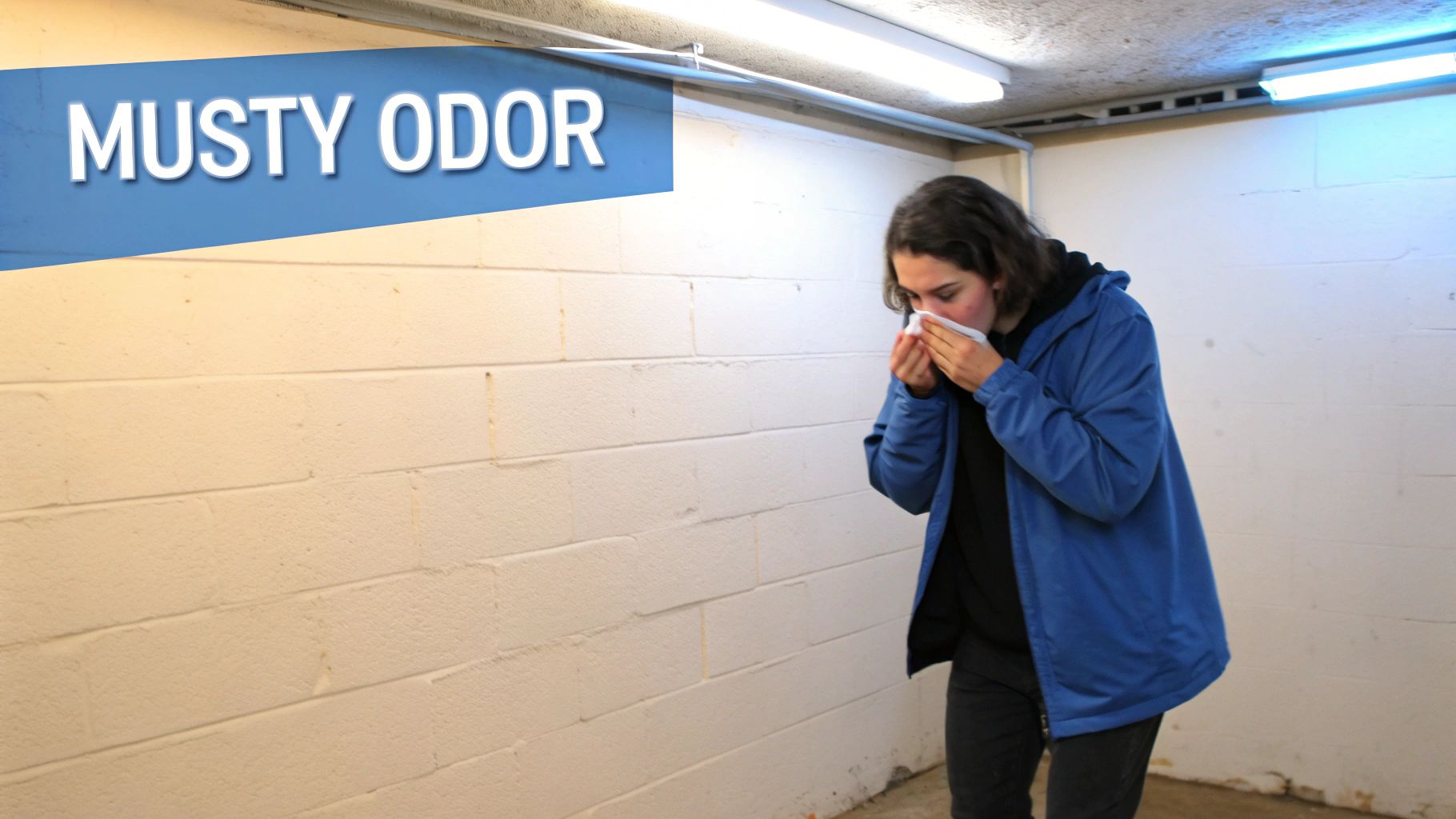
This smell is not just a sign of dampness; it's a direct byproduct of active mold growth. The odor can be more pronounced in enclosed areas with poor ventilation or when you first enter a room that has been closed up for a while. Ignoring a musty scent allows the underlying moisture issue and mold growth to worsen, potentially leading to more significant damage and health concerns.
Common Examples of Mold-Related Odors
- Basement and Crawl Space Smell: A persistent earthy or damp soil odor in a basement often points to mold growing on foundation walls, behind stored items, or within the subfloor due to high humidity or water intrusion.
- HVAC System Odor: If a musty smell is strongest when your air conditioner or heater turns on, it's a strong indicator of mold contamination within the ductwork or on the evaporator coils.
- Attic Mustiness: A stale, musty odor in an attic frequently signals a slow roof leak or poor ventilation, creating the perfect damp environment for mold to thrive on wood and insulation.
Actionable Tips for Odor Detection
Your nose is one of the best tools for discovering hidden mold. Use it strategically to pinpoint potential problem areas before they escalate.
- Trust Your Instincts: If something smells "off," musty, or damp, don't dismiss it. The scent is a clear indicator that warrants a closer look.
- Isolate the Source: Close doors to different rooms for several hours. Open each one and sniff the air to determine if the odor is stronger in a specific location, helping you narrow down the search.
- Check After Ventilation: Open windows to air out a room. If the musty smell returns quickly after closing them, it suggests an active, ongoing source of moisture and mold.
- Perform a "Container Test": Place items like books or fabrics from a suspect area into a sealed plastic bag. Open it a day later in a neutral space; if the musty odor is present, you've confirmed the items are affected.
3. Water Staining and Discoloration Patterns
Water stains are the tell-tale footprints of moisture intrusion, and where there is moisture, mold is often close behind. These persistent marks, rings, and discoloration patterns on ceilings, walls, or floors are more than just cosmetic issues; they are critical signs of mold in home environments, indicating past or present water problems. These stains reveal precisely where moisture has saturated building materials, creating the ideal breeding ground for mold colonies to develop, often within the wall cavity or attic space itself.

The shape and location of these stains offer valuable clues about the source of the water. A circular stain on a ceiling might point to a plumbing leak from the floor above, while streaks running down a wall could indicate a roof leak, a compromised window seal, or heavy condensation. Ignoring these patterns means ignoring the root cause, allowing hidden mold to flourish.
Common Examples of Water Staining
- Ceiling Stains: Yellow or brown rings on the ceiling are often the first sign of a roof leak or a plumbing issue in an upstairs bathroom, suggesting mold may be growing in the attic insulation or ceiling joists.
- Wall Discoloration: Dark streaks or blotches near windows, especially in coastal areas like Ventura, can signal condensation buildup or failing window seals that let moisture seep into the wall.
- Foundation Stains: A "tide line" or discoloration at the base of basement walls indicates groundwater seepage or poor exterior drainage, creating prime conditions for mold growth on concrete and drywall.
- Stains Around Pipes: Discoloration on the wall or in the cabinet around plumbing fixtures is a clear indicator of a slow, hidden leak that is feeding mold growth behind the scenes.
Actionable Tips for Investigating Stains
Before painting over a stain, it's crucial to investigate the underlying moisture issue to prevent a recurring mold problem.
- Trace the Moisture Path: Map the staining patterns to identify where the water is coming from and where it is traveling. This helps pinpoint the source of the intrusion.
- Use a Moisture Meter: A moisture meter can confirm if the area beneath a stain is currently damp, even if it feels dry to the touch. This helps determine if the leak is active.
- Check After Rain: Monitor known stains after heavy rainfall or periods of high humidity. If the stain darkens or expands, you have an active leak that needs immediate attention.
- Document and Track: Take dated photos of any water stains. This allows you to monitor for changes over time and provides valuable information for a professional inspector.
4. Warped or Buckled Surfaces
When building materials absorb moisture over an extended period, they often begin to warp, buckle, or swell. This physical deformation of surfaces like walls, ceilings, and floors is a serious warning sign, indicating not just water damage but also a high probability of hidden mold growth. The structural changes occur because materials like wood, drywall, and particleboard expand as they become saturated, creating the perfect environment for mold to colonize within the compromised structure.
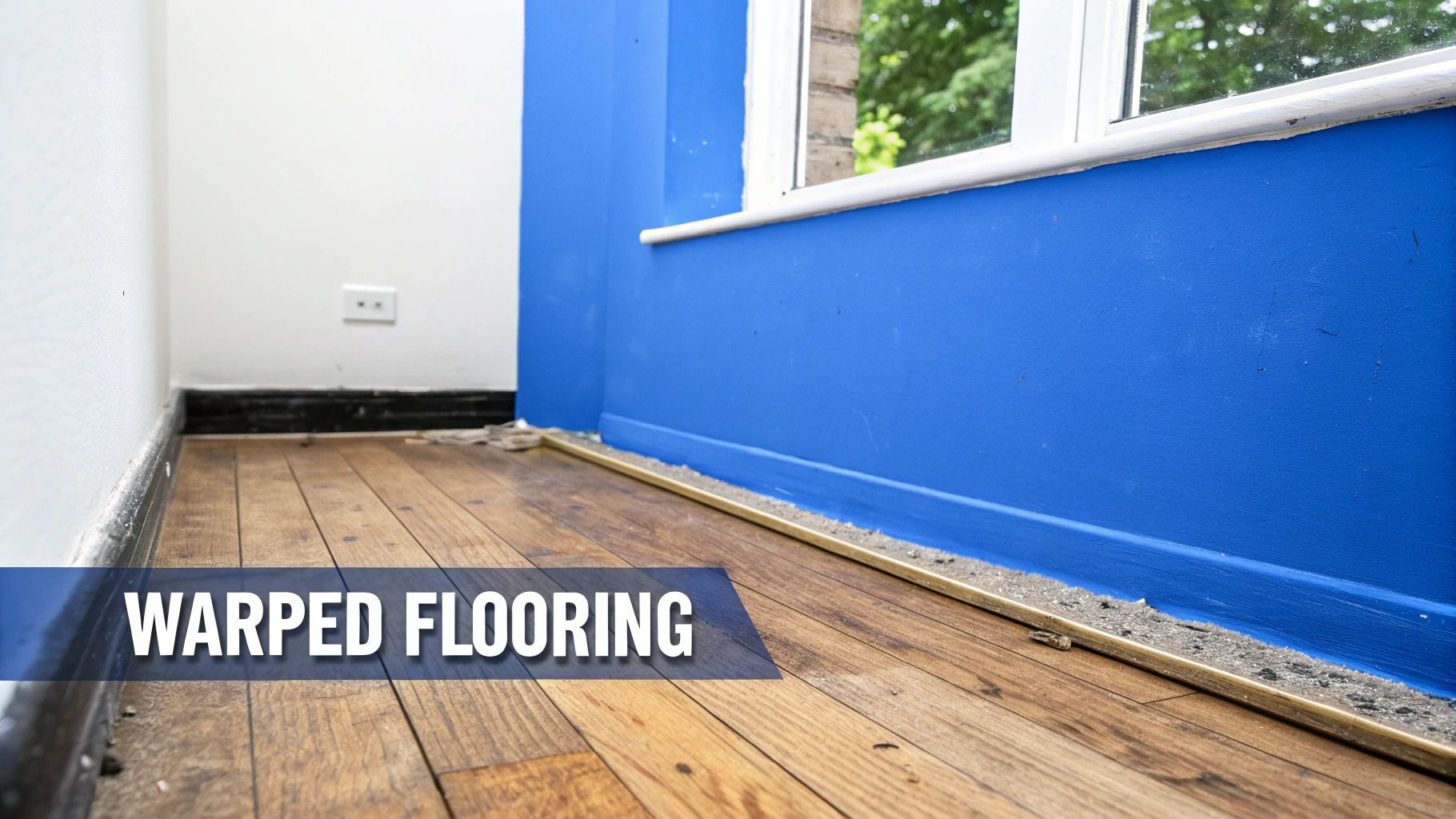
These deformations are not merely cosmetic issues; they point to a significant, underlying moisture problem that has been active long enough to alter the physical integrity of your home. Addressing the source of the water is critical, as the damaged materials are likely harboring extensive mold colonies that are feeding on the cellulose and releasing spores into your indoor air.
Common Examples of Warped Surfaces
- Buckled Hardwood Floors: Planks that are cupping, crowning, or pulling away from the subfloor often signal moisture seeping up from a crawlspace, a slab leak, or a significant spill that wasn't properly dried.
- Swollen Drywall or Baseboards: Areas of drywall that appear bloated or bubbled, especially near plumbing fixtures or along the floor, are classic signs of a persistent leak behind the wall.
- Warped Ceiling Panels: Stains accompanied by sagging or warping in ceiling tiles or drywall are a direct indication of a roof leak or a plumbing issue in the floor above.
- Bent Wooden Framing: In basements or attics, visible warping or bending of wooden studs or joists points to severe, long-term water intrusion that compromises structural safety and fuels mold growth.
Actionable Tips for Warped Areas
Discovering warped surfaces requires immediate investigation to stop the water source and assess the extent of the mold.
- Trace the Moisture Source: The first step is to identify and repair the leak. Check nearby pipes, appliances, roofing, and foundations to find where the water is coming from.
- Use a Moisture Meter: A moisture meter can help you determine the moisture content in the affected wood or drywall. Readings above 20% indicate conditions ripe for mold growth.
- Improve Ventilation: In areas prone to high humidity, such as basements and bathrooms, increase airflow with fans and ensure exhaust vents are functioning correctly to help dry out the materials.
- Install a Dehumidifier: For chronically damp spaces like basements or crawlspaces, using a dehumidifier can help pull excess moisture from the air and surrounding structures, making the environment less hospitable to mold.
- Seek Professional Assessment: If the warping is extensive or affects structural components, it's crucial to call a professional for a comprehensive mold inspection to determine the scope of the contamination and the necessary remediation.
5. Increased Humidity Levels and Condensation
While not mold itself, excessive humidity is one of the most reliable precursors to a mold problem. High indoor humidity creates a damp environment where mold spores can easily activate and colonize. When warm, moisture-rich air comes into contact with a cooler surface, condensation forms, providing a direct water source for mold. Consistently high humidity levels, especially above 60%, are a critical warning sign that your home is a prime breeding ground for mold.
This persistent moisture can dampen walls, seep into wood, and saturate textiles without any obvious leak being present. Organizations like the Environmental Protection Agency (EPA) explicitly state that controlling moisture is the key to controlling mold. Ignoring high humidity and condensation is like leaving the welcome mat out for a mold infestation.
Common Examples of High Humidity
- Window Fog: Condensation collecting on the inside of windows, especially in the morning, indicates that your home’s air is holding too much moisture for its temperature.
- Damp Basement Air: A perpetually clammy or damp feeling in a basement, often accompanied by condensation on cold water pipes or concrete walls, is a classic sign of a humidity issue.
- Lingering Steam: If your bathroom mirrors and walls stay wet long after a shower, it signals poor ventilation that traps humid air, encouraging mold growth on grout and ceilings.
Actionable Tips for Managing Humidity
Managing your home’s moisture levels is a proactive strategy to prevent mold growth before it starts. Consistent monitoring and control are essential.
- Use a Hygrometer: Purchase an inexpensive digital hygrometer to monitor your home’s relative humidity. Aim to keep levels between 30% and 50% year-round.
- Ventilate Properly: Run exhaust fans in kitchens and bathrooms for at least 30 minutes during and after cooking or showering to expel moist air.
- Deploy a Dehumidifier: In naturally damp areas like basements, crawl spaces, or poorly ventilated rooms, a dehumidifier is your best defense against ambient moisture.
- Ensure Good Airflow: Open windows when possible and use fans to circulate air, which helps prevent moist, stagnant pockets where mold thrives, particularly important in coastal areas like Santa Barbara and Ventura.
6. Allergic Reactions and Respiratory Symptoms
Sometimes, the most telling signs of mold in a home are not seen but felt. An unexplained increase in allergic reactions, asthma flare-ups, or persistent respiratory issues among household members can be a significant indicator of hidden mold contamination. When mold grows, it releases microscopic spores into the air that, when inhaled, can trigger an immune response in sensitive individuals, leading to a host of uncomfortable and concerning health symptoms. If you notice these issues seem to worsen inside your home, it's a critical clue that your indoor environment may be the culprit.
These health symptoms are your body's way of reacting to an irritant in the air. The consistent presence of mold spores can lead to chronic inflammation of the respiratory system. A key diagnostic question is whether these symptoms improve when you leave the house for an extended period, like on vacation or during the workday, only to return upon re-entry.
Common Examples of Mold-Related Symptoms
- Persistent Coughing and Sneezing: A constant, unexplained cough, stuffy nose, or sneezing fits that aren't tied to a typical cold or seasonal allergies.
- Worsening Asthma: A noticeable increase in the frequency or severity of asthma attacks, particularly in children or the elderly, which may be linked to spending time in a specific room like a basement or bedroom.
- Irritated Eyes and Skin: Watery, itchy eyes, a sore throat, or unexplained skin rashes can also be reactions to airborne mold allergens.
- Visitor Reactions: A guest who is sensitive to mold might start sneezing or feel their allergies act up shortly after entering your home, providing an unbiased indicator of an indoor air quality problem.
Actionable Tips for Tracking Symptoms
To determine if health issues are linked to your home environment, you need to become a detective. Systematically tracking patterns is essential for connecting the dots between your symptoms and potential mold growth.
- Keep a Symptom Diary: Note when symptoms occur, their severity, and where in the home the person was beforehand. This helps identify trigger zones.
- Note Changes When Away: Pay close attention to how you and your family feel after being away from home for a day or more. Significant improvement is a strong sign the problem is inside your house.
- Consult a Professional: If multiple family members are experiencing new or worsening respiratory issues, discuss the possibility of indoor mold exposure with an allergist or your primary care physician.
- Investigate After Diagnosis: If a doctor confirms an allergy to mold, it should prompt an immediate and thorough inspection of your home for any hidden signs of mold growth, especially in high-moisture areas.
7. Visible Mold Growth on Organic Materials
While discoloration is a warning, seeing textured mold growth on organic materials is a definitive sign that a colony is actively feeding and reproducing. Mold requires organic matter to survive, making materials like wood, drywall paper, insulation, and fabric highly susceptible. This visible growth isn't just a surface stain; it signifies an established infestation that is actively consuming the material it inhabits and releasing spores into your home's air.
When you see three-dimensional, fuzzy, or velvety patches, you are witnessing one of the most serious signs of mold in a home. The presence of such growth means the environmental conditions, particularly moisture levels, are ideal for its continued expansion. It often points to a significant underlying water issue that has persisted long enough for the mold to colonize and thrive.
Common Examples of Mold on Organic Materials
- Fuzzy White Growth: Often found on wood joists in crawl spaces or on insulation in damp basements, this indicates high humidity and poor ventilation.
- Greenish-Black Patches: Visible on drywall behind a leaky pipe or on ceiling tiles below a roof leak, this suggests direct and prolonged water damage.
- Mold on Stored Items: Cardboard boxes, old clothing, or upholstered furniture stored in a damp garage or basement can become covered in mold, as these items provide an ample food source.
Actionable Tips for Handling Visible Growth
Discovering established mold growth requires a cautious and immediate response to prevent cross-contamination and further spread.
- Do Not Disturb: Avoid touching, scrubbing, or disturbing the mold. Agitating the colonies can release a massive number of spores into the air, spreading the problem to other areas of your home.
- Isolate the Area: If possible, close off the room or area from the rest of the house. Shut off any HVAC systems that might circulate the contaminated air.
- Document Everything: Before any cleanup begins, take clear photos of the growth. This documentation is crucial for insurance claims and for professional mold remediation specialists to assess the scope of the problem.
- Call a Professional Immediately: Extensive visible growth, especially on porous materials like drywall or insulation, requires professional containment and removal. Experts like Pacific Mold Pros can safely address the contamination and the moisture source.
8. Peeling Paint and Wallpaper
When paint begins to bubble, peel, or crack, or when wallpaper starts to lift and separate from the wall, it's a clear red flag. These surface-level issues are often not just cosmetic flaws but are direct indicators of an underlying moisture problem, which is a primary ingredient for mold growth. As moisture penetrates the wall substrate (like drywall or wood), it pushes the paint or wallpaper away, breaking its bond and creating a perfect, hidden environment for mold colonies to flourish.
This surface failure is a physical manifestation of excessive moisture vapor trying to escape. As mold grows on the drywall or plaster beneath the paint, it degrades the material and further contributes to the peeling and bubbling. Ignoring this sign means you're only seeing the tip of the iceberg, while a significant mold problem may be developing out of sight.
Common Examples of Moisture-Related Damage
- Bathroom Blistering: Paint bubbling or peeling near the ceiling or around shower tiles is a classic symptom of high humidity and poor ventilation, creating ideal conditions for mold growth on the drywall.
- Wallpaper Separation: Wallpaper seams lifting or bubbling in a kitchen or dining room can indicate a slow leak from plumbing within the wall or high condensation levels.
- Exterior Paint Failure: Bubbling or peeling paint on exterior walls, especially near gutters or windows, often points to water intrusion that can lead to mold growth inside the wall cavity.
- Basement Paint Bubbling: Flaking or bubbling paint on concrete or drywall in a basement is a strong sign of hydrostatic pressure or groundwater seeping through the foundation.
Actionable Tips for Damaged Surfaces
Simply scraping off the old paint and applying a new coat is a temporary fix that traps the problem. A proper approach is crucial to resolve the underlying issue.
- Investigate the Source First: Before any cosmetic repairs, identify and fix the source of the moisture. Whether it's a leaky pipe, poor ventilation, or exterior water intrusion, this step is non-negotiable.
- Carefully Remove Damaged Finishes: Gently scrape away all peeling paint or remove the affected wallpaper section to inspect the wall substrate underneath for visible mold growth, which often appears as dark, splotchy stains.
- Improve Area Ventilation: Enhance airflow in high-humidity zones like bathrooms and kitchens. Use exhaust fans during and after showers or cooking, and consider a dehumidifier for basements.
- Use Mold-Resistant Products: Once the area is clean, dry, and confirmed to be mold-free, use a moisture-resistant primer and mold-inhibiting paint for a more durable, long-term solution.
9. Dust and Debris with Musty Smell
A persistent accumulation of dust or debris, especially when paired with a distinct musty odor, is a strong indicator of active mold growth and sporulation. This is not ordinary household dust; it's often a mix of settled mold spores, fragmented mold colonies, and decaying organic material. When mold grows and reproduces, it releases millions of microscopic spores into the air, which eventually settle on surfaces, creating a dusty or grainy film that continuously returns even after cleaning.
This combination of visual (dust, debris) and olfactory (musty smell) signs is particularly concerning because it points directly to airborne contamination. The particles you see and the odor you smell are evidence that a mold colony is actively releasing contaminants into your living space, which can significantly impact indoor air quality and trigger allergic reactions.
Common Examples of Mold-Related Debris
- Grainy Dust in HVAC Vents: Discovering fine, grainy debris inside air ducts or settled on vent covers, accompanied by a strong odor when the system runs, suggests mold is growing within the HVAC system.
- Musty Coating on Stored Items: A dusty coating on items stored in a basement, attic, or closet that smells distinctly earthy or musty often indicates high humidity and active mold growth in the space.
- Fine Particles on Attic Insulation: A layer of fine, discolored dust or visible particles on attic insulation is a classic red flag for a roof leak or poor ventilation that has allowed mold to thrive.
Actionable Tips for Investigating Suspicious Dust
When you suspect dust is mold-related, it's crucial to investigate safely to avoid dispersing spores and inhaling contaminants.
- Wear an N95 Mask: Before disturbing any suspicious dust or debris, wear a properly fitted N95 mask to protect your respiratory system from inhaling mold spores.
- Avoid Dry Disturbance: Do not sweep or dry-wipe the material, as this will make the spores airborne. Instead, use a vacuum with a HEPA filter to safely capture the particles.
- Document Before Cleaning: Take clear photos of the dusty accumulation before you attempt any cleanup. This documentation can be invaluable for a professional analysis.
- Test Air Quality: If you continuously find musty dust and are concerned about what you're breathing, consider a professional air quality test to identify the types and concentration of mold spores present.
10. Headaches, Fatigue, and Neurological Symptoms
While respiratory issues are commonly linked to mold, some species produce mycotoxins that can lead to neurological symptoms. If you or your family members experience persistent headaches, chronic fatigue, brain fog, or memory issues that seem to worsen inside your home, it could be another insidious sign of mold. These health effects are often overlooked but can point to a serious contamination issue that requires immediate attention to protect your well-being.
These symptoms arise from the body's inflammatory response to inhaled mycotoxins, which can cross the blood-brain barrier and impact the central nervous system. Unlike a common cold or seasonal allergies, these issues don't resolve with standard treatments and often improve dramatically when you spend extended time away from the affected environment.
Common Examples of Neurological Symptoms
- "Office" Headaches: An office worker experiences debilitating headaches and difficulty concentrating during the work week but feels perfectly fine on weekends, later traced to a hidden mold problem in the building's HVAC system.
- Unexplained Family Fatigue: A family constantly feels lethargic and "run-down" at home. After leaving for a week-long vacation, their energy levels return to normal, only to plummet again upon their return, signaling an environmental cause.
- Cognitive Decline: A senior citizen begins showing signs of memory loss and confusion, which their doctor initially attributes to aging. However, the symptoms significantly improve after a professional remediation removes a large mold colony from their basement.
Actionable Tips for Tracking Symptoms
If you suspect your health issues are linked to your home environment, systematic tracking is crucial for identifying a pattern.
- Keep a Symptom Journal: Note the time, location, and severity of symptoms like headaches, dizziness, or fatigue. Look for patterns related to being in specific rooms or at home versus away.
- Document Environmental Changes: Correlate symptom flare-ups with recent events like a water leak, a musty smell appearing, or running the air conditioning for the first time in a season.
- Consult a Physician: Always discuss your symptoms with a doctor to rule out other potential medical causes. Be sure to mention your suspicion of environmental factors in your home.
- Trust Your Instincts: If you consistently feel better when you are away from home, it is a strong indicator that an indoor environmental problem, such as hidden mold, needs to be investigated by a professional.
10 Common Home Mold Signs Compared
| Sign / Indicator | Implementation Complexity 🔄 | Resource Requirements ⚡ | Expected Outcomes ⭐📊 | Ideal Use Cases 💡 | Key Advantages ⭐ |
|---|---|---|---|---|---|
| Dark Spots and Discoloration on Surfaces | Low 🔄 visual detection | Minimal ⚡ flashlight, camera | High confidence ⭐⭐⭐ — confirms surface colonization | Routine inspections in bathrooms, kitchens, basements | Easy to spot, pinpoints problem areas |
| Musty Odor Detection | Low–Medium 🔄 subjective sensing | Minimal ⚡ walkthrough, ventilation check | Early warning ⭐⭐ — often precedes visible growth 📊 | Hidden mold detection in attics, HVAC, crawl spaces | Detects hidden contamination before visual signs |
| Water Staining and Discoloration Patterns | Low 🔄 visual + simple testing | Low ⚡ camera, optional moisture meter | Moderate–High ⭐⭐📊 — indicates moisture source and historical leaks | Roof leaks, ceilings, post-rain inspections, insurance claims | Identifies moisture paths and likely leak sources |
| Warped or Buckled Surfaces | Medium–High 🔄 indicates advanced damage | Medium ⚡ moisture meter, structural assessment, pro | High impact ⭐⭐⭐📊 — signals severe moisture and likely mold | Post-flood, chronic leaks, structural evaluations | Urgent indicator of extensive damage needing remediation |
| Increased Humidity Levels and Condensation | Low 🔄 continuous monitoring | Low ⚡ hygrometer, dehumidifier, sensors | Preventive ⭐⭐ — measurable early indicator 📊 | Ongoing monitoring in basements, bathrooms, kitchens | Quantifiable metric, enables preventive action |
| Allergic Reactions and Respiratory Symptoms | High 🔄 requires correlation & medical input | Medium ⚡ symptom logs, medical tests, environmental assessment | Indicative ⭐⭐ — suggests hidden contamination affecting health 📊 | Multiple occupants with new/worsening respiratory issues | Alerts to health risk and motivates investigation |
| Visible Mold Growth on Organic Materials | Low 🔄 obvious visual confirmation | Medium ⚡ PPE, HEPA cleanup, likely professional removal | Definitive confirmation ⭐⭐⭐📊 — active colonization requiring action | Immediate remediation, containment of affected materials | Unambiguous evidence of mold presence |
| Peeling Paint and Wallpaper | Low 🔄 visual cue of underlying moisture | Low ⚡ inspection, moisture meter | Moderate ⭐⭐ — suggests moisture and possible hidden mold 📊 | Renovation checks, areas with adhesive failure, post-leak | Visible prompt to investigate substrate and moisture source |
| Dust and Debris with Musty Smell | Medium 🔄 requires careful inspection/testing | Medium ⚡ N95, HEPA vacuum, possible lab testing | High impact ⭐⭐⭐📊 — indicates active sporulation and airborne spores | Ducts, storage areas, heavy contamination suspicion | Confirms airborne contamination and health hazard |
| Headaches, Fatigue, and Neurological Symptoms | High 🔄 complex medical-environmental link | High ⚡ physician evaluation, specialized mold/mycotoxin testing | Indicative but uncertain ⭐⭐ — potential serious health impact 📊 | Persistent unexplained symptoms improving away from home | Signals possible mycotoxin exposure; escalates urgency for professional assessment |
Take the Next Step: Your Action Plan for a Mold-Free Home
Navigating the potential presence of mold in your home can feel overwhelming. Throughout this guide, we've explored the diverse and often subtle signs of mold in home environments, moving beyond the obvious dark spots to include less apparent indicators like persistent musty odors, warped building materials, and unexplained health symptoms. You now have the knowledge to connect peeling paint to a hidden leak or recognize that chronic headaches and fatigue could be linked to your indoor air quality.
The key takeaway is that mold is not just a cosmetic issue; it's a potential threat to both your property's structural integrity and your family's health. Ignoring these signs allows the problem to escalate, leading to more extensive damage and costlier repairs down the line. Awareness is your first line of defense, but informed action is what secures a safe and healthy living space.
From Awareness to Action: A Clear Path Forward
Recognizing the signs is a critical first step, but what you do next is what truly matters. Your home, especially in the coastal climates of Santa Barbara and Ventura Counties, provides an ideal environment for mold to thrive if moisture is present. Don't let uncertainty dictate your next move.
Here is a simple, actionable plan to transition from suspicion to a definitive solution:
- Review and Document: Go back through the signs discussed in this article. Walk through your home, room by room, and take note of any potential indicators you observe. Photograph suspicious areas like discolored walls, condensation on windows, or stained ceiling tiles. This documentation is invaluable for a professional inspection.
- Avoid Ineffective DIY Solutions: Resist the urge to scrub visible spots with bleach. While it may remove the surface stain, it often fails to kill the underlying mold spores and can even release them into the air, worsening the problem. Furthermore, it does not address the moisture source that allowed the mold to grow in the first place.
- Prioritize Professional Assessment: The most crucial step is to seek expert evaluation. Hidden mold within walls, attics, crawlspaces, or HVAC systems is impossible to assess without specialized equipment. A professional inspection provides certainty, identifying the type of mold, the extent of the contamination, and the underlying moisture issue.
Why Professional Mold Testing is Non-Negotiable
Guesswork has no place when it comes to your health. While you can now spot the potential signs of mold in home, only a certified professional can confirm the severity of the issue.
Key Insight: A comprehensive mold inspection isn't just about finding mold; it's about finding the why. Our certified inspectors at Pacific Mold Pros use advanced tools like thermal imaging and moisture meters to trace the contamination back to its source, providing a permanent solution rather than a temporary fix.
By engaging a professional, you gain access to:
- Accurate Lab Analysis: Air and surface samples are sent to an accredited laboratory to identify the specific mold species and spore concentration, providing a clear picture of your indoor air quality.
- A Detailed Remediation Blueprint: You receive a comprehensive report that outlines the findings and provides a clear, step-by-step protocol for safe and effective remediation, if needed.
- Peace of Mind and Certification: For homeowners, buyers, and builders, a professional clearance and a Mold-Free Certification provide documented proof that the property is safe, protecting its value and its occupants.
Your home should be a sanctuary, a place where you can relax and breathe easy. Don't let the subtle signs of mold compromise that. You've done the hard work of educating yourself; now, let us provide the professional certainty you need. Contact Pacific Mold Pros at (805) 232-3475 to schedule your comprehensive inspection and take the definitive step toward a healthy, mold-free home.