A persistent musty smell, unexplained allergy symptoms, or subtle discoloration on your walls can be more than just minor annoyances. These are often early warnings of a hidden mold issue. Understanding the key signs of mold in house is the first critical step toward protecting both your property’s structural integrity and your family’s health from potential harm.
Mold is an insidious problem that thrives in damp, dark, and poorly ventilated environments. It frequently grows undetected behind walls, under flooring, in attics, or deep within crawl spaces, making it difficult to spot until the problem becomes significant. For residents in coastal California, where marine layers and high humidity are common, vigilance is especially important. Ignoring the initial indicators allows colonies to spread, potentially leading to costly remediation and adverse health effects.
This comprehensive guide is designed to empower you with the knowledge needed to identify a potential problem before it escalates. We will walk you through the eight most critical indicators of mold, covering everything from the obvious visual cues to the more subtle, invisible signs. You will learn what these signals mean, how to perform simple DIY checks to investigate further, and receive clear, actionable steps for homeowners and renters. Our goal is to help you confidently determine if your home is safe and understand exactly when professional intervention is necessary to ensure a healthy living space.
1. Visible Black or Green Discoloration on Surfaces
The most straightforward and alarming of all the signs of mold in a house is seeing it with your own eyes. Dark, unsightly patches or spots appearing on walls, ceilings, tile grout, or other surfaces are the classic visual indicators of active mold colonization. This discoloration is not just dirt; it's a living organism feeding on organic materials in your home, like wood, drywall, and even dust.
These spots can vary in color, appearing as shades of black, green, brown, or even white and orange, depending on the mold species and the surface it's growing on. Noticing this visible growth is a clear signal that both a mold colony and an underlying moisture problem are present and require immediate attention.
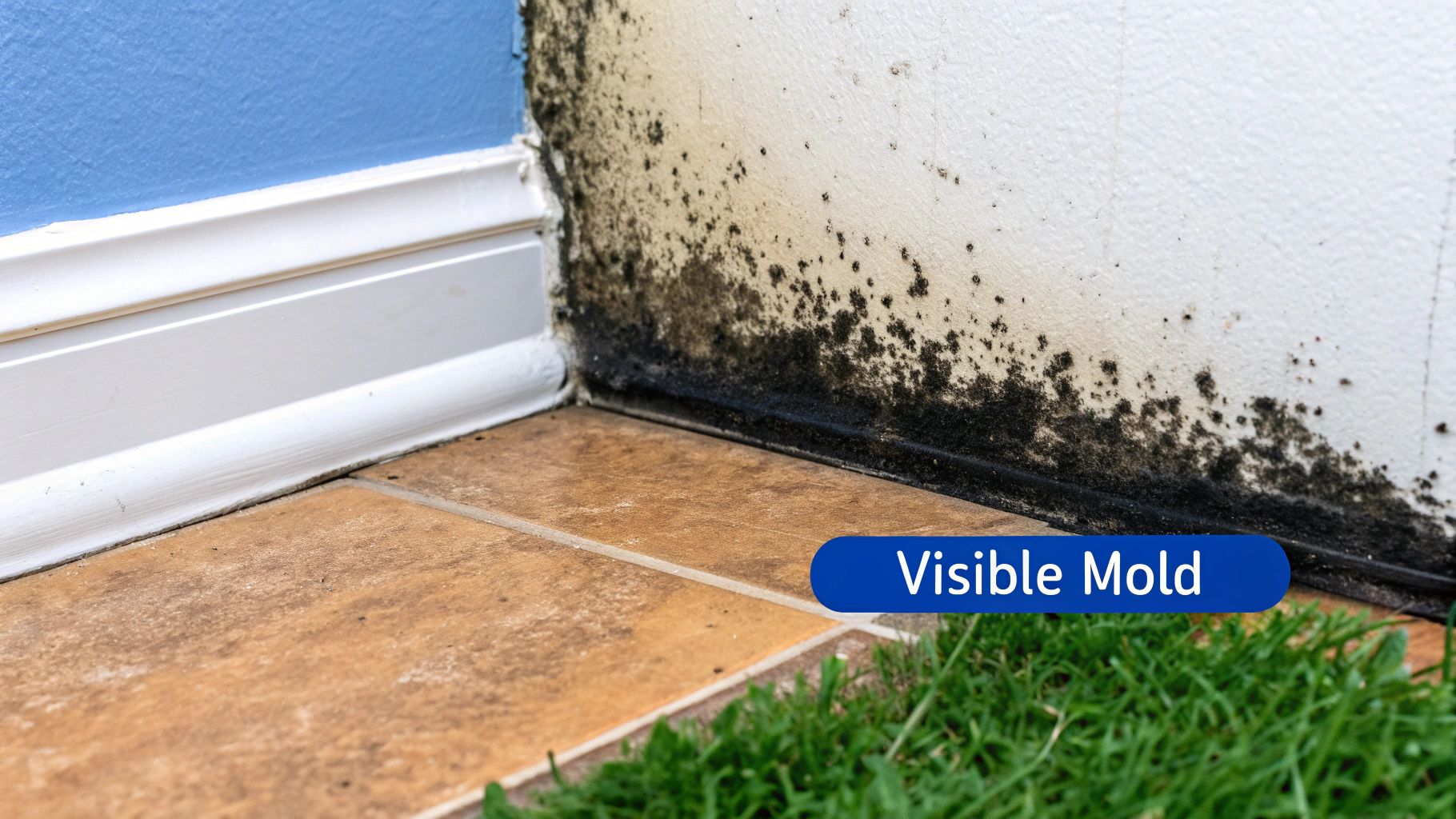
Where to Look for Visible Mold
Mold thrives in damp, dark, and poorly ventilated areas. Be extra vigilant when inspecting these common hotspots in your home:
- Bathrooms: Check tile grout, around the tub and shower, under the sink, and on ceilings where steam collects.
- Basements and Crawl Spaces: Inspect corner walls, areas around pipes, and any place where leaks or flooding may have occurred.
- Kitchens: Look under sinks, behind refrigerators, and on ceilings above stoves where condensation forms.
- Windows and Attics: Examine window frames and sills for fuzzy growth and check attic insulation for dark stains from roof leaks.
Actionable Tips for Homeowners
If you spot discoloration, don't ignore it. The visible portion is often just the "tip of the iceberg," with a more extensive network hidden behind the surface.
- Document Everything: Before you touch anything, take clear photos of the affected area. This documentation is invaluable when you consult with a professional from Pacific Mold Pros for an assessment.
- Avoid Painting Over It: A common mistake is to cover mold with paint. This does not solve the problem. The mold will continue to grow underneath and eventually reappear, while the moisture issue remains unaddressed.
- Distinguish Mold from Mildew: Mildew is a surface-level fungus that can often be wiped away with a household cleaner. True mold growth often indicates deeper penetration into the material. If the stain returns quickly after cleaning or seems embedded, it's likely a more significant mold problem.
2. Musty Odors and Unpleasant Smells
Long before you see any discoloration, your nose might be the first to detect one of the most common signs of mold in a house: a distinctive musty odor. This persistent, earthy smell, often compared to damp soil or rotting leaves, is caused by Microbial Volatile Organic Compounds (MVOCs). These are gasses released by mold as it grows and digests organic materials, making that unpleasant smell a direct indicator of active fungal metabolism somewhere in your home.
This odor is a crucial early warning sign because it can travel through your HVAC system and permeate areas far from the actual mold colony. If you notice a musty smell that gets stronger in certain rooms or worsens after rain, it’s a clear signal to investigate for hidden moisture and mold, even if you can't see anything yet.
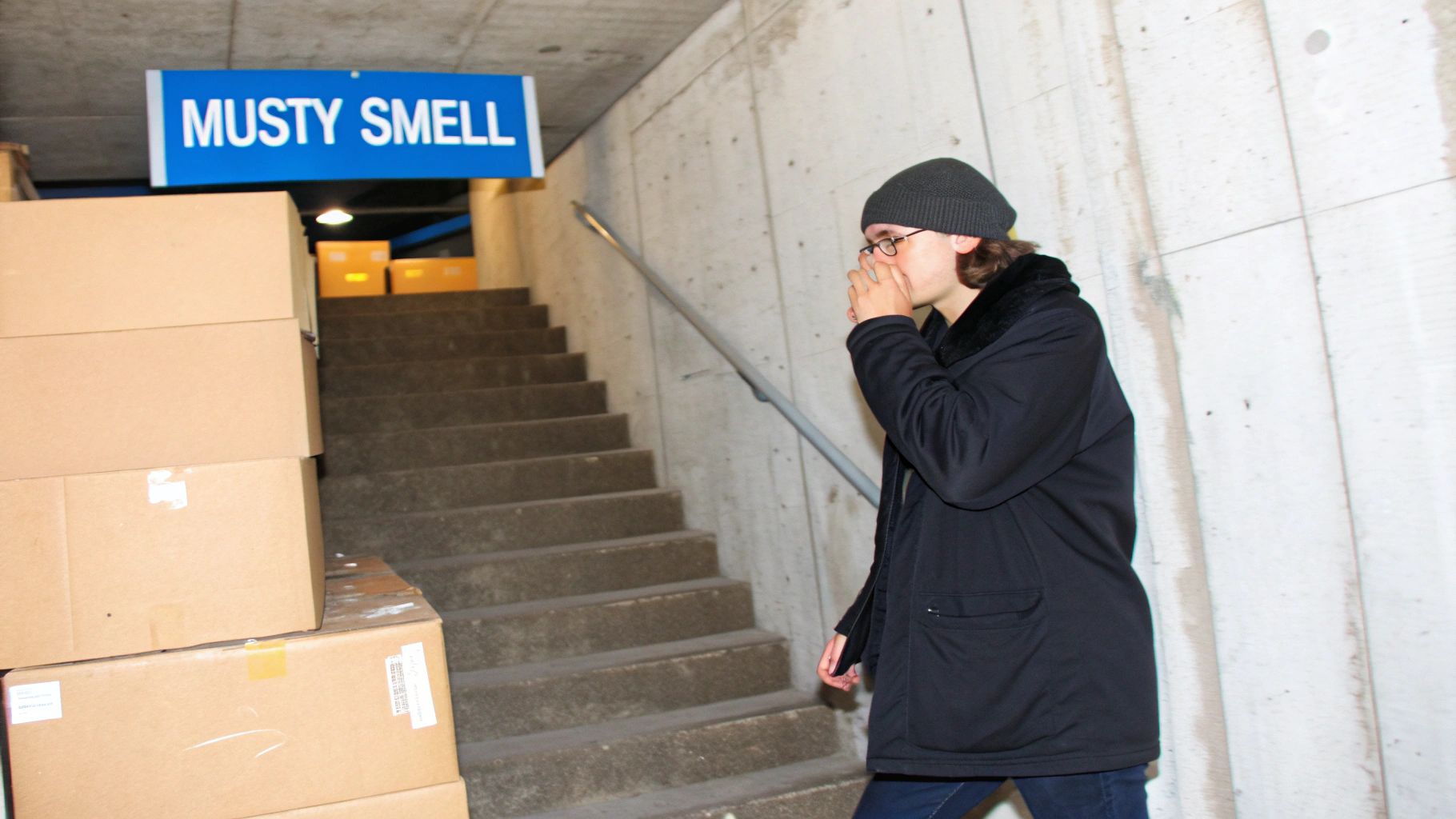
Where Odors Are Most Common
Because these smells are linked to moisture and poor airflow, they tend to concentrate in specific areas. Pay close attention if the musty scent is strongest in these locations:
- Basements and Crawl Spaces: These below-grade areas are notorious for dampness, providing the perfect breeding ground for mold that produces strong, pervasive odors.
- Bathrooms: Check around plumbing fixtures, inside vanities, and near exhaust fans where lingering moisture can lead to hidden mold growth.
- Laundry Rooms: The areas behind washing machines, around utility sinks, and near dryer vents are common hotspots for moisture and resulting smells.
- Attics and Closets: Poorly ventilated spaces that can trap humidity from roof leaks or condensation often develop a stale, musty smell over time.
Actionable Tips for Homeowners
Trust your sense of smell; it's a powerful tool for early mold detection. If a musty odor persists, it’s not something to get used to.
- Follow Your Nose: Try to pinpoint the source of the smell. Does it get stronger when you open a specific cabinet or turn on the HVAC system? This can help narrow down the search area.
- Test with Ventilation: Open windows and use fans to air out a room. If the musty smell returns quickly after you close everything up, it suggests an active, ongoing source within the home rather than stale air.
- Don't Just Mask It: Using air fresheners, candles, or diffusers only covers up the problem. The MVOCs are still present in the air, and the underlying mold and moisture issue will continue to worsen if not addressed. Learn more about how to determine if that musty smell is mold.
3. Water Stains and Discoloration on Walls and Ceilings
Long before mold becomes visible, the conditions that allow it to grow often leave their own calling card: water stains. Yellowish, brown, or dark, ring-like discolorations on walls and ceilings are a definitive sign of moisture intrusion. These stains indicate that water has saturated the drywall, wood, or plaster, creating the perfect damp environment where mold spores can activate and colonize.
Even if you don't see any fuzzy growth yet, a water stain is a critical warning. It tells you that a leak, high condensation, or another form of unwanted moisture has occurred, and the materials in that area may still be damp below the surface. Ignoring these stains is like ignoring a fire alarm; it points directly to a problem that requires immediate investigation before it develops into a full-blown mold infestation.
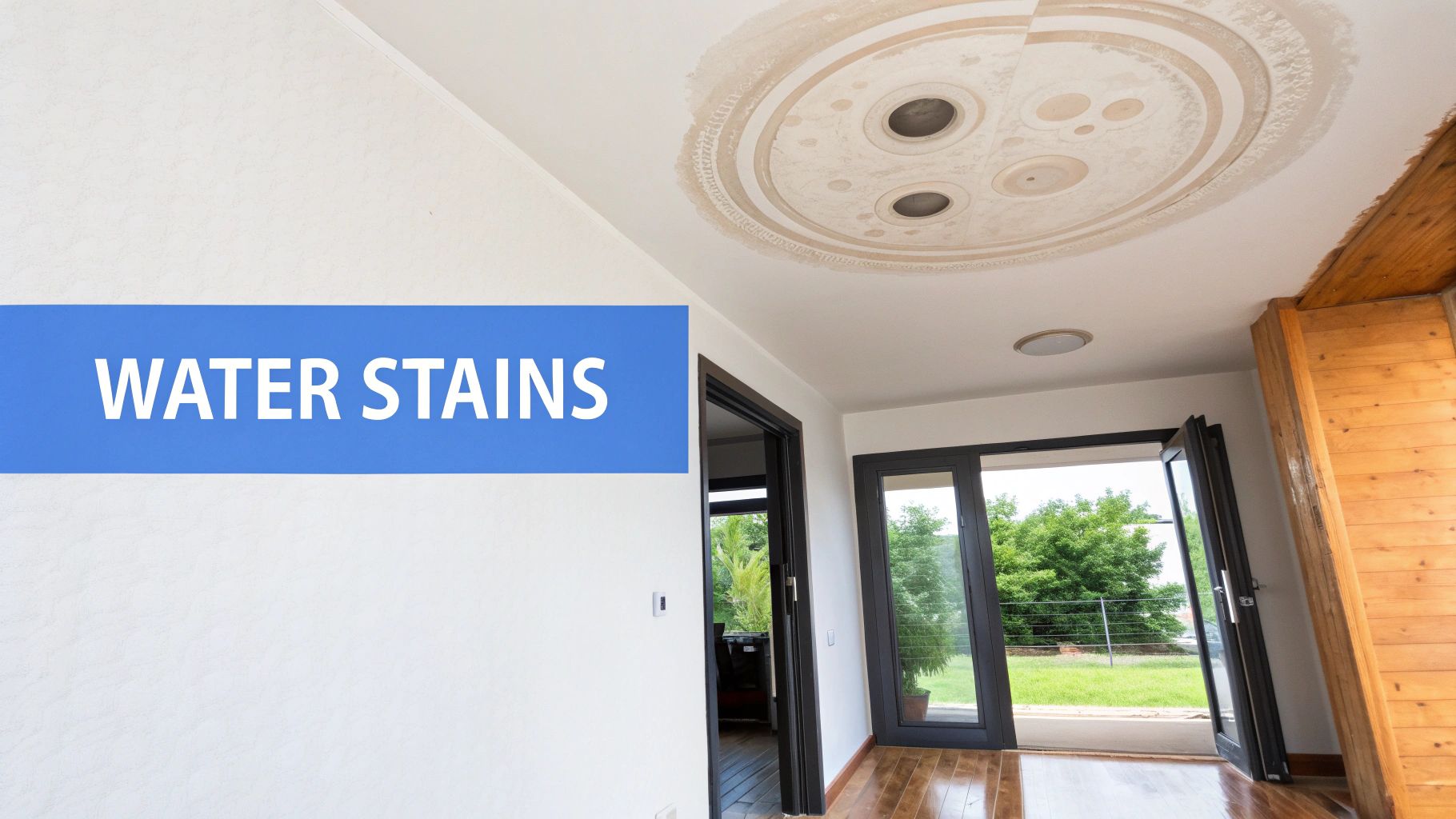
Where to Look for Water Stains
Water stains can appear anywhere, but they are most commonly found in areas susceptible to leaks and moisture buildup. Diligently check these locations for any signs of discoloration:
- Ceilings: Look for stains directly below bathrooms, laundry rooms, or attic spaces, as these often indicate plumbing or roof leaks.
- Walls: Inspect walls around windows and exterior doors, as well as those containing plumbing lines for showers and sinks.
- Basements: Examine the base of foundation walls for water rings or "tide lines" that show where water has previously sat.
- Under Sinks: Check the inside of kitchen and bathroom cabinets for stains on the cabinet floor or back wall, which signal slow pipe drips.
Actionable Tips for Homeowners
A water stain is your cue to act swiftly to prevent mold from taking hold. The key is addressing the source of the moisture and the resulting damage.
- Identify the Source: Don't just cosmetically fix the stain. Determine if it’s from a leaky roof, a faulty pipe, or a condensation issue. This is the most crucial step in preventing a recurrence. To understand more about tracking down these issues, explore our comprehensive guide to moisture intrusion solutions on pacificmoldpros.com.
- Test for Moisture: The surface of a stain might feel dry, but the material underneath can still hold significant moisture. Use a moisture meter to get an accurate reading of the saturation level within the drywall or wood.
- Ensure Thorough Drying: Once the leak is fixed, use fans and dehumidifiers to completely dry out the affected materials. This process can take several days, so be patient and continue monitoring moisture levels. If drywall is warped, bubbled, or soft to the touch, it has lost its structural integrity and should be replaced.
4. Peeling Paint or Wallpaper
When paint or wallpaper begins to bubble, peel, or crack, it's a prominent red flag for moisture trapped within your walls. This cosmetic flaw is more than just an eyesore; it's a critical sign that water has compromised the surface, creating the perfect damp environment for mold to flourish. As mold grows behind these coverings, it breaks down the adhesive and paint, causing them to separate from the drywall or plaster beneath.
This bubbling or peeling is one of the most visible signs of mold in a house because it reveals a hidden problem. The failure of the surface layer indicates that moisture has saturated the wall material, allowing mold to colonize undetected. Addressing this promptly is key to preventing the spread of mold and avoiding more significant structural damage.
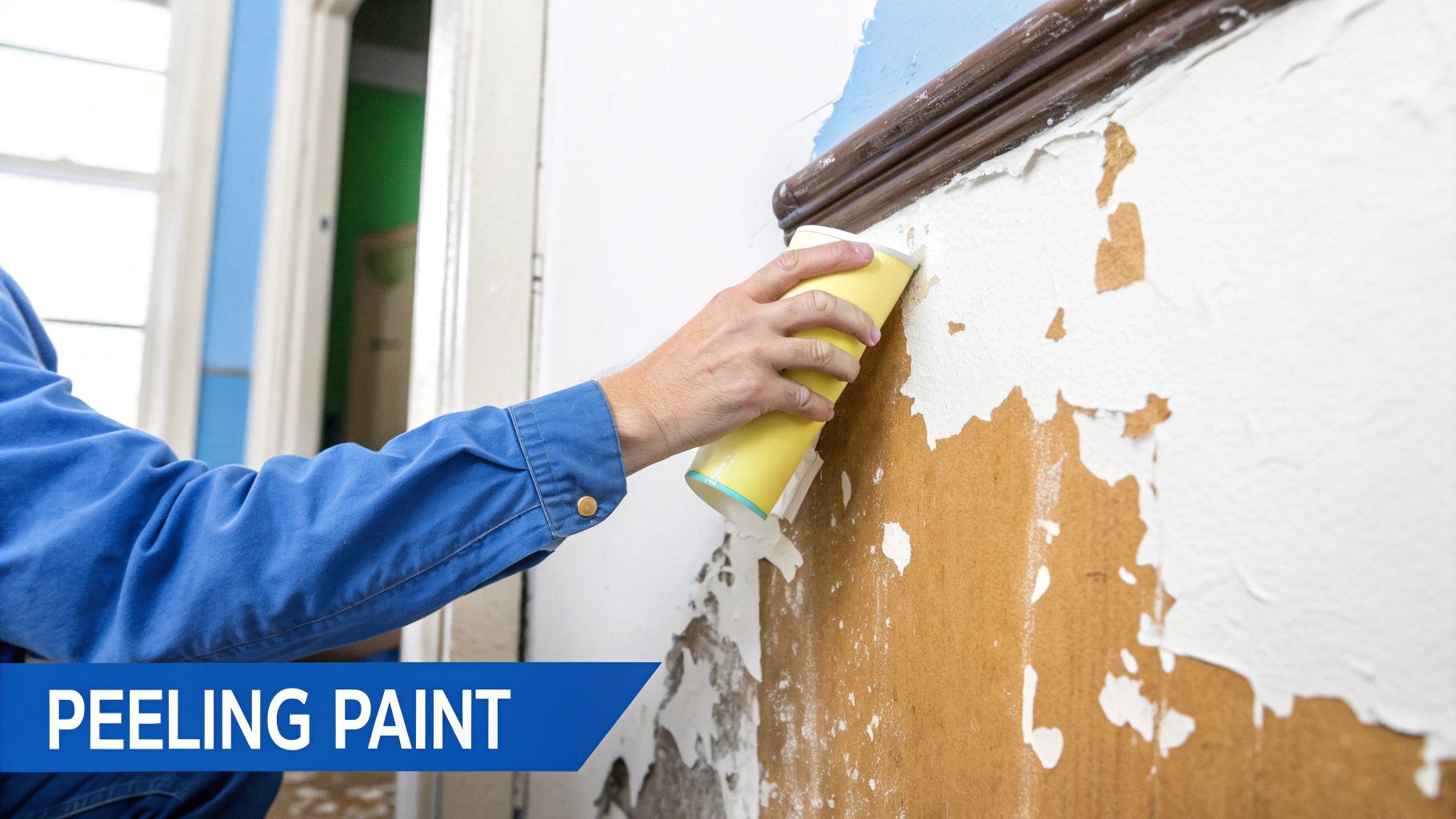
Where to Look for Peeling Surfaces
Moisture-related paint and wallpaper failure is most common in areas with high humidity, poor ventilation, or direct water exposure. Keep a close eye on these specific locations:
- Bathroom Walls: Pay special attention to areas near showers and tubs where constant steam and condensation can seep behind paint, causing it to peel.
- Basement and Exterior Walls: Look for bubbling on walls that are below ground level, as this often indicates water seepage from outside soil.
- Ceilings: Peeling or cracking paint on ceilings is a classic indicator of a roof leak or a plumbing issue in the floor above.
- Around Windows: Condensation on window panes can run down and saturate the wall below, leading to peeling paint or wallpaper right under the sill.
Actionable Tips for Homeowners
If you notice your wall coverings are failing, it’s time to investigate the root cause. Ignoring it allows the underlying moisture and mold issue to worsen.
- Never Just Repaint: Applying a fresh coat of paint is a temporary fix that traps moisture and mold, allowing it to grow even more aggressively. You must solve the water problem first.
- Carefully Investigate: Gently scrape away a small, loose section of the paint or wallpaper to inspect the wall behind it. Look for dark stains, fuzzy growth, or a musty smell.
- Test for Moisture: Use a moisture meter to check the affected wall and surrounding areas. This tool can help you pinpoint the source and extent of the water intrusion. Contacting Pacific Mold Pros for a professional moisture assessment can provide definitive answers.
- Prioritize Ventilation: Once the source of the leak is repaired, improve air circulation in the area to help the materials dry completely. For chronically damp areas like bathrooms, ensure exhaust fans are working properly.
5. Warped or Soft Drywall and Wood
Beyond musty smells or visible spots, one of the more serious physical signs of mold in a house is the deterioration of building materials themselves. If you notice drywall that feels soft or spongy to the touch, or see wood surfaces that are bowing or warping, you are witnessing evidence of prolonged moisture saturation and a likely significant mold problem. These materials become compromised as they absorb water, creating a perfect feeding ground for mold to thrive within.
When materials like drywall, baseboards, or wooden framing lose their structural integrity, it indicates an advanced stage of water damage. This is a critical warning sign that points to a hidden, long-term leak or condensation issue that has allowed mold to colonize deep within your home's structure, often out of sight.
Where to Check for Damaged Materials
This type of damage is most common where moisture can secretly accumulate over time. Use caution and a flashlight to carefully inspect these areas for changes in texture or shape:
- Ceilings and Walls: Look for bubbling or peeling paint, which is often the first sign before the drywall underneath begins to soften. Pay close attention to areas below bathrooms, laundry rooms, or attic air conditioners.
- Floors: Check for subfloors that feel spongy or soft when you walk on them, especially around toilets, tubs, and under sinks. Hardwood floors may cup or warp.
- Basements and Crawl Spaces: Examine wooden rim joists and support beams for any softness or discoloration, particularly where the foundation meets the wood structure.
- Window and Door Frames: Persistent condensation can cause the wood around windows and doors to rot, soften, and warp over time, creating an ideal habitat for mold.
Actionable Tips for Homeowners
Discovering compromised structural materials requires a swift and strategic response to prevent further damage. The integrity of your home could be at risk.
- Test with Gentle Pressure: Carefully press on suspect areas of drywall or wood. If it feels soft, crumbles, or gives way easily, a serious moisture and mold problem is almost certain.
- Document and Don't Disturb: Before any remediation begins, take detailed photos of the warped, softened, or damaged areas. This is crucial for insurance claims and for the assessment you'll get from a professional at Pacific Mold Pros. Avoid breaking open walls yourself, as this can release a massive amount of mold spores into the air.
- Replacement is Non-Negotiable: Soft, crumbling, or warped materials cannot be salvaged. Patching over the damage or simply drying it out is not a solution. The compromised materials must be professionally removed and replaced to fully eliminate the mold and restore structural safety.
- Prioritize the Source: Before any replacement work begins, the root cause of the moisture must be definitively identified and fixed. Whether it’s a plumbing leak, a roof issue, or a foundation problem, failing to stop the water source will only lead to the new materials becoming damaged all over again.
6. Respiratory Issues and Health Symptoms
Sometimes, the first signs of mold in a house are not seen but felt. An unexplained increase in allergic reactions or respiratory problems that worsen when you're at home can be a significant red flag for hidden mold growth. This occurs because mold releases microscopic spores and mycotoxins into the air, which, when inhaled, can trigger inflammatory and allergic responses in sensitive individuals.
These health-based symptoms often appear long before you find any visible mold, serving as an early warning system for poor indoor air quality. If you or your family members notice a persistent cough, sneezing, congestion, or worsening asthma that seems to correlate with time spent in a specific room or inside the house in general, it's a strong indicator that airborne mold contaminants could be the culprit.
Common Health Symptoms to Watch For
Mold exposure affects everyone differently, but certain patterns can suggest a link between your health and your home's environment. Be alert if you notice:
- Persistent Allergy-Like Symptoms: Chronic sneezing, a runny or stuffy nose, itchy eyes, and throat irritation that don't align with seasonal allergies.
- Worsening Asthma: An increase in the frequency or severity of asthma attacks, shortness of breath, or wheezing, especially for family members with pre-existing conditions.
- Chronic Coughing or Respiratory Infections: A nagging cough or frequent sinus infections that seem to improve when you spend extended time away from home, such as on vacation.
- Unexplained Headaches or Fatigue: While less specific, some individuals report persistent headaches, difficulty concentrating, or general fatigue as a reaction to mold exposure.
Actionable Tips for Homeowners
If you suspect your health symptoms are linked to your home environment, it's crucial to investigate the connection methodically. Your well-being could be directly tied to your home's air quality.
- Keep a Symptom Diary: Note when and where symptoms are most severe. For example, does your child's cough flare up only at night in their bedroom? Does your congestion clear up after an hour at the office? This log provides valuable data.
- Consult a Healthcare Provider: Discuss your symptoms and your suspicions about mold with your doctor or an allergist. They can help determine if your health issues are consistent with mold exposure.
- Improve Ventilation and Air Filtration: As a preliminary measure, use HEPA air purifiers to capture airborne spores and improve ventilation by using exhaust fans in bathrooms and kitchens. This can provide temporary relief while you investigate the source. To understand more about the pollutants affecting your home, explore our guide to indoor air quality inspections.
- Don't Dismiss the Link: If your symptoms consistently point to your home as the trigger, trust your instincts. Contact a professional from Pacific Mold Pros to conduct a thorough inspection and air quality testing to confirm or rule out a hidden mold problem.
7. Increased Humidity and Condensation
While not as direct as a visible stain, persistently high humidity and condensation are powerful early warning signs of mold in a house. These conditions signal an excess of airborne moisture, creating the ideal damp environment that mold spores need to activate and colonize surfaces. Think of it as the precursor to a bigger problem; if your home feels consistently damp, you're essentially rolling out the welcome mat for mold growth.
Excess moisture in the air often manifests as condensation, or "sweating," on colder surfaces. This happens when warm, moist air comes into contact with a cooler surface like a windowpane or a metal pipe, causing the water vapor to turn back into liquid. This consistent moisture supply is more than enough to sustain a thriving mold colony, even if you don't have an obvious leak.
Where to Look for Condensation and High Humidity
Be on the lookout for recurring moisture in these specific areas, as they often indicate poor ventilation or hidden water issues:
- Windows and Glass Doors: Fogging, beading, or puddles of water on window sills, especially in the morning or during colder weather.
- Pipes and Metal Surfaces: "Sweating" on cold water pipes in basements, crawl spaces, or under sinks.
- Walls and Ceilings: Damp spots or a clammy feeling on exterior walls or in corners, particularly in bathrooms and basements.
- General Atmosphere: A persistent muggy, sticky, or damp feeling in the air in certain rooms or throughout the house.
Actionable Tips for Homeowners
Controlling indoor humidity is one of the most effective ways to prevent mold. If you notice these signs, take immediate steps to manage the moisture level.
- Monitor Humidity Levels: Invest in an inexpensive hygrometer to measure indoor humidity. The ideal range is between 30% and 50%. Anything consistently above 60% creates a high-risk environment. You can learn more about at what humidity mold grows on pacificmoldpros.com.
- Improve Ventilation: Use exhaust fans in bathrooms and kitchens during and for at least 20 minutes after activities like showering or cooking. Ensure these fans are vented to the outside, not into the attic.
- Use a Dehumidifier: In naturally damp areas like basements, crawl spaces, or poorly ventilated rooms, running a dehumidifier is crucial for pulling excess moisture from the air.
8. Recent Water Damage, Flooding, or Leaks
A history of water intrusion is one of the most significant red flags for potential mold growth. Water damage, whether from a catastrophic flood or a minor, slow leak, creates the perfect breeding ground for mold spores to colonize and spread rapidly. This is not a risk that develops over months; mold can begin to grow on damp materials within just 24 to 72 hours.
Any event that introduces excess moisture into your home, such as a burst pipe, a leaking roof, or even severe condensation, requires immediate and thorough action. Treating recent water damage as a high-priority warning sign is crucial, as unchecked moisture virtually guarantees that mold will become a secondary, more persistent problem. This connection between water and mold is a key reason why it's on this list of signs of mold in a house.
Common Water Damage Scenarios
Mold doesn't discriminate when it comes to a water source. Be on high alert after any of these common household incidents:
- Plumbing Failures: A burst pipe under a sink, a leaking toilet seal, or an overflowing washing machine can saturate drywall, subflooring, and cabinetry.
- Roof and Attic Leaks: Water penetrating the attic from a damaged roof can soak insulation and ceiling joists, often going unnoticed for some time.
- Basement or Crawl Space Flooding: Heavy rains or poor drainage can lead to standing water in the lowest levels of your home, affecting structural materials and stored items.
- Appliance Malfunctions: Leaks from refrigerators, dishwashers, or water heaters are common culprits that introduce moisture behind walls and under floors.
Actionable Tips for Homeowners
If your home has experienced water damage, time is of the essence. Swift action is the single most effective way to prevent a widespread mold infestation.
- Act Immediately: Your first priority is to stop the source of the water. Then, begin removing standing water with wet vacuums or pumps as quickly as possible.
- Accelerate Drying: Increase air circulation by opening windows and using fans. Industrial-grade dehumidifiers are essential for pulling residual moisture from the air and structural materials.
- Document Everything: Before moving or discarding anything, take extensive photos and videos of the affected areas and damaged items. This documentation is critical for insurance claims and for your consultation with Pacific Mold Pros.
- Monitor Closely: For weeks after the initial cleanup, continue to monitor the area for any musty smells or visible discoloration. To learn more, read our detailed guide on how to check for mold after water damage.
Comparison of 8 Household Mold Signs
| Sign / Indicator | 🔄 Implementation Complexity | ⚡ Resource Requirements | ⭐ Expected Outcomes | 💡 Ideal Use Cases | 📊 Key Advantages |
|---|---|---|---|---|---|
| Visible Black or Green Discoloration on Surfaces | Low — visual inspection; may require opening concealed areas | Low — flashlight, camera, basic PPE | ⭐⭐⭐ Strong indicator of active mold; presence confirmed (extent unknown) | Homeowner inspections; document for professionals | Immediate, unambiguous visual evidence guiding remediation |
| Musty Odors and Unpleasant Smells | Low — subjective sniffing; can require systematic sniff checks | Low — none required; optional VOC monitors | ⭐⭐ Early, non‑specific indicator of hidden mold | Basements, attics, post‑water events when no visible mold | Detects hidden problems before visible growth |
| Water Stains and Discoloration on Walls and Ceilings | Low — visual check; may need moisture meter for follow‑up | Low–Moderate — camera, moisture meter, inspection tools | ⭐⭐ Indicates moisture intrusion; risk of mold growth (not always active) | After leaks, roof/plumbing issues or historic water events | Pinpoints moisture sources and prioritizes repairs |
| Peeling Paint or Wallpaper | Low–Moderate — visible but requires removal to assess substrate | Moderate — scrapers, moisture meter, PPE; possible lab testing | ⭐⭐ Reveals hidden moisture and likely underlying mold | Bathrooms, basements, renovation sites with adhesion failure | Exposes concealed damage prompting targeted remediation |
| Warped or Soft Drywall and Wood | Moderate — tactile assessment; often needs professional evaluation | Moderate–High — moisture meters, contractor assessment, possible replacement | ⭐⭐⭐ High likelihood of severe moisture and mold; structural concern | Long‑term leaks, chronic damp areas, structural inspections | Signals urgent repair/replacement and prevents further decay |
| Respiratory Issues and Health Symptoms | Moderate — track symptoms, correlate with locations/time | Moderate — symptom diary, medical consultation, air testing | ⭐ Variable — biological indicator that suggests indoor contamination | Households with sensitive occupants or unexplained symptoms | Prioritizes indoor air quality testing and remediation urgency |
| Increased Humidity and Condensation | Low — measurable and monitorable | Low — hygrometer; dehumidifiers and ventilation upgrades | ⭐⭐ Preventative indicator; reducing humidity lowers mold risk | Climate control, seasonal humidity management, prevention programs | Quantifiable, actionable metric to prevent mold growth |
| Recent Water Damage, Flooding, or Leaks | High — urgent, time‑sensitive mitigation required | High — extraction equipment, dehumidifiers, restoration pros | ⭐⭐⭐ Imminent mold risk within 24–72 hours if not remediated | Any recent flooding, burst pipes, or major leaks | Immediate priority for mitigation; supports insurance claims |
Your Next Steps for a Mold-Free Home
Navigating the potential presence of mold in your home can feel overwhelming, but knowledge is your most powerful tool. Throughout this guide, we've explored the critical signs of mold in house, from the obvious visual cues like black spots and peeling paint to the more subtle indicators like persistent musty odors and unexplained health symptoms. You are now equipped to be your home’s first line of defense, capable of identifying the red flags that demand closer attention.
The journey doesn't end with recognition. Understanding that a simple water stain on the ceiling could signify a hidden colony in your attic, or that chronic allergies might be linked to your indoor environment, is the crucial turning point. It's the moment you shift from passive observation to proactive protection for your property and, most importantly, your family's well-being.
From Identification to Actionable Solutions
So, what comes next? If you've walked through your home and ticked off one or more of the signs we've discussed, it’s time to take clear, decisive action. Don't dismiss that faint, earthy smell in the basement or the slight warping of drywall behind the bathroom sink. These are not just cosmetic issues; they are signals from your home that a deeper problem may be brewing.
Here is a structured plan to guide your next steps:
-
Document Your Findings: Go back through your home with a camera or notebook. Take clear photos of any visible growth, water stains, or damaged materials. Note where you detect musty odors and when they are strongest. This documentation will be invaluable when you consult with a professional.
-
Resist the Urge for DIY Remediation: While scrubbing a small spot of surface mildew on a shower tile might seem harmless, attempting to remove a larger, more established mold problem can be hazardous. Disturbing a mold colony without proper containment can release millions of spores into the air, potentially spreading the contamination to other areas of your home and creating a significant health risk.
-
Do Not Use Bleach on Porous Surfaces: A common myth is that bleach kills mold. While it may remove the surface stain on non-porous materials like tile or glass, it does not effectively kill mold on porous surfaces like drywall or wood. The water component of the bleach soaks into the material, often feeding the mold's root structure and allowing it to return even stronger.
Why a Professional Inspection is Your Most Critical Investment
Guessing is not a strategy when it comes to mold. The most significant danger often lies in what you cannot see. Mold thrives in hidden, damp spaces: behind walls, under flooring, in crawl spaces, and deep within HVAC systems. A professional mold inspection is not just a visual check; it is a scientific investigation into your home's health.
For residents in coastal California, from the seaside homes in Ventura to the estates in Montecito, the marine layer and seasonal rains create a unique environment where moisture can become trapped. This makes professional oversight even more critical.
Key Insight: A certified mold inspector uses specialized tools like thermal imaging cameras to detect temperature anomalies that indicate hidden moisture, moisture meters to quantify dampness in building materials, and borescopes to see inside wall cavities without causing significant damage.
When you partner with a certified professional like Pacific Mold Pros, you receive more than just an assessment. You get a comprehensive roadmap to a healthy home, including:
- Accurate Identification: Air and surface samples are sent to an accredited laboratory to identify the specific type and concentration of mold spores present.
- Source Detection: We don't just find the mold; we find the moisture source that’s feeding it, ensuring the problem is fixed at its root.
- A Detailed Remediation Plan: You'll receive a clear, unbiased report outlining the extent of the contamination and a step-by-step protocol for safe and effective removal.
Protecting your home from the silent threat of mold is one of the most important investments you can make. You’ve taken the first step by educating yourself on the signs. Now, take the next one.
Don’t wait for a small issue to become a major problem. If you’ve seen the signs of mold in your house, contact Pacific Mold Pros today at (805) 232-3475 for a comprehensive inspection and secure the peace of mind that comes with a certified, mold-free home.