In the beautiful coastal climate of Santa Barbara and Ventura, the same marine layer that graces our mornings can create the perfect environment for hidden mold growth. Unchecked, mold can silently compromise your home's structural integrity and, more importantly, your family's health. But how can you be sure it’s there when it’s often tucked away behind walls, under floors, or inside your ventilation system? While some signs are obvious, many are subtle clues that are easy to overlook or misinterpret.
This guide is designed for local homeowners and renters, providing a comprehensive, scannable roundup of the top signs of mold in your home. We will move beyond generic advice, offering actionable insights and real-world examples to help you identify potential issues with confidence. From strange odors and persistent health symptoms to less obvious structural changes and moisture patterns, you will learn to spot the critical indicators that demand a closer look.
Recognizing these signs early is the first, most crucial step in protecting your property and ensuring the air you breathe is clean and safe. This article will equip you with the knowledge to perform a more informed self-assessment of your living space. We will cover visual, olfactory, and health-related red flags, helping you understand what your home might be trying to tell you before a small problem becomes a major remediation project. Let's begin uncovering the clues.
1. Visible Mold Growth and Surface Discoloration (Visual Indicator)
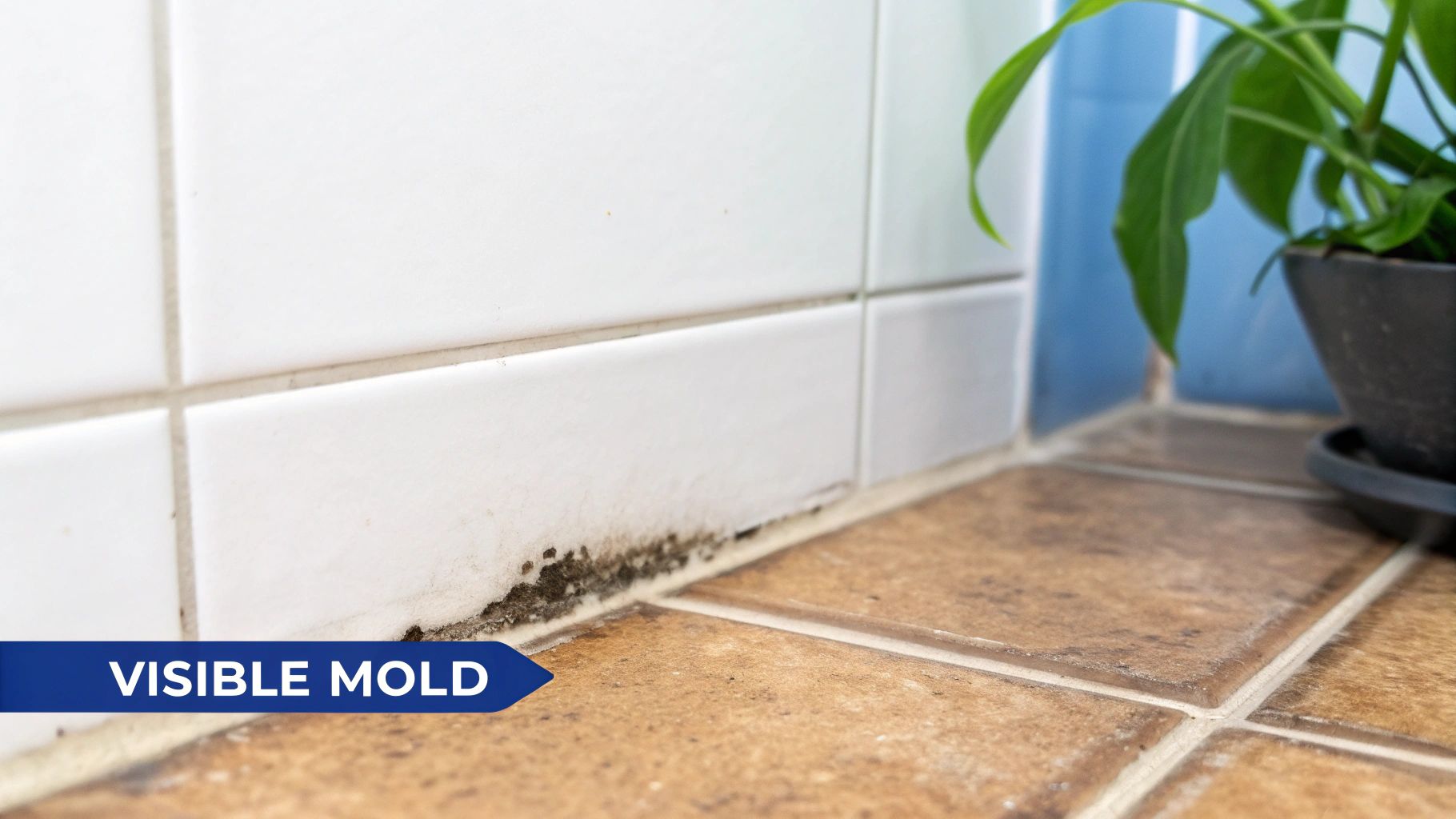
The most undeniable of all the signs of mold in your home is, of course, seeing it with your own eyes. While other indicators require some detective work, visible mold growth provides direct confirmation of a contamination problem that needs immediate attention. This often appears as splotchy, clustered, or speckled discoloration on surfaces where moisture is present.
The appearance of mold can vary dramatically depending on the species, the material it's growing on, and the moisture level. It might look like fuzzy patches, slimy films, or simple dark stains that won't wipe away. In coastal communities like Santa Barbara and Ventura, where persistent humidity and salt air can accelerate moisture problems, what seems like a small spot can signify a much larger, hidden issue.
What to Look For
Keep an eye out for any unusual pigmentation or textural changes on building materials. Common visual clues include:
- Black or Dark Green Specks: Often found on bathroom tile grout, window sills, or along baseboards in damp areas.
- Fuzzy White or Gray Patches: Frequently seen on organic materials like wood joists in crawl spaces, drywall in basements, or forgotten items in damp closets.
- Pink or Orange Film: This is often a bacterial biofilm (like Serratia marcescens) that thrives in consistently wet places like shower corners, toilet bowls, and on wet insulation. While not technically mold, it indicates the exact high-moisture conditions that allow mold to flourish.
- Staining and Discoloration: Yellowish or brownish stains on ceilings or walls are often a tell-tale sign of a past or present water leak that has likely fueled hidden mold growth within the wall cavity.
Actionable Steps for Visible Mold
Discovering visible mold requires a careful and immediate response to protect both your property and your health.
Important Safety Note: Never touch or disturb visible mold with your bare hands. Disturbing a colony can release a massive number of spores into the air, potentially spreading the contamination to other areas of your home and posing a significant inhalation risk.
If you find visible growth, follow these steps:
- Document Everything: From a safe distance, take clear photographs of the growth. Note the location, estimated size, color, and texture.
- Isolate the Area (If Possible): If the mold is contained in a single room, close the door and seal any HVAC vents in the room to prevent spores from circulating through your home.
- Identify the Moisture Source: Look for the cause. Is it next to a leaky pipe, under a dripping window, or in a poorly ventilated bathroom? The moisture problem must be fixed to prevent the mold from returning after remediation.
- Schedule a Professional Assessment: Visible growth is a clear signal to call in experts. A professional mold inspection can determine the full extent of the problem, identify the mold type if necessary, and create a safe and effective plan for removal.
2. Musty Odor (Olfactory Indicator)
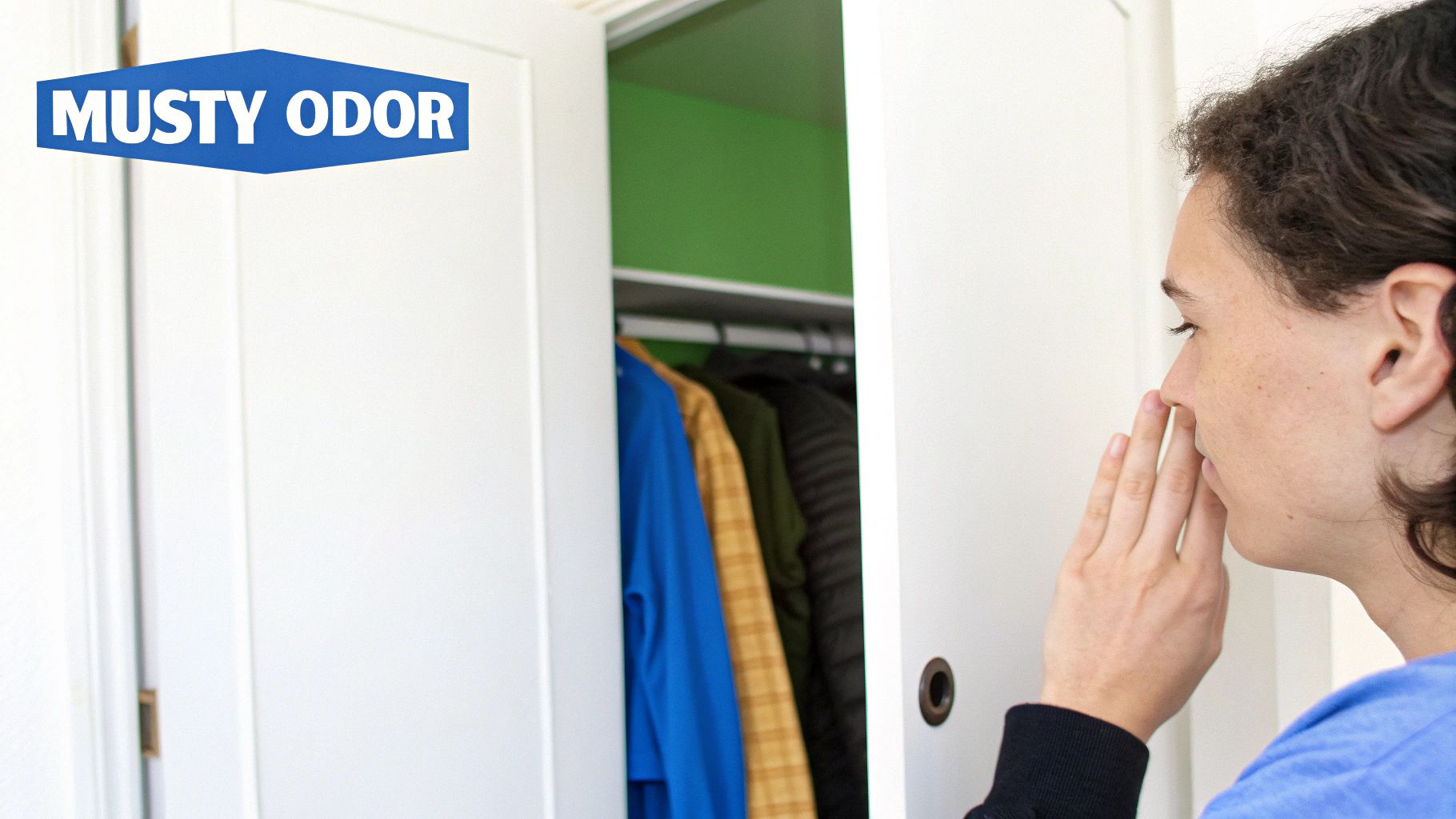
Often preceding any visual evidence, a persistent musty or earthy smell is one of the most common signs of mold in your home. This distinct odor is not just stale air; it's produced by active mold colonies releasing microbial volatile organic compounds (MVOCs) as they grow and digest organic materials. Trusting your sense of smell can be a powerful tool for detecting a hidden mold problem long before it becomes visible.
This olfactory clue is particularly vital for identifying mold growing inside wall cavities, beneath flooring, in crawl spaces, or within HVAC ductwork. In coastal areas like Ventura and Santa Barbara, where a damp marine layer can increase indoor humidity, a new or worsening musty smell after a period of fog or rain is a significant red flag that moisture has infiltrated the structure and is fueling mold growth.
What to Look For
Pay close attention to any unusual smells that don't have an obvious source. The scent is often described as similar to damp soil, rotting leaves, or wet cardboard. Common scenarios where this odor becomes a key indicator include:
- Localized Smells: A musty odor that is noticeably stronger in a specific room, closet, or cabinet points directly toward the likely source of the hidden mold.
- HVAC System Odors: If the smell is strongest when your air conditioner or heater turns on, it suggests mold may be growing within the ductwork or on the HVAC components themselves.
- Post-Leak Persistence: After a plumbing leak or water intrusion event, a lingering musty smell indicates that the area did not dry completely and mold has started to grow within the damp materials.
- Episodic Odors: An odor that comes and goes with changes in humidity or weather can signal a moisture problem that is activated under specific conditions. You can learn more about what causes that musty smell in your house and its direct link to moisture.
Actionable Steps for Musty Odors
If your nose detects a musty smell, it's time to act like a detective to pinpoint the source and address the underlying issue.
Important Safety Note: A persistent musty odor signifies active mold growth, which means mold spores are being released into the air you breathe. Avoid running fans that could spread these airborne contaminants to other parts of your home.
If you detect a suspicious odor, follow these steps:
- Trust Your Nose: Do not dismiss a musty smell as normal "old house smell." It is an active warning sign of a moisture and mold problem.
- Pinpoint the Location: Walk through your home and try to identify where the smell is most concentrated. Check basements, crawl spaces, attics, bathrooms, and laundry rooms first.
- Check for Hidden Moisture: Use your hands to feel for dampness on carpets, walls, and baseboards in the area where the smell is strongest. Look for subtle signs of water damage like peeling paint or soft spots on drywall.
- Schedule a Professional Inspection: An unexplained musty odor is a definitive reason to call for a professional mold inspection. Experts use specialized tools, like moisture meters and thermal imaging cameras, to locate the hidden moisture source and confirm the presence of mold without unnecessary demolition.
3. Water Stains and Discoloration (Visual Indicator)
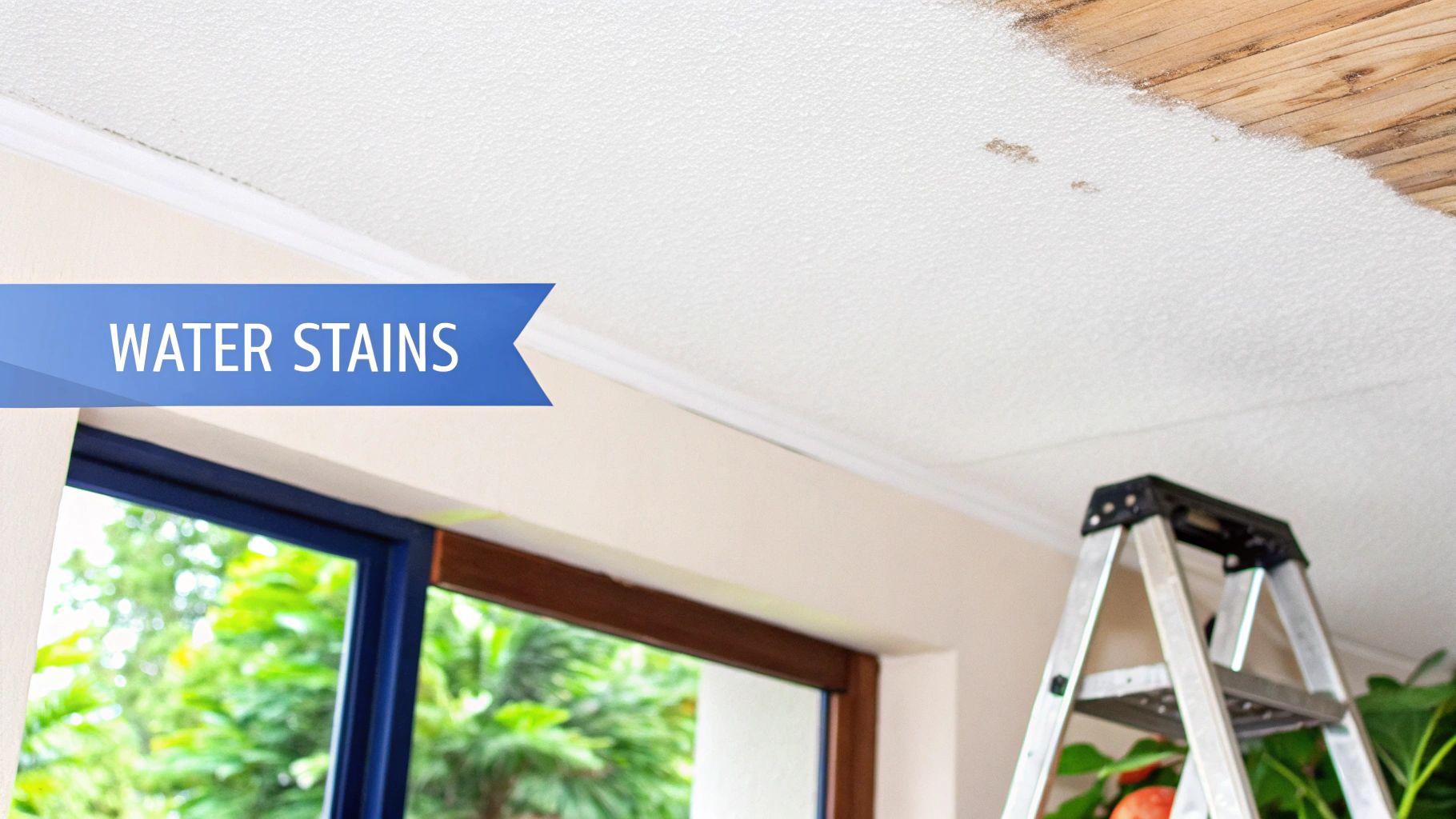
Long before mold colonies become visible, the moisture that feeds them often leaves its own calling card: water stains. These discolored patches on ceilings, walls, and floors are critical early signs of mold in your home, indicating that water has infiltrated building materials. Ignoring a seemingly harmless stain is one of the most common mistakes that allows a small moisture issue to evolve into a widespread mold contamination problem.
These stains typically appear as yellowish, brown, or dark gray blotches and can have distinct "rings" or edges that show how far the water has spread. In coastal communities like Santa Barbara and Ventura, where persistent humidity, sea mist, and seasonal rains test a home's exterior, these stains are often the first signal of a failing roof, leaky window flashing, or plumbing issue. They are a clear warning that the conditions are perfect for mold to thrive, often just behind the surface.
What to Look For
Water damage manifests in several ways, and recognizing these variations can help you pinpoint the source and severity of the moisture intrusion.
- Ceiling Stains: Brownish or yellow rings on ceilings are classic indicators of a roof leak, a plumbing issue on an upper floor, or condensation from an attic space.
- Wall Discoloration: Stains running down from windows or door frames often point to failed seals or weather stripping that allows rainwater or coastal fog to seep in.
- Expanding Patches: A stain that grows, darkens, or changes shape after it rains is a definitive sign of an active leak that requires immediate attention.
- "Ghosting" or Shadowing: On drywall, persistent moisture can cause soot, dust, and dirt particles to stick to damp areas, creating faint, shadowy outlines that trace the studs and joists where condensation is forming.
Actionable Steps for Water Stains
Treat every water stain as a potential mold incubator. A proactive response can prevent significant damage and costly remediation down the road.
Crucial Insight: Painting over a water stain is purely cosmetic and extremely counterproductive. It does nothing to solve the underlying moisture problem and can trap moisture within the material, accelerating hidden mold growth and causing the paint to bubble and peel.
If you discover water stains, follow these steps:
- Document and Monitor: Take clear photos of the stain, noting its size, shape, and location. Re-check it after a few days, especially after a rainstorm, to see if it has changed.
- Trace the Moisture Source: Investigate the area above and around the stain. Look for leaky pipes, roof damage, cracked caulking around windows, or signs of condensation. This is the root cause that must be repaired.
- Check for Active Moisture: Carefully touch the stained area. If it feels damp, soft, or cool to the touch, the leak is likely active. A non-invasive moisture meter is a highly effective tool for confirming the presence of moisture within the material.
- Schedule a Professional Inspection: Because water stains are direct precursors to mold, they warrant a professional assessment. An expert can use thermal imaging and moisture meters to determine the full extent of the water intrusion, check for hidden mold within the wall or ceiling cavity, and recommend a plan for drying, repair, and mold remediation if necessary.
4. Elevated Humidity and Moisture Readings (Moisture Indicator)
While visible growth and musty odors are definitive signs of mold in your home, they often appear after a problem has already taken hold. A more proactive indicator is the presence of excess moisture itself, which is the essential ingredient for mold proliferation. By monitoring and measuring moisture levels, you can identify and address the conditions that allow mold to grow before it becomes a widespread issue.
Mold spores can begin to germinate when relative humidity (RH) consistently stays above 50-60%. Likewise, the moisture content of building materials like wood or drywall exceeding 15-20% creates a perfect breeding ground. In coastal climates like Santa Barbara and Ventura, where the marine layer can drive up ambient humidity, indoor moisture management is especially critical for preventing mold.
What to Look For
Professional tools like moisture meters and thermal imaging cameras provide precise data, but you can also spot many common-sense clues of high humidity.
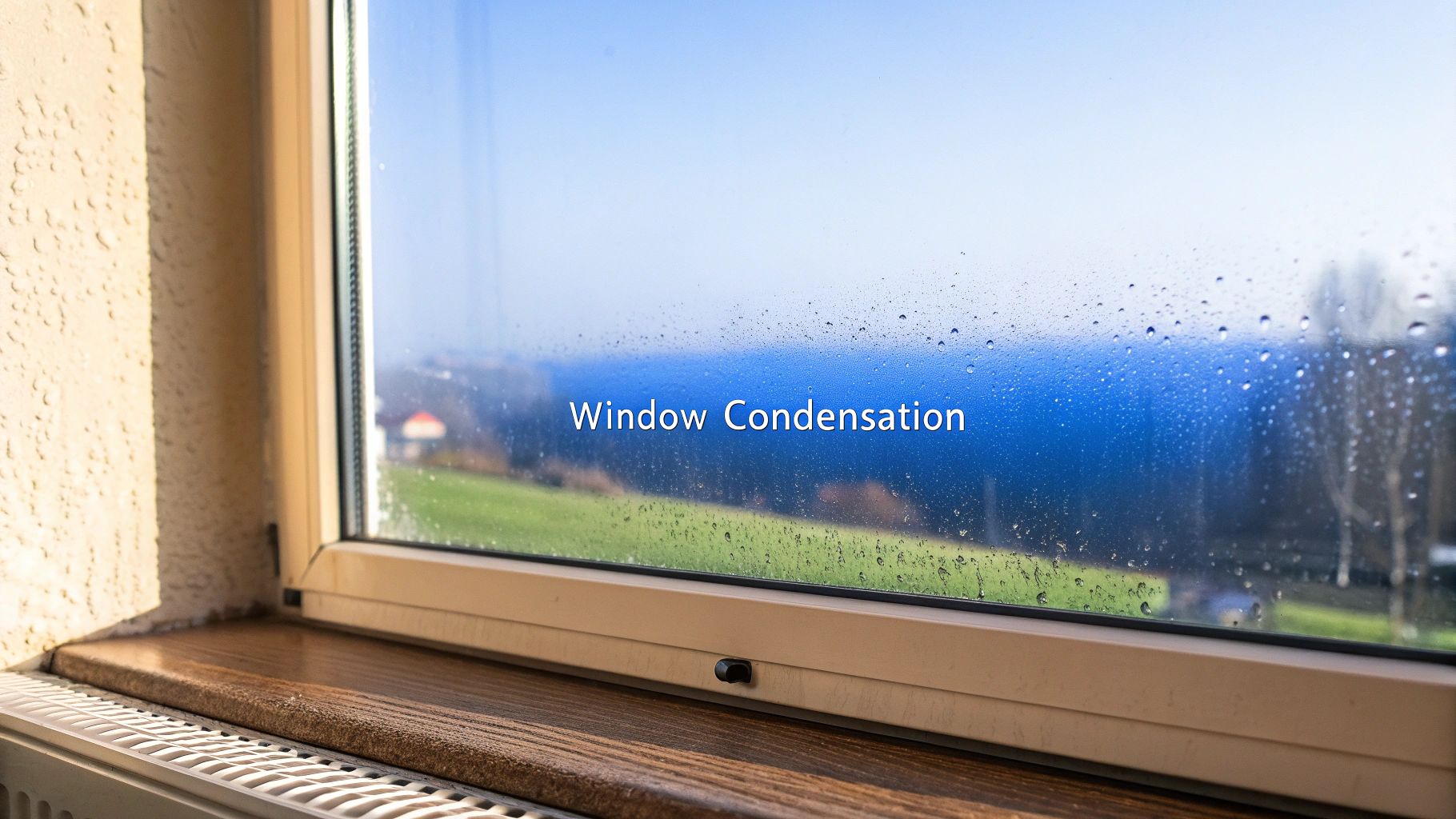
- Persistent Condensation: Water droplets forming on windows, pipes, or metal surfaces are a clear sign that the air in that area is saturated with moisture and cannot hold any more vapor.
- High Hygrometer Readings: A simple, inexpensive hygrometer can show you the relative humidity in a room. Any reading that consistently stays above 50% without ventilation or dehumidification is a red flag.
- Damp or Clammy Feeling: If a room, particularly a basement, crawl space, or closet, feels cool and damp to the touch, it indicates high ambient moisture.
- Swelling Wood: Doors that stick or wooden drawers that are difficult to open can be a sign that they have absorbed excess moisture from the air.
Actionable Steps for High Moisture
Controlling moisture is the single most effective way to control mold. If you suspect or measure high humidity levels, you must act to find and eliminate the source.
Pro Tip: Don't just treat the symptoms, like wiping up condensation. You must address the root cause of the moisture, whether it's a hidden leak, poor ventilation, or humid coastal air infiltration, to achieve a long-term solution.
Take these steps to get your home's moisture levels back in balance:
- Ventilate Key Areas: Run exhaust fans in bathrooms during and after showers, and use the vent hood in your kitchen when cooking. Open windows when outdoor humidity is low to encourage air exchange.
- Use Dehumidifiers: Place dehumidifiers in chronically damp areas like basements, crawl spaces, and laundry rooms. Set them to maintain a relative humidity between 30% and 50%.
- Find the Source: Look for leaks from plumbing, roofs, or windows. Check for improper grading outside that might direct water toward your foundation. Ensure your HVAC system's condensate line is draining properly.
- Schedule a Professional Moisture Assessment: If you can't find the source or if humidity remains high, a professional inspection is necessary. Technicians use thermal imaging to see hidden moisture behind walls and specialized moisture meters to get precise readings in building materials. You can learn more about how to interpret moisture meter readings to better understand the data.
5. Respiratory Symptoms and Allergic Reactions (Health Symptom Indicator)
Sometimes the earliest signs of mold in your home are not seen or smelled but felt in your own body. For individuals who are sensitive, allergic, or have compromised immune systems, exposure to mold spores can trigger a range of physical symptoms. If you or your family members experience new or worsening health issues that mysteriously improve when you leave the house, it's a significant red flag pointing toward an indoor air quality problem.
Mold releases microscopic spores and mycotoxins into the air, which can be inhaled and cause irritation or allergic reactions in the respiratory system. In coastal climates like Ventura and Santa Barbara, where high humidity and "May Gray" or "June Gloom" can trap moisture indoors, these health indicators often become more pronounced. A persistent cough that only acts up at home or allergy symptoms that defy the season can be your body's way of signaling a hidden mold contamination.
What to Look For
Pay close attention to how your body feels inside your home versus outdoors or in other buildings. Common health-related clues include:
- New or Worsening Allergies: Unexplained sneezing, runny or stuffy nose, itchy eyes, and skin irritation that persist indoors.
- Persistent Respiratory Issues: A chronic cough, wheezing, shortness of breath, or chest tightness that doesn't seem to go away.
- Asthma Exacerbation: Individuals with asthma may find their symptoms are harder to control or that they experience more frequent attacks at home.
- Recurrent Sinus Infections: Chronic sinus congestion or repeated sinus infections can be linked to constant exposure to indoor mold.
- General Malaise: Vague symptoms like headaches, fatigue, and difficulty concentrating that seem to clear up after spending time away from the property.
Actionable Steps for Health-Related Symptoms
If you suspect your health is being affected by your indoor environment, it’s crucial to act methodically to identify the cause and protect your well-being.
Important Health Note: This information is for identification purposes and is not medical advice. Always consult with a healthcare professional to diagnose and treat any health symptoms you are experiencing.
If unexplained symptoms point toward a potential mold issue, follow these steps:
- Document Your Symptoms: Keep a health journal. Note what symptoms you experience, when they occur, where you are when they flare up, and when they subside. This data is invaluable for both your doctor and a mold professional.
- Consult Your Doctor: Share your symptoms and your journal with your healthcare provider. Mention your suspicion of an indoor environmental trigger like mold. You can learn more about how mold can affect your health to have an informed conversation.
- Conduct a Thorough Visual Inspection: Use your symptom journal as a guide. If your symptoms worsen in the bedroom, perform a detailed search for visible mold, musty odors, or signs of water damage in that specific area.
- Schedule a Professional Air Quality Assessment: If you cannot find a visible source but your symptoms persist, it's time to call in professionals. An indoor air quality test and a professional mold inspection can detect hidden mold that is impacting your health and pinpoint its location.
6. Condensation on Windows and Pipes (Moisture Indicator)
While not mold itself, persistent condensation is one of the most visible early-warning signs of mold in your home. It’s a direct indicator of excess moisture in the air, a primary ingredient mold needs to thrive. When warm, humid indoor air comes into contact with a cold surface like a window pane or a metal pipe, the moisture condenses into water droplets, creating a perfect micro-environment for mold spores to germinate.
In coastal areas like Santa Barbara and Ventura, where the marine layer can dramatically increase outdoor humidity, interior condensation can become a chronic issue. This isn't just about foggy windows in the morning; it's a symptom of an underlying imbalance between indoor temperature, humidity, and ventilation that can lead to significant mold problems on window sills, walls, and in hidden cavities.
What to Look For
Pay attention to where and when you see condensation. Consistent moisture is a clear red flag that your home’s ventilation can't keep up with the humidity load.
- "Sweating" Windows: Water droplets, fog, or ice forming on the interior of glass panes, particularly in bedrooms and bathrooms.
- Damp Window Sills: Puddles of water collecting on window frames or sills, which can lead to peeling paint and wood rot, creating a food source for mold.
- Moisture on Pipes: Beads of water forming on cold water pipes in basements, crawl spaces, or under sinks. This dripping can saturate surrounding insulation and drywall.
- Persistent Fog on Mirrors: If the bathroom mirror remains fogged up long after a shower, it indicates the exhaust fan is not adequately removing moist air from the space.
Actionable Steps for Condensation
Managing condensation is about controlling indoor humidity and improving air circulation before mold has a chance to establish itself.
Important Property Note: If you notice condensation forming between the panes of a double-pane window, this signifies a broken seal. While this doesn't directly cause interior mold, it drastically reduces the window's insulating ability, making the interior pane colder and more prone to condensation.
If you are dealing with persistent condensation, take these steps:
- Improve Ventilation: Run exhaust fans during and for at least 20 minutes after showers and cooking. Ensure fans are ducted to vent completely outside, not into an attic or crawl space.
- Control Humidity Levels: Use a dehumidifier in chronically damp areas like basements, crawl spaces, or laundry rooms to maintain an indoor humidity level between 30-50%.
- Increase Air Circulation: Use ceiling or portable fans to keep air moving, which helps evaporate moisture from surfaces. Open windows when outdoor humidity is low to air out the home.
- Identify the Root Cause: If these measures don't resolve the issue, it points to a larger problem with your home's insulation, vapor barriers, or HVAC system. Understanding how condensation on windows can lead to mold is the first step toward a permanent solution. A professional assessment can pinpoint these deficiencies.
7. Soft or Deteriorating Wood and Drywall (Visual/Structural Indicator)
When moisture penetrates building materials over a long period, it does more than just stain the surface; it compromises their structural integrity from the inside out. Wood and drywall that become soft, spongy, or crumbly are critical signs of mold in your home, indicating an advanced stage of moisture damage where mold has likely been feeding on the organic materials for some time.
This type of decay signifies a persistent moisture problem that has allowed mold to break down the cellulose in wood and the paper in drywall, turning them weak and unstable. In coastal areas like Ventura, where salt air can trap moisture, historic homes with older wood sills are particularly vulnerable. Pressing on a suspected area and feeling it give way confirms a serious issue that demands immediate, professional attention not just for mold removal, but for potential structural repair.
What to Look For
Beyond obvious discoloration, you should physically test the integrity of materials in damp-prone areas. Be on the lookout for these structural red flags:
- Spongy Drywall: Drywall around the base of a toilet, under a sink, or near a shower that feels soft or gives way when pressed often hides a plumbing leak and significant mold growth within the wall cavity.
- Crumbly Wood: Attic framing or rafters near a roof leak may become brittle and crumble when prodded. This indicates that mold has severely decayed the wood, weakening the roof support.
- Soft Joists: In a crawl space, rim joists or floor joists that feel spongy to the touch are a classic sign of moisture intrusion from the foundation or ground, leading to widespread mold colonization and structural risk.
- Warped or Swollen Materials: Look for baseboards that are pulling away from the wall or wood window sills that appear swollen and misshapen.
Actionable Steps for Deteriorating Materials
Discovering structural decay linked to moisture requires a swift and safe response to prevent further damage and ensure your home's safety.
Important Safety Note: Avoid putting significant pressure on or attempting to remove deteriorated materials yourself. Damaged structural components can be unstable, and disturbing them can release a massive concentration of mold spores into your home.
If you find soft or crumbling wood or drywall, follow these steps:
- Gently Probe the Area: Using a screwdriver or another blunt tool, carefully press on suspected spots. If the material feels soft or gives way easily, you have confirmed advanced decay.
- Document the Damage: Take detailed photos of the affected areas, including close-ups of the texture and wider shots showing the location. This documentation is crucial for professionals and any insurance claims.
- Locate the Moisture Source: The primary goal is to find and stop the water intrusion. Check for roof leaks, plumbing failures, foundation cracks, or poor ventilation that is causing condensation. Learn more about the common signs of water damage in walls to help pinpoint the origin.
- Engage Certified Professionals Immediately: This is not a DIY situation. You need a certified mold remediation company to safely handle the mold and likely a contractor to assess and perform any necessary structural repairs after the mold is gone.
8. HVAC System Mold and Duct Contamination (Visual and Olfactory Indicator)
Your home's heating, ventilation, and air conditioning (HVAC) system is designed to circulate air, but when it becomes contaminated with mold, it can do more harm than good. It effectively becomes a distribution network, pushing mold spores from a hidden source into every room, which is one of the more concerning signs of mold in your home. This issue often starts with moisture condensing on evaporator coils or within the ductwork, creating a perfect dark, damp environment for mold to thrive.
The problem is particularly prevalent in coastal areas like Ventura and Santa Barbara, where high humidity forces air conditioners to work harder, leading to more condensation. An HVAC inspection that reveals mold in return air ducts or on the air handler is a clear sign that your indoor air quality is compromised. A seemingly clean home can have a significant, hidden mold problem circulating through its very lungs.
What to Look For
Since much of the HVAC system is hidden, you'll need to rely on multiple senses to detect a problem. Pay close attention to these clues:
- Musty Odors from Vents: If a musty, earthy smell is stronger or appears only when the heat or AC kicks on, the source is almost certainly within the system.
- Visible Growth on Registers: Check the air supply and return vents. Visible black specks, dust that seems fuzzy, or discoloration on the vent covers themselves indicates spores are being pushed through.
- Debris Around Vents: Small black or dark-colored flakes on the floor or wall directly below a supply vent can be bits of mold growth breaking loose from inside the ducts.
- Increased Allergy Symptoms Indoors: If your family's allergies, asthma, or respiratory issues seem to worsen significantly when you are inside with the system running, it's a major red flag for airborne contaminants like mold.
Actionable Steps for HVAC Mold
Addressing mold in your HVAC system is not a DIY job; it requires specialized equipment and expertise to avoid making the problem worse.
Critical System Alert: Do not attempt to clean moldy ductwork yourself. Using household cleaners or unspecialized tools can release a massive concentration of spores directly into your home's airflow, creating a widespread contamination event.
If you suspect your HVAC system has mold, take these steps:
- Turn Off the System: If you strongly suspect mold, it's best to shut off your HVAC system to stop the spread of spores until a professional can assess it.
- Schedule a Professional HVAC Inspection: Contact a qualified HVAC contractor or a mold inspection company that specializes in HVAC systems. They have the tools, like borescopes, to safely look deep inside the ductwork and air handler.
- Address the Cause: The inspection must identify why mold is growing. Is it excessive condensation due to high humidity? A leak in the drain pan? Poorly sealed ducts pulling in damp air from a crawl space? This moisture source must be fixed.
- Get Professional Remediation: If mold is confirmed, professional remediation is necessary. This may involve cleaning the air handler, coils, and drain pan, followed by a professional duct cleaning or, in severe cases, duct replacement.
8-Point Comparison of Home Mold Signs
| Indicator | 🔄 Complexity | 💡 Resources | ⚡ Speed / Efficiency | ⭐ Key advantages | 📊 Expected outcomes |
|---|---|---|---|---|---|
| Visible Mold Growth and Surface Discoloration | Low–Moderate — easy to spot; remediation requires pros | Eye, camera for documentation; professional remediation & PPE for removal | Fast to detect; remediation time varies | Clear visual confirmation; easy to document and target remediation | Identifies contaminated areas for prioritized remediation; immediate professional assessment recommended |
| Musty Odor (Olfactory Indicator) | Low — subjective detection; source location can be moderate | None to detect; may need IAQ inspection or HVAC check to locate source | Immediate notice; locating source can be time-consuming | Early warning of hidden mold; useful for inaccessible areas | Triggers targeted inspection; often reveals hidden contamination in walls or HVAC |
| Water Stains and Discoloration | Low — visible; determining activity level may require tools | Visual inspection; moisture meter or professional assessment to confirm active moisture | Quick to spot; confirming active leaks may take testing | Early indicator of moisture intrusion; helps pinpoint likely source | Guides leak repair and remediation planning; documents moisture history for inspections |
| Elevated Humidity and Moisture Readings (Moisture Indicator) | Moderate — requires measurement and interpretation | Hygrometers, moisture meters, thermal imaging; trained technicians for mapping | Instantaneous measurements; comprehensive mapping takes time | Objective, quantitative detection of hidden moisture; prevents surprises | Directs dehumidification/ventilation fixes and targeted remediation; useful for certification |
| Respiratory Symptoms and Allergic Reactions (Health Symptom Indicator) | Moderate — subjective symptoms; medical correlation often needed | Symptom logs, medical evaluation, indoor air quality testing | Symptoms may appear gradually; recognition depends on occupants | Indicates real health impact; motivates prompt action | Prompts IAQ assessment and remediation; supports health-based remediation priority |
| Condensation on Windows and Pipes (Moisture Indicator) | Low — easy homeowner observation | None to detect; dehumidifiers, exhaust fans, insulation to mitigate | Immediate detection; mitigation often quick and low-cost | Actionable, visible sign of excess humidity; encourages simple fixes | Reduces humidity and lowers mold risk if ventilation/insulation addressed |
| Soft or Deteriorating Wood and Drywall (Visual/Structural Indicator) | Moderate–High — indicates advanced damage; expert evaluation required | Professional remediators, contractors, structural engineer assessments | Often quickly confirmed by probe tests; remediation can be extensive and slow | Confirms structural/advanced moisture damage; prioritizes repairs | Leads to structural repairs, major remediation and cost estimation; may affect sale/insurance |
| HVAC System Mold and Duct Contamination (Visual & Olfactory) | High — hidden, requires specialized inspection and equipment | HVAC inspection, duct cleaning, HEPA filtration/UV, possible system replacement | Detection may require testing; remediation can be lengthy and costly | Addresses whole-home contamination source; improves overall IAQ when remediated | Reduces spore circulation and improves air quality; prevents recontamination if humidity controlled |
Your Next Steps for a Mold-Free Santa Barbara Home
You have now navigated the often-subtle landscape of mold detection, moving from the most obvious visual clues to the hidden indicators that signal trouble. Recognizing these signs of mold in your home is the critical first step toward protecting your property’s value and, more importantly, your family's health. The journey doesn't end with identification; it begins there. Armed with this knowledge, you are no longer a passive observer but an empowered advocate for a healthy living environment.
The common thread weaving through all these signs, from musty odors in your Goleta garage to peeling wallpaper in a Montecito bathroom, is uncontrolled moisture. Our coastal climate, with its marine layer and fluctuating humidity, creates a uniquely welcoming environment for mold spores. Ignoring a small water stain or dismissing a persistent cough as "just allergies" allows the underlying moisture issue to fester, potentially turning a minor inconvenience into a significant structural and health crisis.
Key Takeaways: From Recognition to Resolution
To ensure your home remains a sanctuary, let's distill the core lessons from this guide into a clear action plan. These are the most important principles to remember as you move forward.
- Trust Your Senses: Your eyes and nose are your primary detection tools. A musty smell or a discolored spot on the drywall is your home’s way of sending an SOS. Never ignore these early warnings.
- Moisture is the Enemy: Mold cannot thrive without water. Proactively hunting down and repairing leaks, managing indoor humidity, and ensuring proper ventilation are your most powerful preventative strategies. Condensation is not normal; it's a call to action.
- Health Symptoms Are Serious Clues: Unexplained respiratory issues, headaches, or allergy flare-ups that improve when you leave the house are significant red flags. Connect the dots between how you feel and the health of your indoor environment.
- Hidden Spaces Matter Most: Mold loves the dark, damp, and undisturbed corners of a home. Regularly inspect under sinks, in attics, within crawl spaces, and around HVAC units. What you can’t see can often cause the most harm.
Your Actionable Roadmap for a Healthy Home
Knowing the signs is one thing; knowing what to do next is everything. If you've identified one or more of the issues discussed in this article, it's time to act decisively. Guesswork and delay are a mold colony's best friends.
- Document, Don't Disturb: If you find what you suspect is mold, take clear photos. Do not touch, scrub, or spray it with bleach. Disturbing the colony without proper containment protocols can release millions of spores into the air, contaminating other areas of your home.
- Control the Moisture Source Immediately: If you can identify the source of water, like a leaking pipe or a roof leak, take immediate steps to stop it. This is a non-negotiable step to halt further growth.
- Seek Professional Assessment: This is the most crucial step. DIY test kits are notoriously unreliable and often misleading. A professional inspection from a certified company like Pacific Mold Pros uses specialized tools like thermal imaging and moisture meters to find the full extent of the problem, including hidden moisture within walls. This is the only way to get a complete and accurate diagnosis.
- Understand Your Report: A professional inspection should conclude with a detailed report, including lab results if samples were taken. This document is your roadmap, outlining the type of mold present, the extent of contamination, and a clear protocol for remediation.
Protecting your Santa Barbara or Ventura home from mold is an ongoing commitment to vigilance and proactive maintenance. By mastering the ability to spot the earliest signs of mold in your home, you are investing in long-term peace of mind. You are ensuring the air you breathe is clean, your structure is sound, and your home remains the safe, healthy haven it was meant to be. Don’t wait for a small sign to become a big problem. Take control of your indoor environment today.