Think of a thermal imaging inspection as giving us X-ray vision for your home. We use a specialized infrared camera to see what’s happening behind your walls, under your floors, and in your ceilings—all without any damage. This technology lets us spot subtle temperature differences on surfaces, which often point directly to hidden problems like moisture intrusion, the key ingredient for mold. It’s a non-invasive way to find the exact conditions that allow mold to grow, long before you can see or smell it.
Seeing What Is Hidden Behind Your Walls
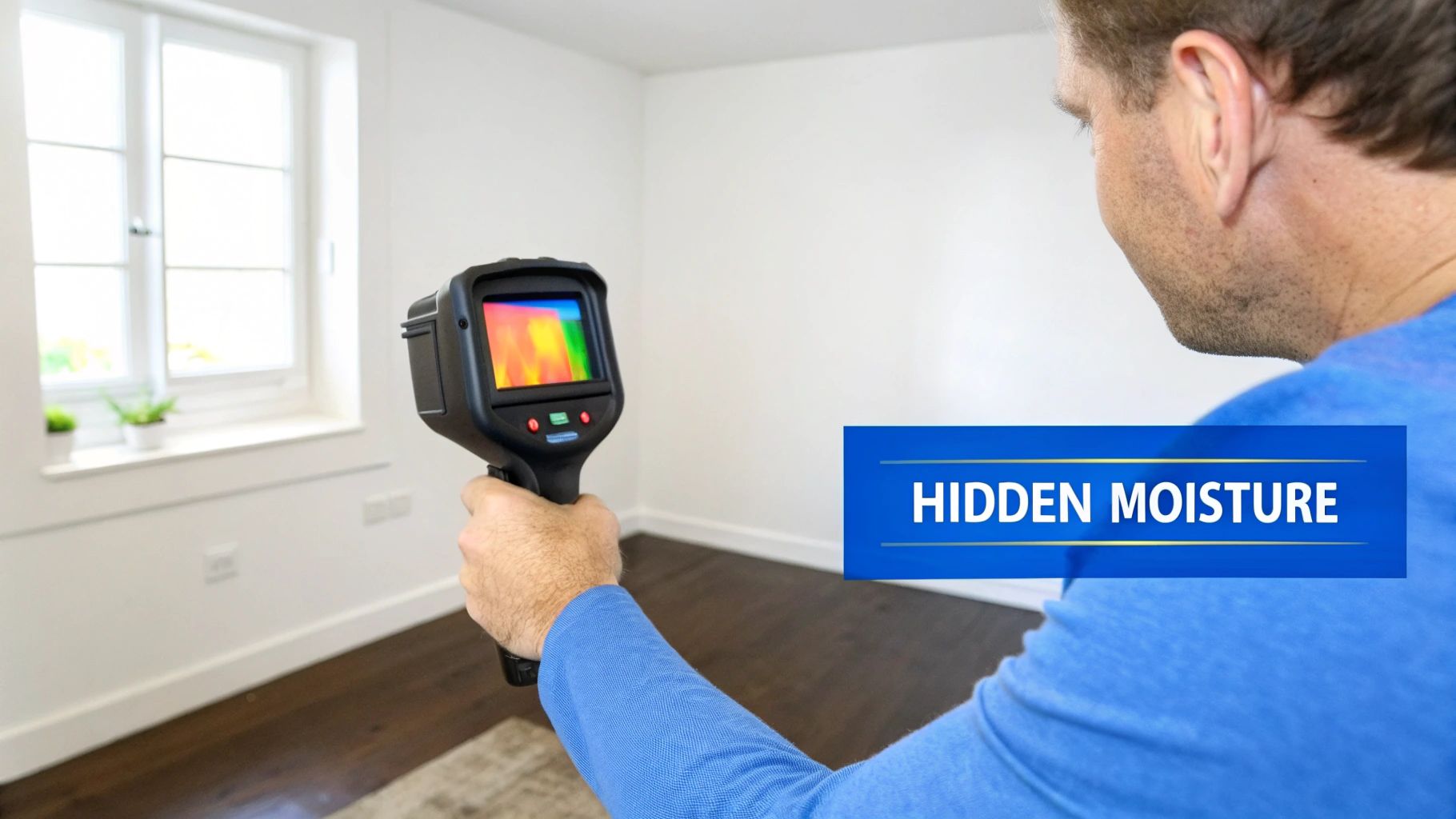
Imagine you’re trying to find a single cold water pipe running inside a warm wall. You can’t see it, of course. But if you could feel the temperature of the wall’s surface, you’d eventually find a distinctly cooler spot. That’s the basic idea behind thermal imaging, but our cameras do it with incredible precision.
Our certified inspectors use advanced infrared cameras that translate heat energy into a visible, color-coded image—a kind of “heat map” of your home. This map shows us exactly what’s happening behind the scenes.
Warm areas, which usually show up as reds and yellows, are typically nothing to worry about. It’s the cooler areas, displayed as blues and purples, that grab our attention. These cold spots are red flags for moisture from a hidden plumbing leak, condensation buildup, or even missing insulation.
Thermal Imaging Inspection At a Glance
So, how does this technology directly benefit you as a homeowner? Here’s a quick breakdown of what makes thermal imaging such a powerful tool in our inspection arsenal.
| Benefit | Why It Matters for Homeowners |
|---|---|
| Non-Invasive | We can find hidden problems without cutting holes in your walls, saving you time and money on repairs. |
| Early Detection | Identifies moisture issues before they lead to widespread mold growth or serious structural damage. |
| Pinpoint Accuracy | Shows the exact location and scope of moisture, so any remediation efforts are targeted and effective. |
| Comprehensive View | Uncovers issues that a standard visual inspection would miss, like poor insulation or faulty seals. |
| Clear Evidence | The visual heat map provides straightforward, easy-to-understand proof of where problems exist. |
Ultimately, this technology allows us to move from guesswork to certainty, giving you a clear picture of your home's health.
Why Temperature Matters for Mold Detection
Mold doesn’t just show up out of nowhere. It needs a specific environment to grow, and moisture is the most critical piece of the puzzle. A thermal imaging inspection is so effective because it targets the root cause—the moisture—instead of just looking for the mold itself. The camera doesn't see mold, but it brilliantly sees the moisture that mold needs to survive.
This is especially critical in the humid coastal climates we see in Santa Barbara and Ventura. By detecting even tiny temperature differences, we can pinpoint potential problem areas with stunning accuracy. It's a technology that has completely changed home inspections, which is why the global thermography market was valued at USD 3.693 billion in 2024 and is expected to hit USD 6.539 billion by 2035.
A professional thermal camera can detect temperature differentials as small as 0.1°C. This incredible sensitivity is what allows us to find hidden water sources that traditional checks would miss, protecting both your property and your health.
The process gives us clear, visual evidence of where problems are hiding. Instead of guessing, we create a precise map of affected areas that guides further investigation with moisture meters. To learn more about how this works, check out our guide on what thermal imaging is used for. This advanced approach saves time, prevents unnecessary damage, and delivers the peace of mind that comes from knowing exactly what’s going on inside your walls.
What to Expect During Your Inspection
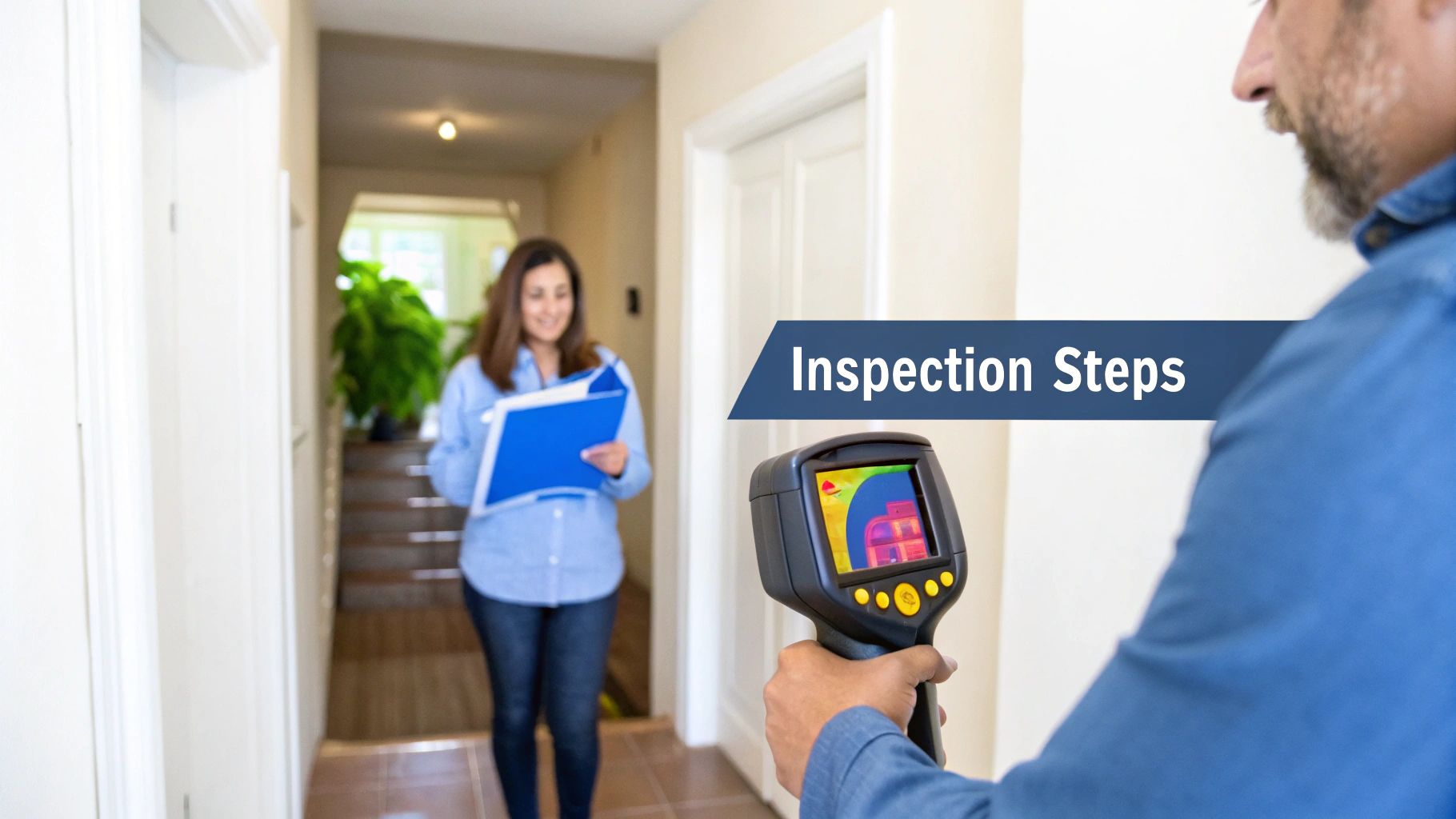
We want to pull back the curtain on the inspection process so you feel completely comfortable and confident every step of the way. Think of it as a systematic health checkup for your home—one that combines our team’s hands-on experience with some seriously advanced technology. It's a transparent, scientific process designed to give you clear answers, not more questions.
When one of our certified inspectors from Pacific Mold Pros arrives at your door, they won't just whip out the camera and start pointing. The whole thing kicks off with a conversation and a thorough visual walkthrough. We want to hear about what you're experiencing—any musty odors, weird water stains, or unusually humid spots—because your insights help us focus our search. This initial tour is crucial for putting all the pieces together.
The Thermal Scan Process
Once we have the lay of the land, we’ll begin the thermal scan. This involves methodically scanning walls, ceilings, and floors with a high-resolution infrared camera, paying extra attention to the usual suspects for moisture problems.
- Kitchens and Bathrooms: We zero in on the areas around sinks, toilets, showers, and dishwashers, where hidden plumbing leaks love to start.
- Attics and Crawl Spaces: These spots are hotspots for roof leaks, condensation from poor ventilation, and other sneaky moisture issues.
- Exterior Walls and Windows: We'll carefully check the seals and frames for signs of water intrusion—a common headache for coastal homes.
- HVAC Systems: Vents and air handlers are inspected for condensation leaks that can drip unnoticed for months, creating the perfect environment for mold.
The camera gives us a real-time, color-coded heat map of your home’s surfaces. Our inspectors are trained to read these images like a language, looking for specific thermal anomalies. Cool, dark patterns, often showing up as blue or purple, are the telltale signs we're hunting for, as they often pinpoint the presence of moisture.
An experienced thermographer doesn't just see colors; they interpret patterns. A dark spot could be a water leak, but it could also be a stud in the wall or an uninsulated pipe. Professional analysis is what separates a true finding from a false alarm.
From Thermal Anomaly to Confirmed Finding
Spotting a cool area with the thermal camera is just the first clue. It tells us exactly where to dig deeper. To confirm whether there’s actually moisture and eliminate any guesswork, we then use a professional moisture meter.
This handheld device gives us a direct, measurable reading of the moisture content inside a wall or floor. We take a reading in the suspicious area and compare it to a reading from a nearby dry spot. This two-step verification—thermal scan followed by moisture meter confirmation—is the foundation of an accurate thermal imaging inspection. It allows us to build a precise map of the affected areas, ensuring any next steps are targeted and effective.
This methodical approach is a key part of our comprehensive mold inspection process in Santa Barbara, giving you total certainty about what's happening inside your home.
Interpreting the Images of Your Home
A thermal image can look like a piece of abstract art, with its swirls of reds, yellows, and blues. But to a certified inspector, it’s a detailed map revealing the hidden stories behind your walls. The key is understanding that the colors represent temperature differences, not moisture itself.
Think of it like this: a wet towel feels cooler than a dry one because of evaporation. A thermal camera picks up on this same cooling effect on the surface of your walls or ceiling when hidden moisture is present. Those cool, dark blue or purple patterns are the “thermal anomalies” that signal a potential problem.
However, reading these images requires a trained eye. A cold spot isn't automatically a leak; it could just be a metal stud, a draft, or an area with missing insulation. Our job is to analyze these patterns in context, distinguishing a true moisture issue from a simple thermal variation. This is where professional training and years of experience are absolutely essential for an accurate thermal imaging inspection.
Real-World Examples of Thermal Findings
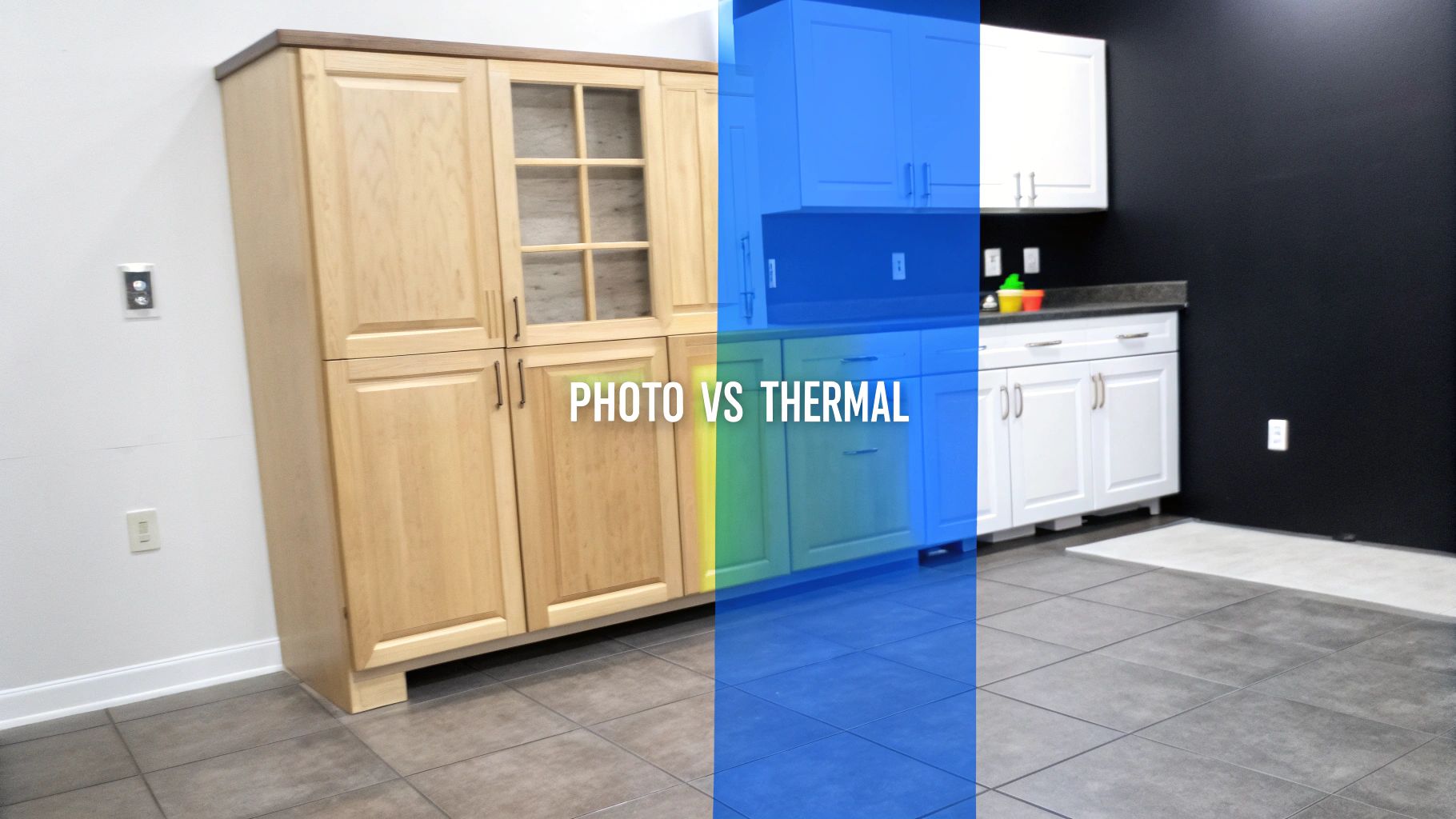
Seeing is believing. Let's look at a few common scenarios we uncover all the time and what they look like side-by-side with a regular photo.
- Slow Pipe Leak: A regular photo might show a pristine wall under a kitchen sink. The thermal image, however, could reveal a distinct, dark blue plume spreading downwards—a dead giveaway of a slow, hidden leak inside the wall that has gone completely undetected.
- Faulty Window Seal: Visually, a window might look perfectly fine. But the thermal scan often shows a cold blue halo around the frame. This is a clear sign that moisture and cold air are seeping in, creating the perfect conditions for condensation and mold.
- Attic Condensation: A ceiling may appear spotless to the naked eye, but the camera can detect large, irregular cool patches across the drywall. This usually points to poor attic insulation or ventilation, causing warm, moist air to condense on the cold surface from above.
The real power of a thermal imaging inspection is its ability to make the invisible visible. It provides clear, undeniable evidence, allowing us to focus our investigation with moisture meters for precise confirmation.
This is why, in the U.S., thermal imaging successfully detects moisture anomalies in 85% of cases that visual-only methods miss entirely. For homeowners along the humid Santa Barbara coast, where mold can be a persistent issue, this early detection can slash exposure risks by as much as 50%.
After pinpointing a problem area with the camera, we always use a moisture meter to confirm our findings. You can learn more about how we use these tools by checking out our guide on how to read moisture meter readings. This combination of advanced technology and hands-on verification ensures you get the most accurate picture of your home’s health.
Getting Real About Thermal Imaging: What It Can and Can’t Do
A thermal imaging camera is one of the most powerful tools in our diagnostic arsenal, but just like any piece of tech, it’s important to be upfront about what it does brilliantly and where its limits are. An honest conversation about its capabilities is key—it builds trust and makes sure you know exactly what you’re getting.
Its biggest win? It’s completely non-destructive. We can spot potential moisture hiding behind your walls or under the floorboards without drilling a single hole. This gives us fast, visual clues that help trace water all the way back to its source, saving you a ton of money on speculative repairs and needless drywall demolition.
But it's just as important to understand what a thermal camera can't do. One of the biggest myths is that it can "see" mold directly—it can't. What it actually sees are the subtle temperature differences caused by moisture, which is what mold needs to grow. It also can’t see through solid objects; it only reads the temperature right on the surface of a material.
Key Strengths of Thermal Technology
So, let's break down why thermal imaging is such a critical first step in our process.
- Non-Invasive Diagnostics: We can identify and map out potential trouble spots without causing any damage to your home.
- Rapid, Visual Results: The camera gives us an instant "heat map," letting us quickly scan large areas and zero in on anything that looks out of place.
- Finds Hidden Moisture: It’s incredibly good at finding the kind of hidden moisture that fuels mold growth—the stuff you'd completely miss with the naked eye.
- Saves You Money: By targeting the exact source of a leak, we skip the costly guesswork of "search and destroy" remediation.
Think of thermal imaging as our first responder. It doesn't give us all the answers on its own, but it tells us exactly where to start digging for them. It guides our moisture meters and sampling strategy to get definitive proof.
Knowing Its Limits
To give you an accurate diagnosis, we have to be real about the technology's boundaries. The camera’s magic relies on a temperature difference between a wet area and the dry materials around it. If everything’s the same temperature, an anomaly simply won’t show up.
Plus, interpreting the images correctly takes a skilled, certified inspector. A cold spot could be a water leak, but it could also be a simple draft, a metal stud behind the drywall, or a patch of missing insulation. Professional analysis is what separates a true moisture problem from a false alarm.
This is why a thermal imaging inspection is always the first step in a larger diagnostic process, not the final word. It's the foundation of a reliable investigation, but it needs to be paired with moisture meters and expert analysis to tell the full story.
Pros vs. Cons of Thermal Imaging in Mold Inspections
To really understand its role, it helps to see the strengths and limitations side-by-side. Thermal imaging is an incredible guide, but it's not a standalone solution. It points us in the right direction, allowing for a more targeted and effective investigation.
| Strengths (What It Excels At) | Limitations (What to Be Aware Of) |
|---|---|
| Non-Destructive: Finds moisture without damaging walls. | Doesn't "See" Mold: Detects moisture, not mold growth itself. |
| Fast & Efficient: Quickly scans large areas for anomalies. | Requires Temperature Contrast: No temp difference = no visible issue. |
| Pinpoints Hidden Issues: Locates leaks behind surfaces. | Can't See Through Objects: Only reads surface temperatures. |
| Cost-Effective: Prevents unnecessary demolition and repairs. | Requires Expert Interpretation: Prone to false positives if misread. |
Ultimately, the goal is to use this technology smartly. When an experienced inspector combines thermal imaging with other tools and a deep understanding of building science, you get a clear, accurate picture of what’s happening in your home.
Confirming Our Findings for Total Certainty
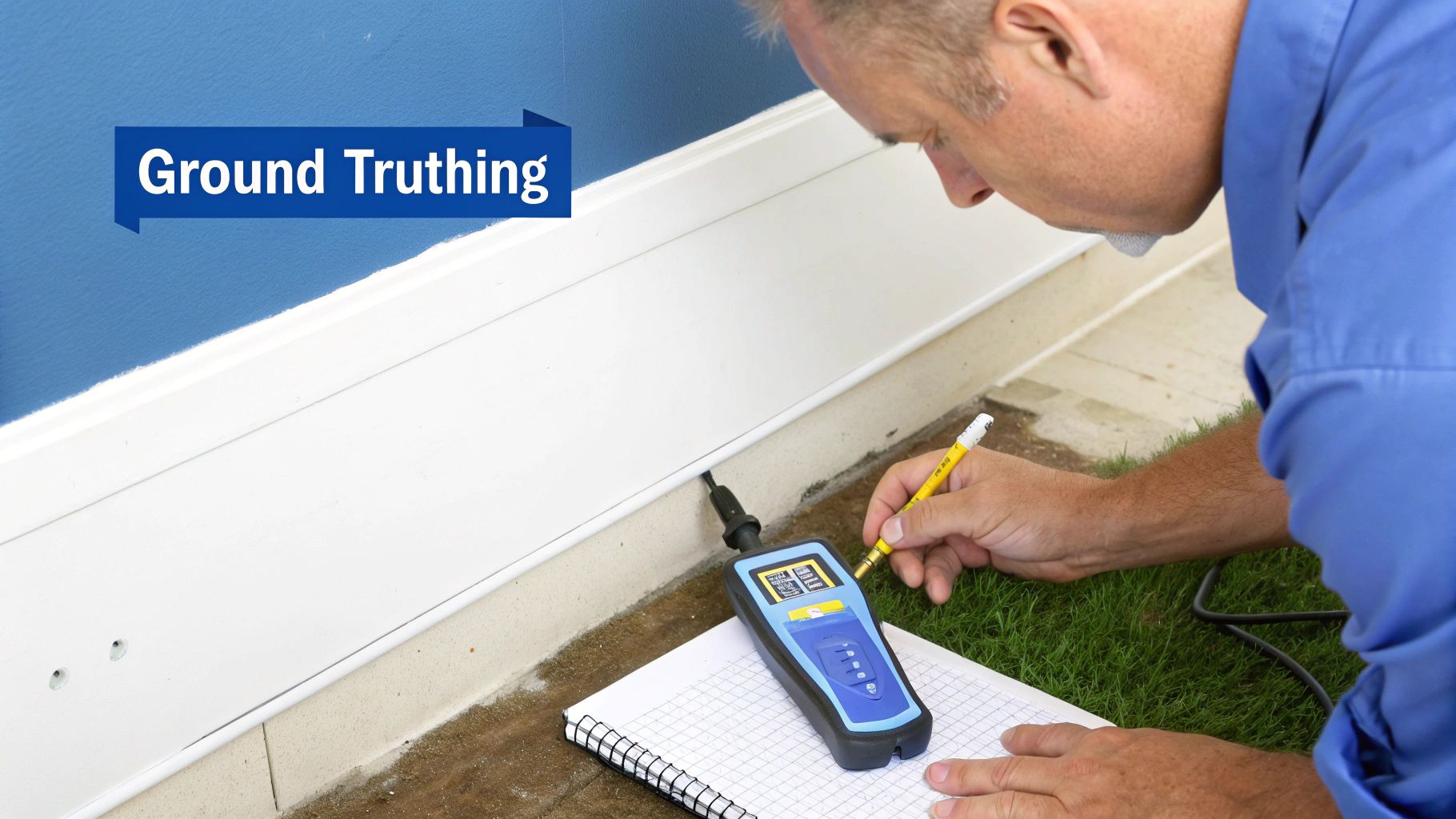
A thermal camera gives us an incredible roadmap to potential moisture problems, but seeing a cold spot is just the first clue. To move from suspicion to certainty, we need to do what's called "ground-truthing"—and this is where real science comes in. This crucial step is what separates a professional thermal imaging inspection from simple guesswork.
Our certified inspectors use professional-grade moisture meters to get hard data from any suspicious areas flagged by the thermal scan. By pressing the meter’s probes against a surface, we get an exact moisture content reading from deep within the building material. It's the moment we confirm whether that cold spot is actually a hidden water issue.
This data allows us to create a precise "moisture map" of the affected area. Think of it like a blueprint of the water intrusion, showing us exactly how far it has spread behind a wall or under your flooring.
From a Moisture Map to Definitive Proof
Once we’ve mapped out the moisture, the next step is figuring out what’s growing in it. If the conditions point to a risk of mold growth, we proceed with targeted sampling. This isn’t a random process; we’re going straight to the problem areas we’ve already identified.
Using the moisture map as our guide, we collect air or surface samples from the confirmed wet zones. These samples are carefully packaged and sent to an accredited, independent lab for a full analysis.
The lab analysis is the final piece of the puzzle. It doesn’t just tell us if mold is present—it identifies the specific types and how concentrated they are. This is the definitive evidence needed to create a remediation plan that actually works.
For homeowners here in Santa Barbara, this level of detail is non-negotiable. Thermal imaging helps us uncover up to 90% of hidden moisture issues, which is critical when you consider that mold allergens affect 25% of allergy sufferers. It’s no wonder the demand for this technology is surging, as noted by Precedence Research's global thermal imaging market report.
At Pacific Mold Pros, we use this powerful combination of thermal imaging, on-site moisture mapping, and professional lab testing to give you the total certainty you deserve. You can learn more about our comprehensive mold and environmental testing services to see exactly how we deliver clear, actionable results.
Protecting Your Home and Investment
It’s easy to see a thermal imaging inspection as just another cost. But honestly? It's one of the smartest investments you can make to protect your property's value and your family's health. Taking a proactive step today can literally save you from tens of thousands of dollars in structural repairs and mold remediation down the road.
For homeowners, this inspection delivers something invaluable: peace of mind. We uncover hidden issues before they have a chance to become catastrophic. It's a critical tool for maintaining the integrity of your home, especially here in the moisture-rich coastal climates of Santa Barbara and Ventura.
If you're a property manager, these detailed reports are your best friend. You can address maintenance needs with surgical precision, stopping minor leaks before they cause widespread damage across multiple units and protecting your assets.
Scheduling Your Thermal Inspection
Getting started is simple. When you call Pacific Mold Pros, we keep the process clear and straightforward. To help us give you the most accurate assessment right from the start, it's helpful to have a few details ready:
- Your primary concerns: Have you noticed any specific musty odors, weird stains, or do you know about a past water event?
- Property details: The approximate age and square footage of your home helps us block out the right amount of time for a thorough job.
- Access information: We’ll need to get into all areas of the property, including attics, crawl spaces, and closets, to get the full picture.
A professional thermal imaging inspection is a powerful asset in real estate. For sellers, it demonstrates transparency and can prevent last-minute surprises from derailing a sale. For buyers, it offers critical due diligence, revealing potential hidden liabilities before you commit to your purchase.
This proactive approach puts you back in the driver's seat. By identifying potential problems early, you can take control of the situation and implement solutions that actually work. To see what comes next, explore our guide on moisture intrusion solutions to understand how we tackle the issues a thermal scan might uncover.
Common Questions About Thermal Inspections
Homeowners always have great questions about how thermal imaging works, what the process is like, and whether it’s truly worth it. Understanding the tech and what to expect is the best way to feel confident in the results. Here are some clear, straightforward answers to the questions we hear most often.
Why Is This Inspection So Important for Coastal Homes?
Living in Santa Barbara and Ventura means dealing with a unique set of challenges. The constant marine layer brings heavy, damp air, and that salty spray accelerates wear and tear on our homes, especially around windows and doors. All that persistent moisture creates the perfect breeding ground for mold that you can't see.
On top of that, many of the older, beautiful homes in our coastal communities weren't built with modern vapor barriers, making them extra vulnerable to moisture sneaking in. A thermal imaging inspection is a game-changer here because it lets us spot the subtle temperature drops caused by dampness long before you see a stain or smell that musty odor.
For coastal homes, think of thermal imaging as an early warning system. It helps us find exactly where that humid, salty air is getting in and causing trouble, so you can make proactive repairs instead of dealing with costly remediation down the road.
Will the Inspection Process Damage My Home?
Absolutely not. In fact, that's one of the biggest benefits of using thermal technology. The entire process is 100% non-invasive and non-destructive. Our inspectors use a handheld infrared camera to scan the surfaces of your walls, ceilings, and floors from a distance.
We don't need to cut holes, pull back carpets, or disturb a single thing in your home to get the initial data. We’re simply reading the heat energy that your home naturally gives off. It gives us a clear map of potential problem spots without leaving so much as a scuff mark behind.
Can I Just Use a Cheap Thermal Camera Myself?
While you can now buy consumer-grade thermal cameras pretty easily, they just can’t hold a candle to professional equipment. It really comes down to two things: sensitivity and expertise.
Our professional cameras can detect incredibly slight temperature differences—sometimes as little as 0.1°C—which is what you need to find moisture that’s just starting to build up. The cheaper gadgets don't have that kind of resolution, so they can easily miss developing problems or, worse, give you misleading results.
But even more important is knowing how to interpret the images. A certified thermographer has the training to tell the difference between a real moisture issue and a thermal anomaly caused by a wall stud, a draft from a window, or a patch of missing insulation. Without that expertise, you’re just guessing, and you could either miss a serious problem or waste time and money worrying about a false positive.
How Long Does a Typical Inspection Take?
The time it takes for a thermal imaging inspection can vary, but for a typical single-family home, you can plan on it taking between 1 to 3 hours.
A few things can affect that timeline:
- Home Size: It’s pretty simple—larger homes with more square footage and multiple floors will take longer to scan thoroughly.
- Property Complexity: Houses with tricky layouts, multiple attics, or large crawl spaces just require more time to cover every corner.
- Specific Concerns: If you already have a known leak or a particular area you're worried about, we’ll spend extra time focusing on those spots to get you clear answers.