Buying a home, especially in the unique coastal climate of Santa Barbara and Ventura Counties, is one of life's biggest investments. While beautiful finishes and stunning views are captivating, the true health and value of a property often lie hidden within its structure, systems, and unseen spaces. This guide provides a comprehensive breakdown of the essential things to look for when inspecting a home, moving beyond the obvious to uncover potential issues that could cost you thousands and impact your family's health.
We will focus on the critical role of moisture control and mold prevention, empowering you with actionable DIY checks and clear indicators for when to call in a certified professional like Pacific Mold Pros. From the foundation to the attic, this checklist is your roadmap to a confident and informed home-buying decision. It's designed for anyone concerned about indoor air quality, particularly home buyers, real estate agents, and those sensitive to allergens in our coastal environment.
This roundup provides an actionable framework to evaluate a property’s core health. Instead of just admiring the curb appeal, you will learn to spot subtle signs of water intrusion, poor ventilation, and hidden moisture. We will cover key areas including the foundation, HVAC system, attic, plumbing, and exterior drainage. Understanding these elements is crucial for protecting your investment and ensuring a safe living environment. Let's delve into the ten key areas that demand your attention before you sign on the dotted line.
1. Foundation and Basement Moisture Assessment
The foundation and basement are the literal bedrock of a home, but they are also primary entry points for moisture. Inspecting these below-grade areas for signs of water intrusion is one of the most critical things to look for when inspecting a home, especially in coastal California. High humidity and seasonal rains create perfect conditions for water to exploit cracks, seep through porous concrete, or be forced in by hydrostatic pressure, leading to hidden mold growth.
This process involves a detailed visual examination of all foundation walls, floors, and corners, paying close attention to any signs of past or present water activity. It's more than just looking for puddles; it’s about identifying the subtle clues that point to a persistent moisture problem.
Why It's a Crucial First Step
Ignoring foundation moisture is a costly mistake. Water accumulation in a basement or crawl space can compromise structural integrity, damage stored belongings, and create a breeding ground for widespread mold that contaminates the entire home's air supply. For example, many older Santa Barbara homes can experience significant seepage through aging foundations after a heavy storm, while properties in Montecito with poor landscape grading may unintentionally channel rainwater directly against the house.
Actionable Inspection Tips
To conduct a thorough assessment, follow these steps:
- Look for Efflorescence: Check for a white, chalky powder on concrete or masonry walls. This is a tell-tale sign that water has seeped through and evaporated, leaving mineral deposits behind.
- Inspect for Cracks: Examine all foundation walls for cracks, especially horizontal ones, which can indicate serious structural issues. Note any signs of water staining around them.
- Follow Your Nose: A persistent musty, earthy smell is a strong indicator of mold or mildew, even if you can't see it.
- Time Your Inspection: If possible, schedule your visit after a period of heavy rain to spot active leaks or seepage in real-time.
- Check Drainage Systems: Ensure all downspouts and gutters are clear and extend at least 4 to 6 feet away from the foundation to direct water away effectively.
Professional Insight: "Moisture doesn't always leave obvious stains. We use thermal imaging and moisture mapping to find hidden water pockets behind finished basement walls. This technology allows us to pinpoint the source of an issue before it leads to a major mold outbreak." – Pacific Mold Pros
When you find concerning signs, using a moisture meter is the next step to quantify the problem. If you need guidance on interpreting the results, you can learn how to properly read moisture meter findings to better understand the severity of the issue. For a comprehensive analysis, especially in complex situations, contacting professionals like Pacific Mold Pros is recommended.
2. HVAC System and Ductwork Inspection
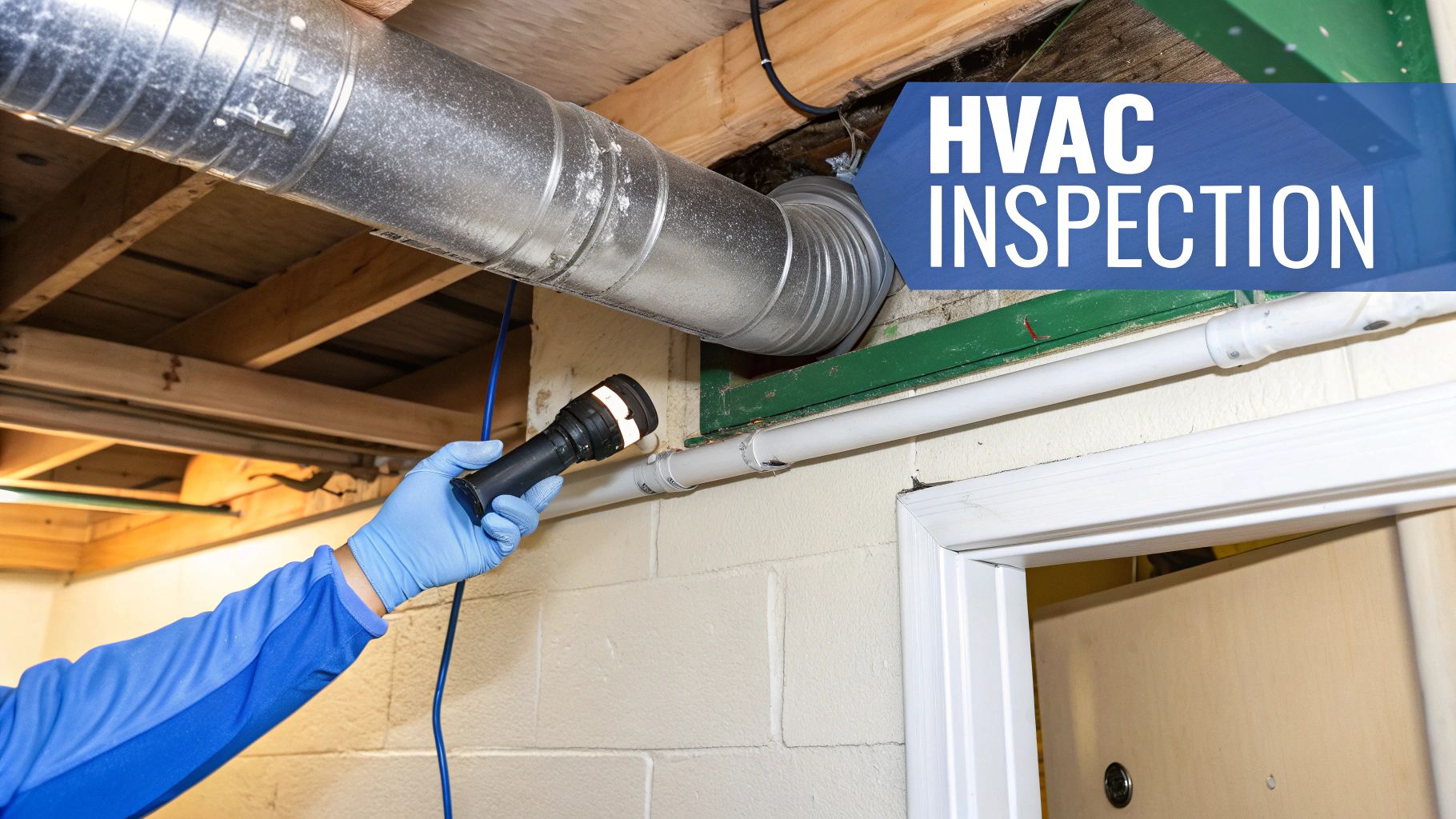
Heating, ventilation, and air conditioning (HVAC) systems can become hidden mold superhighways. They collect moisture in evaporator coils, drip pans, and ductwork, creating the perfect dark, damp environment for mold to flourish. This is a critical item on any checklist of things to look for when inspecting a home, as a contaminated system will actively circulate mold spores into every room, severely degrading indoor air quality.
In coastal communities across Santa Barbara and Ventura Counties, where humidity and temperature swings are common, this inspection is even more vital. The constant presence of moisture in the air means HVAC systems work harder and are more susceptible to condensation buildup, turning them into potential breeding grounds for widespread mold contamination if not meticulously maintained.
Why It's a Crucial Second Step
A compromised HVAC system doesn't just contain a mold problem; it distributes it. For allergy sufferers or those with compromised immune systems, this can turn a home into a source of chronic health issues. For example, older homes in Goleta may have aging systems with years of accumulated dust and spores, while coastal properties often see accelerated corrosion and mold growth on evaporator coils due to the salty, humid air. Neglecting this inspection means you could be breathing contaminated air without even knowing it.
Actionable Inspection Tips
To evaluate the health of an HVAC system, follow these steps:
- Check the Filter: A dirty, clogged air filter is a red flag for poor maintenance and can restrict airflow, causing moisture to build up. Filters should be changed every 1-3 months.
- Inspect the Condensation Pan: Look at the drain pan located under the indoor cooling coils. It should be clean and draining properly, not holding standing water or showing signs of rust or slime.
- Smell the Air: Turn on the system and stand near a vent. If you detect a musty or dirty-sock odor, it's a strong indicator of mold or bacterial growth within the ductwork or on the coils.
- Look Inside Vents: Use a flashlight to peek inside accessible supply and return vents. Look for any visible dark spotting, dust clumps, or signs of moisture on the interior surfaces.
- Assess Airflow: Ensure all registers and returns are unobstructed to maintain proper circulation, which helps manage humidity levels and prevent stagnant, moist air pockets.
Professional Insight: "Flexible ductwork, common in many California homes, is particularly vulnerable to internal mold growth that's invisible from the outside. We often use video borescopes to inspect deep inside duct lines to confirm contamination. Air quality testing is the only way to know for sure what you're breathing." – Pacific Mold Pros
If you notice any of these warning signs or want definitive proof of your home's air quality, a professional inspection is the next logical step. Pacific Mold Pros can conduct thorough air quality testing and HVAC system assessments to identify and resolve any hidden mold issues, ensuring the air you breathe is clean and safe.
3. Attic Ventilation and Moisture Control
The attic is a critical, yet often overlooked, area where moisture problems can silently fester. Inadequate ventilation traps warm, moist air rising from the living spaces below, while roof leaks provide a direct entry point for water. This combination creates an ideal breeding ground for mold on rafters, sheathing, and insulation, a key concern on the list of things to look for when inspecting a home. In coastal California's humid climate, poor attic airflow can lead to extensive contamination before it's ever noticed.
This inspection involves assessing the attic's entire system for managing heat and moisture. It’s not just about looking for leaks; it's about evaluating whether the ventilation is sufficient to prevent condensation and keep the space dry year-round. A properly ventilated attic protects the roof structure and prevents mold from compromising indoor air quality.

Why It's a Crucial Step
An unventilated or poorly ventilated attic is a recipe for disaster. Trapped moisture can saturate insulation, reducing its effectiveness and leading to higher energy bills. More critically, it rots the roof decking and structural beams from the inside out and cultivates mold that can spread through the home via HVAC systems and ceiling penetrations. For instance, many older Santa Barbara homes have insufficient attic ventilation, while some properties in Montecito have had soffit vents inadvertently blocked by blown-in insulation, trapping moisture and creating a hidden mold factory.
Actionable Inspection Tips
To perform a thorough attic assessment, follow these steps:
- Check Ventilation Balance: Look for a balanced system of intake vents (at the lower eaves or soffits) and exhaust vents (at the roof peak or gables). Air must be able to flow in and out.
- Inspect for Blockages: Ensure that insulation, debris, or stored items are not covering soffit vents or other ventilation openings, as this completely disrupts airflow.
- Look for Stains and Discoloration: Examine the underside of the roof sheathing and rafters for dark stains, which indicate past or present roof leaks or condensation issues.
- Feel for Dampness: Check insulation for any signs of dampness or compression, as wet insulation is a primary food source for mold and is ineffective at insulating.
- Verify Proper Exhausting: Make sure bathroom and kitchen exhaust fans are ducted to the exterior of the home, not terminated inside the attic where they release warm, moist air.
Professional Insight: "We often find attic mold that originated from improper ventilation, not a roof leak. A common mistake is adding more insulation without ensuring the soffit vents remain clear. This traps humidity, leading to widespread mold growth on the underside of the roof deck." – Pacific Mold Pros
If you discover dark staining, a musty odor, or signs of moisture in the attic, it's crucial to act quickly. A professional inspection can determine the extent of the problem and identify whether poor ventilation, a leak, or another issue is the root cause, protecting both your home's structure and your family's health.
4. Roof Condition and Leak Detection
The roof serves as the home's primary shield against the elements, and even a minor breach can lead to major mold problems in attics, ceilings, and wall cavities. A thorough roof check is one of the most essential things to look for when inspecting a home, particularly in coastal climates like Santa Barbara and Ventura Counties. Here, the combination of salt air, intense UV exposure, and seasonal downpours can accelerate the deterioration of roofing materials.
This inspection involves more than a quick glance; it requires a careful assessment of shingles, flashing, and gutters to identify weaknesses that could allow water intrusion. Detecting these issues early prevents small leaks from creating the damp, dark environments where mold thrives.
Why It's a Crucial Step
A compromised roof is a direct invitation for water damage and mold. A single storm can exploit a loose shingle or cracked flashing, allowing water to saturate insulation and drywall, often going unnoticed for months. For instance, many older Goleta homes with roofs nearing the end of their 20-year lifespan show significant wear from salt air, while properties in Carpinteria often develop attic mold from slow, undetected leaks after a wet winter. Ignoring these signs can lead to costly structural repairs and extensive mold remediation.
Actionable Inspection Tips
To effectively evaluate a roof’s condition, follow these steps:
- Check Ceilings First: Before looking at the roof itself, inspect all interior ceilings and attic spaces for water stains, discoloration, or peeling paint. These are direct signs of an active or past leak.
- Inspect from the Ground: Use binoculars to safely examine the roof from the ground. Look for missing, curled, or cracked shingles and check the condition of flashing around chimneys, vents, and skylights.
- Examine Gutters and Downspouts: Ensure gutters are free of debris and securely attached. Water overflowing from clogged gutters can seep behind siding and into the foundation.
- Trim Overhanging Branches: Note any large tree limbs hanging over the roof. These can cause physical damage during storms and drop leaves that trap moisture and promote algae growth.
- Don't Delay Repairs: If you spot damage, especially after a storm, address it immediately. A small, inexpensive repair today can prevent a catastrophic failure later.
Professional Insight: "We often find the most severe attic mold cases originate from tiny, long-term roof leaks that homeowners were unaware of. By the time a stain appears on the ceiling, the hidden damage is already extensive. Annual professional roof inspections are critical in coastal areas." – Pacific Mold Pros
While a visual check is a good start, professional evaluation is key to uncovering subtle issues. If you discover signs of water intrusion or suspect a hidden leak, contacting a professional for a comprehensive moisture assessment can confirm the extent of the problem before it escalates.
5. Crawl Space Evaluation and Encapsulation Status
Crawl spaces are often the most neglected area of a home, yet they are ground zero for moisture and mold problems. Their direct contact with the ground, combined with poor ventilation and potential for plumbing leaks, creates a damp, dark environment where mold thrives. This is a critical item on any checklist of things to look for when inspecting a home, especially in coastal California where high humidity and groundwater can easily turn a crawl space into a breeding ground for contamination.
A thorough inspection involves assessing the condition of the vapor barrier, checking for adequate ventilation, and identifying any signs of standing water, wood rot, or active mold growth. It's about understanding whether this hidden space is protecting the home above it or silently compromising its structural integrity and air quality.
Why It's a Crucial Step
Ignoring a damp crawl space allows moisture to seep upward, damaging subflooring, warping hardwoods, and creating musty odors throughout the living area. For instance, many Carpinteria homes near the coast are susceptible to groundwater intrusion, while older Santa Barbara properties often have deteriorating or improperly installed vapor barriers. These conditions can lead to widespread mold that affects the entire home's environment.
Actionable Inspection Tips
To effectively evaluate a crawl space, follow these steps:
- Check the Vapor Barrier: Ensure a 6-mil polyethylene vapor barrier covers the entire ground surface, preventing soil moisture from evaporating into the space.
- Assess Ventilation: Look for adequate ventilation, typically 1 square foot of vent area for every 150 square feet of crawl space, to prevent stagnant, humid air.
- Look for Standing Water: Use a powerful flashlight to scan for puddles, water stains on foundation piers, or signs of efflorescence, which indicate past or present water issues.
- Inspect Wood Framing: Probe wooden joists and subflooring with a screwdriver for soft, spongy spots that signify wood rot from chronic moisture exposure.
- Remove Organic Debris: Note any stored wood, cardboard, or other organic materials that can absorb moisture and serve as a food source for mold.
Professional Insight: "Many homeowners don't realize that over half the air they breathe on the first floor originates from the crawl space. An unsealed, damp crawl space is like having a mold factory directly beneath your living room. Proper encapsulation is non-negotiable for healthy indoor air." – Pacific Mold Pros
If you discover persistent dampness or visible signs of growth, it's vital to address the underlying issues. You can explore professional crawl space moisture control solutions to understand how encapsulation and dehumidification can permanently solve the problem. For a detailed assessment, contacting a professional is the best course of action.
6. Bathroom and Kitchen Moisture Management
Bathrooms and kitchens are the home's primary moisture-generating hubs, where steam, condensation, and constant water use create a perfect environment for mold. Inspecting these high-humidity areas is a non-negotiable part of the list of things to look for when inspecting a home. Poor ventilation and failing waterproof seals allow moisture to penetrate walls, ceilings, and cabinets, leading to hidden colonies behind tiles and under sinks.
This inspection involves a close examination of all surfaces, fixtures, and ventilation systems. It's about looking beyond the surface for subtle signs of water damage, such as peeling paint, soft spots in drywall, or discolored grout, which indicate a persistent moisture problem that needs to be addressed.
Why It's a Crucial Step
Neglecting moisture issues in these rooms can lead to rapid and extensive mold growth that compromises indoor air quality. In coastal California's humid climate, even a small leak under a sink can escalate quickly. For example, many Goleta bathrooms with undersized exhaust fans develop ceiling mold, while older Santa Barbara kitchens often have hidden water damage in cabinets from slow plumbing drips.
Actionable Inspection Tips
To conduct a thorough assessment of these wet zones, follow these steps:
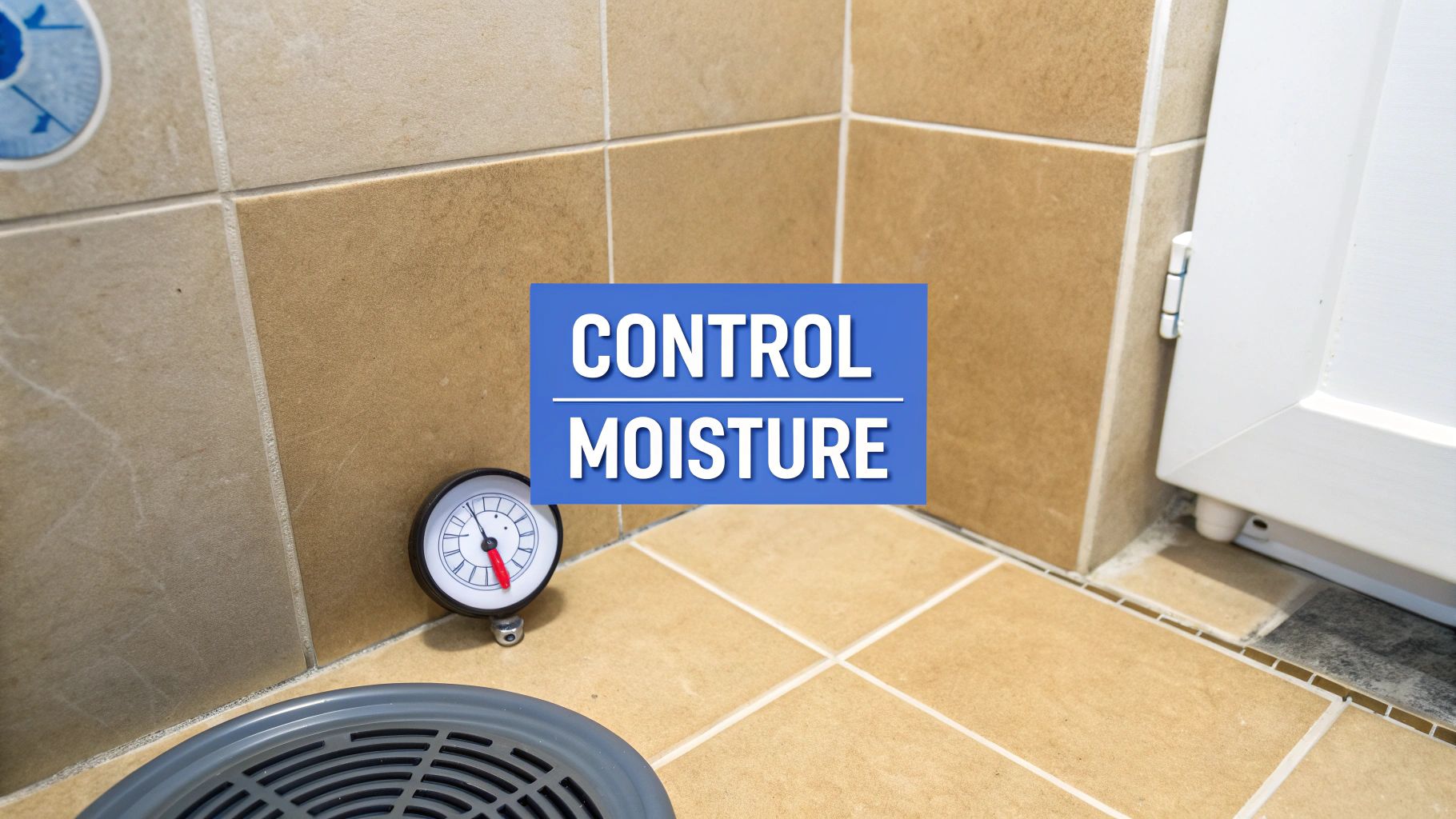
- Test Ventilation: Turn on the exhaust fan and hold a single square of toilet paper up to it. A properly functioning fan should hold the paper firmly in place.
- Inspect Caulk and Grout: Check the sealant around tubs, showers, sinks, and backsplashes for cracks, gaps, or signs of mildew. Failing caulk is a direct pathway for water intrusion.
- Check Under Sinks: Look inside all bathroom and kitchen cabinets for water stains, musty odors, or soft, warped wood. Pay close attention to the plumbing fittings for any signs of active or past leaks.
- Examine Walls and Ceilings: Look for discoloration, peeling paint, or bubbling drywall, especially on the ceiling above showers and near plumbing fixtures. These are classic signs of excess humidity or a hidden leak.
- Confirm Exhaust Ducting: If possible, verify that bathroom and kitchen exhaust fans are ducted to the exterior of the home, not into the attic or a crawl space where they just relocate the moisture problem.
Professional Insight: "We often find the worst mold hidden behind shower tile where the waterproof membrane has failed. Using a thermal camera can help us detect temperature differences that suggest trapped moisture behind the wall without any demolition." – Pacific Mold Pros
Properly managing these areas is key to a healthy home. For more detailed strategies, you can learn how to prevent mold growth in your bathroom to keep these high-moisture zones in check. If you spot any red flags, a professional inspection from Pacific Mold Pros can determine the extent of the issue.
7. Windows, Doors, and Frame Caulking Assessment
Windows and doors are primary culprits for water intrusion, where deteriorating caulking and weatherstripping allow moisture to penetrate wall cavities. Inspecting these vulnerable points is one of the essential things to look for when inspecting a home, especially in coastal communities like Santa Barbara and Ventura County. Seasonal rain, salt air, and persistent humidity can accelerate the breakdown of these seals, leading to hidden water damage and mold growth within walls and frames.
This inspection involves a close look at the integrity of all exterior seals around windows and doors. It’s a process of checking for cracked, shrinking, or missing caulk, as well as worn-out weatherstripping, and then looking for the tell-tale signs of water penetration on both the interior and exterior surfaces.
Why It's a Crucial First Step
Neglecting window and door seals is an open invitation for moisture. Even a small gap can channel significant amounts of rainwater directly into your home's framing, compromising structural wood, ruining insulation, and creating a perfect environment for mold. For example, many older Carpinteria homes with original windows often suffer from rotted sills and moldy drywall due to years of exposure to salt-laden, moist air degrading the sealant. Similarly, a Goleta property with failed window caulk can experience extensive water damage inside the wall cavity after a single heavy storm.
Actionable Inspection Tips
To conduct a thorough assessment of your windows and doors, follow these steps:
- Examine Exterior Caulk: Walk the perimeter of the home and carefully inspect the sealant around every window and door frame. Look for cracks, gaps, or areas where the caulk is pulling away from the siding or the frame itself.
- Check Weatherstripping: Open doors and windows to inspect the condition of the weatherstripping. It should be flexible and create a tight seal; if it is brittle, compressed, or torn, it needs replacement.
- Inspect Interior Sills and Frames: Look for water stains, peeling or bubbling paint, and any dark discoloration or visible mold growth on interior window sills, door frames, and the surrounding drywall.
- Probe for Soft Wood: Gently press the wood on window sills and door frames with a screwdriver. If the wood feels soft or spongy, it is a clear sign of rot caused by prolonged moisture exposure.
- Ensure Proper Drainage: Check that window sills are sloped slightly outward to shed water and that flashing is correctly installed above windows and doors to divert runoff.
Professional Insight: "We often find the most significant mold problems hidden in the wall cavities directly below a leaking window. What looks like a small water stain on a sill can be the tip of the iceberg. We use thermal cameras to detect temperature anomalies that indicate trapped moisture behind the drywall, allowing us to catch the problem before it requires a major tear-out." – Pacific Mold Pros
If you discover any signs of water intrusion around your windows or doors, it's critical to identify the extent of the hidden damage. A professional moisture inspection can confirm the presence of water within the walls and guide a proper, lasting repair.
8. Exterior Grading, Drainage, and Landscaping
A home’s first line of defense against water is its exterior, making proper grading and drainage essential things to look for when inspecting a home. Poor landscaping and improper slope can channel rainwater directly toward the foundation, creating immense hydrostatic pressure. This forces moisture through cracks and porous concrete, leading to basement flooding, crawl space dampness, and widespread mold growth.
This inspection involves walking the property's perimeter to assess how water flows around the structure. It’s about more than just looking at the yard; it’s about understanding how the landscape interacts with the foundation, especially during the heavy seasonal rains common in coastal California.
Why It's a Crucial Perimeter Check
Overlooking exterior water management is a recipe for chronic moisture problems inside the home. A negative grade, where the ground slopes toward the house, can saturate the soil around the foundation, leading to structural damage and ideal conditions for mold. For example, Montecito hillside homes often need engineered drainage systems to divert water, while many Goleta properties suffer from moisture intrusion because dense landscaping beds trap water against the foundation.
Actionable Inspection Tips
To evaluate the property's exterior water management, perform these checks:
- Assess the Slope: The ground should visibly slope away from the foundation for at least 6 to 8 feet. Look for low spots or areas where water could pool against the walls.
- Check Downspout Extensions: Ensure all downspouts carry water at least 4 to 6 feet away from the home. Short or broken extensions deposit gallons of roof runoff right at the foundation.
- Inspect Landscaping Placement: Garden beds, shrubs, and mulch piled against the siding can trap moisture and provide a bridge for pests. There should be several inches of exposed foundation visible.
- Look for Clogged Gutters: Overflowing gutters act like a waterfall, dumping water directly beside the foundation. Check for leaves, debris, or sagging sections.
- Evaluate Hardscapes: Patios, driveways, and walkways should be sloped to direct water away from the house, not toward it.
Professional Insight: "We often find the source of a serious basement mold problem isn't a crack in the wall, but a poorly graded flower bed or a clogged gutter. Correcting these simple exterior issues is one of the most effective ways to keep a home dry and mold-free." – Pacific Mold Pros
If you notice standing water, soil erosion near the foundation, or water stains on the exterior foundation wall, these are clear indicators that the grading and drainage need professional attention. Addressing these external factors is a critical, proactive step in preventing long-term moisture and mold damage.
9. Plumbing Leaks and Water Damage History
Plumbing systems are the vascular network of a home, but even a minor failure can create a persistent moisture source perfect for mold. Hidden leaks behind walls or under floors are a primary culprit for serious mold infestations, making plumbing integrity one of the most important things to look for when inspecting a home. Investigating a property's water damage history is crucial because even a fully repaired leak could have left behind a legacy of hidden mold growth in wall cavities, insulation, or subflooring.
This inspection involves more than just turning on faucets. It requires a detailed visual check of all accessible plumbing, an understanding of past water incidents, and an awareness of the subtle clues that point to previous damage, like mismatched paint or new drywall patches.
Why It's a Crucial First Step
Ignoring the potential for plumbing leaks is to ignore a ticking time bomb. A slow, undetected drip from a dishwasher line in a Montecito home can saturate the subfloor and cabinets for months, leading to extensive structural rot and mold. Likewise, older Carpinteria properties near the coast may have corroded copper pipes from the salt air, increasing the risk of pinhole leaks that are difficult to spot until significant damage and mold have already occurred.
Actionable Inspection Tips
To conduct a thorough assessment, follow these steps:
- Examine Under-Sink Areas: Check all bathroom and kitchen cabinets for dark stains, warped wood, or a musty odor, which are classic signs of a slow leak.
- Inspect Appliance Connections: Look behind the washing machine, dishwasher, and refrigerator for any signs of water drips or staining on the floor and wall.
- Check the Water Heater: Inspect the base of the water heater for any signs of rust, corrosion, or active leaking, which can indicate it is nearing the end of its life.
- Monitor the Water Meter: Turn off all water-using appliances and check if the meter's dial is still moving. Any movement suggests a hidden leak somewhere in the system.
- Request a Claims History: Ask the seller for any history of water damage insurance claims. This provides a clear record of past significant events.
Professional Insight: "We often find the worst mold problems stem from old, repaired leaks. The homeowner fixed the pipe but never addressed the moisture trapped in the wall. That's why we always investigate any signs of past water damage, as the mold risk remains high long after the leak is gone." – Pacific Mold Pros
If you notice discoloration, peeling paint, or soft spots on drywall, it's a strong indicator of a problem within the wall. You can learn more about the signs of water damage in walls to better identify these risks. For a definitive assessment, especially if past water damage is confirmed, a professional mold inspection is the only way to ensure the home is safe.
10. Indoor Humidity Levels and Moisture Control Systems
Air isn't just empty space; it contains water vapor, and managing its concentration is a crucial part of a home inspection. High indoor humidity is a primary driver of mold growth. When relative humidity consistently exceeds 60%, it creates an environment where mold can colonize on nearly any surface, a key concern among the things to look for when inspecting a home in California's coastal regions.
This part of the inspection involves assessing the home’s ability to manage its internal moisture load. This means checking for active dehumidification systems, evaluating ventilation adequacy in moisture-prone areas, and directly measuring humidity levels to see if they fall within a safe range.
Why It's a Crucial Step
Uncontrolled humidity quietly enables mold proliferation. In naturally humid areas like Santa Barbara and Ventura Counties, outdoor moisture can easily infiltrate a home, leading to condensation on windows, a sticky feeling in the air, and musty odors. For instance, coastal homes in Carpinteria often require dehumidifiers to run continuously in the summer, while properties in Goleta can experience a surge in mold growth in the spring as accumulated winter moisture becomes active.
Actionable Inspection Tips
To effectively assess a home's humidity management, follow these steps:
- Use a Hygrometer: Place digital hygrometers in several rooms, especially the basement, bathrooms, and kitchen, to get accurate readings. The ideal range for mold prevention is between 30% and 50%.
- Test Exhaust Fans: Ensure exhaust fans in bathrooms and kitchens are powerful enough to vent steam and moisture outside, not just into the attic or a wall cavity.
- Check HVAC Performance: A properly sized and functioning air conditioning system is a home's primary dehumidifier. Check if it effectively lowers humidity when running.
- Look for Dehumidifiers: Note the presence of standalone or whole-house dehumidification systems. Their existence can indicate a known humidity problem.
- Evaluate Air Circulation: Stagnant air allows moisture to settle. Check for ceiling fans and an open layout that promotes airflow.
Professional Insight: "We often find homes where the humidity is over 70%, especially in poorly ventilated laundry rooms or basements. At that level, mold growth isn't a possibility; it's a certainty. Proactive humidity control is the single most effective preventative measure a homeowner can take." – Pacific Mold Pros
Managing airborne moisture is fundamental to maintaining a healthy indoor environment. For a deeper understanding of a home's atmospheric conditions, you can explore the principles behind effective humidity control in homes to better protect your property. If you suspect high humidity is already causing issues, professional testing from Pacific Mold Pros can confirm the problem and identify solutions.
10-Point Home Inspection: Moisture, Structure & Systems
| Inspection Type | Implementation Complexity 🔄 | Resources & Cost ⚡ | Expected Effectiveness ⭐ | Ideal Use Cases 💡 | Key Advantages 📊 |
|---|---|---|---|---|---|
| Foundation and Basement Moisture Assessment | Moderate–High 🔄 — requires crawlspace/basement access, moisture mapping, thermal imaging | Specialized tools + skilled inspector; moderate cost | High ⭐⭐⭐⭐ — finds hidden moisture before visible mold | Coastal basements, post-storm purchases, properties with sump systems | Identifies water entry paths; prevents structural and mold damage |
| HVAC System and Ductwork Inspection | Moderate 🔄 — accessible but may need duct entry and sampling | HVAC cleaning/testing costs; possible repairs or system upgrades | High ⭐⭐⭐⭐ — reduces airborne spore circulation when remediated | Homes with poor IAQ, shared duct systems, older HVAC units | Improves air quality and HVAC efficiency; lowers allergen spread |
| Attic Ventilation and Moisture Control | Moderate 🔄 — attic access and roof/vent evaluation; thermal imaging useful | Inspection cost + potential ventilation fixes; moderate–high if roof work needed | High ⭐⭐⭐⭐ — prevents structural mold and extends roof life | Homes with insulation/ventilation issues, roof leaks, summer heat buildup | Prevents concealed mold, lowers energy costs, preserves roofing |
| Roof Condition and Leak Detection | Moderate–High 🔄 — roof access; safety and seasonal timing considerations | Professional roof inspection; repair or replacement can be expensive | High ⭐⭐⭐⭐ — stops primary water intrusion source when addressed | Coastal roofs, older shingles, storm-damaged properties | Early leak detection protects attic/wall structures and prevents mold |
| Crawl Space Evaluation and Encapsulation Status | High 🔄 — confined-space entry and moisture/vapor barrier assessment | Encapsulation can be costly ($1.5k–$15k+); specialized equipment | Very High ⭐⭐⭐⭐⭐ — encapsulation greatly lowers indoor moisture risk | Homes with dirt crawl spaces, high groundwater, prior mold issues | Significantly improves IAQ and reduces structural rot/mold risk |
| Bathroom and Kitchen Moisture Management | Low–Moderate 🔄 — visual and exhaust/fixture checks; localized repairs | Low–moderate cost for fans, caulking, duct routing; possible renov. | High ⭐⭐⭐⭐ — reduces localized mold and surface colonization | High-moisture rooms, rentals, older homes with poor ventilation | Prevents common indoor mold sources; improves occupant health |
| Windows, Doors, and Frame Caulking Assessment | Low 🔄 — visual inspection and simple resealing | Low cost for caulk/weatherstripping; replacement expensive if required | Moderate–High ⭐⭐⭐ — prevents entry and localized framing damage | Homes with visible staining, older frames, coastal salt exposure | Cost-effective barrier repair; improves energy efficiency and prevents decay |
| Exterior Grading, Drainage, and Landscaping | High 🔄 — may require excavation and landscape changes | Potentially high ($2k–$10k+) for grading, drains, hardscape changes | High ⭐⭐⭐⭐ — addresses root cause of foundation moisture | Properties with poor slope, heavy runoff, hillside sites | Stops water at source; protects foundation and reduces mold risk |
| Plumbing Leaks and Water Damage History | Moderate 🔄 — may need invasive inspection or moisture detection | Variable — minor repairs to full pipe replacement; can be costly | High ⭐⭐⭐⭐ — fixes eliminate ongoing hidden moisture sources | Homes with past water incidents, aging plumbing, appliance leaks | Prevents recurrent water events and associated mold colonization |
| Indoor Humidity Levels and Moisture Control Systems | Low–Moderate 🔄 — humidity monitoring and system tuning | Affordable monitoring; dehumidifiers/whole-house systems cost variable | Very High ⭐⭐⭐⭐⭐ — most effective ongoing mold-prevention method | Coastal climates, humid seasons, homes with musty odors | Immediate IAQ improvement; scalable and energy-manageable solution |
Inspecting with Confidence: When to Trust the Professionals
Embarking on a home inspection armed with the detailed checklist from this guide transforms you from a passive observer into a proactive investigator. You are now equipped to look beyond the fresh paint and staged furniture, understanding the critical systems that determine a home's true health and longevity. From scrutinizing the foundation for tell-tale cracks to evaluating the attic for proper ventilation, you can now identify potential red flags related to moisture intrusion and hidden damage.
This knowledge is your first and most powerful line of defense. By knowing precisely what things to look for when inspecting a home, you can ask more intelligent questions, spot inconsistencies, and make a far more informed assessment of the property's condition. You have learned to trace the path of water, from the exterior grading and roof integrity down to the crawl space and plumbing systems, recognizing how each component contributes to a dry, healthy living environment.
The Limits of Visual Inspection
However, it is crucial to recognize the inherent limitations of a visual-only inspection. What you can see, smell, and touch is only part of the story. Mold, a master of concealment, often thrives undetected within wall cavities, beneath flooring, or deep within HVAC ductwork. Musty odors can be temporarily masked, and subtle water stains can be easily painted over, hiding a much more significant underlying issue.
Your DIY moisture meter can confirm surface dampness, but it cannot map the full extent of water intrusion or identify the precise origin of a complex leak. This is where your diligence as a home inspector must pivot towards acknowledging when a deeper, more scientific approach is necessary. The stakes are simply too high. A missed mold problem isn't just a future repair bill; it's a potential risk to your family's health and the structural integrity of your most significant investment.
Bridging the Gap: From Diligence to Definitive Answers
The journey from a diligent homebuyer to a confident homeowner often requires a professional partner. This is especially true in the unique coastal climates of Santa Barbara and Ventura Counties, where the persistent marine layer creates a constant battle against moisture. If your inspection has uncovered any of the following, it is a clear signal to engage a certified professional:
- Persistent Musty Odors: If you detect a damp, earthy smell, particularly in basements, bathrooms, or closets, that you cannot trace to an obvious source.
- Visible Signs of Water Damage: Evidence of staining, discoloration, peeling paint, or warped materials, even if the area currently feels dry.
- High Humidity Readings: Consistent indoor humidity levels above 50-60% that are not easily explained by temporary weather conditions.
- Health Concerns: If you or a family member experience unexplained allergies, respiratory issues, or other symptoms that seem to worsen inside the home.
- The Need for Certainty: For the ultimate peace of mind before finalizing a purchase or sale, ensuring you have a complete and accurate picture of the home's condition.
Your Final Step to a Healthy Home
Think of a professional mold inspection not as an expense, but as an essential investment in certainty. At Pacific Mold Pros, we bridge the gap between what you can see and what is actually happening within a home's structure. We utilize advanced tools like thermal imaging to detect temperature anomalies that indicate hidden moisture, and our certified testing provides definitive, lab-verified data on the presence and type of mold spores in the air.
Our comprehensive reports provide you with clear, actionable information, empowering you to negotiate effectively, plan for necessary remediation, or walk away from a potentially problematic property. You have done the hard work of learning the essential things to look for when inspecting a home. Now, take the final, crucial step. Don't let hidden issues undermine your future. Contact Pacific Mold Pros at (805) 232-3475 to schedule a professional inspection and ensure the home you love will be a healthy, safe, and sound investment for years to come.