You know that feeling when you walk into a room and the air just feels… off? That's often the first sign of what we in the industry call biological contaminants.
It’s a technical-sounding term, but it really just means tiny, living organisms—or the stuff they produce—that have moved into your home uninvited. Think of them as microscopic squatters like mold, bacteria, and viruses that absolutely love damp, poorly ventilated spaces.
Decoding Your Home's Invisible Threats

Picture your home as a coastal garden. With the right balance of sun and dry soil, everything is healthy and thriving. But what happens when a pipe starts leaking or the persistent marine layer keeps everything damp? You get weeds. In your home, those "weeds" are biological contaminants, and they do more than just look bad—they actively degrade your indoor environment.
These organisms aren't picky, but they do have a simple recipe for survival: a food source (like drywall, wood, or even dust), a comfortable temperature, and most importantly, moisture. This is exactly why homes here in Santa Barbara and Ventura Counties can be hotspots. Our beautiful coastline comes with a layer of fog and humidity that creates the perfect breeding ground for these unwanted guests.
The Usual Suspects Lurking Indoors
While the term "biological contaminants" covers a lot of ground, you're probably already familiar with the main culprits. They generally fall into a few key categories, each with its own signature and potential impact on your home and health.
Here’s a quick rundown of what we’re typically looking for during an inspection.
Common Types of Biological Contaminants at a Glance
| Contaminant Type | Examples | Common Hiding Spots |
|---|---|---|
| Molds & Fungi | Stachybotrys (black mold), Aspergillus, Penicillium, Mildew | Damp basements, behind drywall, under sinks, attics, crawl spaces |
| Bacteria | Legionella, E. coli, Staphylococcus | HVAC systems, standing water, humidifiers, damp building materials |
| Viruses | Influenza, Common Cold, Norovirus | Airborne droplets, contaminated surfaces (doorknobs, countertops) |
| Allergens & Pests | Dust mites, pet dander, cockroach droppings, pollen | Carpets, bedding, upholstery, air ducts, kitchens, bathrooms |
As you can see, it's a diverse group. From the fuzzy patches of mold you might spot on a ceiling to the bacteria multiplying in a drip pan, these contaminants are signs of a deeper issue.
Biological contaminants aren't just an eyesore. Their presence is a direct warning sign of an underlying moisture problem that can compromise your property's structure and, more importantly, your family's health.
These threats can seriously tank your indoor air quality. The Centers for Disease Control and Prevention (CDC) has linked mold exposure to everything from a stuffy nose and coughing to more severe respiratory reactions. In fact, an estimated 4.6 million asthma cases in the U.S. are attributed to dampness and mold in homes.
Understanding what these contaminants are and where they hide is the critical first step in effective household environmental testing. Each type of intruder requires a specific strategy to find, identify, and deal with it for good.
The Most Common Biological Threats Hiding Indoors
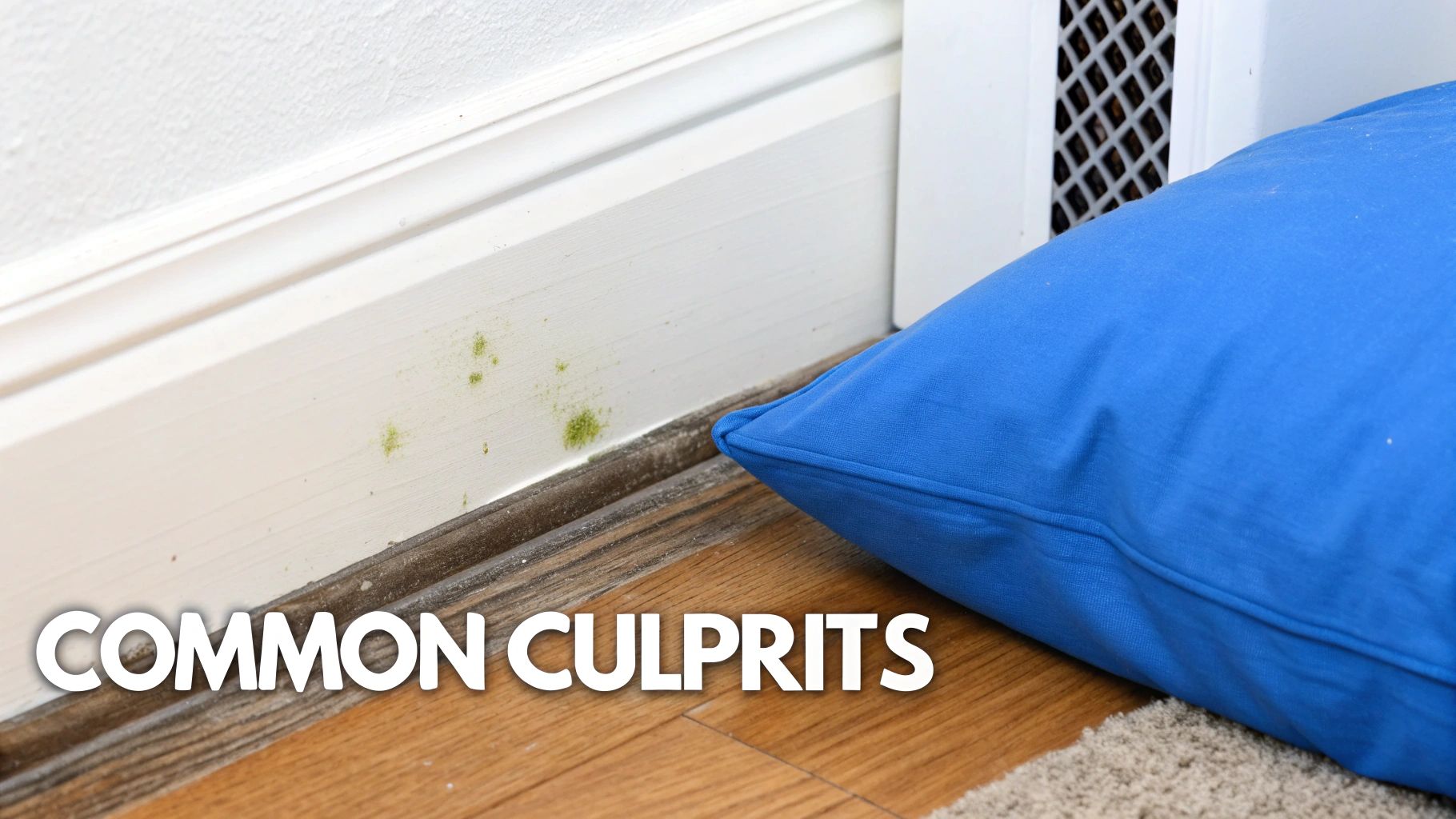
Now that we've covered the big picture, let's zoom in. It helps to think of your home as its own little ecosystem. When the conditions are right, all sorts of organisms can decide to move in. While some are harmless, others can cause real trouble for both your family's health and the house itself.
Knowing who the usual suspects are is the first step toward keeping your indoor environment healthy. Let's break down the most common offenders we find, especially here in the moisture-prone coastal climate of Santa Barbara and Ventura.
Molds: The Fungal Intruders
When you hear "biological contaminants," your mind probably jumps straight to mold. And for good reason. Molds are tiny fungi that get around by releasing spores into the air. When those spores land on a damp surface with something to eat—like drywall, wood, or even a thick layer of dust—they can start growing a new colony in just 24 to 48 hours.
Of course, not all molds are the same. Here are a few of the most common species we run into:
- Stachybotrys chartarum (Black Mold): This is the one that gets all the headlines. It’s a greenish-black mold that loves materials high in cellulose (think drywall and ceiling tiles) that have been soaked for a long time. It's notorious for producing mycotoxins, which can be linked to more serious health problems.
- Aspergillus and Penicillium: These guys are everywhere. They often show up as fuzzy patches in all sorts of colors and can grow on a huge range of surfaces. For many people, they are major triggers for allergies and asthma.
A persistent musty smell is one of the most reliable clues you have hidden mold growth. Even if you can't see a thing, that distinct, earthy odor means mold is actively growing and releasing gases—called microbial volatile organic compounds (mVOCs)—into your air.
Understanding the specific types of mold found in homes is key, as each one can signal a different kind of moisture problem and pose different risks.
Bacteria: The Unseen Colonizers
Mold may get the spotlight, but bacteria are another major player. These single-celled organisms are less visible but can multiply like crazy anywhere there's standing water or constant dampness.
Picture a neglected air conditioner trying to keep up during a hot Santa Barbara summer. The condensation pan inside can easily become a breeding ground for bacteria. Every time the AC kicks on, those bacteria get blown right into the air you breathe.
A couple of common bacterial threats in homes include:
- Legionella: This is the bacterium behind Legionnaires' disease, and it thrives in warm, stagnant water. We often find it in HVAC systems, hot water heaters, and humidifiers. When it gets aerosolized in tiny water droplets, it can be inhaled and lead to a serious type of pneumonia.
- Bacillus and Staphylococcus: These types of bacteria are often found in household dust and on damp surfaces. They can contribute to a variety of health issues, particularly for anyone with a compromised immune system.
Allergens and Pest-Related Contaminants
Finally, we have the contaminants that come from pests. It’s not just about the pests themselves being a nuisance; their byproducts can wreak havoc on your indoor air quality and kickstart allergic reactions.
These microscopic troublemakers love to hide out in carpets, bedding, and furniture, where they can build up without anyone noticing.
- Dust Mites: These tiny critters are relatives of the spider, and they feed on the dead skin cells we all naturally shed. The real problem isn't the mites themselves—it's their waste and decaying bodies. They are powerful allergens that can cause sneezing, itchy eyes, and asthma attacks.
- Cockroach and Rodent Droppings: The saliva, droppings, and decomposing bodies of pests like cockroaches and mice contain proteins that are potent allergens. Once these particles become airborne, they're easily inhaled and can contribute to chronic respiratory problems, especially in kids.
Each of these contaminants—mold, bacteria, and pest byproducts—tells a story about your home's health. Finding them isn't just about cleaning up a mess; it's about diagnosing an underlying imbalance in your home's environment that needs to be fixed for good.
How Biological Contaminants Impact Your Health
It’s easy to write off a little musty smell or a patch of mildew as just a part of owning a home. But the truth is, what you can’t always see can definitely hurt you. Think of ongoing exposure to indoor contaminants like a slow leak—at first, it’s just a minor annoyance, but over time, it can seriously undermine your well-being.
The connection between your home’s air and your health is direct. When mold, bacteria, and other unwanted guests release spores and toxins into your living space, you breathe them in. For many people, this is where the trouble starts, kicking the body’s defense mechanisms into overdrive and leading to a whole host of symptoms.
From Nagging Allergies to Chronic Illness
The most common complaints we hear are tied to allergic and respiratory reactions. This is your immune system sounding the alarm, overreacting to inhaled particles it sees as a threat.
This internal battle can show up in a few ways:
- Never-Ending Allergy Symptoms: Are you constantly fighting a stuffy nose, sneezing fits, itchy eyes, or skin rashes that just won't quit? These are often the first red flags that something is off with your indoor air.
- Asthma Flare-Ups: For anyone with asthma, mold spores and dust mite allergens are potent triggers. Exposure can mean more frequent and severe attacks, leaving you wheezing, coughing, and short of breath.
- Hypersensitivity Pneumonitis: In more serious cases, repeated exposure can lead to this immune system disorder—an inflammation of the lungs caused by breathing in allergens. It can feel like a nasty flu, with fever, chills, and deep fatigue.
The impact isn't one-size-fits-all. It really depends on the type of contaminant, how much you're exposed to, and your own unique sensitivity. What gives one person the sniffles could trigger a severe respiratory crisis in another.
Understanding the potential health effects of mold exposure is the first step in connecting the dots between persistent health issues and the environment you live in.
Below is a table that breaks down some of the common symptoms you might experience, ranging from mild annoyances to more severe conditions.
Health Symptoms Linked to Biological Contaminants
| Symptom Severity | Common Symptoms | Associated Contaminants |
|---|---|---|
| Mild | Sneezing, runny nose, itchy eyes, skin rashes, sore throat | Mold spores, pollen, dust mites, pet dander |
| Moderate | Persistent cough, wheezing, shortness of breath, frequent asthma attacks, sinus congestion, headaches | Mold spores (especially Aspergillus, Penicillium), bacteria, dust mites |
| Severe | Chronic fatigue, memory loss ("brain fog"), joint pain, fever, hypersensitivity pneumonitis, severe respiratory distress | Mycotoxin-producing molds (Stachybotrys chartarum, aka black mold), certain bacteria |
Keep in mind that this is a general guide. If you're experiencing persistent symptoms, it's always best to consult with a healthcare professional to get to the root cause.
The Hidden Danger of Mycotoxins
Beyond allergic reactions, some molds are capable of producing toxic chemical compounds called mycotoxins. These aren't the spores themselves, but nasty substances that can hitch a ride on dust particles and get inhaled or ingested. This is where health problems can get much more serious.
Mycotoxins are particularly sneaky because their effects can be systemic, meaning they can impact your whole body, not just your lungs. Globally, a shocking 7 million deaths each year are linked to air pollution—both indoors and out—where mold and mycotoxins are significant contributors. These toxins are linked to everything from respiratory distress to neurological issues like memory loss, anxiety, and even depression.
Who Is Most at Risk?
While nobody is immune to poor indoor air quality, certain groups are far more vulnerable to the effects of biological contaminants. If your household includes anyone from these groups, it’s time to be extra vigilant.
These high-risk populations include:
- Children and Infants: Their immune and respiratory systems are still under construction, making them much more susceptible to airborne threats. Early exposure can even set the stage for developing asthma later on.
- Older Adults: As we age, our immune systems naturally become less robust, making it harder for the body to fend off the effects of mold and bacteria.
- The Immunocompromised: Anyone with a condition like HIV/AIDS, or those undergoing chemotherapy or who have had an organ transplant, is at a much higher risk of serious infections from common household molds.
- Those with Chronic Respiratory Conditions: For people already managing asthma, COPD, or severe allergies, living in a contaminated environment can feel like pouring fuel on a fire, dramatically worsening their symptoms and quality of life.
Even what seems like a small contamination issue can have a big impact, especially for these vulnerable individuals. Taking care of your home's air is a direct investment in the health of everyone inside.
The Professional Process for Detecting Hidden Contaminants
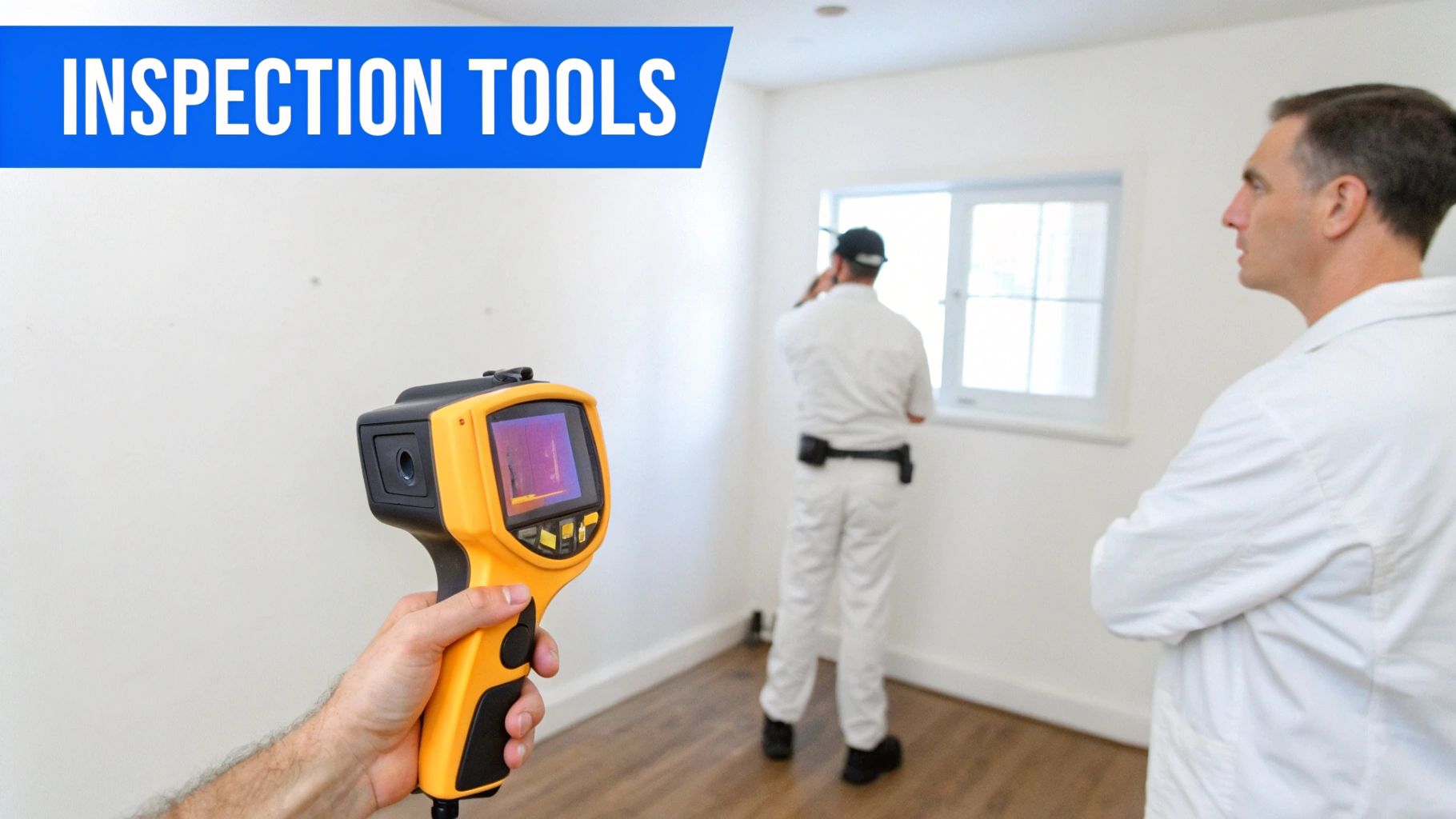
Suspecting you have a hidden problem is one thing; proving it is another. A musty odor or persistent allergies are strong clues, but they don't give you the full picture. To really understand what’s going on—what contaminants are present, where they're hiding, and how bad the issue is—you have to move beyond guesswork.
This is where a professional inspection makes all the difference. It’s not just a quick walk-through looking for obvious mold. Think of it more like a diagnostic exam for your home, a systematic investigation using specialized tech to uncover invisible threats and give you definitive answers.
Starting with a Visual Assessment
Every professional inspection starts with a thorough visual assessment. A certified inspector is trained to spot the subtle signs of water intrusion that most people would easily miss. They know that a small, discolored patch on the ceiling isn't just a stain—it's a clue pointing to a slow leak in the roof or a sweating pipe in the attic.
This initial walkthrough creates a roadmap for the rest of the investigation. The inspector will check known trouble spots like under sinks, around windows, in basements, and near HVAC units, looking for evidence of:
- Past or present water damage like staining or warped materials.
- Visible mold growth, no matter how small it seems.
- Condensation buildup on pipes, windows, or walls.
- Structural issues that could let moisture into the home.
This foundational step sets the stage, helping the inspector pinpoint high-risk zones that need a much closer look with more advanced tools. To see a detailed breakdown of this first phase, you can learn more about our complete mold inspection process.
Using Technology to See the Unseen
Once potential trouble spots are flagged, the high-tech equipment comes out. This is where we shift from observation to measurement, using technology to find moisture that’s hiding from plain sight.
A professional inspection isn't just about finding mold; it's about finding moisture. Moisture is the fuel that allows biological contaminants to thrive. By tracing the water source, we can pinpoint exactly where the problem started and why it's happening.
Two of the most powerful tools in our kit are moisture meters and thermal imaging cameras.
Moisture Mapping: Inspectors use specialized moisture meters with probes to get precise readings of moisture content inside building materials like drywall, wood, and insulation. By taking readings across a surface, they create a "moisture map" that shows exactly where the water is concentrated and how far it has spread.
Thermal Imaging: A thermal camera detects tiny differences in surface temperature. Because wet materials are often cooler than dry ones (thanks to evaporation), a thermal camera can reveal hidden pockets of moisture behind walls or under floors. It’s a non-invasive way to "see" potential problems without tearing anything apart.
Gathering Scientific Evidence Through Sampling
Visual and tech inspections tell us the "where," but sampling and lab analysis provide the crucial "what." If contamination is suspected, an inspector will collect samples to identify the specific types of biological contaminants present and determine their concentration levels.
There are two primary ways we do this:
- Air Sampling: We use a calibrated pump to draw a specific volume of air through a collection cassette. That sample is then sent to an accredited lab to identify and count the types of mold spores in your indoor air, which we compare to the levels outside.
- Surface Sampling: If there's visible growth, a swab or tape lift sample can be taken directly from the surface. This method helps us definitively identify the exact species of mold that is actively growing in your home.
This scientific, evidence-based approach removes all the ambiguity. The lab results give you clear, factual data about what you’re dealing with, forming the basis for a targeted and effective remediation plan.
Proven Strategies for Prevention and Remediation
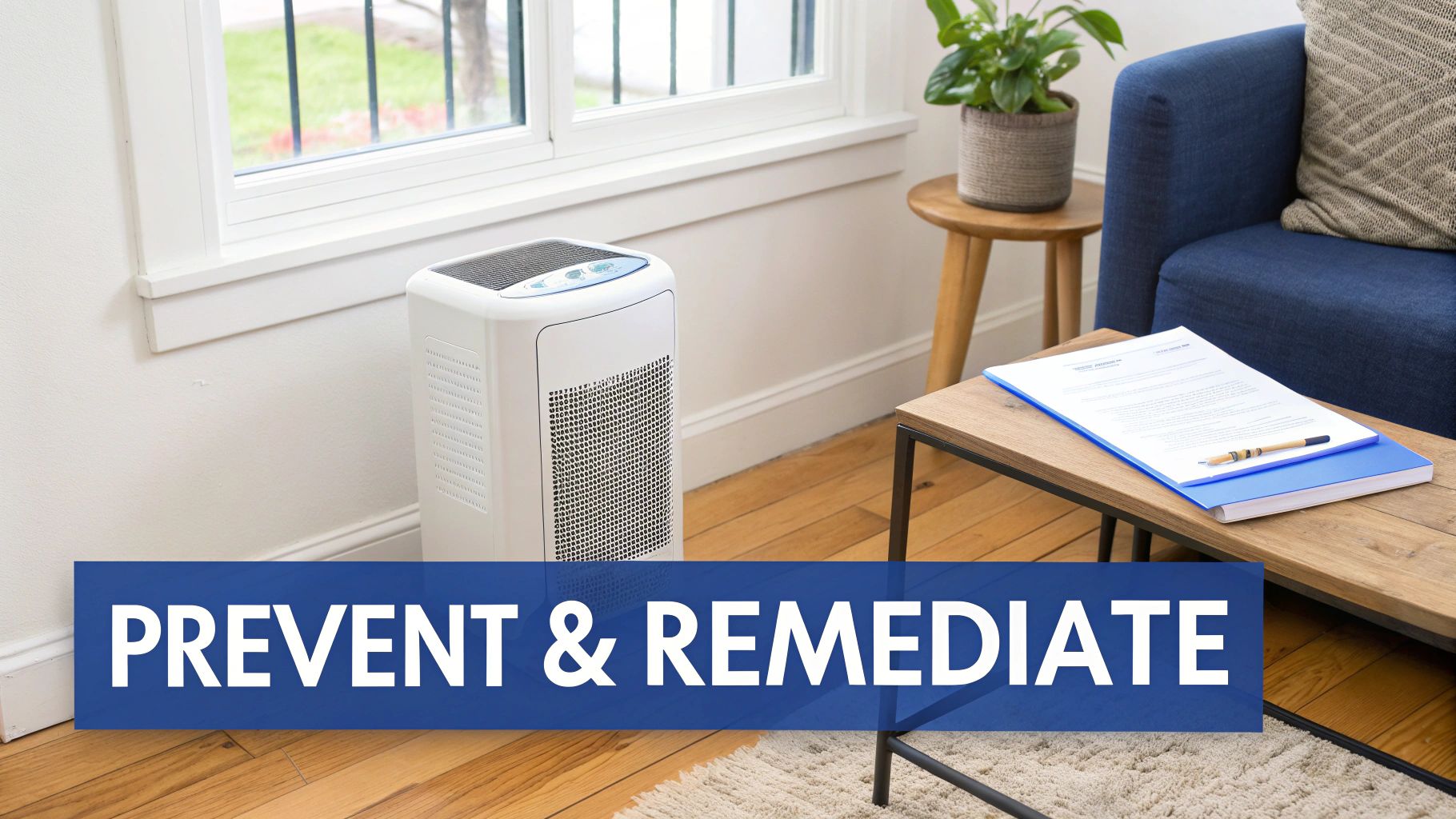
Knowing the risks is one thing, but taking action is what really protects your home and health. The best strategy is always proactive—stopping these organisms before they ever get a foothold. Think of it like maintaining your yard; it’s far easier to pull a few small weeds every weekend than to reclaim a completely overgrown plot.
When it comes to biological contaminants, effective prevention boils down to one simple thing: moisture control. Since every one of these unwanted guests needs water to survive, managing humidity and cutting off water sources is your single most powerful defense. This is especially true here in Santa Barbara and Ventura County, where the coastal marine layer can keep things damp for long stretches.
Proactive Prevention for a Healthy Home
Making your home an unfriendly place for contaminants doesn't mean you need a massive overhaul. It’s really about building smart habits and doing routine checks to keep your home dry and air flowing freely.
A few key strategies can make all the difference. Start by focusing on the spots most vulnerable to moisture.
- Control Indoor Humidity: Your goal is to keep your home's humidity between 30% and 50%. A cheap hygrometer from the hardware store can help you track this, and a good dehumidifier can be a game-changer in those notoriously damp basements, crawl spaces, or bathrooms.
- Ensure Proper Ventilation: Make sure you're using exhaust fans in kitchens and bathrooms to push moisture outside—not just up into the attic. If the air in your home feels heavy or stuffy, just opening a few windows each day can dramatically improve circulation.
- Perform Routine Maintenance: Get in the habit of regularly checking for leaks under sinks, around toilets, and near appliances like your washing machine and dishwasher. It’s also smart to ensure your roof, gutters, and downspouts are clear and channeling water away from your foundation.
These simple, consistent actions starve biological contaminants of the water they need, turning your home into a place they just can't thrive.
Smart Remediation Practices
If you've already found a problem, the game shifts from prevention to safe, effective removal. Proper remediation is so much more than just cleaning. It's a methodical process designed to get rid of the contamination and fix the root cause so it doesn’t come right back.
The single biggest mistake people make in remediation is focusing only on what they can see. Slapping some paint over mold or scrubbing a spot with bleach might look good for a week, but it does absolutely nothing to fix the source. Without solving the moisture problem, the contamination will always return.
Professional remediation isn't guesswork. It follows a strict, proven playbook to make sure the issue is resolved completely and safely.
The Professional Playbook vs. Common DIY Mistakes
| Professional Best Practice | Common DIY Mistake |
|---|---|
| Containment: The entire affected area is sealed off with plastic sheeting to stop spores from spreading through your home during removal. | Scrubbing Dry: Aggressively scrubbing or sanding dry mold sends billions of microscopic spores airborne, contaminating new areas. |
| Source Removal: Contaminated porous materials like drywall or insulation are carefully removed, bagged, and properly discarded. | Painting Over Mold: This just hides the issue. The mold continues to grow and literally eat away at the material underneath the paint. |
| HEPA Filtration: High-efficiency particulate air (HEPA) filters are used in industrial air scrubbers to capture tiny airborne spores during cleanup. | Using Only Bleach: Bleach can kill surface mold, but it can't penetrate porous materials like wood or drywall where the "roots" are. |
| Addressing Moisture: The final and most critical step is fixing the leak or ventilation issue that let everything grow in the first place. | Ignoring the Cause: Cleaning the mold without fixing the leak is like mopping a flooded floor while the faucet is still running full blast. |
True remediation is like hitting the reset button for your indoor environment. It involves containing the area, physically removing the contaminated materials, cleaning the air, and—most importantly—correcting the moisture problem that started it all. By following these proven strategies, you can lock in a lasting solution and get your home back to being a healthy, safe space.
When Should You Call a Certified Inspector?
Trusting your gut is often the first line of defense in protecting your home. While prevention is key, knowing the specific triggers that warrant a professional opinion can save you from much bigger headaches down the road. Deciding to call an inspector isn't an overreaction; it's a smart move to protect your property and your family’s health.
So, how do you know when it's time to pick up the phone? Certain signs are clear giveaways that something is off with your home's invisible environment.
Unmistakable Signs It's Time for an Inspection
If you're dealing with any of these scenarios, it’s a strong signal you need a professional assessment to understand the full scope of the problem. Waiting almost always allows a minor issue to blow up into a major one, costing you more time, money, and stress.
These red flags demand immediate attention:
You Notice a Persistent Musty Odor: This is the classic, most reliable sign of hidden mold. That distinct, earthy smell points to active microbial growth, even if you can't see a single spot. It's your home’s way of telling you there's a moisture problem lurking somewhere.
You've Had a Water Leak or Flood: Any time you have a significant water event—a burst pipe, a leaky roof, or even a failed appliance—you've rolled out the welcome mat for mold. Even after the water is gone, moisture loves to hang around inside walls and under floors, allowing biological contaminants to take hold in just 24-48 hours.
There Are Visible Signs of Growth: Seeing discolored spots, fuzzy patches, or suspicious stains on walls, ceilings, or baseboards is a dead giveaway. A professional can figure out how far it has spread and, more importantly, track down the moisture source that’s feeding it.
Protecting Your Health and Your Biggest Investment
Beyond the obvious signs, there are other critical times to bring in an expert. For many homeowners, unexplained health issues are the biggest motivator.
If your family is dealing with chronic allergy-like symptoms—sneezing, coughing, congestion, or headaches—that seem to get better when you leave the house, your indoor air quality is the likely culprit. This is a huge clue that your home environment might be making you sick.
Real estate transactions are another key moment for due diligence. Whether you’re buying or selling, a professional inspection provides peace of mind that you can't put a price on. For buyers, it uncovers hidden problems before you sign on the dotted line. For sellers, it shows you’re being transparent and can prevent deals from falling through at the last minute.
If you're in one of these situations, you can learn more about our specialized mold testing services near me. Don't leave your family's health or your largest investment to chance.
Common Questions We Hear From Homeowners
Even after you get a handle on the basics, it's natural to have more specific questions pop up. We get calls about this stuff all the time. Here are a few of the most common questions we hear from homeowners in Santa Barbara and Ventura County, along with our straightforward answers.
Can I Just Use Bleach to Clean Up Mold Myself?
This is the number one DIY question we get, and it's a tempting thought. But honestly, it's a bad idea. While bleach might kill the surface mold you can see on a hard surface like a shower tile, it does absolutely nothing for porous materials like drywall or wood.
Mold isn't just a surface problem; it has roots (called mycelia) that grow deep into the material. Bleach can't reach them. Even worse, when you start scrubbing, you can send a massive cloud of spores airborne, potentially spreading the problem to entirely new areas of your home. Professional remediation is about containment and complete physical removal, not just wiping the surface clean.
How Long Does a Professional Inspection Usually Take?
It really depends on the size and complexity of your home, but for a typical single-family house, a thorough inspection will usually take between two and four hours.
That gives a certified inspector enough time to do a detailed visual check, use tools for moisture mapping and thermal imaging, and take any air or surface samples needed for the lab. A bigger house or one with a more complicated history might take a bit longer, but that's a good thing.
Remember, a rushed inspection is a poor inspection. A true professional takes the time to be methodical, gathering all the data needed to give you a complete and accurate picture of your home’s environmental health.
Will an Air Purifier Solve My Biological Contaminant Problem?
A good air purifier with a HEPA filter is a fantastic tool for improving your indoor air quality. Think of it as playing defense—it can definitely help by trapping airborne mold spores, dust mites, and pet dander, which can bring a lot of relief from allergy symptoms.
But it’s not a solution. An air purifier only catches what’s already floating around; it does absolutely nothing to fix the source of the problem. If you’ve got mold growing behind a wall or bacteria thriving in a damp crawlspace, that purifier is fighting a battle it can't win until the moisture is stopped and the contamination is properly removed.
Is a Mold-Free Certification Really Meaningful?
A "Mold-Free Certification" can be incredibly valuable, but its worth all comes down to who issues it and what process they followed. A legitimate certification isn't just a piece of paper; it's the final step after a rigorous professional remediation and a follow-up verification test.
This post-remediation testing is what proves the cleanup worked and that mold spore levels are back to a normal, healthy baseline. For real estate deals, new construction, or for anyone with serious health sensitivities, this kind of certification provides documented proof that the problem was solved correctly. It’s peace of mind you can hold in your hand.