When people ask what causes mold in attics, the answer is surprisingly simple: unwanted moisture. Mold spores are pretty much everywhere, all the time, just floating in the air. They only become a problem when they find what they're looking for—a damp, dark spot with something to eat. Your attic, unfortunately, often serves up this perfect storm of conditions, making it a prime spot for mold to take hold and spread.
Why Your Attic is a Mold Magnet
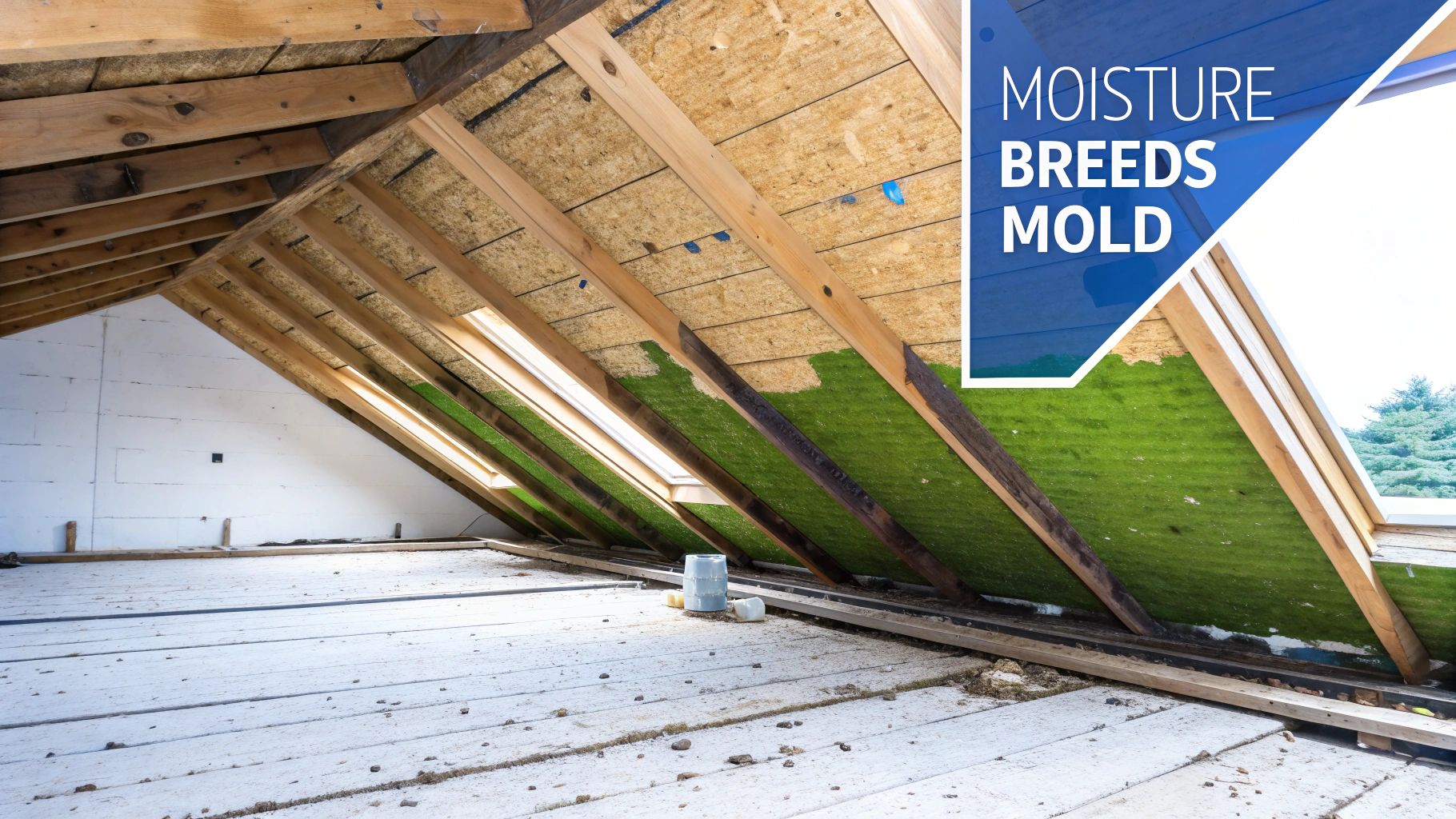
Think of your attic as a potential greenhouse. Just like plants need water to grow, mold needs moisture to thrive. When water finds its way into that space, it’s like flipping a switch, activating all those dormant spores clinging to the wood sheathing, rafters, and insulation.
The real trouble is that most of us rarely, if ever, actually go up into our attics. This means a small, hidden leak or condensation issue can grow completely unchecked for months or even years. By the time it’s discovered, it can lead to some serious damage and air quality problems throughout your home.
The Three Main Culprits Behind Attic Moisture
So, if moisture is the problem, where is it coming from? When we investigate attic mold, it almost always comes down to one of three main sources.
- Roof Leaks: It doesn't take a gaping hole in your roof. Even a tiny leak from a cracked shingle, a failing seal around a vent, or damaged flashing can let in a steady drip of water every time it rains.
- Poor Ventilation: Your house breathes. Warm, humid air naturally rises from your kitchen, bathrooms, and laundry room. If your attic isn't properly ventilated, that moist air gets trapped and has nowhere to go.
- Improper Exhaust: This is a big one we see all the time. Bathroom fans, kitchen hoods, and dryer vents that terminate directly into the attic instead of outside are just pumping gallons of moisture right where you don't want it.
The key takeaway is that mold isn't the root problem; it's a symptom of an underlying moisture issue. To solve the mold problem permanently, you must first solve the water problem.
Relative humidity is a huge piece of this puzzle. To get a better handle on your home's risk, it helps to understand exactly at what humidity does mold grow.
For a quick reference, here’s a look at the most common causes and what to watch out for.
Top 3 Causes of Attic Mold at a Glance
This table breaks down the most common sources of attic mold, what they look like, and the first step you should take to address them.
| Primary Cause | Common Signs | Recommended First Action |
|---|---|---|
| Roof Leaks | Water stains on ceilings, dark or discolored wood sheathing, damp spots on insulation. | Get a professional roof inspection to pinpoint and repair the source of the leak. |
| Poor Ventilation | A stuffy or musty smell, visible frost on the underside of the roof deck in winter, or intense heat buildup in summer. | Ensure soffit and ridge vents are clear of obstructions and functioning properly. |
| Condensation | Dampness on surfaces, blackened wood (especially around nails), peeling paint on the underside of the roof. | Improve attic insulation and make sure all exhaust fans and vents are routed directly outside. |
Identifying the source is always the first, most critical step. Once you know where the moisture is coming from, you can create a real plan to fix it for good.
How Hidden Roof Leaks Feed Mold Growth
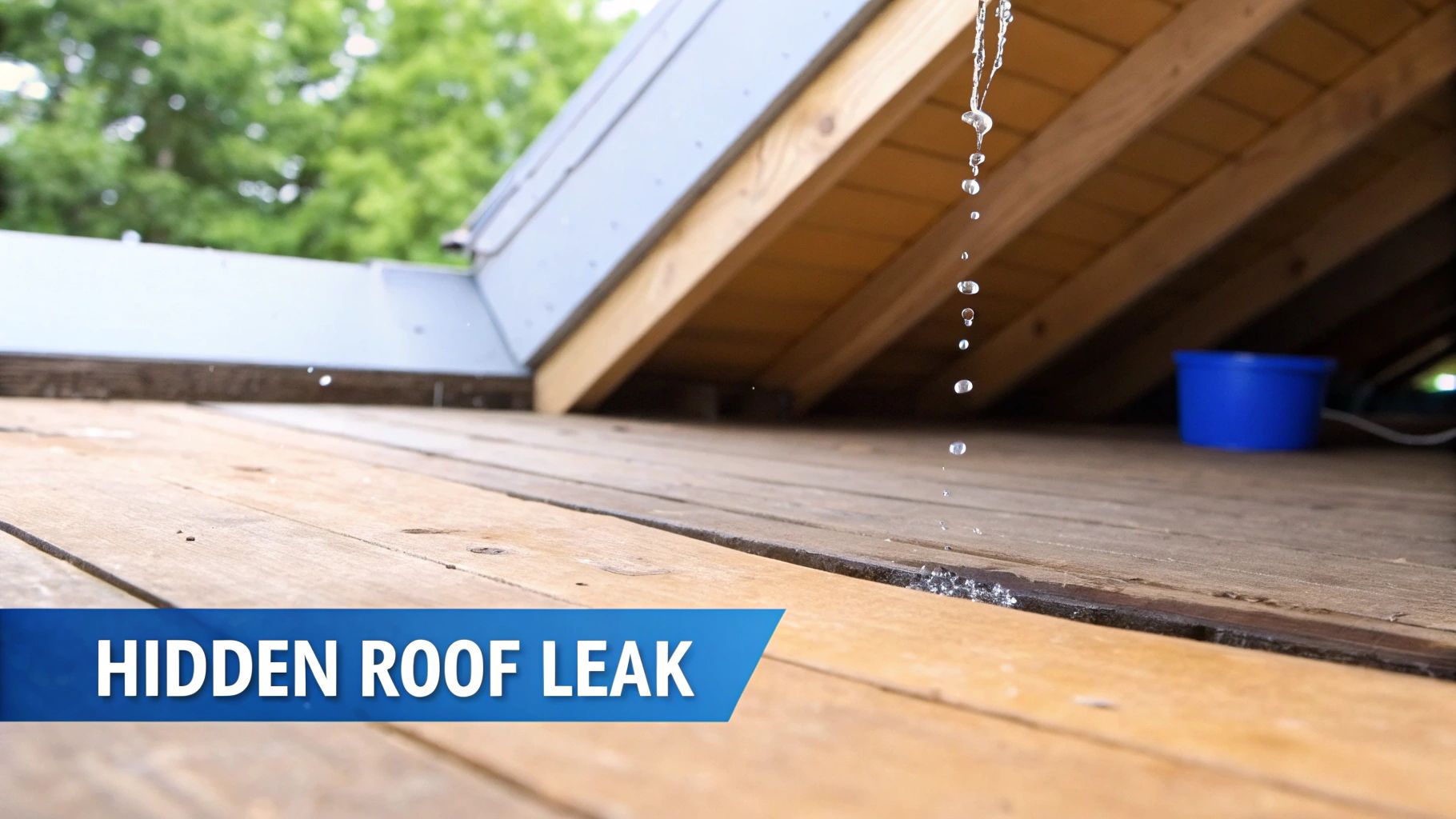
When we’re trying to pinpoint what causes mold in attics, roof leaks are the undisputed heavyweight champion. Think of a small, hidden leak like a slow-dripping faucet. It won't cause a dramatic flood, but that steady drip creates a perfect, perpetually damp environment. It turns your attic's wood and insulation into an all-you-can-eat buffet for mold.
This slow, methodical water intrusion is especially tricky. From the ground, your roof might look perfectly fine, giving you a false sense of security. But all it takes is a single cracked shingle, a tiny gap in the flashing around a chimney, or some degraded sealant around a roof vent for water to start its quiet invasion.
The Anatomy of a Mold-Inducing Leak
The path water takes is rarely a straight line. It might sneak in through one compromised area, then travel along a rafter or the underside of the roof deck before it finally starts dripping onto your insulation. This roundabout journey completely hides the true source of the problem, making it nearly impossible to spot until real damage is done.
These sneaky leaks often find their way in through a few common weak points:
- Damaged or Missing Shingles: Over time, wind and sun can cause shingles to crack, curl, or simply break off, leaving the underlayment exposed to rain.
- Failing Flashing: Those metal strips around chimneys, vents, and skylights are critical barriers. If they start to rust, lift, or come loose, they create a direct channel for water.
- Worn Sealants: The caulk used around vents and pipes doesn't last forever. As it degrades, it creates small but persistent gaps for water to seep through.
Coastal Climates Accelerate the Damage
Living here in Santa Barbara and Ventura, our coastal climate adds another layer of risk. The combination of salty air, intense sun, and seasonal rains works together to break down roofing materials much faster. This means homeowners in our area have to be extra vigilant, because our roofs can show wear and tear far sooner than those in drier, inland climates.
Research backs this up—roof leaks are a major catalyst for attic mold. Studies show a direct correlation, with attic mold present in 40% of homes where roof leaks led to water damage, and wet wood found in 70% of those cases.
Even a small, intermittent leak provides more than enough moisture to keep a mold colony thriving. Since these leaks are often hidden from plain sight, they can go undetected for months or even years, silently saturating the structural bones of your attic.
That's exactly why professional inspections are so important for catching these issues early. Specialized tools can spot moisture the naked eye would completely miss. For instance, you can learn more about how infrared thermography inspection services reveal hidden water intrusion before mold even gets a chance to take over. Fixing the leak is always the first, most critical step toward a permanent mold solution.
The Problem with Trapped Air and Condensation
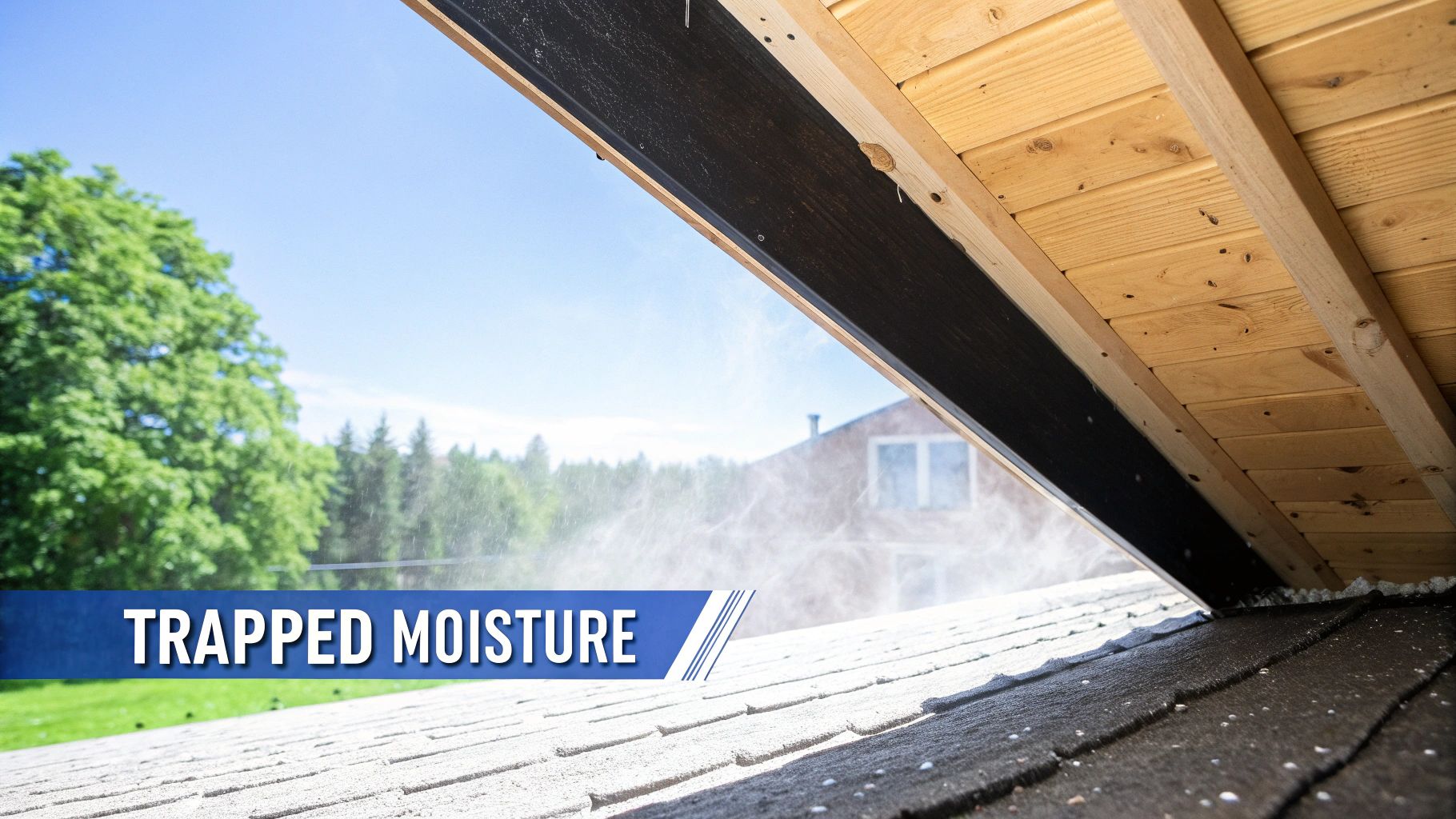
It helps to think of your attic as your home’s lungs—it has to breathe. For a healthy home, your attic needs to constantly pull in cool, dry air from outside and push out the warm, moist air that naturally rises from the living spaces below. When that simple process breaks down, you get a perfect recipe for attic mold.
Think about all the moisture your family creates every day. Cooking, showering, doing laundry, and even just breathing releases gallons of water vapor into your home's air. Since warm air rises, all that humidity drifts straight up into the attic. If it can't get out, it gets trapped.
A properly designed ventilation system is built to prevent this exact problem. It’s a simple but brilliant partnership:
- Soffit Vents: These are the "intake" vents under your roof's eaves. They draw in cool, dry outside air.
- Ridge Vents: These are the "exhaust" vents running along the peak of the roof. They let the hot, humid air escape.
When this airflow is blocked, weak, or non-existent, the attic can’t exhale. That humid air just hangs around, waiting for a chance to cause trouble.
How Condensation Creates an Indoor Rainstorm
That trouble usually starts when the sun goes down. It's a classic scenario here in coastal climates like Santa Barbara and Ventura—the outside temperature drops overnight, and so does the temperature of your roof.
As the roof sheathing and rafters get cold, all that warm, trapped air inside the attic hits those chilly surfaces. It's the same thing that happens when a cold glass of water "sweats" on a warm day. The moisture in the air turns from vapor back into liquid water. Suddenly, you have "attic rain"—droplets forming and dripping onto your insulation, wood beams, and anything else you have stored up there.
The air in a poorly ventilated attic can become so saturated with moisture that it literally starts raining indoors. This constant dampness turns wooden structures into a perfect breeding ground for mold, often starting on the colder, north-facing side of the roof deck.
This is a huge issue in our region. In fact, research on cool marine climates found that inadequate attic ventilation can lead to major mold growth in as many as 60-80% of homes, especially when temperatures dip below 40°F. You can read more about these findings on attic ventilation and moisture from BC Housing.
A Common and Costly Mistake
One of the most frequent and damaging ventilation errors we see is an improperly vented bathroom fan. When your bathroom exhaust fan dumps all that steamy shower air directly into the attic instead of piping it outside, you're essentially hooking up a fog machine in a sealed room.
This one simple mistake pumps massive amounts of concentrated moisture right where you don't want it, creating a guaranteed mold hotspot. For homeowners looking to get ahead of this, learning how to manage your home's humidity is a great first step. Take a look at our guide on how to reduce humidity in your house for some practical tips that can make a real difference.
How Faulty Insulation Can Create Mold Hotspots
You think of insulation as your home's thermal blanket, right? It's supposed to keep you cozy in the winter and cool in the summer. But when that insulation gets old, squashed down, or was just installed improperly from the start, it can flip the script and become a major cause of attic mold. It goes from a protective barrier to a moisture-trapping nightmare.
One of the biggest culprits we see is insulation blocking airflow. Your attic's ventilation system is like a river—it needs a clear path to flow properly. The journey starts at the soffit vents under your eaves, which pull in fresh, dry air. But when thick batts of insulation get shoved right up against those vents, it’s like building a dam. This completely suffocates the attic, trapping all the warm, humid air inside and leading straight to condensation.
When Good Insulation Goes Bad
Even insulation that was put in correctly can become a problem over time. As it ages or gets wet, insulation compresses and loses its thermal resistance, what we call its R-value. When that happens, it can no longer do its job effectively, creating cold spots on your ceiling and the underside of the roof sheathing.
These cold spots act just like a cold glass of iced tea on a hot day. Warm, moist air rises from your living areas into the attic, and the moment it hits these colder surfaces, it condenses into water droplets. Before you know it, your roof deck is a damp sponge—the perfect water source for mold to set up shop.
Here’s a quick rundown of how insulation becomes the bad guy:
- Blocking Ventilation: Insulation jammed into the eaves cuts off the crucial airflow from soffit vents, trapping humidity inside.
- Creating Cold Spots: Old, compressed, or just plain inadequate insulation lets warm air from your home condense on the cold roof decking.
- Absorbing Leaks: Insulation is great at soaking up moisture from small roof leaks or dripping pipes, hiding the real problem for months or even years.
The Hidden Threat of HVAC Ducts
Another major issue we often find is leaky or poorly insulated HVAC ducts running through the attic. Ducts carrying chilled air through a sweltering attic will "sweat" condensation, which then drips right onto the insulation and ceiling below. This creates a hidden, damp pocket where mold can absolutely flourish, completely out of sight.
This scenario is particularly dangerous because your HVAC system can then suck up mold spores from the contaminated insulation and blast them throughout your entire home every time the air kicks on.
Getting to the bottom of these hidden moisture sources is non-negotiable for a healthy home. Figuring out these complex interactions often takes a professional eye. If you have a hunch that your insulation or HVAC system is causing a moisture problem, exploring professional moisture intrusion solutions can give you a clear diagnosis and a real plan for a permanent fix.
Learning to Spot the Early Warning Signs
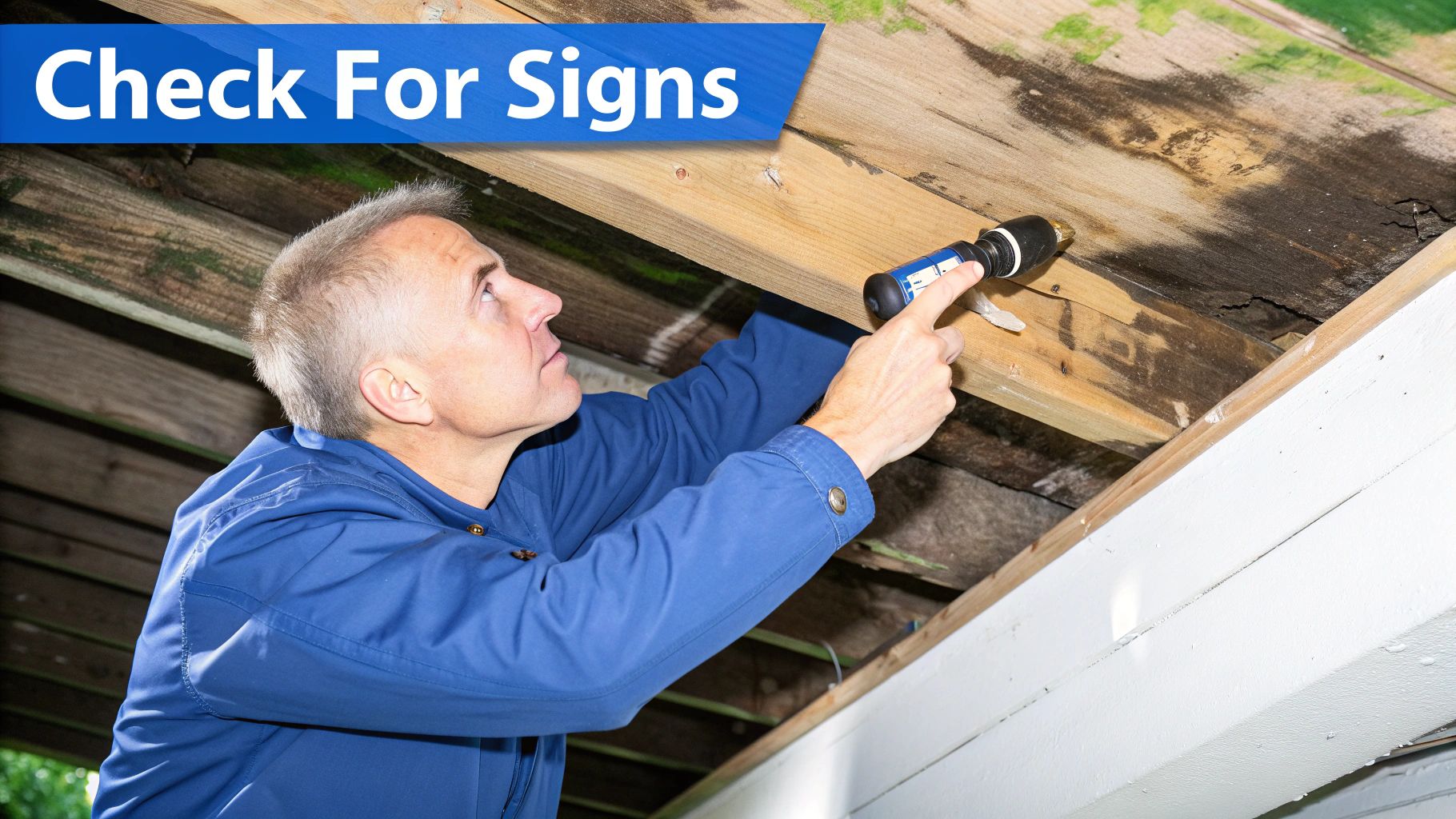
Mold almost never shows up as a full-blown infestation overnight. It's sneaky. Long before you spot any actual growth, it sends out subtle clues that something is wrong.
Learning to recognize these early warnings is like becoming a detective in your own home. It allows you to catch moisture issues before they spiral out of control. The key is to shift your mindset: stop looking for a "mold problem" and start looking for a "moisture problem." Find one, and the other is usually not far behind.
One of the oldest and most reliable tools you have is your nose. A persistent musty, earthy, or damp smell drifting down from the ceiling or lingering in upstairs rooms is a classic red flag. That odor comes from gases—called microbial volatile organic compounds (MVOCs)—released by active mold. Even if you can't see a thing, that smell is telling you moisture is hiding somewhere.
Visual Clues to Watch For
Besides the smell, your house will often show physical signs of a struggle with moisture. Think of these visual cues as your home's way of saying water is getting in where it doesn't belong. Keep a sharp eye out for these signs, as they're often the first visible proof of a hidden leak or condensation issue that contributes to what causes mold in attics.
Common visual warnings include:
- Water Stains: Look for faint, yellowish, or brown spots on your ceilings or high up on the walls. These stains are a dead giveaway of a past or current leak that has soaked the drywall from above.
- Peeling or Bubbling Paint: When moisture gets into drywall, it literally pushes the paint off the surface. If you see paint bubbling, cracking, or peeling near the ceiling, it’s a bad sign.
- Blackened Wood: In the attic, check the underside of the roof sheathing. Dark, stained, or blackened areas are a major concern, especially around roofing nails where cold metal can attract condensation.
- Damp or Matted Insulation: Your attic insulation should be light and fluffy. If it looks clumped, compressed, or feels damp to the touch, it has soaked up water from a leak or persistent condensation.
The key is to act on the evidence of moisture, not just the visible mold itself. A small water stain today could be feeding a large, hidden mold colony that you won't discover for months.
Attic Mold Warning Signs Checklist
Use this checklist to identify potential signs of moisture and mold issues in and around your attic.
| Warning Sign | What to Look For | Level of Concern |
|---|---|---|
| Musty Odors | A persistent damp, earthy, or "old basement" smell, especially in upstairs rooms or closets. | High |
| Visible Stains | Yellow, brown, or discolored patches on ceilings or walls. | High |
| Paint Damage | Paint that is bubbling, cracking, or peeling near the ceiling. | Medium to High |
| Dark Wood | Black or dark gray stains on the underside of the roof deck or on rafters. | High |
| Damp Insulation | Insulation that feels wet, looks compressed, or appears matted down. | High |
| Condensation | Moisture droplets forming on attic surfaces like pipes, ducts, or roof sheathing. | Medium |
| Frost in Winter | Frost forming on the underside of the roof sheathing during cold weather. | High |
| Health Symptoms | Increased allergy-like symptoms (sneezing, coughing) only when at home. | Medium to High |
This checklist isn't exhaustive, but it covers the most common red flags. If you check off even one of these boxes, it's worth taking a closer look.
By catching these early indicators, you can step in before a minor moisture issue turns into a massive remediation project. Understanding the common signs of mold in your home is the first and most important step toward protecting your property and your family’s health. If any of these signs pop up, it’s time to investigate further.
When You Need a Professional Mold Inspection
Knowing the early signs of moisture is a great first step, but DIY detective work has its limits. There comes a point where guessing just isn't good enough, and you need an expert to get a clear, accurate picture of what's really happening in your attic.
Making that call is one of the most important things you can do to protect both your home’s value and your family’s health.
Going Beyond What the Eye Can See
Certain situations are just too critical to leave to chance. If you've discovered a significant roof leak, are in the middle of buying or selling a home, or can smell that unmistakable musty odor without seeing where it's coming from, it's time for a professional. These scenarios demand a level of precision that goes far beyond a quick visual check.
Certified mold inspectors don't just look for visible mold; they map out the entire moisture problem. Think of it like a doctor's diagnosis. They don't just look at your symptoms—they use tools like X-rays and MRIs to see what’s happening beneath the surface. We do the same for your home.
Our inspectors use advanced equipment to uncover the full story:
- Thermal Imaging Cameras: These devices instantly reveal temperature differences inside your walls and ceilings, pinpointing cold spots where hidden moisture from a leak or condensation is lurking.
- Moisture Meters: By measuring the exact moisture content of wood, drywall, and insulation, we can determine just how saturated the materials are and how far the water damage has spread.
A professional inspection isn’t just about confirming you have mold. It’s about creating a precise roadmap of the moisture source and its path of destruction—the only way to develop a plan that solves the problem for good.
This detailed assessment answers the most important questions: Where is the water coming from? How far has it traveled? And what’s the true extent of the mold contamination?
Without these answers, any attempt at cleanup is just a temporary fix. It ensures that when you do invest in remediation, you're fixing the root cause, not just painting over the symptoms.
Have More Questions About Attic Mold? We Have Answers.
Even after you understand what causes mold, you probably have a few more specific questions floating around. Let's tackle some of the most common ones we hear from homeowners right here in Santa Barbara and Ventura.
Can I Just Clean Attic Mold Myself?
It's tempting, I get it. You see a small spot, you grab a bottle of bleach, and you think you're done. But this approach almost always backfires in an attic.
Mold isn’t just a surface stain; on porous materials like wood and insulation, it grows deep roots that topical cleaners can't touch. You might wipe away the visible part, but the problem is still embedded in the material, ready to grow back.
Even more importantly, DIY cleanup doesn't fix the why. Without correcting the leak, condensation, or ventilation failure that caused it, the mold is guaranteed to return. For anything more than a tiny spot, professional remediation is really the only way to be sure it's gone for good.
Does Homeowners Insurance Cover Attic Mold Removal?
This is a big one, and the honest answer is: it depends entirely on the cause.
If the mold grew as a direct result of a sudden, covered event—say, a storm rips a hole in your roof and water gets in—your policy will likely cover the remediation. No problem.
However, most standard policies specifically exclude mold damage from gradual problems. This means slow leaks, persistent high humidity from bad ventilation, or general maintenance issues are usually on you. It’s critical to read your policy and talk to your agent. A professional inspection report is the documentation you’ll need to support your claim if the cause is covered.
The "Stack Effect": A Hidden Danger
Warm air naturally rises from your living space into your attic. If you have mold up there, this airflow can pull dangerous spores and mycotoxins right back down into your home through tiny gaps around light fixtures, vents, and attic hatches.
How Fast Does Mold Grow After a Leak?
Frighteningly fast. Under the right conditions, mold can start growing in as little as 24 to 48 hours. Your attic is the perfect incubator: it's dark, often humid, and full of food sources like wood, dust, and the paper backing on insulation.
This is exactly why you can't wait after discovering a leak. A small, manageable problem can explode into a widespread contamination issue in just a few days, making it much harder and more expensive to fix.
Will Attic Mold Affect My Home's Air Quality?
Yes, absolutely. This is one of the most dangerous misconceptions out there. Many people think, "It's just in the attic, so who cares?"
But as we mentioned with the stack effect, air doesn't stay put. Microscopic mold spores are easily pulled from the attic down into your living areas. They end up in the air you and your family breathe every day, which can lead to serious respiratory issues and other health problems. What happens in the attic definitely doesn't stay in the attic.