That stale, earthy odor wafting through your home is more than just a nuisance—it’s a clear signal that something’s off. When homeowners ask, "what causes musty smell in house," the answer nearly always comes back to one thing: excess moisture. This persistent dampness creates the perfect breeding ground for mold and mildew, which are the real culprits behind the smell.
Decoding the Musty Smell in Your House
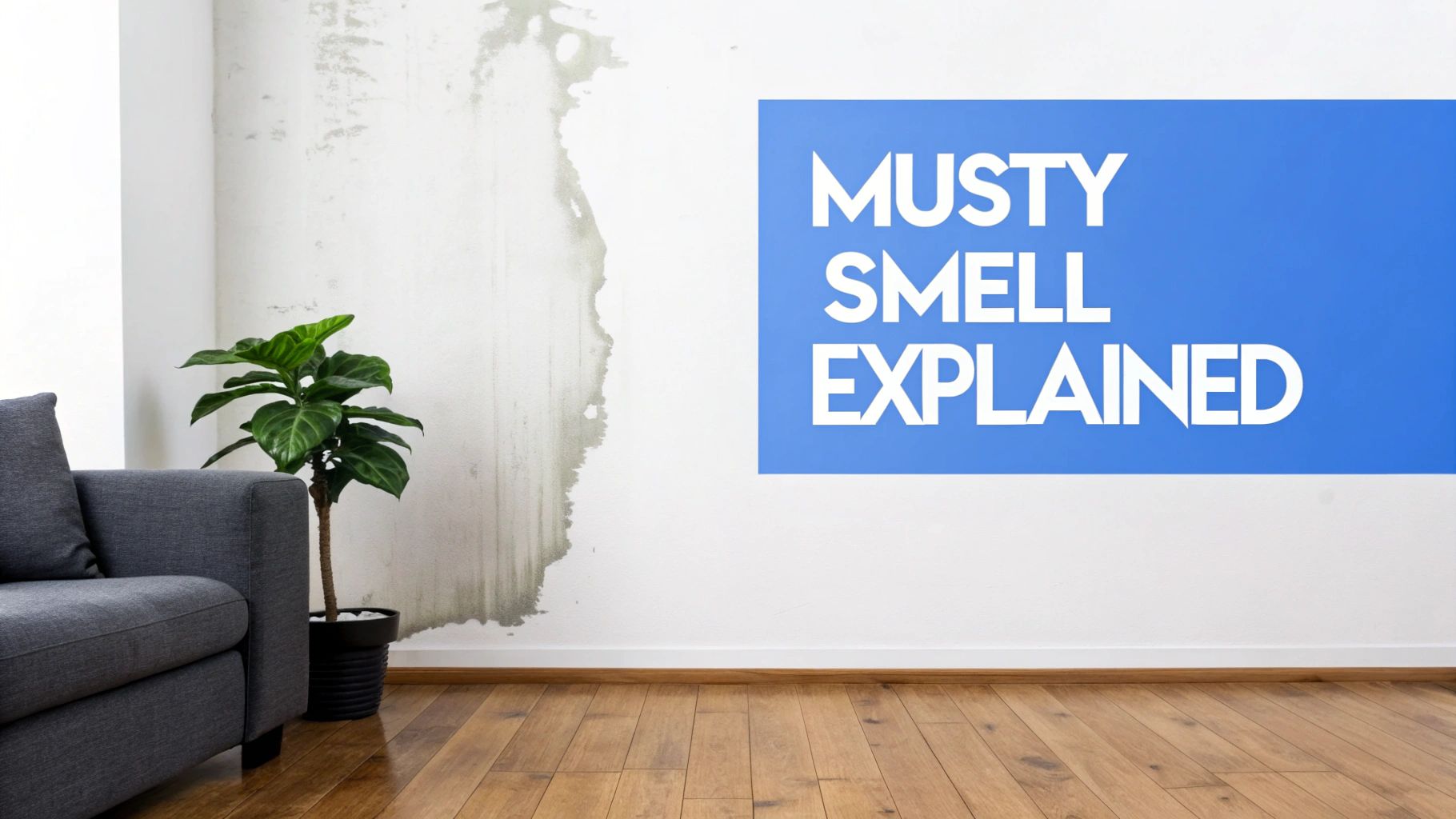
Think of that musty smell as your home’s built-in alarm system. It’s not just the scent of damp air; it's the direct result of fungi feasting on organic materials like drywall, wood, and carpet in a damp, stuffy space.
As these microorganisms grow, they release gases called microbial volatile organic compounds (MVOCs). It’s these MVOCs that you recognize as that distinct, "old basement" smell. Essentially, you're not just smelling dampness. You’re smelling the active byproduct of fungal growth, which is why air fresheners just cover it up instead of getting rid of it.
The Science Behind the Scent
The link between moisture and musty odors isn't just a hunch; it's a scientific fact. Research consistently shows that hidden mold colonies are the source of the MVOCs that create the smell. One in-depth case study found a powerful connection between high indoor humidity and musty smells, with microbial contamination levels soaring over 5,600 CFU/cm² in localized damp spots.
That study is a perfect example of how a small, unseen patch of moisture can tank the air quality of an entire room.
The key takeaway is simple: a musty smell is a symptom, not the problem itself. The real issue is the underlying moisture source that’s letting mold and mildew thrive.
To really solve the problem, you have to become a "smell detective." Your mission is to trace that odor back to its source, which usually means investigating all the places where water can secretly hang out.
To help you get started, here's a quick rundown of the usual suspects.
Quick Guide to Common Musty Smell Sources
This table breaks down the most frequent causes of musty odors and where you’re most likely to find them lurking in your home.
| Common Cause | Typical Location | Key Sign to Look For |
|---|---|---|
| Hidden Plumbing Leaks | Under sinks, behind toilets, inside walls, near appliances | Water stains, peeling paint, warped flooring |
| High Humidity Zones | Basements, crawl spaces, attics, poorly ventilated bathrooms | A general feeling of dampness, clammy air |
| Condensation Buildup | Windowsills, uninsulated pipes, exterior walls, HVAC ducts | Visible water droplets ("sweating") on surfaces |
| Trapped Moisture | Carpet padding, drywall, wood framing, insulation | A persistent smell that worsens after rain or humidity |
| HVAC System Issues | Clogged drain pans, dirty coils, damp filters, ductwork | Odor is strongest when the AC or heater is running |
| Foundation & Roof Leaks | Around the base of the foundation, ceilings, attic spaces | Water stains on ceilings, dampness in the basement |
Remember, this is just a starting point. The goal is to identify the moisture source first, because until you fix the water problem, the musty smell will always come back.
Finding the Most Common Moisture Sources
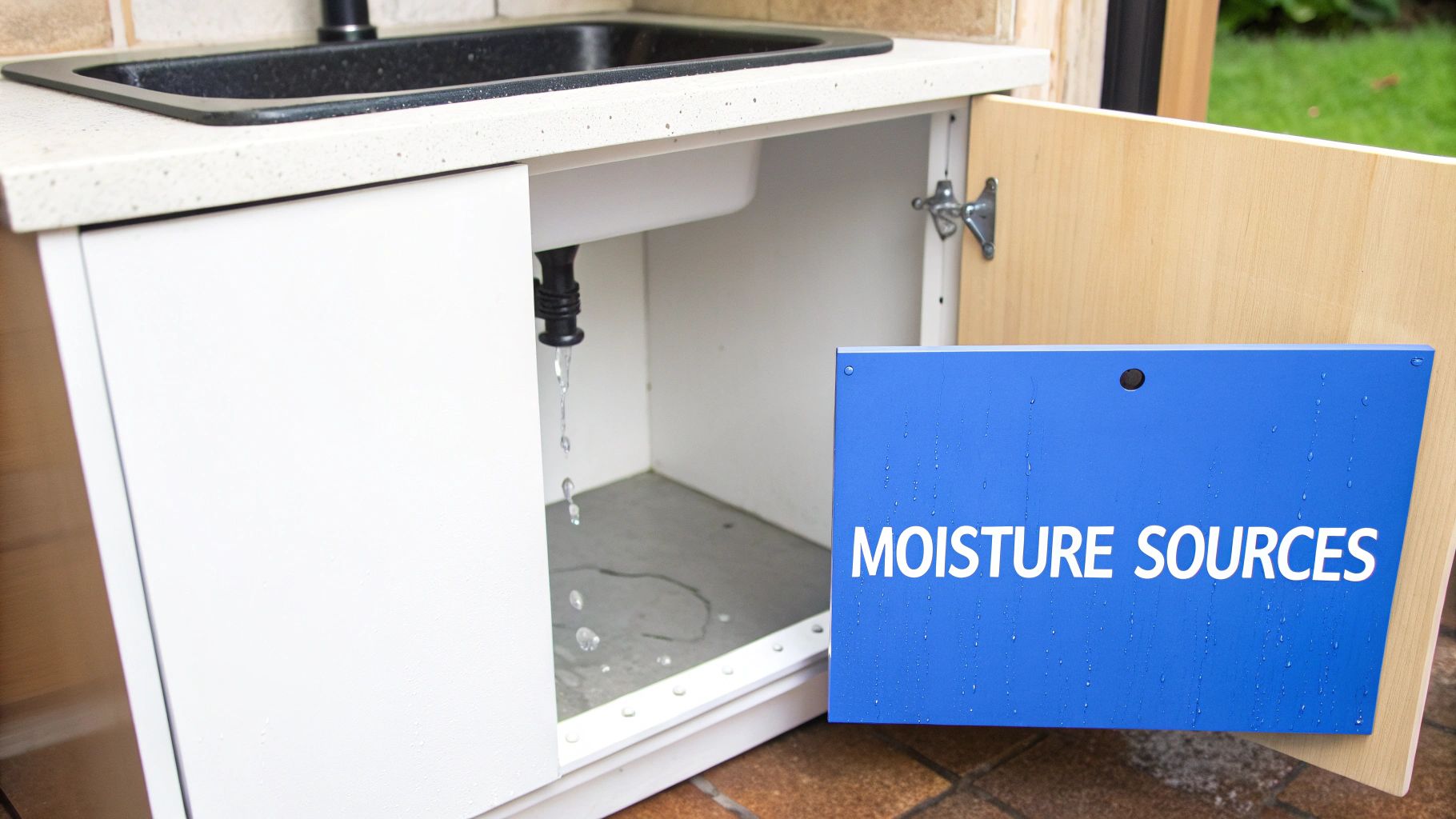
To solve the puzzle of a musty smell, you have to become a moisture detective. That stubborn odor is almost always a symptom of a hidden water problem, and tracking it down means knowing exactly where to look. More often than not, the culprits are small, slow, and easy to overlook—until the smell becomes impossible to ignore.
One of the top offenders is a hidden plumbing leak. Think about that slow, silent drip from a pipe under your kitchen sink. It might only release a few drops an hour, but over weeks, it can completely saturate the cabinet floor and the drywall behind it.
This creates the perfect dark, damp environment for mold to set up shop, producing the very smell you're trying to get rid of. Similar leaks love to hide behind toilets, dishwashers, and washing machines, staying out of sight until the damage is done.
Everyday Activities and Condensation
Not all moisture comes from a faulty pipe. Believe it or not, everyday life generates a surprising amount of water vapor. Simple things like cooking a pot of pasta, taking a hot shower, or even just breathing can raise your home's humidity levels quite a bit.
In a well-ventilated home, this isn't an issue. But in spaces with poor airflow—like a bathroom without an exhaust fan or a stuffy laundry room—that humid air gets trapped. This is a huge reason why understanding humidity control in homes is so important for stopping that musty smell before it ever starts.
When this warm, moist air hits a colder surface, like a window in winter or an uninsulated pipe, it cools down and turns back into liquid water. This process, called condensation, is why you see "sweat" on your windows. That water might seem harmless, but it can pool on sills and drip down walls, creating a constant source of dampness.
Think of condensation as a tiny, continuous leak. A single instance is minor, but day after day, it provides a steady water supply for mildew, turning windowsills and wall corners into prime real estate for musty odors.
This isn't just a minor inconvenience; it's a global problem. Mold contamination in homes is incredibly common. Globally, black mold—notorious for its distinct musty odor—is estimated to affect a staggering 70% of homes.
The Forgotten Spaces: Basements, Attics, and Crawl Spaces
Some of the biggest moisture traps in a house are the areas you visit the least. Basements, attics, and crawl spaces are notorious for harboring the exact conditions that lead to that pervasive musty smell.
These spots often have the perfect storm of poor ventilation, temperature swings, and proximity to the ground, making them magnets for moisture.
Take your crawl space, for example. It sits right on top of damp earth that constantly releases water vapor. Without a proper vapor barrier and good ventilation, that moisture gets trapped, turning the entire underbelly of your home into a humid, mold-friendly zone.
Similarly, basements are prone to moisture seeping through foundation walls. Attics can trap humidity rising from the rest of the house, especially if bathroom fans are vented improperly. Because air naturally circulates throughout your home, a musty problem in one of these forgotten areas will eventually make its way into your living spaces.
Diving Deeper: Uncovering Hidden Causes of Musty Smells
Sometimes, the culprit behind a musty smell isn't a glaringly obvious leak under the kitchen sink. The most stubborn, frustrating odors often come from places you’d never think to check. These hidden sources act like silent partners to moisture, creating a problem that can spread far beyond a single room and make you feel like you're chasing a ghost.
One of the most common—and overlooked—sources is your HVAC system. Think of it as your home's lungs; it breathes air in and pushes it out to every single room. If moisture finds its way into the system, maybe from a clogged drain pan or condensation on the evaporator coils, it quickly becomes a perfect incubator for mold.
Once mold takes root inside your air handler or ductwork, your HVAC effectively becomes a delivery service for musty odors. Every single time the AC or heat kicks on, it blasts microscopic spores and that unmistakable earthy smell throughout your entire house. It’s a frustrating cycle that makes it almost impossible to pinpoint the source.
When Your Home's Materials Turn Against You
Even the very structure of your home can secretly harbor moisture and fuel musty smells. Many common building materials are porous, acting like sponges that soak up and hold onto water from leaks, floods, or just high humidity. Once they're wet, they become an all-you-can-eat buffet for mold.
Here are a few common offenders that love to trap moisture:
- Drywall: Water can easily wick up behind the paint, saturating the paper backing and gypsum core without leaving any obvious signs on the surface you see every day.
- Insulation: Whether it's the pink fiberglass stuff or blown-in cellulose, insulation is basically useless once it's wet. Worse, it holds onto moisture for months, fostering mold growth deep inside your walls or attic where you can't see it.
- Carpet Padding: That foam pad under your carpet can hold a shocking amount of water. A spill or minor leak might seem dry on top, but the padding underneath can stay saturated for weeks, slowly releasing that musty odor.
This is especially true in the sub-floor areas of a home. A damp, poorly sealed crawl space creates a high-humidity environment that soaks the subfloor and insulation from below. For homes in coastal areas like ours, exploring professional crawl space moisture control is often a critical first step to stopping this foundational source of musty air.
The real danger with water-damaged materials is that the problem stays invisible for so long. By the time you actually smell it, a significant mold colony may have already established itself behind a wall or under the floor.
Don't Forget to Look Outside: The Problem with Poor Drainage
Finally, what happens outside your home has a massive impact on the air inside. Things like improper grading, clogged gutters, or downspouts that dump water right next to your foundation are basically open invitations for moisture to come inside.
When rainwater pools against your home's foundation, it creates immense hydrostatic pressure. This pressure is powerful enough to force water through tiny, invisible cracks in the concrete, leading to a perpetually damp basement or crawl space. This constant, low-level supply of moisture is often what causes a persistent, house-wide musty smell that never seems to go away, no matter how much you clean. It's a foundational issue that surface-level fixes just can't solve.
Your DIY Smell Detective Checklist
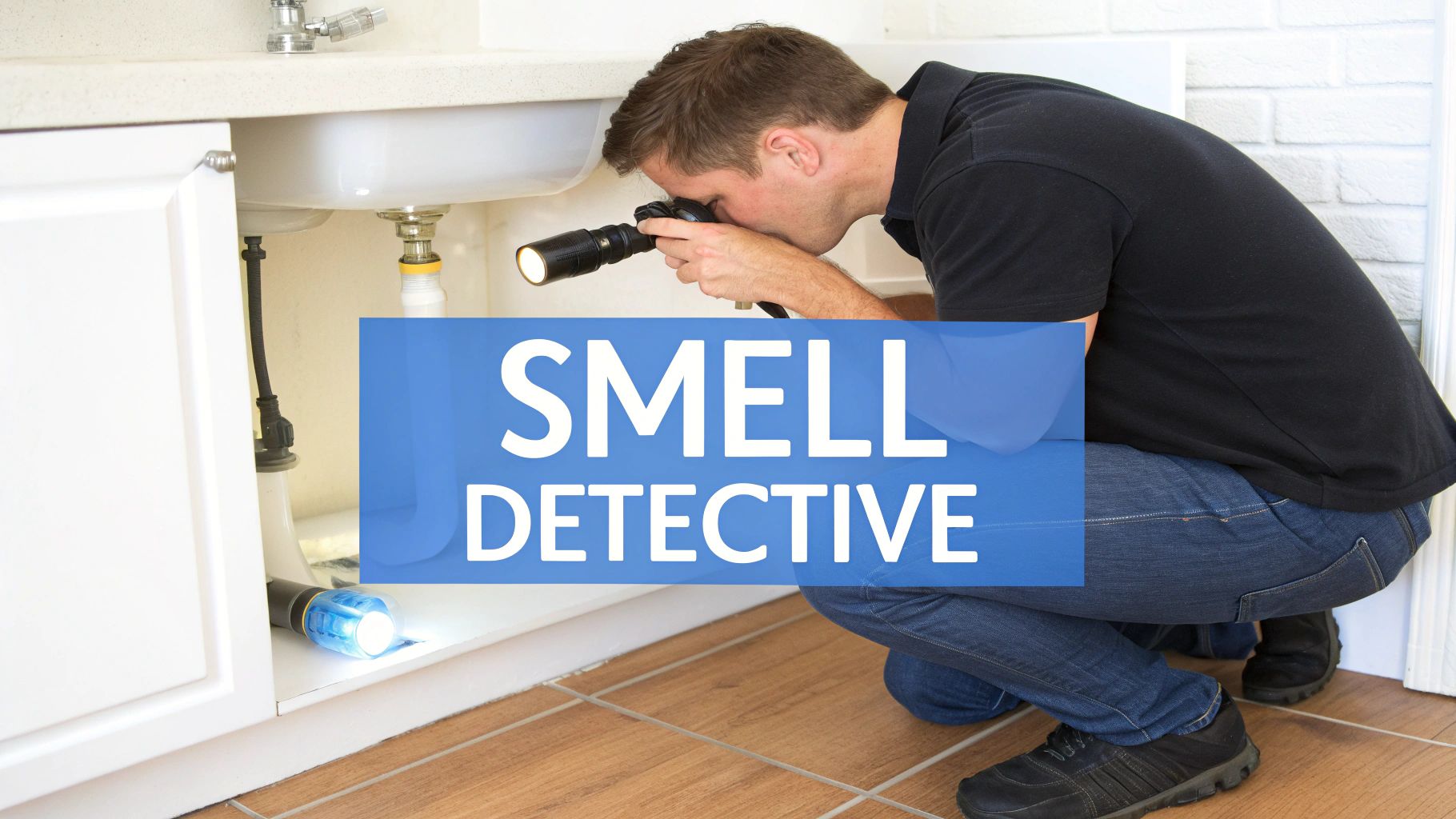
Now that you have an idea of what causes that musty smell, it's time to put on your detective hat. The good news is that you don't need a truck full of expensive equipment to start investigating—just a systematic approach and your own senses.
Your best tool, by far, is your nose. Start in the room where the odor is strongest and just walk around, sniffing high and low. Does the smell get worse when you're near a certain wall? A corner? A piece of furniture? This simple "nose test" is your first and most important clue.
Once you’ve narrowed down the hotspot, it's time to let your eyes take over. Grab a good, bright flashlight and get ready for a detailed visual inspection. You're not necessarily looking for a giant patch of obvious mold; instead, you’re hunting for the subtle breadcrumbs that moisture always leaves behind.
Spotting the Visual Clues
Even a slow, hidden leak will eventually give itself away. As you inspect the area where the smell is most potent, keep your eyes peeled for these tell-tale signs of water intrusion:
- Faint Water Stains: Look for those subtle, yellowish-brown rings or streaks on ceilings and walls. They can be really faint, especially on darker paint colors.
- Discoloration: Check for any patches of drywall or wood that seem a bit darker or have a different texture than the area around them.
- Peeling or Bubbling Paint: When moisture gets behind a wall, it pushes the paint away, creating bubbles or causing it to flake right off.
- Warped Materials: See if any baseboards are pulling away from the wall, or if the floor feels a little soft or spongy when you press down on it.
These visual hints are the trail that leads right back to the moisture source. Be sure to check thoroughly in closets, under sinks, and behind big appliances like refrigerators and washing machines—they're notorious hiding spots for slow leaks.
If you’ve located the problem and are ready to tackle the odor itself, our comprehensive guide on how to get rid of a mold smell offers practical next steps.
Measuring Your Home’s Humidity
Sometimes, the culprit isn't a single leak but just consistently high humidity hanging in the air. Mold can start to grow and thrive any time the relative humidity stays above 60%. For a healthy, comfortable home, you want to keep that number somewhere between 30% and 50%.
You can easily check your home's humidity with an inexpensive tool called a hygrometer, available at most hardware stores. Placing one in different rooms can reveal which areas are trapping the most moisture.
If you find that your basement, bathroom, or another specific room is constantly registering high humidity, that ambient moisture alone might be what's causing the musty smell in your house. It’s a simple data point that confirms the problem is environmental and points you toward solutions like better ventilation or a good dehumidifier.
Local Climate Challenges in Santa Barbara and Ventura County

Living here in Santa Barbara or Ventura County is incredible, but our beautiful coastline comes with a unique challenge that sneaks right into our homes. That iconic marine layer we see rolling in isn't just a pretty backdrop; it's a constant source of high humidity.
This damp, heavy air is the number one reason our homes are so prone to developing that stubborn musty smell. Think of it this way: your house is constantly breathing in air that's already soaked with moisture. When that air gets trapped inside, it creates the perfect damp, humid playground where mold and mildew thrive.
For us coastal residents, the answer to what causes musty smell in house is almost always tied directly to our climate. We're not just fighting moisture after a rare rainstorm—it's a daily battle.
Architectural Vulnerabilities in Coastal Homes
Many of the homes in our area, especially older ones, have features that can actually make this humidity problem worse. Single-pane windows, for example, are notorious for collecting condensation, which then drips down and creates dampness in the sills and surrounding walls.
Crawl spaces are another huge culprit. If they aren't properly ventilated or sealed off, they act like a sponge, soaking up moisture from the damp ground right underneath your floors. This creates a perpetually humid environment that can lead to major mold issues you can't even see. For homeowners dealing with this, getting professional mold testing in Santa Barbara, CA is the only way to know for sure what's hiding under the house and how to fix it.
When the air outside is consistently damp, any vulnerability in your home's construction—from a poorly sealed window to an unventilated attic—becomes an open invitation for a musty smell to take hold.
Actionable Tips for Coastal Homeowners
To win the fight against coastal humidity, you have to be proactive. Just cleaning up the musty smell isn't enough; you need to control the moisture at its source.
- Strategic Dehumidifier Use: Don't just run a dehumidifier anywhere. Place high-capacity units in known trouble spots like basements, laundry rooms, and walk-in closets. Your goal is to keep the indoor humidity below 50%.
- Prioritize Ventilation: Make sure your attic and crawl space can breathe. If air sits stagnant, moisture will build up. This might mean adding vents or even installing fans to keep the air moving.
- Choose Mold-Resistant Materials: If you're remodeling, spend a little extra on materials designed for our damp environment. Mold-resistant drywall, insulation, and paint can make a world of difference in preventing problems down the road.
When to Call a Professional for Help
While a little DIY investigation is a great first step, some situations just aren't meant for a weekend warrior. Knowing when to tag in an expert is the key to protecting both your house and your health.
Think of it this way: if that musty smell is so strong it practically hits you at the door, or you’ve looked everywhere and can’t find the source, it’s time to call for backup. Pros come armed with specialized gear like thermal imaging cameras and moisture meters that can literally see behind walls and under floors—pinpointing problems your own senses would completely miss. A persistent, strong odor is a dead giveaway that the moisture problem is probably hidden, significant, or has spread further than you think.
Red Flags That Demand an Expert
There are a few clear signs that mean you should pick up the phone right away. The Environmental Protection Agency (EPA) has a straightforward guideline: if you see mold growth covering more than 10 square feet, it’s a job for a professional remediation company. Trying to tackle a large infestation yourself can blast a huge cloud of spores into your air, making a bad situation much, much worse.
Another critical red flag is your family’s health. If anyone at home is suddenly dealing with worse allergies, more frequent asthma attacks, or other unexplained respiratory problems, that musty odor could be a symptom of a serious indoor air quality issue that needs a professional assessment. In fact, one study of older adults found that 25.22% of those living in homes with musty smells experienced cognitive impairment, highlighting just how serious these environmental issues can be. You can read the full research about these neurological health risks here.
Calling a professional isn’t admitting defeat—it’s making a smart, strategic decision to resolve the problem correctly and safely the first time.
Choosing the Right Professional
Knowing who to call is just as important as knowing when. Not every expert handles every type of moisture problem, and getting the right person on the job saves you time and headaches.
Here’s a quick breakdown:
- Mold Inspection Specialist: This should be your first call when you suspect mold but can't see it, or if you want to understand the full scope of the issue. They perform detailed assessments and can conduct air and surface testing to give you the facts. If you're not sure where to begin, a professional mold inspection service is the place to start.
- Plumber: If you’ve found clear evidence of a leak—like water stains on the ceiling, the sound of dripping in the walls, or a sudden spike in your water bill—a plumber is the one you need to fix the source of the water.
- HVAC Technician: Does that musty smell get noticeably stronger only when your heat or AC kicks on? That’s a strong sign you need an HVAC pro to inspect your system. They’ll check for mold lurking in the coils, drain pan, or hidden deep within your ductwork.
Got Questions About That Musty Smell? We’ve Got Answers.
When you’re trying to track down that weird smell in your house, a lot of specific questions tend to come up. Let’s tackle some of the most common ones we hear from homeowners.
Can a House Smell Musty Without Mold?
Yes, but it's a huge red flag. While mold is the usual suspect, that musty odor can also be caused by extremely high humidity, stagnant air, or damp materials like old carpets that haven't started growing visible mold yet.
Think of it this way: that musty smell is the calling card of an environment that’s perfect for mold. Even if widespread mold hasn't taken hold, the conditions are ripe for it to start.
It’s a warning sign you shouldn't ignore.
How Long Does It Take to Get Rid of a Musty Smell?
This completely depends on the source. If it’s something simple, like a forgotten damp towel in the laundry basket, the smell can be gone in just a few hours after you’ve removed it and aired out the room.
But if you're dealing with a bigger issue like a hidden leak or a serious mold problem, that smell isn't going anywhere until the moisture is stopped and the contaminated materials are either professionally cleaned or completely removed. That process could take days or even weeks. There's no quick fix—you have to solve the underlying water problem first.