Think of a mold inspection as a health check-up for your home. It’s a professional, systematic investigation designed to find hidden mold, pinpoint where the moisture is coming from, and figure out the true extent of the problem.
This is way more than just a quick scan for visible spots. It’s a deep dive using specialized tools and scientific analysis to protect both your property and your family's well-being.
Your Home's Health Checkup Unveiled

A good mold inspector is like a detective for your home’s indoor environment. Their job isn’t just to confirm what you can already see—it's to uncover what you can’t. This whole investigative process stands on three essential pillars that work together to paint a complete picture of your property's health.
The Three Pillars of a Professional Inspection
A true professional mold inspection cuts through the guesswork, giving you clarity and a clear path forward. It’s an absolutely critical service, especially for homeowners in our coastal communities like Santa Barbara and Ventura, where the damp, foggy air creates the perfect breeding ground for mold.
Here’s what that process looks like:
- A Thorough Visual Assessment: Inspectors are trained to spot the subtle clues of water intrusion and mold growth that most people miss, from faint discoloration on baseboards to slightly warped flooring.
- Advanced Moisture Detection: Using high-tech tools like moisture meters and thermal imaging cameras, inspectors can essentially “see” inside your walls to find hidden pockets of moisture that feed mold colonies.
- Strategic Sampling and Analysis: When necessary, air and surface samples are carefully collected and sent to an accredited lab. This gives us hard data on the types and concentration of mold spores you're dealing with.
This methodical approach isn't about creating fear; it's about empowerment. A detailed inspection gives you the factual information you need to address the root cause of the problem—not just the symptoms.
The need for this field really grew as modern, airtight construction started trapping moisture inside, which had a big impact on indoor air quality. By the early 2000s, the links between damp buildings and respiratory issues were well-documented, with some studies suggesting up to 50% of homes in certain climates show signs of dampness.
Understanding the potential health effects of household mold is the first step toward creating a safer, healthier living space.
Key Components of a Professional Mold Inspection
To give you a quick overview, here’s a breakdown of what a comprehensive mold inspection really involves. Each step builds on the last to ensure nothing is missed.
| Component | What It Is | Why It Matters |
|---|---|---|
| Visual Assessment | A top-to-bottom physical examination of the property, looking for visible mold, water stains, and moisture signs. | It identifies obvious problem areas and helps the inspector know where to focus with their specialized equipment. |
| Moisture & Humidity Mapping | Using tools to measure moisture levels in walls, floors, and the air to find hidden damp spots. | Mold needs moisture to grow. This step finds the "fuel" source, even when it's not visible to the naked eye. |
| Thermal Imaging | An infrared camera is used to detect temperature differences inside walls, which can indicate hidden moisture. | It’s a non-invasive way to see behind surfaces and pinpoint potential leaks or condensation issues without demolition. |
| Sampling & Lab Analysis | Collecting air or surface samples and sending them to an accredited laboratory to identify mold types and counts. | This provides scientific proof of a mold problem and helps determine the potential health risks and next steps. |
Ultimately, each of these components comes together to create a detailed report that gives you the full story of what's happening in your home.
The Step-by-Step Mold Inspection Process
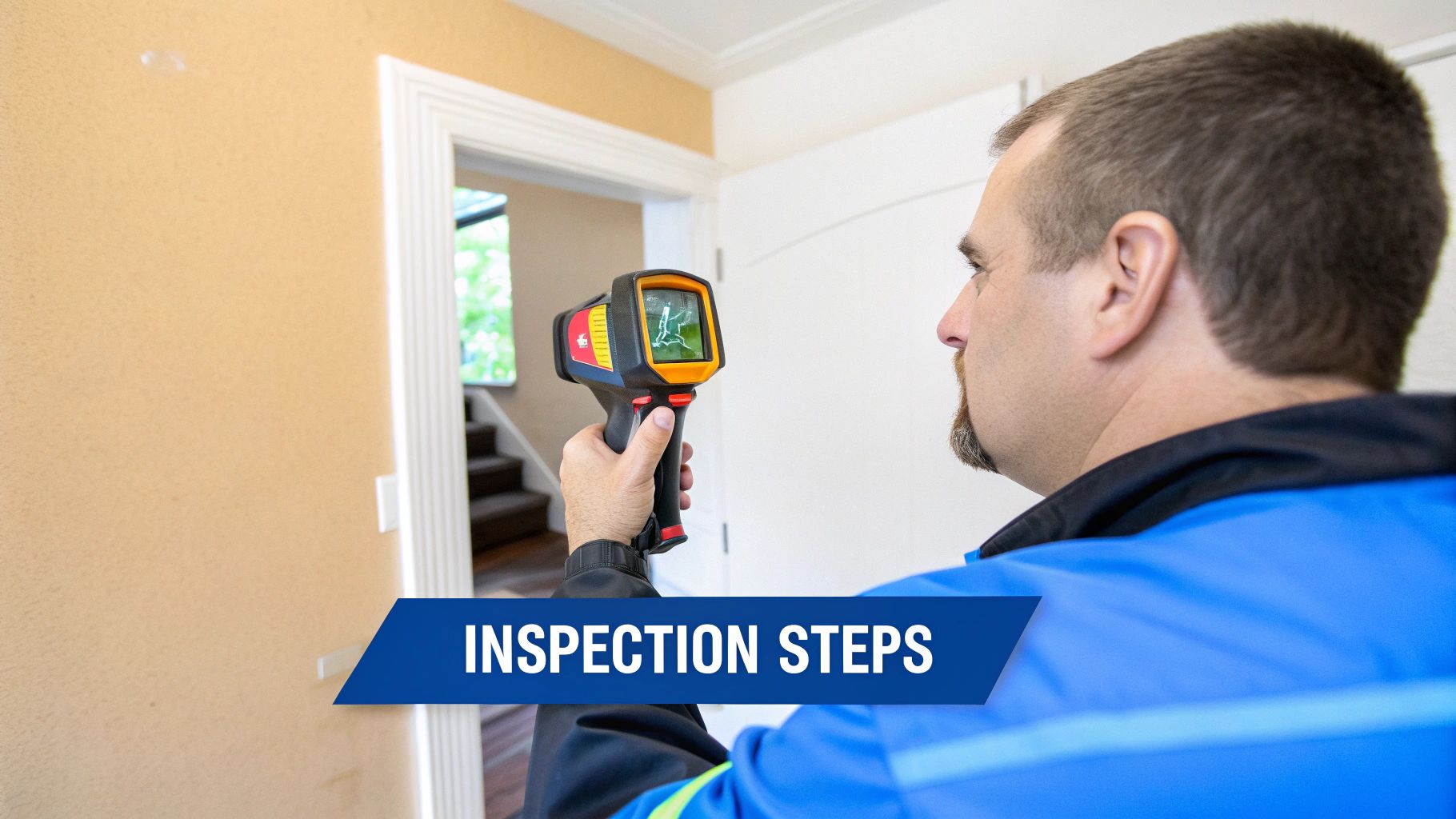
A professional mold inspection isn’t just a quick look around. It’s a systematic investigation—a sequence of steps where each one builds on the last to give us a complete picture of your home's health. It all starts the moment our certified inspector arrives, using their most fundamental tool: a pair of highly trained eyes.
This initial visual assessment is far more than just a casual walkthrough. Our inspectors are trained to spot the subtle clues homeowners often miss. We're looking for faint discoloration on drywall, peeling paint near a window sill, or minor warping in the baseboards. We also trust our noses, because that distinct musty odor is often the first sign of hidden mold, especially in closets, laundry rooms, or other stuffy spots.
Uncovering Hidden Moisture with Technology
After the initial sweep, we bring out the heavy hitters. This is where the real detective work begins, as we use advanced technology to see what the naked eye can’t. Think of it like a doctor using an X-ray or an MRI to look beyond the surface and get to the root of the problem.
Our primary tools for this phase are moisture meters and thermal imaging cameras.
- Moisture Meters: These handheld devices let us measure the exact moisture content inside your walls, floors, and ceilings. We take readings across the home, especially in areas flagged during the visual check, to create a detailed “moisture map” that shows us exactly where water is hiding.
- Thermal Imaging Cameras: An infrared camera is a game-changer. It detects tiny temperature differences on surfaces, which is a huge clue because wet areas are almost always cooler than the dry materials around them. This lets us find hidden leaks behind walls or under floors without having to tear anything apart.
This combination of tools gives us hard data. It turns suspicions into facts and pinpoints problem spots long before they cause major damage.
An effective inspection is built on evidence, not assumptions. By mapping moisture and identifying temperature anomalies, an inspector can pinpoint the exact source of the problem, which is the key to creating a lasting solution.
Examining High-Risk Zones
With a clear idea of your home’s condition, we then zero in on the areas most likely to harbor mold. These are usually the "out of sight, out of mind" places that homeowners rarely check.
Common hotspots include:
- Attics and Crawl Spaces: Poor ventilation and hidden roof leaks make these spaces prime real estate for mold.
- HVAC Systems: The dark, damp coils and ductwork of an HVAC unit can become a breeding ground, blowing spores throughout your entire home every time the system kicks on.
- Basements and Under-Sink Cabinets: These spots are magnets for plumbing leaks, condensation, and general high humidity.
By thoroughly investigating these known trouble spots, we make sure no stone is left unturned. It's this meticulous approach that ensures a truly successful assessment. To see a detailed breakdown of what this looks like in Santa Barbara homes, you can explore our complete mold inspection process guide. This final examination provides the last pieces of the puzzle, leading to a comprehensive and actionable report you can trust.
Understanding Mold Samples and Lab Results
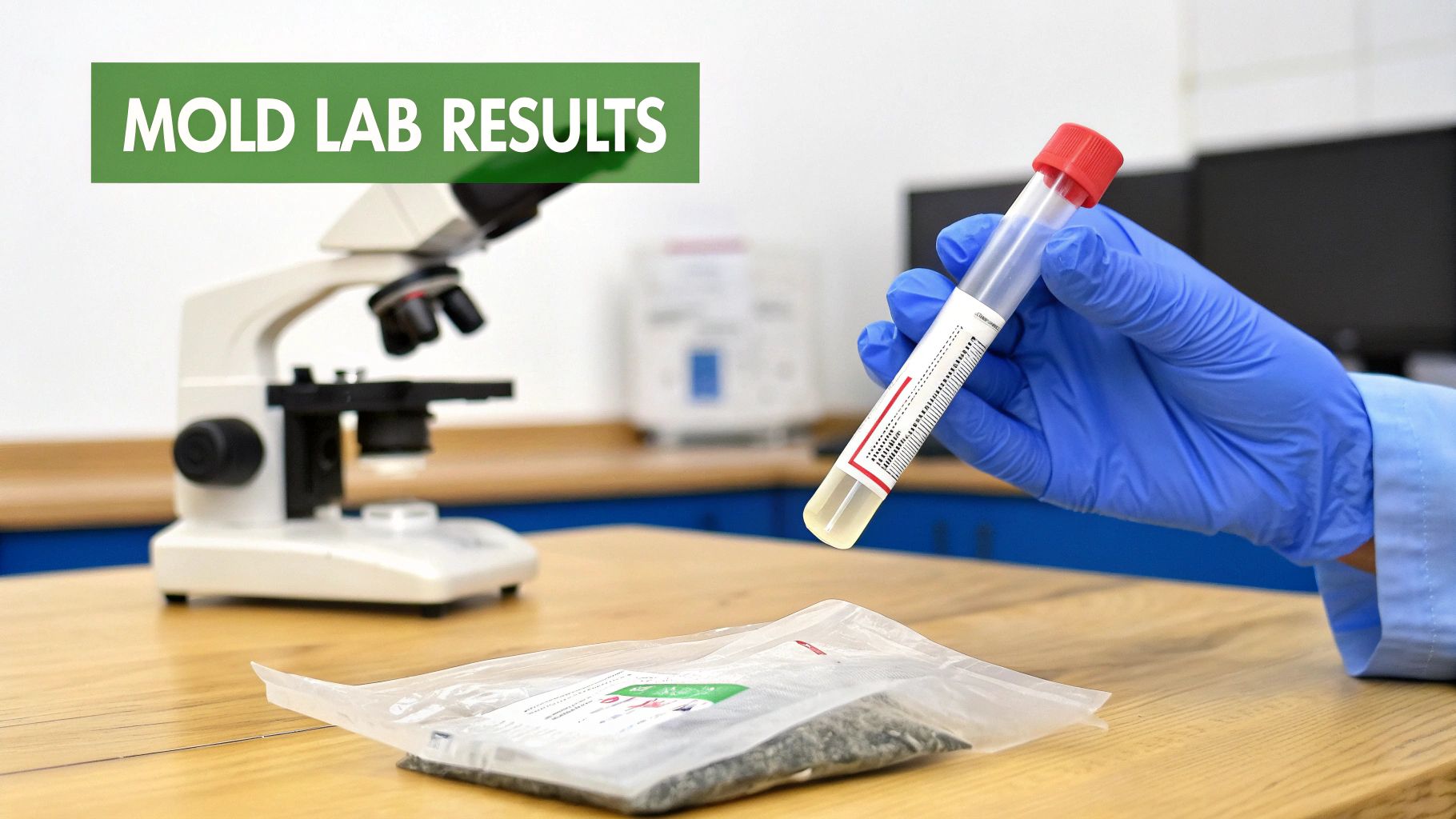
While a visual inspection and moisture mapping can tell us where a problem is likely hiding, scientific sampling tells us exactly what we're up against. This is where we move from educated guesses to hard, actionable data. It's the proof in the pudding, giving us a clear picture of the scope and potential health risks.
Think of it like this: a visual check is like seeing smoke on the horizon, but taking a sample is the analysis that tells you precisely what’s burning. This step is absolutely critical for identifying the specific types of mold present and just how concentrated they are in your home.
Types of Mold Samples We Collect
Depending on the situation, we use a few different sampling methods, each designed to answer a specific question about your indoor environment. The two most common types work together to tell the full story of what's happening, both in the air you breathe and on the surfaces in your home.
- Air Samples: These are our go-to for measuring the concentration of airborne mold spores. We take a sample inside and compare it to an outdoor "control" sample. If your indoor spore counts are elevated, it's a huge red flag for an active, hidden colony. It’s like taking a "pollen count" specifically for your home.
- Surface Samples: When we find visible growth, we might take a surface sample using a sterile swab or a special tape lift. This technique acts like a "fingerprint," allowing a lab to identify the exact mold species growing on that material.
Collecting samples isn't always necessary, but when it is, it provides an undeniable baseline. This data is invaluable for confirming the extent of contamination and later verifying that a remediation effort was successful.
The Lab Analysis Process
Once we’ve collected the samples, they’re sent off to an independent, accredited laboratory for analysis. There, technicians use high-powered microscopes to identify the different mold spores based on their unique shapes, sizes, and other characteristics.
The lab report that comes back will do two crucial things:
- Identify the Mold Genera: It will list the types of mold found, such as common culprits like Aspergillus, Penicillium, or the more infamous Stachybotrys (often called "black mold").
- Quantify the Spore Levels: The report gives us a raw count of spores per cubic meter of air or on the surface sample. This data lets us determine if the indoor environment has a higher concentration of mold than the natural, outdoor air.
This scientific data is the final piece of the puzzle. For a deeper dive into interpreting these findings, you can get more information by understanding mold test results in our detailed guide. It’s this powerful combination of a hands-on visual inspection and lab-verified data that gives you a complete, accurate, and trustworthy picture of your home’s health.
When You Should Get a Mold Inspection
Figuring out when to call a mold inspector can feel like a bit of a guessing game. Is that faint smell just an old house thing? Is that tiny water spot a big deal? An inspection isn't just for when disaster strikes; it's a diagnostic tool that gives you the power to protect your home and your health. Think of it as an essential check-up for your property when it starts showing certain symptoms.
The most obvious trigger, of course, is significant water damage. If you've dealt with a burst pipe, a leaky roof, or any kind of flooding, a mold inspection is non-negotiable. Mold can start to creep in within just 24 to 48 hours after water gets in, often hiding behind walls or under flooring long after you've dried up the visible mess.
Responding to Sensory and Health Clues
Sometimes, the signs are much more subtle than a full-blown flood. Your own senses are actually powerful detectors, and you should trust them when they tell you something feels off in your home.
A persistent musty or earthy smell is one of the most common red flags for hidden mold. If you walk into a room and the odor gets stronger, or if you notice it every time the HVAC system kicks on, that’s a clear signal that a colony could be growing somewhere completely out of sight.
Another critical trigger is unexplained health issues. From a risk-management perspective, an inspection is all about finding out if dampness and mold are present at levels that could be impacting your well-being. The U.S. Centers for Disease Control and Prevention points out that indoor mold exposure can cause symptoms like a stuffy nose, sore throat, coughing, or burning eyes, and it's a known aggravator for asthma. Some estimates even suggest about half of all asthma cases are worsened by dampness and mold exposure, making an inspection a vital step for any family with respiratory concerns. You can find out more about the health risks and market trends from Coherent Market Insights.
Protecting Your Biggest Investment
Beyond water damage or health worries, a mold inspection plays a huge role in real estate. For anyone buying or selling a home here in Santa Barbara or Ventura County, it’s a smart—and often necessary—step.
For a buyer, an inspection uncovers potential hidden liabilities before you commit to a massive purchase. For a seller, it provides transparency and can prevent future disputes or legal headaches by disclosing any known problems upfront.
Ultimately, an inspection gives you peace of mind by replacing uncertainty with hard facts. It's a proactive choice that safeguards not just your property's structure, but more importantly, the health of the people living inside it.
Give us a call if you notice any of these signs:
- After a water leak: Even a tiny, slow drip behind a cabinet can create the perfect breeding ground for mold.
- Persistent musty odors: This is often the first—and sometimes only—sign of a hidden mold problem.
- Visible signs of growth: Any strange discoloration or fuzzy spots on walls, ceilings, or baseboards need a professional evaluation right away.
- Buying or selling a home: It protects both parties and helps ensure a fair, transparent deal.
- Unexplained allergy symptoms: If your family is dealing with chronic respiratory issues that only seem to act up at home, mold could easily be the culprit.
How to Read Your Mold Inspection Report

After all the on-site work is done, you'll get a detailed report that translates all our data into a clear story about your home’s health. At first glance, these documents can feel a little intimidating with all the scientific terms and numbers. But a good report is designed to be your guide, not a puzzle.
Think of it like a doctor’s chart for your house. It kicks off with an executive summary, which gives you the bottom line right away. This is your quick overview of the key findings and a straightforward answer on whether a significant mold issue was found.
Breaking Down the Details
Right after the summary, the report gets into the evidence. This is where you’ll see the full story of the inspector's investigation, broken down into easy-to-digest pieces.
- Detailed Findings: This section lays out everything the inspector saw during the visual check and moisture mapping. It will pinpoint specific areas of concern, like old water stains on the ceiling or high moisture readings behind a bathroom wall.
- Photographic Evidence: They say a picture is worth a thousand words, and that’s especially true here. High-quality photos give you visual proof of any issues, documenting visible growth, water damage, and even the readings on our instruments so you can see exactly what we saw.
- Lab Results: If samples were taken, this part provides a clear interpretation of the lab analysis. The report will explain the types of mold identified and, crucially, compare the indoor spore counts to the outdoor baseline to give the numbers real-world context.
The most important part of any report is the remediation protocol. This isn't just a casual recommendation; it's a step-by-step, unbiased blueprint for a separate mold removal company to follow.
This protocol ensures the fix is based on hard evidence from the inspection, not guesswork. By keeping the diagnosis (our inspection) separate from the treatment (the remediation), you're guaranteed an honest, conflict-free process. It’s the hallmark of a trustworthy and ethical what is a mold inspection service.
Your Local Guide to Mold Inspections in Santa Barbara
Trying to figure out a potential mold issue can feel like you're navigating a maze blindfolded. But for homeowners in Santa Barbara and Ventura Counties, having local expertise in your corner changes everything. Our coastal climate, with its persistent marine layer and humidity, creates unique challenges—and it takes a specialized approach to get it right. At Pacific Mold Pros, we’re not just inspectors; we're your neighbors, dedicated to keeping our community’s homes safe and healthy.
Our entire process is built to be simple, friendly, and completely transparent. We've seen firsthand how moisture can affect properties differently in Montecito, Goleta, and Carpinteria. That’s why we offer same-day availability whenever we can—because we know you need fast, clear answers when you're worried about your home.
Your Peace of Mind Is Our Priority
We built our company around a core promise we call our “Breathe Easy Guarantee.” This isn’t just a catchy slogan. It’s our pledge to give you a completely thorough and unbiased assessment of your property, every single time. Because we focus exclusively on inspection and testing, our findings are based on pure science, not a sales pitch for expensive removal services.
This ethical separation is critical. It means the report you get from us is one you can absolutely trust, with a clear and honest protocol for whatever steps might come next. We're here to give you facts, not fear.
A professional mold inspection is a crucial risk-management tool that protects both your family’s health and the value of your property. It provides the clarity needed to make informed decisions with confidence.
Believe it or not, mold inspection and remediation is a global market worth over a billion dollars annually. North America accounts for over one-third of that market, driven by extreme weather and water damage events. For coastal areas like ours, this data just confirms what we already know: proactive inspections are essential for protecting high-value real estate. If you want to dig into the numbers, you can explore more data on the growth of the mold remediation market.
Specialized Services for Our Community
We also offer services designed specifically for the needs of our local market, like Mold-Free Certifications for new construction projects and property portfolios. This gives builders and property managers documented proof of a healthy indoor environment right from the start.
When you're searching for the best mold inspectors near you, look for a team with deep local knowledge and a genuine commitment to your well-being. If you have any concerns at all, don’t hesitate to reach out to Pacific Mold Pros at (805) 232-3475 for a friendly, no-pressure consultation.
Got Questions About Mold Inspections? Let's Clear a Few Things Up.
To wrap things up, let's tackle a few of the most common questions we get from homeowners about mold inspections. Getting clear, straightforward answers is the first step to making a confident decision for your property and your family's health.
One of the first things on everyone's mind is cost. The price for a professional mold inspection isn't one-size-fits-all; it really depends on the size of your home, how complex the situation seems, and whether we need to send samples to the lab. A larger home with a tricky history of leaks will naturally take more time and resources than a small, straightforward assessment.
Can I Just Use a DIY Mold Test Kit from the Hardware Store?
This is a big one. People often ask if a store-bought DIY kit can do the same job as a professional service. While these kits seem like a cheap and easy shortcut, they often create more confusion than clarity.
A home kit might tell you that mold is present, but that’s about it. It can’t tell you where it's coming from, how widespread the problem is, or what specific type of mold you're dealing with. It's like having a smoke detector that beeps but doesn't tell you which room is on fire.
A professional inspection, on the other hand, is a complete diagnostic. We combine a trained visual assessment, high-tech moisture mapping, and certified lab analysis to give you a full and actionable picture of your home's health. It’s worth remembering that most general contractors aren't specialists in this area, which is why a home inspection might not check for mold with the necessary detail.
What happens if the inspection finds mold? Our detailed report serves as an unbiased blueprint for a separate, qualified remediation company to follow, ensuring an honest and effective cleanup process.
This separation of duties is crucial, and it’s how we operate at Pacific Mold Pros. We handle the diagnosis—the inspection and testing. This gives you a conflict-free report that empowers you to hire a remediation team with confidence, knowing their plan is based on scientific facts, not a sales pitch.