Ever find yourself wondering what’s really in the air you breathe at home? Air quality testing is essentially a health check-up for your house, giving you concrete answers about invisible pollutants that might be floating around.
It’s a scientific way to measure and identify threats like mold spores, allergens, and chemical vapors that could be quietly affecting your family’s health.
Decoding The Air You Breathe
It’s a common assumption here in Santa Barbara and Ventura—we think the air inside our homes must be cleaner than what’s outside. But you’d be surprised. According to the EPA, indoor air can actually be two to five times more polluted than outdoor air. Yikes.
That’s because our homes are great at trapping contaminants, which can build up over time and lead to everything from a nagging musty smell to persistent health problems.
This is exactly why understanding what is air quality testing is so important. It’s not about guessing; it's a diagnostic tool that gives you real answers. Think of it this way: you wouldn't try to fix your car's engine without knowing what's broken, right? Running an air purifier without knowing what you're filtering is just as much of a shot in the dark.
The Purpose of Professional Testing
Professional testing takes you from speculation to certainty, providing a clear, scientific baseline of your home’s environmental health. Certified inspectors use specialized equipment to collect samples, which are then analyzed by an accredited lab.
This process is designed to achieve several key goals. We’ve broken them down in the table below to show you what a professional test really accomplishes.
Key Goals of Indoor Air Quality Testing
| Objective | Why It Matters for Your Home | Example Threat Detected |
|---|---|---|
| Identify Pollutants | Pinpoints the exact type and concentration of contaminants. | Specific mold species like Stachybotrys (black mold) or high allergen levels. |
| Locate the Source | Traces pollutants back to their origin. | A hidden pipe leak behind drywall fueling mold growth. |
| Validate Health Concerns | Confirms if symptoms are linked to your indoor environment. | Chronic allergies or headaches are tied to elevated mold spore counts. |
| Guide Effective Solutions | Provides a data-driven roadmap for fixing the problem. | The data shows you need targeted remediation, not just an air filter. |
The main takeaway here is that professional testing gives you the clarity to take targeted, effective action. It turns uncertainty into a clear plan, empowering you to protect your property and your family’s health.
The global impact of air pollution is staggering. The State of Global Air 2025 report revealed that air pollution contributed to 7.9 million deaths worldwide in 2023. To put that in perspective, 36% of the world's population breathed air that failed to meet even the most basic WHO air quality targets.
Ultimately, you can’t fix a problem you can’t see. Testing is the first step toward creating a healthier indoor environment. For a closer look at the different methods available, our guide on comprehensive household environmental testing offers more detail.
Clear Signs You Need To Test Your Home's Air
Deciding when to get your home's air tested can feel like a bit of a guessing game. Do you just wait until a problem smacks you in the face, or is it better to get ahead of it? The reality is, your home is almost always sending you signals when its indoor environment needs a professional check-up.
Ignoring these clues means potentially overlooking issues that can impact both your family’s health and the structural integrity of your property.
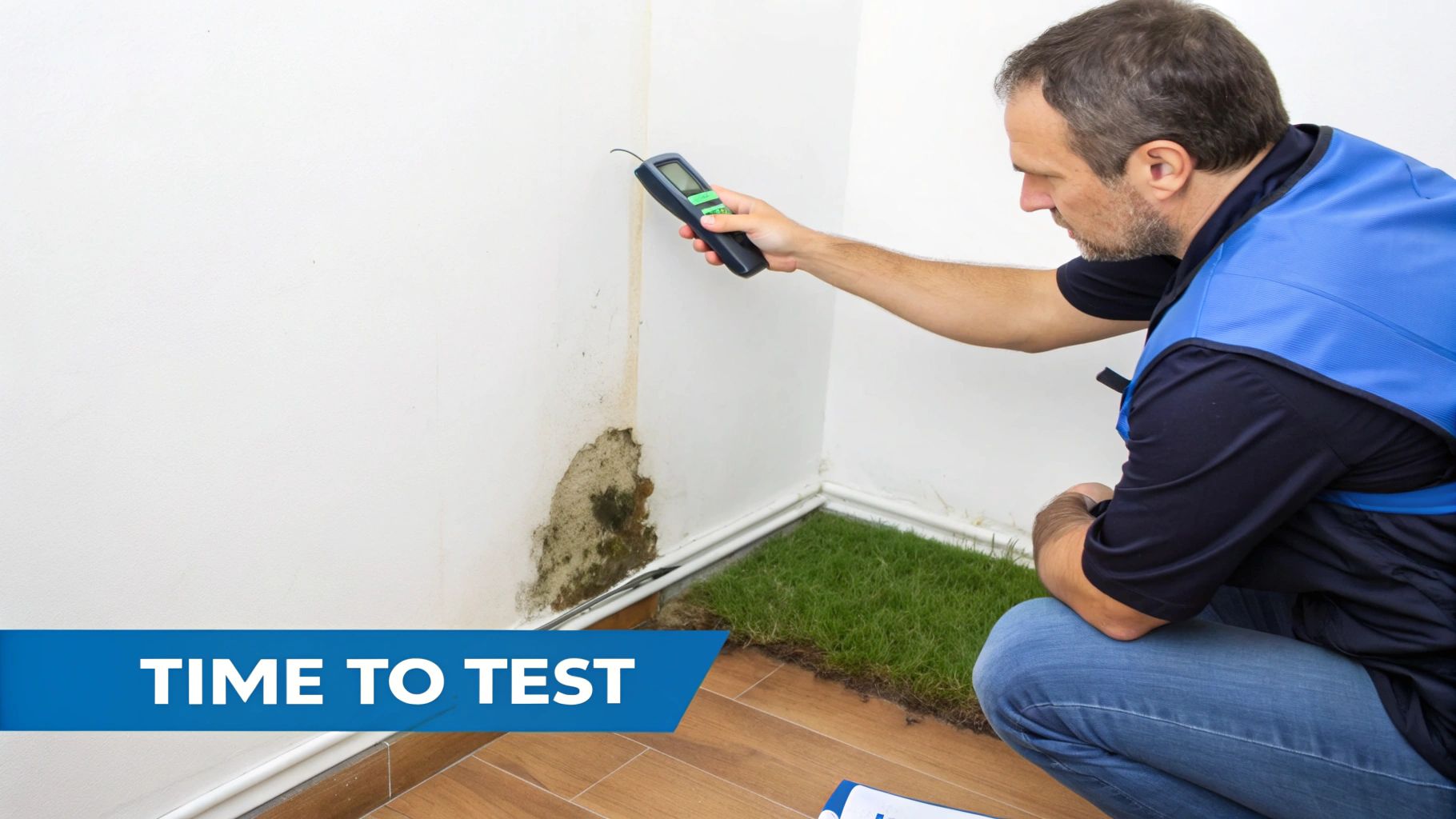
Sometimes the triggers are obvious—a burst pipe, a musty smell. Other times, they’re far more subtle and creep up on you over time. Knowing what to look for helps you move from wondering and worrying to taking decisive action.
Aftermath Of Water Damage
Any kind of water intrusion is a massive red flag for mold and poor air quality. A leaky roof, a burst pipe under the sink, or even a small appliance malfunction can quickly saturate building materials like drywall, insulation, and subflooring. This creates the perfect breeding ground for mold to explode.
Think about a common scenario for a Montecito homeowner after our heavy winter rains. A tiny leak in the attic goes unnoticed for a few weeks, letting moisture slowly seep into the ceiling insulation. Even after the visible water spot is patched and painted, microscopic mold spores could already be airborne, circulating through the entire house via the HVAC system.
This is a classic case where professional air quality testing is non-negotiable. It's the only way to know for sure if a hidden contamination problem is brewing.
Unexplained Health Symptoms
Your own body is often the most sensitive and reliable detector of poor air quality. If you or your family members are dealing with persistent symptoms that seem to get better the moment you leave the house, your indoor environment is the prime suspect.
You really need to pay attention to these patterns:
- Chronic Allergies: Are you constantly sneezing, rubbing itchy eyes, or dealing with a runny nose that doesn’t seem to line up with the local pollen count?
- Respiratory Issues: Have you developed a nagging cough, wheezing, or shortness of breath that feels worse when you're at home?
- Frequent Headaches: Do you get unexplained headaches or a feeling of "brain fog" that magically clears up after you spend some time outside?
These symptoms strongly suggest that allergens, mold spores, or other irritants are floating around at elevated levels inside your home. Testing gives you the hard data needed to connect those health concerns to a specific environmental trigger. You can learn more by exploring the common signs of mold in a home.
Proactive Health And Investment Protection
You don't have to wait for a disaster to strike to justify an air quality test. In fact, being proactive is often the smartest move you can make to protect both your family's well-being and your financial investment in your property.
A professional air quality test provides the certainty you need to make informed decisions. It transforms invisible risks into a clear, data-driven action plan, ensuring you are addressing the root cause of a problem, not just its symptoms.
Here are a few key moments when proactive testing just makes sense:
- Real Estate Transactions: Before buying a new home, testing can uncover hidden moisture or mold issues that a standard home inspection might miss. If you're selling, a clean report can offer invaluable peace of mind to potential buyers.
- Preparing for a New Baby: Getting a nursery ready is about more than just paint colors and furniture. Ensuring the air is free from mold spores and other contaminants is absolutely critical for a newborn’s developing respiratory system.
- Post-Renovation: Construction kicks up a ton of dust, chemical vapors (VOCs) from new materials, and other particulates. A post-renovation test is the best way to confirm that your home's air is clean and safe again.
How Professionals Test Your Indoor Air Quality
When a certified professional shows up to test your home’s air, they aren't just waving a magic wand. They’re acting like environmental detectives, piecing together clues with a combination of scientific methods to get a complete picture of what's going on inside your home. Understanding these methods helps pull back the curtain on the process and shows why professional testing is light-years ahead of any DIY kit.
Each technique is a specific tool for a specific job, chosen based on what you’ve told us and what we see during the initial visual walkthrough. It’s a strategic process designed to give you accurate, actionable answers.
Air Sampling: The Baseline For Comparison
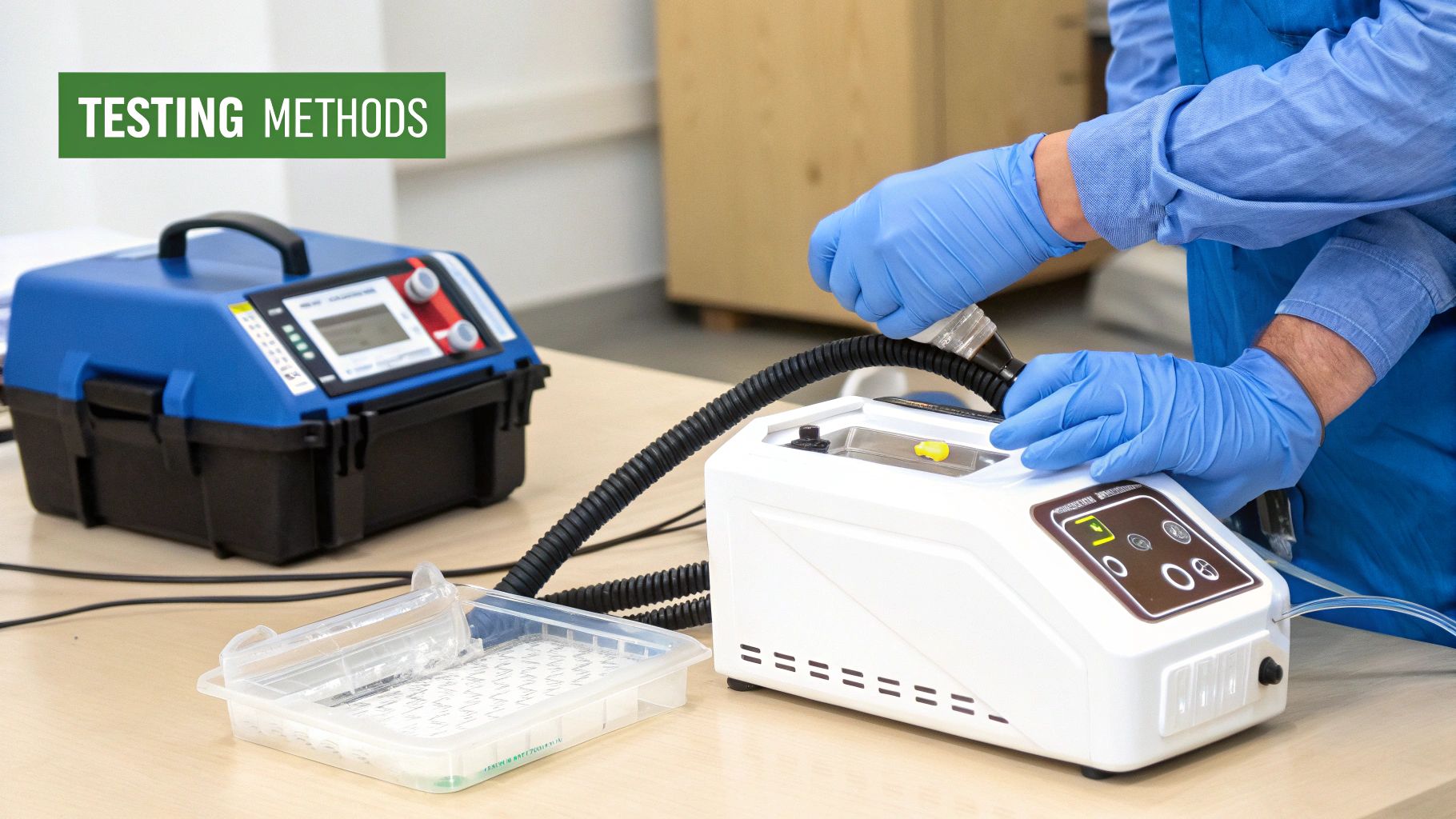
The most common method you'll see is air sampling. Think of it like casting a net into the "ocean" of your home's air to see what we catch. We use a calibrated pump to pull a specific volume of air through a sticky cassette, which traps any airborne particles floating by.
We’ll repeat this process in key areas—maybe the master bedroom, a child's room, or that spot where you always notice a musty smell. Most importantly, we will always take an outdoor "control" sample to act as a baseline. This is the secret sauce to an accurate analysis.
The outdoor sample is non-negotiable. It tells us the normal, background level of mold spores in your local environment on that particular day. We only know there’s a problem inside when your indoor spore counts are significantly higher or contain different types of mold than what's found right outside your door.
Without that baseline, the indoor results are just numbers without context. A high spore count might look scary, but if it's even higher outside, it probably isn't an indoor growth problem.
Surface Sampling: Getting A Fingerprint Of Contamination
While air sampling tells us what’s floating around, surface sampling gives us a direct "fingerprint" of any visible growth or suspected contamination. If we find a discolored patch on the drywall or something that looks like mold in a damp crawlspace, we’ll collect a sample right from the source.
There are two main ways we do this:
- Tape Lifts: We press a piece of special, clear adhesive tape against the surface, which lifts a perfect sample of the growth. It then goes under a microscope at the lab.
- Swab Samples: A sterile cotton swab is wiped across the area to collect material. This method is great for getting into tight corners or testing rough, uneven surfaces.
Surface sampling is incredibly precise. It doesn't just tell you if mold is there; it confirms the exact species growing on that surface, which is crucial information for planning an effective cleanup strategy. For a closer look at the tools and techniques we use, check out our guide to comprehensive indoor air quality inspections.
Advanced DNA Testing For Your Home
In some cases, especially when someone in the home is immunocompromised or for complex legal situations, we can bring in the heavy hitters. The most powerful of these is Quantitative Polymerase Chain Reaction (qPCR) analysis, often known as the ERMI test (Environmental Relative Moldiness Index).
Think of qPCR as a DNA test for your house. Instead of just looking at spores under a microscope, this method analyzes dust samples to identify the unique DNA of 36 different mold species that are notorious for growing in water-damaged buildings. It’s so sensitive it can even detect the history of mold growth, long after the spores have died.
This method gives us a detailed, quantitative score that helps assess a home's mold history and potential health risks with a high degree of scientific accuracy.
To help you see how these pieces fit together, here’s a quick comparison of the primary testing methods and what they tell us.
Comparing Air Quality Sampling Techniques
This table gives a quick overview of the main methods we use in professional mold and air quality testing. Each one serves a different purpose, and together, they help us build a complete diagnostic picture of your home's health.
| Testing Method | Primary Purpose | Best Used For | Information Provided |
|---|---|---|---|
| Air Sampling | Measures airborne spore concentrations | Identifying hidden mold sources and assessing overall air health | Spore counts and types per cubic meter, compared to an outdoor baseline |
| Surface Sampling | Identifies specific mold types on surfaces | Confirming visible growth and determining the exact species present | Direct identification of mold species (e.g., Stachybotrys, Aspergillus) |
| qPCR (ERMI) | Provides a historical mold "DNA" profile | Assessing long-term exposure risks and for sensitive occupants | A detailed report on 36 specific mold species and a relative moldiness score |
At the end of the day, a certified professional from Pacific Mold Pros won't just rely on a single test. We use our experience to combine these methods, creating a complete diagnostic report that accurately identifies the problem, pinpoints the source, and gives you a clear path forward to a healthy home.
What To Expect During Your Air Quality Inspection
Calling in a professional for an air quality inspection can feel like a big deal, but knowing what’s involved beforehand takes all the guesswork out of it. A certified inspector doesn’t just show up and start taking samples; it’s a methodical process designed to be thorough, non-invasive, and laser-focused on getting the answers you need for your home. Think of it as a transparent investigation, from start to finish.
The whole process flows in a logical sequence. It kicks off with a conversation and a visual sweep of your home, moves into strategic sample collection, and wraps up with lab analysis and a clear, detailed report. Let's break down what each of these stages actually looks like.
The Initial Consultation And Visual Walkthrough
The inspection really starts with your first phone call. During our initial chat, we’ll ask questions to get a handle on your concerns. Are you smelling something musty in your Carpinteria condo? Did a pipe just leak in your Ventura home? This background information is invaluable.
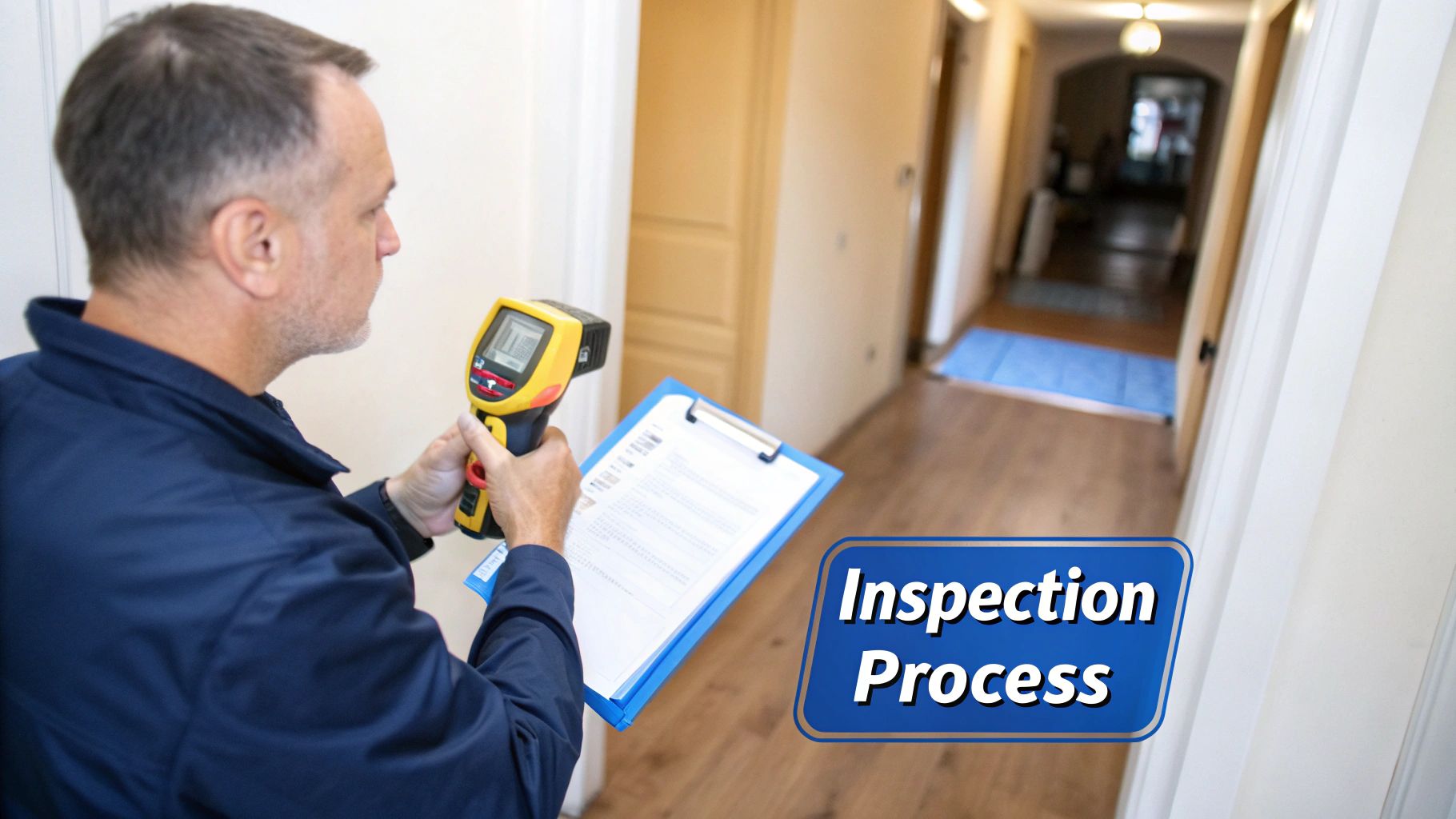
Once on-site, the inspector begins with a full visual assessment. This isn't just a quick look around—it's a detailed investigation using specialized tools to see what the naked eye can't.
- Thermal Imaging Cameras: These incredible devices spot temperature variations behind walls and under floors. Those cold spots can be a dead giveaway for hidden moisture you'd otherwise never know was there.
- Moisture Meters: We use these to get direct readings of the moisture content in materials like drywall and wood, confirming if there’s enough water to fuel mold growth.
This first phase is all about detective work. The inspector will check known trouble spots like HVAC systems, attics, and crawlspaces, mapping out any evidence of water damage or potential problems.
Strategic Sample Collection
With the visual walkthrough complete, the inspector now has a solid game plan for where and what to test. This is a precise, strategic step—not a random one. Based on what was uncovered, the inspector will recommend the right types of samples to get you definitive answers.
For instance, if you have a nagging musty odor but can't see any mold, an air sample is crucial to find out what's floating around. If there’s a suspicious-looking spot under the sink, a surface sample can identify exactly what you're dealing with.
A professional inspection is a non-invasive process. Our goal is to gather information without causing any damage to your property. We use advanced tools and careful techniques to ensure the investigation is both thorough and respectful of your home.
This step always involves taking an outdoor air sample to act as a "control." This is critical because it establishes a baseline for your local environment. It's the only way the lab can tell if the air inside your home has an elevated or unusual mold count compared to the air just outside your door.
Accredited Lab Analysis And Reporting
After the fieldwork is done, we carefully package the samples and send them off to an accredited, third-party laboratory. Here, trained microbiologists put them under powerful microscopes and use other scientific instruments to analyze them. Using an independent lab ensures the results are completely unbiased and scientifically sound.
The lab provides a report packed with data, like spore counts per cubic meter and the specific types of mold species found. It can look pretty technical, but you won’t be left to figure it out alone. We translate all that raw data into a clear, easy-to-read report that explains exactly what was found and what it means for you.
This commitment to accurate data is more important than ever. The evolution of air quality testing reveals dramatic disparities, with only 11.7% of global cities meeting WHO PM2.5 guidelines. While China's rigorous monitoring helped slash its PM2.5 levels by 40.8% since 2014, the US still struggles, with the State of the Air 2025 reporting 125.2 million people exposed to risky ozone levels—an increase of 24.6 million from the prior year. Explore more about these global air quality trends.
Finally, we’ll set up a follow-up call to walk you through the report, answer every one of your questions, and give you clear, actionable recommendations for what to do next. This transparent approach gives you the clarity and confidence you need to create a healthier home.
Making Sense Of Your Air Quality Test Results
Getting a lab report back after an air quality test can feel like trying to decipher a secret code. You’re handed this dense document, packed with scientific names and columns of numbers that honestly, don’t mean much to the average person. But you don’t need a biology degree to get to the bottom of it—you just need someone to translate.
This report isn't just a bunch of data; it's the story of your home's indoor environment. The most important thing is learning how to read that story, and it all starts with context.
The Outdoor Baseline Is Everything
Here’s the single most critical piece of information on your entire report: the outdoor control sample. Without it, the rest of the numbers are practically useless. Why? Because mold spores are everywhere in nature. They're always floating around outside. The outdoor sample gives us a snapshot of what’s considered “normal” for your specific neighborhood on the exact day of the test.
Think of it this way: the outdoor air is our control group. The real magic happens when we compare your indoor air samples directly against that baseline.
A professional air quality report isn't about finding zero mold—that's impossible. It's about determining if your indoor environment has an abnormal condition, meaning the types or concentrations of mold spores inside are significantly different from what's naturally occurring right outside your door.
This comparison is what separates a real, scientific diagnosis from a simple DIY kit you buy at the hardware store. It helps us answer the one question that really matters: Is there an active mold source growing inside your home?
Decoding Spore Counts And Types
Your report will list different mold species followed by a number, usually shown as spores per cubic meter (spores/m³). This number tells you the concentration—how much of that mold is in the air. While a big number might look scary, the type of mold is just as important as how much of it there is.
Here’s a simple way to look at it:
- Common Outdoor Molds: You'll likely see names like Cladosporium and Alternaria. They are incredibly common outside. If your indoor levels are similar to or lower than the outdoor sample, it’s usually no big deal.
- Water-Damage Indicators: This is where you need to pay close attention. Seeing species like Stachybotrys (what most people call "black mold") or Chaetomium is a major red flag. These guys need a lot of water to grow and are almost never found in high numbers outdoors. Finding them inside, even at low levels, points straight to a hidden water problem.
For a deeper dive into the nitty-gritty of lab results, you can learn more about understanding mold test results in our detailed guide.
From Data To An Actionable Roadmap
At the end of the day, a professional lab report does more than just throw numbers at you. It turns all that complex data into a clear, actionable roadmap for what to do next. The analysis will show you exactly which parts of your home have a problem, identify the specific kinds of mold you're up against, and give you the hard evidence needed to create a smart, targeted remediation plan.
Instead of guessing, you get a scientific foundation for fixing the problem right the first time. The report empowers you to move forward with confidence, knowing exactly what needs to be done to get your home back to being a healthy, safe space.
Your Guide To Local Air Quality In Santa Barbara And Ventura
Living here on the Central Coast is a dream, but our unique climate comes with its own set of challenges for our homes. That persistent marine layer, the heavy winter rains, and the high humidity we get year-round? It’s the perfect recipe for moisture-related problems to take root indoors. For homeowners from Montecito to Goleta, this isn't some far-off concern; it's a local reality.
This coastal environment makes properties in Santa Barbara and Ventura counties especially prone to hidden mold growth. Moisture has a sneaky way of getting trapped in walls, attics, and crawlspaces, creating a breeding ground for contaminants that end up in the air you breathe every single day. Understanding what is air quality testing in this context is the first step in protecting your family’s health and your home's value.
Why Our Coastal Climate Demands Vigilance
The same ocean breezes we love can carry a lot of moisture inland, and that dampness is exactly what mold loves. This makes routine air quality checks and pre-purchase mold inspections more than just a good idea—they're a critical part of owning a home in our area.
Catching these issues early isn't just about your health; it's a smart financial decision. Being proactive with professional indoor testing can head off major health problems and even more costly property damage down the road. The impact is bigger than you might think—studies show that integrated air quality and climate policies could reduce related mortality by 35% and add up to $2.4 trillion to the global GDP. Here in the US, 156.1 million people live in areas with failing air quality, which really underscores the need for action. You can learn more about how air quality funding impacts global health.
Pacific Mold Pros: Your Local Authority
In a real estate market as competitive as ours, certainty is everything. A professional air quality test can uncover hidden problems before a sale or give sellers a clean bill of health, which brings peace of mind to everyone involved. For property managers, regular testing is simply part of maintaining a safe and healthy building for tenants.
As the trusted local experts, Pacific Mold Pros gets the specific environmental pressures facing homes in Santa Barbara and Ventura. Our services are designed to tackle the unique challenges of our coastal climate, giving you the clarity you need to keep your home healthy.
We pair advanced diagnostic tools with a deep understanding of local building practices to give you accurate, actionable results. Whether you're worried about a musty smell, cleaning up after water damage, or just want to be sure your home is a safe haven, we provide the definitive answers you need.
For a closer look at what sets a professional service apart, check out our guide on choosing from the top indoor air quality testing companies. By explaining the specific climate-related risks in our area, we help you understand why our services are an essential part of maintaining a healthy home on the Central Coast.
Common Questions About Air Quality Testing
Even after digging into the details, it’s totally normal to have a few more practical questions. We get it. To wrap things up, here are the most common questions we hear from homeowners in Santa Barbara and Ventura, with straight-up answers to clear up any lingering concerns.
How Much Does Professional Air Quality Testing Cost?
The cost for a professional air quality test isn’t a one-size-fits-all number. It really depends on the size of your home and how many samples we need to collect to get a clear and accurate picture of what’s going on. For a typical home, a standard inspection and testing usually starts in the low hundreds.
At Pacific Mold Pros, we’re all about transparency. Before we do anything, we’ll give you a clear, detailed quote tailored to your property. That way, you know you’re only paying for the specific testing you actually need to get reliable answers.
Are DIY Home Mold Testing Kits Reliable?
We see them at the hardware store all the time, and while those DIY kits might look like a cheap and easy fix, they’re notoriously unreliable. Honestly, they often create more confusion than they solve. Their biggest flaw? They don't take a comparative sample of the air outside your home.
Without an outdoor baseline, a DIY kit can't distinguish between normal background spores (which are everywhere) and a real indoor contamination problem. This means they often give false positives that cause unnecessary panic, or worse, false negatives that leave a serious issue completely unaddressed.
A professional uses calibrated equipment and sends samples to an accredited lab—it’s the only way to get the precise, actionable data that a store-bought kit just can't provide.
How Long Does It Take To Get Test Results?
We know that when you’re worried about your home’s air, waiting for answers is the hardest part. The on-site inspection itself is pretty quick and efficient, usually taking just an hour or two to complete.
Once we’ve collected the samples, they’re sent directly to an independent, third-party lab for analysis. You can typically expect a detailed, easy-to-understand report from us within 2-3 business days. We push for a quick turnaround because we know that when it comes to your home and health, peace of mind is priceless.