Understanding Biological Contamination in Your Home
You can think of your home as its own little ecosystem. When everything is in balance, the air is clean, and the environment is safe. But when that balance gets thrown off by invasive, microscopic organisms, you’ve got biological contamination.
This isn’t about simple dirt or dust. We’re talking about living things—mold, bacteria, and other microbes—that grow, reproduce, and release byproducts into the air you breathe. It’s a problem that goes way beyond what a simple cleaning can fix, especially since the culprits are often invisible until a full-blown infestation has taken root.
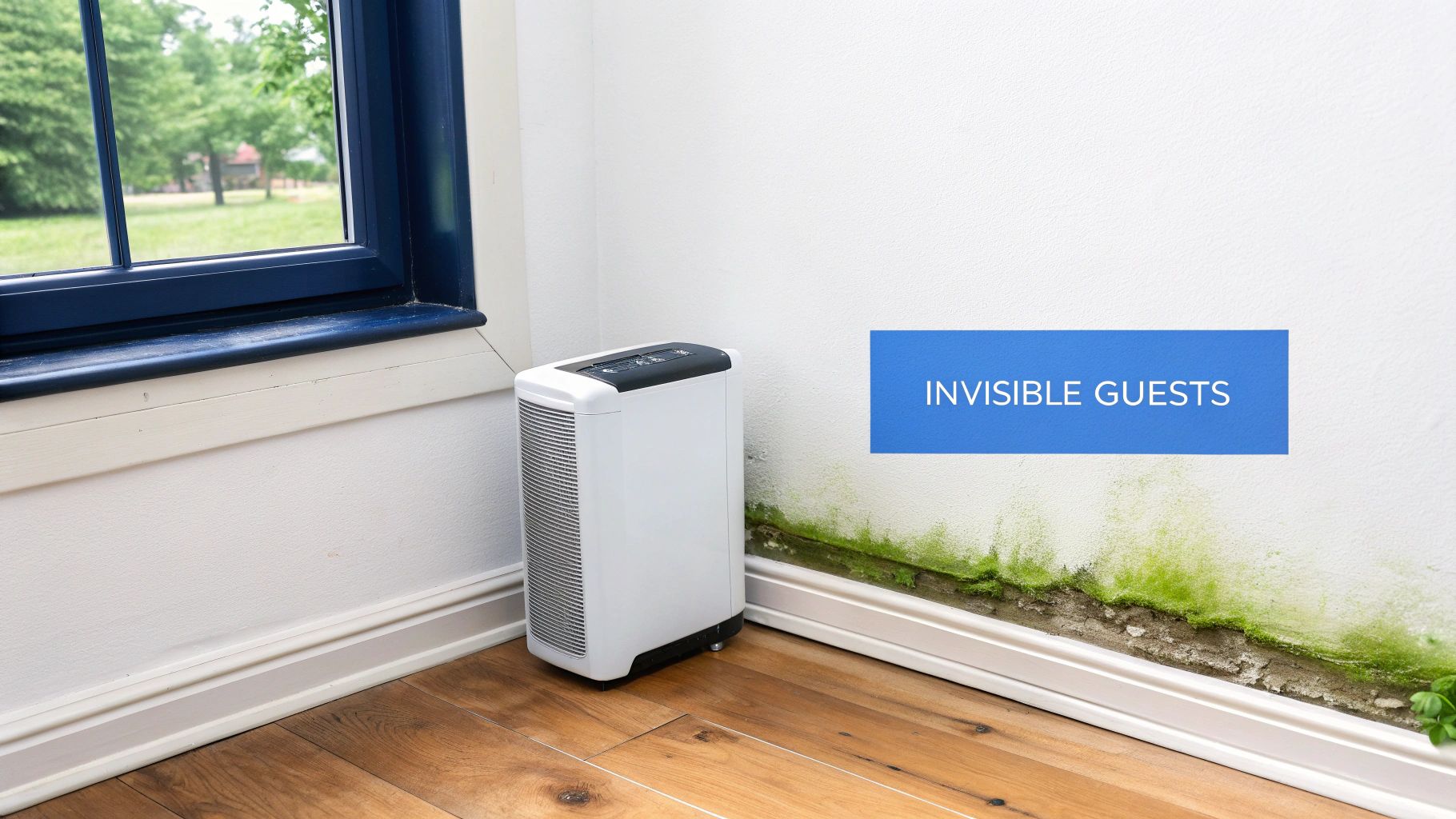
The Main Types of Biological Contaminants
Not all indoor contaminants are the same, but they all share one key requirement: moisture. Knowing what you might be dealing with is the first step toward protecting your home and family.
Here’s a quick breakdown of what could be lurking in those damp corners.
| Contaminant Type | Common Sources | Potential Impact |
|---|---|---|
| Mold & Mildew | Leaky pipes, damp basements, poorly ventilated bathrooms, drywall, wood, insulation. | Respiratory issues, allergies, musty odors, structural damage to building materials. |
| Bacteria | Standing water after a flood, contaminated HVAC systems, chronically damp carpets. | Infections, unpleasant odors, and can contribute to a generally unhealthy indoor environment. |
| Viruses | Poorly ventilated spaces where airborne droplets can circulate and linger. | Can spread illnesses more easily among occupants, contributing to an unhealthy home. |
As you can see, these organisms do more than just leave stains or create musty smells. They actively break down the materials that make up your home and can pose very real health risks. It’s a serious concern for homeowners everywhere, which is why the global mold remediation market is projected to hit $1,751.9 million by 2032.
At its core, the problem is simple: where there's moisture, life will find a way. When that life is mold or bacteria growing inside your home, it becomes a direct threat to your property and your well-being.
For those of us in coastal California, from Santa Barbara down to Ventura, the persistent fog and humidity create a perfect breeding ground for these unwanted guests. Understanding your home’s unique weak spots is key. Getting familiar with professional house environmental testing can give you the critical insights needed to ensure your indoor air is safe.
The Unseen Health Risks Lurking in Your Home
Biological contaminants are much more than just an ugly stain on the wall; they're silent threats that can seriously impact your family’s health. Mold, one of the main culprits, acts like an invisible factory, pumping microscopic spores and toxic compounds called mycotoxins into the air.
Once they're airborne, these tiny particles are easily inhaled. Suddenly, the very air you breathe is working against you.
This constant exposure can set off a whole cascade of health problems. For a lot of people, it starts with symptoms that feel just like bad seasonal allergies—persistent sneezing, random skin rashes, itchy eyes, or a nagging cough that just won't quit. For others, though, the consequences can be far more severe.

Who Is Most Vulnerable to Mold Exposure?
While anyone can be affected, some people are far more susceptible to the harm caused by biological contamination. Their bodies simply can't keep up the fight against the constant assault from airborne spores and toxins.
Those at the highest risk include:
- Children and Infants: Their immune and respiratory systems are still developing, making them extra sensitive to environmental threats.
- The Elderly: A naturally weakening immune system can make it much harder to fend off mold-related infections and allergic reactions.
- Individuals with Compromised Immune Systems: Anyone with a condition like HIV/AIDS or undergoing chemotherapy has a reduced ability to combat these illnesses.
- People with Pre-existing Respiratory Conditions: For someone with asthma or COPD, mold exposure can trigger severe attacks and make their condition much worse.
This is why it's so critical to understand the real-world impact of biological contaminants. Protecting the most vulnerable members of your family often means taking proactive steps to clean up your indoor air. You can learn more by exploring the specific health effects of household mold in our detailed guide.
Beyond Allergies: The Hidden Impact of Mycotoxins
The risks don't stop at respiratory issues. The mycotoxins released by certain types of mold are potent poisons that can lead to more mysterious and debilitating symptoms. It's not uncommon for people in a contaminated home to experience chronic fatigue, relentless headaches, brain fog, and even memory loss—problems that are often misdiagnosed or dismissed.
These lesser-known symptoms show just how pervasive the problem can be. What might look like a small leak or a little patch of mildew could be the source of major, ongoing health challenges for everyone in your household. Taking any sign of mold seriously isn't an overreaction; it's the first and most important step toward protecting your family's well-being.
Why Coastal California Homes Are at Higher Risk
Living the dream in coastal California is amazing, but the same beautiful environment that makes places like Santa Barbara and Ventura so special also happens to be a paradise for biological contaminants. Our mild, humid climate is basically an open invitation for mold and bacteria to move in, often in places you’d never think to look.
The number one culprit? Moisture. And we have it in spades. That persistent marine layer, the classic morning fog, and the general humidity mean moisture is a constant companion. It seeps into our homes, creating the perfect damp, cozy conditions for dormant mold spores to wake up and start a family.
Common Local Risk Factors
Beyond our unique climate, certain features common to homes in our area can accidentally trap all that moisture. What starts as a little dampness can quickly escalate into a full-blown contamination problem. Knowing what to watch for is your first line of defense.
Several local factors really ramp up the risk:
- Stucco Exteriors: We love that classic California look, but stucco can act like a sponge, absorbing and trapping moisture—especially if tiny cracks form. This can lead to nasty mold growth hiding right inside your walls.
- Poorly Ventilated Crawl Spaces: So many homes around here have crawl spaces that just don't get enough airflow. This allows damp air to sit and stagnate, creating a perfect breeding ground for massive mold colonies right under your feet.
- Older Plumbing Systems: Santa Barbara is full of beautiful historic and older homes, but that charm can come with aging pipes. Slow, hidden leaks are incredibly common, providing a steady, secret water source for mold to thrive on.
The real issue isn’t just the environment outside—it's how our homes breathe (or don't breathe) in response to it. A house that can't dry out effectively becomes the perfect incubator for biological contaminants.
The Role of Consistent Humidity
You don't even need a dramatic leak for mold to take hold. Sometimes, all it takes is consistently high humidity. When the moisture level inside your home regularly gets above 50-60%, a thin film of condensation can form on windows, walls, and even furniture. Believe it or not, that's more than enough moisture for mold to start growing.
This constant battle against dampness is why local expertise matters so much. For homeowners in Santa Barbara and Ventura Counties, knowing how to reduce humidity in the house isn't just about comfort—it's an essential part of keeping your home and family safe. By understanding these regional risks, you can take smart, targeted steps to protect your home from the ever-present threat of biological contamination.
How Professionals Uncover What's Hiding in Your Home
When you suspect something is wrong in your home, a quick look around just won't cut it. Biological contaminants are experts at hiding. Professional inspectors don't just search for problems; they use a systematic, data-driven approach to figure out what’s really going on behind your walls and under your floors.
Think of it less like a casual walkthrough and more like a scientific investigation. The mission is to find the exact source and scope of the issue.
It all starts with tracking down the invisible enemy: moisture. Since mold and bacteria need water to thrive, pinpointing the moisture source is the first critical step. We use specialized tools to see what the naked eye can’t, turning guesswork into a precise science.
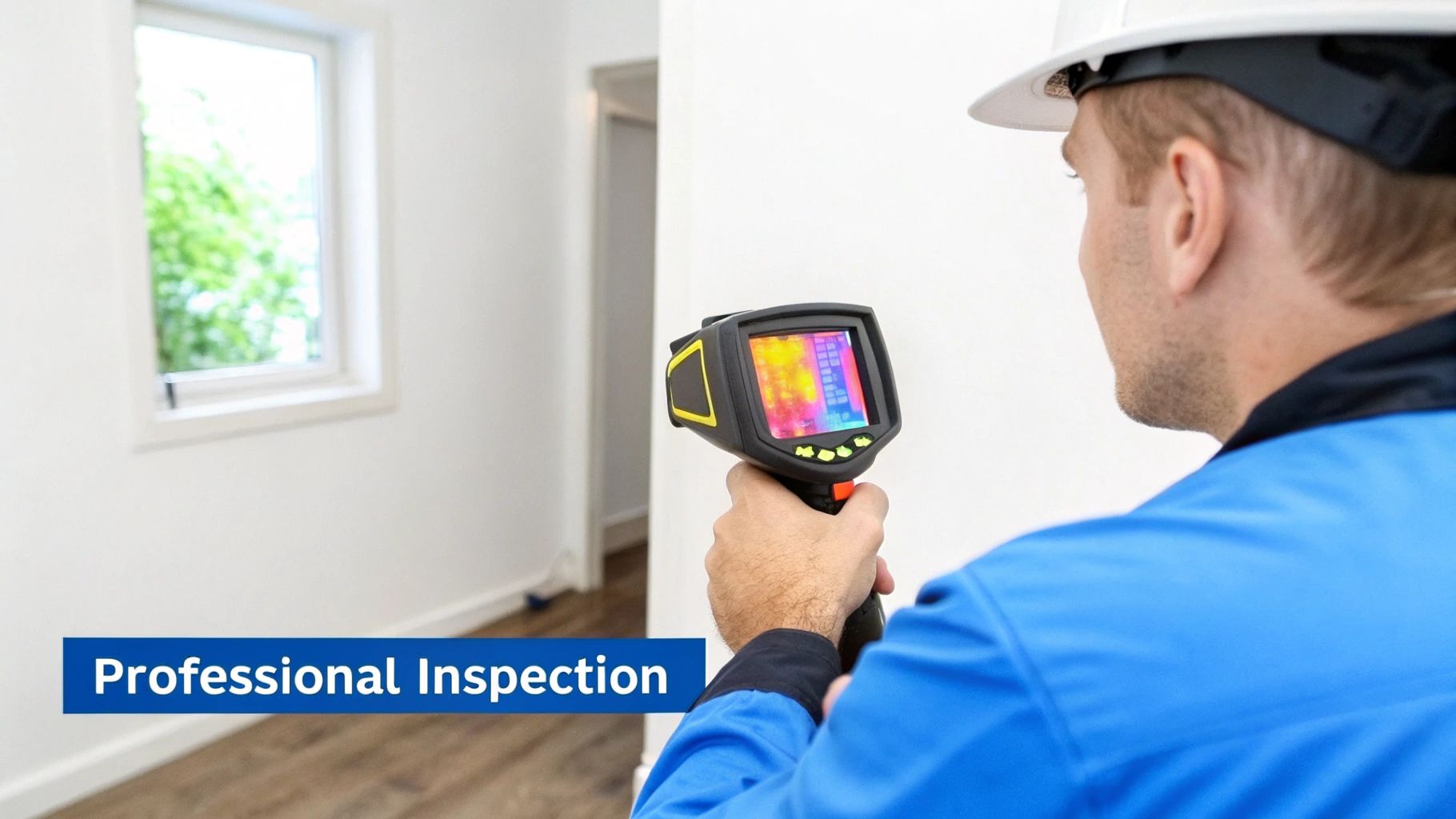
Uncovering Clues With Advanced Technology
To find hidden moisture without tearing into your walls, certified professionals rely on non-invasive diagnostic tools that give us a clear picture of your home's health. This technology lets us map out affected areas without causing any damage to your property.
Here are a few key tools in our arsenal:
- Thermal Imaging Cameras: These devices are incredible. They detect subtle temperature differences on surfaces, which is a dead giveaway for moisture. A cool spot on an otherwise warm wall often points directly to a hidden leak or condensation problem. You can learn more about how we use this tech in our guide to thermal imaging inspections.
- Moisture Meters: Once thermal imaging flags a potential issue, we use moisture meters to get precise readings. These tools measure the exact moisture content in materials like drywall, wood, and concrete, confirming the extent of the water damage.
This tech-forward approach ensures that every potential problem area is thoroughly investigated. The end goal is to create a complete "moisture map" of your home, which guides all the testing and remediation that follows.
A professional inspection isn't just about finding mold—it's about finding the reason mold is there. By focusing on the underlying moisture, we address the root cause, not just the symptom.
From Samples to Solutions
Once we’ve identified the moisture-affected areas, the next step is to understand exactly what type of contamination we're dealing with and how concentrated it is. This is where scientific sampling comes in, providing concrete evidence that helps build an effective remediation plan.
We collect physical evidence through two primary methods:
Air Sampling involves using a calibrated air pump to capture airborne spores. This tells us what you and your family are breathing in and helps determine if the indoor spore count is abnormally high compared to the outdoors.
Surface Sampling uses swabs or tape lifts to collect direct physical samples from areas where we suspect mold growth. This is crucial for identifying the specific mold species present.
These samples are sent to an accredited laboratory for analysis. The lab results give us a detailed report on the types of mold present and their concentration, providing a clear, factual basis for any necessary next steps. This data-backed process removes all the uncertainty, so you know exactly what you’re up against.
Deciding between a professional inspection and a store-bought kit can be confusing. Here’s a quick breakdown to help clarify the difference.
Professional Inspection Methods Compared to DIY Kits
| Feature | Professional Inspection (Pacific Mold Pros) | DIY Mold Test Kit |
|---|---|---|
| Accuracy & Reliability | High. Uses calibrated equipment and accredited lab analysis for precise results. | Low. Prone to false positives/negatives. Doesn't differentiate between normal and elevated spore levels. |
| Scope of Inspection | Comprehensive. Includes visual assessment, moisture mapping, and identifying hidden sources. | Limited. Typically just a single petri dish that collects whatever lands on it, visible or not. |
| Data & Interpretation | Provides a detailed lab report identifying mold species, concentrations, and a professional interpretation. | Vague. Often just indicates "mold is present" without context on type, quantity, or source. |
| Root Cause Analysis | Focuses on finding and addressing the underlying moisture problem causing the growth. | None. Cannot identify the source of the moisture or the extent of the contamination. |
| Actionable Plan | Delivers a clear, data-driven report with recommendations for remediation if needed. | No clear next steps. Often leaves homeowners guessing what to do with the results. |
While a DIY kit might seem like a cheap first step, it often provides misleading or incomplete information. A professional inspection, on the other hand, gives you the accurate, comprehensive data needed to truly solve the problem and protect your home and health.
Practical Prevention and Remediation Strategies
When it comes to tackling biological contamination in your home, it’s a two-front battle. First, you need smart prevention to stop problems before they even start. Second, you need a solid plan of action for when remediation is the only choice. The best strategy is always proactive, and it all boils down to controlling the one thing these contaminants need to thrive: moisture.
Think of moisture control as cutting off the enemy’s supply line. A few simple, consistent habits can make a world of difference in keeping your home dry and completely inhospitable to mold. The name of the game is managing humidity and jumping on any unwanted water sources fast.
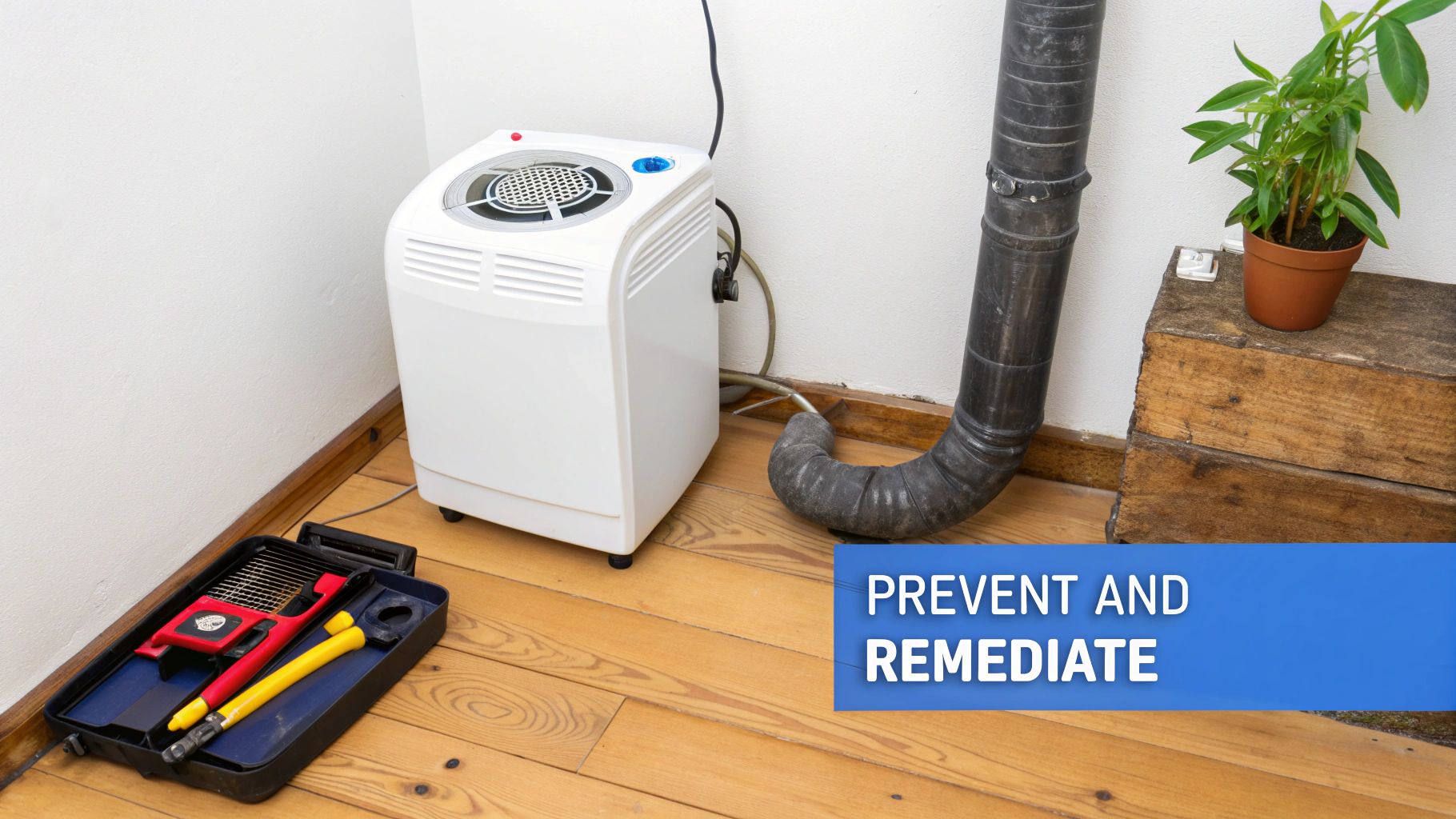
Proactive Prevention Tips for a Healthy Home
Turning your home into an anti-mold fortress doesn’t require a massive overhaul. It’s really about building small, effective habits into your daily life.
- Boost Ventilation: This is a big one. Always use your exhaust fans in bathrooms and kitchens to get that steam and moisture outside. You also want to make sure your attic and crawl spaces have plenty of airflow so humid, stagnant air can’t just sit there.
- Fix Leaks Immediately: That tiny drip under the sink might seem harmless, but it’s a constant water source for mold. Address every single leak as soon as you spot it, no matter how small it seems.
- Manage Indoor Humidity: Your goal is to keep your home's humidity level below 50%. Living in a damp coastal climate like ours, a good dehumidifier is non-negotiable. It’s the best tool for pulling that extra moisture out of the air, especially in basements and crawl spaces.
Following these steps creates an environment where biological contaminants just can't get a foothold. But sometimes, especially after serious water damage, prevention simply isn’t enough.
Knowing When to Call for Professional Remediation
If you’ve stumbled upon a significant mold problem, trying to tackle it yourself can actually backfire and make things much worse. When you disturb a mold colony without the right containment, you can send a massive cloud of spores airborne, spreading the problem all over your house.
This is exactly when professional remediation becomes critical. It's not just cleaning; it’s a highly controlled process designed to safely remove contaminated materials and sanitize the area without cross-contaminating the rest of your home. To really get into the weeds on this, check out our guide on the crucial differences between mold removal and remediation.
The stakes are higher than you might think. This issue goes far beyond just homes—mycotoxins from mold contaminate global food supplies, like corn. These risks get amplified when contaminated food is stored in damp homes, a common problem for families here in coastal California. It’s this connection to broader health threats that fuels the mold remediation market, which commands a 63.4% market share and is growing steadily. This is partly due to increased water damage in flood-prone areas like Santa Barbara and Ventura Counties. You can learn more about this rising mycotoxin threat on Alltech.com.
Call a certified inspector immediately if you notice a persistent musty odor, discover mold growth larger than a few square feet, or have experienced recent water damage from a flood or major leak.
Trying to DIY a large-scale mold cleanup is a major risk, both to your property and your health. Bringing in a pro ensures the problem is solved completely and safely, protecting your home and family from any more harm.
Protecting Your Home Starts With Local Expertise
Getting a handle on biological contamination is the first—and most important—step in protecting your home and family. It’s one thing to hear about the health risks of mold, but it’s another to understand the unique climate challenges we face here in coastal California. We’ve walked through how these invisible threats find a foothold, the tools we use to track them down, and the practical steps you can take to stop them.
Now, it’s about putting that knowledge into action.
For anyone living in Santa Barbara, Ventura, or Montecito, dealing with a potential mold problem means you need a partner who gets our specific environment. At Pacific Mold Pros, we’re not just flying in with generic solutions. We bring a deep understanding of local conditions and combine it with the best diagnostic tech to give you a clear, honest picture of your home’s health.
Your Local Mold Inspection Team
We're not some faceless corporation; we’re your neighbors, dedicated to making sure the air you breathe is safe. Our certified team brings you:
- Certified Expertise: Our inspectors are professionally trained to find hidden moisture and mold where others might miss it.
- Advanced Diagnostics: We use tools like thermal imaging to see what’s happening behind your walls without tearing them up.
- Transparent Reporting: You get fast, easy-to-understand lab results with straightforward advice on what to do next.
Don't let uncertainty about your indoor air quality linger. Gaining peace of mind is as simple as scheduling a professional inspection to ensure your home is a healthy sanctuary for your family.
Ready to breathe easy again? Give Pacific Mold Pros a call today at (805) 232-3475 to schedule your comprehensive mold inspection.
Got Questions About Biological Contamination? We've Got Answers.
When it comes to biological contamination, it’s easy to feel overwhelmed. Homeowners often ask us where to draw the line between a quick cleanup job and a serious health threat. Here are the answers to some of the most common questions we hear from residents in Santa Barbara and Ventura counties, designed to give you clarity and confidence.
Can I Just Grab Some Bleach and Clean Up the Mold Myself?
It’s a common impulse to reach for the bleach bottle, but honestly, it’s usually the wrong tool for the job. While bleach might kill surface mold on non-porous materials like tile or glass, it’s completely ineffective on porous surfaces—think drywall, wood, or carpet.
Why? Because mold isn’t just on the surface. It has roots that dig deep into these materials, and bleach simply can’t penetrate far enough to kill the entire colony.
Worse yet, using bleach can give you a false sense of security. It often removes the surface stain, making you think the problem is gone, while the hidden mold continues to thrive and pump spores into your home. If you're dealing with a mold issue larger than a few square feet, getting a professional assessment is the only way to be sure it's removed completely and safely.
What Does That Musty Smell in My House Mean?
That persistent, earthy smell is one of the most reliable signs that you have a hidden mold problem. The odor is caused by Microbial Volatile Organic Compounds (MVOCs)—gases that mold produces as it eats and grows. You can smell these compounds even when you can’t see a single spot of mold.
If you notice that smell, especially in a basement, bathroom, or crawl space, treat it as a major red flag. It’s a strong indicator that an active mold colony is growing behind a wall, under the floor, or in another damp, hidden spot. Think of that musty odor as your home’s built-in alarm system telling you it’s time to find the moisture source.
A musty odor is your home’s way of telling you there’s a moisture problem feeding a hidden biological issue. Never ignore it, as it points directly to potential indoor air quality degradation and contamination.
Are Air Purifiers Enough to Handle Biological Contamination?
Air purifiers with high-quality HEPA filters are fantastic tools. They do a great job of improving indoor air quality by capturing airborne particles like mold spores, dust mites, and bacteria. They can absolutely help reduce the allergens you're breathing in.
But here’s the reality: an air purifier is a bandage, not a cure.
It traps the spores that are already floating around, but it does absolutely nothing to stop the source—the active mold colony that’s continuously producing them. It’s like bailing water out of a boat that still has a leak. To truly solve the problem, you have to find and eliminate the moisture source and have the existing mold professionally remediated.