Purchasing a home is a monumental step, especially in the unique coastal environments of Santa Barbara and Ventura Counties. While a standard home inspection provides a good overview, the most critical insights often come from knowing exactly what to ask during home inspection. A generic checklist won't uncover the subtle, costly issues-like hidden moisture, early-stage mold, or structural vulnerabilities-that are common in our marine climate.
This guide is your comprehensive blueprint. It provides a detailed list of essential questions designed to empower you, whether you're a first-time buyer, a seasoned real estate agent, or a diligent homeowner. Think of it not just as a list, but as a strategic tool to probe deeper than a surface-level visual check.
We will break down the crucial questions by the most important areas of the property, including structural integrity, roofing, plumbing, electrical, and HVAC systems. For each question, we'll explain the 'why' behind it, detailing the specific red flags you need to watch for. You'll also find suggested follow-up questions to help you dig deeper when an inspector gives a vague or concerning answer.
Our focus extends to the specific challenges of coastal living, addressing issues like salt air corrosion, high humidity, and proper ventilation that are paramount in this region. Armed with this knowledge, you can transform a routine walkthrough into a powerful diagnostic session. This ensures your potential investment is not just visually appealing but is also safe, healthy, and structurally sound for years to come. You'll move beyond simply observing and start actively investigating, protecting your financial future and your family's well-being.
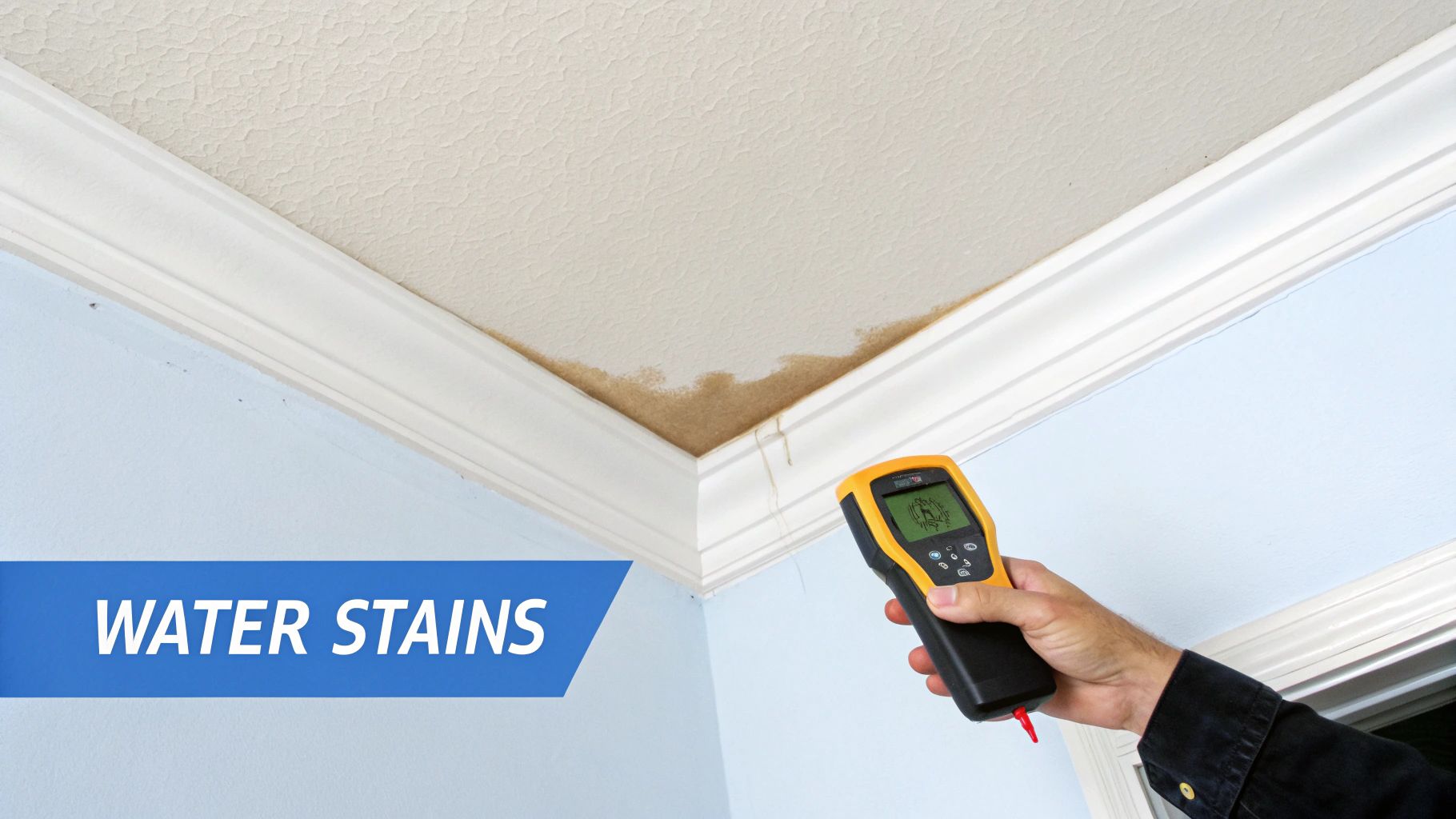
1. Are there any signs of water damage, stains, or discoloration on ceilings, walls, and floors?
This is one of the most critical questions to ask during a home inspection because visible water intrusion is a direct precursor to hidden mold growth and potential structural decay. Water stains, whether faint yellow rings or dark brown patches, are telltale signs of past or present moisture problems. These markings help inspectors trace the source of the leak, which could originate from a failing roof, faulty plumbing, foundation seepage, or even HVAC condensation.
Why This Question is Crucial
Ignoring these signs can lead to expensive remediation and significant structural damage down the line. In coastal communities like Santa Barbara and Ventura, the salty, humid marine air accelerates the deterioration process, making early detection even more vital. A simple stain could indicate a much larger, unseen problem lurking behind drywall or beneath flooring. Addressing it immediately protects both your investment and your indoor air quality.
Local Examples in Santa Barbara & Ventura Counties
- A Montecito home might show subtle discoloration near window frames, caused by wind-driven rain and salt spray penetrating the seals.
- In a Ventura property, faint brown water stains on a second-floor ceiling could point directly to a compromised roof flashing or a slow plumbing leak from an upstairs bathroom.
- An older Carpinteria residence could have chalky efflorescence or dark water marks low on basement walls, indicating hydrostatic pressure forcing groundwater through the foundation.
Actionable Follow-Up Steps
To properly investigate, your inspector should go beyond a simple visual check.
- Utilize Technology: Ask the inspector to use a moisture meter and thermal imaging camera to detect moisture levels behind walls and ceilings. These tools can confirm if a stain is from an active leak or a past, repaired issue.
- Focus on High-Risk Areas: Pay extra attention to bathrooms, kitchens, laundry rooms, and around water heaters. Check under sinks and behind toilets for any signs of slow drips or old water marks.
- Investigate the Source: If a ceiling stain is found, inspect the area directly above it, whether it's an attic, another room, or the roof. Understanding the different signs of water damage in walls can help you pinpoint the origin more effectively.
- Document Everything: Take clear photos of all stains, measure their size, and note their location. This documentation is essential for negotiating repairs or filing insurance claims.
2. Has the home experienced flooding, foundation leaks, or plumbing failures?
Directly asking about a home's history with major water events is a crucial part of your due diligence, as it uncovers risks that a visual inspection alone might miss. Events like flooding from storms, foundation seepage, or burst pipes can introduce massive amounts of moisture, creating ideal conditions for widespread mold and structural damage. This question forces a disclosure of past problems that may have been cosmetically covered up but never properly remediated.
Why This Question is Crucial
Understanding a property's past water-related failures helps predict its future vulnerabilities. In coastal Southern California, where winter storms can be intense and aging infrastructure is common, homes are particularly susceptible. A previous flood or significant leak can compromise subflooring, insulation, and framing, leading to long-term issues that aren't immediately apparent. Knowing this history allows you to probe deeper and ensure any past repairs were done correctly.
Local Examples in Santa Barbara & Ventura Counties
- A Goleta home with a previously failed water heater might have hidden, long-term moisture damage to the subfloor that was never properly addressed.
- In a Santa Barbara coastal property, chronic foundation seepage caused by a high water table and salt spray corrosion could be an ongoing issue requiring extensive drainage solutions.
- A Ventura County home with older copper plumbing may have a history of pinhole leaks behind drywall, a common problem that often goes undetected until significant damage occurs.
Actionable Follow-Up Steps
Don't just take the seller's word for it; ask for evidence and investigate further.
- Request Documentation: Ask for detailed repair invoices, contractor reports, and permits for any past water damage remediation. This paperwork provides a timeline and shows the extent of the work performed.
- Check Insurance History: Inquire about the homeowner's insurance claims history (e.g., a CLUE report) to see if any water-related events have been filed.
- Investigate Foundation and Drainage: If foundation leaks are mentioned, ask about sump pump maintenance, backup systems, and exterior drainage. Consider hiring a structural engineer if visible cracks are present.
- Verify Compliance: For properties in known risk areas, verify that any repairs or modifications comply with local coastal building codes and flood zone requirements.
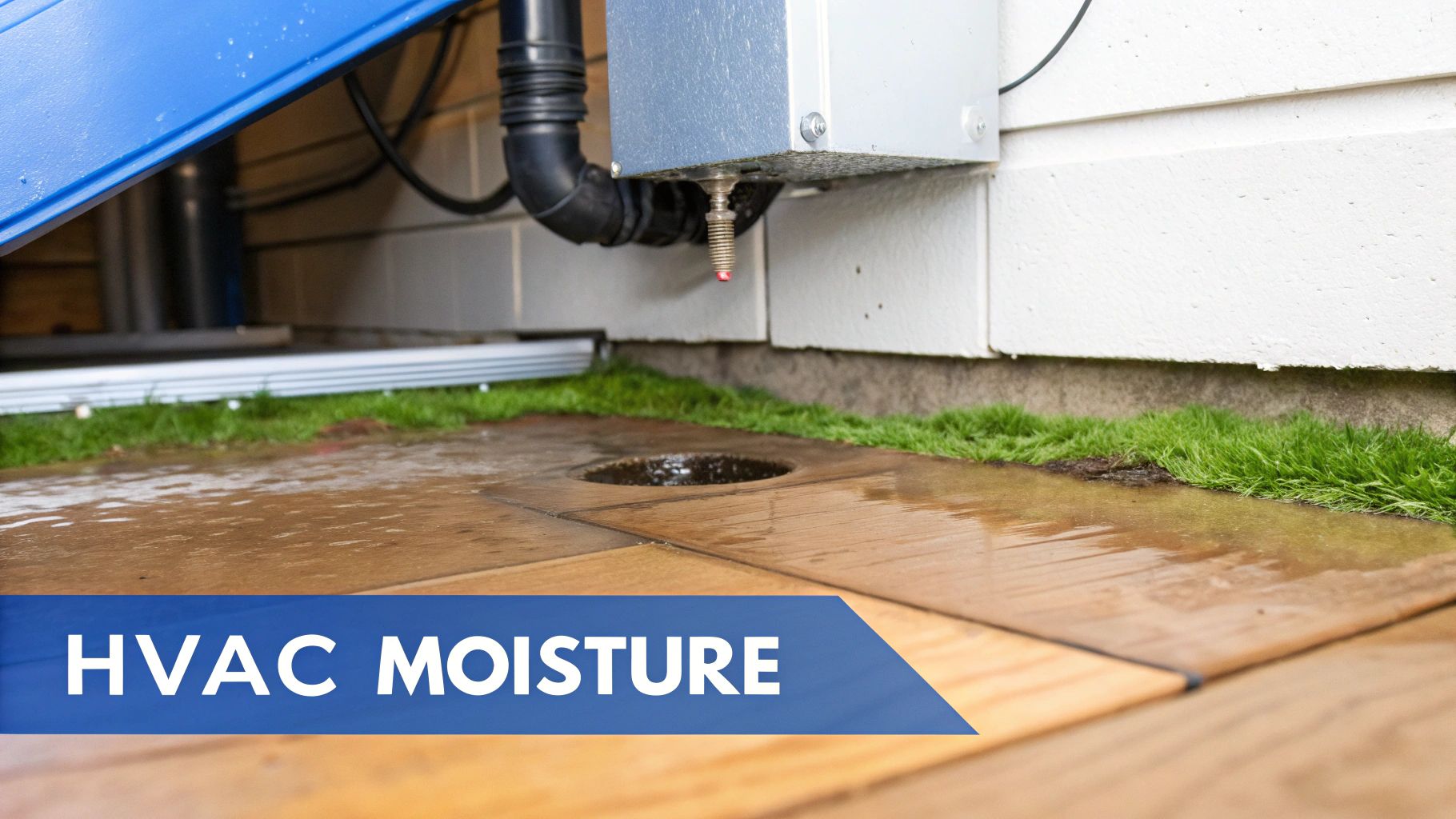
3. What is the condition of the roof, gutters, and drainage systems?
The roof is a home's primary defense against the elements, and its integrity is non-negotiable for preventing widespread water intrusion. Asking about the roof, gutters, and drainage systems allows you to assess how well the property manages water from top to bottom. Damaged shingles, failed flashing, clogged gutters, or improper grading can direct rainwater directly into the attic, walls, and foundation, creating the perfect conditions for extensive mold growth and structural rot.
Why This Question is Crucial
A compromised roof system can lead to some of the most catastrophic and expensive repairs a homeowner can face. In coastal communities like Santa Barbara and Ventura, the combination of intense sun, salt spray, and periodic heavy winter rains accelerates the degradation of roofing materials. What begins as a minor issue can quickly escalate, jeopardizing the home's structural health and indoor air quality.
Local Examples in Santa Barbara & Ventura Counties
- A Santa Barbara home with a classic clay tile roof might have cracked tiles or deteriorated flashing around vents, allowing rainwater to seep into the attic and ruin insulation.
- On a coastal Montecito property, salt-laden air can corrode metal gutters, causing them to fail and dump water against the exterior walls, leading to seepage.
- In a Goleta residence, poorly sloped gutters that overflow during a storm can saturate the soil around the foundation, creating immense hydrostatic pressure and potential crawl space flooding.
Actionable Follow-Up Steps
A thorough roof and drainage assessment requires a multi-pronged approach.
- Ask for Documentation: Inquire about the roof's age and any remaining warranty. Ask to see receipts or reports from any recent repairs, as this can indicate its overall condition and potential vulnerabilities.
- Inspect Gutters and Downspouts: Visually check if gutters are clear of debris and securely attached. Ensure downspouts extend several feet away from the foundation to direct water safely away from the structure.
- Evaluate Site Grading: Confirm that the ground slopes away from the foundation. The standard recommendation is a minimum six-inch drop over the first ten feet to prevent water from pooling against the home.
- Consider a Specialist: If the general inspector notes any concerns or if the roof is particularly old or complex, consider hiring a licensed roofing contractor for a specialized evaluation.
4. Are HVAC systems properly maintained, and is moisture controlled in ductwork and condensation areas?
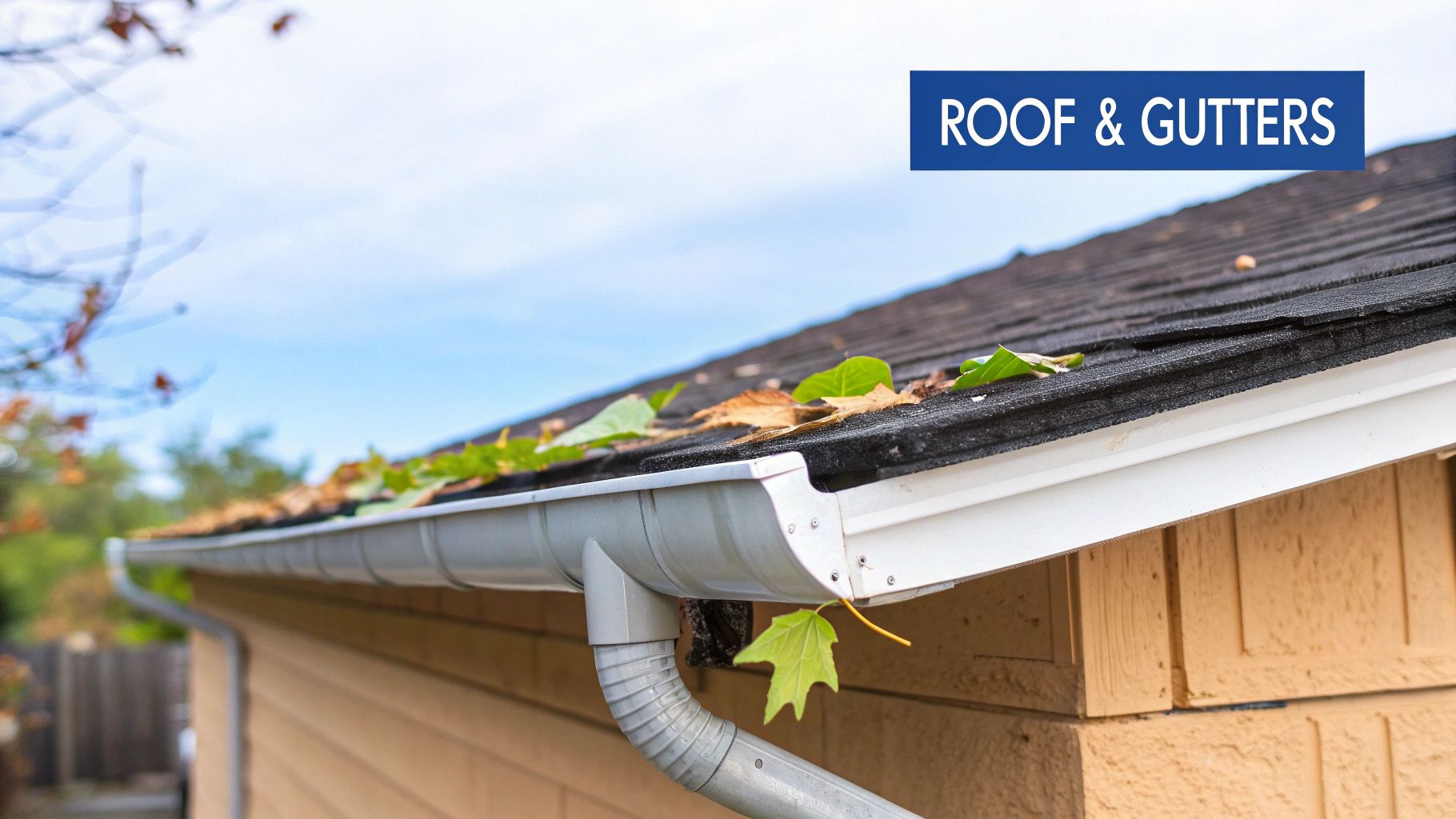
Heating, ventilation, and air conditioning (HVAC) systems are often overlooked sources of significant moisture intrusion. An improperly maintained system can become a distribution network for mold spores, dust, and allergens. The AC evaporator coils, for instance, generate condensation that must drain correctly; if the line is blocked or disconnected, water can saturate surrounding materials like insulation and drywall, creating a hidden mold factory.
Why This Question is Crucial
A neglected HVAC system directly compromises indoor air quality and can lead to extensive, costly mold remediation. In the humid coastal climate of Santa Barbara and Ventura, these moisture problems are amplified, accelerating mold colonization in attics, crawl spaces, and wall cavities. This inspection is especially critical for allergy sufferers, young children, and individuals with compromised immune systems who are more sensitive to airborne contaminants.
Local Examples in Santa Barbara & Ventura Counties
- A Goleta property might have an oversized AC unit that short-cycles, failing to properly dehumidify the air and leaving the home feeling damp during cool, foggy nights.
- In a Santa Barbara home, an inspector could find a disconnected HVAC condensation drain line in the attic, which has saturated the insulation and fostered a large mold colony on the ceiling drywall below.
- A coastal Montecito residence with an unsealed crawl space may have corroded ductwork that leaks cold air, causing condensation to form and drip, promoting mold growth on the subfloor.
Actionable Follow-Up Steps
Ensure your inspector thoroughly evaluates the entire HVAC system for moisture-related issues.
- Request Maintenance Records: Ask the seller for documentation of annual professional servicing. A consistent maintenance history is a good indicator of a well-functioning system.
- Inspect Key Components: Visually check the condensation drain line, tracing its path to ensure it has a proper slope and terminates correctly. Inspect the drip pan under the indoor air handler for any signs of rust, standing water, or overflow.
- Evaluate Ductwork: Ask the inspector to check for sealed and insulated ductwork, especially in unconditioned spaces like attics and crawl spaces. Leaky ducts waste energy and can introduce moisture and contaminants. Understanding proper humidity control in homes is key to preventing these issues.
- Check for Visible Growth: Carefully inspect the air handler, vents, and registers for any visible signs of mold or excessive dust buildup. A musty odor when the system turns on is a major red flag.
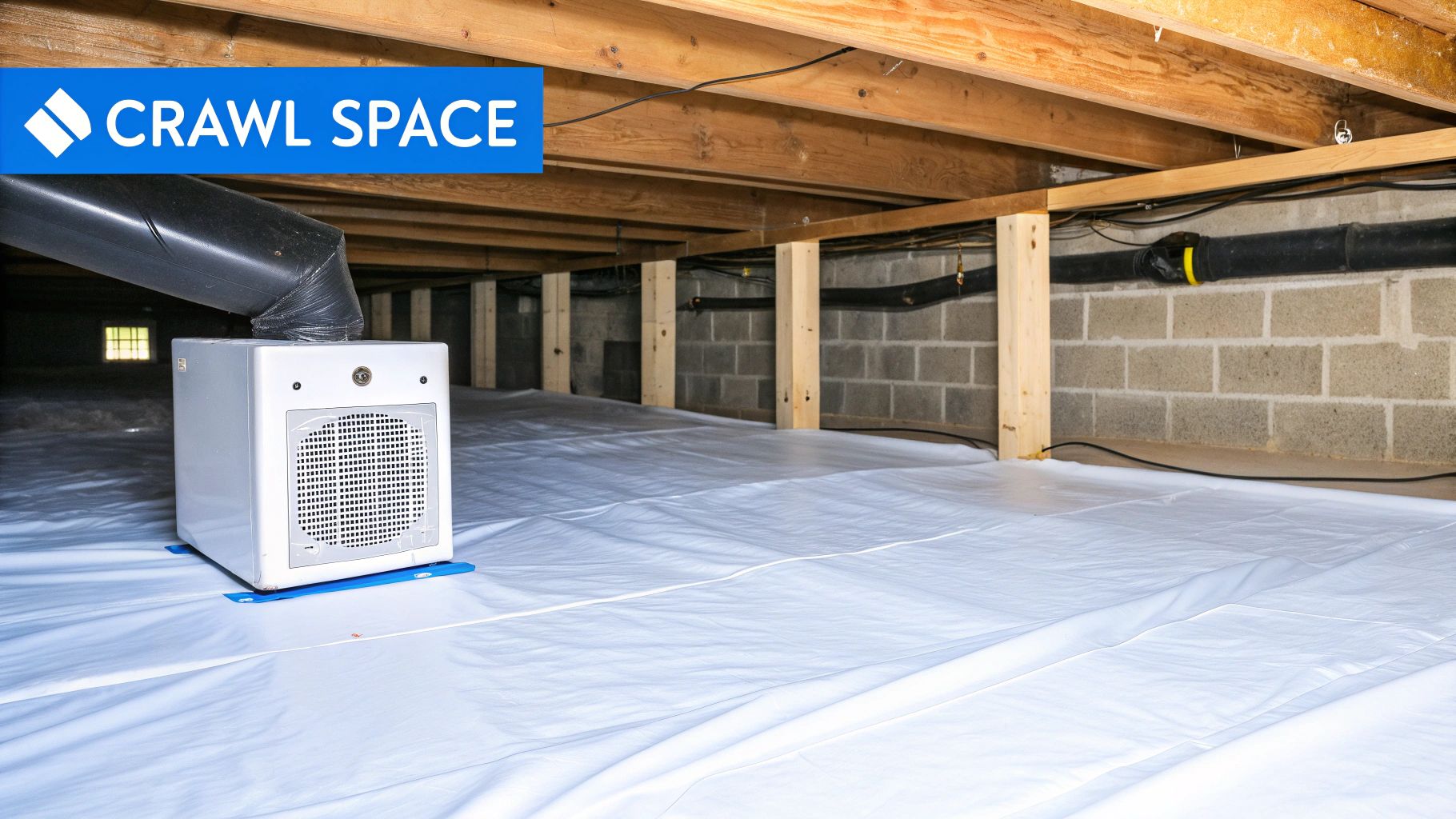
5. What is the condition of the crawl space, including insulation, vapor barriers, and moisture levels?
The crawl space is a "hidden zone" often overlooked, yet it critically impacts a home's structural integrity and indoor air quality. This dark, confined area beneath the main living space is highly susceptible to moisture intrusion, poor ventilation, and pest activity. Asking about its condition is a key part of what to ask during a home inspection, as problems here can lead to widespread issues throughout the house.
Why This Question is Crucial
A damp or poorly maintained crawl space is a breeding ground for mold, which can grow on wood joists, insulation, and soil. Due to the stack effect, where air naturally rises, up to 50% of the air on the first floor can originate from the crawl space. This means mold spores, musty odors, and humid air can easily migrate into your living areas, compromising your health and causing structural wood rot.
Local Examples in Santa Barbara & Ventura Counties
- A Goleta residence may have a damaged or missing vapor barrier, allowing ground moisture to saturate the fiberglass insulation and cause it to sag, reducing its effectiveness and promoting mold.
- In a Montecito coastal property with a high groundwater table, the crawl space could be prone to seasonal flooding, leading to severe structural rot and mold growth on the subfloor if not properly encapsulated.
- A Ventura home with foundation cracks might allow water seepage directly into the crawl space, resulting in a persistent musty odor that permeates the living areas above.
Actionable Follow-Up Steps
A thorough crawl space assessment goes beyond a quick look with a flashlight.
- Request Detailed Inspection: Ask the inspector to enter the crawl space and provide photo documentation, moisture meter readings of the wood framing, and notes on the insulation's condition.
- Verify the Vapor Barrier: Inquire about the vapor barrier material and its coverage. A proper barrier should be at least 6-mil polyethylene and cover 100% of the ground, sealed at the seams and foundation walls.
- Evaluate Moisture Management: Look for evidence of a foundation drainage system, sump pump, or dehumidifier. These systems are crucial for effective crawl space moisture control in our coastal climate.
- Sample for Mold: If mold or musty odors are present, request that the inspector collect air and surface samples for certified laboratory analysis to identify the type and concentration of mold.
- Consider Encapsulation: Discuss long-term solutions like full encapsulation, which involves sealing vents, installing a robust vapor barrier, and adding a dehumidifier to create a clean, dry, and healthy space.
6. How is the attic ventilated, and are there signs of moisture, condensation, or mold?
This question targets one of the most common and overlooked areas for significant mold growth and moisture damage. The attic acts as a home's "lungs," and improper ventilation traps warm, moist air that condenses on cooler surfaces like roof sheathing, framing, and insulation. This persistent moisture creates a perfect breeding ground for mold, which can then circulate throughout the home via HVAC systems and natural air leakage, directly impacting indoor air quality.
Why This Question is Crucial
A poorly ventilated attic can lead to widespread mold contamination, wood rot, and compromised insulation effectiveness. In coastal regions like Santa Barbara and Ventura, the temperature swings between warm days and cool, humid nights exacerbate this issue, accelerating condensation. Answering this question helps determine the home's long-term health and reveals hidden risks that could lead to costly remediation and structural repairs.
Local Examples in Santa Barbara & Ventura Counties
- A Montecito property with blocked soffit vents (often from pushed-up insulation) can trap humidity, causing condensation to form on roof sheathing and breed a significant mold colony.
- In a Goleta residence, an HVAC unit located in the attic could have a disconnected or clogged condensation drain line, slowly saturating the surrounding insulation and creating a concentrated patch of mold.
- A Ventura County home might have its gable vents blocked by improperly stored boxes, creating stagnant air and high humidity that fosters widespread mold growth across the entire attic.
Actionable Follow-Up Steps
A thorough attic inspection is more than a quick look; it requires a systematic approach.
- Verify Airflow: Ask the inspector to confirm that soffit, ridge, and gable vents are clear and unobstructed. There should be a visible pathway for air to enter at the lowest point (soffits) and exit at the highest (ridge).
- Check for Air Gaps: Ensure insulation is not pushed directly against the roof sheathing. There should be at least a one- to two-inch air gap maintained by baffles to allow for proper airflow.
- Identify Air Leaks: Look for unsealed penetrations from the living space below, such as gaps around bathroom fans, recessed lighting, and ductwork. These allow warm, conditioned air to enter the attic, increasing moisture. For more detail, you can explore the common reasons what causes condensation in attics.
- Request Advanced Tools: Ask for the use of a thermal imaging camera to spot moisture and air leaks that are invisible to the naked eye. If mold is suspected, request air samples from both the attic and living spaces to assess the extent of contamination.
7. Are there visible signs of mold, musty odors, or moisture in bathrooms, kitchens, and laundry areas?
This question directly addresses the most common breeding grounds for mold in any home. High-moisture rooms like bathrooms, kitchens, and laundry areas are prime locations for fungal growth due to constant water use and humidity. Visible mold, musty smells, or persistent condensation are not just cosmetic issues; they are clear indicators that the home's moisture management systems, like ventilation, are failing.
Why This Question is Crucial
Unchecked moisture in these high-traffic areas can lead to widespread mold contamination, which damages building materials and can negatively impact indoor air quality. A musty odor, even without visible mold, often signals a hidden problem within a wall cavity or under flooring. In coastal climates like Santa Barbara and Ventura, the high ambient humidity exacerbates these indoor moisture problems, making proper ventilation absolutely essential to prevent costly remediation and protect the health of occupants, especially those with allergies or respiratory sensitivities.
Local Examples in Santa Barbara & Ventura Counties
- A Santa Barbara bathroom might feature mold-covered grout and a condensation-soaked window frame, pointing to an inadequate or non-existent exhaust fan.
- In a coastal kitchen, water damage under the sink from a slow leak could allow mold to grow unseen in the cabinet, eventually spreading to the subfloor and wall cavity.
- A Goleta laundry room with a dryer improperly vented indoors can become a moisture trap, causing mold to bloom on surrounding walls and ceilings.
Actionable Follow-Up Steps
A thorough inspector should actively look for these signs of poor moisture control.
- Test All Exhaust Fans: Run the exhaust fans in bathrooms and kitchens. Ensure they are pulling air effectively and, crucially, are ducted to the exterior of the home, not into the attic space.
- Inspect Under Sinks: Look carefully inside all kitchen and bathroom cabinets under sinks for any signs of past or present leaks, water stains, or a musty smell.
- Check High-Moisture Zones: Examine tile grout, caulk lines around tubs and sinks, and the areas around toilets and washing machines for any discoloration or visible mold growth.
- Investigate Odors: If a musty smell is present but no mold is visible, ask the inspector to use a moisture meter on the surrounding walls and floors. This can help detect hidden moisture that needs further investigation.
8. What is the home's proximity to water sources (ocean, lakes, rivers), and how does coastal moisture affect the property?
This question is paramount for properties in Santa Barbara and Ventura counties, where the marine environment is a defining risk factor for moisture intrusion, accelerated material decay, and mold growth. Proximity to the coast introduces persistent high humidity, marine fog, and corrosive salt spray. Homes within a few miles of the ocean are constantly exposed to these elements, which can overwhelm standard building materials and ventilation systems, leading to chronic moisture issues.
Why This Question is Crucial
Understanding a home's exposure to coastal conditions is essential for assessing its long-term durability and maintenance needs. The relentless marine moisture can lead to wood rot, corroded metal components (like HVAC systems and hardware), and persistent mold colonization in attics, crawl spaces, and wall cavities. Older homes may lack the modern salt-resistant materials and moisture barriers required by current coastal building codes, making them especially vulnerable. This isn't just a maintenance issue; it's a critical factor affecting the home's structural integrity and indoor air quality.
Local Examples in Santa Barbara & Ventura Counties
- A Montecito oceanfront property could exhibit significant salt-spray damage on exterior wood siding, window frames, and metal hardware, with consistently elevated indoor humidity.
- In a Goleta home situated 1.5 miles from the coast, the constant marine layer might lead to chronic attic condensation and mold, as standard ventilation is insufficient to handle the moisture load.
- A Carpinteria residence might show premature corrosion of its HVAC condenser unit and rusted exterior fixtures, indicating the pervasive impact of salty air.
Actionable Follow-Up Steps
A home inspector should evaluate how the coastal environment has impacted the property.
- Assess Exterior Materials: Verify that all exterior materials, including paint, sealants, roofing, and hardware, are coastal-rated and in good condition. Look for signs of corrosion, peeling, or deterioration.
- Inspect HVAC and Metal Components: Carefully check the HVAC system, ductwork, and any exposed metal for signs of salt corrosion. This can significantly shorten the lifespan of these expensive systems.
- Check for Attic and Crawl Space Moisture: Ask the inspector to pay special attention to the attic and crawl space for signs of condensation or mold, which are common in homes affected by marine fog.
- Plan for Moisture Management: If the property is in a high-risk coastal zone, plan for proactive moisture control. This could include installing a whole-home dehumidification system and budgeting for more frequent maintenance to manage the unique challenges posed by the coastal climate.
9. Are there any signs of water intrusion or moisture problems around windows, doors, and exterior penetrations?
This question targets the most vulnerable points of a home's exterior where water commonly finds its way inside. Windows, doors, and any penetration for vents or pipes are potential weak spots in the building's protective envelope. Failed caulking, deteriorated weatherstripping, or improper flashing can allow water to seep into wall cavities, often going unnoticed until significant mold growth and structural damage occur.
Why This Question is Crucial
Even minor gaps around windows or doors can introduce substantial moisture over time, creating a hidden breeding ground for mold behind drywall and siding. In coastal areas like Santa Barbara and Ventura, the corrosive salt spray accelerates the breakdown of sealants and metals, making these entry points even more susceptible to leaks. A thorough check of these areas is a critical part of a comprehensive home inspection, as it helps prevent costly, hidden water damage repairs.
Local Examples in Santa Barbara & Ventura Counties
- A Santa Barbara home may have cracked or peeling caulk around window frames, allowing wind-driven rain to infiltrate the wall cavity and foster mold growth.
- In a coastal Montecito property, salt spray often corrodes the weatherstripping on sliding glass doors, leading to water pooling on the interior sill during storms.
- A Goleta residence might have improper flashing around a roof vent penetration, causing water to run down the exterior wall and saturate the attic insulation below.
Actionable Follow-Up Steps
A detailed inspection of these penetration points is essential. Ask your inspector to perform the following checks.
- Examine All Seals: Meticulously inspect the caulking and weatherstripping around every window, door, and exterior fixture. Look for cracks, gaps, or material that is brittle and pulling away.
- Verify Proper Flashing: Ensure that metal flashing is installed correctly above all windows and doors, and around any vents or pipes that exit the home. The flashing should be layered to direct water away from the wall.
- Check for Interior Signs: Look for any water stains, peeling paint, or soft spots on the drywall around windows and doors, as these are clear indicators of a leak.
- Use a Moisture Meter: Ask the inspector to use a moisture meter on the interior walls adjacent to windows and doors, especially if any visual signs of damage are present. This can confirm if moisture is actively present in the wall cavity.
10. Has a home inspection or mold inspection been previously performed, and what were the results?
Asking for previous inspection reports provides an invaluable historical record of the property's health. This baseline data reveals recurring issues, documents past problems, and allows you to gauge the effectiveness of any remediation work. A prior home inspection might mention moisture concerns, while a professional mold inspection will offer detailed laboratory analysis of contamination levels and species. This is a crucial question to ask during a home inspection, as it uncovers the property's hidden history.
Why This Question is Crucial
A previous report acts as a roadmap, guiding your current inspector to areas of known concern. Comparing past findings to the home's present condition reveals whether root causes were truly addressed or if problems were merely covered up with cosmetic fixes. A pattern of recurring mold, for instance, points to a systemic moisture problem that requires a far more comprehensive solution than simple surface cleaning.
Local Examples in Santa Barbara & Ventura Counties
- A Montecito home has a 2019 mold report showing Cladosporium. A 2024 inspection detects the same species at much higher levels, indicating the original moisture source was never fixed.
- In a Goleta residence, the seller claims a contractor performed "mold remediation," but a previous report is unavailable. Your inspection confirms the mold's return, suggesting the work was incomplete.
- A Ventura County property seller states a "complete crawl space encapsulation" was done. Without the previous report to verify, your inspector discovers a poorly installed vapor barrier and active mold growth.
Actionable Follow-Up Steps
Use past documentation to inform your current inspection and protect your investment.
- Request All Documents: Ask the seller or real estate agent for copies of all previous home inspection reports, mold reports (including lab results), and remediation contractor invoices.
- Compare Past and Present: Have your inspector compare current findings with old reports. A significant increase in mold spore counts or the reappearance of a repaired leak is a major red flag.
- Verify Credentials: If remediation was performed, verify the contractor's credentials and ensure the work was completed according to EPA or IICRC standards.
- Confirm Root Cause Repair: Request proof that the source of the moisture was fixed (e.g., a new roof, upgraded drainage) and not just the visible mold. Understanding if home inspections check for mold can help you determine if you need a specialized assessment.
10-Point Water & Moisture Inspection Questions
| Item | 🔄 Implementation complexity | ⚡ Resources & efficiency | 📊 Expected outcomes | 💡 Ideal use cases | ⭐ Key advantages |
|---|---|---|---|---|---|
| Are there any signs of water damage, stains, or discoloration on ceilings, walls, and floors? | Low 🔄 — visual inspection; expert interpretation sometimes needed | Minimal tools (eyes); optional moisture meter/thermal imaging; rapid ⚡ | Identifies visible intrusion, scopes urgency and likely sources | Pre-purchase walkthroughs, routine maintenance, insurance documentation | Quick, low-cost detection; supports negotiations and claims |
| Has the home experienced flooding, foundation leaks, or plumbing failures? | Moderate 🔄 — record review, interviews, possible structural checks | Moderate: document review, possible engineering or moisture testing; moderate time | Reveals systemic moisture events and long‑term vulnerability | Older homes, storm-prone areas, prior claims or visible damage | Exposes chronic issues; informs major repairs and insurance decisions |
| What is the condition of the roof, gutters, and drainage systems? | Moderate 🔄 — roof/attic access may be required; sometimes professional climb | Tools: ladder, attic access, thermal imaging; may need roofer; seasonal tasks | Detects leak sources and drainage failures that cause attic/foundation moisture | Homes with older roofs, coastal exposure, or prior leaks | Preventive maintenance saves larger remediation costs; improves marketability |
| Are HVAC systems properly maintained, and is moisture controlled in ductwork and condensation areas? | Moderate 🔄 — requires HVAC access, records, duct inspection | Requires HVAC service, duct inspection/sealing, possible lab sampling; periodic maintenance | Improves IAQ and humidity control; prevents duct/attic mold growth | Homes with attic/duct HVAC, occupants with allergies, high‑humidity climates | High impact from relatively low-cost maintenance; energy savings and health benefits |
| What is the condition of the crawl space, including insulation, vapor barriers, and moisture levels? | High 🔄 — limited access, may need invasive checks and encapsulation experts | Significant: moisture meters, vapor barrier work, sump/dehumidifier; costly and time‑consuming | Detects hidden mold and structural moisture; prevents upward contamination | Homes with dirt crawl spaces, high groundwater or coastal properties | Long‑term mold control; reduces HVAC strain and structural risk |
| How is the attic ventilated, and are there signs of moisture, condensation, or mold? | Moderate 🔄 — attic access, ventilation assessment, possible thermal imaging | Attic access, thermal imaging, ventilation upgrades if needed; moderate effort | Reveals ventilation failures, condensation hotspots, and attic mold risk | Homes with roof/attic HVAC, prior attic moisture, or insulation issues | Cost‑effective prevention; reduces insulation damage and energy use |
| Are there visible signs of mold, musty odors, or moisture in bathrooms, kitchens, and laundry areas? | Low 🔄 — visual and odor checks; may need targeted testing | Minimal to moderate: ventilation checks, surface/air sampling if needed; fast fixes often available | Identifies surface mold and ventilation failures; indicates hidden sources if odors present | High‑moisture rooms, rental units, homes with reported odors or visible growth | Actionable, immediate occupant benefit; remediation often affordable |
| What is the home's proximity to water sources (ocean, lakes, rivers), and how does coastal moisture affect the property? | Moderate 🔄 — site assessment, code and materials review | Document review, distance/wind analysis, material inspection; ongoing maintenance demands | Assesses chronic exposure risk and expected maintenance intensity | Coastal buyers, properties within a few miles of shore, older coastal builds | Guides material selection and preventive budgeting; informs negotiations |
| Are there any signs of water intrusion or moisture problems around windows, doors, and exterior penetrations? | Moderate 🔄 — visual, thermal checks; flashing inspection may be needed | Minimal: visual/thermal tools; resealing or flashing repairs may require contractor | Finds common entry points before wall cavity mold develops | Homes with aging seals, salt‑spray exposure, or irrigation near walls | Relatively low‑cost fixes prevent hidden structural and IAQ damage |
| Has a home inspection or mold inspection been previously performed, and what were the results? | Low 🔄 — document retrieval and comparative analysis | Requires obtaining reports and lab results; may need follow‑up testing; time for review | Provides baseline, reveals remediation effectiveness and recurrence patterns | Pre‑purchase due diligence, dispute resolution, recurring problem cases | Offers documented history to target re‑inspection and validate remediation |
Take the Next Step: Ensure Your Peace of Mind
Navigating a home inspection can feel overwhelming, but you are now equipped with a powerful toolkit of questions designed to transform you from a passive observer into an empowered advocate for your investment. This comprehensive list, covering everything from the foundation and roof to the intricate electrical and plumbing systems, is your roadmap to uncovering a property's true condition. By asking what to ask during a home inspection, you are not just ticking boxes; you are actively investigating the long-term safety, stability, and health of your potential new home.
The common thread weaving through nearly every critical question in this guide is moisture. Uncontrolled water is the primary catalyst for the most destructive and costly issues a homeowner can face, including structural rot, foundation damage, and the proliferation of hazardous mold. This is especially true in the unique coastal microclimates of Santa Barbara and Ventura, where persistent marine layers and humidity create an ideal environment for moisture-related problems to take hold.
From General Knowledge to Specific Action
You now understand the importance of scrutinizing drainage, evaluating HVAC performance, and inspecting hidden areas like crawl spaces and attics. However, it's crucial to recognize the inherent limitations of a standard home inspection. A general home inspector is a jack-of-all-trades, trained to identify visible, surface-level defects across a broad range of systems. They are typically not certified mold specialists, nor do they carry the advanced diagnostic equipment required to detect hidden moisture intrusion or non-visible mold colonies lurking behind walls or beneath flooring.
This creates a critical gap between what a general inspection can reveal and what you truly need to know to protect your family's health and financial future. Simply asking about "signs of mold" is a starting point, but it's not enough.
Key Takeaway: A standard home inspection is an essential first step, but a specialized mold inspection is the non-negotiable follow-up for true peace of mind, especially in high-humidity coastal regions.
Your Actionable Next Steps for a Secure Investment
To bridge this gap and move forward with absolute confidence, consider these definitive next steps:
Review Your General Inspection Report with a Specialist's Eye: Go through the report you receive and highlight every mention of "moisture," "staining," "water intrusion," "efflorescence," or "musty odors." These are red flags that warrant a deeper investigation by a certified professional.
Schedule a Professional Mold Inspection: Do not leave this to chance. A certified mold inspector, like the team at Pacific Mold Pros, utilizes specialized tools such as thermal imaging cameras, moisture meters, and air quality sampling equipment. This technology allows them to see what the naked eye cannot, providing definitive data rather than speculation.
Demand Certified Laboratory Analysis: A visual inspection alone cannot confirm the type or toxicity of a potential mold issue. Insist on a service that provides accredited laboratory analysis of collected samples. This scientific evidence is crucial for understanding the health risks and formulating an effective remediation plan.
Secure Your 'Breathe Easy Guarantee': Before you finalize the purchase of your home, ensure you have a clear, comprehensive report that either confirms the absence of a hidden mold problem or provides a precise roadmap for addressing one. This is your ultimate leverage in negotiations and your foundation for a healthy living environment.
By asking the right questions during your home inspection, you lay the groundwork. By taking the next step with a targeted, professional evaluation, you build a fortress of certainty around your most significant asset. Don't settle for a partial picture of your home's health. Take control, dig deeper, and ensure the air you breathe is as safe as the roof over your head.
Ready to uncover the full story of your property? Contact Pacific Mold Pros today at (805) 232-3475 for a comprehensive pre-purchase inspection and secure your peace of mind.