That musty smell in the basement or the dark stain behind the bathroom tiles isn't just an eyesore; it's a sign of a hidden ecosystem thriving within your home. Mold is a natural part of the environment, but when it establishes colonies indoors, it can compromise air quality, damage property, and pose significant health risks. This is especially true in the unique coastal climates of Santa Barbara and Ventura Counties, where the persistent marine layer and fluctuating temperatures create the perfect humid conditions for mold to flourish.
Understanding the different types of mold found in homes is the critical first step toward protecting your property and family. Not all molds are created equal. Some are relatively benign allergens, while others, like the infamous toxic black mold (Stachybotrys chartarum), produce mycotoxins that can lead to severe respiratory and neurological issues. Differentiating between them is key to assessing the real risk and determining the right course of action.
This guide breaks down the 8 most common culprits you're likely to encounter. We will detail their appearance, preferred habitats, and the specific health risks they carry, moving beyond generic advice to provide actionable insights for detection, prevention, and professional remediation. Whether you are a homeowner spotting a suspicious patch, a real estate agent navigating a transaction, or a property manager safeguarding a building, this comprehensive roundup will empower you with the specific knowledge needed to maintain a healthier, safer indoor environment. You'll learn not just what mold is growing, but why it's there and exactly what to do about it.
1. Aspergillus Niger (Black Mold – Non-Toxic Variant)
One of the most frequently encountered types of mold found in homes is Aspergillus niger. Often mistaken for its more infamous toxic cousins due to its dark black or brownish coloration, this species is a common sight in areas with persistent moisture. It's a key reason why a professional diagnosis is crucial; what looks menacing might not be toxigenic, though it still poses health risks.
Aspergillus niger is a saprophytic fungus, meaning it thrives on decaying organic matter. In a home environment, this translates to damp drywall, wood, dust, and soil. Its prevalence in the coastal climates of Santa Barbara and Ventura counties is high, as the persistent marine layer can elevate indoor humidity, creating ideal growth conditions. While not producing mycotoxins like Stachybotrys chartarum, it can be an allergen and an irritant, particularly for vulnerable individuals.
Common Locations and Health Impacts
You are most likely to find Aspergillus niger in perpetually damp or poorly ventilated spaces. Because it thrives in high humidity and condensation-prone areas, it's a frequent unwelcome guest.
- Key Growth Areas: Look for it in bathroom exhaust fan ducts, behind toilets, in basement corners with poor drainage, and inside HVAC systems where condensation collects. We often discover it during pre-sale inspections in Montecito properties, particularly in attics with minor, slow roof leaks.
- Health Concerns: For most healthy individuals, exposure might cause no symptoms. However, it can trigger allergic reactions, including sneezing, coughing, and itchy eyes. For those with asthma, weakened immune systems, or pre-existing respiratory conditions, exposure can lead to more severe complications like aspergillosis, a lung infection.
Proactive Detection and Prevention Tips
Identifying the source of moisture is paramount to controlling Aspergillus niger. Simply cleaning the visible mold is a temporary fix if the underlying water issue remains.
- Check Ventilation: Ensure all exhaust fans in bathrooms and kitchens vent directly outside, not into an attic or crawl space where moisture can become trapped.
- Control Humidity: Maintain indoor humidity levels below 50%. Use dehumidifiers in basements, crawl spaces, and other chronically damp areas, especially during foggy coastal mornings.
- Advanced Inspection: If you suspect hidden mold, consider professional thermal imaging. This technology detects temperature differences in walls that often indicate trapped moisture, pinpointing the problem before visual signs appear.
- HVAC Maintenance: If you notice dark, soot-like dust around your air vents, have your HVAC system professionally inspected immediately. Aspergillus niger can colonize ductwork and spread spores throughout your home every time the system runs.
2. Stachybotrys Chartarum (Toxic Black Mold)
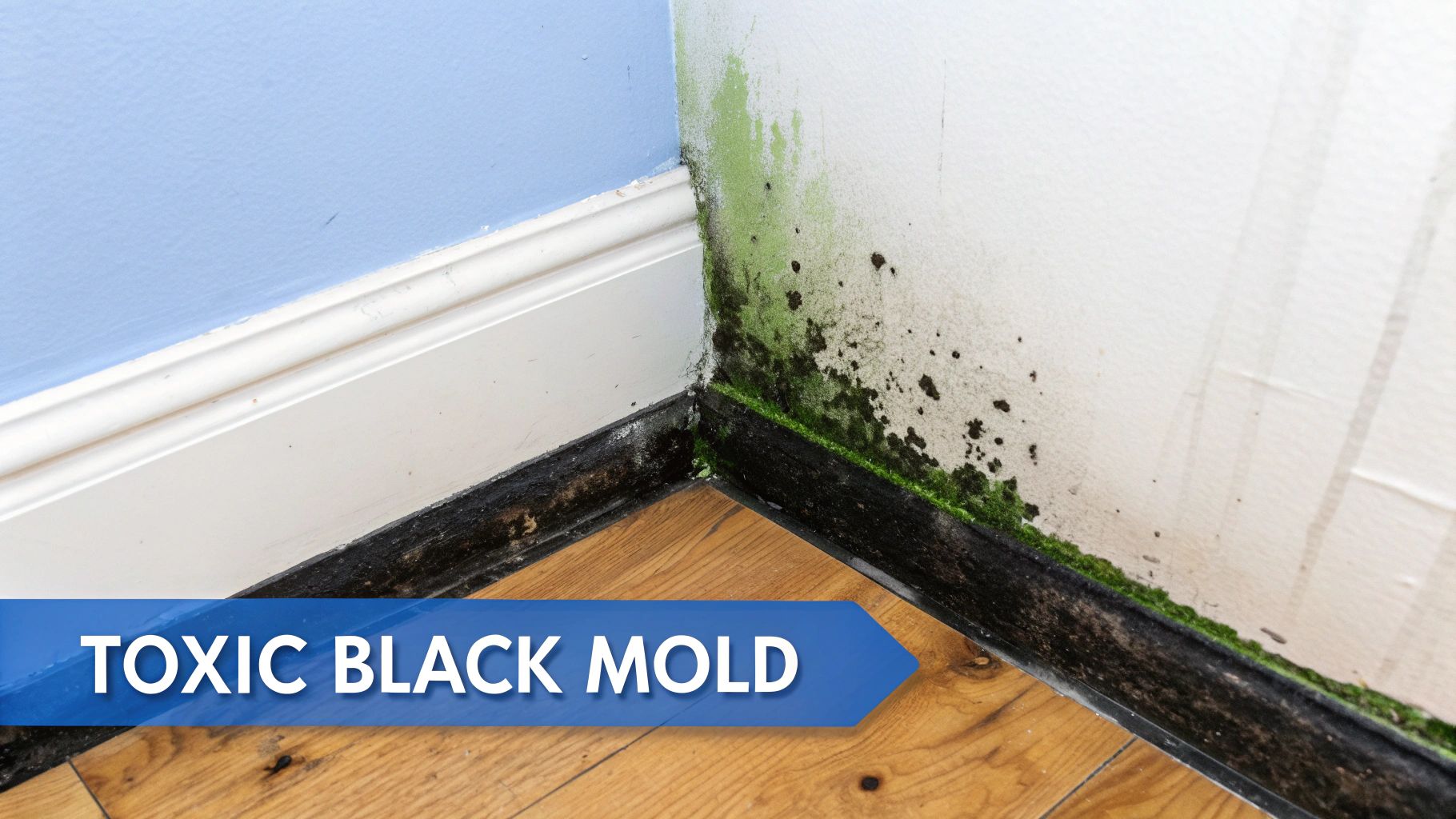
Perhaps the most notorious of all types of mold found in homes, Stachybotrys chartarum is the species commonly referred to as "toxic black mold." Unlike Aspergillus niger, this mold produces mycotoxins, specifically satratoxins, which can lead to serious health issues upon exposure. Its appearance is typically a slimy, dark greenish-black, and it requires a constant source of moisture to grow, making it a clear indicator of a significant water problem.
Stachybotrys thrives on materials with high cellulose content, such as drywall, wood framing, and insulation, that have been saturated with water for a prolonged period. Due to its hazardous nature, its presence in a Goleta or Carpinteria home is a major health and property liability concern. The discovery of this mold often stems from an unrepaired roof leak following major winter storms or a slow, hidden plumbing failure behind a wall, demanding immediate professional intervention.
Common Locations and Health Impacts
Because Stachybotrys needs constant wetness, it is less common than other molds but far more dangerous when found. It signals a severe, ongoing water intrusion issue that must be addressed.
- Key Growth Areas: We frequently identify it in crawl spaces of coastal homes with poor drainage, behind walls in Montecito properties with a history of plumbing failures, and in basements or attics after a significant water damage event. Any cellulose-based material that stays wet for more than a week is a potential breeding ground.
- Health Concerns: Exposure to Stachybotrys mycotoxins can cause a wide range of severe symptoms, from chronic fatigue and headaches to respiratory distress and neurological issues. The health effects can be debilitating, particularly for children, the elderly, and immunocompromised individuals. You can explore the full range of black mold health symptoms on pacificmoldpros.com for a more detailed understanding.
Proactive Detection and Prevention Tips
The discovery of Stachybotrys chartarum is not a DIY situation. Its potential for toxicity makes professional handling essential from detection to removal.
- Never Attempt DIY Removal: Do not disturb or try to clean suspected Stachybotrys yourself. Agitating the mold can release a massive amount of mycotoxin-laden spores into the air, contaminating your entire home.
- Request Professional Sampling: If you suspect its presence due to a musty odor or visible signs after water damage, hire a certified professional to conduct air and surface sampling to confirm the species.
- Document Everything: Keep a detailed record of all water damage incidents with photos and dates. This documentation is crucial for insurance claims and potential property disclosures.
- Post-Remediation Verification: After professional remediation, always insist on third-party post-remediation clearance testing. This verifies that the mold has been successfully removed and the area is safe to occupy again.
3. Penicillium Species (Green/Blue Mold)
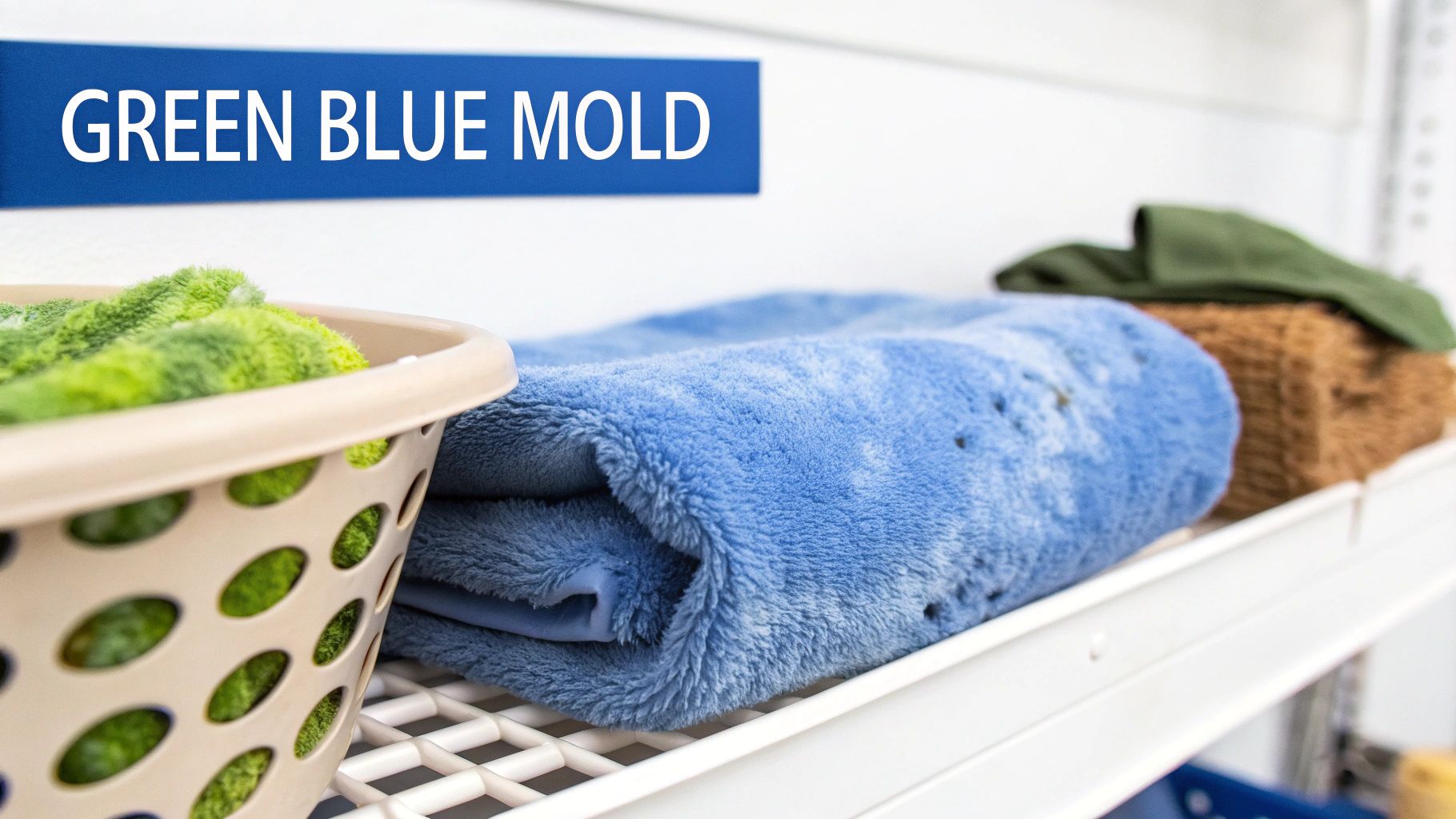
One of the most widespread types of mold found in homes is Penicillium. Instantly recognizable by its characteristic blue, green, or even grey-green velvety appearance, this mold is notorious for its rapid growth on damp organic materials. While some species of Penicillium are famously beneficial, such as the one used to produce penicillin, the varieties found thriving in water-damaged properties are significant allergens and can degrade indoor air quality.
Penicillium is a moisture-loving fungus that excels at colonizing porous and organic surfaces. In the consistently humid coastal climate of Santa Barbara and Ventura, it's a common finding during our indoor air quality assessments. It readily grows on damp fabrics, wallpaper, stored documents, and even HVAC filters, making it a persistent threat in homes with even minor moisture control issues. Its presence often indicates an ongoing water problem that requires immediate attention.
Common Locations and Health Impacts
You are most likely to encounter Penicillium in areas with high humidity, poor airflow, and ample organic material to feed on. Its ability to spread quickly through airborne spores makes it particularly troublesome in enclosed spaces.
- Key Growth Areas: Check inside HVAC ducts, on stored items in damp Goleta garages, and on old books or documents in basements. We also frequently find it growing on damp fabrics, carpets behind furniture, and water-damaged drywall in older properties.
- Health Concerns: Penicillium is a known allergen that can trigger significant respiratory responses. Symptoms include coughing, wheezing, sinus infections, and shortness of breath, especially for individuals with asthma or allergies. Prolonged exposure can lead to chronic conditions like hypersensitivity pneumonitis.
Proactive Detection and Prevention Tips
Controlling Penicillium growth hinges on aggressive moisture management and diligent maintenance. Because its spores are easily aerosolized, addressing it quickly is key to preventing its spread.
- Filter and Purify: Replace HVAC filters every 1-3 months in humid coastal areas. Using a HEPA-filtered air purifier can also significantly reduce airborne spore counts in rooms where Penicillium has been detected.
- Secure Storage: Store important documents, clothing, and other organic items in sealed, moisture-controlled containers rather than cardboard boxes, especially in garages or basements.
- Maintain Low Humidity: Keep indoor humidity below 50% year-round. A properly sized dehumidifier is a critical tool for homes in Montecito and other coastal communities prone to persistent dampness. If you've already found mold and are unsure of the next steps, it's important to act quickly; you can discover what to do after finding mold in your home to prevent further issues.
- Dry Materials Promptly: After any water intrusion, from a spill to a leak, thoroughly clean and dry all affected fabrics, carpets, and building materials within 24-48 hours to prevent spores from germinating.
4. Cladosporium (Gray-Olive Mold)
Among the most widespread types of mold found in homes, Cladosporium is a frequent infiltrator from the outdoors. It often appears as dark gray, olive-green, or nearly black colonies and is particularly adaptable, capable of growing in both cool and warm conditions. Its prevalence is notable in coastal California, where moist ocean air can easily carry spores indoors, making it a common discovery in properties from Carpinteria to Goleta.
Cladosporium can colonize a variety of surfaces, including fabrics, wood, and particularly porous materials like painted walls and paper. While often less aggressive than other species, its presence is a strong indicator of an air infiltration or ventilation problem, signaling that outdoor moisture is finding a way into the home and condensing on cooler surfaces. This mold does not typically produce potent mycotoxins but is a known allergen that can significantly impact indoor air quality.
Common Locations and Health Impacts
You will often find Cladosporium in areas where outdoor air meets indoor surfaces, especially where condensation forms. It thrives on surfaces that aren't necessarily water-damaged but are consistently damp or cool.
- Key Growth Areas: Look for it around window seals and frames, in attics with poor ventilation, and within crawl spaces that lack an adequate moisture barrier. We frequently identify it during pre-purchase inspections of older Santa Barbara homes where original windows have begun to fail.
- Health Concerns: Cladosporium is a well-known allergen. Exposure can trigger asthma attacks and cause allergic reactions like sneezing, watery eyes, and skin rashes. For individuals with respiratory sensitivities, prolonged exposure can lead to sinus infections and other upper respiratory tract issues.
Proactive Detection and Prevention Tips
Controlling Cladosporium growth is fundamentally about managing air and moisture intrusion from the outside. Sealing the building envelope is the most effective long-term strategy.
- Seal Air Leaks: Meticulously caulk and weatherstrip around all windows, doors, and utility penetrations to prevent spore-laden outdoor air from entering.
- Ventilate Key Areas: Ensure your attic and crawl spaces have proper ventilation systems to exhaust moist air before it condenses on cool surfaces.
- Moisture Mapping: If you suspect hidden intrusion, professional moisture mapping can identify the exact pathways water is using to enter your home. You can learn more about professional mold detection methods on pacificmoldpros.com.
- HVAC Care: Regularly change your HVAC filters and consider professional ductwork cleaning to prevent Cladosporium spores from circulating throughout your home.
5. Fusarium Species (Pink/Red Mold)
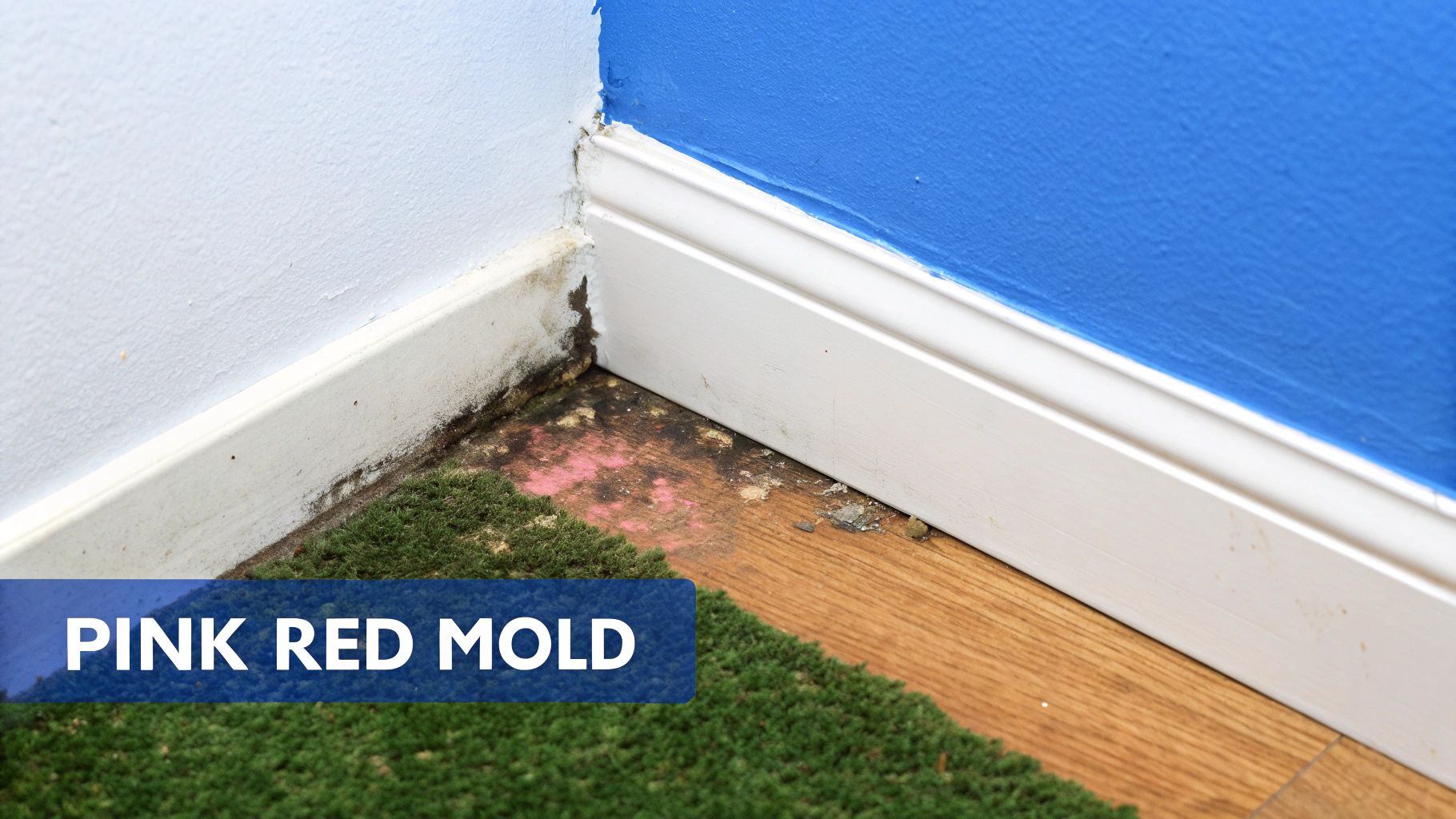
Often appearing with distinctive pink, reddish, or even whitish colonies, Fusarium is another of the common types of mold found in homes, particularly after significant water intrusion. This mold is particularly aggressive and is frequently associated with water damage events like flooding, burst pipes, or major leaks, such as those that can occur during intense California winter storms. Unlike some molds that need chronic dampness, Fusarium can rapidly colonize materials that have been saturated, even if only temporarily.
Fusarium is a soil-born fungus but readily adapts to indoor environments where water-damaged organic materials are present. It is known to be particularly damaging to building materials, as it can cause rot in carpeting, drywall, and even wood. In homes across Goleta and Ojai that have experienced water damage from roof leaks or poor property grading, we often find Fusarium colonizing wet insulation and the paper backing of drywall, where it can thrive unseen.
Common Locations and Health Impacts
Fusarium is almost exclusively found in materials that have been thoroughly wetted. Its presence is a strong indicator of a past or present major water problem, making it a critical discovery during a mold inspection.
- Key Growth Areas: Look for it in soaked carpeting and padding, water-damaged drywall (especially near the floor), and textiles or stored goods in basements and crawl spaces that have flooded. We have identified it in Montecito properties where winter storm runoff has saturated lower-level walls.
- Health Concerns: Fusarium can produce mycotoxins that may become airborne. For healthy individuals, it can cause allergic reactions and skin infections. For those with compromised immune systems, it poses a much greater risk, potentially leading to serious systemic infections.
Proactive Detection and Prevention Tips
The key to controlling Fusaurusim is immediate and aggressive action following any water damage event. The longer materials remain wet, the higher the likelihood of colonization.
- Rapid Drying is Crucial: After any leak or flood, the goal is to dry all affected materials within 24-48 hours. This often requires professional water extraction equipment and high-capacity dehumidifiers, not just fans.
- Remove Contaminated Porous Materials: Saturated carpeting, padding, drywall, and insulation should be removed and disposed of promptly. Fusarium can grow deep within these materials, making surface cleaning ineffective.
- Address Exterior Water Intrusion: Ensure the grading around your home’s foundation slopes away from the structure. Clean gutters and downspouts to prevent water from pooling near the foundation.
- Post-Remediation Testing: After a significant water damage event and subsequent cleanup, professional air quality testing is recommended to confirm that Fusarium spores are not lingering in the environment.
6. Alternaria (Dark Brown/Black Mold)
Another of the most pervasive types of mold found in homes, Alternaria, is an allergenic mold frequently found both outdoors and indoors. It typically appears as dark brown or black colonies, often with a velvety or powdery texture. While it originates in outdoor soil and on plants, its spores easily travel indoors, establishing colonies wherever sufficient moisture is present. It's a common culprit behind allergy-like symptoms that homeowners can't otherwise explain.
Alternaria is known for its ability to grow on a wide variety of surfaces. In a home, it thrives on materials like drywall, wallpaper, textiles, and wood when they become damp. Its presence is particularly notable in coastal communities like those in Santa Barbara and Ventura counties, where the marine layer provides consistent humidity, allowing it to flourish around leaky windows, under sinks, and in shower enclosures. Although not toxigenic like Stachybotrys, its allergenic properties are significant and can severely impact respiratory health.
Common Locations and Health Impacts
You are most likely to encounter Alternaria in areas that are frequently damp or have experienced water damage. Because it thrives in high-humidity environments and on surfaces where condensation settles, it’s a frequent invader in bathrooms and kitchens.
- Key Growth Areas: Look for it on window frames where condensation collects, in shower tile grout, under sinks with slow plumbing leaks, and on drywall below leaking pipes. We often identify it on bathroom ceilings in Carpinteria homes with inadequate exhaust ventilation or during pre-sale inspections in older Montecito properties.
- Health Concerns: Alternaria is a well-known and potent allergen. For sensitive individuals, exposure can trigger asthma attacks and severe allergic reactions, including hay fever-like symptoms such as coughing, sneezing, watery eyes, and a runny nose. In rare cases, for individuals with compromised immune systems, it can cause more serious infections.
Proactive Detection and Prevention Tips
The key to preventing an Alternaria infestation is vigilant moisture control and proper ventilation. Addressing dampness quickly and consistently will deny this mold the environment it needs to grow.
- Seal Leaks: Regularly inspect window seals, plumbing under sinks, and shower enclosures. Apply mold-resistant caulk to seal any gaps where water can accumulate.
- Ventilate Properly: Ensure your bathroom exhaust fan is powerful enough for the room's size and always vents directly outside, not into the attic. Consider installing a fan with a humidistat control for automatic operation when humidity levels rise.
- Dry Surfaces: Make it a habit to wipe down shower walls, doors, and window sills after use. This simple step removes the standing moisture that Alternaria needs to thrive.
- Maintain Humidity: Use exhaust fans and dehumidifiers to keep your home's indoor humidity below 50%. This is especially critical during the foggy mornings common along the coast, from Ventura to Goleta.
7. Aspergillus Fumigatus (Respiratory Mold)
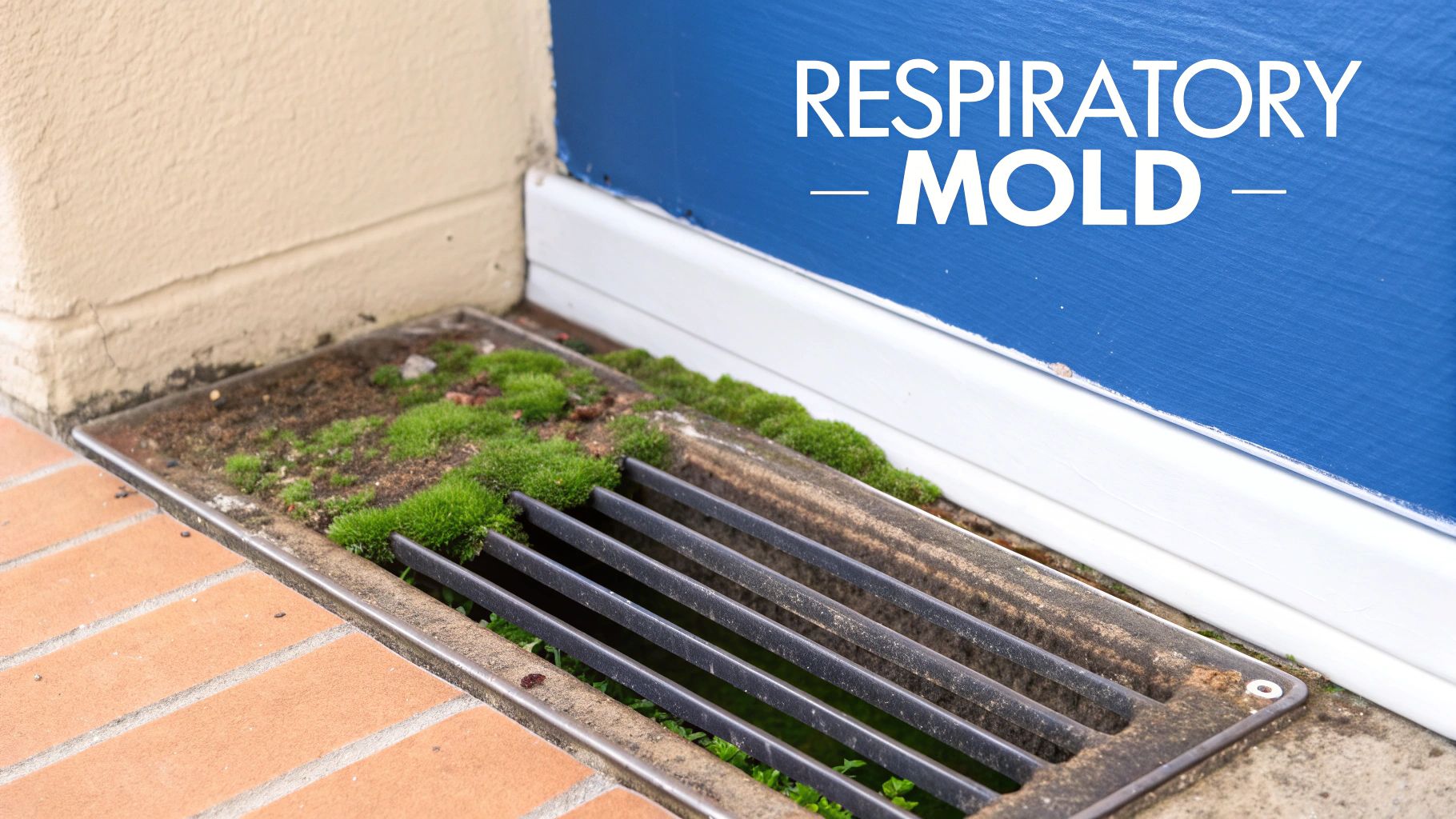
Among the most medically significant types of mold found in homes, Aspergillus fumigatus presents a serious risk, especially for individuals with compromised immune systems. This species is recognizable by its gray or greenish-gray, fuzzy colonies. It is thermotolerant, meaning it can survive and even thrive at higher temperatures than most other molds, making it a unique threat within home heating and ventilation systems.
Aspergillus fumigatus produces very small spores that can be inhaled deeply into the lungs, bypassing the body’s natural filtration mechanisms. This ability to penetrate the lower respiratory tract is what makes it a primary cause of aspergillosis, a spectrum of diseases affecting the lungs. In homes across coastal California, its presence is often linked to poorly maintained HVAC systems, where warmth and intermittent condensation create a perfect breeding ground.
Common Locations and Health Impacts
Because of its tolerance for heat, Aspergillus fumigatus is frequently found in places other molds might not survive. Its detection often requires more than just a visual inspection, as it colonizes areas hidden from plain sight.
- Key Growth Areas: This mold is a primary concern in HVAC ductwork, air handlers, and near heat sources with inadequate air circulation. We commonly identify it through air sampling during indoor air quality assessments in Ventura homes where residents report persistent respiratory issues despite a visually clean environment.
- Health Concerns: While it may not affect healthy individuals, Aspergillus fumigatus is a major opportunistic pathogen. For those with asthma, cystic fibrosis, or weakened immunity, exposure can lead to severe allergic reactions or invasive aspergillosis, a serious lung infection. Understanding the potential health effects of household mold is critical when dealing with this species.
Proactive Detection and Prevention Tips
Controlling Aspergillus fumigatus is centered on managing the air systems within your home. Since its spores are airborne and easily distributed, preventative HVAC maintenance is non-negotiable.
- Upgrade Air Filters: Switch to high-efficiency HVAC filters with a MERV-13 rating or higher. These are designed to capture smaller mold spores and prevent their circulation throughout your home.
- Professional Duct Cleaning: Schedule a professional HVAC ductwork cleaning every 3-5 years, or more frequently if you have pets or allergies. This removes the dust and organic debris the mold feeds on.
- Manage Condensation: Ensure your HVAC system's condensation drain line is clear and draining properly. Clogs can cause water to back up into the air handler, creating a prime growth environment.
- Air Quality Testing: If unexplained respiratory symptoms persist, professional air quality testing is the only definitive way to confirm the presence of Aspergillus fumigatus spores. This allows for targeted remediation of the source.
8. Chaetomium (Brown Mold in Drywall)
Among the more concerning types of mold found in homes is Chaetomium. Often appearing as a cottony colony that darkens over time from white to gray, brown, or olive, this mold is a definitive indicator of significant, long-term water damage. It thrives on cellulose-rich materials like drywall, wallpaper, and wood that have been thoroughly saturated.
Chaetomium is particularly worrisome because its presence signals a deeper problem than just surface moisture. We frequently find it in California homes after major water events, such as a roof leak from a severe winter storm in a Montecito home or foundation water infiltration in a Ventura property. While not as commonly known as Penicillium, Chaetomium can produce mycotoxins and is associated with structural degradation, demanding a comprehensive professional response that goes beyond simple cleaning.
Common Locations and Health Impacts
You are most likely to find Chaetomium hidden within building materials that have been wet for an extended period. Its musty, earthy odor is often the first clue to its presence, even before it becomes visible.
- Key Growth Areas: Look for it inside wall cavities following a plumbing failure, in basement drywall affected by foundation leaks, and on wood framing in attics with chronic roof issues. We once identified a massive Chaetomium colony inside the walls of a Goleta home where a slow pipe leak had gone undetected for months.
- Health Concerns: Chaetomium is a known allergen and can trigger respiratory irritation, sinus infections, and asthma attacks. Certain species can produce mycotoxins, and while the risk from inhalation is still being studied, prolonged exposure is ill-advised, especially for individuals with compromised immune systems. It has also been linked to neurological issues in some rare cases.
Proactive Detection and Prevention Tips
The discovery of Chaetomium necessitates a two-pronged approach: immediate mold remediation and a thorough structural assessment. Its presence means the water damage is not superficial.
- Never DIY Removal: Due to its potential toxicity and deep-seated growth, Chaetomium should only be handled by certified mold remediation professionals who use proper containment and safety protocols.
- Address the Root Cause: The absolute priority is to find and repair the source of water intrusion. This could mean fixing a leaky roof, re-grading landscaping, or repairing a compromised foundation. For more information, explore our guide to preventing mold after water damage.
- Assess Structural Damage: When Chaetomium is found, we strongly recommend a building inspector assess the extent of damage to drywall, studs, and other structural components.
- Demand Clearance Testing: After remediation, always insist on post-remediation verification (PRV) or clearance testing. This independent, third-party air and surface sampling confirms the mold has been successfully eliminated and the area is safe to rebuild.
8-Point Comparison: Household Mold Types
| Mold | 🔄 Remediation complexity | ⚡ Resources required | 📊 Expected outcomes | 💡 When to prioritize | ⭐ Key advantage |
|---|---|---|---|---|---|
| Aspergillus niger (Black Mold – Non-Toxic Variant) | Moderate — standard cleaning, HVAC inspection | Moderate — PPE, cleaners, HVAC service, dehumidifier | Reduced allergen load; visual/air confirmation usually possible | When dark colonies appear in vents/attics or during pre-sale inspections | Easily identifiable and responsive to standard remediation |
| Stachybotrys chartarum (Toxic Black Mold) | High — professional containment and abatement required | High — certified remediators, lab testing, structural repairs | Complete elimination with pro remediation; may trigger insurance claims | Immediate professional intervention if suspected water-damaged cellulose present | Clear health urgency that mandates professional remediation |
| Penicillium Species (Green/Blue Mold) | Moderate — moisture control, cleaning, HVAC maintenance | Moderate — HEPA filters, dehumidifiers, cleaning supplies | Lower toxicity than Stachybotrys; reduced spore counts if moisture fixed | When found on fabrics, stored items, or HVAC filters during assessments | Well-understood removal protocols and easy lab identification |
| Cladosporium (Gray-Olive Mold) | Low–Moderate — cleaning, air sealing, ventilation upgrades | Low–Moderate — caulking, ventilation, routine HVAC maintenance | Decreased outdoor infiltration and fewer seasonal spikes | Prioritize when mold appears near windows, seals, or exterior penetrations | Indicates specific air-sealing/ventilation improvements |
| Fusarium Species (Pink/Red Mold) | High — removal of contaminated materials and drying | High — disposal, professional water extraction, structural repair | Requires material replacement; resolves after rapid drying and repairs | Immediately after flooding or visible water-damage to textiles/flooring | Distinctive sign of recent/serious water damage prompting rapid action |
| Alternaria (Dark Brown/Black Mold) | Moderate — targeted cleaning and ventilation improvement | Moderate — exhaust fans, dehumidifiers, mold-resistant materials | Reduced allergen exposure; may recur without ventilation fixes | When found in bathrooms/kitchens or on grout and caulk | Easily visible; motivates ventilation and moisture-control upgrades |
| Aspergillus fumigatus (Respiratory Mold) | High — specialized HVAC cleaning and air testing | High — air sampling, duct cleaning, MERV-13+ filters, monitoring | Lowered deep-spore exposure if HVAC remediated; significant health benefits | If occupants have respiratory illness or HVAC shows contamination | Targeted HVAC remediation can meaningfully reduce inhalation risk |
| Chaetomium (Brown Mold in Drywall) | High — drywall removal and structural remediation | High — certified remediation, structural repair, clearance testing | Requires component replacement; resolves when source and structure fixed | When found in drywall/wall cavities after prolonged water intrusion | Strong indicator of prolonged water damage requiring structural repair |
From Detection to Solution: Your Next Steps for a Mold-Free Home
Navigating the world of indoor mold can feel overwhelming. We've journeyed through the details of the most common types of mold found in homes, from the allergenic potential of Aspergillus and Penicillium to the more hazardous implications of Stachybotrys chartarum. Understanding these distinctions is the crucial first step, but the ultimate goal is action. The presence of any mold, regardless of its color or species, is a definitive symptom of a larger problem: excess moisture.
Simply scrubbing away visible mold without addressing the underlying water source is like treating a fever without fighting the infection. The mold will inevitably return, potentially stronger and more widespread than before. Your focus must shift from merely cleaning the symptom to permanently solving the cause.
Your Action Plan for a Healthy Home
The knowledge you've gained from this guide empowers you to protect your property and your health. The key takeaway is not just to identify mold but to understand its message. That splotch of Cladosporium on a window sill is signaling condensation issues, while the musty odor of Chaetomium behind drywall points to a hidden leak or structural water intrusion.
Here are your immediate, actionable next steps:
- Assess the Scale: Is the visible mold a small, contained patch (under 10 square feet) on a non-porous surface like tile or glass? If so, a DIY cleaning approach using appropriate safety gear may be an option.
- Identify the Moisture Source: Trace the mold back to its origin. Is it a leaky pipe under the sink, poor ventilation in the bathroom, a crack in the foundation, or high humidity from our coastal Santa Barbara climate? This is the root cause you must fix.
- Recognize Professional Triggers: Certain situations demand immediate expert intervention. These non-negotiable red flags include:
- Mold covering an area larger than 10 square feet.
- A persistent, musty smell with no visible source (indicating hidden mold).
- Mold growth resulting from sewage backup or contaminated water.
- Residents experiencing chronic respiratory issues, allergies, or other unexplained health symptoms.
- Mold reappearing after you’ve attempted to clean it.
Why Professional Assessment is a Non-Negotiable Investment
Guesswork has no place in ensuring a healthy living environment. While you might identify what looks like one of the types of mold found in homes we've discussed, only professional testing can confirm the species, spore concentration, and the full extent of the contamination. This is especially true for our local communities in Santa Barbara and Ventura Counties, where the "marine layer" can create persistent high-humidity conditions ideal for mold proliferation.
Key Insight: A professional mold inspection is not just about finding mold; it's about creating a comprehensive map of your home's moisture problems. It provides a scientific, data-driven roadmap for effective, long-term remediation.
At Pacific Mold Pros, we bridge the gap between suspicion and certainty. Our certified inspectors utilize advanced technology like thermal imaging and moisture meters to pinpoint hidden water sources that feed mold growth in wall cavities, attics, and subfloors. We provide accredited laboratory analysis that delivers a clear report on the specific mold species and airborne spore counts, giving you the objective data needed to make informed decisions.
Your home should be your sanctuary, a place of safety and well-being. Don’t let the uncertainty of a mold problem compromise that peace of mind. Taking decisive, informed action today protects your property's value and, more importantly, safeguards the health of your loved ones. You are now equipped with the knowledge to move forward confidently. The next step is to partner with experts who can help you reclaim your healthy home.