That moment of discovery—seeing an unexpected patch of mold behind a piece of furniture or during a small home repair—can be seriously alarming. But your first reaction is what sets the tone for how the whole situation plays out.
The biggest mistake I see people make? Panicking and trying to scrub the area away. It feels productive, but it can actually make the problem a hundred times worse by blasting millions of spores into the air. The right approach is much calmer, more methodical, and focused on safety first.
Your First Steps After Finding Mold
Okay, you’ve found something that looks like mold. Before you do anything else, take a breath. Here’s exactly what to do next to keep the problem from getting bigger.
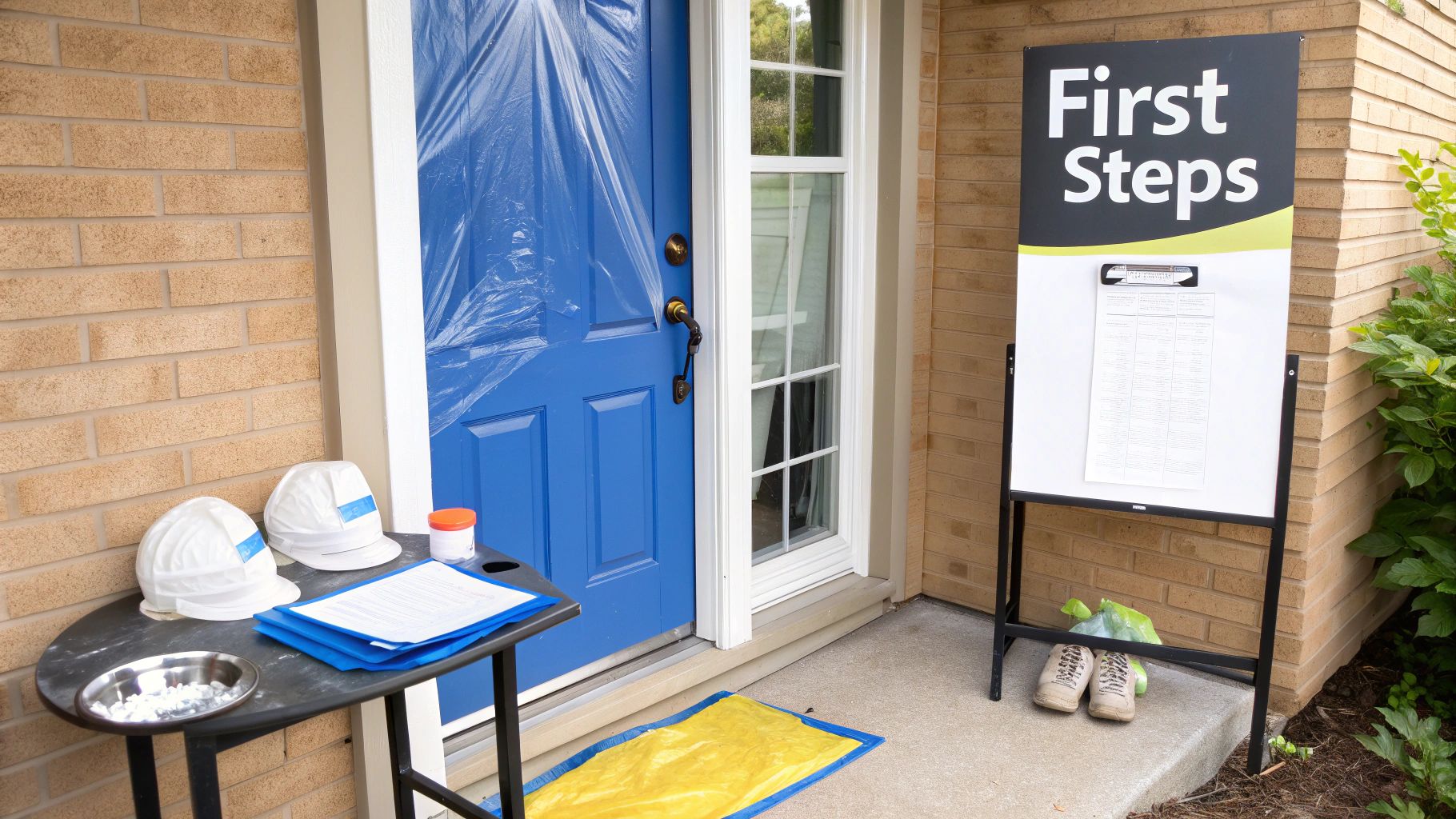
Prioritize Safety and Containment
Your first job isn't to remove the mold—it’s to stop it from spreading and protect your family.
Even if you’re just taking a quick look, grab some basic personal protective equipment (PPE). At the very least, you’ll want an N95 mask to filter out airborne spores and some disposable gloves to keep it off your skin.
Once you’re protected, the goal is containment. This involves a few key actions:
- Isolate the Area: The easiest thing to do is just close the door to the affected room. If it's a more open space, you can create a temporary barrier with some thick plastic sheeting and painter's tape to seal off doorways and vents.
- Stop Air Movement: This is a big one. Go turn off your home’s HVAC system right away. Air currents from fans, air conditioners, or heaters are like a superhighway for mold spores, carrying them all over your house.
- Control Humidity: If you found the mold in a known damp spot like a bathroom or basement, get a dehumidifier running. Drying out the air makes the environment much less friendly for mold growth.
Key Takeaway: Your immediate objective is not removal, but containment. Disturbing mold without proper containment protocols can cross-contaminate your entire home, turning a small, localized issue into a widespread problem.
When you spot mold, taking immediate, careful action can make all the difference. To help you stay on track, here's a quick checklist of what to do right away.
Immediate Action Checklist When You Discover Mold
| Action | Why It's Important |
|---|---|
| Do NOT Touch or Disturb It | Scrubbing or wiping mold releases millions of spores into the air, spreading contamination. |
| Turn Off HVAC & Fans | Prevents airborne spores from circulating throughout your home's ventilation system. |
| Isolate the Room | Close doors or use plastic sheeting to seal off the area, containing the problem. |
| Put on PPE (Mask & Gloves) | Protects you from inhaling spores and getting mold on your skin, even during a brief inspection. |
| Take Photos and Videos | Creates a clear record for insurance claims or professional remediation companies before anything is moved or cleaned. |
| Reduce Humidity | Run a dehumidifier in the affected area to make the environment less suitable for mold to thrive. |
Following these initial steps helps you manage the situation safely and effectively while you figure out your next move.
Document Everything Meticulously
Before you move a single thing, put on your detective hat.
Grab your phone and take clear, well-lit photos and videos of the mold. Get shots from different angles and distances. Make sure you capture not just the visible growth but also the surrounding area. Look for signs of water damage, stains, or peeling paint and document those, too. This visual record is invaluable if you need to file an insurance claim or show a professional what you found.
This early stage is also a good time to sharpen your awareness of other potential issues. For homeowners in a place like Santa Barbara, where the coastal climate can be a factor, knowing how to detect mold beyond just the obvious visual signs is a critical skill.
Once you've safely contained and documented the visible spot, you can start figuring out the true scope of the situation.
Should You Handle Mold Yourself or Call a Pro?
After you’ve contained the visible mold, the big question looms: can you clean this up yourself, or is it time to bring in an expert? This is a crucial decision. Get it right, and you solve the problem for good. Get it wrong, and you could be dealing with a temporary fix—or worse, making the problem bigger than it was.
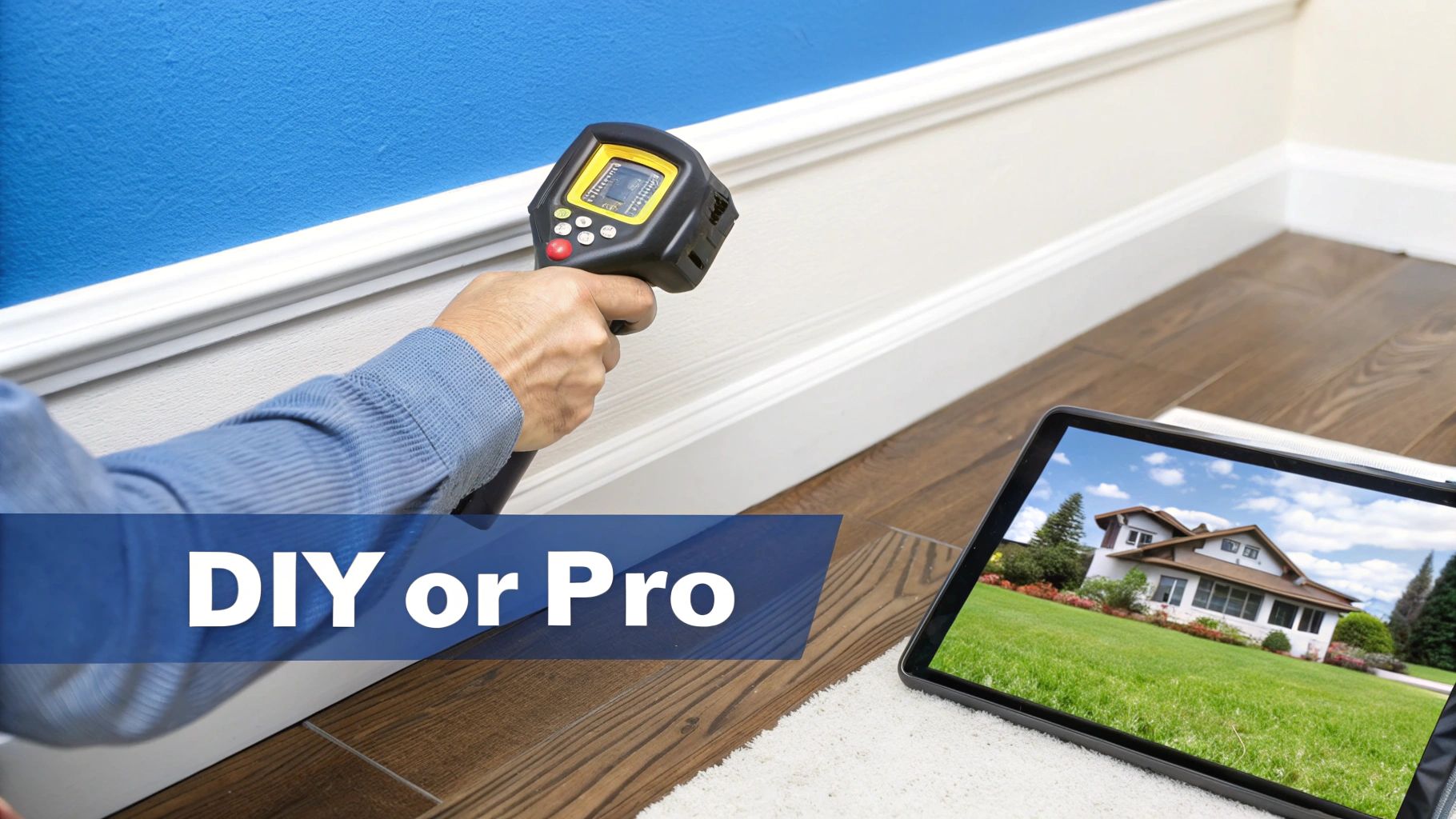
A common guideline comes straight from the EPA. They suggest a small, contained area of less than 10 square feet (think a 3×3 foot patch) on a non-porous surface might be manageable for a homeowner. But that simple rule often doesn't tell the whole story, especially here in coastal California where persistent humidity can create hidden moisture issues.
The reality is, mold is surprisingly common. Studies show that roughly 1 in 5 U.S. homes has a mold problem, almost always tied to untreated moisture. That's why the EPA's recommendation to call a professional for anything over 10 square feet is so important. It creates a clear threshold for when a DIY approach becomes too risky. Professionals are equipped to identify the mold type, figure out the true extent of the contamination, and—most importantly—trace it back to the source.
When DIY Mold Cleanup Is a Bad Idea
Trying to tackle a larger or more complex mold issue on your own can backfire, sometimes spectacularly. You might scrub the surface clean, but if you don't find and fix the moisture source, the mold is guaranteed to return.
Even worse, using the wrong cleaning techniques can blast a cloud of spores into the air, spreading the contamination to other parts of your home. It's a classic case of the "cure" being worse than the disease.
Here are a few scenarios where calling a professional is the only smart move:
- The Mold Patch Is Larger Than 10 Square Feet: This is the clearest sign that the problem has moved beyond a simple DIY fix.
- You Suspect Mold in Your HVAC System: Mold in your ventilation system is a serious problem. It requires specialized cleaning to avoid blowing spores through your entire house every time the heat or AC kicks on.
- The Mold Is on Porous Materials: Drywall, insulation, and wood act like sponges. Surface cleaning won't do a thing for mold that has grown deep into the material itself.
- You Smell That Musty Odor but Can't See Mold: This is the classic sign of a hidden problem. It's likely growing inside a wall, under the flooring, or in a crawl space where you can't see it.
The Professional Advantage: Uncovering What’s Hidden
A certified mold inspector doesn't just look at the visible spot; they play detective. They use advanced tools to find the root cause and full extent of the problem, often without tearing your walls apart. For instance, a thermal imaging camera can spot temperature differences inside a wall that point to hidden moisture, while a moisture meter can confirm just how saturated the drywall or wood framing is.
This diagnostic approach is the key difference between simple mold removal and true remediation. Removal is just cleaning what you can see. Remediation is a complete process: find the source, contain the area, safely remove contaminated materials, and then verify that the space is truly clean.
Getting a professional assessment gives you the full picture. When you understand the difference between mold removal vs. remediation, you can be confident you’re choosing a permanent solution, not just treating a symptom. It’s the only way to get real peace of mind.
Understanding the Value of Professional Mold Testing
After finding what looks like mold, one of the first questions I hear from homeowners is, "Do I really need to pay for professional testing?" It's a fair question. You can see the problem, so why spend more money just to confirm it?
But here's the thing I've learned over years of doing this: what you can see is almost never the full story. Professional testing isn't just about confirming mold exists; it's about uncovering the critical details that a visual check simply can't provide.

This process is far more sophisticated than just looking at a stain on the wall. Certified inspectors use specialized equipment to take air and surface samples, which are then sent off to an accredited lab for analysis.
It’s the difference between guessing what’s going on in your home and knowing for sure.
What Lab Analysis Actually Reveals
That lab report you get back is incredibly powerful. It’s not a simple "yes" or "no" on mold. It's a detailed breakdown that gives you a clear roadmap for what to do next to protect your home and your family's health.
Here’s what professional testing actually tells you:
- Specific Mold Types: The lab identifies the exact species of mold in your home. This is crucial because it distinguishes between common allergenic molds and more hazardous types like Stachybotrys chartarum—the infamous "black mold."
- Spore Concentration Levels: Air samples measure the number of mold spores per cubic meter. By comparing indoor levels to the outdoor air, we can tell if you have an active, growing colony inside that's pumping spores into the air you breathe.
- Hidden Contamination: Sometimes, you can smell mold but can't see it. Testing is the only way to confirm if a hidden colony behind a wall or under the floor is impacting your indoor air quality.
An independent testing company provides unbiased, factual data about your indoor environment. Since they don't perform remediation, there is no conflict of interest—their only goal is to give you an accurate assessment of the situation.
Knowing the mold type and how much of it is in the air is essential for planning an effective cleanup. It helps remediation pros choose the right containment methods and ensures the problem is truly solved, not just painted over. Our team specializes in providing this kind of clarity with comprehensive mold and environmental testing.
Why Data-Driven Decisions Matter
This data has real-world consequences. For instance, if you're filing an insurance claim, having documented proof from a third-party lab can make all the difference. It’s also vital in real estate deals, where full transparency protects both the buyer and the seller.
The demand for this kind of certainty is on the rise. The global mould detection service market is expected to grow from USD 1.2 billion in 2023 to USD 2.3 billion by 2032. As this in-depth market analysis shows, this isn't just a niche service anymore; it's becoming standard practice as people become more aware of indoor air quality.
Ultimately, investing in professional testing isn't just an expense—it's an investment in making the right decisions for your property and your health.
How to Navigate Mold During a Real Estate Deal
Discovering mold right in the middle of buying or selling a home can feel like a complete deal-breaker. It’s one of those things that instantly ramps up the stress, whether you’re the buyer who just found a hidden problem or the seller suddenly facing a surprise disclosure.
But it doesn't have to kill the deal. In my experience, handling it the right way can actually build trust and get everyone to the closing table.
If you're selling your home, the absolute best strategy is to be proactive. Don't wait for the buyer’s inspector to uncover an issue. Seriously consider getting a pre-listing mold inspection. This move puts you in the driver's seat, giving you time to address any problems on your own terms without the pressure of a ticking clock.
Walking into negotiations with a professional report and proof of remediation shows buyers you’re honest and have nothing to hide. It can prevent those painful, last-minute price reductions.
Now, if you're the buyer, finding mold gives you significant leverage. This isn't just about knocking a few bucks off the price; it’s about understanding the long-term health of the property you’re about to invest in. A solid inspection should tell you not just that there's mold, but why it's there—pinpointing the moisture source is critical before you sign anything.
Turning a Problem into a Solution
The key to getting through this is clear, unbiased information. An independent inspection report, complete with detailed lab analysis, gives both the buyer and seller the facts they need to move forward. It strips the emotion out of the conversation and reframes the issue as a solvable problem with a specific cost attached.
A "Mold-Free Certification" from a reputable inspection company can be a powerful asset in any real estate deal. For sellers, it offers buyers documented peace of mind. For buyers, it ensures you are moving into a healthy, safe home.
Once everyone understands the scope of the problem, you can start talking about real solutions. Usually, it comes down to one of three options:
- Seller-Funded Remediation: The seller hires a certified company to fix the problem before closing. The work should always be verified with follow-up clearance testing.
- Buyer Credit: The seller provides a credit at closing. This allows the buyer to take possession of the home and manage the remediation with their own chosen company.
- Price Reduction: The home's sale price is simply lowered to account for the estimated cost of the mold remediation and any necessary repairs.
Understanding why a mold inspection is crucial when buying a house in Santa Barbara is the first step for any prospective homeowner in our coastal climate. It’s not just about protecting your investment—it’s about protecting your family’s health. By treating a mold discovery as just another manageable part of the due diligence process, buyers and sellers can work together to get the deal done.
Choosing a Trustworthy Mold Remediation Company
Once an independent inspection confirms you’ve got a mold problem, you’ve reached the most critical decision point. Picking the right remediation company isn't just about hiring someone to clean up a mess; it’s about trusting them with the health of your home and, more importantly, your family.
The right team solves the problem for good. The wrong one can leave you stuck in a cycle of recurring mold, wasted money, and endless frustration.
A non-negotiable best practice is to hire a separate company for remediation than the one you used for the initial inspection and testing. This is the single best way to avoid a glaring conflict of interest. An inspector's job is to give you unbiased, scientific data—not to sell you an enormous cleanup project. This separation ensures the game plan is based on facts, not a company's profit margin.
If you haven't had an inspection yet, check out our guide on finding the best mold inspectors near you to start with a truly independent assessment.
Vetting Your Potential Remediation Partner
Let's be clear: not all remediation companies are created equal. The industry is booming, with the global mold remediation market projected to hit USD 1,751.9 million by 2032. This explosive growth, largely fueled by increasing water damage from extreme weather, means a lot of new players are jumping into the game. As this market growth report shows, it's more important than ever to be selective.
Here's what you absolutely must look for:
- IICRC Certification: The Institute of Inspection, Cleaning and Restoration Certification (IICRC) is the gold standard in our industry. A company with IICRC-certified technicians has proven they understand the science behind doing this job right.
- The Right Insurance: Don't just ask if they're insured. Ask for proof of both general liability and, specifically, pollution/mold liability insurance. This is what protects you if something goes wrong during the project.
- A Detailed Written Plan: A legitimate pro will never toss a vague number at you over the phone. They should walk the property and provide a comprehensive, written remediation plan detailing exactly how they'll contain the area, remove contaminated materials, and clean everything.
Key Questions to Ask Every Contractor
Before you even think about signing a contract, you need to interview potential contractors. Their answers to a few pointed questions will tell you everything you need to know about their experience and professionalism.
Expert Tip: A trustworthy remediator will always insist on post-remediation verification, often called "clearance testing." This is where the original, independent inspector comes back to test the area and confirm the cleanup was successful. A company that skips, downplays, or discourages this step is a massive red flag.
Walk into that conversation ready to ask these questions:
- What is your containment strategy? They should immediately talk about using negative air pressure machines, HEPA air scrubbers, and physical barriers to prevent mold spores from spreading to the rest of your home.
- How will you remove the contaminated materials? Listen for a clear process. They need to explain how they'll safely bag and dispose of things like drywall, insulation, and carpet without cross-contaminating other areas.
- Do you guarantee your work? A reputable company will stand by their work and offer a warranty. This is almost always contingent on you having fixed the original moisture source that caused the mold in the first place.
- Will you provide a detailed report when you're done? You need final documentation. A good company provides a full report outlining all the work performed, which is incredibly valuable for your records and for future real estate disclosures.
Got Questions? We’ve Got Answers.
When you find mold, the initial shock quickly gives way to a flood of questions. We get it. Homeowners across Santa Barbara and Ventura counties call us with the same worries about their health, property, and what to do next. Here are the straight-up answers to the questions we hear most often.
Can I Just Douse It In Bleach?
This is easily the biggest and most dangerous myth out there. It’s the first thing everyone thinks of, but bleach is almost always the wrong tool for the job.
Sure, bleach might kill some surface mold on a non-porous surface like a tile or a bathtub. But on anything porous—drywall, wood, grout, you name it—it's a recipe for disaster. Since bleach is mostly water, the chlorine quickly evaporates, leaving the water to soak deep into the material. You’ve just given the mold's hidden root system a nice, big drink, practically guaranteeing it will grow back stronger.
Plus, dead mold spores are still allergenic and toxic. Professional remediation is about total removal of the contaminated source using specialized antimicrobial agents, not just trying to kill what you can see on the surface. That’s the only way to solve the problem for good.
What Kind of Health Symptoms Are We Talking About?
Mold affects everyone differently. Your reaction depends on your personal sensitivity, the type of mold you’re dealing with, and how much of it is in your air.
Many people experience symptoms that feel a lot like seasonal allergies that just won't go away:
- Constant sneezing and coughing
- A runny nose or congestion that never clears up
- Itchy, red eyes or unexplained skin rashes
If you have asthma, mold is a known trigger that can cause more frequent and intense attacks. In more serious cases, often linked to toxigenic molds, people report nagging headaches, chronic fatigue, dizziness, and even frequent respiratory infections.
Here's a huge red flag: if your family feels rundown and sick at home but the symptoms seem to magically improve when you leave the house, that’s your cue to get a professional air quality assessment.
Renter’s Tip: If you're renting, your very first move should be to notify your landlord or property manager in writing. California law is clear: landlords must provide a habitable living space, and that includes fixing a mold problem that poses a health and safety risk.
So, How Much Is a Mold Inspection Going to Cost Me?
The cost for a professional mold inspection here in Santa Barbara or Ventura isn't one-size-fits-all. It really depends on the size of your property and how many lab samples are needed to get a clear picture of what's going on.
A basic visual look-over is the starting point, but a truly comprehensive assessment will include air and surface sampling to give you hard data. It’s tempting to see this as just another expense, but you should really think of it as an investment.
An accurate, unbiased inspection report from a company that doesn't also sell remediation can save you thousands down the road by preventing failed DIY attempts or paying for incomplete work from a biased contractor. It gives you the facts you need to make the right decision for your home and your family.